One street tree can boost Sydney house prices by $30,000 – or cost $70,000 if it’s too close: new study

A single street tree can potentially increase an average Sydney house price by A$30,000, our new research shows. This echoes past research showing street trees not only help boost property prices, but offer other benefits, from improved scenery and privacy to increased shade.

But there’s a catch. Our analysis, published in the international Cities journal, also found that if a street tree is too close, it can actually reduce the selling price by more than $70,000.

Our study looked at more than 1,500 house sales in the City of Sydney from 2021 to 2024, then matched those with detailed council data on nearly 50,000 public trees.

After accounting for other, better known price factors – number of bedrooms, bathrooms, car parking, land size, proximity to the CBD, transport, schools and more – we found trees can be associated with higher house prices. But that price boost only occurred when the trees were about 10–20 metres from a home, such as across the street or near the frontage.

In contrast, trees planted too close – within a 10m radius from the centre of the property – were actually associated with lower sale prices.

This matters beyond Sydney. Every Australian capital city has set tree-planting goals, such as the City of Sydney’s target for 23% tree canopy cover in 2030 and 27% in 2050. Yet many will struggle to meet them, with some facing resistance from residents. Our research explains why tree placement will be crucial if we ever want to meet those targets.

What’s new about this research

Past studies in Perth, as well as several cities in the United States and Canada, have consistently shown trees tend to increase property values.

But what we didn’t know before now was where the benefits stop and the costs begin.

Our study identifies a clear “not in my backyard” (NIMBY) boundary, of around 10m, within which street trees’ economic value turns negative.

That finding is important, because that’s when resident resistance to street trees is likely to be strongest.

This is a first study of its kind to quantify the economic value of public trees by taking advantage of using individual tree-level data managed by the City of Sydney from 2023.

It allowed us to measure tree effects at the finest possible distance from the centre of property: under 10m, 10–20m, 20–50m, 50–100m, and beyond 100m. This is something previous studies could not do when relying on satellite or street imagery.

How tree location affects price

We controlled for all the usual factors that influence house prices, including property features and location amenities. This meant we could measure the impact of trees after accounting for everything else.

We found that distance matters. In dollar terms, one additional tree within 10m of the centre of a property reduced its value by 2.96%. An average home sold in the City of Sydney from 2021 to 2024 was worth $2,613,000 – so that reduction worked out to be a $70,290 cost.

Given the average lot size of 176m² in the City of Sydney, the distance from the centre of an average property to its boundary is typically about 8m.

But if a tree was located 10-20 metres away, it increased the value by about 1.16%, worth an average of $30,310.

If the tree was further than 20 metres away, we found no price difference.

The new study identified a clear ‘not in my backyard’ (NIMBY) boundary, within which street trees’ can actually hit house prices. Belle Co/Pexels, CC BY

This show a clear proximity effect. Trees being too close to a house are a cost risk; trees at a moderate distance are a valued feature; and trees further away are neutral and just part of the neighbourhood amenity.

Our study used more precise data than ever before to calculate the distance between street trees and the centre of each property.

But future research could take this further by measuring the distance from each tree to the house. It could also incorporate resident surveys to better understand how people perceive and value trees near their homes.

Why trees being too close matters

Street trees like these are much loved – but can have hidden downsides, such as damage from roots or branches. Jo Quinn/Unsplash, CC BY

It makes sense that people may see trees close to home as a financial risk.

Trees can cause structural damage to buildings and infrastructure, increase fire hazards, and safety concerns from falling branches.

Rather than dismissing residents’ concerns as NIMBYism, they should be seen as rational market responses to maintenance risks, structural damage, and amenity loss.

Planting plans need resident support

Every Australian capital city has adopted “urban forest” or tree planting strategies, many of them aiming to hit 30-40% canopy cover in coming decades. For example, the City of Melbourne’s target is 40% canopy cover by 2040, while Brisbane City Council is aiming for 50% shade for residential footpaths and bikeways by 2031.

However, there are doubts about whether many of those targets will be met.

There are good reasons for governments to invest in urban trees, as they can protect us from extreme heat and help as a response to climate change. But resistance from homeowners can undermine these policies.

Our research shows residents are more likely to welcome street trees if they’re planted not too close, and not too far, from their homes.

* Thanks to the coauthors of this paper, Qiulin Ke and Bin Chi from University College London.The Conversation

Song Shi, Associate Professor, Property Economics, University of Technology Sydney

This article is republished from The Conversation under a Creative Commons license. Read the original article.

Read More........

Tata Motors hits 10 lakh commercial vehicle milestone at Lucknow plant

(Photo: Tata Motors)

New Delhi, (IANS) Indian commercial vehicle manufacturer Tata Motors Ltd on Wednesday announced the rollout of its 10th lakh vehicle from its Lucknow plant.

The rollout also marked three‑and‑a‑half decades of operations in Uttar Pradesh, the company said in a release.

In his reaction, Uttar Pradesh Chief Minister Yogi Adityanath said: "The rollout of 10 lakh trucks and buses from Tata Motors’ Lucknow facility is a moment of pride for the entire state. It is a recognition of the state’s capabilities and immense potential, as well as of its talented people."

"Our vision is to transform Uttar Pradesh into a one‑trillion‑dollar economy, with industry and entrepreneurs playing a pivotal role in this journey. The state offers a conducive ecosystem for scalable businesses, supported by a vast consumer market, a young, skilled workforce, and seamless connectivity," he said.

Tata Motors’ success in Uttar Pradesh reflects the strength of this ecosystem and reinforces the state's commitment to fostering responsible industrial growth, creating jobs, building skills and advancing sustainable socio‑economic development, he added.

The milestone vehicle was a zero-emission electric bus, and it highlighted the shared commitment of Uttar Pradesh and Tata Motors to green mobility, aligned with the state’s net-zero 2070 vision and the company’s net-zero target of 2045, the company said.

On this occasion, Tata Sons Chairman N. Chandrasekaran said that the production of Tata Motors' 10th lakh commercial vehicle from its Lucknow facility reflects the strength of its longstanding partnership with Uttar Pradesh.

"Over more than three decades, this collaboration has demonstrated how industry, government and communities can come together to drive industrial excellence, create livelihoods and build capabilities at scale," he added.

"As India’s commercial vehicle industry is undergoing rapid transformation towards cleaner, smarter and more efficient mobility solutions, this milestone underscores Tata Motors’ leadership in shaping the future of mobility," he said, as per the release.

The Lucknow facility, established in 1992 and spread over about 600 acres, has an annual capacity of over one lakh vehicles and supports over 8,000 livelihoods.

It builds industry‑relevant skills through flagship training programmes, and operates as a water‑positive facility powered by 100 per cent renewable energy, the auto manufacturer said.It manufactures a comprehensive range of cargo and passenger commercial vehicles across multiple powertrains, including next-generation zero-emission electric buses and trucks, as well as fuel cell electric vehicles (FCEVs). Tata Motors hits 10 lakh commercial vehicle milestone at Lucknow plant | MorungExpress | morungexpress.com
Read More........

India Deep Tech Accelerator announced to help scale up IIT startups


(AI image/IANS)

New Delhi, (IANS) The India Deep Tech Alliance (IDTA) and the University of Chicago’s Polsky Center for Entrepreneurship and Innovation on Tuesday announced the launch of the India Deep Tech Accelerator, a 10‑week programme designed to help IIT‑affiliated deep‑tech startups scale internationally.

The initiative, led by Polsky Center, is developed in collaboration with leading Indian Institutes of Technology (IIT) innovation networks and incubators, including SINE at IIT Bombay, FITT at IIT Delhi, and IIT Madras Research Park, a statement said.

The programme, aimed at supporting India’s emerging deep tech startup ecosystem, will run from April through June 2026 and will be structured for a cohort of up to 15 startups through targeted workshops, coaching, and strategic customer and investor connections.

The accelerator will also include "an India showcase and a Bay Area showcase for top-performing companies in June," the statement said.

The initiative builds a structured, repeatable pathway connecting startups from India’s premier technical institutions with the potential for fundraising and the Polsky Center’s deep experience in venture creation, startup acceleration, and international market access.

The accelerator will run from April through June 2026 and take a cohort of up to 15 startups through targeted workshops, coaching and investor and customer connections. Top performers will be showcased at an India event and a Bay Area showcase in June.

The India Deep Tech Accelerator aims to support globally ambitious, IIT-affiliated startups for near-term commercializsation and financing milestones in the United States and other global markets.

IDTA will provide strategic guidance and founder support, while Aroa Venture Partners has committed up to $2,00,000 per startup for select companies emerging from the accelerator. Several other venture capital firms have committed to contribute to workshops, office hours, selective mentoring, and may provide potential investment support to cohort startups.“India’s IITs produce world‑class engineering and research, but too many deep‑tech breakthroughs still struggle to cross the last mile into scalable commercialisation,” said Sriram Viswanathan, Founding Managing Partner, Celesta Capital, and Founding Executive Committee Member, IDTA. India Deep Tech Accelerator announced to help scale up IIT startups | MorungExpress | morungexpress.com
Read More........

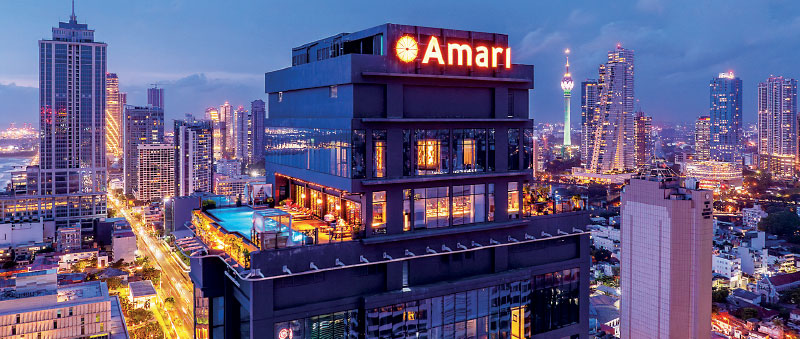
Amari Colombo wins Sri Lanka’s Leading Business Hotel 2025 at World Travel Awards


Amari Colombo has been honoured as Sri Lanka’s Leading Business Hotel 2025 at the World Travel Awards (WTA), Asia and Oceania Gala Ceremony held in Hong Kong in October 2025. This accolade recognises the hotel’s exceptional standards of service, contemporary design, and its position as a benchmark for business hospitality in Sri Lanka.

The glittering ceremony, held in partnership with Hong Kong International Airport and InterContinental Grand Stanford Hong Kong, brought together the region’s most distinguished travel and hospitality brands to celebrate excellence across Asia and Oceania.

“We are truly delighted and honoured to be recognised as Sri Lanka’s Leading Business Hotel,” said Amari Colombo General Manager Monty Ariyaratne. “This award is a testament to our team’s unwavering commitment to delivering warm, personalised service and creating an inspiring environment for both business and leisure travellers. We share this achievement with our valued guests and dedicated team members who make the Amari experience so special.”

Amari Colombo, part of ONYX Hospitality Group, embodies modern elegance infused with the warmth of Thai-inspired service. Ideally located in the heart of Colombo’s vibrant business district, the hotel caters to discerning travellers with world-class amenities, stylish meeting spaces, and exceptional dining venues—all designed to foster connection, productivity, and comfort.

The World Travel Awards, established in 1993, are globally recognised as the ultimate hallmark of industry excellence, celebrating the best in travel, tourism, and hospitality. The Asia and Oceania Gala Ceremony 2025 showcased leading lights of the region, including destinations, resorts, hotels, and tourism boards that continue to raise the standard of global travel.

World Travel Awards Founder Graham Cooke remarked: “Tonight we have celebrated the leading lights of travel across Asia and Oceania. Our winners represent the very best in tourism excellence, and I congratulate each and every one for raising the benchmark of achievement across this remarkable region.” Amari Colombo wins Sri Lanka’s Leading Business Hotel 2025 at World Travel Awards | Daily FT
Read More........

Hyundai Motor aims to develop India into a ‘strategic export hub’


IANS File Photo

Seoul, (IANS): The head of South Korea's automotive giant Hyundai Motor Group has visited three key overseas markets -- China, the United States and India -- at the start of the new year as part of the group's global expansion strategy, the company said on Wednesday.

Executive Chair Euisun Chung's visits were aimed at exploring business opportunities in major economies that are expected to underpin the group's future growth, while also seeking partnerships with leading global companies, the group said in a press release.

During his visit to India, Chung toured three production facilities -- Hyundai Motor's Chennai and Pune plants and Kia's Anantapur plant -- to review production operations and sales strategies.

Hyundai Motor Group ranks second in the Indian automotive market with a market share of about 20 percent. The three plants have a combined annual output capacity of 1.5 million vehicles.

The group aims to develop India into a "strategic export hub" following the listing of Hyundai Motor India on the Indian stock market in 2024 in what was the largest initial public offering (IPO) in the country's history.

"Hyundai has been able to grow over the past three decades thanks to the support of the Indian people," Chung was quoted as saying. "We must pursue a home-brand strategy for the next 30 years so that Hyundai can become a truly national company in India."

During his 10-day trip through Tuesday, Chung attended the Korea-China Business Forum held in conjunction with President Lee Jae Myung's state visit to China, and the world's largest IT and electronics exhibition, CES 2026, in Las Vegas, and toured the group's production facilities in India, reports Yonhap news agency.

In Beijing, Chung exchanged views with Zeng Yuqun, chairman of Contemporary Amperex Technology Co. (CATL), the world's largest battery maker, on cooperation in the electric vehicle (EV) battery sector. He also met with Hou Qijun, chairman of China Petroleum & Chemical Corp. (Sinopec), to discuss potential collaboration in hydrogen-related businesses.

To boost sales in China, Hyundai Motor Co. launched its first China-dedicated EV model, the Elexio, in October and plans to expand its EV lineup in the world's largest automobile market to six models by 2030. Its smaller affiliate, Kia Corp., plans to strengthen its Chinese EV lineup by introducing at least one new model each year through 2027, following the launch of the EV6 in 2023.

At CES 2026, Chung held meetings with executives from global big-tech companies, including Nvidia Corp. CEO Jensen Huang and Qualcomm Inc. Chief Operating Officer (COO) Akash Palkhiwala.The group unveiled its artificial intelligence (AI) and robotics strategy at the exhibition, with the presentation of Atlas, a humanoid robot developed by its U.S. subsidiary Boston Dynamics, drawing significant attention. Hyundai Motor aims to develop India into a ‘strategic export hub’ | MorungExpress | morungexpress.com
Read More........

More than 1 billion 5G subscriptions expected in India by 2031: Report

IANS Photo

New Delhi, (IANS): India is set to cross 1 billion 5G subscriptions by the end of 2031, a new report said on Thursday.

This would give the country a 79 per cent 5G subscription penetration, reflecting rapid growth in adoption just three years after the service began rolling out nationwide, according to the November 2025 edition of the Ericsson Mobility Report.

The report highlights that India is one of the fastest-growing 5G markets globally. By the end of 2025, the country is expected to reach 394 million 5G users, accounting for 32 per cent of all mobile subscriptions.

Ericsson India MD Nitin Bansal said that mobile data usage in India is the highest in the world, with average consumption at 36 GB per month per smartphone, projected to rise to 65 GB by 2031.

He added that affordable 5G FWA (Fixed Wireless Access) equipment and heavy data usage are driving this surge.

Globally, the report forecasts 6.4 billion 5G subscriptions by 2031, making up about two-thirds of all mobile subscriptions.

In 2025 alone, global 5G subscriptions are expected to reach 2.9 billion, rising by 600 million in a single year.

Network coverage is also expanding quickly, with 400 million more people gaining 5G access in 2025.

By the end of that year, half of the global population outside mainland China is expected to be covered.

Mobile network data traffic rose 20 per cent between Q3 2024 and Q3 2025, driven mainly by India and China.

By 2025, 5G networks will handle 43 per cent of all mobile data, a number expected to jump to 83 per cent by 2031.

Fixed Wireless Access continues to grow as a major 5G use case. The EMR estimates that 1.4 billion people will be connected through FWA by 2031, with 90 per cent of these users on 5G networks.Currently, 159 service providers already offer 5G-based FWA services, representing about 65 per cent of all FWA operators worldwide, the report said. More than 1 billion 5G subscriptions expected in India by 2031: Report | MorungExpress | morungexpress.com
Read More........

Intracom Telecom Expands Strategic Collaboration with Nova to Enhance Enterprise Connectivity


Posted by Harry Baldock, Intracom Telecom, a global technology systems and solutions provider, and Greece’s largest network infrastructure manufacturer, announces the expansion of its collaboration with Nova, a member of United Group the leading telecommunications and media provider in Southeast Europe and a pioneering provider of mobile, internet, and video services. Nova will begin deploying Intracom Telecom’s WiBAS™ G5 Smart and WiBAS™ G5 GigaConnect FWA platforms to deliver reliable high-speed enterprise connectivity over Nova’s 5G mmWave spectrum at 26.5–27.5 GHz.

This deployment marks an important step in Nova’s ongoing investment in high-speed access infrastructure, aimed at supplying business customers with highly reliable broadband services. Operating in the 26.5–27.5 GHz band, the WiBAS™ G5 platform enables Nova to unlock substantial network capacity and deliver consistent performance, ensuring robust connectivity even in demanding enterprise environments.

Since 2021, Intracom Telecom and Nova have been engaged in a multi-year network modernization program utilizing Intracom Telecom’s field-proven WiBAS™ Point-to-Multipoint (PMP) technology. This nationwide initiative has focused on expanding coverage and capacity across Greece’s major metropolitan areas, connecting thousands of business customers with next-generation wireless access solutions. The ongoing expansion reinforces Nova’s strategy to deliver resilient, ultra-fast connectivity to enterprises of all sizes.

“Our collaboration with Nova continues to grow stronger as we jointly build the foundation for a high-capacity enterprise connectivity network in Greece,” commented Ioannis Tenidis, Director for Wireless Product Line Management at Intracom Telecom. “The deployment of our WiBAS™ G5 platform will enable Nova to deliver unmatched performance and reliability to its business subscribers on valuable 5G mmWave spectrum.”

Thanos Theodoropoulos, Access & Transmission Senior Manager at Nova, added: “Intracom Telecom has been a trusted technology partner in our multi-year effort to modernize and expand our enterprise wireless services. The new WiBAS™ G5 solutions enable us to offer even higher speeds and resilient connectivity to our customers, supporting Greece’s digital transformation.” Intracom Telecom Expands Strategic Collaboration with Nova to Enhance Enterprise Connectivity - Total Telecom
Read More........

KKR–Singtel consortium near $10bn deal for STT GDC


Posted by Harry Baldock, The move seeks to capitalise on Southeast Asia’s booming date centre market

This week, media reports suggest that a consortium led by KKR and Singtel is closing in on a deal to acquire ST Telemedia Global Data Centres (STT GDC).

Negotiations, which are already at an “advanced stage”, would value the data centre business at around $10.22 billion.

“Singtel, as part of a consortium, continues to have discussions in relation to STT GDC. While these discussions are at an advanced stage, there is no certainty that such discussions will lead to any definitive or binding agreement,” said Singtel in a statement on Sunday.

STT GDC owns and operates around 100 data centres in over 20 markets, including Singapore, Malaysia, India, Germany, Italy, and the UK, according to the company website

Rumours that KKR and Singtel were in discussions to acquire STT GDC were first reported in July last year.

Both companies already hold stakes in the business, having jointly invested $1.3 billion in 2024, with KKR owning 14.1% and Singtel 4.2%. The remaining majority stake in STT GDC is held by ST Telemedia, itself owned by Singapore’s state-owned holding company Temasek.

For Singtel, the deal would represent the operator’s latest step in its drive to become a regional AI data centre powerhouse.

The company’s Digital InfraCo unit was rebranded as Nxera in 2024, with the company aiming to expand its data centre capacity in Southeast Asia to 200MW by the end of 2027 in partnership with Nvidia.

By combining Nxera’s existing and planned data centre assets in Singapore, Malaysia, Thailand, and Indonesia with those of STT GDC, Singtel would immediately become one of the region’s largest digital infrastructure players.

KKR, on the other hand, already owns roughly 155 facilities with a pipeline of 12-gigawatts of capacity. The company has been on a spending spree in recent years to grow this capacity even further, most recently including a $1.5 billion investment in Global Technical Realty, a company specialising in building bespoke facilities for hyperscalers like Amazon, Microsoft, and Google.How is the data centre landscape evolving in 2026? Join the industry in discussion at Total Telecom’s Hyperscale Live event! KKR–Singtel consortium near $10bn deal for STT GDC - Total Telecom
Read More........