Japan births, fertility rates dropped to record low in 2025: Report

Pedestrians walk across a street in Tokyo, Japan on July 8, 2021. (Christopher Jue/Xinhua/IANS File Photo)

Tokyo, (IANS): The number of babies born in Japan to Japanese citizens in 2025 dropped to a record low of 671,236, while the country's total fertility rate also reduced to a new low, government data revealed on Wednesday, local media reported.

Births in Japan reduced by 2.2 per cent or 14,937 from the previous year, and the fertility rate dropped by 0.01 percentage point to 1.14, both witnessing a decline for the 10th consecutive year. However, the rate slowed in comparison to recent trends, Japan's Ministry of Health, Labour and Welfare revealed in a data, Japan's leading Kyodo News Agency reported. The slow pace of drop in the number of newborns may be due to the stable population of 25 to 35-year-olds who were born around the 1990s.

The number of marriages, a key factor attributable for future birth trends, increased for the second consecutive year to 489,119, with the average age of men getting married at 31.0 while women at 29.7, both down from the previous year.

Meanwhile, 1,589,489 deaths were reported in Japan, down for the first time in five years, as per the data. Deaths outnumbered births by 918,253, marking the 19th straight year of drop in the population.

Earlier in May, government data revealed that child population in Japan has reduced to an estimated 13.29 million as of April 1, showcasing a decline of 350,000 from a year earlier and marking a new record low. The figure has declined for 45th consecutive year.

The ratio of children aged below 15 years dropped 0.3 percentage point to 10.8 per cent of the total population, lowest since comparable data became available in 1950, according to data released by Japan's Ministry of Internal Affairs and Communication, Kyodo News reported.

The figures, including foreign residents, were calculated based on population estimates mentioned in national census conducted every five years.

The decline in population has continued for 45 years despite several measures taken by the Japanese government like increasing financial support for families who are raising a child. In order to address the declining birthrate, the Japanese government has declared the period through 2030 as a "final opportunity to reverse the trend."According to the data, there were 6.81 boys and 6.48 million girls. As many as 3.09 million children were aged between 12-14 years while 2.13 million were zero to two years, showcasing a trend of fewer children being born. Japan births, fertility rates dropped to record low in 2025: Report | MorungExpress | morungexpress.com
Read More........

Batteries That Use Sodium Instead of Lithium Could Be Low-Cost Rival to Tesla’s

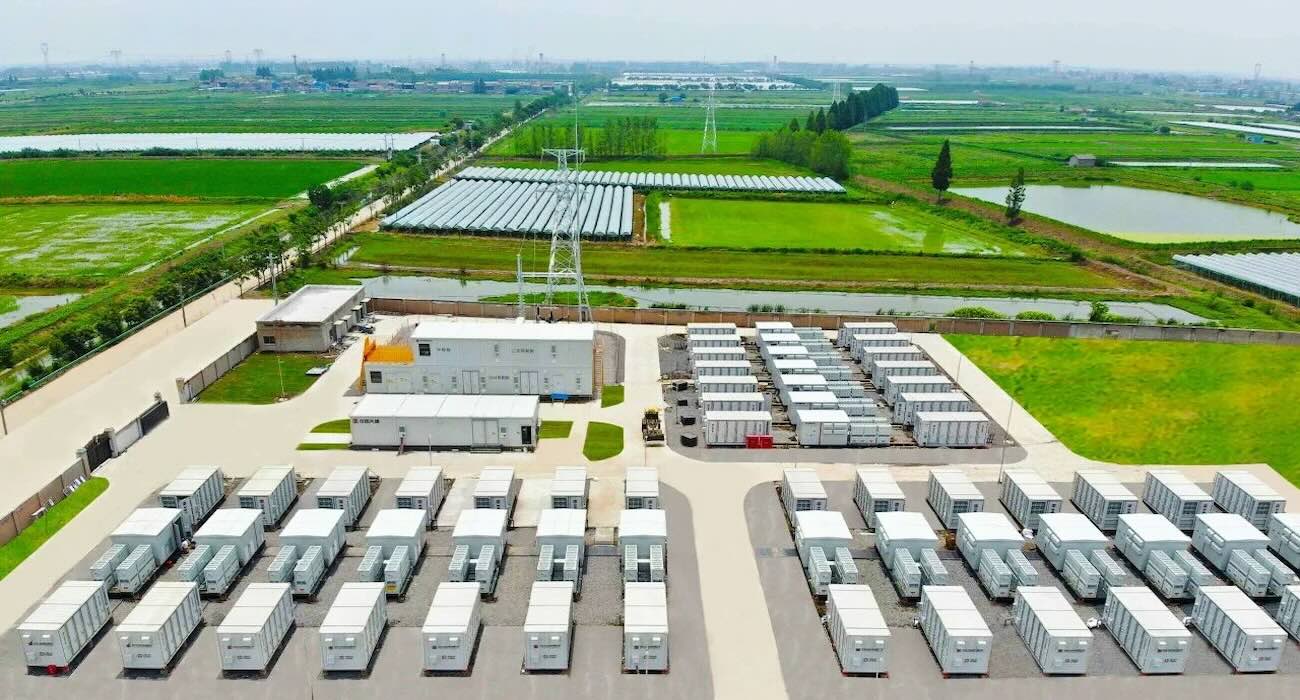
Sodium-ion batteries providing large-scale energy storage in China – CREDIT: Datang power company / HiNa Battery

A new study shows that a low-cost sodium-ion battery currently used in cars and large-scale energy storage systems in China matches most performance parameters and production quality found in Tesla’s lithium-ion batteries.

Since sodium is much more abundant and widely available than lithium, using it for batteries could cut raw material costs for manufacturers and reduce supply chain risks that surround critical minerals.

Conducted by a German university, the research published on May 28 in the Cell Press journal Physical Science, looked at the battery designed by Hina, a spin-off company of the Chinese Academy of Sciences that has partnered with automakers like JAC to provide EV batteries.

It shows that “once the sodium-ion (or Na-ion) battery is tweaked to charge more effectively at low temperatures and function better at high energy densities, it could provide a cost-effective alternative for future electric vehicle batteries”.

“The combination of good uniformity, high power capability, and strong low‑temperature performance makes these cells attractive for stationary storage, grid services, and shorter‑range or commercial vehicles where potential lower cost and resource availability matter more than maximum driving range,” said Moritz Schütte, a battery researcher at RWTH Aachen University in Germany.

To assess how HiNa batteries compare to more advanced Tesla batteries, Schütte’s team used a non-destructive technique called impedance spectroscopy to measure the uniformity of 120 sodium-ion battery cells. Next, to map out the power and energy performances of individual cells under real-life conditions, the team tested the batteries at varying currents and at temperatures from −20 °C to 45 °C. They also used X-rays to see the battery’s internal structure, then opened up the cells to measure their electrode dimensions, compositions, and microstructures.

They found that the battery uses a tabless (design), a double-aluminum current collector design that reduces resistance and ensures a uniform temperature distribution—and also mirrors the current design of Tesla batteries.

“We were positively surprised by how uniform the cells are,” says Schütte.

However, the sodium-ion battery has some limitations when it comes to energy density and charging at low temperatures. “The high‑power performance was better than one might expect from an early commercial sodium‑ion product,” says Schütte.

“For applications that require frequent charging at low ambient temperatures, appropriate thermal management or operating strategies will be important because low-temperature charging remains a clear weakness.”

The researchers also found unexpectedly high, unevenly distributed levels of copper in certain cathode regions of the battery, which “raises interesting questions about its role in performance and aging,” said Schütte.

“It will be exciting to see future sodium-ion technologies that are free of nickel and copper, as well, while achieving competitive energy density.”

Sodium-ion batteries also perform well under load at low temperatures, making them an appealing option for both stationary power storage and mobile applications in cold climates.

“However, today’s commercial sodium-ion cells generally have lower energy density than the best lithium-ion cells, and the technology is less mature overall,” said Schütte.

Next, the authors plan to better understand and improve upon the battery’s charging capabilities at low temperatures so that they can charge more safely and efficiently below 0°C. Further research should also focus on optimizing the materials used to make sodium-ion batteries, added Schütte.

“Advances in hard‑carbon anodes and electrolyte formulations may be especially promising,” he said.This work was supported by Germany’s Federal Ministry of Research, Technology, and Space and the Federal Ministry for Economic Affairs and Energy. Batteries That Use Sodium Instead of Lithium Could Be Low-Cost Rival to Tesla’s
Read More........

Samsung Strikes Deal with Workers for Profit Sharing in Company's Trillion Dollar Slice of the AI Pie

Samsung Electronics Executive Vice President Yeo Myung-gu, left, and Samsung Electronics labor unions leader Choi Seung-ho sign a wage agreement – credit, Samsung, released

Following eye-watering Q1 performance, some 48,000 of Samsung’s semiconductor division workers are set to receive a new profit-sharing-style bonus structure that will give a bigger slice of the AI pie to those making baking it.

Samsung’s compensation package was among the country’s most generous, as the tech giant accounts for a staggering 16% of national GDP. But after last month’s Q1 revenues rose over 800%, exceeding the entirety of fiscal year 2025, 40% of Samsung’s South Korea-based staff were poised to go on strike for better terms.

The issue was resolved quickly and a preliminary agreement was reached between Samsung’s largest labor union and the company which saw the staff return to work Monday morning, and the company’s shares surge 7%.

Roughly 75% of the 62,000 unionized workers backed the preliminary deal that would see an end to the cap on bonuses of 50% of annual pay, and in its place the commitment to allocate 10.5% of operating profits from its semiconductor division to worker bonuses.

Well, the semiconductor division accounted for 94% of total operating profit in the quarter, amounting to $35.8 billion, 10.5% of which divided 48,000 striking workers would equate to around $78,000 for just this quarter alone. Multiplied by 4, a worker’s slice of the AI boom would amount to $312,000.

Samsung is the country’s largest company at over $1 trillion in market cap, and it’s also the largest semiconductor manufacturer. The standoff came 8 months after the second-largest semiconductor producer, SK Hynix, improved its own bonus terms to its employees.

“The semiconductor industry is now facing a war to secure global talent,” Samsung’s union said in a statement last month. “SK Hynix has already revised its compensation structure to retain talent, while foreign companies are luring our engineers with exceptional offers.”

Samsung and SK Hynix are direct beneficiaries of the global AI boom (or bubble, as some might say), as the wafer-thin processors are needed to supply the computing power to run the AI tools which can be found all throughout our society from E-commerce to hospitals to the front lines of the war in Ukraine.

The strike threatened to so thoroughly derail global semiconductor production that the Korean Prime Minister Kim Min-seok made mention of it on Sunday.

“Any disruption to Samsung’s semiconductor production would go far beyond losses for a single corporate group, leaving deep scars across the national economy,” said the Prime Minister, whose government actually helped step in and mediate the deal.“The agreement came later than expected,” Samsung said in a Wednesday statement. “We will work to build a more mature and constructive labor management relationship so that such a situation does not happen again.” Samsung Strikes Deal with Workers for Profit Sharing in Company's Trillion Dollar Slice of the AI Pie
Read More........

Telstra and Ericsson team up to target 6G


Posted by Harry Baldock | News: The agreement spans various aspects of 6G research, including trips to both parties’ research centres

Telstra and Ericsson have signed a letter of intent to collaborate on 6G research.

The agreement will see the companies collaborate on the research, standards development, and real-world testing of 6G technology,

It also includes mutual site visitations, with Telstra engineers visiting Ericsson’s testbed in Sweden, and Ericsson staff travelling to Telstra’s Innovation Centre on the Gold Coast.

Further details on the partnership were sparse, but both partners emphasised the role AI had to play in making 6G networks more intelligent and more customisable for customers. This feature is, in fact, a key element of Telstra’s Connected Future 30 strategy, which aims to allow customers to purchase configurable connectivity services at individual prices.

“Mobile connectivity has been one of the most powerful economic engines of modern Australia. As the first G which is AI-native, 6G will be the most intelligent network yet – capable of advanced network connectivity, and new Network as a Product innovations such as the ability to sense the environment around the network. The latter opens the potential for new use cases for public safety, agriculture, weather detection and more,” said Shailin Sehgal, Telstra Group Executive of Global Networks & Technology.

“We are on a clear and exciting trajectory – from 5G Standalone today, to AI-powered 5G and autonomous networks, towards AI-native 6G that is meeting the evolving and future business needs,” added Erik Ekudden, Ericsson Chief Technology Officer. “6G will redefine what a network fundamentally is – not just an AI-native technology platform, but a platform that senses, adapts and orchestrates resources to deliver outcomes for enterprises and society at scale; simply an intelligent fabric.”

This type of partnership is largely to be expected, with Ericsson having been Telstra’s primary RAN partner for many years. The companies made similar agreements during the early days of the 5G era, though these were often based around delivering greater speeds.Today, Ericsson and Telstra’s focus has increasingly shifted away from pure speeds and towards the benefits of AI integration and network optimisation. It seems likely that their initial joint research on 6G will follow that same path. Telstra and Ericsson team up to target 6G - Total Telecom
Read More........

Data centre to be built near planned Polish nuclear power plant

Visualisation of the Baltic Data Centre Campus in Choczewo (Image: WBS Power)

Renewable energy developer WBS Power has announced plans for a 3.2 GW data centre campus in the municipality of Choczewo in northern Poland's Pomerania region. It says the nuclear power plant planned to be built nearby will help provide a stable power supply.

Preparations for the project - named the Baltic Data Centre Campus - have taken several months, the company said, and included the development of the investment concept, the selection of an optimal location and the securing of suitable plot for the development. "The chosen site allows the project to scale flexibly across different technological configurations while ensuring access to sufficient power sources," it added.

WBS Power is now moving into the next phase of the project. The campus will be built in four phases, each with a planned capacity of 800 MW. Each phase will include: dedicated energy infrastructure for AI workloads; integration with renewable energy sources and battery energy storage systems; solutions meeting the highest ESG, energy efficiency and energy security standards; and platforms designed to support cooperation with global hyperscalers and cloud providers.

Preparatory work for all four phases is expected to be completed by the end of 2027, with the first data centre planned to become operational around 2028–2029.

The company said it has already secured grid connection conditions for the full 3.2 GW capacity.

"This will be the largest project of its kind in Poland and one of the largest in Europe," said WBS Power CEO Maciej Marcjanik. "The rapid development of AI is driving demand for hyperscale data centres supported by advanced infrastructure and reliable access to large volumes of power. The integration of renewable energy and energy storage with digital infrastructure will be a key pillar of competitiveness for next-generation hyperscale projects."

The company said power supplied to the Baltic Data Centre Campus "will come from conventional sources complemented by renewable energy and, in the longer term, also nuclear power".

In November 2022, the then Polish government selected Westinghouse AP1000 reactor technology for the construction of the country's first nuclear power plant at the Lubiatowo-Kopalino site in Choczewo municipality. The aim is for Poland's first AP1000 reactor to enter commercial operation in 2033.

"The digital revolution requires infrastructure on an entirely new scale," said WBS Power CFO Hubert Bojdo. "We selected the location for the Baltic Data Centre Campus very carefully, ensuring access to large power capacities, a diversified energy mix already in place today, and the long-term prospect of stable supply supported by future nuclear generation." Data centre to be built near planned Polish nuclear power plant
Read More........

One street tree can boost Sydney house prices by $30,000 – or cost $70,000 if it’s too close: new study

A single street tree can potentially increase an average Sydney house price by A$30,000, our new research shows. This echoes past research showing street trees not only help boost property prices, but offer other benefits, from improved scenery and privacy to increased shade.

But there’s a catch. Our analysis, published in the international Cities journal, also found that if a street tree is too close, it can actually reduce the selling price by more than $70,000.

Our study looked at more than 1,500 house sales in the City of Sydney from 2021 to 2024, then matched those with detailed council data on nearly 50,000 public trees.

After accounting for other, better known price factors – number of bedrooms, bathrooms, car parking, land size, proximity to the CBD, transport, schools and more – we found trees can be associated with higher house prices. But that price boost only occurred when the trees were about 10–20 metres from a home, such as across the street or near the frontage.

In contrast, trees planted too close – within a 10m radius from the centre of the property – were actually associated with lower sale prices.

This matters beyond Sydney. Every Australian capital city has set tree-planting goals, such as the City of Sydney’s target for 23% tree canopy cover in 2030 and 27% in 2050. Yet many will struggle to meet them, with some facing resistance from residents. Our research explains why tree placement will be crucial if we ever want to meet those targets.

What’s new about this research

Past studies in Perth, as well as several cities in the United States and Canada, have consistently shown trees tend to increase property values.

But what we didn’t know before now was where the benefits stop and the costs begin.

Our study identifies a clear “not in my backyard” (NIMBY) boundary, of around 10m, within which street trees’ economic value turns negative.

That finding is important, because that’s when resident resistance to street trees is likely to be strongest.

This is a first study of its kind to quantify the economic value of public trees by taking advantage of using individual tree-level data managed by the City of Sydney from 2023.

It allowed us to measure tree effects at the finest possible distance from the centre of property: under 10m, 10–20m, 20–50m, 50–100m, and beyond 100m. This is something previous studies could not do when relying on satellite or street imagery.

How tree location affects price

We controlled for all the usual factors that influence house prices, including property features and location amenities. This meant we could measure the impact of trees after accounting for everything else.

We found that distance matters. In dollar terms, one additional tree within 10m of the centre of a property reduced its value by 2.96%. An average home sold in the City of Sydney from 2021 to 2024 was worth $2,613,000 – so that reduction worked out to be a $70,290 cost.

Given the average lot size of 176m² in the City of Sydney, the distance from the centre of an average property to its boundary is typically about 8m.

But if a tree was located 10-20 metres away, it increased the value by about 1.16%, worth an average of $30,310.

If the tree was further than 20 metres away, we found no price difference.
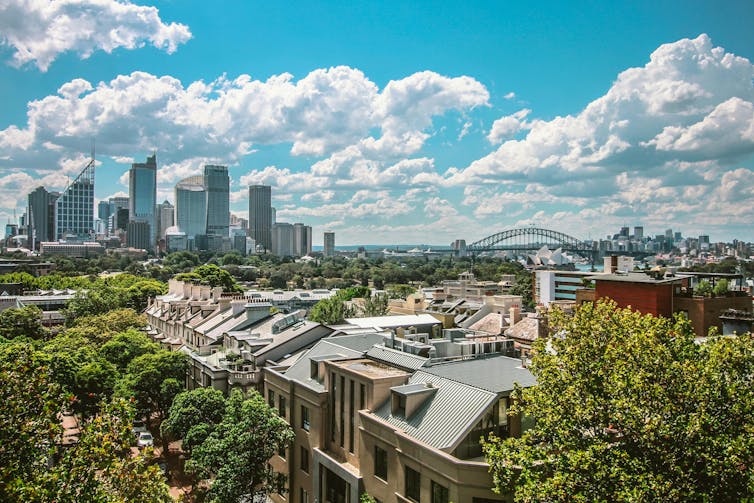
The new study identified a clear ‘not in my backyard’ (NIMBY) boundary, within which street trees’ can actually hit house prices. Belle Co/Pexels, CC BY

This show a clear proximity effect. Trees being too close to a house are a cost risk; trees at a moderate distance are a valued feature; and trees further away are neutral and just part of the neighbourhood amenity.

Our study used more precise data than ever before to calculate the distance between street trees and the centre of each property.

But future research could take this further by measuring the distance from each tree to the house. It could also incorporate resident surveys to better understand how people perceive and value trees near their homes.

Why trees being too close matters
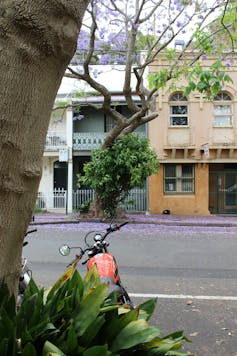
Street trees like these are much loved – but can have hidden downsides, such as damage from roots or branches. Jo Quinn/Unsplash, CC BY

It makes sense that people may see trees close to home as a financial risk.

Trees can cause structural damage to buildings and infrastructure, increase fire hazards, and safety concerns from falling branches.

Rather than dismissing residents’ concerns as NIMBYism, they should be seen as rational market responses to maintenance risks, structural damage, and amenity loss.

Planting plans need resident support

Every Australian capital city has adopted “urban forest” or tree planting strategies, many of them aiming to hit 30-40% canopy cover in coming decades. For example, the City of Melbourne’s target is 40% canopy cover by 2040, while Brisbane City Council is aiming for 50% shade for residential footpaths and bikeways by 2031.

However, there are doubts about whether many of those targets will be met.

There are good reasons for governments to invest in urban trees, as they can protect us from extreme heat and help as a response to climate change. But resistance from homeowners can undermine these policies.

Our research shows residents are more likely to welcome street trees if they’re planted not too close, and not too far, from their homes.

* Thanks to the coauthors of this paper, Qiulin Ke and Bin Chi from University College London.The Conversation

Song Shi, Associate Professor, Property Economics, University of Technology Sydney

This article is republished from The Conversation under a Creative Commons license. Read the original article.

Read More........

Airtel and partners pump $1bn into Nxtra data centres


The transaction is designed to accelerate Nxtra’s buildout of large-scale and edge facilities to serve enterprises, hyperscalers, and government customers across India.

Bharti Airtel has secured a $1 billion equity infusion for its data centre arm Nxtra Data from a consortium led by Alpha Wave Global, with participation from The Carlyle Group, Anchorage Capital and Airtel itself, the company said.

Under the terms disclosed, Alpha Wave Global will contribute $435 million, Carlyle $240 million, Anchorage Capital $35 million, with Airtel investing the remainder. Final investor stakes will be subject to post-closing adjustments and customary approvals.

According to reporting, the deal will see Nxtra valued at roughly $3.1 billion, with Airtel remaining the controlling shareholder.

The capital will be applied primarily to capacity expansion, with Nxtra planning to grow from about 300 MW today to a targeted 1 GW, aiming t control roughly a quarter of India’s data centre market.

Headquartered in New Delhi, Nxtra already operates 14 major data centres and more than 120 edge facilities across India, with recent openings in Pune and active development of AI-ready campuses in Chennai, Mumbai, and Kolkata.As always, the deal is subject to typical regulatory approvals. Airtel and partners pump $1bn into Nxtra data centres - Total Telecom:
Read More........

A new ad campaign is pushing Australians to use less petrol. Has this happened before?

David Lee, UNSW Sydney

A new federal government advertising campaign is prompting Australians to reduce their fuel consumption during the current global oil crisis.

It asks Australians to consider using their car less and offers tips to boost fuel efficiency, such as “driving smoothly” and “unloading excess weight”.

It comes soon after Prime Minister Anthony Albanese’s whirlwind trip to Singapore, which makes up more than a quarter of Australia’s refined fuel imports, including more than half of our petrol, 22% of jet fuel and 15% of diesel.

However, the launch of the campaign shows the government is concerned to some degree about fuel supplies in Australia.

The federal government’s new campaign is titled ‘every little bit helps’.

So, why is this happening, are there historic precedents in Australia and what are other countries doing at the moment?

Why the concerns about fuel supply?

The campaign comes two weeks after national cabinet endorsed a four-stage National Fuel Security Plan – which mentions rationing as a final step – as global fuel supplies continue to fluctuate due to the ongoing conflict in the Middle East.

The Strait of Hormuz is a key factor – it was tentatively re-opened after the two-week ceasefire was agreed to last week. Since then, Iran has blocked ships from passing through the strait after Israel launched a wave of strikes in Lebanon. Then on Monday, US President Donald Trump threatened to block it via the US Navy.

Even before the ceasefire, the Australian government said it had secured supplies into May and that rationing would not be needed.

But it may be necessary if there’s no lasting peace in the Middle East.

How Asian countries are responding

Asian economies are particularly dependent on oil and gas supplies from the Middle East. According to the US Energy Information Administration, 84% of crude oil shipped through the Strait of Hormuz in 2024 was bound for Asia.

Understandably, several countries have already introduced rationing or other measures:

Countries in Europe and Africa have also implemented rationing but Asian countries have been particularly affected.

Australia’s experience with fuel conservation

Australia has rationed petrol in earlier emergencies.

When the second world war broke out in September 1939, Australia only had enough petrol to last three months of normal consumption.

At first, the wartime government led by Robert Menzies encouraged Australians voluntarily to reduce their petrol consumption and promoted conversion to vehicles powered by gas from coal.

But as the fighting intensified, oil tankers which were on their way to Australia turned around because of the war, and supplies dwindled.

In June 1940, cabinet aimed to reduce consumption by 50%, a goal later reduced to 30%.

Under national security regulations, civilians were issued ration coupons limiting how much fuel a person could purchase. Non-essential driving was restricted. Public transport and essential industries were prioritised and diesel was tightly controlled for military and agricultural operations.

Even in wartime, rationing was unpopular. The issue contributed to Menzies’s near-defeat at the September 1940 election. His government was replaced the following year by a Labor government.

The end of the war did not automatically lead to the end of petrol rationing.

This was because Australia had to use US dollars to purchase most of its petrol, which were in short supply throughout the British Commonwealth. Consequently, the Chifley government continued with rationing to conserve dollars.

In June 1949, the High Court decided rationing was a matter for states – not the Commonwealth.

Australia’s next serious oil crisis came in the 1970s.

In 1973, the Organisation of Arab Petroleum Exporting Countries (OAPEC) reduced oil production and suspended deliveries to some western countries.

Like many other countries, Australia experienced “stagflation” – higher unemployment and inflation – for about a decade.

But Australia was shielded from the full reverberations because it reached about 70% sufficiency in oil through the discovery of oil and natural gas in Bass Strait.

Only in 1979, after a second oil price spike and a strike at the Caltex Refinery in Kurnell, New South Wales, was petrol rationing introduced through an “odd-even” number plate method.

Further action on fuel supply

After the 1970s oil crisis, the Hawke government sponsored legislation to allow the Governor-General to declare a formal national liquid fuel emergency.

The Liquid Fuel Emergency Act may be invoked as a last resort when a fuel shortage has national implications.

Under the act, the minister for climate change and energy can direct refineries, importers and distributors to adjust production and manage stocks.

The legislation also allows the government to implement two levels of rationing: retail and bulk.

Retail rationing involves service stations limiting how much individual motorists can buy at a time while also exempting essential users.

Bulk rationing targets large-scale distributors and wholesale customers, such as mining companies and large transport fleets.

Historic footage shows how Australians coped with fuel conservation in the past.

A reprieve, for now

Albanese’s National Fuel Security Plan mentions rationing as a final step.

Triggers include shortages threatening the operation of critical infrastructure, stockpiles being dangerously depleted and if the economy is at risk of stalling.

The wobbly ceasefire in the Middle East means Australians have been granted a reprieve. But rationing remains a possibility if hostilities resume.The Conversation

David Lee, Associate Professor of History, UNSW Sydney

This article is republished from The Conversation under a Creative Commons license. Read the original article.

Read More........