Birth rates are declining in most of the world, including Australia. Here’s why that really matters

Liz Allen, Australian National University

Birth rates have been declining worldwide since the peak of the post-second world war baby boom. Birth rates have now reached below replacement in most of the world, including Australia. Put simply, populations on average aren’t replacing themselves.

Everyone from Elon Musk to Italian Prime Minister Giorgia Meloni, to the pope have opinions on declining total fertility (or birth) rates – the average number of births per woman.

Overpopulation has dominated popular discourse since the 1960s. While fears of overpopulation remain, especially tied to immigration, concerns have shifted to depopulation and the related economic and national security issues.

Overpopulation fears to depopulation woes

In his 1968 book The Population Bomb, Paul Ehrlich warned the 1970s would bring “people, people, people, people” and an overpopulation “cancer” resulting in famine and war. Human extinction was imminent, we were warned.

Overpopulation-associated human extinction has not come to be.

The global total fertility rate has more than halved since 1950. Average birth rates for OECD countries now sit at 1.46 births per woman, well below the 2.1 required for generational replacement.

World population decline is projected by the mid-2080s. China is now in its fourth year of population decline. South Korea has been declining since 2019 with its near-global record low birth rates. Germany has seen deaths outnumber births since 1972. Japan, Greece, Italy, Cuba and Thailand are also among those in the depopulation club.

Without immigration, the United Kingdom would also see population decline, with deaths outnumbering births. Australia is about a generation away from the same fate. Immigration controls have seen depopulation in Canada.

Birth rates a solution to the ageing ‘problem’

Enormous advancements since the 1950s, mostly in health and medical technologies like immunisation, mean humans are living longer. We’re also having fewer children, and as a result populations are ageing.

An ageing population is a mark of success and human ingenuity, but economic systems tend to view ageing societies as problematic.

Workers and working-aged people are essential to maintain a healthy economy. Individual income taxpayers are the top source of federal government revenue in Australia. Too few people of working age replacing those retiring can seriously undermine economic wellbeing, forcing governments to do more service provision with less financial resources.

Below-replacement fertility and its implications for government bottom lines have resulted in Australian politicians calling on Australians to have more babies. “Have one for mum, one for dad, and one for the country”, treasurer Peter Costello famously said in 2004.

In 2020, former prime minister Tony Abbott suggested the wrong kind of women were having children, calling on “middle class” women to have more. Talking the budget, treasurer Jim Chalmers in 2024 said it would be “better if birth rates were higher”.

Human catastrophe of low birth rates

People are increasingly saying the choice to have children is constrained by external factors. Worldwide, around one-in-five surveyed by the United Nations said fears about the future would or has resulted in them having fewer children than they wanted.

Housing affordability, economic stability, gender inequality and climate change present insurmountable barriers for having a much-wanted family.

The lack of choice to have children in below-replacement regions, I’d argue is indeed a human catastrophe. How is it that we’ve allowed society to become so hostile that children are out of the question for so many who want them?

The intergenerational bargain is well and truly corrupted.

We are confronted with the tough question of who will care for us with the children gone.

Can a human catastrophe be avoided?

The burden of having a family falls on working-aged people, especially women.

A baby bonus or one-off payment is unlikely to change people’s minds and increase the total fertility rate; such payments merely change timing. Instead, increasing total fertility rates requires a comprehensive suite of measures from a policy perspective.

Tackling the big four big domains of housing, the economy, gender and climate encompass issues such as

  • secure, affordable and appropriate housing
  • employment and income security
  • accessible childcare
  • social and workplace gender equality
  • climate change action.

People of childbearing age aren’t being hedonistic when making family and fertility decisions. They’re not thinking about themselves, they’re actually thinking about the future world and weighing what that might look like for prospective children.

Loss of hope among people of childbearing age, including fears of being left behind, contribute to overall concerns about an insecure future.

Not only is the human catastrophe of low births rates reflecting more widespread concerns, such as insecurity, it could also be undermining social cohesion.

Rather than an exploding bomb of overpopulation, the world faces an economic and social implosion due to lacking substantive supports necessary to help raise much-wanted children.

Surely it’s beyond time we ask people what they actually need – and give it to them.The Conversation

Liz Allen, Demographer, POLIS Centre for Social Policy Research, Australian National University

This article is republished from The Conversation under a Creative Commons license. Read the original article.

Read More........

Asian Boxing C’ships: Vishvanath Suresh stuns World No. 1; Ankushita, Narender advance to semis

Photo credit: Asian Boxing

Ulaanbaatar (Mongolia), (IANS) Havaldar Vishvanath Suresh delivered a remarkable performance in Indian boxing, defeating the reigning World Champion and World No. 1 Sanzhar Tashkenbay (KAZ) with a decisive 5-0 win. This victory propelled him into the semifinals of the Asian Boxing Championships 2026 in Ulaanbaatar, Mongolia.

Vishvanath (Men’s 50 kg – Flyweight) has swiftly established himself as one of India’s most promising boxing talents, effortlessly progressing from a strong youth career to the top echelons of the senior ranks. Originating from Chennai, Tamil Nadu, his ascent signifies a notable milestone for boxing talent emerging from the region.

Heading into 2026, Vishvanath remains the reigning national champion after winning gold at the Elite Men’s National Boxing Championships 2026. In the final, he decisively defeated Rishi Singh with a unanimous 5-0 decision, cementing his status as India’s top boxer in the 50 kg category.

His rise has been supported by an outstanding youth career. Vishvanath initially gained international recognition with a gold medal at the IBA Youth Men's World Boxing Championships 2022, and then secured another gold at the ASBC Asian Youth Boxing Championships 2022, demonstrating his dominance on both world and continental stages.

As he advanced in his career, Vishvanath consistently impressed against tougher and more seasoned opponents. He earned a bronze medal at the 2024 Asian U-22 Boxing Championships and later won another gold medal at the BFI Federation Cup 2025 in Chennai.

Vishwanath is technically sharp and tactically astute, renowned for his speed, agility, and ring intelligence. His skill in controlling distance, along with his quick, precise combinations, establishes him as a formidable figure in the fast-paced flyweight division.

After his national victory, he was selected to compete at the 2026 Asian Boxing Championships and played a vital role in India’s efforts. During the tournament in Ulaanbaatar, he caused a significant upset by defeating the reigning world champion and World No. 1, securing his place in the semifinals.

Vishvanath is developing into a strong international medal contender, thanks to training at the Army Sports Institute, with support from the Boxing Federation of India.

Vishvanath Suresh, who began as a decorated youth champion and rose to India’s top-ranked flyweight, demonstrates a trajectory of consistent growth, rapid advancement, and the potential for continued international success.

In the women’s 65kg category, Ankushita Boro secured a decisive 4-1 victory against Laura Yessenkeldi (KAZ), demonstrating poise and dominance to reach the semifinals. She will now compete against Chinese Taipei's Nien-Chin Chen, the 2025 World Boxing Finals gold medalist and Paris 2024 Olympic bronze medalist, in an important semifinal match.

In the men’s division, Narender maintained his momentum with a 5-0 win against Orkhan Aghayev (UAE), moving into the semifinals. He will next face China’s Bayikewuzi Danabieke, a bronze medalist at both the 2022 Asian Games and the 2025 World Championships.

Meanwhile, in the men’s 65kg category, Aditya was eliminated following a 0-5 defeat to Uzbekistan’s Abdulloh Madaminov in the quarterfinals.India’s campaign at the Asian Boxing Championships 2026 continues to gain momentum in Ulaanbaatar, with standout performances and several semifinal appearances. Asian Boxing C’ships: Vishvanath Suresh stuns World No. 1; Ankushita, Narender advance to semis | MorungExpress | morungexpress.comt
Read More........

Amari Colombo wins Sri Lanka’s Leading Business Hotel 2025 at World Travel Awards


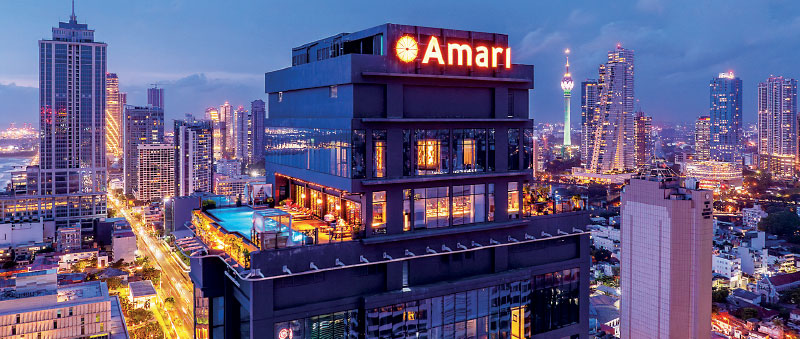
Amari Colombo has been honoured as Sri Lanka’s Leading Business Hotel 2025 at the World Travel Awards (WTA), Asia and Oceania Gala Ceremony held in Hong Kong in October 2025. This accolade recognises the hotel’s exceptional standards of service, contemporary design, and its position as a benchmark for business hospitality in Sri Lanka.

The glittering ceremony, held in partnership with Hong Kong International Airport and InterContinental Grand Stanford Hong Kong, brought together the region’s most distinguished travel and hospitality brands to celebrate excellence across Asia and Oceania.

“We are truly delighted and honoured to be recognised as Sri Lanka’s Leading Business Hotel,” said Amari Colombo General Manager Monty Ariyaratne. “This award is a testament to our team’s unwavering commitment to delivering warm, personalised service and creating an inspiring environment for both business and leisure travellers. We share this achievement with our valued guests and dedicated team members who make the Amari experience so special.”

Amari Colombo, part of ONYX Hospitality Group, embodies modern elegance infused with the warmth of Thai-inspired service. Ideally located in the heart of Colombo’s vibrant business district, the hotel caters to discerning travellers with world-class amenities, stylish meeting spaces, and exceptional dining venues—all designed to foster connection, productivity, and comfort.

The World Travel Awards, established in 1993, are globally recognised as the ultimate hallmark of industry excellence, celebrating the best in travel, tourism, and hospitality. The Asia and Oceania Gala Ceremony 2025 showcased leading lights of the region, including destinations, resorts, hotels, and tourism boards that continue to raise the standard of global travel.

World Travel Awards Founder Graham Cooke remarked: “Tonight we have celebrated the leading lights of travel across Asia and Oceania. Our winners represent the very best in tourism excellence, and I congratulate each and every one for raising the benchmark of achievement across this remarkable region.” Amari Colombo wins Sri Lanka’s Leading Business Hotel 2025 at World Travel Awards | Daily FT
Read More........

Allianz world’s No. 1 insurance brand for 7th consecutive year

Allianz has once again been recognised as the World’s No. 1 insurance brand in the Interbrand Best Global Brands 2025 ranking, marking its seventh consecutive year at the top.

This year, Allianz achieved its highest-ever brand value and strongest growth in history, increasing by 20% from $ 23.5 billion to $ 28.2 billion, and rising two places to No. 27 globally.

This achievement reflects Allianz’s strong financial performance and the consistent execution of its global brand strategy, reinforcing its reputation for trust, innovation, and reliability worldwide. It is also a testament to the dedication and collective effort of every Allianz employee across the globe.

Allianz Insurance Lanka Ltd., is a fully owned subsidiary of Allianz SE, a global financial services provider specialising in insurance and asset management, headquartered in Munich, Germany. Allianz world’s No. 1 insurance brand for 7th consecutive year | Daily FT
Read More........

World Bank says SL recovery remarkable, among fastest worldwide

 
  • Latest World Bank public finances diagnostic says SL made remarkable recovery
  • Stabilisation sharper and faster than 123 countries since 1980
  • Says Sri Lanka can move to a more balanced fiscal policy
  • Points to fiscal space to grow revenue to support growth, equity and fairness
  • Challenge is to get better results from every rupee collected and spent
The World Bank yesterday said Sri Lanka has made remarkable strides in stabilising its economy, undertaking one of the largest fiscal adjustments in its history, equal to nearly 8% of GDP over three years, and doing it faster than most countries.

In a statement announcing the release of its latest diagnostic title ‘Sri Lanka Public Finance Review: Towards a Balanced Fiscal Adjustment’, the World Bank said that this adjustment was also sharper and faster by international standards when compared with more than 330 similar efforts in 123 countries worldwide since 1980.

The review, a core World Bank diagnostic conducted every five years in member countries, concludes that Sri Lanka is well-positioned to focus on making public finances work better for all Sri Lankans.

“While fiscal measures helped restore stability, they also put pressure on households through higher indirect taxes and reduced real public-sector wages, and slowed growth due to lower public investment,” the statement said. “The next phase of fiscal calibration should prioritise raising revenues in ways that support growth and fairness, and improve the quality of government spending.”

The diagnostic review highlights that Sri Lanka could increase revenue by up to 2% by 2029 without undermining growth or equity. It also points out that better targeting and management of public spending can deliver improved outcomes within current budget limits.

The review recommends raising revenue more fairly and efficiently by shifting toward direct taxes, such as a minimum corporate income tax, and digitising tax administration to make paying taxes easier and more transparent.

It also recommends spending smarter, not more or less. The report stresses that it is not feasible to further cut or increase overall spending, but the best gains will come from using existing funds more efficiently to get better results.

This includes improving public sector wage management by protecting essential frontline services, simplifying pay structures, and modernising systems through which public sector workers are paid. It also entails reprioritising capital investments to close infrastructure gaps, completing ongoing projects faster, and strengthening project selection, management and maintenance.

Enhancing social protection by better targeting assistance, expanding the social registry, and moving from universal subsidies to more focused support for those who need it most, is another priority.

“Now that Sri Lanka has largely stabilised its economy, the challenge is to get better results from every rupee collected and spent,” said World Bank Division Director for Maldives, Nepal and Sri Lanka David Sislen. “This means modernising tax administration, focusing on direct taxes, and making sure public spending is both efficient and fair, especially for the most vulnerable,” he added. World Bank says SL recovery remarkable, among fastest worldwide | Daily FT
Read More........

Romania Hits 94% Recycling After Launching Largest Return Plan in the World

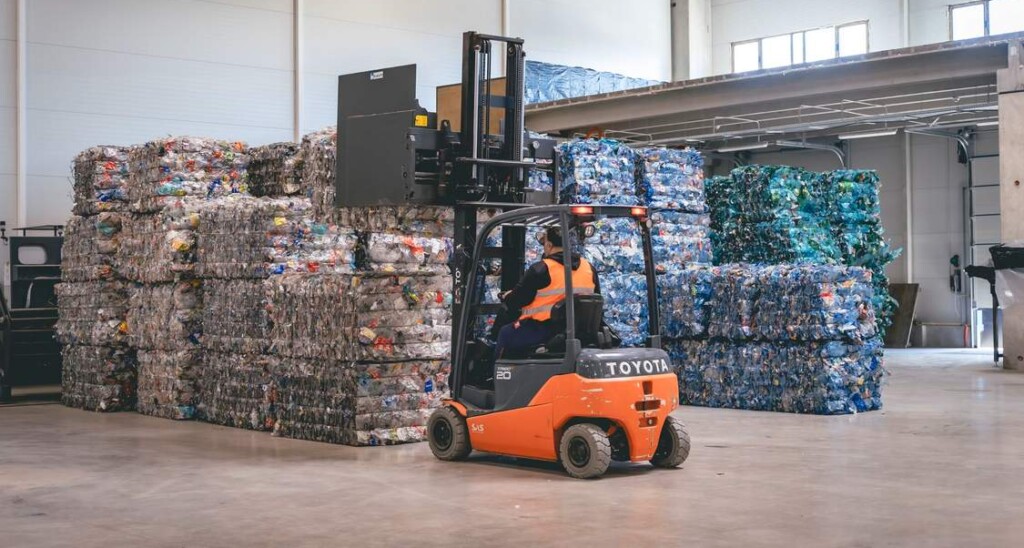
A recycling depot operated by RetuRO, Romania’s plastic return system organizer – credit Eduard Voicu / RetuRO

If you had to guess where in the EU you would find the most sophisticated and effective recycling system for beverage containers, how long before you’d say Romania?

Beating out Scandinavia, Belgium, Germany, and the Netherlands, the Romanian government’s private-public partnership with the logistics firm RetuRO, has led to an incredible 94% collection rate of plastic, glass, and metal containers in just two years.

The method is simple, but a RetuRO executive said that its secret to success comes from the fact that there was no existing recycling system already working that had to be overwritten: it was a fresh idea.

Fresh, but not new. Each retailer that sells products which come in recyclable containers are given a tax credit for the cost of installing return infrastructure like reverse vending machines and other installations. Then, the customer, when they buy each item, are charged a deposit that is returned with a few cents extra when they return the items.

With all the extras, one Transylvanian woman was able to buy food for her cats for the whole week.

“We are the largest fully integrated deposit return system globally,” said Gemma Webb, the chief executive of RetuRO, the company running the system in a public-private partnership.

Even though product return rates are as high as 94% in some months, those products as a proportion of the country’s total recyclable waste remains small; less than 15%. As far as that is from seeing the recyclability of all waste, it’s still awfully far from where the country has come.

Between 2011 and 2021, recycling rates for plastic, glass, and metal beverage containers hovered around 11-12%, and rarely changed. Only 1% of all materials recycled or thrown away eventually made it back into the economy, according to the Guardian.

Romanians returned some seven-and-a-half billion beverage containers between November 2023 and the end of September 2025, 4 billion of which were polyethylene terephthalate, the ubiquitous “PET” plastic that permeates world society. One study found that 90% of surveyed Romanians had used the system at least once.The Guardian reported that the plastic contained in a single PET plastic beverage container can produce 25 more over the materials lifespan if properly recycled. Romania Hits 94% Recycling After Launching Largest Return Plan in the World
Read More........

Yiwu: The world’s largest trading hub

A worker loads rolls of steel plate at a steel market in China's Zhejiang province. via AP -

I had the privilege of travelling to Yiwu City in Zhejiang Province with a delegation from the Caribbean, hosted by China’s Ministry of Foreign Affairs.

What we witnessed was nothing short of breathtaking: the deliberate construction of what China envisions as the largest trading hub in the world – a city that has already earned the title of the "world’s supermarket."

For anyone unfamiliar with Yiwu, think of it as the national showroom of China.

The country is massive, and for foreign businesses, navigating where to start can feel overwhelming. Yiwu solves this by serving as a central starting point: vendors, manufacturers and traders from all over China have permanent setups there.

Once connections are made in Yiwu, those relationships extend into every corner of the country.

From street peddlers to a global marketplace

Yiwu’s rise is a story of grassroots entrepreneurship.

In the late 1970s, poor farmers and traders, forbidden by the state to do business, set up illicit roadside markets to survive.

By 1982, local leaders broke ranks with Beijing and legalised trading under the "Four Allows" policy – allowing farmers to sell, long-distance trafficking, multi-channel competition and the creation of markets.

Fast forward to today, and Yiwu is home to over 75,000 individual booths trading 400,000 products across 40 industries.

It is estimated that nearly 600,000 foreign visitors come annually, with 15,000 foreign traders living permanently in the city.

The numbers behind the "world’s supermarket"

Yiwu’s economy continues to surge. Between January and July 2024, its import and export value hit US$53.1 billion, up 18.1 per cent year-on-year.

Exports reached US$47.0 billion, led by labour-intensive goods like textiles (up 23.5 per cent) and mechanical and electrical products (up 15.6 per cent).

A fashion accessories vendor talks to a customer on the phone at the Yiwu International Trade Market in Yiwu, eastern China's Zhejiang province. AP PHOTO -

Sporting goods spiked by 37.8 per cent, driven by global events like the European Cup and Olympics.

But perhaps more interesting is Yiwu’s pivot from "sell global" to "buy global."

The city is addressing its 1:10 import-to-export imbalance, aiming to push imports to US$14 billion by the end of 2024 and US$42 billion by 2030.

For Caribbean exporters, that means an opening: Yiwu doesn’t just want to sell to the world – it wants to buy from it.

The future: Yiwu’s global digital trade centre

The crown jewel of Yiwu’s evolution is the Yiwu Global Digital Trade Centre (GDTC) – a CNY 8.2 billion project spanning 1.25 million square metres. It is described as a "sixth-generation market," blending physical trade with cutting-edge technologies like AI, blockchain, IoT and 5G.

At its heart is the "digital brain" – a sci-fi inspired hub that integrates product display, business exchanges and data services.

Already, 30,000 Yiwu merchants use AI daily, producing multilingual videos in English, Spanish and Arabic to promote products. Blockchain underpins transaction trust, offering tamper-proof trade records.

Yiwu is also positioning itself financially with Yiwu Pay, a global payment platform partnered with over 400 banks across 100 countries, designed for the small-value, high-volume transactions typical of e-commerce.

Why this matters for the Caribbean

For small businesses in the Caribbean, Yiwu is a game-changer. Unlike most wholesale hubs that demand massive bulk orders, Yiwu vendors often allow minimum order quantities (MOQs) as low as ten-50 pieces.

Add in the logistics advantage – the ability to consolidate products from dozens of suppliers into one shipment – and Caribbean SMEs can now test products and scale without crippling upfront costs.

At the same time, the risks are clear.

China’s growing influence in the Caribbean has sparked debates around trade imbalances and debt dependencies

In 2020, the region held a US$51.2 billion trade deficit with China.

Countries like Suriname already owe over 14 per cent of GDP in debt to China, complicating IMF negotiations.

This means our engagement with Yiwu must be strategic, not passive.

It cannot be about replacing one dependency with another, but about diversifying supply chains and positioning the Caribbean as both a buyer and a seller in this new global ecosystem.

Final thoughts

Walking through Yiwu’s Global Digital Trade Centre felt like looking into the future of commerce.

This is beyond just a marketplace – it’s China’s bid to redefine global trade.

For the Caribbean, the message is clear: Yiwu offers lower sourcing costs, global logistics, and a path to sell into China’s vast consumer market. But we must engage strategically, aware of the geopolitical stakes.

The global trading map is being redrawn – and if the Caribbean wants a seat at the table, it starts here.

Keron Rose is a Caribbean-based digital strategist and digital nomad currently living in Thailand.

He helps entrepreneurs across the region build their digital presence, monetise their platforms and tap into global opportunities.

Through his content and experiences in Asia, Rose shares real-world insights to help the Caribbean think bigger and move smarter in the digital age.Listen to the Digipreneur FM podcast on Apple Podcasts, Spotify, or YouTube. Yiwu: The world’s largest trading hub - Trinidad and Tobago Newsday:
Read More........

India surpasses Europe, US in locomotive production to emerge as world leader


IANS Photo

New Delhi, (IANS): India has emerged as a global leader in railway locomotive manufacturing, achieving a record production of 1,681 locomotives in the financial year 2024-25, according to a Railway Ministry statement issued on Wednesday.

This milestone surpasses the total locomotive production of regions such as Europe, the United States, South America, Africa, and Australia, reaffirming India’s growing dominance in the global railway sector.

"The continuous rise in locomotive production is a direct result of strategic decisions taken to strengthen the Make in India initiative. Between 2004 and 2014, India produced a total of 4,695 locomotives, with a national annual average of 470. In contrast, from 2014 to 2024, locomotive manufacturing witnessed a significant surge, with 9,168 locomotives produced, raising the annual average to approximately 917," the Railways statement said.

Indian Railways' locomotive manufacturing units have achieved a remarkable milestone by producing 1,681 locomotives in various categories during the financial year 2024-25. This marks an increase of 209 locomotives, or 19 per cent, compared to the 1,472 locomotives produced in the previous financial year 2023-24, the statement said.

This record-breaking production is the highest ever for locomotive manufacturing in the country, reflecting the significant achievements of all units in enhancing railway infrastructure and capacity.

The production of 1,681 locomotives during the year comprised 700 manufactured at the Chittaranjan Locomotive Works, 477 produced at Banaras Locomotive Works, 304 made at Patiala Locomotive Works, and 100 locomotives each manufactured at the Madhepura and Marhowrah units located in Bihar.

The majority of the locomotives produced in the country were intended for freight trains. Among the 1,681 locomotives produced in the financial year 2024-25, as many as 1,047 were WAG-9/9H locomotives. These locomotives are a class of heavy-duty, three-phase AC electric locomotives used by Indian Railways for freight operations, known for their high speed and power, and are the only freight-dedicated three-phase AC locomotives in India. They are among the most powerful freight locomotives in India, with the WAG-9H having a higher power rating than the standard WAG-9. The other locomotives include WAG-9 Twin locomotives, of which 148 units were produced during the year, WAP-5 locomotives (2), and WAP-7 locomotives (272).The rest were WAG-12B locomotives, and WDG 4G/6G locomotives, at 100 each and five NRC locomotives. India surpasses Europe, US in locomotive production to emerge as world leader | MorungExpress | morungexpress.com
Read More........