Batteries That Use Sodium Instead of Lithium Could Be Low-Cost Rival to Tesla’s

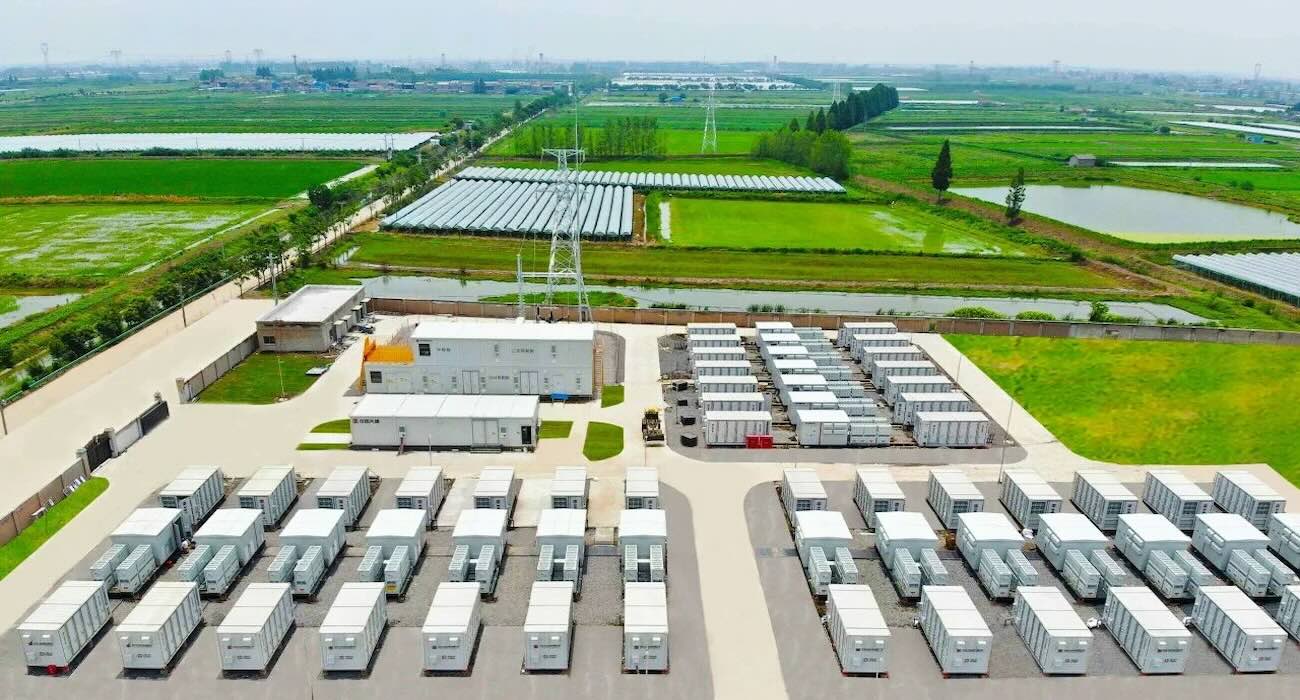
Sodium-ion batteries providing large-scale energy storage in China – CREDIT: Datang power company / HiNa Battery

A new study shows that a low-cost sodium-ion battery currently used in cars and large-scale energy storage systems in China matches most performance parameters and production quality found in Tesla’s lithium-ion batteries.

Since sodium is much more abundant and widely available than lithium, using it for batteries could cut raw material costs for manufacturers and reduce supply chain risks that surround critical minerals.

Conducted by a German university, the research published on May 28 in the Cell Press journal Physical Science, looked at the battery designed by Hina, a spin-off company of the Chinese Academy of Sciences that has partnered with automakers like JAC to provide EV batteries.

It shows that “once the sodium-ion (or Na-ion) battery is tweaked to charge more effectively at low temperatures and function better at high energy densities, it could provide a cost-effective alternative for future electric vehicle batteries”.

“The combination of good uniformity, high power capability, and strong low‑temperature performance makes these cells attractive for stationary storage, grid services, and shorter‑range or commercial vehicles where potential lower cost and resource availability matter more than maximum driving range,” said Moritz Schütte, a battery researcher at RWTH Aachen University in Germany.

To assess how HiNa batteries compare to more advanced Tesla batteries, Schütte’s team used a non-destructive technique called impedance spectroscopy to measure the uniformity of 120 sodium-ion battery cells. Next, to map out the power and energy performances of individual cells under real-life conditions, the team tested the batteries at varying currents and at temperatures from −20 °C to 45 °C. They also used X-rays to see the battery’s internal structure, then opened up the cells to measure their electrode dimensions, compositions, and microstructures.

They found that the battery uses a tabless (design), a double-aluminum current collector design that reduces resistance and ensures a uniform temperature distribution—and also mirrors the current design of Tesla batteries.

“We were positively surprised by how uniform the cells are,” says Schütte.

However, the sodium-ion battery has some limitations when it comes to energy density and charging at low temperatures. “The high‑power performance was better than one might expect from an early commercial sodium‑ion product,” says Schütte.

“For applications that require frequent charging at low ambient temperatures, appropriate thermal management or operating strategies will be important because low-temperature charging remains a clear weakness.”

The researchers also found unexpectedly high, unevenly distributed levels of copper in certain cathode regions of the battery, which “raises interesting questions about its role in performance and aging,” said Schütte.

“It will be exciting to see future sodium-ion technologies that are free of nickel and copper, as well, while achieving competitive energy density.”

Sodium-ion batteries also perform well under load at low temperatures, making them an appealing option for both stationary power storage and mobile applications in cold climates.

“However, today’s commercial sodium-ion cells generally have lower energy density than the best lithium-ion cells, and the technology is less mature overall,” said Schütte.

Next, the authors plan to better understand and improve upon the battery’s charging capabilities at low temperatures so that they can charge more safely and efficiently below 0°C. Further research should also focus on optimizing the materials used to make sodium-ion batteries, added Schütte.

“Advances in hard‑carbon anodes and electrolyte formulations may be especially promising,” he said.This work was supported by Germany’s Federal Ministry of Research, Technology, and Space and the Federal Ministry for Economic Affairs and Energy. Batteries That Use Sodium Instead of Lithium Could Be Low-Cost Rival to Tesla’s
Read More........

Tata Motors hits 10 lakh commercial vehicle milestone at Lucknow plant

(Photo: Tata Motors)

New Delhi, (IANS) Indian commercial vehicle manufacturer Tata Motors Ltd on Wednesday announced the rollout of its 10th lakh vehicle from its Lucknow plant.

The rollout also marked three‑and‑a‑half decades of operations in Uttar Pradesh, the company said in a release.

In his reaction, Uttar Pradesh Chief Minister Yogi Adityanath said: "The rollout of 10 lakh trucks and buses from Tata Motors’ Lucknow facility is a moment of pride for the entire state. It is a recognition of the state’s capabilities and immense potential, as well as of its talented people."

"Our vision is to transform Uttar Pradesh into a one‑trillion‑dollar economy, with industry and entrepreneurs playing a pivotal role in this journey. The state offers a conducive ecosystem for scalable businesses, supported by a vast consumer market, a young, skilled workforce, and seamless connectivity," he said.

Tata Motors’ success in Uttar Pradesh reflects the strength of this ecosystem and reinforces the state's commitment to fostering responsible industrial growth, creating jobs, building skills and advancing sustainable socio‑economic development, he added.

The milestone vehicle was a zero-emission electric bus, and it highlighted the shared commitment of Uttar Pradesh and Tata Motors to green mobility, aligned with the state’s net-zero 2070 vision and the company’s net-zero target of 2045, the company said.

On this occasion, Tata Sons Chairman N. Chandrasekaran said that the production of Tata Motors' 10th lakh commercial vehicle from its Lucknow facility reflects the strength of its longstanding partnership with Uttar Pradesh.

"Over more than three decades, this collaboration has demonstrated how industry, government and communities can come together to drive industrial excellence, create livelihoods and build capabilities at scale," he added.

"As India’s commercial vehicle industry is undergoing rapid transformation towards cleaner, smarter and more efficient mobility solutions, this milestone underscores Tata Motors’ leadership in shaping the future of mobility," he said, as per the release.

The Lucknow facility, established in 1992 and spread over about 600 acres, has an annual capacity of over one lakh vehicles and supports over 8,000 livelihoods.

It builds industry‑relevant skills through flagship training programmes, and operates as a water‑positive facility powered by 100 per cent renewable energy, the auto manufacturer said.It manufactures a comprehensive range of cargo and passenger commercial vehicles across multiple powertrains, including next-generation zero-emission electric buses and trucks, as well as fuel cell electric vehicles (FCEVs). Tata Motors hits 10 lakh commercial vehicle milestone at Lucknow plant | MorungExpress | morungexpress.com
Read More........

Electric vehicles: what to know if you’re considering an EV

Most EV drivers charge at home a few times a week. Fast chargers are used on longer trips. Zaptech/Unsplash

Hussein Dia, Swinburne University of Technology Soaring petrol prices are once again making many Australians think seriously about switching to an electric vehicle.

As politicians warn Australians not to resort to panic buying, finding constructive ways to reduce your petrol costs and cut carbon emissions has become increasingly appealing.

The strikes on Iran have seen prices of Brent crude – the global oil benchmark – trade around US$104 (A$150) per barrel, up from roughly US$68 (A$96) a few weeks earlier. There is no clear end in sight for the current crisis.


The good news is buying and owning an electric car is becoming much easier as more models arrive in Australia and charging networks expand. But there are still a few things worth considering before making the switch.

What should you look for when choosing an EV?

Choosing an electric vehicle is not very different from choosing any other car. Size, price and safety features still matter.

But there are a few additional things worth checking.

The first is driving range, which is how far the vehicle can travel on a full battery. Most new EVs sold in Australia offer between 300 and 500 kilometres of range, which is more than enough for typical daily driving.

It is also worth looking at charging capability. Some vehicles can accept faster charging speeds than others, meaning they can recharge more quickly when using high-power public chargers. This can make a difference on long trips.

Finally, check the battery warranty. Most manufacturers offer warranties of eight years or around 160,000km, providing reassurance about long-term battery performance.

For most buyers, the key is simply choosing a vehicle that suits their everyday driving needs.

How To Buy The Right Electric Car.

Check how much you drive

An important question to ask when choosing an electric vehicle is: how far do you usually drive each day?

Most Australians drive far less than they think. Car passenger kilometres per person have reduced from a peak of 13,184 in 2004 to 10,238 in 2024–25.

That’s roughly 28km per day, meaning many drivers could go several days between charges with today’s EVs. Most new models now sold in Australia have a real-world driving range of 300–500km on a full battery.

In practice, many EV owners simply plug their car in at home overnight once or twice a week.

Most EV drivers charge at home a few times a week. Fast chargers are used on longer trips. Zaptech/Unsplash

Do you need to install a charger at home?

Many people assume installing a home charger is essential, but that is not always the case.

Electric vehicles can be charged from a standard household power point. This is the slowest method, but it can still add 10–15km of range per hour of charging. At that rate, a 12-hour overnight charge could give you up to 180km.

Many owners choose to install a dedicated wall charger instead. These typically cost A$1,000–2,000 plus installation. These charge much faster, allowing most vehicles to fully recharge overnight.

Fast chargers are useful, but usually not for everyday charging. Public fast chargers are designed mainly for longer trips.

These high-power chargers can add 150–300km of driving range per hour, depending on the vehicle and type of charger.

They are very convenient for highway travel but usually cost more than charging at home. Public fast charging can range from around 50 to 70 cents per kilowatt-hour, which is still cheaper than petrol, but the savings are smaller than charging at home.

Many EV owners only use public chargers occasionally, not every day.

EV drivers in Australia will come across three different charger speeds. Here’s how they work.

How much should you charge the battery?

Another common question is whether EV batteries should always be charged to 100%.

For everyday driving, many manufacturers recommend keeping the battery between 20% and 80% most of the time. This helps maximise long-term battery health.

A fully charged battery is generally under more stress. However, charging to 100% shortly before a long trip is fine. Modern EV battery management systems are designed to protect the battery automatically.

In practice, drivers quickly develop simple routines, often charging overnight a few times per week.

How much could you save on fuel?

One of the main reasons drivers consider switching to an EV is the potential saving on running costs.

Electric cars are typically cheaper to run because electricity costs less than petrol and electric motors are far more energy efficient than combustion engines.

Home charging is also the cheapest way to run an EV. Electricity for overnight charging typically costs 20–30c per kilowatt-hour, which can translate to around $3–5 per 100km of driving.

By comparison, fuel-efficient petrol cars typically consume 6–8 litres per 100km and cost $14–18 to drive that distance at current fuel prices.

That difference can add up quickly over a year. Online tools, such as our public EV payback calculator, allow drivers to compare different vehicles and test how savings change depending on electricity prices, fuel costs and driving distance.

What if you live in an apartment or unit?

Charging can be more complicated for people living in apartments or units, but options are expanding quickly.

Many new residential developments now include shared EV charging infrastructure in car parks. Some apartment owners are also installing chargers in their individual parking spaces where building rules allow it.

Workplace charging is another growing option. Many employers are beginning to install chargers for staff vehicles, allowing drivers to top up their battery during the day.

Public charging networks are expanding across Australian cities. While these chargers typically cost more than home electricity, they provide an important option for drivers without dedicated parking or charging access at home.

As EV adoption increases, improving charging access for apartment residents is becoming a major focus for building managers and policymakers.

Where next?

The decision to switch to an electric vehicle has never been more straightforward. Ranges are longer, models are more affordable, charging networks are expanding and running costs are lower than ever.

As petrol prices remind Australians of their exposure to global oil markets, the case for making the switch gets stronger.

For most drivers, the question is no longer whether an EV could work for them – it is simply a matter of when.The Conversation

Hussein Dia, Professor of Transport Technology and Sustainability, Swinburne University of Technology

This article is republished from The Conversation under a Creative Commons license. Read the original article.

Read More........

Australia’s roads are full of giant cars, and everyone pays the price. What can be done?

Milad Haghani, The University of Melbourne

You may have noticed — there’s a car-size inflation on Australian roads that some have nicknamed car “mobesity”.

Most SUVs and utes from a decade or two ago look small next to today’s models.

As we head for a fifth consecutive year of rising road deaths and what could be the worst year for pedestrian fatalities in nearly two decades, it’s time to look more closely at what this means.

We already know bigger cars cause greater impacts in collisions.

But what’s less discussed is whether driving one also changes how we drive – if larger vehicles make us feel safer inside them, do they also make us take more risks behind the wheel?

What’s driving this trend?

Four in five new cars sold in Australia are SUVs or utes – more than double the share of 20 years ago.

This isn’t purely consumer-driven.

With no domestic car manufacturing, Australia imports vehicles shaped by global production trends, many of which trickle down from United States policies that reward larger vehicles.

Two subtle US policy features explain why.

First, the “SUV loophole”: under US law, most SUVs are classified as light trucks, meaning they’re subject to less stringent fuel-efficiency and crash-safety standards than passenger cars.

Second, under US fuel economy rules, fuel-efficiency targets are adjusted based on the size of the vehicle’s “footprint” — the area between its wheels. In practice, this means larger vehicles are allowed to consume more fuel while still meeting the target.

Together, these rules have encouraged American manufacturers to build and sell heavier SUVs and utes.

Large vehicles can deliver significantly higher profit margins than small cars.

These trends have resulted in more bigger cars being driven on Australian roads.

The combination of high car ownership, years without fuel efficiency rules, and the luxury-car-tax exemption that many utes qualify for has made Australia a highly lucrative market for large, high-emission models.

Marketing has played a significant role too: in 2023, car makers invested about A$125 million in SUV and 4×4 advertising in Australia – a 29% increase from the previous year.

The dangers of bigger vehicles

There’s a physical mismatch between large and small vehicles that usually transfers the danger from the occupants of the bigger car to everyone else.

While the risks of being hit by a large SUV or ute might seem self-evident, the question is how much greater those risks are.

Research provides a clear answer.

Car-to-car collisions:

  • Collisions between large SUVs and smaller cars show occupants of a smaller vehicle face about 30% higher risk of dying or sustaining serious injury.

  • A 500kg increase in vehicle weight is linked to a 70% higher fatality risk for occupants of the lighter car.

  • For every fatal accident avoided inside a large vehicle, there are around 4.3 additional deaths among other road users.

Car-to-pedestrian and cyclist collisions:

These differences help explain why US pedestrian deaths — once on a steady decline — have climbed back to their highest level since the early 1980s.

This is while most countries have reduced pedestrian fatalities.

Bigger cars, more risk-taking?

Evidence from multiple countries suggests driving larger vehicles may lead to more confident or risk-prone behaviour:

Policy can make a difference

Taxes and size-dependant registration fees could potentially offset some of the extra costs of heavier vehicles on roads surfaces, congestion and emissions, or regulate demand.

Two measures would make a tangible difference:

Licence testing by vehicle class

Many drivers obtain their licence in a small sedan but can legally drive a two-tonne ute the next day. Yet, larger vehicles demand different manoeuvring skills, longer braking distances and greater spatial awareness.

Requiring a practical test in a vehicle of comparable size to what the driver intends to drive (or a streamlined license upgrade for an experienced driver when upsizing) would acknowledge that added responsibility.

The reform would also carry a symbolic message: driving a heavier vehicle comes with greater responsibility.

Penalties scaled to impact potential

A ute or SUV travelling 10kmh over the limit carries greater kinetic energy and longer stopping distance than a small sedan.

A tiered approach – where fines or demerit points scale with vehicle mass – would better reflect the disproportionate risk that bigger cars pose.

If Australia is serious about reducing road trauma, these are the kinds of targeted, evidence-based adjustments that should be considered.The Conversation

Milad Haghani, Associate Professor and Principal Fellow in Urban Risk and Resilience, The University of Melbourne

This article is republished from The Conversation under a Creative Commons license. Read the original article.

Read More........

Hyundai Motor aims to develop India into a ‘strategic export hub’


IANS File Photo

Seoul, (IANS): The head of South Korea's automotive giant Hyundai Motor Group has visited three key overseas markets -- China, the United States and India -- at the start of the new year as part of the group's global expansion strategy, the company said on Wednesday.

Executive Chair Euisun Chung's visits were aimed at exploring business opportunities in major economies that are expected to underpin the group's future growth, while also seeking partnerships with leading global companies, the group said in a press release.

During his visit to India, Chung toured three production facilities -- Hyundai Motor's Chennai and Pune plants and Kia's Anantapur plant -- to review production operations and sales strategies.

Hyundai Motor Group ranks second in the Indian automotive market with a market share of about 20 percent. The three plants have a combined annual output capacity of 1.5 million vehicles.

The group aims to develop India into a "strategic export hub" following the listing of Hyundai Motor India on the Indian stock market in 2024 in what was the largest initial public offering (IPO) in the country's history.

"Hyundai has been able to grow over the past three decades thanks to the support of the Indian people," Chung was quoted as saying. "We must pursue a home-brand strategy for the next 30 years so that Hyundai can become a truly national company in India."

During his 10-day trip through Tuesday, Chung attended the Korea-China Business Forum held in conjunction with President Lee Jae Myung's state visit to China, and the world's largest IT and electronics exhibition, CES 2026, in Las Vegas, and toured the group's production facilities in India, reports Yonhap news agency.

In Beijing, Chung exchanged views with Zeng Yuqun, chairman of Contemporary Amperex Technology Co. (CATL), the world's largest battery maker, on cooperation in the electric vehicle (EV) battery sector. He also met with Hou Qijun, chairman of China Petroleum & Chemical Corp. (Sinopec), to discuss potential collaboration in hydrogen-related businesses.

To boost sales in China, Hyundai Motor Co. launched its first China-dedicated EV model, the Elexio, in October and plans to expand its EV lineup in the world's largest automobile market to six models by 2030. Its smaller affiliate, Kia Corp., plans to strengthen its Chinese EV lineup by introducing at least one new model each year through 2027, following the launch of the EV6 in 2023.

At CES 2026, Chung held meetings with executives from global big-tech companies, including Nvidia Corp. CEO Jensen Huang and Qualcomm Inc. Chief Operating Officer (COO) Akash Palkhiwala.The group unveiled its artificial intelligence (AI) and robotics strategy at the exhibition, with the presentation of Atlas, a humanoid robot developed by its U.S. subsidiary Boston Dynamics, drawing significant attention. Hyundai Motor aims to develop India into a ‘strategic export hub’ | MorungExpress | morungexpress.com
Read More........

Mercedes-Benz Club of Sri Lanka sets new world record with 640-car gathering

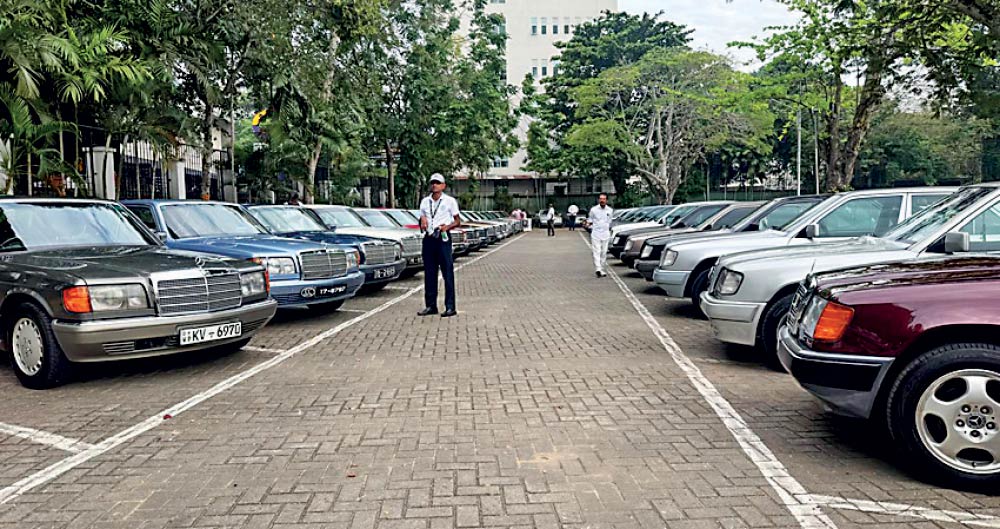
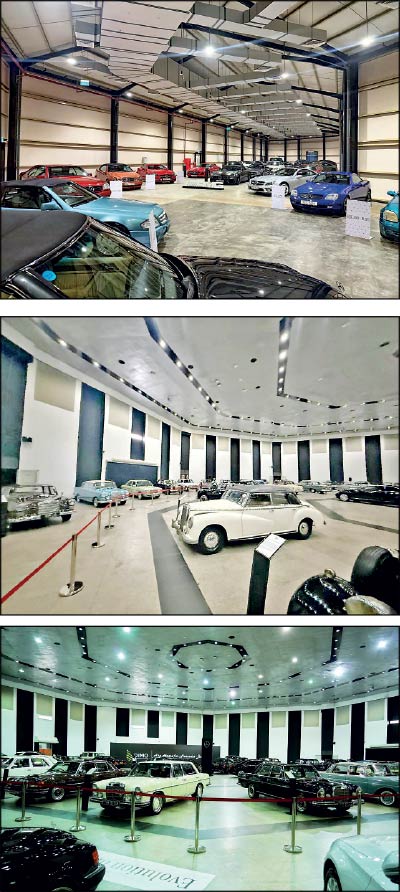
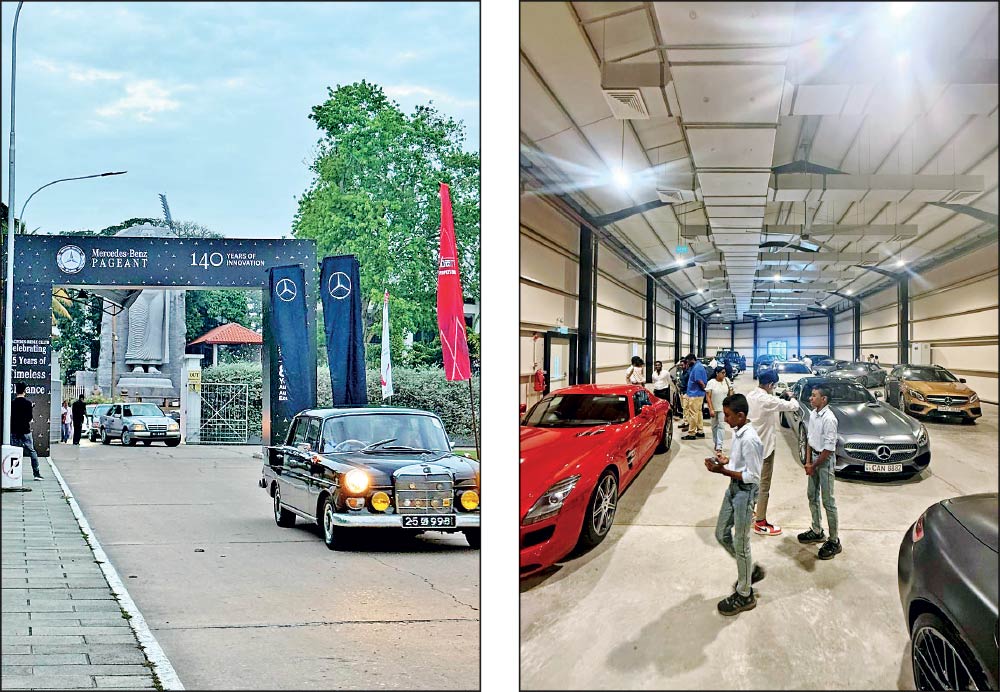
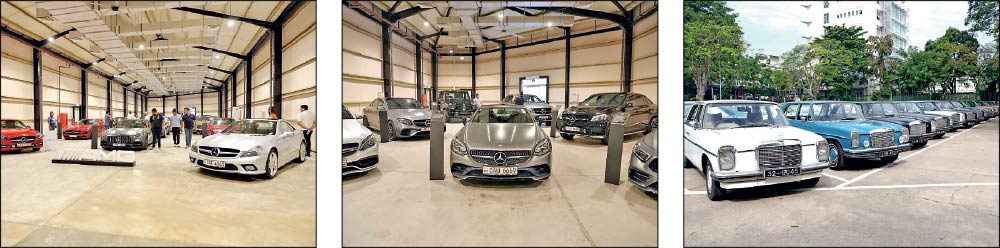
The Mercedes-Benz Club of Sri Lanka has successfully hosted a historic gathering of 640 Mercedes-Benz vehicles, as officially verified and certified by international auditors BDO partners, establishing a new benchmark for the largest gathering of Mercedes-Benz cars in the world in one location.

This achievement surpasses the current Guinness-listed record of 479 vehicles, previously set by Mercedes-Benz Ecuador in Quito, Ecuador, on 16 October 2021.

The record-breaking event took place on 8 February 2026 at the Bandaranaike Memorial International Conference Hall (BMICH) in Colombo, Sri Lanka. Mercedes-Benz owners from across the country united to celebrate the brand’s legacy, engineering excellence, and the strong camaraderie within the Sri Lankan Mercedes-Benz community.

Executive Committee of the Mercedes-Benz Club of Sri Lanka said: “We are immensely proud of this momentous accomplishment. This event reflects the passion, dedication, and unity of our members and the wider Mercedes-Benz family in Sri Lanka. The certification by BDO partners underscores the credibility and precision with which the event was organised and conducted.”

The club extends its heartfelt appreciation to all participants, partners, our main sponsors Dimo the exclusive agent for Mercedes Benz vehicles in Sri Lanka, and volunteers whose contributions made this extraordinary milestone possible.

Founded in 1990 the club celebrates its 35th year in preserving the heritage, innovation, and passion behind the Mercedes-Benz brand, the Mercedes-Benz Club of Sri Lanka brings together enthusiasts and owners from across the nation. Through events, exhibitions, and community initiatives, the club fosters connection, knowledge-sharing, and appreciation for one of the world’s most iconic automotive marques.

Read More........

India becomes 1st market outside US to start local production of Mercedes-Maybach GLS

(IANS/Mercedes-Benz India Photo)

New Delhi, (IANS): Mercedes-Benz India on Tuesday announced that it has achieved a major global milestone by becoming the first market outside the United States to start local production of the ultra-luxury Mercedes-Maybach GLS.

The move highlights India’s growing importance for the German luxury carmaker and underlines the company’s strong confidence in the country’s appetite for top-end luxury vehicles.

According to Mercedes-Benz India, local manufacturing of the Mercedes-Maybach GLS will not only strengthen its top-end portfolio but also help the brand respond better to rising demand while reinforcing its long-term commitment to the Indian market.

“The decision to start the local production of the Mercedes-Maybach GLS reiterates Mercedes-Benz’s deep commitment to the Indian customers, offering the pinnacle of luxury SUV, ‘Made in India’,” Santosh Iyer, Managing Director & CEO, Mercedes-Benz India, said.

“Local production will further enhance the vehicle’s appeal, reiterating our world-class manufacturing prowess and agility, catering to most demanding customer wishes for such exclusive top-end vehicles,” Iyer added.

In its 2025 sales performance highlights, the German luxury carmaker announced it has sold 19,007 units in India during CY 2025, slightly lower than the 19,565 units sold in 2024.

Despite the marginal dip in volumes, the company recorded its best-ever year in terms of revenue.

According to the company, the Top-End Vehicles portfolio, which includes the S-Class, Mercedes-Maybach models and AMG cars, showed strong resilience and grew 11 per cent year-on-year.

This segment accounted for 25 per cent of total sales, reflecting rising demand for ultra-luxury vehicles in India.

The high-performance AMG portfolio performed particularly well, registering a sharp 34 per cent growth, as Indian customers continued to show strong interest in performance-oriented luxury cars.

Mercedes-Benz India’s electric vehicle business also maintained its growth momentum in 2025.

The company’s battery electric vehicle portfolio grew 12 per cent year-on-year and accounted for 20 per cent of all top-end Mercedes-Benz cars sold in the country.

Notably, 70 per cent of the electric vehicles sold during the year belonged to the top-end segment, priced between Rs 1.25 crore and Rs 3.1 crore.

These included models such as the EQS SUV, EQS Sedan, Mercedes-Maybach EQS SUV and the Mercedes-Benz G580.The EQS SUV remained the company’s highest-selling luxury electric vehicle in India. India becomes 1st market outside US to start local production of Mercedes-Maybach GLS | MorungExpress | morungexpress.com
Read More........

Nissan to invest $17.6 bn in EV development over next 5 years


IANS Photo

Tokyo, (IANS): As the adoption of electric vechicles enters top gear globally amid rising petrol-diesel prices, Japanese auto-maker Nissan on Monday said it will invest $17.6 billion (2 trillion Yen) in developing new EVs and battery technology over the next five years.

Unveiling the 'Nissan Ambition 2030' plan, the company announced it will launch 23 new electrified models, including 15 new EVs, aiming for 50 per cent electrification mix, by fiscal year 2030.

"We will drive the new age of electrification, advance technologies to reduce carbon footprint and pursue new business opportunities. We want to transform Nissan to become a sustainable company that is truly needed by customers and society," said Makoto Uchida, Nissan CEO.

Over the next 10 years, Nissan aims to deliver exciting, electrified vehicles and technological innovations while expanding its operations globally.

The vision supports Nissan's goal to be carbon neutral across the life cycle of its products by fiscal year 2050.

With the introduction of 20 new EV and e-POWER equipped models in the next five years, Nissan intends to increase its electrification sales mix across major markets by fiscal year 2026, including Europe by more than 75 per cent of sales, Japan by more than 55 per cent of sales, China by more than 40 per cent of sales and the US by 40 per cent of EV sales in fiscal year 2030.

"With our new ambition, we continue to take the lead in accelerating the natural shift to EVs by creating customer pull through an attractive proposition by driving excitement, enabling adoption and creating a cleaner world," said Nissan COO Ashwani Gupta.

Representing the next stage of Nissan's electrified future, the company also unveiled three new concept cars that offer enhanced experiences through sophisticated technology packaging.

Nissan aims to launch EV with its proprietary all-solid-state batteries (ASSB) by fiscal year 2028 and ready a pilot plant in Yokohama as early as fiscal year 2024.

With the introduction of breakthrough ASSB, Nissan will be able to expand its EV offerings across segments and offer more dynamic performance.

"By reducing charging time to one-third, ASSBs will make EVs more efficient and accessible. Further, Nissan expects ASSB to bring the cost of battery packs down to $75 per kWh by fiscal year 2028 and aims to bring it further down to $65 per kWh to achieve cost parity between EV and gasoline vehicles in the future," the company announced.

Nissan intends to increase its global battery production capacity to 52 GWh by fiscal year 2026, and 130 GWh by fiscal year 2030.

Disclaimer: This story is auto-generated from news agency feeds and has not been edited by The Morung Express.Source: IANS Nissan to invest $17.6 bn in EV development over next 5 years | MorungExpress | morungexpress.com
Read More........