How successful is luxury tourism in Africa? What happens if it fails to produce higher tourism revenues: can it be reversed? And does it depend on what kind of government is in place?
Pritish Behuria is a scholar of the political economy of development who has conducted a study in Botswana, Mauritius and Rwanda to find answers to questions like this. We asked him about his findings.
What is luxury tourism and how prevalent is it in Africa?
Luxury tourism aims to attract high-spending tourists to stay at premium resorts and lodges or visit exclusive attractions. It’s a strategy that’s being adopted widely by governments around the world and also in African countries.
It’s been promoted by multilateral agencies like the World Bank and the United Nations, as well as environmental and conservation organisations.
The logic underlying luxury tourism is that if fewer, high-spending tourists visit, this will result in less environmental impact. It’s often labelled as a “high-value, low-impact” approach.
However, studies have shown that luxury tourism does not lead to reduced environmental impact. Luxury tourists are more likely to use private jets. Private jets are more carbon intense than economy class travel. Supporters of luxury tourism also ignore that it reinforces economic inequalities, commercialises nature and restricts land access for indigenous populations.
In some ways, of course, the motives of African countries seem understandable. They remain starved of much-needed foreign exchange in the face of rising trade deficits. The allure of luxury tourism seems almost impossible to resist.
How did you go about your study?
I have been studying the political economy of Rwanda for nearly 15 years. The government there made tourism a central part of its national vision.
Over the years, many government officials and tourism stakeholders highlighted the challenges of luxury tourism strategies. Even so, there remains a single-mindedness to prioritise luxury tourism.
I found that, in Rwanda, luxury tourism resulted in a reliance on foreign-owned hotels and foreign travel agents, exposing potential leakages in tourism revenues. Crucially, tourism was not creating enough employment. There was also a skills lag in the sector. Employees were not being trained quickly enough to meet the surge of investments in hotels.
So I decided to investigate the effects of luxury tourism in other African countries. I wanted to know who benefits and how it is being reversed in countries that are turning away from it.
I interviewed government officials, hotel owners and other private sector representatives, aviation officials, consultants and journalists in all three countries. Added to this was a thorough review of economic data, industry reports and grey literature (including newspaper articles).
What are your take-aways from Mauritius?
Mauritius was the first of the three countries to explicitly adopt a luxury tourism strategy. In the late 1970s and early 1980s the government began to encourage European visitors to the island’s “sun-sand-sea” attractions. Large domestic business houses became lead investors, building luxury hotels and buying coastal land.
Over the years, tourism has provided significant revenues for the Mauritian economy. By 2019, the economy was earning over US$2 billion from the sector (before dropping during the COVID pandemic).
However, tourism has also been symbolic of the inequality that has characterised Mauritius’ growth. The all-inclusive resort model – where luxury hotels take care of all of a visitor’s food and travel needs themselves – has meant that the money being spent by tourists doesn’t always enter the local economy. A large share of profits remains outside the country or with large hotels.
After the pandemic, the Mauritian government took steps to loosen its focus on luxury tourism. It opened its air space to attract a broader range of tourists and re-started direct flights to Asia. There’s growing agreement within government that the opening up of tourism will go some way towards sustaining revenues and employment in the sector. Especially as some other key sectors (like offshore finance) may face an uncertain future.
And from Botswana?
Botswana followed Mauritius by formally adopting a luxury tourism strategy in 1990. Its focus was on its wilderness areas (the Okavango Delta) and wildlife safari lodges. For decades, there were criticisms from scholars about the inequalities in the sector.
Most lodges and hotels were foreign owned. Most travel agencies that booked all-inclusive trips operated outside Botswana. There were very few domestic linkages. Very little domestic agricultural or industrial production was used within the sector.
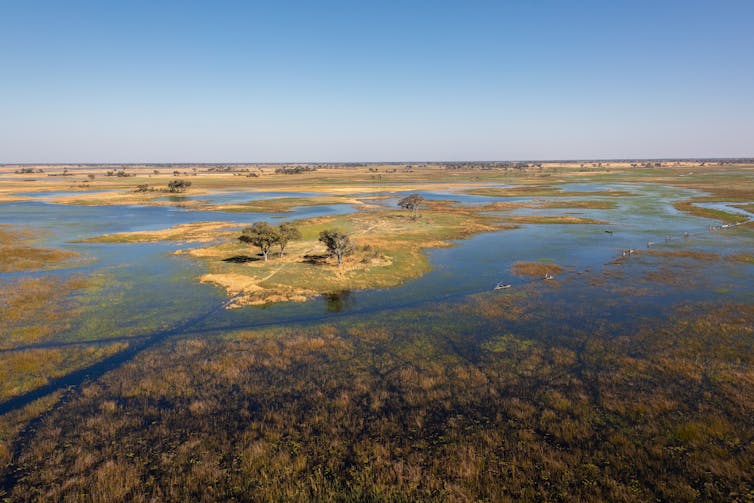
Guides take tourists across Botswana’s Okavango delta in boats. Diego Delso/Wikimedia Commons,
CC BY-SAHowever, I found that the direction of tourism policies had also become increasingly political. Certain politicians were aligned with conservation organisations and foreign investors in prioritising luxury tourism. Former president Ian Khama, for example, banned trophy hunting on ethical grounds in 2014. He pushed photographic tourism, where travellers visit destinations mainly to take photos. But critics allege he and his allies benefited from the push for photographic tourism.
Photographic tourism is closely linked with the problematic promotion of “unspoilt” wilderness areas that conform to foreign ideas about the “myth of wild Africa”.
President Mokgweetsi Masisi reversed the hunting ban once he took power. He argued it had adverse effects on rural communities and increased human-wildlife conflict. He believed that regulated hunting could be a tool for better wildlife management and could produce more benefits for communities.
Since the latter 2010s, Botswana’s government has loosened the emphasis on luxury tourism and tried to diversify tourism offerings. It has relaxed visa regulations for Asian countries, for example, to allow a wider range of tourists to visit more easily.
What about Rwanda?
Of the three cases, Rwanda was the most recent to adopt a luxury tourism strategy. However, it has remained the most committed to this strategy. Rwanda’s model is centred on mountain gorilla trekking and premium wildlife experiences. It’s augmented by Rwanda’s attempt to become a hub for business and sports tourism through high-profile conferences and events.
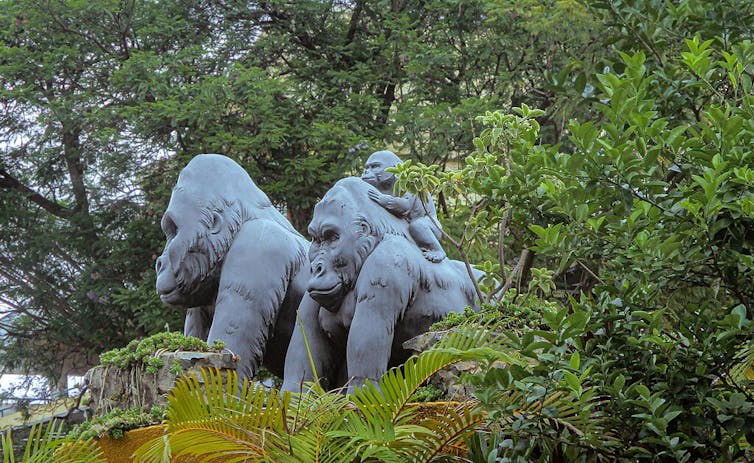
Gorillas are a key attraction for luxury tourists in Rwanda. Gatete Pacifique/Wikimedia Commons,
CC BY-SARwanda invited global hotel brands (like the Hyatt and Marriott) to build hotels and invested heavily in the country’s “nation brand” through sponsoring sports teams. The “luxury” element is managed through maintaining a high price to visit the country’s main tourist attraction: mountain gorillas. Rwanda is one of the few countries where mountain gorillas live.
After the pandemic, the government lowered prices to visit mountain gorillas but has also regularly stated its commitment to luxury tourism.
What did you learn by comparing the three?
I wanted to know why some countries reverse luxury tourism strategies once they fail while others don’t.
It is quite clear that luxury tourism strategies will always have disadvantages. As this study shows, luxury tourism repeatedly benefits only very few actors (often foreign investors or foreign-owned entities) and does not create sufficient employment or provide wider benefits for domestic populations. My research shows that the political pressure faced by democratic governments (like Botswana and Mauritius) forced them to loosen their luxury tourism strategies. This was not the case in more authoritarian Rwanda.
Rwanda’s position goes against a lot of recent literature on African political economy, which argues that parties with a stronger hold on power would be able to deliver better development outcomes.
While that may be case in some sectors, the findings of this study suggest that weaker political parties may actually be more responsive to changing policies that are creating inequality than countries with stronger political parties in power.
Pritish Behuria, Reader in Politics, Governance and Development, Global Development Institute, University of Manchester
This article is republished from The Conversation under a Creative Commons license. Read the original article.



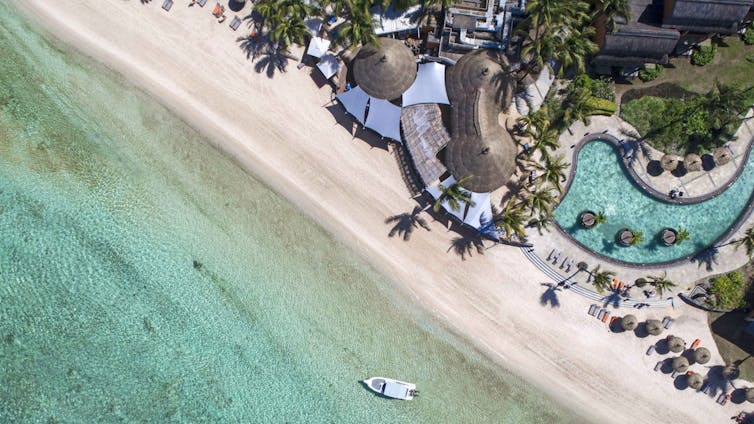 Mauritius led the luxury tourism trend in Africa with all-inclusive resorts.

