The High-End Fashion Industry’s Reaction to Economic Turmoil


Illustration by Ruhi Bishnoi

While inflation has pinched the wallets of many, it’s ironically fueling the growth of luxury fashion. As most consumers scale back on spending due to rising costs, iconic brands like Chanel, Rolex, and Hermès are boldly raising their prices, sometimes surpassing inflation itself. For some, it's a response to economic pressures; for others, it’s a strategic move to preserve their elite status.

Luxury brands excuse their price inflation by claiming inflation pressures and rising material costs, but their figures do not hold up. Consider, for instance, Chanel in 2019, the average price for a Classic Flap bag stood at $5,800. At present, it has reached about $10,200, a phenomenal increase of about 76% in price. Chanel justified this by claiming a commitment to quality and exclusivity. This argument was pushed by the CEO, Leena Nair for the price hike, she said "We use exquisite raw materials and our production is very rigorous, laborious, handmade-so we raise our prices according to the inflation that we see." But is there more to it? Many consumers and analysts suspect otherwise, wondering whether such price bounds are truly to do with keeping up with cost or simply to maintain their ultra-high-end status.

The watch market is no different. Patek Philippe and Rolex rank among the world's most desirable brands, but to purchase them at retail is effectively impossible for someone who lacks any insider affiliation. On the secondary market, though, such timepieces tend to fetch two to three times their retail price. Are these brands genuinely facing supply chain restrictions, or do they limit production on purpose to keep demand strong? Most industry professionals believe the latter.

Beyond the realm of economics, luxury brands have learned a thing or two about price psychology. Economists call it the Veblen Effect; as the price for some luxury items rises, so does their demand. In contrast to mass-market items, a client does not buy Chanel handbags or Rolex watches just for their fine craftsmanship; he or she buys them for their prestige. Price hikes aren’t just about inflation; they create an aura of exclusivity around such goods. In short, the higher the price, the more desirable they become.

Hermès exemplifies this strategy. The brand, synonymous with scarcity and strict pricing, increased the price of an average Birkin bag by nearly 10% in 2023, exceeding inflation rates. A close examination of the discourse further reveals the possible truth that these bags do not just serve as accessories but genuine investments, worth holding and appreciating. Louis Vuitton had equally to trade from a playbook wherein multiple price raises go within a year despite the depressing foreign retail markets. These luxury goods stack up nowadays according to Business of Fashion on an average basis for around fifty-four percent more than they did during 2019. Yet, sales remain booming-some even argue more than ever. Why? Because these have successfully groomed the idea that affordability in hand and wrist should become a tag as status hallmark for completion in being successful. However, it too ends up being an ethical debate. Should luxury companies literally be allowed to raise prices this steeply while others are still cash-strapped? Some would just say that this is merely a business concept as the saying goes"If you find someone willing to pay, why not charge him more?" while some see it as a deliberate ploy to keep out regular buyers, thus making it all the more desired by ultra-high-net-worth individuals.

So, what’s next in the future? Will brands continue to push prices higher, or are we approaching a breaking point? History suggests that as long as affluent consumers remain eager to buy into exclusivity, luxury brands will continue raising prices, regardless of economic conditions. But there’s always the risk of alienating aspirational buyers, the ones who save up for a dream luxury purchase, if prices keep climbing.

Indeed, changes in behavior control the portion of this high drama. The industry remains high-class and entry-level as long as there is pursuit by people to be status seekers, this profit will always be there for these brands, be it a recession or not.Ruhi Bishnoi is a Data Science, Economics, and Business student at Plaksha University, set to graduate in 2027. She is passionate about leveraging data-driven insights to drive strategic business decisions and create meaningful impact. The High-End Fashion Industry’s Reaction to Economic Turmoil | MorungExpress | morungexpress.com
Read More........

Temasek Invests in Haldiram’s as India Becomes a Key Market


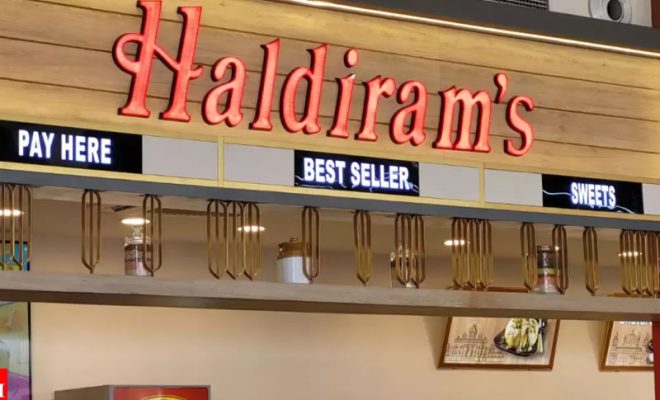
Singapore’s state-owned investment fund, Temasek, has made yet another major investment in India; this time it acquired a 10% stake in Haldiram‘s Snacks Food, one of the leading snack brands in India.

This deal was worth $1 billion, giving Haldiram’s a valuation of $10 billion. This is the largest private equity deal in the consumer sector in India.
Reasons for Investing in Temasek Haldiram’s

Temasek has put up investments across several sectors in India, including but not limited to medicals, finance, and technology. Long-term growth potential for India is seen by the fund, which plans to invest $10 billion in the next three years.

The spokesperson from Haldiram’s said they’re thrilled to welcome Temasek as an investor and partner. It is going to complement the company’s expansion further, both within India and abroad.

Haldiram’s: A Legacy of Success

Haldiram’s started as small snack shop in Bikaner, Rajasthan, in 1937. Today, it is a household name across India famous for savoury snacks, sweets, and fast-food outlets.

Beverage brand holds nearly 13% of India’s $6.2 billion snack market according to Euromonitor International. It has also set up a manufacturing facility in the UK from where products are exported to different countries.

Haldiram’s Attracting More Investors

Haldiram’s has already positioned itself as a company sought out by major global investors. Companies such as the Tata Group and Bain Capital have toyed with earlier decisions about purchasing a stake in the company.

It is joined in this latest funding round by Temasek, along with two other investors- Alpha Wave Global (New York-based) and the UAE’s International Holding Co.
Temasek Expanding Its Footprint in India

Since 2004, Temasek has been building its presence in India based on its Mumbai office. Investments in the country are nearing $40 billion by 2024.

Apart from Haldiram’s, Temasek has now invested in leading Indian companies like: 
Looking Beyond India

But while Temasek stays optimistic about India, it has been restructuring its portfolios across all geographies depending on economic and geopolitical factors.In 2020, China constituted 29% of Temasek’s investments. That is set to fall to 19% by 2024, whereas India now makes up 7% of the total portfolio.Temasek Invests in Haldiram’s as India Becomes a Key Market
Read More........

The High-End Fashion Industry’s Reaction to Economic Turmoil


While inflation has pinched the wallets of many, it’s ironically fueling the growth of luxury fashion. As most consumers scale back on spending due to rising costs, iconic brands like Chanel, Rolex, and Hermès are boldly raising their prices, sometimes surpassing inflation itself. For some, it's a response to economic pressures; for others, it’s a strategic move to preserve their elite status.

Luxury brands excuse their price inflation by claiming inflation pressures and rising material costs, but their figures do not hold up. Consider, for instance, Chanel in 2019, the average price for a Classic Flap bag stood at $5,800. At present, it has reached about $10,200, a phenomenal increase of about 76% in price. Chanel justified this by claiming a commitment to quality and exclusivity. This argument was pushed by the CEO, Leena Nair for the price hike, she said "We use exquisite raw materials and our production is very rigorous, laborious, handmade-so we raise our prices according to the inflation that we see." But is there more to it? Many consumers and analysts suspect otherwise, wondering whether such price bounds are truly to do with keeping up with cost or simply to maintain their ultra-high-end status.

The watch market is no different. Patek Philippe and Rolex rank among the world's most desirable brands, but to purchase them at retail is effectively impossible for someone who lacks any insider affiliation. On the secondary market, though, such timepieces tend to fetch two to three times their retail price. Are these brands genuinely facing supply chain restrictions, or do they limit production on purpose to keep demand strong? Most industry professionals believe the latter.

Beyond the realm of economics, luxury brands have learned a thing or two about price psychology. Economists call it the Veblen Effect; as the price for some luxury items rises, so does their demand. In contrast to mass-market items, a client does not buy Chanel handbags or Rolex watches just for their fine craftsmanship; he or she buys them for their prestige. Price hikes aren’t just about inflation; they create an aura of exclusivity around such goods. In short, the higher the price, the more desirable they become.

Hermès exemplifies this strategy. The brand, synonymous with scarcity and strict pricing, increased the price of an average Birkin bag by nearly 10% in 2023, exceeding inflation rates. A close examination of the discourse further reveals the possible truth that these bags do not just serve as accessories but genuine investments, worth holding and appreciating. Louis Vuitton had equally to trade from a playbook wherein multiple price raises go within a year despite the depressing foreign retail markets. These luxury goods stack up nowadays according to Business of Fashion on an average basis for around fifty-four percent more than they did during 2019. Yet, sales remain booming-some even argue more than ever. Why? Because these have successfully groomed the idea that affordability in hand and wrist should become a tag as status hallmark for completion in being successful. However, it too ends up being an ethical debate. Should luxury companies literally be allowed to raise prices this steeply while others are still cash-strapped? Some would just say that this is merely a business concept as the saying goes"If you find someone willing to pay, why not charge him more?" while some see it as a deliberate ploy to keep out regular buyers, thus making it all the more desired by ultra-high-net-worth individuals.
So, what’s next in the future? Will brands continue to push prices higher, or are we approaching a breaking point? History suggests that as long as affluent consumers remain eager to buy into exclusivity, luxury brands will continue raising prices, regardless of economic conditions. But there’s always the risk of alienating aspirational buyers, the ones who save up for a dream luxury purchase, if prices keep climbing.

Indeed, changes in behavior control the portion of this high drama. The industry remains high-class and entry-level as long as there is pursuit by people to be status seekers, this profit will always be there for these brands, be it a recession or not.Ruhi Bishnoi is a Data Science, Economics, and Business student at Plaksha University, set to graduate in 2027. She is passionate about leveraging data-driven insights to drive strategic business decisions and create meaningful impact. The High-End Fashion Industry’s Reaction to Economic Turmoil | MorungExpress | morungexpress.com
Read More........