How antiwar student protests are spreading across U.S. universities

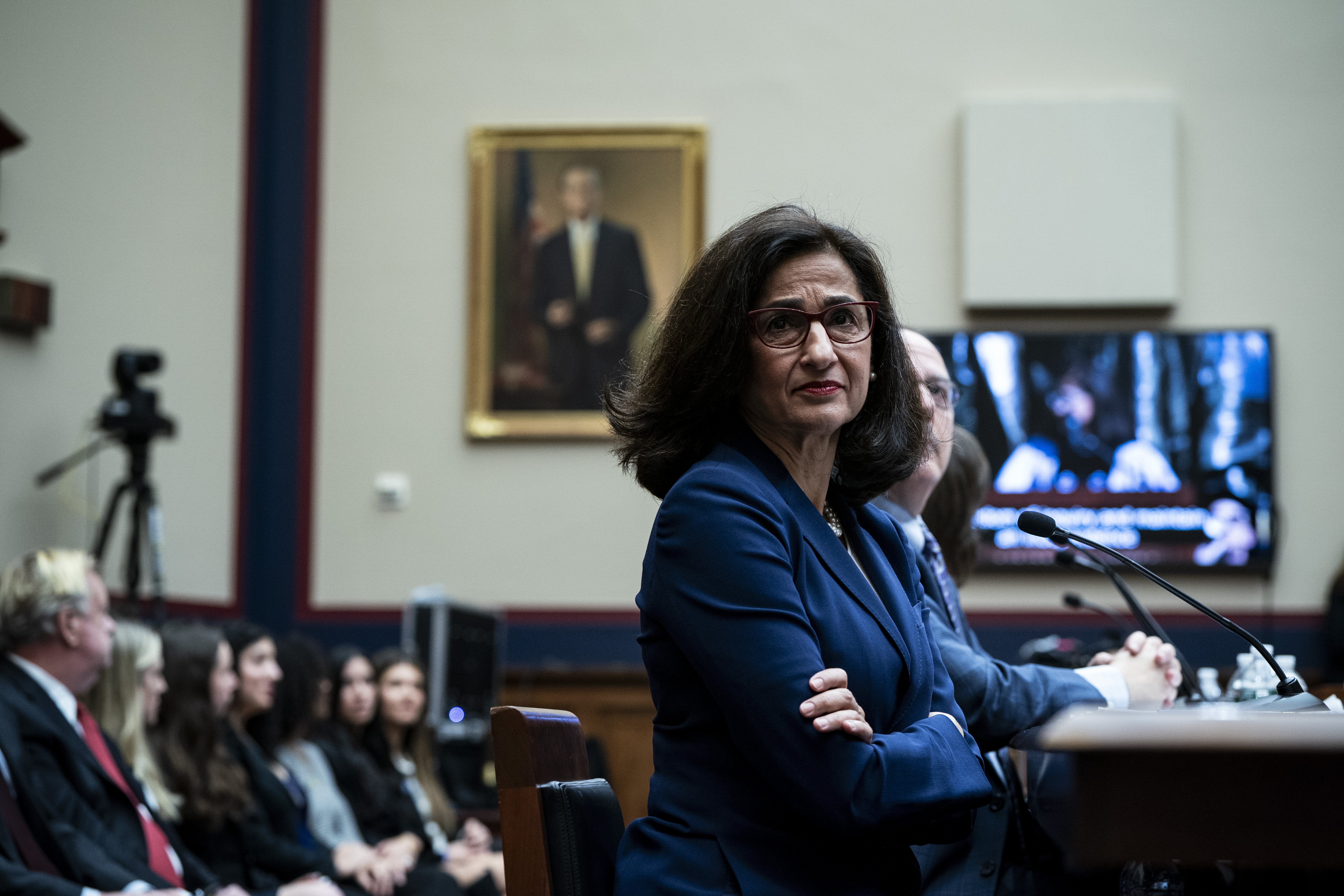
Minouche Shafik, the president of Columbia University, testified before Congress last week. MUST CREDIT: Haiyun Jiang for The Washington Post

Merlin Van Alstine, a University of Minnesota student and an organizer with the school’s chapter of Students for a Democratic Society, had watched for four days as hundreds of pro-Palestinian protesters at other college campuses were arrested.

Van Alstine, 21, and about 30 other students were inspired to set up their own encampment. By Tuesday morning, nine of her fellow demonstrators were arrested and charged with trespassing.

It was one of the latest examples of pro-Palestinian protests sweeping college campuses across the country with students demanding that their universities cut ties or reveal their involvement with corporations doing business with Israel or profiting off the war in Gaza.

The arrest of more 100 student protesters at Columbia University on Thursday has sparked solidarity protests at colleges across the nation, from Yale University and MIT on the East Coast to Ohio State University in the middle of the country and Stanford University and the University of California at Berkeley out west.

This is how the burgeoning protest movement started, escalated and spread – and where it might go from here. Commencements for the class of 2024 begin in weeks.

– – –

A protest at Columbia

Last Wednesday, protesters set up tents on the South Lawn of Columbia University and flew Palestinian flags. They held demonstrations in which they chanted, banged on noise makers and denounced the “genocide” in Gaza.

But around midafternoon the next day, New York police began breaking up a protest at Columbia, arresting demonstrators who had occupied a campus lawn in support of Palestinians.

This came at the request of Columbia President Minouche Shafik, who had written to the New York Police Department earlier in the day to tell them that protesters had been trespassing on the South Lawn of the university’s Morningside Heights campus and represented “a clear and present danger to the substantial function of the University.”

She requested that the department send officers to campus to remove them. In total, 108 were arrested.

The protest came a day after Shafik testified before Congress, pledging to lawmakers during a hearing on antisemitism to balance students’ safety with their right to free speech.

Shafik told members of the House Committee on Education and the Workforce that balancing the free speech rights of those who want to protest with the rights of Jewish students to be free of harassment and discrimination at Columbia has been the central challenge on campus. Her hearing followed one in December in which three other university presidents – from Harvard, the University of Pennsylvania and MIT – were scrutinized over their testimony before Congress, during which they declined to say calls for the genocide of Jews would violate campus policies. The leaders of Harvard and Penn later resigned.

– – –

More student antiwar protests

There weren’t as many protests on Friday and over the weekend, but starting Monday, protests sprang up at college campuses across the country, including at New York University, the University of North Carolina at Charlotte and the University of Michigan.

At Yale, 47 students are arrested. Officers gave one warning around 6 a.m. and within minutes began arresting protesters who had been camped out on Beinecke Plaza.

Those students were charged, processed and released – and almost all of them reconvened at an off-campus intersection near Beinecke to join hundreds of others to continue their protest as New Haven police blocked the intersection and looked on.

Meanwhile, on Monday night, 120 protesters were arrested at NYU’s campus. And on the West Coast, students at California State Polytechnic at Humboldt barricaded themselves inside a building, the campus went on lockdown, and administrators eventually closed the campus through Wednesday; the university urged people to stay away from the “dangerous and volatile situation” at the hall and said it was “deeply concerned about the safety of the protesters.”

– – –

Where do the antiwar protests go next?

After the nine arrests at the University of Minnesota on Tuesday, the movement made its way to the District. On Tuesday, hundreds of American University students marched to the president’s office building to demand that the administration divest from Israel.

The protest came a day after the school’s undergraduate senate passed a nonbinding resolution calling for divestment, to which President Sylvia Burwell said in a statement that the resolution “does not represent American University’s position and will not be implemented.”

Freshman Kaden Ouimet said that despite Burwell’s rejection, protesters would not be deterred in large part because they knew they had compatriots at colleges around the country.“We will not be demoralized,” said Ouimet, a political science major and senator at-large in student government. “And although the path to divestment is a long and treacherous one, campuses are standing in solidarity.”How antiwar student protests are spreading across U.S. universities
Read More........

A guide: Uranium in Niger : Uranium & Fuel

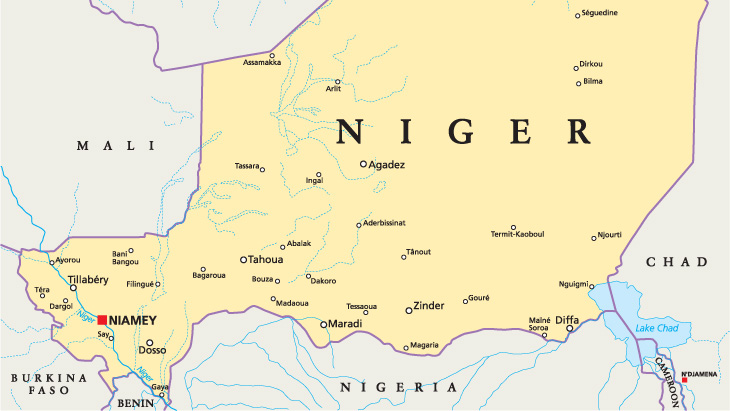
Current events in Niger mean world attention is turning to the West African uranium-producing country. Here is an overview of Niger's uranium sector.  What has happened in Niger? After reports on 26 July that presidential guards had seized Niger's president, Mohamed Bazoum, General Abdourahmane Tchiani - also known as Omar Tchiani - went on national TV on 28 July and declared himself the new leader of Niger. Bazoum became president following a runoff election in February 2021 in which he won 55.67% of the vote. How much uranium does Niger produce? Niger produced 2020 tU in 2022, just over 4% of world uranium output. Current production is from the open-pit operations of SOMAÏR (Société des Mines de l’Aïr), near the town of Arlit. SOMAÏR is 63.4% owned by French company Orano and 36.66% owned by Sopamin (Société du Patrimoine des Mines du Niger). Sopamin manages Niger's state participation in mining ventures. According to data from the World Bank, uranium is Niger's second largest export, in monetary terms, after gold. What is Niger's uranium history? Uranium was first discovered at Azelik in Niger in 1957, and commercial uranium production began at Arlit - 900 km northeast of the capital Niamey - in 1971. COMINAK (Compagnie Minière d’Akouta) - also majority-owned by Orano - began production from an underground mine at Akouta in 1978, producing more than 75,000 tU before operations came to an end in 2021. The Societe des Mines d'Azelik SA (SOMINA) joint venture was set up in 2007 to mine at Azelik/Teguidda, 160km southwest of Arlit, in the Agadez region. 62% of SOMINA's equity is held by Chinese interests, with 37.2% by CNNC International. The government of Niger owns 33%, and 5% is owned by Korean interests. Azelik came into production at the end of 2010 but market conditions led to its being put on care and maintenance in 2015. China National Uranium Corporation has recently been carrying out studies towards the restart of production at SOMINA, according to social media posts by Niger's Minister of Mines Ousseini Hadizatou Yacouba in June this year. What other plans are in the pipeline? The Imouraren project is about 80km south of Arlit and about 160km north of Agadez. Operating company Imouraren SA - owned 66.65% by Orano Expansion (itself owned by Orano Mining with Korean companies holding 4.7%) and 33.35% by Sopamin and the State of Niger - was awarded an operating permit to mine the deposit in 2009 and excavations began in 2012, but development of the project was suspended in 2015 pending more favourable market conditions. The joint venture is now looking into the possibility of using in-situ leach methods to bring it into production. Dasa is a high-grade uranium deposit 105km south of the established uranium mining town of Arlit. First discovered in 2010, the project is 90%-owned by Toronto-listed Global Atomic Corporation and will operate under the company's Niger mining subsidiary SOMIDA (Société Minière de Dasa SA) which is 20%-owned by the government of Niger. Mine excavation began in 2022, with first deliveries to utilities expected to begin in 2025. Canada-based GoviEx Uranium holds mining permits for the Madaouela project, in the Agadez region. The company earlier this year had begun the project financing process to develop the project. GoviEx holds an 80% interest in the operating company COMIMA, with the remaining 20% held by the Republic of Niger. Who buys Niger's uranium? Niger supplies around 5% of the world's uranium, but is a leading supplier of uranium to the European Union. According to the Euratom Supply Agency, EU utilities purchased 2905 tU of Niger-produced uranium in 2021. This represented just over 24% of EU uranium imports, putting Niger slightly ahead of Kazakhstan as the EU's leading source of uranium. What they are saying "Regarding foreign nationals, Orano is in constant discussion with the French authorities. The group closely follows the instructions given by the French Embassy to give the opportunity to employees to leave Niger if they wish so. The group supports its Nigerien teams and thanks them for their professionalism. Activities at the operational sites in Arlit and Akokan as well as at the headquarters in Niamey are continuing." Orano, 1 August "While the situation in Niger remains volatile and there has been protesting in some parts of the capital, the rest of the country remains calm. Importantly, our people remain safe and normal business is being conducted at our offices and development of the Dasa Project continues. The neighbouring African countries union, ECOWAS, as well as the EU and USA have voiced their opinions to the Niger Junta currently running the Country and given a directive that the President and his Ministers be returned to power in 7 days. It is too early to speculate on the outcome of this mandate." Global Atomic CEO & President Stephen Roman, 31 July "GoviEx's operations in Niger continue as usual. Our employees are safe and continue to work diligently on our Madaouela uranium project, ensuring that our activities at both the Project site and our office in the capital city of Niamey proceed without interruption. We are currently able to meet all of our obligations to employees and suppliers, and we anticipate this stability to persist." GoviEx, 31 July "An attempt to overthrow the Nigerien government was announced in the press on July 26, 2023 and the situation remains unstable as at the reporting date of the financial statements. The group has set up a crisis unit to prioritise the safety of its employees. At the reporting date of the financial statements, Orano does not consider this event to have any immediate impact on its activities in Niger or on the value of its assets." Orano half-year results statement, 28 July "Following the recent resignation of the President in Niger, the Company's Dasa Project remains unaffected other than the borders and airport have been temporarily closed which will interrupt our supply lines in the short term … With an infrastructure that has supported uranium mining for over 50 years, an experienced mining work force and the highest-grade uranium deposit in Africa, Global Atomic remains committed to the development of the Dasa Project and the ensuing benefits to our shareholders and the people of Niger." Global Atomic, 27 July "GoviEx's operations in Niger remain unaffected by the current situation. We are committed to ensuring that our activities continue as normal, both at our Project site and our office in Niamey. GoviEx has always worked for the benefit of all stakeholders, including the people of Niger. We believe in the potential of the country and its people, and we remain dedicated to contributing positively to its socio-economic development. Niger has been a pro-mining country and despite changes in regime, has never experienced an interruption in its uranium mining activities over the last 50 years. This long-standing stability in the mining sector is a testament to the country's resilience and its commitment to development." GoviEx, 27 July "Informed of an attempt by certain members of the military to undermine the stability of democratic and republican institutions in Niger, which is tantamount to an attempted coup d'état, the Chairperson of the African Union Commission, HE Moussa Faki Mahamat, strongly condemns such actions by members of the military acting in total betrayal of their republican duty. He urges them to immediately cease these unacceptable actions." African Union, 26 JulyResearched and written by World Nuclear News  Source: World Nuclear News
Read More........

NATO must be ready for long standoff with Russia - Stoltenberg

Photo: U.S. Secretary of Defense

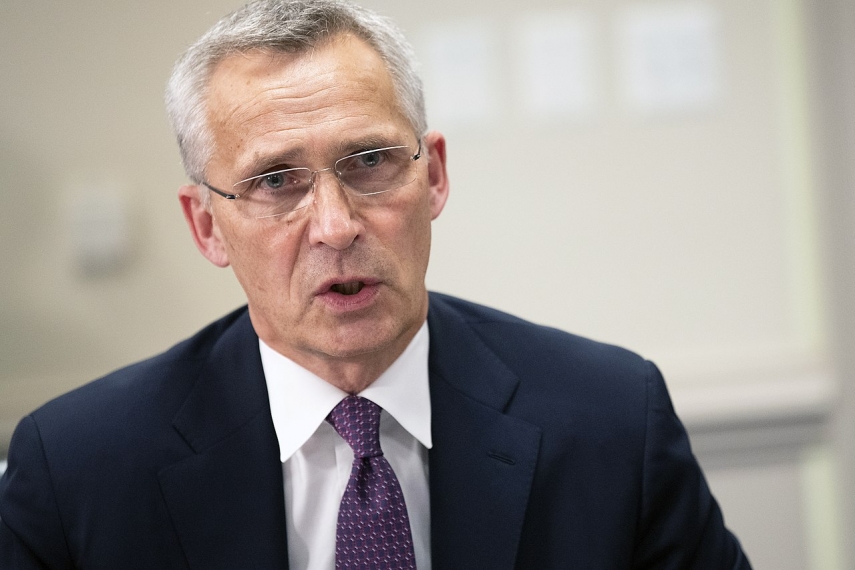
BRUSSELS - NATO must be prepared for a long standoff with Russia beyond the immediate crisis triggered by President Vladimir Putin's year-old invasion of Ukraine, alliance chief Jens Stoltenberg told AFP.

Moscow's war on its pro-Western neighbor has plunged Europe into its most dangerous crisis since World War II and pushed NATO into the biggest overhaul of its defenses since the Soviet Union collapsed.

"President Putin wants a different Europe, wants a Europe where he can control neighbors, where he can decide what countries can do," Stoltenberg, 63, said in an interview a week ahead of the first anniversary of Moscow's invasion.

"We need to be prepared for the long haul, this may last for many, many, many, many years."

The Norwegian head of the US-led alliance said he was wary of predicting how long the renewed face-off between Russia and the West would continue, because change can come suddenly.

"We saw the fall of the Berlin Wall, or we saw 9/11," he said.

NATO would, he said, "always look into where there are opportunities to again come into the situation where there is room for a better relationship, but with the current behavior of the Russian regime, the regime in Moscow, there's no way."

NATO members have not sent their own forces to Ukraine, and some Western officials fear that a direct military conflict could escalate into a nuclear war between the West and Russia.

But since the Russian tanks rolled in, tens of thousands more NATO troops have been deployed to the alliance's eastern flank and a string of European allies have ramped up defense spending.NATO members, spearheaded by the United States, have also sent weaponry worth tens of billions of dollars to Ukraine to help it fight back against Russia. Source: https://www.baltictimes.com/
Read More........

India successfully tests Agni-IV long-range missile that can strike targets 4,000 km away

India is in the process of further strengthening its strategic missile arsenal by adopting newer technologies and capabilities. Agni-IV is the fourth in the Agni series of missiles

India's Strategic Forces Command have successfully tested a nuclear-capable Agni-IV ballistic missile, which can strike targets 4,000 km away in the farthest Chinese cities if needed.

"The successful test reaffirms India's policy of having a credible minimum deterrence capability," the Defence Ministry said in a statement. The missile was test-fired off APJ Abdul Kalam Island in Odisha in eastern India at 7.30 pm Monday evening. The government said the launch validated all operational parameters and the system's reliability.

The test was a part of routine user training launches carried out under the aegis of the Strategic Forces Command, said the Defence Ministry.

India is in the process of further strengthening its strategic missile arsenal by adopting newer technologies and capabilities. Agni-IV is the fourth in the Agni series of missiles - earlier known as Agni II prime - developed by the country's Defence Research and Development Organisation or DRDO.

Last year, India successfully test-fired the nuclear-capable strategic Agni Prime missile with the capability to hit targets between 1,000 to 2,000 km.

Read More........

Joe Biden announces new Ukraine assistance package as he makes surprise visit to Kyiv


It is the first time US President Joe Biden has visited Ukraine since Russia invaded in February 2022.(Reuters/Ukrainian Presidential Press Service)

US President Joe Biden has made an unannounced visit to the Ukrainian capital Kyiv, days before the first anniversary of Russia's full-scale invasion of Ukraine in 2022.

Air raid sirens blared across the Ukrainian capital as Mr Biden visited Kyiv but there were no reports of Russian missile or air strikes.

He delivered remarks and met with President Volodymyr Zelenskyy at Mariinskyi Palace to announce an additional half billion dollars in US assistance and to reassure Ukraine of American and allied support as the conflict continues.

"One year later, Kyiv stands. And Ukraine stands. Democracy stands," Mr Biden said.

"[Putin] is counting on us not sticking together. He was counting on the inability to keep NATO united. He was counting on us not to be able to bring in others to the side of Ukraine.

"He thought he could outlast us. I don't think he's thinking that right now. He's just been plain wrong."

Mr Biden said Washington would provide Kyiv with a new military aid package worth $US500 million ($A724 million) that would be announced on Tuesday.

He said it would include more ammunition for High Mobility Artillery Rocket Systems (HIMARS).

The US would also be announcing additional sanctions this week, Mr Biden said, against the Russian elite and companies trying to evade sanctions to "back the Russian war machine".

In a speech, Mr Biden commended Ukraine's courage during the war and noted that he had visited Kyiv six times when he had earlier served as vice-president.

"I knew I would be back," he said.

The air raid sirens wailed while both presidents were inside the St Michael's Golden-Domed Cathedral on a square in central Kyiv where burnt-out Russian tanks have been placed.

"Your visit is an extremely important sign of support for all Ukrainians," Mr Zelenskyy said.

"We hope this year, 2023, will become the year of victory against this unprovoked and criminal Russian war against Ukraine."

In a statement, Ukraine's Foreign Minister Dmytro Kuleba said both Mr Biden and Mr Zelenskyy were pleased with the outcome of their talks.

Ukraine is preparing for what it expects to be a major new Russian offensive that some military analysts say is already underway.

Mr Biden's trip fell on the day that Ukraine marks the deaths of more than 100 people — now known as the Heavenly Hundred — at anti-government protests that eventually toppled a Moscow-backed president in 2014.

It also comes just a day before Russian President Vladimir Putin was due to make a major address, expected to set out his country's aims for the second year of the invasion he launched on February 24 last year.The anniversary has taken on more than symbolic significance, becoming what the West views as motivation for the war's deadliest phase as Moscow hurls thousands of conscripts and mercenaries into a winter offensive. Source: https://www.fijivillage.com/
Read More........

Zelensky: 'Ukraine will acquire missile, drone interception system'

Ukrainian President Volodymyr Zelenskyy in Brussels, Belgium on February 09, 2023. [Dursun Aydemir - Anadolu Agency]

Ukrainian President Volodymyr Zelensky announced during the Munich Security Conference on Friday that Ukraine's acquisition of an Israeli missile interception system to use against Russia "is only a matter of time". He added that his country needs to acquire the David's Sling air defence system from Israel to use against the Russian Goliath.

The David's Sling system is a system for intercepting medium-range missiles and drones. Ukraine has requested to obtain missile interception systems several times since the start of the war with Russia, but Israel has so far refused.

During his speech, Zelensky attacked Iran for providing aid to Russia and said Iran would use the experience of using drones in Ukraine to improve its performance and use it in the Middle East.

Israeli Security Minister Yoav Gallant spoke at the Munich Security Conference and said that Iran is in talks with 50 countries regarding selling drones and missiles, according to quotes by the Israeli media.

Gallant disclosed that the regime in Tehran provides drones with a range of 1,000 kilometres through Eastern European countries, such as Belarus, and has done so in the past in South America and sold to Venezuela.

He said that all of this was happening while the arms embargo on Iran was still in effect, but the embargo will expire at the end of the year, adding that the international community must develop an alternative to the international arms embargo. Under and above ground, Iran continuously seeks to eliminate the State of Israel. Iran is threatening not only Israel but also the security and stability of Europe and the world in general.

Gallant called on the international community to take joint action to: "Create an effective alternative to the dying embargo – a practical mechanism of deterrence and consequences. When we speak of preventing Iran from gaining a nuclear weapon, we must keep all the possible means – I repeat, all possible means – on the table."

Israeli media reported that Israeli Foreign Minister Eli Cohen agreed with Zelensky during their meeting in Kyiv on cooperation between Israel and Ukraine and initiating new sanctions against Iran in international organisations.

According to Israeli media, Zelensky told Cohen that it is important for Israel and Ukraine to cooperate on the Iranian issue and that Ukraine could help Israel in this. Zelensky pointed out that Ukraine has great experience in intercepting Iranian drones.

After he visited Ukraine, Cohen indicated: " We talked about deepening cooperation with Ukraine in the face of the Iranian threat in the international arena." The Iranian issue was at the top of the agenda of Cohen's visit. He believes it is very important to mobilise Ukraine against Iran, and Zelensky claimed that the two countries have a "common enemy" in Iran. Cohen provided Ukrainian Foreign Minister Dmytro Kuleba with: "Ideas on how to counter the threat of Iranian drones" that Russia is using in the war with Ukraine.Zelensky and Kuleba urged Israel to provide defensive military means to Ukraine. Cohen did not refuse this, but told Zelensky: "Israel is in a complex situation; it is neither Portugal nor Canada. We have a common border with Russia [in Syria], and we have the Iranian threat," referring to the Israeli attacks against Iranian targets in Syria Source: https://www.middleeastmonitor.com/
Read More........

Ukraine war: ‘soccer plot’ raises fears of fresh Russian attempts to destabilise neighbouring Moldova

Moldova has been sliding into yet another crisis following the resignation of its prime minister, Natalia Gavrilita, and fears that Russia was plotting a coup to overthrow the pro-western president, Maia Sandu.

At a press conference in the Moldovan capital Chisinau on February 13, Sandu confirmed earlier accusations made by the Ukrainian president, Volodymyr Zelensky, in his speech to the European Council that the Kremlin was about to execute a coup against Moldova.

Zelensky said he had informed Sandu of a “detailed Russian plan” to “break the democratic order in [Moldova] and establish control over it”.

In turn, Sandu said Russia’s plan involved using “saboteurs with military background, camouflaged in civilian clothes, to undertake violent actions, attacks on state institutions and taking hostages”. The coup would involve infiltration by foreign agitators from Russia, Montenegro, Belarus and Serbia, she added.

Sandu’s statement was promptly rejected by the Kremlin, which said the accusations were “completely unfounded and unsubstantiated”.

But Moscow has form for trying to destabilise Moldova as part of its strategy in the war against Ukraine – and, given its geography, Moldova is an easy and convenient target for the Kremlin. These latest revelations may therefore not be surprising, but they are deeply worrying and should dispel any myth that Vladimir Putin’s objectives are limited to Ukraine.  Perilous position: Moldova is vulnerable to destabilisation from the breakaway Russian enclave of Transnistria. Peter Hermes Furian via Shutterstock
A history of subversion

Wedged between Ukraine and Romania – and torn between pro-European and pro-Russian sentiments – Moldova has long been a target of Russian influence-seeking. The conflict in Transnistria, dating back to the break-up of the Soviet Union, remains unresolved to this day – despite ongoing efforts by the Organisation for Security and Cooperation in Europe – and continues to offer Moscow important leverage over both Moldova and Ukraine.

Back in April, several explosions rocked the small breakaway territory, but a feared escalation of violence did not happen.

As the economic crisis in Moldova deepened as a result of the war in Ukraine and the hike in energy and food prices, pro-Russian forces in the country staged large public protests against the government and presidency.

These protests were organised by the so-called Shor party, named after fugitive Moldovan oligarch Ilan Shor, who is reportedly implicated in a political and financial scandal surrounding a major banking fraud involving the disappearance of US$1 billion (£880 million) from three Moldovan banks in 2014 – something he has denied. But the protests are widely viewed as the handiwork of Moscow exploiting ordinary Moldovans’ economic hardship and trying to derail the pro-European course of the country.

Russian threats against Moldova are nothing new. But they have intensified over the past year after Moldova applied for EU membership when Russia invaded Ukraine. The country was granted official candidate status in June 2022.

There are concerns over the future of Moldova’s sovereignty. Many believe this is part of Putin’s plan to return Russia to a great-power status akin to the Soviet Union – the demise of which he has lamented as a “geopolitical catastrophe”. Preventing now-independent countries such as Moldova and Ukraine from sliding into the western orbit of the EU and Nato will remain Putin’s top foreign policy priority in the post-Soviet space.
The football plot

Over the past few days, more details have emerged about the alleged Russian plot in Moldova. Apparently, well-trained and well-equipped foreign agents were meant to infiltrate the ongoing protests, then instigate and carry out violent attacks against state institutions, take hostages and replace the current government.

This may seem far-fetched, but is it? Yesterday, Moldova denied entry to Serbian soccer fans who had planned to support their team, FK Partizan Belgrade, in a Europa Conference League match against the Transnistrian side Sheriff Tiraspol.

While the Montenegrin and Serbian governments sought clarification from Sandu on the allegations, there is a history of Serbian football hooligans being involved in paramilitary activities, including war crimes committed by the notorious Arkan Tigers during the war in Bosnia in the early 1990s.

Moreover, Russia attempted to overthrow the Montenegrin government in October 2016, just ahead of the country’s Nato accession the following year, in a plot eerily prescient of what was allegedly planned recently in Moldova.
Continuing crisis

Even if this latest Russian attempt at meddling in Moldova’s affairs has been successfully thwarted, it is unlikely this will be the end of the Kremlin’s attempts to use Moldova as leverage against Ukraine and the west.

The economic and political crisis in Moldova is real, thus offering Moscow plenty of opportunity to capitalise on people’s concerns over rising food, gas and electricity prices. There is also significant pro-Russian sentiment in both Moldova and Transnistria – this may not be pro-Kremlin sentiment, but it combines an affinity with Russian culture, a nostalgia for the Soviet past, and resentment over the costs of European integration and its uncertain future benefits.

All this clearly plays into Moscow’s hands as it creates uncertainty for the government in Chisinau. It also raises fears in Kyiv of a potential second front on its southern border, close to the city of Odesa. For the EU, it increases the costs not only of keeping Moldova stable, but also of shepherding through the reforms necessary on its path towards EU membership.

The long history of Russian destabilisation efforts in Moldova underlines the need for a clear and decisive response, not only from the government in Chisinau but also from the country’s western allies. Kremlin meddling in Moldovan politics is bound to continue, creating instability and uncertainty about the future status of Ukraine’s critically important neighbour.

Stefan Wolff, Professor of International Security, University of Birmingham, This article is republished from The Conversation under a Creative Commons license. Read the original article.
Read More........

EU proposes 10th sanctions package against Russia

EU flags are seen outside the European Commission in Brussels, Belgium, Jan. 6, 2023. [Photo/Xinhua]

The European Commission proposed a tenth package of sanctions against Russia and Iranian drone suppliers, and banning Moscow from acquiring advanced technology, Commission President Ursula von der Leyen said on Wednesday.

The proposed export bans worth over 11 billion euros (11.75 billion U.S. dollars) will target technological and industrial goods critical for the Russian economy that the country cannot get through backfilling by third countries, she said.

The ban covers electronics, specialized vehicles, machine parts, spare parts for trucks and jet engines, as well as goods for the construction sector that can be directed to Russia's military, such as antennas or cranes.

A ban on the export of dual-use and advanced tech goods to Russia is also part of the new sanctions package. The Commission proposes controls on 47 new electronic components that could be used in Russian weapons systems, as well as on specific rare earth materials and thermal cameras.

Adding these to the existing list of banned products should enable the European Union (EU) to block exports towards Russia of all tech products found on the battlefield. In order to prevent third countries from supplying such goods to Russia, the package targets Iran for the first time.

Next week, a Sanctions Coordinators Forum will bring together the EU member states and international partners, she said, in order to make sure that these sanctions are enforced in a coordinated way.The Commission's proposal requires unanimous approval by all EU member states. (1 euro = 1.07 U.S. dollar) Source: China.org.cn

Read More........

Chinese disengagement in Ladakh is a small lollipop to India!

It is quite possible that the Indian side conveyed to Beijing that with China’s rigid stance on the border standoff, Prime Minister Narendra Modi may consider it difficult to attend the summit, and more importantly, a one-to-one meeting between PM Modi and Chinese President Xi Jinping may not be possible unless Beijing shows some progress on further disengagement

By Lt Gen Prakash Katoch (retd) : The 16th round of Corps Commander-level talks over the India-China standoff in Eastern Ladakh held on July 17, 2022, led by the Leh-based 14 Corps Commander, Lieutenant General Anindya Sengupta, and China's South Xinjiang Military District Commander, Major General Yang Yin, had indicated no breakthrough.

During the 15th round of talks, held on March 11, 2022, that lasted for around 13 hours, the Indian side had pushed China for the resolution of remaining intrusion areas (dubbed "friction points") in Ladakh but there was also no breakthrough. India had hoped that a resolution on Patrolling Point (PP) 15 in Hot Springs would be arrived at but the joint statement issued after the talks said that the "two sides carried forward their discussions from the previous round", 14th round, held on January 12, "for the resolution of relevant issues along the LAC in the Western Sector". It said both sides "agreed to maintain dialogue via military and diplomatic channels to reach a mutually acceptable resolution at the earliest".

Not only was the 14th round of talks inconclusive, but the 13th Corps Commander-Level meeting that took place on October 21, 2021, also ended in a stalemate, after which the Indian Army said that the "constructive suggestions" it made were not agreeable to the Chinese side, which also could not provide any "forward-looking" proposals. The Chinese later released a press statement calling India's demands "unreasonable".

Now almost two months after the 16th round of Corps Commander-level talks, India's Ministry of External Affairs (MEA) has issued a statement on September 8, 2022, that reads: “On 08 September 2022, according to the consensus reached in the 16th round of India China Corps Commander Level Meeting, the Indian and Chinese troops in the area of Gogra-Hotsprings (PP-15) have begun to disengage in a coordinated and planned way, which is conducive to the peace and tranquillity in the border areas.”

Sudden disengagement

The next day on September 9, China’s state media Global Times tweeted: “Chinese and Indian troops in the area of Jianan Daban have begun to disengage in a coordinated and planned manner on Thursday (September 8), according to the consensus reached on 16th Round of China-India Corps Commander Level Meeting: Chinese Defense Ministry.”

It is significant to note that the 16th round of talks was held ten days after India's External Affairs Minister S Jaishankar had an hour-long meeting with Chinese Foreign Minister Wang Yi in Bali, Indonesia, on July 7, 2022, on the sidelines of a meeting of the foreign ministers of the G20 countries. After the discussion, Jaishankar stated that he had focused on specific outstanding issues in India-China bilateral relationship pertaining to the border situation. But despite this, China gave no indication of any possibility of changing the status quo in Eastern Ladakh.

How then is this sudden disengagement at PP 15? The 2022 annual summit of the Shanghai Cooperation Organization (SCO) Heads of State is being held on September 15-16 at Samarkand, Uzbekistan, Uzbekistan has taken over the chairmanship of SCO from Tajikistan in September last year. It is quite possible that the Indian side conveyed to Beijing that with China’s rigid stance on the border standoff, Prime Minister Narendra Modi may consider it difficult to attend the summit, and more importantly, a one-to-one meeting between PM Modi and Chinese President Xi Jinping may not be possible unless Beijing shows some progress on further disengagement.

As per recent news, the Chinese side has pulled back northeast of PP 17A while the Indian troops have pulled back to PP-17. In between is the no-patrol zone which means that Indian troops can no more patrol up to PP 15 which was our forward PP in this sector.

China loses nothing:  On the other hand, China loses nothing. The extent of the buffer zone has not been specified. China has ensured the buffer zone since PP-15 in the Kungrang Nullah area provides an access route to Kongka La - a key pass leading into the Aksai Chin hinterland and beyond. In the event of any possibility of hostilities, China can reoccupy PP 15 at the earliest.

The deepest intrusion by China is at Y Junction in the Depsang area – 20 km deep. This denies our patrols to go up to PPs 10, 11, 11A, 12 and 13, even as these PPS were cited short of the Line of Actual Control (LAC). Moreover, India vacated the Kailash Range without linking it with the Chinese withdrawal from Depsang and Demchok areas.

Having consolidated its defences in the intrusion areas, China is sitting pretty in Eastern Ladakh with buffer zones in Indian territory, continuing to block traditional patrolling areas in Depsang plains and Charding Nala regions, and denying traditional grazing areas to our villagers in Eastern Ladakh. Disengagement from PP 15 is just a small lollipop to India. Source:w!
Read More........

Amid Ladakh standoff and Taiwan tensions, India-US to hold military exercise near LAC

AUG 03, 2022 NEW DELHI: In what is sure to ring in alarm bells in the Chinese administration, India and the US will be holding a two-week military exercise at Auli in Uttarakhand, which is less than 100 km from the Line of Actual Control (LAC) in the central region. Interestingly, China and India are entangled in a border dispute in eastern Ladakh and the recent visit of US House Speaker Nancy Pelosi has evoked very strong response from Beijing which has vowed to take "strong and resolute" countermeasures against America. 'Yudh Abhyas', the Indo-US joint military exercise, is expected to be conducted from October 14 to 31. The militaries of both the countries are conducting the exercise in Auli so that both can have a handy experience of the high-altitude warfare. Notably, Indian forces are already deployed in high-altitude areas like Siachen and eastern Ladakh and are considered to be very experienced in mountain warfare. Copyright © Jammu Links News Amid Ladakh standoff and Taiwan tensions, India-US to hold military exercise near LAC - Jammu Links News
Read More........

China officially admits five military officers, soldiers killed in Galwan clash with Indian Army


FEB 19, 2021 Five Chinese military officers and soldiers were killed in last year's Galwan Valley clash in eastern Ladakh with the Indian Army, the People''s Liberation Army (PLA) officially acknowledged for the first time on Friday. Five Chinese frontier officers and soldiers stationed in the Karakoram Mountains have been recognised by the Central Military Commission of China (CMC) for their sacrifice in the border confrontation with India, which occurred in the Galwan Valley in June 2020, the PLA Daily, the official newspaper of the Chinese military reported on Friday. Those killed included Qi Fabao, the regimental commander from the PLA Xinjiang Military Command, state-un Global Times quoted PLA Daily report as saying. A total of 20 Indian soldiers died in the Galwan Valley clash on June 15, regarded as the worst in over four decades at the India-China border. The CMC, the overall high command of the PLA headed by President Xi Jinping,has awarded Qi Fabao, the regimental commander from the PLA Xinjiang Military Command, the title of "Hero regimental commander for defending the border," Chen Hongjun with "Hero to defend the border," and awarded first-class merit to Chen Xiangrong, Xiao Siyuan and Wang Zhuoran. This is the first time China has acknowledged casualties and details of these officers and soldiers'' sacrifice, four of whom died when dealing with the Indian military''s "illegal trespassing" of the Galwan Valley Line of Actual Control (LAC), the report said. A total of 20 Indian soldiers died in the Galwan Valley clash regarded as the worst in over four decades at the India-China border. While India has announced the casualties immediately after the incident, China did not officially acknowledge the casualties until Friday. The Russian official news agency TASS reported on February 10 that 45 Chinese servicemen were killed in the Galwan Valley clash. Qian Feng, director of the research department at the National Strategy Institute at Tsinghua University, told the Global Times that China unveiled the details of the incident to refute previous "disinformation" that stated China suffered greater casualties than India or China incited the incident. The admission of the casualties by the PLA coincides with the disengagement of troops by both sides at the North and South banks of the Pangong Lake, the most contentious part of the standoff which began in May last year. Copyright © Jammu Links News, Source:  Jammu Links News
Read More........

Mexican Defense Minister tests COVID-19 positive


Mexican Defense Minister Luis Cresencio Sandoval on Wednesday said that he had tested positive for COVID-19 and is undergoing medical treatment while working from home.

The Minister said, “I will continue my duties in quarantine from home, under medical treatment, and relying on the officials of the National Defense Ministry in keeping with the chain of command.”

Mexican President Andres Manuel Lopez Obrador and several members of his cabinet have tested positive for COVID-19 since the outbreak of the pandemic in Mexico.The country’s health ministry has reported more than 2 million official cases and over 175,000 deaths, the world’s third-highest COVID-19 death toll, after the United States and Brazil. Source: https://www.daily-bangladesh.com
Read More........

India gets LMGs from Israel, to add more firepower to forces


India has received a consignment of 6,000 Negev Light Machine Gun (LMGs) from Israel, which was procured under 'immediate requirements', a Defence Ministry official said on Thursday.

India had signed a contract with Israel Weapons Industries (IWI) on March 19, 2020 to procure 16,479 LMGs under Fast Track Procedure.

With the disputed border with China and Pakistan active at the same point of time, the guns will add more firepower to the deployed frontline troops. The Negev 7.62X51 mm Light Machine Gun is a combat proven weapon and currently used by several countries around the globe.

This LMG will greatly enhance the lethality and range of a soldier vis-a-vis the presently used weapon.

Indian Army received first lot of consignment of 6,000 quantities in mid January this year in Mumbai. The guns have been shifted to Jabalpur and is undergoing proper inspection. The rest of the guns is expected to arrive by March end of this year.

Under government's 'Make in India' initiative, rest of the requirement of the Indian Army is being met by Indian industry and currently is at pre-trial stage. "Field Evaluation Trial (FET) scheduled this month," sources said.

On March 19, 2020, Indian Armed Forces' long-standing requirement of a modern state-of-the-art Light Machine Gun (LMG) was fructified with approval of Indian Defence Minister Rajnath Singh.

The Acquisition Wing of Ministry of Defence then had signed the capital acquisition contract with Israel Weapons Industries for procurement of 16,479 LMGs at a cost of Rs 880 crore. (IANS), Source: https://southasiamonitor.org
Read More........

Woman pilot to lead India's Republic Day Parade flypast


Indian Air Force Flight Lieutenant Swati Rathore, who hails from Rajasthan, will script a new chapter in the history of woman empowerment by becoming the first woman to lead the flypast on the main Republic Day parade at Delhi's Rajpath.
\
Born in a small village in Rajasthan's Nagaur district, Swati did her schooling from Ajmer. During her childhood, she made a tricolour in a painting competition, making evident her ardent love for her nation. Eventually, her parents pushed her to realise her dream.

Swati had cherished the dream to become a pilot and was selected in the IAF in her first attempt in 2014. Her brother is posted in the Merchant Navy.

Her mother Rajesh Kanwar says that she never treated her son and daughter differently, and this is the reason that her daughter is going to create history.

In 2013, Swati appeared in the Air Force Common Admission Test. After clearing it, she was called for an interview by the Air Force Selection Board, Dehradun, in March 2014.

According to Swati, there were around 200 female students from all over the country, out of which 98 were selected for screening. Only five students were left after the screening, in which only she was selected for the flying branch. Source: https://southasiamonitor.org/
Read More........

India, China to hold round 9 of military talks today


Military commanders of India and China will meet today for a ninth time for talks to defuse tension along the Line of Actual Control in eastern Ladakh and find a solution to end the standoff. The talks will be held at Moldo, opposite Chushul sector in India.

In the last round of talks, the Indian Army strongly insisted on an early disengagement of troops by China from all points of friction in eastern Ladakh.

The nearly nine-month-long military standoff has seen tension rise along the LAC. Some 50,000 Indian Army troops are currently deployed in a high state of combat readiness in mountainous locations in eastern Ladakh in sub-zero conditions, as multiple rounds of talks between the two sides have failed to resolve the standoff.

China has deployed an equal number of troops, officials said.

India will not reduce its troop strength unless China initiates the process, Defence Minister Rajnath Singh said on Friday in an interview to Times Now. Expressing confidence that a solution to the row could be found through talks, he said India is developing its border infrastructure, some of which China has objected to, at a "very fast rate".

According to a transcript of the interview issued by the channel, when asked about the dialogue process with China on the row, Mr Singh said, "There is no deadline when it comes to matter like the ongoing standoff. You can't fix a date."- NDTV.DailyBangladesh/SA Source: https://www.daily-bangladesh.com/
Read More........

Indian Army on high alert along border with China: Army Chief


Indian Army is on high alert not only in Eastern Ladakh but across the Northern Border with China, Indian Army Chief General Manoj Mukund Naravane said on Tuesday.

In an annual presser, General Naravane said: "We have gone into a winter deployment situation... We (India and China) will reach amicable solutions. However, we are ready to meet any eventuality."

General Naravane said that last year the Army had to walk the talk to meet the challenges and the force did so successfully.

"First biggest challenge was Covid and the next was the situation at the northern border," he said.

He also said there was no cause of concern on the logistical issues and the force's operational preparedness is of high order. "Morale of the troops is high," General Naravane said.

"The situation at the Line of Actual Control is the same as it was last year. The status quo remains the same. We have received directions from the government to remain in the same position where we are deployed at the friction point.

"There is no change in the deployment in the friction area in Eastern Ladakh," said the Army Chief.

"There is no decrease in the number of troops in the friction areas," said the Army Chief

"In-depth area of the Tibet region, every year Chinese People's Liberation Army troops come for training and after training they leave. Troops from some training areas have been vacated.

India and China are engaged in a nine-month-long standoff at the LAC in Eastern Ladakh. Despite several levels of dialogue, there has not been any breakthrough and the deadlock continues.
Read More........

Women to be inducted as army pilots: Indian Army Chief


Women will be inducted as pilots in the Army Aviation Corps from next year, Indian Army Chief General Manoj Mukund Naravane said on Tuesday.

Till now, women are only part of ground duties in the Army Aviation Corps.

Women pilots would be flying helicopters to forward locations and be part of operations at the borders, the Army Chief said, adding that the proposal has been cleared.

The Indian Air Force has 10 women fighter pilots. In the Indian Navy, women pilots are flying the Dornier aircraft and also as observers on board helicopters and P8I surveillance aircraft.

Other than the 10 fighter pilots, the IAF has 111 women pilots who fly transport planes and choppers.

During his annual press conference in New Delhi, General Naravane said: "Last month, I had initiated a proposal that women officers can be recruited to Army Aviation. The next course which will begin in July this year, will induct women for training purposes in flying branch and after one year they will be able to join in operational duties."

The Indian Army raised the Army Aviation Corps on November 1, 1986 and it comprises helicopters that fly in conflict and peace zones.

The Aviation Corps is critical for the Indian Army as it is pressed into action for the evacuation of injured troops during operations or health emergencies in high altitude areas.

Army Aviation Corps choppers are also used for reconnaissance, observation, casualty evacuation, essential load drops, and combat search and rescue.

The helicopters participate in Humanitarian Aid and Disaster Relief (HADR) operations across the country. The corps has played an important role in the past in operations like Kargil but has also been at the forefront carrying out varied tasks during the ongoing India-China military standoff in Ladakh. Source: https://southasiamonitor.org/
Read More........

China pulls back 10,000 troops from Ladakh theatre


The Chinese People’s Liberation Army (PLA) has pulled back at least 10,000 soldiers from depth areas in the Ladakh theatre to rear positions in the midst of the ongoing border standoff between India and China, officials familiar with the development said on Monday.

But despite withdrawing around 10,000 troops, the PLA’s frontline deployments remain unchanged, said one of the officials cited above. The withdrawal of troops appears to be linked to extreme weather conditions in the sector, said a second official.

The Chinese troop withdrawal, experts said, has to be seen against the backdrop of the overall Indian and Chinese military deployments in the theatre --- both armies have deployed a total of 100,000 soldiers and weaponry in their forward and depth areas.

“In winters, large-scale or even limited military operations are ruled out. That’s possibly the reason why the PLA has withdrawn troops from depth areas,” said former Northern Army commander Lieutenant General (retd) DS Hooda.

The reduction of 10,000 troops has happened over the last week to 10 days, said a third official. The Indian army is closely monitoring the developments in the Ladakh theatre as a re-induction of troops by the PLA in the sector cannot be ruled out, said a fourth official.The Ladakh standoff is in its ninth month, with soldiers holding forward positions at friction points in extreme weather conditions. The two armies have held eight rounds of military talks so far, with dates yet to be announced for the delayed ninth round of dialogue between corps commander-level officers. Source: https://www.daily-bangladesh.com
Read More........

US agrees to equip Indian Navy warships with heavy guns urgently

At a time when India and China are engaged in a border dispute, the American Navy has agreed to urgently equip Indian Navy warships with its own naval guns to help India be better prepared for a conflict in the earliest possible time frame. The two sides are moving ahead with a plan to take three American Navy inventory medium caliber guns and put them on the Indian warships of large size to use them in both anti-ship and anti-aircraft roles, top government sources told India Today. The 127 mm medium caliber guns are produced by the American BAE systems and the countries are discussing a $600 million deal to buy 11 such weapons systems. India has issued a Letter of Request to the US government for acquiring 11.127 mm medium caliber guns which are to be equipped on the large-size warships of the Indian Navy including the Visakhapatnam-class destroyers. As per the new plan, the LoR issued to the American administration and the first three guns to be provided to the Indian Navy would be from the American Navy inventory so that the Indian warships are fully equipped at the earliest. Once the production of the new guns starts in America and they are ready to be delivered, the American Navy guns on Indian warships would be replaced by fresh ones. The medium caliber guns would be a new entry into the Indian Navy and would be an upgrade on the existing weapons of similar class in the maritime force. The Indian Navy has developed a very close working relationship with its American counterpart as majority of the new acquisitions of the force are coming from the US only.The Russian equipment in the force including the surveillance planes have been replaced by the P-8I aircraft. The multirole helicopters are also coming from the US as the SeaKing choppers would be replaced by the MH-60 Romeos. The American Predator drones have also been leased by the Navy from the American firm General Atomics and more such unmanned systems are expected to come as part of a triaervice deal between the two sides.///indiatoday Source: Defenseblog-njs.blogspot.com
Read More........

Terrorist leadership degraded; residual terrorist strength in Kashmir below 200, says India's defence ministry


Residual terrorist strength in Jammu and Kashmir is currently below 200, said India's Ministry of Defence in its annual review. The ministry also pointed out that local recruitment is decreasing giving a serious blow to the "nefarious designs" of Pakistan to "indigenise" the movement and fuel unrest in the valley.

"Well synergised, intelligence-based operations have resulted in significant successes and have considerably degraded terrorist leadership and their capabilities in Jammu and Kashmir," the ministry said.

Attempts to spread violence South of Pir Panjal Range have been comprehensively defeated by proactive operations. It is South of Pir Panjal Range from where terrorists from Pakistan make attempts to infiltrate in the valley.

The ministry also said that possible steps are being taken to provide a secure environment to the people of Jammu and Kashmir.

"Significant reduction has been observed in protests over the past two years providing an opportunity to the Awaam to lead a peaceful life," the ministry said.

Attempts of inimical elements to mislead people by running disinformation campaigns were defeated by proactively monitoring the situation and engaging with the local population.

In the challenging times of the global pandemic of COVID-19, the Indian Army rendered assistance not only to the civil administration but directly to civil populace as well, by carrying out medical evacuations, provision of necessary supplies to the needy and educating common people about nitty-gritties of COVID-19.

"The humane approach of the Army has been appreciated by one and all," the ministry said.

The ministry further pointed out that with the 'whole of government' approach adopted against the terror ecosystem and the consistent efforts of the security forces, the security situation in Jammu and Kashmir has seen progressive improvement.

On one hand, a high level of alertness by troops along the Line of Control blunted Pakistan's endeavors to infiltrate terrorists into the Valley, at the same time, high tempo of kinetic operations in the hinterland ensured denial of operational space to terrorist organisations.

"Ceasefire violations committed by the Pakistan Army were given a befitting reply by own troops causing significant casualties to the Pakistan Army," the ministry said.

The counter-infiltration grid was strengthened resulting in neutralisation of a number of terrorists along the Line of Control.

"A number of attempts to smuggle arms, ammunition and contraband were also foiled along the Line of Control," the ministry said. (IANS), Source: https://southasiamonitor.org
Read More........