Floating nuclear power plant set for first refuelling : Uranium & Fuel

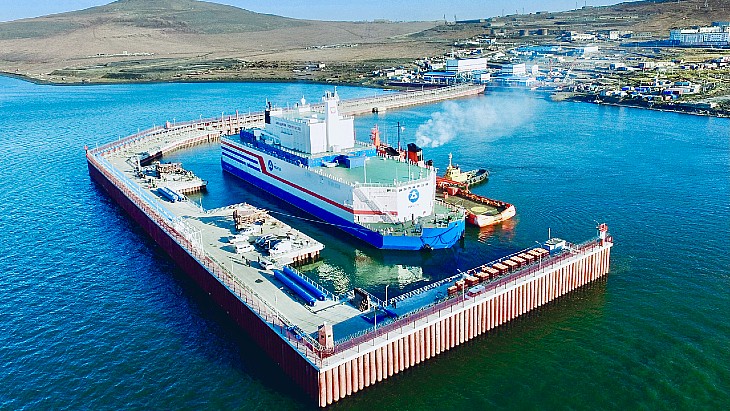
Nuclear fuel has been delivered to Russia's floating nuclear power plant Akademik Lomonosov with the landmark refuelling set to begin before the end of the year.

The fuel was delivered by TVEL, Rosatom's fuel division, via the Northern Sea Route to the site, in Pevek, in the Chukotka region, in northeast Russia. The fuel was manufactured by TVEL's Elektrostal Machine-Building Plant, which is in the Moscow region.

The Akademik Lomonosov, which supplies heat and power to the town, is based on two KLT-40S reactors generating 35 MWe each, which are similar to those used in a previous generation of nuclear powered icebreakers. The fuel for the second reactor is due to be supplied and loaded during 2024.

TVEL said that unlike land-based large reactors which generally require replacement of a proportion of their fuel rods every 12-18 months "in the case of these reactors, the refuelling takes place once every few years and includes unloading of the entire reactor core and loading of fresh fuel into the reactor". It says this means there can be up to 3.5 years between refuellings.

Akademik Lomonosov, which was put into commercial operation in May 2020, was described at the time as a pilot project and a 'working prototype' for a future fleet of floating nuclear power plants and on-shore installations based on Russian-made small modular reactors intended for deployment in hard-to-reach areas of Russia's North and Far-East, as well as for export. Named after the 18th century Russian scientist Mikhail Lomonosov, it is 144 metres long and 30 metres wide, and has a displacement of 21,000 tonnes.

The town of Pevek has a population of about 4000, while the floating plant could potentially supply electricity to a city of 100,000. Since commissioning it is replacing the Bilibino nuclear power plant as it is retired, having operated since 1974, and the Chaunskaya thermal power plant which had been operating for more than 70 years. It also supplies power more widely in the region, including to mining companies involved in the development of the Baimsk ore zone.

Rosatom is already in the process of constructing four floating power units and is targeting the export market for floating nuclear power plants with capacity of at least 100 MWe and an assigned service life of up to 60 years featuring RITM-200M reactors, derived from those used on Russia's latest nuclear-powered icebreakers.Researched and written by World Nuclear News Floating nuclear power plant set for first refuelling : Uranium & Fuel - World Nuclear News
Read More........

At G-20, Biden announces ambitious corridor connecting India, Europe

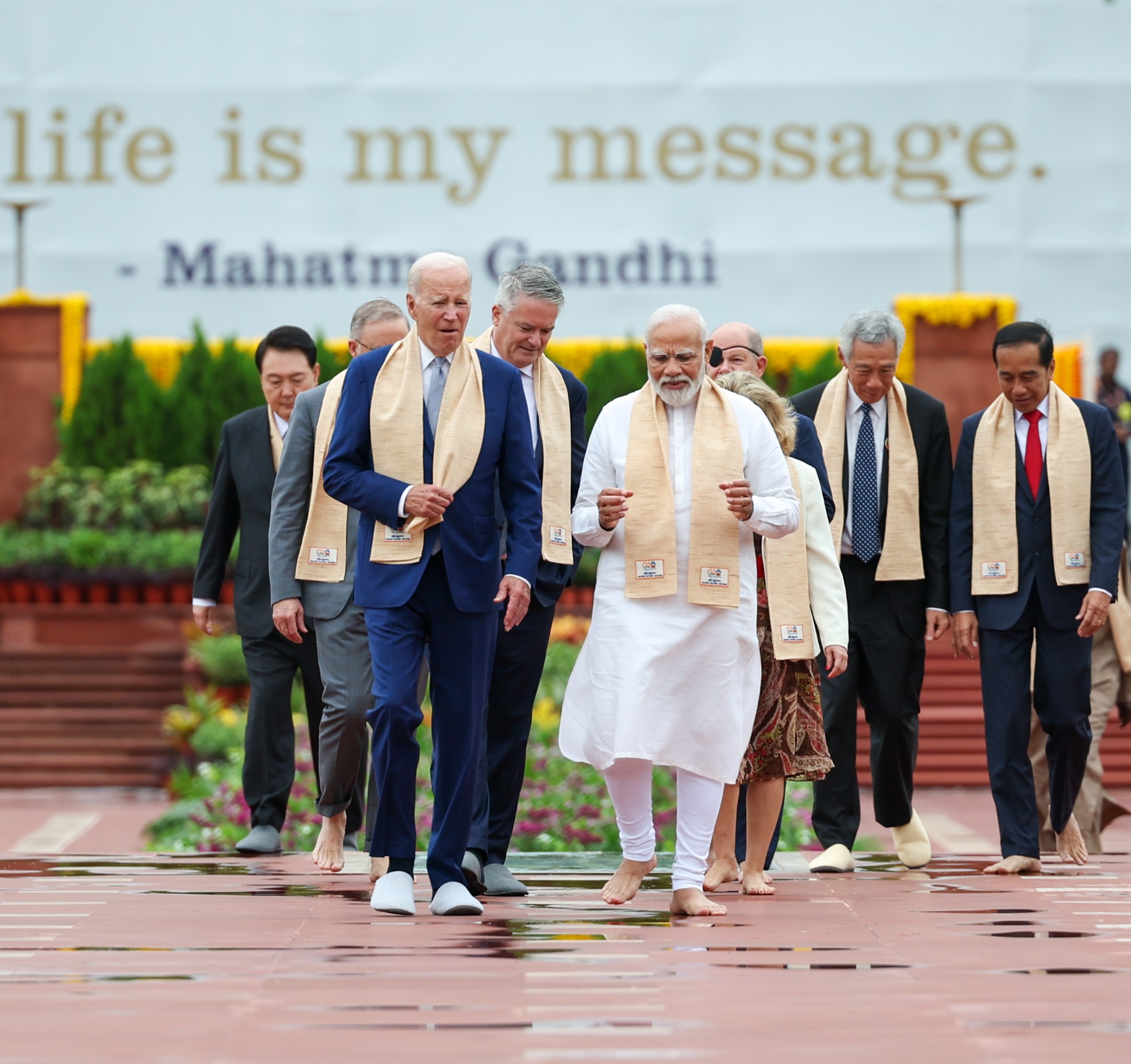
President Biden with PM Modi at Raj Ghat Sept. 10, 2023. PHOTO: X @narendramodi

NEW DELHI – President Biden and several other world leaders announced plans here Saturday afternoon for a new rail and shipping corridor that would connect India and Europe through the Middle East, an ambitious proposal aimed at further connecting a volatile region and countering China’s years-long backing of massive infrastructure projects around the world.

The announcement solidified a preliminary agreement among a range of participants – including the United States, India, Saudi Arabia, Jordan, Israel, the United Arab Emirates and the European Union – and came as leaders of the world’s largest economies tried to work through divisions on a range of thorny issues.

By midafternoon, the leaders here had reached consensus on a 37-page joint declaration on 83 points, several of which referred to Russia’s war in Ukraine. The debate over the war led some to predict that such a statement would prove elusive, particularly given that Russia is a member of the G-20. But they arrived at language that stated that “all states must refrain from the threat or use of force to seek territorial acquisition,” and also stated that “the use or threat of use of nuclear weapons is inadmissible.” The language was not as pointed as it was during last year’s conference and did not explicitly name Russia as the aggressor in the war.

The leaders did highlight the “suffering and negative added impacts of the war in Ukraine” on a range of issues, including global food supply and energy security. But in the dry language of diplomacy, the statement added, “There were different views and assessments of the situation.”

In a Facebook post, Ukraine’s Foreign Ministry spokesman Oleg Nikolenko said the G-20 has “nothing to be proud of” on the language over Russian aggression in Ukraine, and he offered his own edits of how the portions regarding Ukraine should have been written.

The declaration in another section also formalized that the United States would host the G-20 in 2026, overcoming some late opposition from China.

“This is a significant milestone for India’s chairmanship and vote of confidence that the G-20 can come together to address a pressing range of issues and also to deal with hard issues that actually very much [divided] some members from others – including, obviously, Russia’s brutal war against Ukraine,” Jake Sullivan, the national security adviser, said shortly after the deal was reached.

“I have got good news. From our team’s hard work, we have reached an agreement on the G-20 declaration,” Prime Minister Narendra Modi, the summit’s host, said in Hindi, prompting a long round of applause from the G-20 leaders.

Biden came to the conference determined to try to showcase that the G-20 can maintain its relevance even after Chinese President Xi Jinping and Russian President Vladimir Putin sent deputies instead of attending themselves, amid tensions over the war in Ukraine.

Asked whether Xi’s absence affected the summit, Biden said, “It would be nice to have him here but, no, the summit is going well.”

Shortly after the declaration was announced, Biden joined other leaders to announce the rail corridor.

“This is a big deal,” he said. “This is a real big deal.”

The cost of the project was unclear, but senior Biden administration officials view it as a way to link key areas of the world, India to Europe, opening up new trading partnerships and a flow of energy and digital information. Also significant is having Israel working with a historical adversary such as Saudi Arabia; Biden is separately hoping to broker a deal to normalize relations between the two countries.

Deputy national security adviser Jon Finer noted the significance of reaching an agreement in an area that “has, obviously often been a net exporter of turbulence and insecurity.”

“Linking these two regions, we think, is a huge opportunity, building on our broader efforts over the last couple of years to turn the temperature down across the region,” Finer said.

Officials in the countries involved are expected within 60 days to come up with a timeline for the projects – linking energy grids, laying undersea and overland cables, and providing more digital connections. Some of the tasks involve installing hydrogen pipelines from Israel to Europe, which administration officials hope will advance clean energy goals.

The summit took place against the backdrop of a city that largely has been shut down amid tight security, with police officers standing at nearly every intersection and shops and restaurants closed.

Most of the conference meetings were closed to the news media, but Biden entered the opening session planning to outline his opposition to Russia’s invasion of Ukraine.

American officials unsuccessfully lobbied to have Ukrainian President Volodymyr Zelensky address the conference, something he did in person during a Group of Seven gathering in Hiroshima, Japan, and which he did virtually during last year’s G-20 in Bali.

“Our view is that it is fundamentally a good thing when President Zelensky is able to make his case and Ukraine’s case for, you know, how damaging this conflict has been to his people and to his country,” Finer said. “He is the most effective messenger for that. And it’s certainly in a format in which, you know, Russian representatives will be able to give their views about the conflict that is appropriate for Ukraine to be able to offer its perspective.”

Biden arrived at the summit on Saturday morning, walking down a long corridor to greet Modi. “How are you?” he asked as he approached, appearing to jog up a slight incline before the two leaders shook and held hands while examining a G-20 logo that had the motto, “One Earth. One Family. One Future.”

They later met in a large room with three rows of desks in an oval, a chandelier hanging above them and small flags denoting where each country’s leader was to sit.

During the first session, Biden was between British Prime Minister Rishi Sunak and Indonesian President Joko Widodo. Before Biden sat down, several others greeted him, among them leaders from Australia, the Netherlands, Germany and Nigeria.

“This period in the 21st century is a time to give the entire world a new direction. It is a time when age-old problems are demanding new solutions from us,” Modi said in an address to the global leaders as he sat behind a nameplate reading not India but Bharat – the Hindi name for the country – signaling a branding shift that has been the source of controversy for many in the nation.

The negotiations over a joint communiqué had been difficult, especially around language regarding the Ukraine war.

While it did note the harm of the war and the importance of territorial sovereignty, it did not name Russia as the perpetrator and was less direct in some of the language than was agreed to last year during the G-20 in Bali. At that meeting, while noting there were some disagreements, it referred to a U.N. resolution that “deplores in the strongest terms the aggression by the Russian Federation against Ukraine and demands its complete and unconditional withdrawal from the territory of Ukraine.”

When asked about the change in text over the course of a year, Indian Foreign Minister S. Jaishankar said that some conditions have changed in the war.

“Bali was Bali and New Delhi was New Delhi,” he said. “Bali was a year ago and the situation was different. Many things have happened since then.”

He went on to add, “One should not have a theological view of this. New Delhi declaration is responding to the situation of today just as the Bali declaration did to the situation a year ago.”

The language also was the result of a lengthy negotiation. India’s chief G-20 coordinator, Amitabh Kant, said that Brazil, South Africa and Indonesia were helpful in reaching consensus.

“It was a tough, ruthless negotiation that went on for several days nonstop,” he said.

Indian officials expressed frustration that the war has overshadowed other issues, such as successfully negotiating the African Union’s acceptance into the G-20. For the first time, a representative of the African Union joined the gathering, with the chairman of the 55-member bloc, Comoros President Azali Assoumani, being introduced by Modi.“For all our moral idealism in foreign policy, we accept things as they are and find a way around it,” said India expert Aparna Pande of the Hudson Institute. “At the end of the day, you work with what you got.”At G-20, Biden announces ambitious corridor connecting India, Europe
Read More........

Brics+ and the Tricky Business of Balancing Global Geopolitics

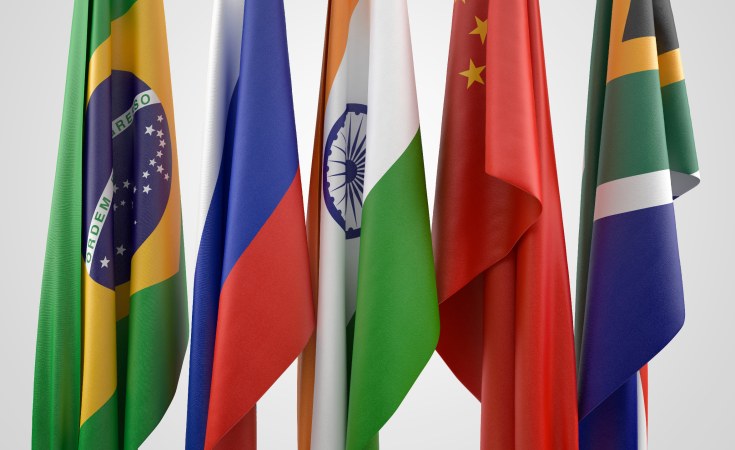
By Priyal Singh: Will an expanded BRICS precipitate a new international order, or collapse under the weight of its internal contradictions? The words of 13th century Persian poet Jalāl al-Dīn Muḥammad Rūmī, 'As you start to walk the way, the way appears,' certainly found new resonance in Johannesburg last week at the 15th BRICS Summit. Apart from expanding the diplomatic club to include Iran, Argentina, Egypt, Ethiopia, Saudi Arabia and the United Arab Emirates, the summit revealed the global south's growing disillusionment with the current structure of the international system. These frustrations have bolstered BRICS' appeal as a counterweight to leading Western countries, such as those composing the G7. More significantly, an expanded BRICS represents a resounding call for international reform by global south states, exclusive from, and in opposition to, traditional Western powers. This unprecedented moment reflects the shifting locus of global power, and has propelled an expanded BRICS to chart a way into unknown territory. Decisions over the nature and trajectory of global order were once the sole preserve of the European 'great' powers, along with the United States (US). The contemporary international system will undoubtedly be shaped by the Asia-Pacific region, Africa, the Middle East and Latin America. If global institutions fail to evolve, international cooperation on pressing issues will inevitably fail If global institutions fail to evolve and accommodate this reality, international cooperation on the most pressing issues of our time will inevitably fail. On paper, this is the fundamental challenge BRICS intends to address in order to bring about a more 'representative, fairer international order, [and] a reformed multilateral system.' How it does so, however, remains poorly defined.  One likely approach is to use the group's combined economic clout to pursue global governance, financial and justice system reform, and alternative paths on specific issues like climate change. Already, the current BRICS states' collective economic output (based on GDP adjusted for purchasing power parity) is roughly US$3 trillion larger than the G7, which includes Canada, France, Germany, Italy, Japan, the US and United Kingdom. (As a non-enumerated member, the European Union is excluded.) With six new BRICS members in 2024, this difference rises to just under US$11 trillion. However, economic output measured by GDP based on current exchange rates places the G7 as the larger combined economy (even with the six new BRICS members). Coordinated action on points of contention may not be as easy for BRICS as for the G7 Regardless, countries in the global south are increasingly poised to challenge the economic dominance of traditional powers. And based on the former's current growth trajectories, will decisively outperform the G7 economies over the coming decades. This combined economic influence could help to secure greater representation and fairer rules and procedures in the United Nations Security Council, International Criminal Court, World Bank and International Monetary Fund - among others alluded to in the BRICS Johannesburg II Declaration. However, coordinating common action on specific points of contention may not be as easy for the expanded BRICS grouping as for the G7. G7 countries have structured their cooperation on global matters around shared liberal political values and norms, particularly on democracy and civil liberties. While these have been threatened in recent years by the rise of populist right-wing administrations, G7 members' considerable normative and political alignment underpins their global economic clout. The expanded BRICS grouping, on the other hand, is a more arbitrary constellation of states with very different (and sometimes diametrically opposed) political systems and values. They range from progressive constitutional democracies to closed and repressive theocracies, to countries experimenting with hybrid authoritarianism. Ironically, BRICS may be in its ascendency due to its ambiguity and loosely articulated vision: An analysis of various governance variables across member countries, including perceptions of political stability, rule of law, government effectiveness and basic freedoms, reveals a high level of variance. Scores for each of these variables show a standard deviation from the mean that is often more than double that of G7 countries. That raises serious questions about BRICS' ability to pursue coherent, coordinated action on global institutional reform, despite members agreeing that the international system is unfairly structured. Without a robust normative basis for cooperation, disagreements over issues such as gender equality, individual rights and liberties, and the character of a new international order, could derail momentum needed for meaningful change.  Ironically, BRICS may well be in its ascendency due to its ambiguity and loosely articulated vision of multipolarity and a reformed international system. However, as the group expands and evolves into something more concrete, difficult issues may not be as easy to kick down the road as before. For example, how do all members justify provisions in the Johannesburg II Declaration on respecting international humanitarian law in conflict situations, increased participation of women in peace processes, and the promotion and protection of democracy, human rights and fundamental freedoms for all? Squaring these provisions with the brazen violations by certain current and incoming BRICS members will test the mettle of the diplomatic club. These contradictions must be overcome for BRICS to muster not only its economic clout, but the moral and political capital to pursue reforms and serve as a counterweight to the G7. Rumi's wisdom still rings true, but as the expanded BRICS group marches towards a new world order, the way ahead may be murkier than initially expected.Priyal Singh, Senior Researcher, Africa in the World, ISS Pretoria. Source: https://allafrica.com/
Read More........

NATO must be ready for long standoff with Russia - Stoltenberg

Photo: U.S. Secretary of Defense

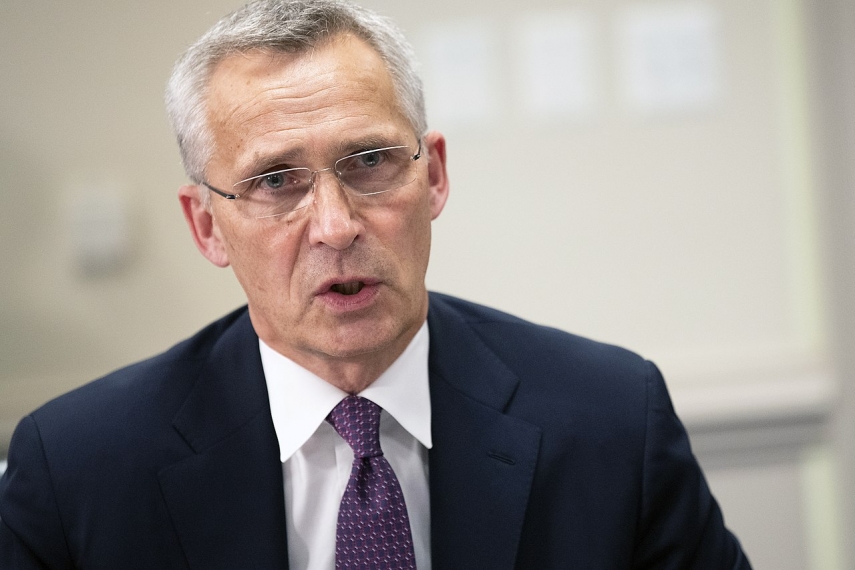
BRUSSELS - NATO must be prepared for a long standoff with Russia beyond the immediate crisis triggered by President Vladimir Putin's year-old invasion of Ukraine, alliance chief Jens Stoltenberg told AFP.

Moscow's war on its pro-Western neighbor has plunged Europe into its most dangerous crisis since World War II and pushed NATO into the biggest overhaul of its defenses since the Soviet Union collapsed.

"President Putin wants a different Europe, wants a Europe where he can control neighbors, where he can decide what countries can do," Stoltenberg, 63, said in an interview a week ahead of the first anniversary of Moscow's invasion.

"We need to be prepared for the long haul, this may last for many, many, many, many years."

The Norwegian head of the US-led alliance said he was wary of predicting how long the renewed face-off between Russia and the West would continue, because change can come suddenly.

"We saw the fall of the Berlin Wall, or we saw 9/11," he said.

NATO would, he said, "always look into where there are opportunities to again come into the situation where there is room for a better relationship, but with the current behavior of the Russian regime, the regime in Moscow, there's no way."

NATO members have not sent their own forces to Ukraine, and some Western officials fear that a direct military conflict could escalate into a nuclear war between the West and Russia.

But since the Russian tanks rolled in, tens of thousands more NATO troops have been deployed to the alliance's eastern flank and a string of European allies have ramped up defense spending.NATO members, spearheaded by the United States, have also sent weaponry worth tens of billions of dollars to Ukraine to help it fight back against Russia. Source: https://www.baltictimes.com/
Read More........

Joe Biden announces new Ukraine assistance package as he makes surprise visit to Kyiv


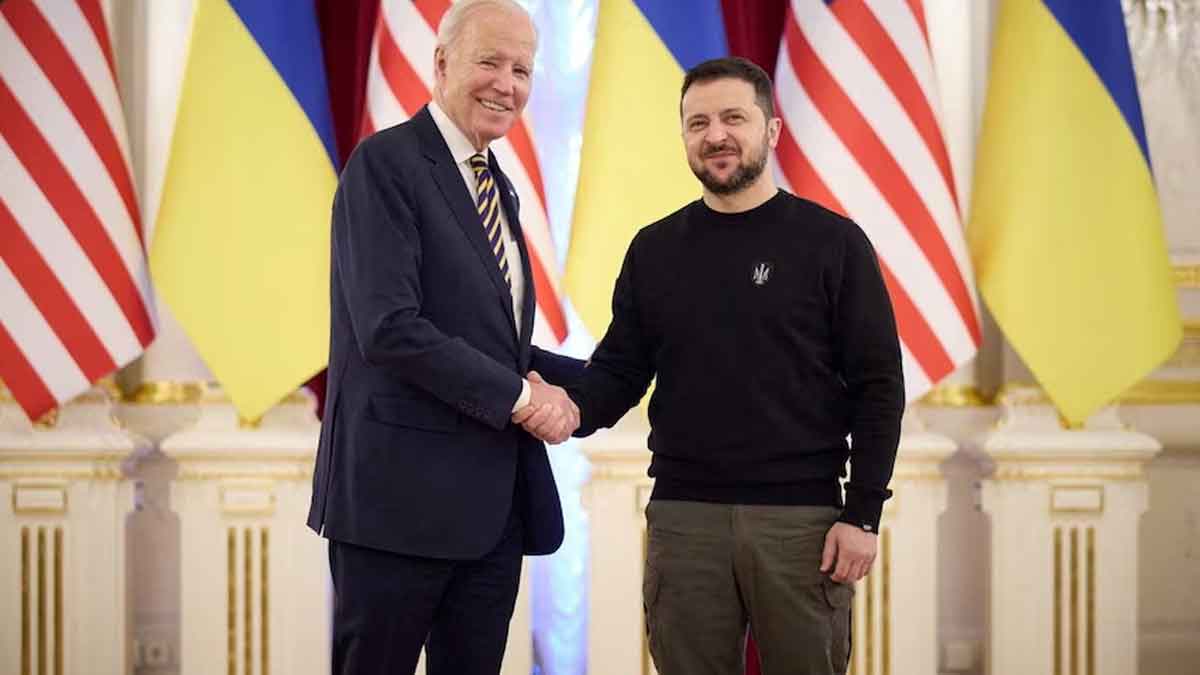
It is the first time US President Joe Biden has visited Ukraine since Russia invaded in February 2022.(Reuters/Ukrainian Presidential Press Service)

US President Joe Biden has made an unannounced visit to the Ukrainian capital Kyiv, days before the first anniversary of Russia's full-scale invasion of Ukraine in 2022.

Air raid sirens blared across the Ukrainian capital as Mr Biden visited Kyiv but there were no reports of Russian missile or air strikes.

He delivered remarks and met with President Volodymyr Zelenskyy at Mariinskyi Palace to announce an additional half billion dollars in US assistance and to reassure Ukraine of American and allied support as the conflict continues.

"One year later, Kyiv stands. And Ukraine stands. Democracy stands," Mr Biden said.

"[Putin] is counting on us not sticking together. He was counting on the inability to keep NATO united. He was counting on us not to be able to bring in others to the side of Ukraine.

"He thought he could outlast us. I don't think he's thinking that right now. He's just been plain wrong."

Mr Biden said Washington would provide Kyiv with a new military aid package worth $US500 million ($A724 million) that would be announced on Tuesday.

He said it would include more ammunition for High Mobility Artillery Rocket Systems (HIMARS).

The US would also be announcing additional sanctions this week, Mr Biden said, against the Russian elite and companies trying to evade sanctions to "back the Russian war machine".

In a speech, Mr Biden commended Ukraine's courage during the war and noted that he had visited Kyiv six times when he had earlier served as vice-president.

"I knew I would be back," he said.

The air raid sirens wailed while both presidents were inside the St Michael's Golden-Domed Cathedral on a square in central Kyiv where burnt-out Russian tanks have been placed.

"Your visit is an extremely important sign of support for all Ukrainians," Mr Zelenskyy said.

"We hope this year, 2023, will become the year of victory against this unprovoked and criminal Russian war against Ukraine."

In a statement, Ukraine's Foreign Minister Dmytro Kuleba said both Mr Biden and Mr Zelenskyy were pleased with the outcome of their talks.

Ukraine is preparing for what it expects to be a major new Russian offensive that some military analysts say is already underway.

Mr Biden's trip fell on the day that Ukraine marks the deaths of more than 100 people — now known as the Heavenly Hundred — at anti-government protests that eventually toppled a Moscow-backed president in 2014.

It also comes just a day before Russian President Vladimir Putin was due to make a major address, expected to set out his country's aims for the second year of the invasion he launched on February 24 last year.The anniversary has taken on more than symbolic significance, becoming what the West views as motivation for the war's deadliest phase as Moscow hurls thousands of conscripts and mercenaries into a winter offensive. Source: https://www.fijivillage.com/
Read More........

Ukraine war: ‘soccer plot’ raises fears of fresh Russian attempts to destabilise neighbouring Moldova

Moldova has been sliding into yet another crisis following the resignation of its prime minister, Natalia Gavrilita, and fears that Russia was plotting a coup to overthrow the pro-western president, Maia Sandu.

At a press conference in the Moldovan capital Chisinau on February 13, Sandu confirmed earlier accusations made by the Ukrainian president, Volodymyr Zelensky, in his speech to the European Council that the Kremlin was about to execute a coup against Moldova.

Zelensky said he had informed Sandu of a “detailed Russian plan” to “break the democratic order in [Moldova] and establish control over it”.

In turn, Sandu said Russia’s plan involved using “saboteurs with military background, camouflaged in civilian clothes, to undertake violent actions, attacks on state institutions and taking hostages”. The coup would involve infiltration by foreign agitators from Russia, Montenegro, Belarus and Serbia, she added.

Sandu’s statement was promptly rejected by the Kremlin, which said the accusations were “completely unfounded and unsubstantiated”.

But Moscow has form for trying to destabilise Moldova as part of its strategy in the war against Ukraine – and, given its geography, Moldova is an easy and convenient target for the Kremlin. These latest revelations may therefore not be surprising, but they are deeply worrying and should dispel any myth that Vladimir Putin’s objectives are limited to Ukraine.  Perilous position: Moldova is vulnerable to destabilisation from the breakaway Russian enclave of Transnistria. Peter Hermes Furian via Shutterstock
A history of subversion

Wedged between Ukraine and Romania – and torn between pro-European and pro-Russian sentiments – Moldova has long been a target of Russian influence-seeking. The conflict in Transnistria, dating back to the break-up of the Soviet Union, remains unresolved to this day – despite ongoing efforts by the Organisation for Security and Cooperation in Europe – and continues to offer Moscow important leverage over both Moldova and Ukraine.

Back in April, several explosions rocked the small breakaway territory, but a feared escalation of violence did not happen.

As the economic crisis in Moldova deepened as a result of the war in Ukraine and the hike in energy and food prices, pro-Russian forces in the country staged large public protests against the government and presidency.

These protests were organised by the so-called Shor party, named after fugitive Moldovan oligarch Ilan Shor, who is reportedly implicated in a political and financial scandal surrounding a major banking fraud involving the disappearance of US$1 billion (£880 million) from three Moldovan banks in 2014 – something he has denied. But the protests are widely viewed as the handiwork of Moscow exploiting ordinary Moldovans’ economic hardship and trying to derail the pro-European course of the country.

Russian threats against Moldova are nothing new. But they have intensified over the past year after Moldova applied for EU membership when Russia invaded Ukraine. The country was granted official candidate status in June 2022.

There are concerns over the future of Moldova’s sovereignty. Many believe this is part of Putin’s plan to return Russia to a great-power status akin to the Soviet Union – the demise of which he has lamented as a “geopolitical catastrophe”. Preventing now-independent countries such as Moldova and Ukraine from sliding into the western orbit of the EU and Nato will remain Putin’s top foreign policy priority in the post-Soviet space.
The football plot

Over the past few days, more details have emerged about the alleged Russian plot in Moldova. Apparently, well-trained and well-equipped foreign agents were meant to infiltrate the ongoing protests, then instigate and carry out violent attacks against state institutions, take hostages and replace the current government.

This may seem far-fetched, but is it? Yesterday, Moldova denied entry to Serbian soccer fans who had planned to support their team, FK Partizan Belgrade, in a Europa Conference League match against the Transnistrian side Sheriff Tiraspol.

While the Montenegrin and Serbian governments sought clarification from Sandu on the allegations, there is a history of Serbian football hooligans being involved in paramilitary activities, including war crimes committed by the notorious Arkan Tigers during the war in Bosnia in the early 1990s.

Moreover, Russia attempted to overthrow the Montenegrin government in October 2016, just ahead of the country’s Nato accession the following year, in a plot eerily prescient of what was allegedly planned recently in Moldova.
Continuing crisis

Even if this latest Russian attempt at meddling in Moldova’s affairs has been successfully thwarted, it is unlikely this will be the end of the Kremlin’s attempts to use Moldova as leverage against Ukraine and the west.

The economic and political crisis in Moldova is real, thus offering Moscow plenty of opportunity to capitalise on people’s concerns over rising food, gas and electricity prices. There is also significant pro-Russian sentiment in both Moldova and Transnistria – this may not be pro-Kremlin sentiment, but it combines an affinity with Russian culture, a nostalgia for the Soviet past, and resentment over the costs of European integration and its uncertain future benefits.

All this clearly plays into Moscow’s hands as it creates uncertainty for the government in Chisinau. It also raises fears in Kyiv of a potential second front on its southern border, close to the city of Odesa. For the EU, it increases the costs not only of keeping Moldova stable, but also of shepherding through the reforms necessary on its path towards EU membership.

The long history of Russian destabilisation efforts in Moldova underlines the need for a clear and decisive response, not only from the government in Chisinau but also from the country’s western allies. Kremlin meddling in Moldovan politics is bound to continue, creating instability and uncertainty about the future status of Ukraine’s critically important neighbour.

Stefan Wolff, Professor of International Security, University of Birmingham, This article is republished from The Conversation under a Creative Commons license. Read the original article.
Read More........

EU proposes 10th sanctions package against Russia

EU flags are seen outside the European Commission in Brussels, Belgium, Jan. 6, 2023. [Photo/Xinhua]

The European Commission proposed a tenth package of sanctions against Russia and Iranian drone suppliers, and banning Moscow from acquiring advanced technology, Commission President Ursula von der Leyen said on Wednesday.

The proposed export bans worth over 11 billion euros (11.75 billion U.S. dollars) will target technological and industrial goods critical for the Russian economy that the country cannot get through backfilling by third countries, she said.

The ban covers electronics, specialized vehicles, machine parts, spare parts for trucks and jet engines, as well as goods for the construction sector that can be directed to Russia's military, such as antennas or cranes.

A ban on the export of dual-use and advanced tech goods to Russia is also part of the new sanctions package. The Commission proposes controls on 47 new electronic components that could be used in Russian weapons systems, as well as on specific rare earth materials and thermal cameras.

Adding these to the existing list of banned products should enable the European Union (EU) to block exports towards Russia of all tech products found on the battlefield. In order to prevent third countries from supplying such goods to Russia, the package targets Iran for the first time.

Next week, a Sanctions Coordinators Forum will bring together the EU member states and international partners, she said, in order to make sure that these sanctions are enforced in a coordinated way.The Commission's proposal requires unanimous approval by all EU member states. (1 euro = 1.07 U.S. dollar) Source: China.org.cn

Read More........

G7 to implement Russian oil price cap `urgently`

G7 industrialized powers vowed Friday to "urgently" move towards implementing a price cap on Russian oil imports in a bid to cut a major source of funding for Moscow's war in Ukraine. The G7 said it was working towards a "broad coalition" of support for the measure but officials in France urged caution, saying a "final" decision could only be taken once all 27 members of the European Union had given their assent. Households on the continent have borne the brunt of rising energy prices, with governments under pressure to alleviate the pain of the resulting high inflation. "Russia is benefitting economically from the uncertainty on energy markets caused by the war and is making big profits from the export of oil and we want to counter that decisively," German Finance Minister Christian Lindner said in a press conference after the move was announced. The aim of the price cap on oil exports was to "stop an important source of financing for the war of aggression and contain the rise in global energy prices", he added. Ahead of Friday's decision, Kremlin spokesman Dmitry Peskov sounded a clear warning. The adoption of a price cap "will lead to a significant destabilisation of the oil markets," he said. Moscow would "simply not supply oil and petroleum products to companies or states that impose restrictions," Russia's Deputy Prime Minister Alexander Novak had warned on Thursday, according to Russian news agencies. "Interference in the market mechanisms of such an important industry ... will only destabilise the oil industry, the oil market. And for this, European and American consumers will be the first to pay," he said. 'Powerful tool' At a summit in June, the G7 leaders agreed to work towards implementing the ceiling on crude sales. In their statement, finance ministers from the G7 said they would "urgently work on the finalisation and implementation" of the long-considered measure, without specifying the cap level. The price cap was "one of the most powerful tools we have to fight inflation and protect workers and businesses in the United States", US Secretary of the Treasury Janet Yellen said in a statement Friday. However, the French finance ministry said technical work on the price cap was still "in progress". "It is clear that no final decision can be taken until we have consulted and obtained unanimous support from all 27 member states of the European Union," it said. "We support all measures that reduce the income that Russia derives from the sale of oil," French Finance Minister Bruno Le Maire added. EU Commissioner Paolo Gentiloni said the bloc aims to find a deal by December 5 for crude oil and February 5 for petroleum products. 'Broad coalition' The G7 also voiced ambition to extend the measure beyond the bloc, saying it was seeking to form a "broad coalition" of support for the oil price cap to "maximise" the effectiveness of the measure. The ministers urged "all countries that still seek to import Russian oil and petroleum products to commit to doing so only at prices at or below the price cap". The push to get as many countries as possible to go along with the cap is expected to be a key topic for discussion by leaders at the G20 summit in Bali on November 15 and 16. The initial cap would be set "at a level based on a range of technical inputs" the G7 ministers said, adding that its effectiveness would be "closely monitored". Analysts warned, however, that the cap may yet fuel another rise in prices. The cap would introduce new risks for the oil market by "potentially disrupting Russian energy supplies", Capital Economics analyst Liam Perch said in June. "This could push global energy prices up further." "The cap may also be effective at reducing the Russian government’s tax revenues," he said, speculating that a cap just below $80 (80 euros) per barrel could "push Russia's budget into a deficit".DailyBangladesh/SA, Source: https://www.daily-bangladesh.com/
Read More........

Sputnik vaccines reliable as AK-47 rifle: Putin


President Vladimir Putin has heralded Russia's COVID-19 vaccine offering as reliable as the country's world-renowned Kalashnikov (AK-47) assault rifle.

During a video conference on Thursday with Deputy Prime Minister Tatyana Golikova, he said, "Our medications are based on technologies and platforms that have been used literally for decades. They are also very modern and up-to-date, and undoubtedly, they are the most reliable and the safest."

"They are as reliable as an AK-47. By the way, it wasn't us who said that, this was said by a European specialist. And I think that he is certainly right," TASS quoted Putin as saying.

The comment came as the country's health officials registered a single-dose version of the Sputnik V vaccine on Thursday, dubbed Sputnik Light.

Putin's comparison referenced the Soviet Union-era weapon that remains popular and widely used still today.

He was quoting a comment originally made by an Austrian doctor earlier this year about the jab's efficacy.

The Sputnik V vaccine works in a similar way to others developed by Oxford/AstraZeneca and Janssen/Johnson & Johnson. It uses a cold-type virus, engineered to be harmless, as a carrier to deliver a small fragment of the coronavirus to the body.

Critics of the Putin administration were sceptical when the vaccine was given speedy regulatory approval in Moscow last year, but late-stage trials have found it offers high levels of protection against Covid-19.

The two-dose version of the jab has now been authorised in dozens of other countries around the world.

Sputnik Light, a single-use version where recipients only get the first jab, was officially authorised in Russia on Thursday.

In a press release, its makers said a single dose had demonstrated 79.4% efficacy during the country's vaccine roll-out.

"The single-dose regiment allows for immunisation of a larger number of people in a shorter time frame, furthering the fight against the pandemic during the acute phase," the statement said.The authorisation comes amid an ongoing international row over whether patents should be waived on vaccine technology to boost production. - BBC Sourcer: https://www.daily-bangladesh.com
Read More........

Russia receives US invitation to attend Biden inauguration


The United States has sent an invitation to Russia to attend the inauguration of President Elect Joe Biden scheduled for January 20 in the capital, the Russian Embassy in Washington, D.C. told TASS.

"We have received the invitation. Ambassador [of Russia in the US Anatoly Antonov] is expected to take part [in the inauguration ceremony]," the diplomatic mission said.

Kremlin Spokesman Dmitry Peskov admitted in late November last year that Ambassador Antonov could attend the inauguration ceremony of the new US president. However, the participation of foreign countries’ representatives at this event is not stipulated, he noted.The US presidential election was held on November 3. On December 14, the US Electoral College convened and confirmed Democratic candidate Joe Biden’s election victory. Biden’s inauguration ceremony is due on January 20, 2021. Source: https://www.daily-bangladesh.com
Read More........

Russia gives over 800,000 people its COVID-19 vaccine


Russia's health minister on Saturday announced that more than 800,000 citizens have received the country's coronavirus vaccine, with more than 1.5 million doses distributed.

Reuters reported that the TASS news agency quoted Mikhail Murashko as saying that from Jan. 1, people who received the Sputnik V vaccine will receive an electronic verification certificate, with the health ministry maintaining a database of all those vaccinated.

Russia has the world's fourth-highest number of COVID-19 cases, with nearly 3.2 million people infected and more than 57,000 fatalities due to the virus, according to data compiled by Johns Hopkins University.

However, Russian officials on Monday said that the country's death toll is three times higher than initially reported, meaning the actual number of COVID-19 fatalities could be more than 186,000 people.

According to Reuters, Sputnik V's two doses use different components and must be administered 21 days apart.

The Russian vaccine, which began its rollout in early December, was found by developers to have a 91 percent efficacy rate at preventing COVID-19 after two doses.

However, the inoculation has received skepticism from some health experts, as the Kremlin announced the vaccine's registration before all clinical trials were completed.

Despite this, the Russian vaccine has already been distributed to other countries.

On Tuesday, Argentina and Belarus began their rollouts of the Sputnik V vaccine, with around 300,000 Argentinians expected to be vaccinated. The Latin American country anticipates receiving 20 million doses within the next two months.

Venezuela also signed a contract this week to acquire enough doses of the Sputnik V vaccine to inoculate 10 million people, Venezuelan Vice President Delcy Rodríguez said, according to Reuters. The country began administering doses in October as part of a clinical trial.

Russian state media reported last week that President Vladimir Putin was slated to receive the vaccine, despite previously suggesting that there was no reason for him to be vaccinated.

Putin previously said that one of his daughters took part in a clinical trial for the Sputnik V vaccine in August.DailyBangladesh/SA Source: https://www.daily-bangladesh.com
Read More........

India on track to acquire Russian S-400 missile defence system

India is on track to acquire the S-400 missile defence system, while it examines the US decision to impose sanctions on NATO ally Turkey’s defence industry over the purchase of the Russian system. Persons familiar with the dynamics of India’s global outreach told ET that since New Delhi maintains autonomy in its foreign policy, the US decision won’t affect the Indian deal. Last week, the external affairs ministry had emphasised that it pursued foreign policy based on national interest and hoped that this was appreciated by partners. “Our relations with Russia stand on their own merits, including in the sphere of military-technical cooperation,” MEA spokesperson had said.Diplomatic sources indicated that India’s case is different from that of Turkey as Ankara went ahead with the purchase of S-400 system despite being a NATO member. The MEA had earlier made it clear that India had no plans to scrap its S-400 deal with Russia despite the US nudge. The Ministry of Defence had also expressed similar views. The Indian government has not been comfortable with repeated US attempts to dissuade it from purchasing the S-400 system. Moreover, India has often taken a strong stand against the use of sanctions as a political tool by one country against the other. In fact, after the June 15 clash with the Chinese PLA on LAC in eastern Ladakh, which resulted in the killing of about 20 Indian military personnel, India had requested Russia to expedite S-400 supply, following which Moscow assured that some systems would reach much before the deadline of 2021-end. /// economictimes Source: Defenseblog-njs.blogspot.com
Read More........

US planning to close last consulates in Russia


Donald Trump’s outgoing administration is planning to close the two remaining US consulates in Russia as President-elect Joe Biden prepares to take office amid high tensions with Moscow, media reports said on Friday. 

The US will close its consulate in the far eastern city of Vladivostok and suspend operations at its post in Yekaterinburg, CNN reported, citing a December 10 letter sent to Congress from the State Department. 

The move comes in “response to ongoing staffing challenges for the US Mission in Russia in the wake of the 2017 Russian-imposed personnel cap on the US Mission and the resultant impasse with Russia over diplomatic visas,” the report said, citing the letter.

Ten diplomats assigned to the consulates will reportedly be relocated to the US embassy in Moscow, while 33 local staff will lose their jobs. 

“No action related to the Russian consulates in the United States is planned,” CNN cited the letter as saying.

The closures would leave the embassy in Moscow as the United States’ last diplomatic mission in Russia.

In March 2018 Moscow ordered the closure of the US consulate in St Petersburg amid a diplomatic spat sparked by the poisoning of Sergei Skripal on UK soil.

It was unclear whether the closures would happen before January 20, when President-elect Biden takes office.

AFP reached out to the State Department for comment on the report, but did not receive a response.

On Friday Secretary of State Mike Pompeo said Russia was “pretty clearly” behind a devastating cyberattack on several US government agencies that security experts say could allow attackers unfettered access to critical IT systems and electric power grids.

Yohannes Abraham, executive director for the Biden transition team, said the hack was of “great concern” and that under the new administration cyber attacks would meet a response inflicting “substantial cost.”Russia has denied any involvement in the cyberattacks. - AFP Source: https://www.daily-bangladesh.com/
Read More........

India to produce 300 million doses of Sputnik V vaccine


DEC 18, 2020 MOSCOW: India will produce about 300 million doses of the Russian Sputnik V coronavirus vaccine in 2021, Head of the Russian Direct Investment Fund (RDIF) Kirill Dmitriev said. "In India, we have agreements with four large manufacturers. ... India will produce about 300 million doses or more of the vaccine for us next year," he said, in an interview to Rossiya 24 TV channel, quoted by Tass News Agency. Tass further reported that Dmitriev noted, out of 110 production sites that negotiated production of Sputnik V, RDIF chose 10 that meet its requirements. "The Russian Sputnik V will be actively produced in the world and we see that this is built on a safe platform based on the human adenovirus," Dmitriev added. The Russian embassy in India on Friday, quoting the RDIF CEO, said that Russia is testing the first samples of its Sputnik V vaccine against COVID-19 that were produced in India. Sputnik V, the world's first COVID-19 vaccine, is over 95 per cent effective, said Russian President Vladimir Putin on Thursday. Taking to Twitter, Russia's Ministry of Foreign Affairs (MFA) cited Putin saying that some health specialists have claimed that the vaccine's protection level reaches up to 96-97 per cent. The world COVID-19 caseload is nearing 75 million cases, as per the latest updates by Johns Hopkins University. The COVID-19 Dashboard by the Center for Systems Science and Engineering (CSSE) at Johns Hopkins University (JHU) reported that the world tally stands at 74,952,221 and 1,662,127 fatalities due to the virus, as of 9:56 am IST. About 42,318,910 patients -- who tested positive for COVID-19 worldwide -- have recovered from the disease, according to the dashboard further reporting that India continues to maintain pole position when it comes to most recoveries in the world with as many as 9,520,827 recoveries reported in the country. Copyright © Jammu Links News, Source: Jammu Links News
Read More........

Karabakh ceasefire breached: Russian army says


The Russian army on Saturday reported a violation of the ceasefire that ended the conflict between Azerbaijan and Armenia in November in the breakaway region of Nagorno-Karabakh.

“One case of ceasefire violation was reported on 11 December in the Hadrut district,” said a statement from the Russian Defence Ministry, which has deployed peacekeepers to the region.

The Armenian army reported attacks from Azerbaijan on two villages that are under the control of Karabakh forces.

The Azerbaijani Defence Ministry said “adequate countermeasures” had been taken against “provocations” from the other side but added that the truce was “currently being respected”.

A spokesman for the Russian peacekeeping forces confirmed “exchanges of fire with automatic weapons”, telling the Ria Novosti press agency that requests to respect the ceasefire had been sent to both parties.

Earlier in the day, Karabakh forces announced that three of their fighters had been wounded in an attack by Azerbaijani forces.

Azerbaijani troops attacked Armenian fighters on Friday evening and “three were wounded in the ensuing firefight”, the territorial defence ministry said.It was Russia’s first report of a violation since the peace deal was reached on November 10. Source: https://www.daily-bangladesh.com
Read More........

Russia slams leakage of IAEA report on Iran


Russia has condemned to the leak of the International Atomic Energy Agency's (IAEA) confidential report on Iran's nuclear program. 

"Yet another confidential #IAEA report on #Iran was leaked to mass media immediately upon its circulation in Board of Governors," Russian Ambassador and Permanent Representative to the International Organizations in Vienna Mikhail Ulyanov wrote in his Twitter account on Friday. 

"The Ambassador of Iran in his Twitter account has already reacted by suggesting to strengthen mechanisms of confidentiality. Good idea but will it help?," Mr. Ulyanov added. Earlier, Iranian Ambassador and Permanent Representative to the International Organizations in Vienna Kazem Gharibabadi in a Twitter message said: "@iaeaorg confidential report, based on Iran's confidential letter, appeared in Media immediately even before the BoG Members could track it down. Agency is not merely responsible to update the development, but shall ensure confidentiality of safeguards information." Source: https://www.daily-bangladesh.com
Read More........

Argentine president to get Russia vaccine to dispel fears


Argentine President Alberto Fernandez said on Thursday that he would be the first person in Argentina to be injected with Russia’s Sputnik V coronavirus vaccine in order to dispel public fears.

“I will be the first to be vaccinated so that no one need be afraid,” Fernandez told a press conference in Buenos Aires, where he announced the purchase from Russia of enough vaccines for 10 million people.

The president sought to calm fears over mass coronavirus vaccinations and the Russian vaccine in particular.

Fernandez said he would receive his dose once the vaccine is approved by Argentina’s National Administration of Drugs, Food and Medical Technology.

“We will have enough doses to vaccinate 10 million Argentines,” Fernandez said.
A first shipment of 600,000 doses will be used to inoculate 300,000 people (two doses per person) before the end of the year, he said.

In January, doses for a further 5 million people are expected, with the remainder of the inoculations needed for a total of 10 million arriving in February, the president said.

The Sputnik vaccine’s developers say it is 95 percent effective based on interim trial results. However, it’s yet to complete its third and final phase of trials involving some 40,000 volunteers.

Argentina has been hit particularly badly by the coronavirus pandemic, surpassing 40,000 deaths from the disease this week, and accumulating more than 1.5 million cases.

The agreement with Russia is the third signed by the Argentine government to acquire Covid-19 vaccines.The other two are joint efforts with Mexico for the British AstraZeneca vaccine with Covax, a mechanism set in motion by the World Health Organization to guarantee equitable global access to vaccines. Source: https://www.daily-bangladesh.com/
Read More........

Russia slams leakage of IAEA report on Iran


Russia has condemned to the leak of the International Atomic Energy Agency's (IAEA) confidential report on Iran's nuclear program. 

"Yet another confidential #IAEA report on #Iran was leaked to mass media immediately upon its circulation in Board of Governors," Russian Ambassador and Permanent Representative to the International Organizations in Vienna Mikhail Ulyanov wrote in his Twitter account on Friday. 

"The Ambassador of Iran in his Twitter account has already reacted by suggesting to strengthen mechanisms of confidentiality. Good idea but will it help?," Mr. Ulyanov added. Earlier, Iranian Ambassador and Permanent Representative to the International Organizations in Vienna Kazem Gharibabadi in a Twitter message said: "@iaeaorg confidential report, based on Iran's confidential letter, appeared in Media immediately even before the BoG Members could track it down. Agency is not merely responsible to update the development, but shall ensure confidentiality of safeguards information." Source: https://www.daily-bangladesh.com/a>
Read More........

COVID-19: Russia agrees to produce Sputnik V vaccine in India


NOV 27, 2020 MOSCOW: The Russian Sovereign Wealth Fund and India's pharmaceutical company Hetero have agreed to produce over 100 million doses per year of the Russian COVID-19 vaccine Sputnik V in India, according to a statement on Sputnik V Twitter account on Friday. The Russian Direct Investment Fund (RDIF) and Hetero intend to start the production of Sputnik V in the beginning of 2021. Russia became the first country to register the world's first COVID-19 vaccine on August 11. Sputnik V, named after Russia's first satellite, is developed by the Gamaleya National Research Centre for Epidemiology and Microbiology (GNRCEM) of the Russian Healthcare Ministry. On Tuesday, the GNRCEM and RDIF declared results obtained during the second interim data analysis of the largest double-blind, randomised, placebo-controlled phase III clinical trials in Russia involving 40,000 volunteers. "It has shown a 91.4 per cent efficacy on day 28 after the first dose while preliminary data from volunteers obtained 42 days after the first dose(corresponds with 21 days after the second dose) indicates an efficacy of the vaccine above 95 per cent," stated press statement issued by the RDIF. Kirill Dmitriev, CEO of the RDIF, said that the agreement between the RDIF and Hetero will pave the way for the production of the safe and highly effective Sputnik V vaccine on Indian soil. "We are delighted to announce the agreement between RDIF and Hetero that will pave the way to the production of the safe and highly effective Sputnik V vaccine on Indian soil. The vaccine's interim clinical trial results show 95 per cent efficacy on the 42nd day after the first dose," he was quoted by the statement on Sputnik V Twitter account. "I am confident that Sputnik V should become an integral part of the national vaccine portfolio of every country willing to protect its population from the coronavirus". Thanks to our cooperation with Hetero, we will be able to significantly increase production capacity and provide people of India with an efficient solution in this challenging period of the pandemic," he added. B. Murali Krishna Reddy, Director - International Marketing, Hetero Labs Limited, meanwhile said that the collaboration is another step towards their commitment in the battle against COVID-19 and realising the objective of 'Make-in-India' campaign. "We are pleased to collaborate with RDIF as a manufacturing partner for the most anticipated Sputnik V vaccine for the treatment of COVID-19. While we look forward to the clinical trial results in India, we believe that manufacturing the product locally is crucial to enable swift access to patients. This collaboration is another step towards our commitment in the battle against COVID-19 and realising the objective of the 'Make-in-India' campaign as envisioned by our Prime Minister of India (Narendra Modi)," he said. Copyright © Jammu Links News, Source: Jammu Links News
Read More........

Dr Reddy's partners with BIRAC for Sputnik V trials in India


Indian pharma major Dr Reddy's said it has entered into a partnership with Biotechnology Industry Research Assistance Council (BIRAC) set up by the Department of Biotechnology (DBT) for advisory support on clinical trials of Russian Covid-19 vaccine Sputnik V in India.

The partnership will allow Dr Reddy's to identify and use some of BIRAC's clinical trial centres for the vaccine, which are funded under the National Biopharma Mission (NBM), implemented by the Project Management Unit-NBM at BIRAC. The company will also have access to Good Clinical Laboratory Practice (GCLP) labs to conduct immunogenicity assay testing of the vaccine.

"We are pleased with the collaboration with BIRAC as an advisory partner for clinical trials of the Sputnik V vaccine in India. We look forward to working with them to accelerate our efforts in bringing the vaccine to India," Satish Reddy, Chairman, Dr Reddy's Laboratories, said in a statement.

Earlier this month, Dr Reddy's and Russia Direct Investment Fund (RDIF) received approval from the Drugs Controller General of India (DCGI) to conduct an adaptive phase 2/3 human clinical trial for the Sputnik V vaccine in India.

"The government is committed to fast track clinical development of COVID vaccine candidates and provide facilitation to accelerate market readiness of a suitable vaccine," said Renu Swarup, Secretary, DBT and Chairperson, BIRAC.

On August 11, the Sputnik V vaccine developed by the Gamaleya National Research Institute of Epidemiology and Microbiology was registered by the Ministry of Health of Russia and became the world's first registered vaccine against Covid-19 based on the human adenoviral vector platform. 
Opportunity for India as Russia ready to produce Covid vax at foreign sites of partners

India has a huge opportunity to be the next big hub for vaccine production after Russia announced that it will manufacture Covid-19 vaccines at foreign sites with partners.

Amir Ullah Khan, economist at MCRHRDI of the Government of Telegana, and former senior advisor for Bill and Melinda Gates Foundation, said, "As Russia is keen to work with other countries, including India, this is a huge opportunity for us to be the next big hub for vaccine production. India has played an important role with the most prominent partnership of Dr. Reddy's lab with the Russian Development Investment Fund. The lab will conduct clinical trials and provide Sputnik V for coronavirus in India."

Russia has recently expressed the willingness to produce vaccines at foreign sites. It is very encouraging and a huge opportunity for India which is among the largest manufacturers of generic drugs and vaccines in the world. It is home to half a dozen major vaccine makers which are developing vaccines against the virus that causes Covid-19.

"With India's increasing experience in manufacturing vaccines and crucial role in product innovation that is affordable, the country is foreseen as a growing vaccine hub. About 60 per cent of all vaccines worldwide are manufactured in India and it can be world's door to vaccines," said Gajendra Singh, a public health expert. Source: https://southasiamonitor.org/
Read More........