
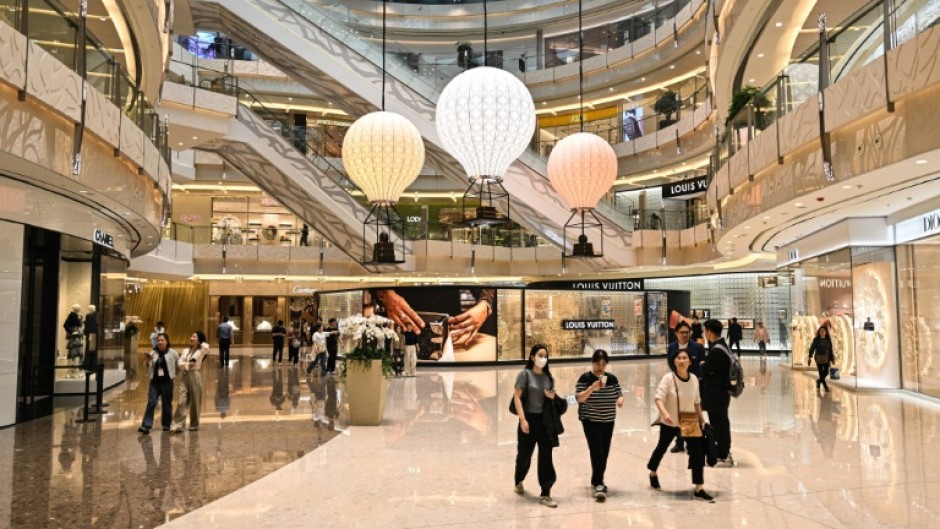
Chinese consumers in Beijing mulled their their spending habits and said they are prepared to forego American brands if that means avoiding the pinch from the escalating trade war with Washington.
Some worried prices of their favorite products could escalate after US President Donald Trump's tariffs came into force Wednesday.
Outside a shopping mall in central Beijing, massage therapist Gao Xin, 26, listened to music on his iPhone and considered whether his next device would have to be a different brand.
"I have always used (US products) in the past, including the (phone) I use now, but if there is really a big wave of price increases, I may choose domestic ones."
Tariffs levied by both Beijing and Washington stand to have a complex impact on prices of goods from around the world as supply chains are hit by higher costs of components or equipment.
But prominent American brands like Apple -- even though it produces phones in China -- are an easy target for anxiety about price hikes caused by the trade war.
Nearby, a man sporting Oakley sunglasses said he would switch to a non-US brand if his favourite products became more expensive.
AFP | Pedro PARDO
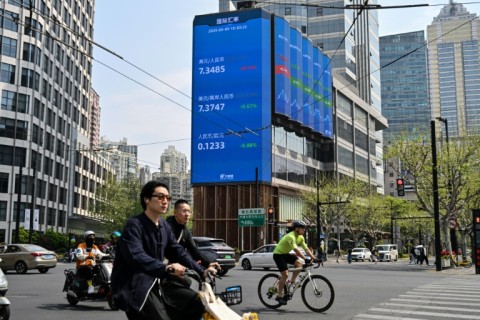
China imported around $163 billion-worth of goods from the United States in 2024 -- 6.3 percent of the Asian country's imports.
After a tit-for-tat volley between Washington and Beijing, China faces cumulative tarrifs of 104 percent -- the highest imposed by Trump's sweeping assault on global trade.
"It's very worrying," said lawyer Yu Yan, 54, adding that she sees echoes of the Great Depression in recent events.
"The economy may fall into a depression, which is something we all don't want to see," she told AFP.
China's economy is already struggling from a property crisis, low consumption and high government debt.
The new tariffs could hurt the country's goal of achieving around five percent growth this year, Nomura analysts said last week.
- Heating up -
Stock markets around the world tumbled as Trump's measures against dozens of trading partners came into effect.
Some countries dispatched envoys to Washington to negotiate, while China -- Washington's top economic rival but also a major trading partner -- vowed to take "firm and forceful" steps.
Retaliatory duties of 34 percent are due to take effect just after midnight.
AFP | HECTOR RETAMAL
In Beijing, massage therapist Gao said he saw the tariffs that Beijing and Washington were lobbing at each other as "a means of intimidation".
"I think there will definitely be an impact, but for most ordinary people, I don't think it will be a big problem, unless you are doing some foreign trade," he said.
Tech professional Sun Fanxi said reading about the tit-for-tat measures made her nervous.
"I'm scared that (tariffs) will lead to a real hot war," the 27-year-old said. "That would be bad for everyone."
But she added that no matter what happens, she fully supports her country's moves.
"If the country wants us to do something, then so be it," she said.By Sam Davies Beijing consumers mull spending habits as tariffs kick in


