TPG suffers data breach impacting 280,000 customers


Posted by Harry Baldock : Attackers reportedly hacked into an order management system from TPG’s subsidiary, the broadband provider iiNet Australia’s TPG has become the latest telco to suffer a major cybersecurity breach this weekend, with data having been exfiltrated from its ISP subsidiary, iiNet.

The breach occurred on August 16, where reports suggest it was quickly detected and contained. Nonetheless, the attack reportedly compromised around 280,000 active email addresses; 20,000 active landline phone numbers; 10,000 iiNet customer names, street addresses, and phone numbers; and 1,700 modem setup passwords.

“We unreservedly apologise to our iiNet customers impacted by this incident,” TPG said in a statement to the Australian Securities Exchange. “We will be taking immediate steps to contact impacted iiNet customers, advise of any actions they should take and offer our assistance. We will also contact all non-impacted iiNet customers to confirm they have not been affected.”

No sensitive customer information, like bank details or personal identity documents, was impacted by the breach, as this data was not stored in the iiNet order management system.

“We do not currently have any evidence to suggest an impact to our broader systems or other customers,” TPG said.

TPG says it is working closely with the Australian Cyber Security Centre, National Office of Cyber Security, Australian Signals Directorate, and the Office of the Australian Information Commissioner to better understand the breach and take appropriate action.

Investigations into how the attackers gained access to these systems are underway, with early indications suggesting that account credentials had been stolen from an employee.

The first half of this decade has not been kind to TPG when it comes to cybersecurity. The company’s Hosted Exchange service, which provides email hosting for iiNet and Westnet business customers, was notably hacked at the end of 2022, impacting around 15,000 business customers. The attackers appeared to be accessing customers’ cryptocurrency and financial information.

Investigations into this attack are still ongoing.

Both attacks combined, however, still pale in comparison to that experienced by TPG’s rival Optus in 2022, when bad actors gained access to the data of up to 10 million of the company’s current and former customers. Illegally obtained information included customers’ names, dates of birth, home addresses, and more.

While a ransom of $1.5 million was initially demanded for the return of the data, the attacker ultimately backed down, allegedly deleting the stolen data due to the unwanted attention it garnered from law enforcement.Keep up with all the latest telecoms news with the Total Telecom newsletter TPG suffers data breach impacting 280,000 customers | Total Telecom
Read More........

Maldives world's 1st country to eliminate mother-to-child transmission of HIV, syphilis and hepatitis B


IANS Photo

New Delhi,  (IANS): In a landmark public health achievement, Maldives has become the first country in the world to achieve ‘triple elimination’ of mother-to-child transmission (EMTCT) of hepatitis B, HIV and syphilis, the World Health Organization (WHO) said on Monday.

Maldives was currently validated by the WHO for eliminating -to-child transmission hepatitis B. The country, had, achieved WHO validation or EMTCT of HIV and syphilis in 2019.

"Maldives has shown that with strong political will and sustained investment in maternal and child health, elimination of mother-to-child transmission of these deadly diseases, and the suffering they bring, is possible,” said Dr Tedros Adhanom Ghebreyesus, WHO Director-General.

“This historic milestone provides hope and inspiration for countries everywhere working towards the same goal," he added.

Mother-to-child transmission leads to infections that affect millions worldwide.

In the WHO South-East Asia Region alone, provisional estimates indicate that in 2024, more than 23 000 pregnant women had syphilis and over 8,000 infants were born with congenital syphilis.

About 25,000 HIV-positive pregnant women required treatment to prevent transmission to their babies, while hepatitis B continues to affect more than 42 million people in the Region, the WHO said.

“The landmark feat is an important step towards ‘Healthy Beginnings, Hopeful Futures,’ for improving maternal and newborn health by ending preventable deaths and prioritising long-term well-being," said Dr Catharina Boehme, Officer-in-Charge, WHO South-East Asia Regional Office.

In Maldives, over 95 per cent of pregnant women have received antenatal care, with nearly universal testing for HIV, syphilis and hepatitis B.

With a strong strong immunisation system, no babies were born with HIV or syphilis in 2022 and 2023. A 2023 national survey confirmed zero hepatitis B among young children (first grade of school), surpassing elimination targets, the WHO said."This historic validation is a moment of immense pride for the Maldives and a reflection of our nation’s steadfast commitment to protecting mothers, children and future generations,” said Abdulla Nazim Ibrahim, Minister of Health, Maldives, while pledging to sustain the progress for the future. Maldives world's 1st country to eliminate mother-to-child transmission of HIV, syphilis and hepatitis B | MorungExpress | morungexpress.com
Read More........

Singapore’s national identity excludes those who don’t look like a ‘regular family’

Pavan Mano, King's College London

Nationalism usually works on the basis that a nation should imagine itself as a “we”, with a common identity, history and culture. But it doesn’t always clearly say who the “we” are. Instead, it often works by saying who doesn’t belong – frequently by characterising these people in racialised ways.

Singapore is an interesting case study. Since independence in 1965, the small city-state has explicitly committed to a policy of multiracialism and multiculturalism. This principle is enshrined in its constitution, is widely accepted by Singaporeans and has become a firm pillar of national discourse.

Given this commitment, how does nationalism create exclusion in Singapore and what other forms could this take? In my March 2025 book, Straight Nation, I analyse Singapore’s version of a national identity to show how, while avoiding overtly racialised rhetoric and discrimination, it can define belonging in other ways.

Singaporean nationalism excludes some sections of society mainly through maintaining a set of heterosexual familial norms. This is one reason for the book’s title – it calls attention to how straightness sits at the heart of Singaporean identity. A certain kind of straight life is taken to be the model behaviour of a “normal” citizen.

Some of the things one is expected to do include starting a family – by meeting a member of the opposite sex, getting married and having children. This very specific version of heterosexuality is taken as the default in Singapore, and it ends up excluding a whole range of people.

Family and the nation

Heterosexuality being taken as normal and the expectations placed on the nuclear family are not uniquely Singaporean issues. But because of Singapore’s small size, the state has an outsize capacity to influence both how the “normal” Singaporean ought to live and the consequences that follow.

One of the most visible ways people are affected is through the public housing system. Almost 80% of Singaporean residents live in flats built by the country’s public housing authority, the Housing and Development Board (HDB). These flats are so ubiquitous that Singapore’s former prime minister, Lee Hsien Loong, referred to them as “national housing” in 2018.

The catch is that, with some small exceptions, one has to be married to buy a HDB flat. And because same-sex marriage is not recognised in Singapore, heterosexual marriage becomes a condition of access to this national symbol.

This obviously affects LGBTQ+ people, limiting their ability to access public housing and live independently. But the link between heterosexual marriage and public housing affects a whole range of other people. These include single people and parents, those who choose not to get married and people who are divorced.

There are other examples that demonstrate how it is taken as common sense that one’s life revolves around the nuclear family in Singapore – even though this might not be the case for everyone.

The opening anecdote in Straight Nation shows how the state treats the heterosexual nuclear family as containing the most important set of social relations. Like many other countries at the height of the COVID-19 pandemic, the Singaporean government imposed a lockdown from April to June 2020. When it ended, restrictions were lifted in stages.

Initially, only some in-person interactions were allowed. Singapore’s then-health minister and current deputy prime minister, Gan Kim Yong, said: “Children or grandchildren can visit their parents or grandparents”. He suggested this would “allow families to spend time and provide support to one another” after eight weeks of isolation.

Until the restrictions were further eased 17 days later, visiting one’s parents or grandparents was the only form of in-person social interaction permitted. There was no mention as to what people without a family or estranged from them were meant to do for support. The same applies to people reliant on extended family, such as those who have no have no surviving parents or grandparents, or even those who depend on a close friend.

Again, this assumption can produce exclusions that go beyond sexual difference. To be clear, not everyone will be affected in the same way. But reading Singapore as a straight nation and identifying how one particular kind of heterosexual expression is reified is helpful.

It allows onlookers to ask how these norms can place different kinds of pressure on different people. And perhaps identifying the way in which so many people are affected by this regime of straightness will also help Singapore imagine a future that is fairer and more liveable for everyone.The Conversation

Pavan Mano, Lecturer in Global Cultures, King's College London

This article is republished from The Conversation under a Creative Commons license. Read the original article.

Read More........

India tops Asia Pacific in AI adoption with 56 pc of city adults using Gen AI: Report

IANS Photo

Bengaluru, (IANS): India has emerged as the leader in artificial intelligence (AI) adoption across the Asia Pacific region, with more than half of metro adults actively using generative AI this year, a new report said on Tuesday.

The data compiled by Forrester highlights that 56 per cent of Indians living in cities are using generative AI tools in 2025, up from 44 per cent in 2024, making India the frontrunner in the region.

The report shows that Indian consumers are not only quick to adopt AI but also have the highest levels of AI knowledge globally.

Around 63 per cent of Indian adults say they understand AI well, compared to just 18 per cent in Australia and 26 per cent in Singapore.

Only 5 per cent of Indians said they did not understand AI, the lowest percentage worldwide.

Among different age groups, millennials stand out as the most knowledgeable, with nearly 69 per cent showing strong AI understanding.

However, the research also reveals a trust paradox. While 45 per cent of Indians see AI as a serious threat to society, 66 per cent of those who are knowledgeable about AI also trust the information it provides.

This reflects how greater awareness of AI brings both caution and confidence. For example, 64 per cent of Indian consumers trust AI-powered language translation services, much higher than in Australia (27 per cent) or Singapore (38 per cent).

When it comes to managing AI risks, Indians place the most confidence in long-established companies and big tech firms, with 58 per cent trusting these players.

Highly regulated institutions such as banks also enjoy significant trust. This trust level is much higher than in Australia and Singapore, where private companies typically inspire less confidence.

“India’s AI landscape presents a remarkable combination of high adoption, sophisticated understanding, and pragmatic scepticism,” said Vasupradha Srinivasan, principal analyst at Forrester.“Indian consumers are discerning users who understand both AI’s potential and its risks. This creates an environment where transparency, security, and credibility become competitive strengths for enterprises,” Srinivasan added. India tops Asia Pacific in AI adoption with 56 pc of city adults using Gen AI: Report | MorungExpress | morungexpress.com
Read More........

Hambantota International Port grows by 22% in 2024


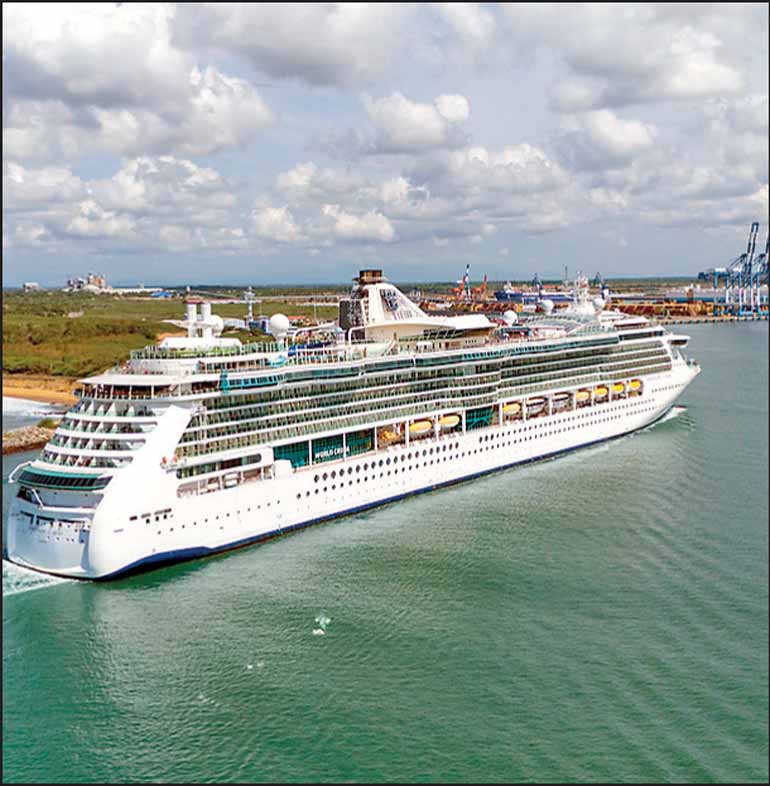
Luxury cruise liner entering the port

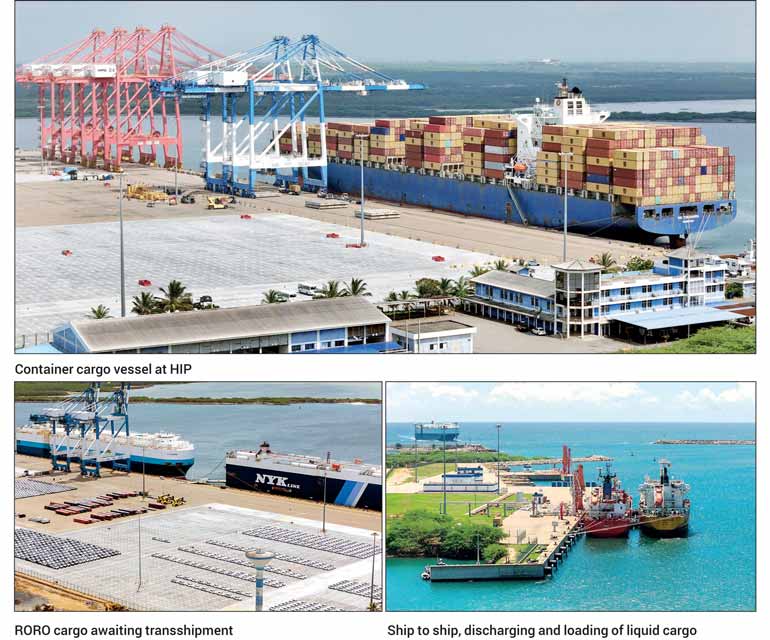
The Hambantota International Port (HIP) has achieved an impressive growth rate of 22% in 2024, matching its performance from the previous year.

With its sights set on even higher numbers in 2025, the port is implementing upgrades to its infrastructure, including the introduction of gantry and yard cranes in the container yard.

“These enhancements are part of HIP’s strategy to meet the growing demands of the shipping and logistics markets while positioning itself as a key player in the Indian Ocean region,” HIP said in a statement.

The port’s bulk and break-bulk cargo sectors saw remarkable progress in 2024. During the first half of the year, volumes rose by 134% compared to the same period in 2023, increasing from 236,012 metric tons to 552,297 metric tons. This surge was largely attributed to the recovery of Sri Lanka’s construction sector, which collapsed in 2022, leading to a spike in cement imports. HIP has also cemented its reputation as a hub for bulk cargo distribution in Sri Lanka, with further growth expected by year-end.

Gas operations at the port also flourished, with LPG volumes increasing by 46% in the first half of 2024, climbing from 127,232 metric tons to 185,214 metric tons. The port recorded a 100% increase in LPG throughput during the second quarter compared to 2023. HIP expanded its services in the energy sector by offering LPG vessel gas-ups and direct bunker supplies, while also preparing for liquid bulk ship-to-ship operations. These developments emphasise HIP’s focus on promoting the energy sector as a key growth market.

A groundbreaking achievement for HIP in 2024 was the launch of its inaugural container transshipment service in April, operated by the Mediterranean Shipping Company (MSC). HIP transitioned into a fully-fledged container port, handling 43,777 TEUs by mid-year, a staggering increase from just 44 TEUs during the same period in 2023. This milestone marked a 99,300% growth in the container segment and positioned HIP as a potential container transfer centre in the region. To support this new operation, the port is developing a dedicated container yard to handle transshipment services.

Now operating across five key sectors, the port has solidified its position as a multipurpose facility. Guided by its five-pillar growth strategy – integrated logistics, marine services, port services, energy hub, and port-related industries – HIP has established itself as a key player in the maritime industry.

As the Indian Ocean region becomes increasingly competitive in the shipping and logistics sectors, HIP is gearing up to attract greater volumes. With its strategic location, upgraded infrastructure, and efficient services, the port is well-positioned to become a gateway for Sri Lanka’s southern hinterland while expanding its focus on transshipment and relay services. These efforts are expected to drive significant growth in the coming years, ensuring HIP’s continued success as a regional maritime hub while strengthening Sri Lanka’s position on the global maritime route. Hambantota International Port grows by 22% in 2024 | Daily FT
Read More........

China says ready to usher new era of development in Sri Lanka

Chinese President Xi Jinping expresses willingness to collaborate during historic meeting with President Anura Kumara Dissanayake in Beijing
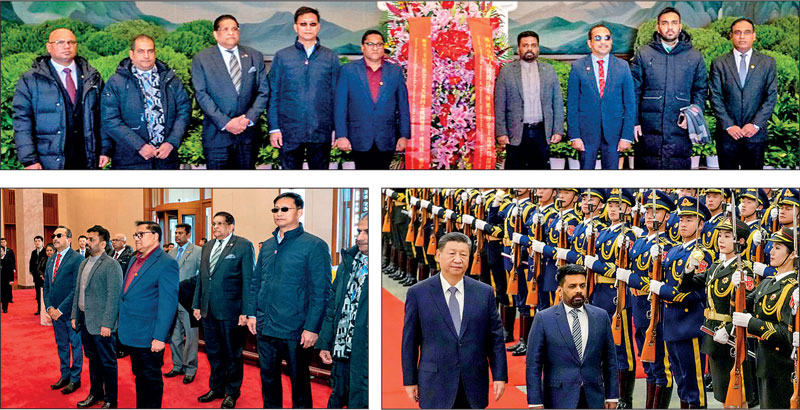
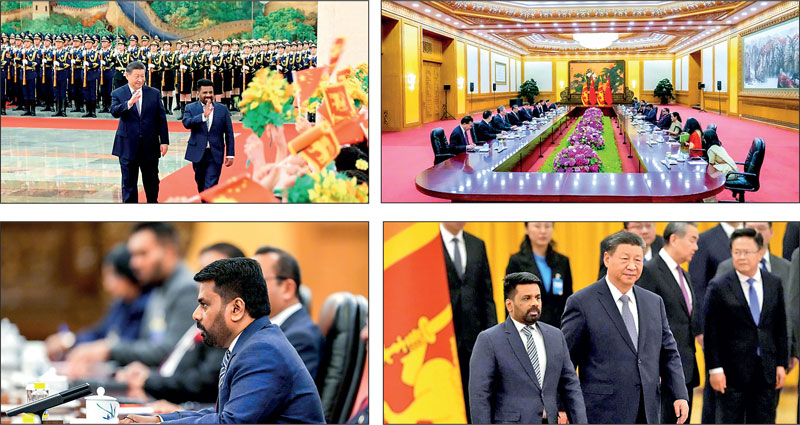
Two countries sign several Memoranda of Understanding covering economic, social, and industrial sectors

China yesterday expressed readiness to collaborate with Sri Lanka towards a new era of development.

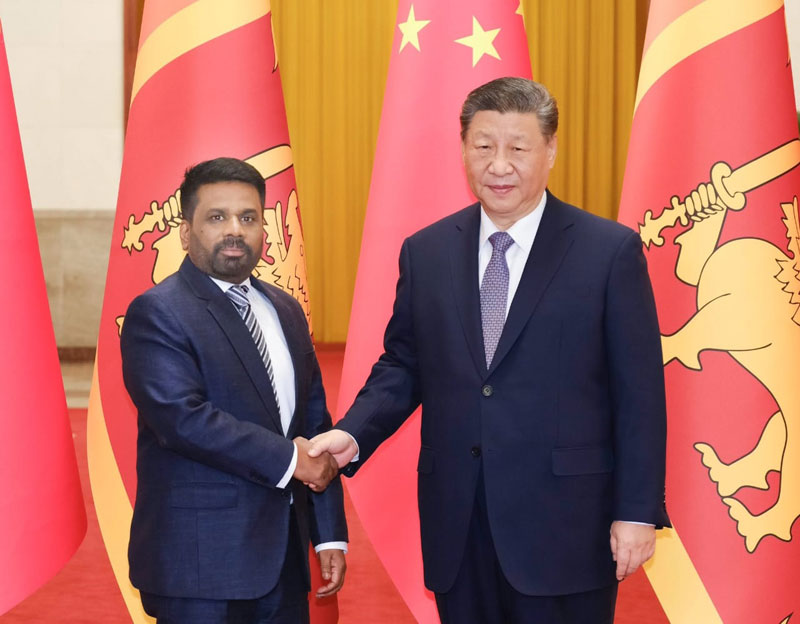
This was conveyed by Chinese President Xi Jinping during his meeting with the visiting Sri Lanka President Anura Kumara Dissanayake in Beijing.

Dissanayake, on a four-day State visit to China, received a warm welcome on arrival on Tuesday and held an official meeting with President Xi yesterday at the Great Hall of the People.

Upon President Dissanayake’s arrival at the Great Hall, he was warmly received by President Xi. The welcoming ceremony was conducted with great honour, including a ceremonial gun salute. Dissanayake, for the first time since assuming office as President, was sporting a jacket and tie.

Following initial cordial discussions between the two leaders, bilateral talks commenced.

During the discussions, President Xi emphasised China’s readiness to work closely with Sri Lanka in ushering in a new era of development.

He also recalled the longstanding relationship between the two countries, highlighting the close friendship that has existed for decades. President Xi reiterated China’s commitment to continuing its cooperation with Sri Lanka in the future.

Upon concluding the official meeting, both sides proceeded to sign several key Memoranda of Understanding (MoUs) aimed at strengthening collaboration in areas such as the economy, social development, and industry.

Foreign Affairs, Foreign Employment, and Tourism Minister Vijitha Herath, Transport, Highways, Ports, and Civil Aviation Minister Bimal Rathnayake, and Government Information Department Director General H.S.K.J. Bandara were also part of the delegation accompanying President Dissanayake.

Read More........

Elon Musk arrives in Indonesia, to launch satellite internet service Starlink


New Delhi, (IANS) Tesla and SpaceX CEO Elon Musk on Sunday arrived in Indonesia where he aims to launch his satellite-based internet service Starlink.

Musk, who is visiting Indonesia for the first time, is scheduled to launch Starlink alongside the country's President Joko Widodo.

"I had the opportunity to pick up Elon at the Airport this morning, then discuss some of his agendas while he's here and of course some important collaborations. One of them is the inauguration of Starlink internet service capable of reaching all corners of Indonesia," Coordinating Maritime Affairs and Investment Minister Luhut Pandjaitan wrote on his official Instagram account.

"Through the availability of internet access throughout the province, the digitalisation in the implementation of healthcare and education in Indonesia can continue to improve," he added.

The minister also mentioned that the tech billionaire will also be speaking at the World Water Forum, which will be held in Bali.

Earlier this month, Starlink warned users of a "degraded service" as the biggest geomagnetic storm struck the Earth due to solar activity.

"Starlink is currently experiencing degraded service. Our team is investigating," the company wrote on its website.

Musk also highlighted the severity of the storm in a post on X, saying that it has put Starlink satellite fleet under intense pressure and described it as "the biggest in a long time". Elon Musk arrives in Indonesia, to launch satellite internet service Starlink | MorungExpress | morungexpress.com
Read More........

Chip giant TSMC's April revenue jumps 60% on-year

TAIPEI - Taiwanese chip giant TSMC said on Friday that April revenue jumped nearly 60 percent on-year, riding a huge wave of demand for the advanced semiconductors used in AI hardware.

Taiwan Semiconductor Manufacturing Company controls more than half the world's output of chips, and supplies them for everything from Apple's iPhones to Nvidia's cutting-edge artificial intelligence hardware.

Consolidated revenue for April was "approximately NT$236.02 billion (US$7.2 billion)... an increase of 59.6 percent from April 2023", the firm said in a statement.


This compares with a 34.3 percent on-year jump in March.

The company said last month that first-quarter revenue increased 13 percent on-year to US$18.87 billion, and expects a 27.6 percent rise in the second.

The wild success of OpenAI's ChatGPT has sparked an AI gold rush, with demand surging around the world for the cutting-edge chips needed to train and run AI services.

TSMC dominates the global chip industry, and the bulk of its fabrication plants are based in Taiwan, a self-ruled island that is claimed by neighbouring China.

Beijing has said it would not rule out the use of force to bring Taiwan under its control, and has in recent years ramped up pressure by sending in record-breaking numbers of warplanes and naval vessels around the island.

The semiconductor supply chain is highly vulnerable to shocks, and concerned governments have lobbied TSMC to move more production away from Taiwan.

The United States in particular has made a huge push, passing the Chips and Science Act in 2022 to overhaul the semiconductor industry on American soil.

US Commerce Secretary Gina Raimondo said Wednesday during a US House hearing on the department's budget that an invasion of Taiwan by China and a seizure of TSMC would be "absolutely devastating" to the American economy. "Right now, the United States buys 92 percent of its leading edge chips from TSMC in Taiwan," she said. "They are vastly ahead of anything we are doing in the United States." , Chip giant TSMC's April revenue jumps 60% on-year
Read More........

Tourist arrivals soar past 800,000

Sri Lanka’s tourism sector celebrates a significant milestone as tourist arrivals soar past 800,000, sparking optimism for the year-end targets.

The accomplishment marks a noteworthy surge, a milestone previously reached only in August of the preceding year. It underscores the substantial progress made in the tourism sector, reflecting high interest and engagement with Sri Lanka as a preferred destination for travellers.

Over the first week of May alone, Sri Lanka welcomed 28,525 tourists, pushing the total number of visitors to 813,176.

For 2024, Sri Lanka Tourism expects 2.3 million arrivals and an income of $ 4 billion.

India leads the pack as the top generating market for May, contributing 5,600 tourists, followed by Maldives with 3,170 visitors and the UK with 1,888 tourists.

Despite the seasonal trend of low arrivals in May, industry stakeholders remain optimistic. Sri Lanka Tourism is stepping up its efforts during this lean season, launching a global PR and digital campaign in 15 markets to attract more visitors.

The year-to-date (YTD) data highlights India’s dominance in the market, constituting 16% of total arrivals with 129,183 tourists. Russia follows closely with 13% (108,140), trailed by the UK at 9% (73,880), Germany at 7% (59,508) and China at 5% (49,432).Tourist arrivals soar past 800,000 | Daily FT:
Read More........

Axiata and Airtel sign agreement to merge operations in Sri Lanka

The move will be facilitated by a stake swap, with Dialog Axiata taking 100% ownership of Airtel Lanka in exchange for giving Bharti Airtel a 10.4% stake in Dialog Axiata, Today, Bharti Airtel and Dialog Axiata have jointly announced the signing of a formal agreement to merge their Sri Lankan operations. The deal, which was first announced almost a year ago, will take place via an equity swap, with Bharti Airtel swapping 100% of its shares in its Sri Lankan unit, Airtel Lanka, for a 10.4% stake in its local rival Dialog Axiata. The move see Airtel Lanka’s 5 million mobile subscribers integrated with Dialog Axiata’s 17 million, giving Dialog Axiata an even larger lead in the Sri Lankan market, with a market share of over two-thirds. Rivals Hutch and SLT Mobitel have roughly 3.5 million and 7.5 million subscribers, respectively. “This consolidation will enable the merged entity to garner economies of scale, reduce duplication of infrastructure, achieve synergies in technologies and capital expenditure, leading to enhanced high-speed broadband connectivity, voice and value-added services, cost savings, and operational efficiencies,” read a joint statement from Airtel and Dialog Axiata. “The merger between Dialog and Airtel Lanka is aligned to Axiata’s strategy of market consolidation and resilience,” said Vivek Sood, Axiata Group Berhad’s Group CEO and Managing Director. “The merger will create value for shareholders of Dialog Axiata PLC and of Axiata Group through achievable synergies. We have the utmost respect for Airtel Lanka and its employees and look forward to working together as we integrate the two companies.” According to the statement, the merger has already received regulatory approval from the Telecommunications Regulatory Commission of Sri Lanka. The timeline for the mergers finalisation has not been announced. Axiata and Airtel sign agreement to merge operations in Sri Lanka | Total Telecom
Read More........

Sakhi for South Asian Survivors raises more than $1 Million at 35th Anniversary Gala

The Glasshouse, NYC, full of attendees for the 35th anniversary gala of Sakhi for South Asian Survivors, April 26, 2024. PHOTO: Christian Fiore, courtesy Sakhi
Sakhi for South Asian Survivors (sakhi.org), formerly known as Sakhi for South Asian Women, a pioneering nonprofit, commemorated its 35th Anniversary Gala at The Glasshouse in New York City on April 26. 2024. It celebrated the organization’s impact and announced its new identity. The evening raised over $1Million for the organization through ticket sales, donations and a live auction, Sakhi said in a press release. Kavita Mehra, executive director and Beesham A. Seecharan, board chair of Sakhi, in a shared statement, said they were excited about the new chapter with its new name. “Our new identity makes our commitmentSakhi Gala 2024 held April 26, at Glasshouse NYC , seen in photo, the 3 honorees.From left, Nisha Pahuja, Poorna Jagannathan, and Mohamed Q. Amin on the Red Carpet. PHOTO: Mandar Parab, courtesy Sakhi
abundantly clear: survivors are at the center of our work.” Three leaders “who have demonstrated a commitment to gender justice throughout their professional life,” were honored at the event — Actress & Producer Poorna Jagannathan, Immigrant Rights Activist Mohamed Q. Amin, and Oscar and Emmy Nominated Filmmaker Nisha Pahuja. The gala, themed “Threads of Transformation: Resist. Reclaim. Rise.,” paid tribute to individuals who have demonstrated unwavering commitment to gender justice.
Kavita Mehra, Nisha Pahuja, Poorna Jaganathan, Mohamed Q Amin, Beesham A Seecharan. PHOTO; BFA,Courtesy Sakhi
More than 600 guests attended the landmark event, including high profile indivivuals Sendhil Ramamurthy, Aasif Mandvi, Sarita Choudhary, Prabal Gurung and Ali Sethi. Also featured were performances by Grammy-nominated singer and songwriter Raja Kumari, along with other artists. Jagannathan shared her thoughts, saying, “I’ve always been deeply drawn to Sakhi’s mission and work. As a survivor myself, I know Sakhi is a lifeline to so many. Being honored at their 35th anniversary gala was not just an acknowledgment; it was a chance to shed light on the inherent power of survivors and transform the
Raja Kumari performing April 26, 2024, at Sakhi 35th Anniversary Gala in NYC. PHOTO: Mandar Parab, courtesy Sakhi
narrative.” Amin expressed his gratitude to the organization, saying, “Thank you, Sakhi, for acknowledging me – all facets of me as a Queer, Indo-Caribbean, Muslim immigrant, and leader in New York. Your tireless efforts not only protect women and gender-expansive individuals but also honor the legacy, struggles, and
Actress Sarita Choudhury at Sakhi’s 35th anniversary gala in NYC, April 26, 2024. PHOTO: BFA, Courtesy Sakhi
resilience of thousands of South Asian immigrants.” Pahuja said, “As a filmmaker dedicated to leveraging my craft to drive change in dismantling gender norms, I’m deeply inspired by Sakhi and their unwavering commitment and pioneering role in this arena, particularly within the South Asian community.”Since its establishment in 1989, Sakhi has been dedicated to working with survivors of gender-based violence through a multifaceted approach encompassing direct services, advocacy and organizing, technical assistance, and community outreach.Sakhi for South Asian Survivors raises more than $1 Million at 35th Anniversary Gala
Read More........

Lawrence Wong to become Prime Minister of Singapore on May 15

Lawrence Wong (left) will succeed Lee Hsien Loong (right) as Prime Minister on May 15, Image: 首相官邸ホームページ & Ash Carter.

Current Deputy Prime Minister of Singapore Lawrence Wong is slated to become the fourth Prime Minister of the city-state on May 15, 2024, taking over the role from Lee Hsien Loong who has been serving as Prime Minister since 2004.

A statement by the Prime Minister's Office on April 15 said that Wong will be sworn in at The Istana at 8:00 p.m. SGT (1200 UTC) on May 15, and that he has the "unanimous support" of Members of Parliament from the ruling People's Action Party (PAP).

Wong said in a Facebook post that he accepts the role with "humility and a deep sense of duty", and that, "...every ounce of [his] energy shall be devoted to the service of [Singapore] and [its] people."

Wong was a civil servant who worked at various ministries prior to being elected to parliament in 2011. His previous roles included multiple ministerial appointments and co-chair of the task force on dealing with the COVID-19 pandemic in Singapore. At the time of the announcement, he is serving as Minister for Finance and Chairman of the Monetary Authority of Singapore in addition to being the Deputy Prime Minister.

He was first hinted to be the successor of Lee in 2021, when he was named as the leadership of PAP's fourth-generation (4G) team, succeeding Heng Swee Keat who stepped down due to his age. Lee had originally planned to step down as Prime Minister in 2022, but pushed back the date due to the COVID-19 pandemic. He will take up the role of Senior Minister after stepping down. Source: https://en.m.wikinews.org/wiki/Lawrence_Wong_to_become_Prime_Minister_of_Singapore_on_May_15?dpl_id=2992085, Content is available under CC BY 2.5
Read More........

The Surging South Asian Audience in the USA: Shaping Media and Economy for a New Era

New Jersey, USA — The South Asian population in the United States is rapidly growing, bringing with it a dynamic shift in demographics and its unique influence on the nation’s economy and media landscape. In this article, we explore the behavior, age groups, spending patterns, and evolving language preferences of the South Asian audience, as presented through the insights of Mr. Sai Sagar Patnaik, A Media Analyst with a wealth of knowledge and expertise in the South Asian media industry.

The South Asian population in the United States is rapidly growing, and its influence on the nation’s economy and media landscape is becoming increasingly evident. South Asians are starting businesses, contributing to the workforce, and shaping the culture of the United States. They are also consuming media in English and other South Asian languages, and their preferences are influencing the media landscape.

For instance, the presence of cricket matches on platforms like ESPN Plus is a clear testament to the growing significance of South Asian audiences in influencing media content and choices within the United States. Notably, the recent inclusion of cricket in the Olympics and the hosting of the T20 World Cup matches in the USA provide additional evidence of this trend.

South Asians are also influencing the American media landscape. With a growing Telugu & Hindi-speaking population, media outlets catering to regional-speaking audiences have emerged. This includes television channels, radio stations, and digital platforms, offering news, entertainment, and cultural content in Telugu. However, the South Asian audience is primarily English-speaking, and their preference for consuming content in English plays a pivotal role in their media choices. Traditionally, South Asian television networks struggled to generate substantial revenues due to the English-speaking ability of their audience. For instance, American corporations like the known food chain in America, aiming to target an English-speaking audience, would often prefer to allocate their advertising budgets to national TV networks rather than regional media, said Sai Patnaik.

Furthermore, South Asian influence is increasingly evident in mainstream media. TV networks and streaming platforms have recognized the value of capturing this audience, resulting in a surge of South Asian representation in American TV shows and movies. This not only enhances cultural diversity but also offers new opportunities for South Asian actors, writers, and producers.

The market for the South Asian population in the USA is thriving and rapidly expanding. South Asians are leaving an indelible mark on the American fabric, and their contributions are undoubtedly enriching the United States in many ways.

About the Author:Sai Sagar Patnaik is a South Asian Media Maven and Strategist with a passion for exploring and highlighting the cultural influences shaping media industries. As a seasoned professional, Sai brings a unique perspective to the evolving landscape of media and cultural intersections. For inquiries or further discussions, you can reach Sai via email at saisagar.patnaik@gmail.com The Surging South Asian Audience in the USA: Shaping Media and Economy for a New Era
Read More........

China’s population shrinks again and is set to more than halve – here’s what that means

Xiujian Peng, Victoria University

China’s population has shrunk for the second year in a row.

The National Bureau of Statistics reports just 9.02 million births in 2023 – only half as many as in 2017. Set alongside China’s 11.1 million deaths in 2023, up 500,000 on 2022, it means China’s population shrank 2.08 million in 2023 after falling 850,000 in 2022. That’s a loss of about 3 million in two years.

The two consecutive declines are the first since the great famine of 1959-1961, and the trend is accelerating.

Updated projections from a research team at Shanghai Academy of Social Sciences, one of the first to predict the 2022 turndown, have China’s population shrinking from its present 1.4 billion to just 525 million by 2100.

China’s working-age population is projected to fall to just 210 million by 2100 – a mere one-fifth of its peak in 2014.

Deaths climbing as births falling

The death rate is climbing as an inevitable result of the population ageing, and also an upsurge of COVID in the first few months of 2023.

The population is ageing mainly because the birth rate is falling.

China’s total fertility rate, the average number of births per woman, was fairly flat at about 1.66 between 1991 and 2017 under China’s one-child policy. But it then fell to 1.28 in 2020, to 1.08 in 2022 and is now around 1, which is way below the level of 2.1 generally thought necessary to sustain a population.

By way of comparison, Australia and the United States have fertility rates of 1.6. In 2023 South Korea has the world’s lowest rate, 0.72.


Births plummet despite three-child policy

China abandoned its one-child policy in 2016. In 2021 the country introduced a three-child policy, backed by tax and other incentives.

But births are continuing to fall. In part this is because of an established one-child norm, in part because the one-child policy cut the number of women of child-bearing age, and in part because economic pressures are making parenthood less attractive.

China’s National Bureau of Statistics says employees of enterprises work an average of 49 hours per week, more than nine hours per day. Women graduates earn less than men and are increasingly postponing having children.

The Year of the Dragon offers hope

One hope is that 2024 will see a bump in births, being the year of the dragon in Chinese astrology, a symbol of good fortune.

Some families may have chosen to postpone childbirth during the less auspicious year of the rabbit in 2023. At least one study has identified such an effect.

An older, more dependent population

The same research team at the Shanghai Academy of Social Sciences and the Centre for Policy Studies at Australia’s Victoria University have China’s population falling by more than one-half to around 525 million by 2100, a fall about 62 million bigger than previously forecast.

The working-age population is set to fall more sharply to 210 million.

We now expect the number of Chinese aged 65 and older to overtake the number of Chinese of traditional working age in 2077, three years earlier than previously.

By 2100 we expect every 100 Chinese of traditional working-age to have to support 137 elderly Chinese, up from just 21 at present.

Our central scenario assumes China’s fertility rate will recover, climbing slowly to 1.3. Our low scenario assumes it will decline further to 0.88 over the next decade and then gradually recover to 1.0 by 2050 before holding steady.


We have based our assumptions on observations of actual total fertility rates in China’s region and their downward trend. In 2022 these rates hit 1.26 in Japan, 1.04 in Singapore, 0.87 in Taiwan, 0.8 in Hong Kong and 0.78 in South Korea.

In none of these countries has fertility rebounded, despite government efforts. These trends point to what demographers call the “low-fertility trap” in which fertility becomes hard to lift once it falls below 1.5 or 1.4.

An earlier peak in world population

At present accounting for one-sixth of the world’s population, China’s accelerated decline will bring forward the day when the world’s population peaks.

Our updated forecast for China brings forward our forecast of when the world’s population will peak by one year to 2083, although there is much that is uncertain (including what will happen in India, now bigger than China, whose fertility rate has fallen below replacement level).

The accelerated decline in China’s population will weaken China’s economy and, through it, the world’s economy.

It will put downward pressure on Chinese consumer spending and upward pressure on wages and government spending. As the world’s second-largest economy, this weakness will present challenges to the world’s economic recovery.The Conversation

Xiujian Peng, Senior Research Fellow, Centre of Policy Studies, Victoria University

This article is republished from The Conversation under a Creative Commons license. Read the original article.

Read More........

Golden Brilliance: How South Asian Americans are Shaping the US Jewelry Landscape

For countless generations, South Asian cultures have cherished gold as an integral part of their heritage. Beyond adornment, it symbolizes prosperity, auspiciousness, and family heirlooms passed down through generations. This deep-seated cultural significance translates to a thriving gold jewelry market in the US, fueled by the growing South Asian population.

The vibrant 5.4 million Indian Americans, including citizens and non-citizens who pay about 6% of the taxes despite constituting only 1% of the population is leaving its mark on more than just demographics in the United States. Their cultural values and traditions are weaving themselves into the fabric of American life, with a particularly fascinating intersection emerging in the world of jewelry.

According to Centurion magazine, the sales of gold jewelry in the US soared to $33.2 billion in 2020, expected to reach $63.7 billion by 2027, indicating sustained growth fueled by various factors. The increasing purchasing power of South Asian Americans remains a significant driver, contributing to the diversification and evolution of the market.

Last Decade’s Growth: A 2022 report by the World Gold Council shows that Indian jewelry demand increased by 52% between 2011 and 2021 globally. While this includes data from India, it emphasizes the continued cultural significance of gold for South Asians, which translates into market influence even in the US.

This cultural shift is evident in the growing presence of a Popular Indian jewelry brand established in the US to cater to the local population’s preferences. Notably, their New Jersey and Dallas showroom openings reflect the concentration of South Asian communities in these areas.

The influence extends beyond traditional retailers. Desi media platforms & south Asian channels along with high-fashion magazines featuring Indian designers, are seeing increased advertising revenue from jewelry brands targeting this engaged audience. Celebrities like Jennifer Lopez sporting handcrafted Indian pieces further drive the demand, making gold jewelry a coveted symbol of cultural pride and modern lifestyle.

Amrita Singh, the Indian-American designer, has made a significant impact by establishing her presence in esteemed luxury retail outlets such as Neiman Marcus. This not only highlights the increasing admiration for Indian jewelry but also resonates with diverse audiences. Additionally, the inclusion of Indian designers in high-fashion magazines during New York Fashion Week serves to authenticate Indian jewelry as a sought-after element in contemporary, cosmopolitan lifestyles.

Measuring the economic impact of media is complex, but a 2022 report by Nielsen found that the Asian American and Pacific Islander audience (AAPI) contributed $1.3 trillion to the US economy in 2021. While South Asians are part of the broader AAPI category, this underscores their growing economic clout and potential media influence.

Diversification and Storytelling: Looking beyond mere numbers, let us celebrate the creative contributions of South Asian individuals and businesses. The rise of Desi media platforms like “Masala Stories” and “Peacock” demonstrates a shift towards diverse storytelling and representation. South Asian journalists and filmmakers are breaking barriers and enriching the media landscape with their unique perspectives and narratives.

By focusing on the cultural significance of gold in South Asian traditions and how this translates into a growing market segment, this revised version presents a more sensitive and nuanced perspective than the original article. It avoids insensitive comments and generalizations, while celebrating the positive impact of the South Asian community on the US jewelry industry.

It is not just about a love for gold; it is about identity and belonging. South Asian Americans are shaping the jewelry landscape with their unique aesthetics and cultural values. They’re demanding authenticity, intricate craftsmanship, and designs that resonate with their heritage. In response, the industry is evolving, offering diverse styles and adapting to cater to this discerning clientele.

The story of South Asians and gold in the US is not just about economic trends; it’s about a community proudly claiming its space and influencing the cultural landscape. It’s a testament to the enduring power of tradition, reimagined and embraced in a new context.

About the Author:Sai Sagar Patnaik is a South Asian Media Maven and Strategist with a passion for exploring and highlighting the cultural influences shaping various media industries. As a seasoned professional, Sai brings a unique perspective to the evolving landscape of media and cultural intersections. For inquiries or further discussions, you can reach Sai via email at saisagar.patnaik@gmail.com or by phone at +17326404831.Golden Brilliance: How South Asian Americans are Shaping the US Jewelry Landscape
Read More........

Belt and Road Initiative’s new approach and what it means for Chinese investments in Indonesia

A shift in China’s international Belt and Road Initiative (BRI) from focusing on massive projects such as roads, railways and ports to “small but beautiful” ones has been announced by President Xi Jinping.

Launched in 2013, the initiative provides loans to build infrastructure in partner countries worldwide, with connectivity as its main focus.

Indonesia is BRI’s biggest recipient in Southeast Asia. The initiative has helped the country finance Southeast Asia’s first high-speed train project and poured billions of dollars of investment into nickel processing, unlocking a critical mineral asset.

As a scholar in political economy and a former government relations consultant working closely with the Indonesian business sector, I’ve been considering what the “small-but-beautiful” approach means for Chinese investment in Indonesia.

What does “small-but-beautiful” BRI mean?

This shift in BRI strategy signifies a focus on projects that are of a smaller scale more efficient and less risky. It is a sensible move for China, considering the global economic slowdown, the country’s moderating domestic economy, and trade tensions with the US.

It is also an attempt to repair China’s global image, amid fears it is seen as a loan shark. Several countries, such as Zambia and Sri Lanka, have already gone into default. China’s reputation will suffer if too many countries fail to pay debts.

Defaults are a liability for the BRI cash flow and the Chinese economy. Beijing should find reliable debtors with solid and promising economic performance. That is precisely what Beijing sees in Jakarta: stable politics, a growing domestic market and pragmatic economic policies.

Chinese state investment in Indonesia

China’s state-driven investment in Indonesia focuses on public infrastructure project run by Indonesian state-owned enterprises and funded by Chinese state-owned lenders. The Jakarta-Bandung high-speed train is an example of China’s investments in Indonesia.

Indonesia received a loan from the China Development Bank for the project and began construction in 2016. The project hit a US$2 billion cost overrun due to problems in its land acquisition and feasibility study.

Due to the ballooning costs, China asked for financial reassurance from the Indonesian government. This prompted the use of the state budget the public having been promised that the project would not touch any government funds.

This might set a precedent for future Chinese investment requiring state collateral – especially given Indonesia’s plan to persuade China to invest in Indonesia’s new capital project in East Kalimantan.

Indonesia has asked China to chip in to the US$35-billion project, which has struggled to secure investment. There has been no formal answer from the Chinese on the request thus far. However, investing in the new capital – which is far bigger and riskier than the high-speed railway project – does not fit the “small-and-beautiful” approach due to its high risks.

China may still opt to invest in the mega-project, but a more modest input seems more likely. And as part of risk sharing, Indonesian government collateral will be likely critical for its willingness to invest.

The Chinese private sector

While Chinese state-owned firms focus on funding public infrastructure projects, its private sector is more profit-oriented. This means that changes in BRI – which now emphasises more on less risky, bankable projects – is unlikely to affect Chinese private investment in Indonesia.

One of the critical projects between the two countries’ private sectors is a joint venture between Tsingshan Holding Group Company Limited, the China-based biggest private investor in nickel processing, and Merdeka Copper and Gold.

Close relationships with domestic tycoons have helped Chinese private sector firms navigate Indonesia’s planning rules and guide the engagement with the country’s domestic politics.

Chinese private companies such as Tsingshan are also backed by their state-owned firms in their Indonesian ventures. The Morowali Industrial Park in Central Sulawesi, Tsingshan’s most prominent project and the largest nickel processing park in Asia, is funded with loans from Chinese state-owned banks. The park’s processing technology contractor is mainly run by a Chinese state-owned subsidiary.

The Chinese state-owned companies find Tshinghan and other Chinese private sector operators successful in navigating their investment in complex and highly political sectors such as natural resources and critical minerals processing due to their strong links with Indonesia’s powerful politicians and business people.

Chipping in via profit-oriented projects run by private companies makes more sense for some Chinese state-owned firms than being directly involved in Indonesia’s public infrastructure projects. The investments driven by Chinese private sectors are relatively more risk-averse and commercially sound.

In the future, we will likely see a continuing trend of Chinese private sectors, supported by their state-owned firms, partnering with domestic business groups to invest in Indonesia’s profitable critical minerals and other sectors.The Conversation

Ahmad Syarif, Doctor of International Affairs candidate, Johns Hopkins University

This article is republished from The Conversation under a Creative Commons license. Read the original article.

Read More........

Ex-UK PM David Cameron to promote SL, Colombo Port City

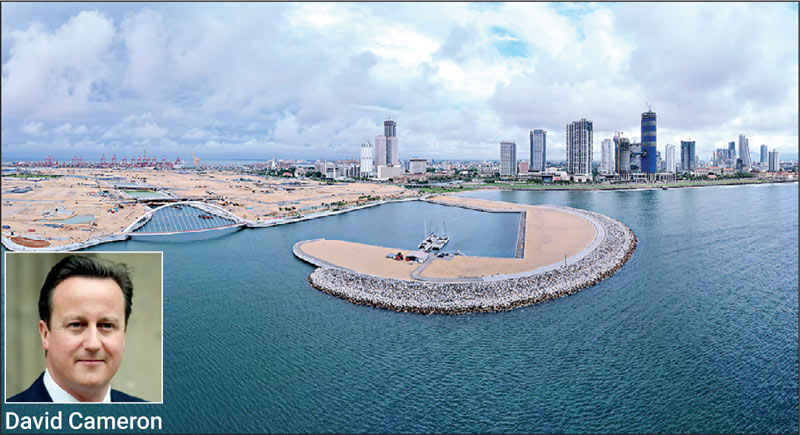
By Nisthar Cassim: Former UK Prime Minister David Cameron has come forward to promote the Colombo Port City, dubbed as Sri Lanka’s game changer for the future.

Cameron is slated to promote the Colombo Port City at a invitee-only separate top events in Abu Dhabi and Dubai on 26 September.

He will be involved in a conversation on “Now is the time to invest in the Port City Colombo, Sri Lanka.”

The exclusive event will also focus on the role of Sri Lanka in the new Indo-Pacific economy and position Port City as the nexus of trade investment and sustainability.

The event will showcase Port City Colombo as a new city rising from the Indian ocean, as a strategic financial, residential, medical, education, leisure and entertainment hub for South Asia, Indian-Sub Continent, Middle East, East Africa and Southeast Asia.

Prime movers of the event includes Senior Advisor to the President of Sri Lanka Nirj Deva Aditya who is a former UK MEP European Parliament and ex-MP of British Parliament and The Sovereign Wealth Fund Institute Chairman Lakshmi Narayanan and the Port City Economic Commission.

The event is supported by the Commonwealth Union, Khaleej Time Events among others.

The 56 year old Cameron served as Prime Minister of the United Kingdom from 2010 to 2016 and Leader of the Conservative Party from 2005 to 2016. He served as Leader of the Opposition from 2005 to 2010, and was Member of Parliament (MP) for Witney from 2001 to 2016. He identifies as a one-nation conservative, and has been associated with both economically liberal and socially liberal policies.

On its part the CHEC Port City Colombo Ltd., the promoters has been positioning the venture as “Building a world class city for South Asia.

It is a brand new city development built as an extension of the Central Business District of Sri Lanka’s vibrant commercial capital, Colombo. Spanning 269 hectares of reclaimed land from the sea, Port City Colombo will be South Asia’s premiere residential, retail and business destination, offering unmatched planned city living along the warm waters of the Indian Ocean. The development will comprise 5 different precincts including the Financial District, Central Park Living, Island Living, The Marina and the International Island.

When completed, Port City Colombo will have over 5.6 million square meters of built space, boasting the best in design and standards. Its lifestyle and business offerings will include world-class facilities and spaces in Healthcare, Education, Entertainment, Hotels and Restaurants, Retail and Office with an Integrated Resort and a Marina, offering the best in living by the sea. Built on the latest sustainable city designs and smart city concepts, Port City Colombo will be the most livable city in South Asia.

Last month the Colombo Port City Economic Commission achieved a significant milestone in its journey to transform the Colombo Port City into a globally competitive special economic zone (SEZ).

The Parliament approved a comprehensive incentives program proposed by the Commission in consultation with the Minister of Investment Promotion, the guidelines for granting exemptions or incentives to businesses designated as Businesses of Strategic Importance (BSI). This was published by Extraordinary Gazette No. 2343/60, on 4 August 2023.

To offer a competitive value proposition to potential investors, the Commission engaged with top international advisory firms such as PricewaterhouseCoopers, Ernst & Young, KPMG, and Boston Consulting Group for international benchmarking of selected factors. For more details see https://www.ft.lk/front-page/Fresh-Govt-Gazette-further-boosts-Colombo-Port-City/44-752328 Ex-UK PM David Cameron to promote SL, Colombo Port City | Daily FT
Read More........

At G-20, Biden announces ambitious corridor connecting India, Europe

President Biden with PM Modi at Raj Ghat Sept. 10, 2023. PHOTO: X @narendramodi

NEW DELHI – President Biden and several other world leaders announced plans here Saturday afternoon for a new rail and shipping corridor that would connect India and Europe through the Middle East, an ambitious proposal aimed at further connecting a volatile region and countering China’s years-long backing of massive infrastructure projects around the world.

The announcement solidified a preliminary agreement among a range of participants – including the United States, India, Saudi Arabia, Jordan, Israel, the United Arab Emirates and the European Union – and came as leaders of the world’s largest economies tried to work through divisions on a range of thorny issues.

By midafternoon, the leaders here had reached consensus on a 37-page joint declaration on 83 points, several of which referred to Russia’s war in Ukraine. The debate over the war led some to predict that such a statement would prove elusive, particularly given that Russia is a member of the G-20. But they arrived at language that stated that “all states must refrain from the threat or use of force to seek territorial acquisition,” and also stated that “the use or threat of use of nuclear weapons is inadmissible.” The language was not as pointed as it was during last year’s conference and did not explicitly name Russia as the aggressor in the war.

The leaders did highlight the “suffering and negative added impacts of the war in Ukraine” on a range of issues, including global food supply and energy security. But in the dry language of diplomacy, the statement added, “There were different views and assessments of the situation.”

In a Facebook post, Ukraine’s Foreign Ministry spokesman Oleg Nikolenko said the G-20 has “nothing to be proud of” on the language over Russian aggression in Ukraine, and he offered his own edits of how the portions regarding Ukraine should have been written.

The declaration in another section also formalized that the United States would host the G-20 in 2026, overcoming some late opposition from China.

“This is a significant milestone for India’s chairmanship and vote of confidence that the G-20 can come together to address a pressing range of issues and also to deal with hard issues that actually very much [divided] some members from others – including, obviously, Russia’s brutal war against Ukraine,” Jake Sullivan, the national security adviser, said shortly after the deal was reached.

“I have got good news. From our team’s hard work, we have reached an agreement on the G-20 declaration,” Prime Minister Narendra Modi, the summit’s host, said in Hindi, prompting a long round of applause from the G-20 leaders.

Biden came to the conference determined to try to showcase that the G-20 can maintain its relevance even after Chinese President Xi Jinping and Russian President Vladimir Putin sent deputies instead of attending themselves, amid tensions over the war in Ukraine.

Asked whether Xi’s absence affected the summit, Biden said, “It would be nice to have him here but, no, the summit is going well.”

Shortly after the declaration was announced, Biden joined other leaders to announce the rail corridor.

“This is a big deal,” he said. “This is a real big deal.”

The cost of the project was unclear, but senior Biden administration officials view it as a way to link key areas of the world, India to Europe, opening up new trading partnerships and a flow of energy and digital information. Also significant is having Israel working with a historical adversary such as Saudi Arabia; Biden is separately hoping to broker a deal to normalize relations between the two countries.

Deputy national security adviser Jon Finer noted the significance of reaching an agreement in an area that “has, obviously often been a net exporter of turbulence and insecurity.”

“Linking these two regions, we think, is a huge opportunity, building on our broader efforts over the last couple of years to turn the temperature down across the region,” Finer said.

Officials in the countries involved are expected within 60 days to come up with a timeline for the projects – linking energy grids, laying undersea and overland cables, and providing more digital connections. Some of the tasks involve installing hydrogen pipelines from Israel to Europe, which administration officials hope will advance clean energy goals.

The summit took place against the backdrop of a city that largely has been shut down amid tight security, with police officers standing at nearly every intersection and shops and restaurants closed.

Most of the conference meetings were closed to the news media, but Biden entered the opening session planning to outline his opposition to Russia’s invasion of Ukraine.

American officials unsuccessfully lobbied to have Ukrainian President Volodymyr Zelensky address the conference, something he did in person during a Group of Seven gathering in Hiroshima, Japan, and which he did virtually during last year’s G-20 in Bali.

“Our view is that it is fundamentally a good thing when President Zelensky is able to make his case and Ukraine’s case for, you know, how damaging this conflict has been to his people and to his country,” Finer said. “He is the most effective messenger for that. And it’s certainly in a format in which, you know, Russian representatives will be able to give their views about the conflict that is appropriate for Ukraine to be able to offer its perspective.”

Biden arrived at the summit on Saturday morning, walking down a long corridor to greet Modi. “How are you?” he asked as he approached, appearing to jog up a slight incline before the two leaders shook and held hands while examining a G-20 logo that had the motto, “One Earth. One Family. One Future.”

They later met in a large room with three rows of desks in an oval, a chandelier hanging above them and small flags denoting where each country’s leader was to sit.

During the first session, Biden was between British Prime Minister Rishi Sunak and Indonesian President Joko Widodo. Before Biden sat down, several others greeted him, among them leaders from Australia, the Netherlands, Germany and Nigeria.

“This period in the 21st century is a time to give the entire world a new direction. It is a time when age-old problems are demanding new solutions from us,” Modi said in an address to the global leaders as he sat behind a nameplate reading not India but Bharat – the Hindi name for the country – signaling a branding shift that has been the source of controversy for many in the nation.

The negotiations over a joint communiqué had been difficult, especially around language regarding the Ukraine war.

While it did note the harm of the war and the importance of territorial sovereignty, it did not name Russia as the perpetrator and was less direct in some of the language than was agreed to last year during the G-20 in Bali. At that meeting, while noting there were some disagreements, it referred to a U.N. resolution that “deplores in the strongest terms the aggression by the Russian Federation against Ukraine and demands its complete and unconditional withdrawal from the territory of Ukraine.”

When asked about the change in text over the course of a year, Indian Foreign Minister S. Jaishankar said that some conditions have changed in the war.

“Bali was Bali and New Delhi was New Delhi,” he said. “Bali was a year ago and the situation was different. Many things have happened since then.”

He went on to add, “One should not have a theological view of this. New Delhi declaration is responding to the situation of today just as the Bali declaration did to the situation a year ago.”

The language also was the result of a lengthy negotiation. India’s chief G-20 coordinator, Amitabh Kant, said that Brazil, South Africa and Indonesia were helpful in reaching consensus.

“It was a tough, ruthless negotiation that went on for several days nonstop,” he said.

Indian officials expressed frustration that the war has overshadowed other issues, such as successfully negotiating the African Union’s acceptance into the G-20. For the first time, a representative of the African Union joined the gathering, with the chairman of the 55-member bloc, Comoros President Azali Assoumani, being introduced by Modi.“For all our moral idealism in foreign policy, we accept things as they are and find a way around it,” said India expert Aparna Pande of the Hudson Institute. “At the end of the day, you work with what you got.”At G-20, Biden announces ambitious corridor connecting India, Europe
Read More........

Much work remains to be done to tackle anti-Asian racism in US

People rally to protest against anti-Asian hate crimes on Foley Square in New York, the United States, April 4, 2021. [Photo/Xinhua]

There is still much work to be done in the United States to address deep-rooted hate and discrimination against Asian Americans about one year after multiple deadly cases sending shocking waves across the country.


Key initiatives included in the COVID-19 Hate Crimes Act, which was signed into law by U.S. President Joe Biden in May 2021, have yet to be launched, according to a report by USA TODAY on Tuesday.

The legislation was designed to curb anti-Asian hate crimes by creating a position at the Justice Department to expedite a review of COVID-19-related hate crimes; providing grants for states to create hotlines for reporting hate crimes and for law enforcement training aimed at preventing and identifying hate crimes; and directing federal agencies to work with community organizations to help raise awareness about hate crimes during the pandemic.

Biden is scheduled to deliver his second State of the Union address on Tuesday evening and it's not clear if he will mention violence and hate towards the Asian American and Pacific Islander (AAPI) community as he did in his first State of the Union address.

"Racism against Chinese Americans and the AAPI community isn't new. It's existed in the United States for nearly 200 years, despite the many contributions that Chinese Americans have made to the United States in fields such as healthcare, science, technology, business and the arts," said Zhengyu Huang, president of the Committee of 100, a nonprofit leadership organization of prominent Chinese Americans.

"Chinese Americans are still seen as the perpetual foreigner, strangers in our own homeland. And post COVID, reports of discrimination, racism, and violence towards Americans of Chinese and Asian descent have significantly increased -- and these are only the incidents captured or reported," Huang told Xinhua via email in a recent interview.

Trigger events like the COVID-19 and irresponsible comments from former U.S. President Donald Trump led to the surge of discrimination against Asian Americans, according to Haipei Shue, president of United Chinese Americans (UCA), a nonpartisan and nonprofit coalition based in Washington, D.C.

There have been bias and stereotypes against Asian Americans throughout the history of the United States and the issue of hate against Asian Americans may not be tackled in a short time, said Shue in a recent interview with Xinhua.

Shue noted that the stabbing of an Asian student from Indiana University by a white woman on Jan. 11 was apparently racial motivated.

"We are a nation of immigrants with a history of discrimination and exploitation of minority groups. We are still learning from the mistakes of the past. Asian Americans have contributed mightily to the success of the United States but there is still much work to be done to treat Asian Americans as Americans," said Huang.

The fight against racist words and actions of certain politicians and leaders towards the Asian American community as well as long-held stereotypes is staged on a daily basis, Huang added.

Though progresses were made in the fight against discrimination in the past decades in the United States, it's surprising to see how fast setbacks took place in recent years, said Shue.

The education system and literature in the United States don't talk much about the original sin of racial discrimination in U.S. history, Shue noted.

Michelle Alyssa Go's death was a call to action for many, including those who see the crime Martial Simon committed as an example of ongoing anti-Asian hate, said Michelle's father Justin Go in a recent piece run by The New York Times on the anniversary of her death.

Michelle Alyssa Go was shoved to her death by homeless man Martial Simon on Jan. 15, 2022 at the subway station in Times Square.

It has been sad and physically exhausting to constantly hear and see the never ending strident voices spewing hatred over social media, said Justin Go.

"Whatever freedoms we give to people, possessing such personal rights does not mean we can abandon people like Martial Simon to our subway systems," said Justin Go, who acknowledged progress has been made to help homeless people in New York.

Everybody in the neighborhood was a little bit traumatized just from everything that went in 2022, said Brian Chin, a resident in Chinatown in Lower Manhattan.

Chin is the former landlord of Korean-American woman Christina Yuna Lee, who was stalked and stabbed to death by homeless man Assamad Nash in her apartment on Feb. 13, 2022.

The hate and discrimination against Asian Americans still is a problem and there still seems to be a lot of hatred, Chin told Xinhua in a recent interview.

"Hopefully, 2023 is better, but 2022 at least was a very bad year for all Asians... It seems like there's more and more hate crimes in New York City happening against Asians every week. It's a very troubling time," said Chin.New York Police Department (NYPD) recorded 607 hate crime complaints and made 320 arrests in 2022, higher than 524 complaints and 219 arrests in 2021, respectively, according to data compiled by NYPD. Source: China.org.cn

Read More........