Yiwu: The world’s largest trading hub

A worker loads rolls of steel plate at a steel market in China's Zhejiang province. via AP -

I had the privilege of travelling to Yiwu City in Zhejiang Province with a delegation from the Caribbean, hosted by China’s Ministry of Foreign Affairs.

What we witnessed was nothing short of breathtaking: the deliberate construction of what China envisions as the largest trading hub in the world – a city that has already earned the title of the "world’s supermarket."

For anyone unfamiliar with Yiwu, think of it as the national showroom of China.

The country is massive, and for foreign businesses, navigating where to start can feel overwhelming. Yiwu solves this by serving as a central starting point: vendors, manufacturers and traders from all over China have permanent setups there.

Once connections are made in Yiwu, those relationships extend into every corner of the country.

From street peddlers to a global marketplace

Yiwu’s rise is a story of grassroots entrepreneurship.

In the late 1970s, poor farmers and traders, forbidden by the state to do business, set up illicit roadside markets to survive.

By 1982, local leaders broke ranks with Beijing and legalised trading under the "Four Allows" policy – allowing farmers to sell, long-distance trafficking, multi-channel competition and the creation of markets.

Fast forward to today, and Yiwu is home to over 75,000 individual booths trading 400,000 products across 40 industries.

It is estimated that nearly 600,000 foreign visitors come annually, with 15,000 foreign traders living permanently in the city.

The numbers behind the "world’s supermarket"

Yiwu’s economy continues to surge. Between January and July 2024, its import and export value hit US$53.1 billion, up 18.1 per cent year-on-year.

Exports reached US$47.0 billion, led by labour-intensive goods like textiles (up 23.5 per cent) and mechanical and electrical products (up 15.6 per cent).

A fashion accessories vendor talks to a customer on the phone at the Yiwu International Trade Market in Yiwu, eastern China's Zhejiang province. AP PHOTO -

Sporting goods spiked by 37.8 per cent, driven by global events like the European Cup and Olympics.

But perhaps more interesting is Yiwu’s pivot from "sell global" to "buy global."

The city is addressing its 1:10 import-to-export imbalance, aiming to push imports to US$14 billion by the end of 2024 and US$42 billion by 2030.

For Caribbean exporters, that means an opening: Yiwu doesn’t just want to sell to the world – it wants to buy from it.

The future: Yiwu’s global digital trade centre

The crown jewel of Yiwu’s evolution is the Yiwu Global Digital Trade Centre (GDTC) – a CNY 8.2 billion project spanning 1.25 million square metres. It is described as a "sixth-generation market," blending physical trade with cutting-edge technologies like AI, blockchain, IoT and 5G.

At its heart is the "digital brain" – a sci-fi inspired hub that integrates product display, business exchanges and data services.

Already, 30,000 Yiwu merchants use AI daily, producing multilingual videos in English, Spanish and Arabic to promote products. Blockchain underpins transaction trust, offering tamper-proof trade records.

Yiwu is also positioning itself financially with Yiwu Pay, a global payment platform partnered with over 400 banks across 100 countries, designed for the small-value, high-volume transactions typical of e-commerce.

Why this matters for the Caribbean

For small businesses in the Caribbean, Yiwu is a game-changer. Unlike most wholesale hubs that demand massive bulk orders, Yiwu vendors often allow minimum order quantities (MOQs) as low as ten-50 pieces.

Add in the logistics advantage – the ability to consolidate products from dozens of suppliers into one shipment – and Caribbean SMEs can now test products and scale without crippling upfront costs.

At the same time, the risks are clear.

China’s growing influence in the Caribbean has sparked debates around trade imbalances and debt dependencies

In 2020, the region held a US$51.2 billion trade deficit with China.

Countries like Suriname already owe over 14 per cent of GDP in debt to China, complicating IMF negotiations.

This means our engagement with Yiwu must be strategic, not passive.

It cannot be about replacing one dependency with another, but about diversifying supply chains and positioning the Caribbean as both a buyer and a seller in this new global ecosystem.

Final thoughts

Walking through Yiwu’s Global Digital Trade Centre felt like looking into the future of commerce.

This is beyond just a marketplace – it’s China’s bid to redefine global trade.

For the Caribbean, the message is clear: Yiwu offers lower sourcing costs, global logistics, and a path to sell into China’s vast consumer market. But we must engage strategically, aware of the geopolitical stakes.

The global trading map is being redrawn – and if the Caribbean wants a seat at the table, it starts here.

Keron Rose is a Caribbean-based digital strategist and digital nomad currently living in Thailand.

He helps entrepreneurs across the region build their digital presence, monetise their platforms and tap into global opportunities.

Through his content and experiences in Asia, Rose shares real-world insights to help the Caribbean think bigger and move smarter in the digital age.Listen to the Digipreneur FM podcast on Apple Podcasts, Spotify, or YouTube. Yiwu: The world’s largest trading hub - Trinidad and Tobago Newsday:
Read More........

AT&T drops DEI to get $1bn spectrum deal approved


Posted by Harry Baldock: The FCC has approved AT&T’s $1.02 billion spectrum acquisition from UScellular on the condition that the company terminates its DEI initiatives, amid concerns over industry consolidation and its impact on rural connectivity and competition.

The Federal Communications Commission has approved AT&T’s $1.02 billion purchase of spectrum licenses from UScellular, conditional on AT&T’s formal commitment to end its Diversity, Equity and Inclusion (DEI) programmes.

According to the FCC, the acquisition, which transfers 1,250 million MHz-Pops of 3.45 GHz and 331 million MHz-Pops of 700 MHz B/C block licenses, will enhance AT&T’s network coverage, capacity and performance and thus improve the customer experience.

AT&T notified the FCC in a letter that it will terminate DEI activities as part of the conditions tied to the transaction, a move the company said was necessary to obtain regulatory approval. Industry reporting and the FCC statement place this decision squarely within the commission’s recent practice under Chair Brendan Carr of making cessation of DEI programmes a term of certain approvals.

The Rural Wireless Association opposed the deal, arguing it risks further consolidation and could harm competition and roaming options for rural consumers, potentially raising prices for wireless plans. The FCC acknowledged these concerns but concluded the net effect would be to strengthen AT&T’s network performance for customers.

The AT&T transaction follows a broader pattern in which major carriers have agreed to end DEI initiatives to secure FCC clearance: T‑Mobile ended DEI programmes while seeking approval for its purchases of much of UScellular’s retail operations and customers, and Verizon made similar concessions in its approval to acquire Frontier Communications’ assets.

UScellular’s investor release confirms the company has monetised a significant portion of spectrum excluded from earlier transactions with other bidders, and FCC filings provide the regulatory context by mapping MHz‑POP holdings across carriers, data used to assess concentration and potential competitive impacts.The move is the second largescale spectrum purchase for AT&T this year, after the operator bought low-band and mid-band spectrum from EchoStar earlier this year fr $23 billion s AT&T drops DEI to get $1bn spectrum deal approved | Total Telecom
Read More........

Sri Lanka shines at World Travel Market 2025: Showcasing island’s tourism excellence to world


In collaboration with the Sri Lanka Tourism Promotion Bureau (SLTPB), the High Commission of Sri Lanka in London has marked a remarkable level of participation by the nation’s tourism industry at World Travel Market (WTM) 2025, held from 4–6 November 2025 at the ExCel London. A delegation of 92 leading travel and tourism partners represented the island, highlighting its vibrant and rapidly growing tourism sector to an international audience. The Sri Lanka Pavilion provided a dynamic platform for B2B meetings, networking, and collaboration between global travel and hospitality professionals.

During his welcome remarks at the opening of the Sri Lanka Pavilion, High Commissioner Nimal Senadheera expressed his appreciation to all partners and participants, noting that their collective effort created a powerful platform to showcase the island as a premier global destination. He highlighted that over 1.8 million visitors had already been welcomed by Sri Lanka in 2025, with the United Kingdom remaining the second-largest source market, contributing more than 170,000 arrivals by October. The Pavilion was also graced by The Lord Hannett of Everton OBE, the United Kingdom’s Trade Envoy to Sri Lanka, who praised the strong partnership between the two nations and emphasised the importance of continued collaboration in trade, tourism, and culture. SLTPB Chairman Buddhika Hewawasam noted that Sri Lanka’s renewed focus on sustainable tourism, wellness, and wildlife reflected its commitment to responsible, high-quality growth and meaningful travel experiences.

Parallel to the Sri Lanka Pavilion, a press conference was held on 5 November at WTM, bringing together a significant gathering of UK travel and tourism media, journalists, and PR representatives. The event provided a high-profile platform to share the latest developments in the sector, including government priorities, enhanced air connectivity through Sri Lankan Airlines, and sustainable tourism initiatives. Speakers included High Commissioner Senadheera, SLTPB Chairman, SLTPB Director of Marketing Dushan Wickramasuriya, Regional Manager Europe and Americas at Sri Lankan Airlines Chinthaka Weerasinghe, and, BGTW Chair Chris Coe. Also present at the head table were SLAITO President Nalin Jayasundera and, THASL President M. Shanthikumar representing the country’s travel and hospitality sectors.

Visitors to the Sri Lanka Pavilion were treated to a vibrant celebration of the island’s culture and heritage, featuring traditional dance performances and the serving of renowned Ceylon Tea, offering guests an authentic taste of the island’s warmth and hospitality. The Pavilion at WTM 2025 once again reaffirmed the country’s position as a resilient, innovative, and welcoming destination, ready to inspire travellers and strengthen global tourism partnerships. Sri Lanka shines at World Travel Market 2025: Showcasing island’s tourism excellence to world | Daily FT
Read More........

Paytm wants Sri Lanka to build “world’s most seamless travel corridor” for Indian tourists

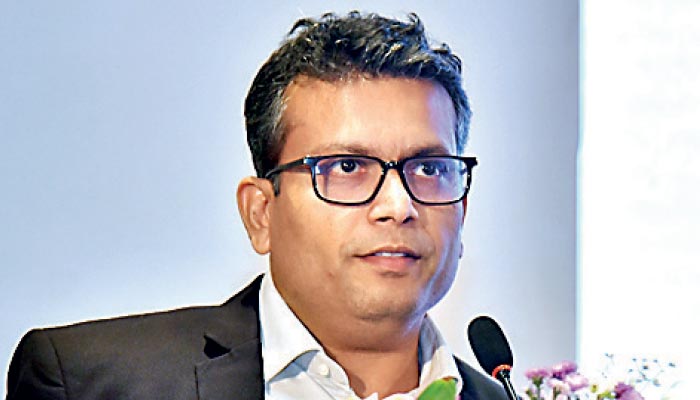
Paytm CEO for Travel and COO for Consumer Payments Vikash Jalan – Pic by Ruwan Walpola
  • Says modern tourism depends on seamless, invisible payments and destinations become more attractive when travellers do not worry about currency or acceptance
  • Notes with UPI acceptance in Sri Lanka, Indian arrivals boosted; opines country could attract 1 m Indians annually if payments become fully frictionless
  • Stresses digital payments must reach micro-merchants and SMEs, enabling homestays, guides, tuk-tuk drivers and fishermen to earn instantly, become visible to all
  • Suggests creating a national fintech-tourism task force to build a unified digital journey for travellers, make India-Sri Lanka travel corridor most seamless in the region
By Charumini de Silva: Paytm CEO for Travel and COO for Consumer Payments Vikash Jalan on Wednesday urged Sri Lanka to position itself as the “most frictionless, trusted, and convenient overseas destination” for Indian travellers, insisting that digital payments and fintech infrastructure will be just as critical as flights, hotels, and marketing in shaping the country’s next phase of tourism growth.

Speaking at the India-Sri Lanka Tourism Connect forum on the theme “Role of Fintech in Tourism Experiences,” Jalan said modern tourism is increasingly defined by action and ease, not advertising, and that seamless payment experiences are now fundamental to destination choice, visitor satisfaction, and spending levels.

“A traveller shouldn’t have to worry about currency, conversion, or acceptance. When payments disappear into the background, destinations become instantly more attractive,” he pointed out.

He explained that payments are often invisible when they work smoothly, but “painfully visible” when they don’t; affecting not only the individual tourist, but also a destination’s revenue, reputation, and repeat visitation.

A frictionless payment layer, he said, creates a self-reinforcing cycle; destination choices expand, travellers increase, revenues rise, and experience quality improves, helping that destination win in a highly competitive regional market.

Jalan stressed that India’s payments ecosystem is now among the most advanced in the world, driven by Unified Payments Interface (UPI), which processed 85 billion transactions last year, accounting for over 83% of all non-cash retail payments.

“India has gone from ‘cash-first to mobile-first in less than a decade’ and Sri Lanka’s rapid progress in digital payments places it on a parallel track,” he said.

He said over 67% of Sri Lanka’s merchant transactions now run through digital channels, and with UPI acceptance enabled in Sri Lanka in 2024, Indian travellers can simply ‘scan and pay’ as they would at home.

“This changes everything,” Jalan said, pointing to the sharp rise in Indian arrivals.

He noted that Sri Lanka saw 430,000 Indian visitors in 2024, up from 300,000 the previous year, and has already welcomed over 450,000 Indians in the first 10 months of 2025. “If Sri Lanka reaches its projected 3 million annual tourist arrivals, at least 1 million could come from India alone, especially if Sri Lanka becomes a fully frictionless UPI-enabled destination,” he added.

Jalan described the opportunity as transformational, particularly with the next wave of outbound Indian travellers emerging from tier-2 and tier-3 cities. These new travellers are value-conscious, but digitally confident.

“They trust Indian apps, Indian payment systems and Indian digital journeys. If Sri Lanka gets the experience right, it becomes closer than Bangkok, more convenient than Dubai and more interesting than many Southeast Asian markets,” he said.

To unlock this potential, Jalan argued that payment acceptance must be universal, extending beyond hotels and big retailers to micro-merchants, homestays, guides, tuk-tuk drivers, craft sellers, fishermen and local eateries.

He outlined how fintech can bring thousands of Sri Lankan small and medium enterprises (SMEs) into the formal digital economy, making them discoverable and bookable, while enabling transparent pricing and instant settlements.

“Imagine a fisherman in Jaffna getting paid instantly through QR, or a small homestay in Yala earning digitally from Indian travellers. When you solve trust and transparency, participation increases and prices stabilise naturally,” he opined.

He added that digital payments generate valuable insights to personalise tourism offerings whether for families heading to beaches, couples preferring hill country, or younger groups seeking nightlife and adventure. “A mature payments ecosystem allows Sri Lanka to curate experiences at scale,” he said.

Jalan proposed developing a national fintech–tourism task force bringing together Government, tourism authorities, banks, fintech companies and travel platforms to address issues such as cross-border settlements, QR standardisation, and merchant on-boarding and regulatory clarity.

He said this could evolve into a unified marketplace allowing travellers to discover, book, pay and experience everything in one digital journey.

Jalan said fintech is no longer an add-on, but the invisible backbone of modern tourism. “Imagine a traveller who plans on Paytm, lands in Colombo, discovers local gems, moves around easily, pays instantly, books the next experience on the go and returns home already planning the next visit. That is what happens when payments and travel work together,” he said.

“India has fintech. Sri Lanka has the most charming destination. It’s time to connect them and build the world’s most seamless travel corridor,” he added. Paytm wants Sri Lanka to build “world’s most seamless travel corridor” for Indian tourists | Daily FT
Read More........

World cereal output to pass record threshold in 2025 – FAO


The Food and Agriculture Organization of the United Nations (FAO) has released updated forecasts for world cereal markets in 2025. Thanks to larger-than-expected wheat harvests, especially in Argentina, global cereal output is now foreseen to surpass three billion tonnes for the first time ever, rising 4.9 percent to 3.003 billion tonnes. Coarse grain and rice outputs are both expected to increase from the previous year, with world rice output projected to grow by 1.6 percent, led by Bangladesh, Brazil, China, India and Indonesia.

The new Cereal Supply and Demand Brief also offers preliminary updates on trends in the ongoing winter wheat season in the northern hemisphere and coarse grain plantings in the southern hemisphere.

World cereal utilization in 2025/26 is now expected to increase by 2.1 percent from the previous year. Based on the updated forecasts, global cereal stocks are predicted to expand by 6.5 percent to a record high of 925.5 million tonnes, while the new forecast for world trade in cereals in 2025/26 points to a 3.3 percent increase to 500.6 million tonnes.More details are available here. custom title
Read More........

Franchise businesses have long been plagued by scandals. Domino’s is just the latest

Jenny Buchan, UNSW Sydney

The blue and red boxes with white dots are immediately recognisable as containing Domino’s pizzas. The pizza chain is Australia’s largest and is run as a franchise, with the ASX-listed public company Domino’s Pizza Enterprises holding the Australian master franchise rights.

Industry analysts IBISWorld calculate Domino’s has 4.2% of the fast food and takeaway market in Australia.

But recent reports suggest all is not well with many of the store owners, who are struggling with rising costs and declining profitability.

Troubling reports

The central issue appears to be what the federal government describes in its code of conduct as the “the imbalance of power between franchisors and franchisees”.

The Australian Financial Review has reported troubling claims in two key areas:

  • Domino’s appears to have doubled the margin on the key food ingredients it sells to franchisees and increased its advertising levy, according to a letter from store owners represented by the Australian Association of Franchisees. This could reduce their profitability

  • Domino’s Australian chief operating officer, Greg Steenson, reportedly encouraged franchisees in a presentation to take advantage of restructuring schemes that allow insolvent companies to continue to trade by negotiating repayment plans with the tax office and other creditors.

In a letter to Domino’s quoted in the report, the franchisees said their earnings have remained flat for 15 years, and have not kept up with inflation.

A long history of disputes

A former franchisee told a parliamentary inquiry into the franchising model the margin squeeze meant

franchisees can be ripped off by [Domino’s Pizza Enterprises] when forced to buy supplies at a higher price than they could get through their wholesalers.

He said the cost of food, labour, rent and other fixed costs had risen, but in 2019 pizzas were still sold at 1990s prices. “Nobody is left to pay for this but the franchisees,” the former owner said.

According to the Financial Review article, the cost of supplies remains a problem for franchisees. Time will tell whether Domino’s proposed 70 cent increase in pizza prices will help.

In response to questions from the Financial Review, Domino’s said the food margin had not “materially changed” in five years, despite volatility in ingredients prices.

Government reviews found the previous regulations had loopholes that did not sufficiently protect franchisees. There have been a string of high-profile disputes involving auto services company Ultra Tune, coffee chain 85 Degrees Coffee, Pizza Hut and others.

Following a 2024 inquiry, changes to the code of conduct were introduced this year.

Advertising costs on the rise

Advertising expenditure comes from what is now known as a “special purpose fund” in the code of conduct. Franchisors need to provide franchisees with disclosure about how the money is spent.

In 2017, the consumer regulator Australian Competition and Consumer Commission fined Domino’s A$18,000 for allegedly slipping on its obligations to advise franchisees about its marketing spend.

Ensuring franchisees have a genuine say in how their increased contribution is spent could help to address any imbalance of power between Domino’s and its franchisees.

Franchisees reportedly now pay 6% of their earnings to Domino’s for marketing and advertising, up from 5.35%. That is in addition to 7% of gross sales paid as royalties, and other costs for email and bookkeeping.

What insolvent means

The insolvency law for small businesses is explained by the Australian Taxation Office as a process that enables financially distressed but viable firms to restructure their existing debts and continue to trade.

The press reports say the franchisees of about 65 Domino’s stores were on repayment plans with the Australian Taxation Office. Many franchisees own two or more outlets.

Under the Corporations legislation, companies on these repayment plans may be trading insolvent, or believe they will become insolvent. Insolvent means they cannot pay their debts when they fall due. If this is the case, a key question that needs to be answered by Domino’s is whether their franchised outlets can become profitable.

In another media report, Domino’s was quoted as saying it disputed the number of stores on repayment plans, adding it was a “significantly smaller” number of franchisees.

The company was contacted for comment but did not respond before deadline.

What this means for the stores

So what does this mean for Domino’s store owners who may be trading insolvent?

Under the law, the restructuring process allows eligible small business companies:

  • to retain control of the business, property and affairs while developing a plan to restructure with the assistance of a small business restructuring practitioner
  • to enter into a restructuring plan with creditors.

If a company proposes a restructuring plan to its creditors, it is taken to be insolvent. This is a game changer for the franchisee and its creditors.

Franchisees receive protection from creditors who want to enforce rights under existing contracts. A franchisee’s creditors include suppliers, its landlord, employees, the tax office and the franchisor (in this case, Domino’s).

Currently these store owners are protected from any creditors pushing them to pay their debts. The restructuring process gives the store owners some breathing room while the debt negotiations take place.

The imbalance of power persists

Despite government inquiries and reviews, it seems the imbalance of power between the Domino’s franchisees and their franchisor persists.

But Domino’s can’t afford to stay the same. Franchisees need to make a profit. The move to enter restructuring could be a temporary band aid.

Domino’s largest shareholder and executive chairman, Jack Cowin, was appointed in July after the former chief executive left after just seven months. Cowin understands the franchised fast food sector and has pledged to lead a cost reduction program that will improve the profitability of stores.The Conversation

Jenny Buchan, Emeritus Professor, Business School, UNSW Sydney

This article is republished from The Conversation under a Creative Commons license. Read the original article.

Read More........

More than 1 billion 5G subscriptions expected in India by 2031: Report

IANS Photo

New Delhi, (IANS): India is set to cross 1 billion 5G subscriptions by the end of 2031, a new report said on Thursday.

This would give the country a 79 per cent 5G subscription penetration, reflecting rapid growth in adoption just three years after the service began rolling out nationwide, according to the November 2025 edition of the Ericsson Mobility Report.

The report highlights that India is one of the fastest-growing 5G markets globally. By the end of 2025, the country is expected to reach 394 million 5G users, accounting for 32 per cent of all mobile subscriptions.

Ericsson India MD Nitin Bansal said that mobile data usage in India is the highest in the world, with average consumption at 36 GB per month per smartphone, projected to rise to 65 GB by 2031.

He added that affordable 5G FWA (Fixed Wireless Access) equipment and heavy data usage are driving this surge.

Globally, the report forecasts 6.4 billion 5G subscriptions by 2031, making up about two-thirds of all mobile subscriptions.

In 2025 alone, global 5G subscriptions are expected to reach 2.9 billion, rising by 600 million in a single year.

Network coverage is also expanding quickly, with 400 million more people gaining 5G access in 2025.

By the end of that year, half of the global population outside mainland China is expected to be covered.

Mobile network data traffic rose 20 per cent between Q3 2024 and Q3 2025, driven mainly by India and China.

By 2025, 5G networks will handle 43 per cent of all mobile data, a number expected to jump to 83 per cent by 2031.

Fixed Wireless Access continues to grow as a major 5G use case. The EMR estimates that 1.4 billion people will be connected through FWA by 2031, with 90 per cent of these users on 5G networks.Currently, 159 service providers already offer 5G-based FWA services, representing about 65 per cent of all FWA operators worldwide, the report said. More than 1 billion 5G subscriptions expected in India by 2031: Report | MorungExpress | morungexpress.com
Read More........

More than 1 billion 5G subscriptions expected in India by 2031: Report

IANS Photo

New Delhi, November 20 (IANS): India is set to cross 1 billion 5G subscriptions by the end of 2031, a new report said on Thursday.

This would give the country a 79 per cent 5G subscription penetration, reflecting rapid growth in adoption just three years after the service began rolling out nationwide, according to the November 2025 edition of the Ericsson Mobility Report.

The report highlights that India is one of the fastest-growing 5G markets globally. By the end of 2025, the country is expected to reach 394 million 5G users, accounting for 32 per cent of all mobile subscriptions.

Ericsson India MD Nitin Bansal said that mobile data usage in India is the highest in the world, with average consumption at 36 GB per month per smartphone, projected to rise to 65 GB by 2031.

He added that affordable 5G FWA (Fixed Wireless Access) equipment and heavy data usage are driving this surge.

Globally, the report forecasts 6.4 billion 5G subscriptions by 2031, making up about two-thirds of all mobile subscriptions.

In 2025 alone, global 5G subscriptions are expected to reach 2.9 billion, rising by 600 million in a single year.

Network coverage is also expanding quickly, with 400 million more people gaining 5G access in 2025.

By the end of that year, half of the global population outside mainland China is expected to be covered.

Mobile network data traffic rose 20 per cent between Q3 2024 and Q3 2025, driven mainly by India and China.

By 2025, 5G networks will handle 43 per cent of all mobile data, a number expected to jump to 83 per cent by 2031.

Fixed Wireless Access continues to grow as a major 5G use case. The EMR estimates that 1.4 billion people will be connected through FWA by 2031, with 90 per cent of these users on 5G networks.Currently, 159 service providers already offer 5G-based FWA services, representing about 65 per cent of all FWA operators worldwide, the report said. More than 1 billion 5G subscriptions expected in India by 2031: Report | MorungExpress | morungexpress.com
Read More........

Maruti Suzuki's Jimny 5-door export from India surpasses 1 lakh units milestone

IANS Photo

New Delhi, (IANS): In a landmark achievement, the Jimny 5-door SUV has surpassed a cumulative export of 1 lakh units from India, Maruti Suzuki India Limited said on Thursday.

Jimny 5-door export journey began in 2023, shortly after the SUV made its debut in India. The SUV, manufactured exclusively in India, has been shipped across more than 100 countries, including Japan, Mexico, and Australia.

"Jimny 5-door’s entry in Japan in January 2025, under the name 'Jimny Nomade', sparked off an overwhelming response with orders crossing the 50,000 mark within days of introduction. This reflects Jimny’s strong resonance in one of the world’s most evolved and quality-conscious automobile markets," the company said.

According to Maruti Suzuki, the Jimny 5-door is built for performance, combining a ladder-frame chassis with Suzuki’s proven ALLGRIP PRO (4WD), offering superior off-road dynamics and stability.

Powered by a 1.5-litre petrol engine, it embodies a balance of durability, simplicity and dependable performance, traits that appeal to both rugged terrain drivers and global customers attuned to quality and functionality.

“The Jimny has over half a century of heritage globally. Jimny 5-door crossing 1 lakh export mark is a proud achievement for Maruti Suzuki. We are deeply thankful to customers around the world for their trust in this acclaimed SUV," Maruti Suzuki India Limited Managing Director and CEO, Hisashi Takeuchi, said.

Jimny’s strong off-road DNA, reliable performance and uncompromising quality have earned admiration in over 100 countries, he added.

The Jimny, along with 16 other models exported by Maruti Suzuki, stands as a shining example of ‘Make in India for the World’.

The year-on-year rise in the company’s exports reflects the love and confidence of customers in our products and highlights India’s rise as a hub for world-class automobile manufacturing, Takeuchi said.

This achievement reinforces Maruti Suzuki’s robust and sustained export growth trajectory.

With over 2 lakh vehicles exported in H1 FY 2025-26, the company grew by around 40 per cent and recorded its highest-ever half-yearly export volume. In FY 2024-25, the Company had exported over 3.3 lakh vehicles.Maruti Suzuki commands over 46 per cent share in India’s passenger vehicle exports.Maruti Suzuki's Jimny 5-door export from India surpasses 1 lakh units milestone | MorungExpress | morungexpress.com
Read More........

Time to move beyond billboards: Australia’s tourism strategy needs to embrace the personal

Australia continues to rely on billboard-style and cinematic advertising to promote itself as a destination. This approach, used for decades, presents a national image built around iconic sites and curated visuals.

While this style may appeal to tourism bodies because of the celebrity-fronted content and central control, it is increasingly out of step with how modern travellers plan their journeys.

In 2025, travellers are scrolling TikTok, watching Instagram reels, and browsing peer reviews. Tourism campaigns should meet people where they are.

Authenticity beats curated content

Social media is a central source of travel inspiration, particularly for Gen Z and millennials, according to a global survey of 20,000 respondents across all age groups.

Almost 90% of young travellers discover new destinations through TikTok, and 40% say they have booked a trip directly because of something they saw on the platform.

What matters most is not just reach, but trust.

Influencers shape behaviour from desire to booking and post-trip sharing. Their impact rests on perceived authenticity. Real people telling stories resonate more than stylised ads.

Storytelling sits at the heart of this shift, and tourism providers can engage in this form of storytelling, too. Airbnb’s Host Stories campaign invites hosts to share personal narratives through short videos and blog posts.

By highlighting real hosts and their daily lives, marketing moves beyond selling places and instead emphasises authentic, locally rooted connections that resonate with travellers.

It introduces travellers to places through personal experience, grounded in local knowledge and genuine connection.

User-generated content builds trust

A 2025 study found user-generated content enhances emotional connection and perceived authenticity with potential tourists.

Stumbling on a friend’s holiday photo or a short travel video in their feed can increase the appeal of a destination. Unlike traditional advertising, which requires deliberate placement, peer content can influence simply by appearing in everyday browsing.

Australia has used participatory storytelling before. One powerful example is Tourism Queensland’s 2009 Best Job in the World campaign, which invited applicants from around the world to compete for a six-month caretaker role on Hamilton Island in the Great Barrier Reef. All they had to do was submit a short video explaining why they were the right candidate.

The campaign went viral, attracting over 34,000 applicants from 200+ countries, millions of website hits and global media overage.

Its success was driven less by who eventually got the job and more by the anticipation and unusual premise. It stood out because of simplicity and inclusivity, inviting real people to be part of the narrative.

Yet, 16 years on, Australia’s national tourism campaigns still rely on cinema ads, billboards and polished TV commercials built around icons such as Uluru and the Sydney Harbour Bridge.

From storytelling to story-sharing

The long-running Inspired by Iceland campaign consistently encourages locals to share authentic travel memories, cultural insights and personal stories.

Iceland Hour, launched in June 2010, saw schools, parliament and businesses pause for a coordinated social media push. Citizens and international supporters posted more than 1.5 million positive, personal messages across social media in a single week.

The campaign helped rebuild confidence after the Eyjafjallajökull volcanic eruption, and contributed to a 20% year-on-year rise in tourist arrivals.

Finland’s Rent a Finn campaign, launched in 2019, embraced a similarly human-centred approach. Showcasing ordinary people rather than cinematic landscapes, the campaign reached 149 countries, contributed €220 million in additional tourism revenue and reinforced Finland’s reputation as the “world’s happiest country”.

The United Kingdom’s Great Chinese Names for Great Britain campaign in late 2014 invited Chinese audiences to propose Mandarin nicknames for 101 British landmarks.

Suggested names, such as “Strong Man Skirt Party” for a kilted parade or “Stone Guardians” for Hadrian’s Wall, were featured on Google Maps and Wikipedia.

The campaign attracted more than 13,000 submissions, sparked widespread engagement on Chinese social media and was followed by a 27% increase in visits from China. It was worth an estimated £22 million boost to the UK economy.

Storytelling as a sustainability strategy

Participatory storytelling is not only more engaging, it can also be more sustainable.

Japan’s Hidden Gems campaign redirects tourist traffic away from overcrowded areas like Kyoto and Tokyo by spotlighting lesser-known destinations through locally led narratives. These stories promote slower travel, distribute benefits more evenly and reduce pressure on fragile ecosystems.

Australia faces a similar challenge. Our global image is still anchored to a handful of spectacular but vulnerable icons.

Yet tourism is about more than selfies in front of sandstone or coral. By inviting regional communities and visitors to tell their stories, we could shift attention beyond brochure highlights and encourage deeper, more diverse engagement.

There is also a strong economic case for prioritising emotional connection. Research shows when travellers form personal bonds with a place – through memorable, localised experiences – they are more likely to return, recommend it to others and stay longer.

Tourism is a relationship, not a product

Visitors are not passive consumers of postcard moments but active contributors to a shared story.

Australia’s tourism strategy should reflect this. This could mean amplifying visitor photos and videos on official platforms, inviting local communities to co-design campaigns, and drawing on authentic user-generated content rather than polished advertising and cinematic masterpieces.

That means letting go of perfection, embracing authenticity and trusting that the people who come here, as well as the people who live here, have stories worth sharing.The Conversation

Katharina Wolf, Associate Professor in Strategic Communication, Curtin University

This article is republished from The Conversation under a Creative Commons license. Read the original article.

Read More........

India’s luxury goods market to see 10 pc growth at $12.1 billion by 2025: Report


IANS Photo

New Delhi, (IANS): India’s luxury goods market is projected to see 10 per cent growth to reach $12.1 billion by 2025, emerging as a significant player in the global luxury market, a new report has said.

The luxury retail landscape is being reimagined, with brands moving beyond transactional spaces to offer curated lifestyle experiences, according to data analytics company Euromonitor International.

South Africa (15 per cent), India (10 per cent), and the United Arab Emirates (9 per cent) are among the leading countries in luxury goods market growth.

India is expected to achieve a Compound Annual Growth Rate (CAGR) of 74 per cent over the forecast period, highlighting its growing importance in the luxury ecosystem. A key factor contributing to India's growth is the increasing number of wealthy individuals, said the report.

Premium and luxury cars led value sales, fuelled by urbanisation, affluent consumers, attractive financing, and new electric models. Experiential luxury — especially hotels, travel, fine dining, and exclusive events — was the fastest-growing segment, as younger buyers increasingly sought unique experiences over products, spurred by a surge in tourism and personalised offerings.

In 2025, physical luxury stores accounted for 81 per cent of personal luxury goods sales, reflecting the sector’s resilience and the continued importance of in-person engagement.

The global luxury market – valued at $1.5 trillion in 2025 — remains resilient, despite continued macroeconomic and geopolitical disruptions.

"Amid market uncertainty, the industry is undergoing a profound transformation, shifting from product-centric models to experience-driven engagement. Wellness, lifestyle and emotional resonance are emerging as new markers of status, reshaping how brands connect with consumers,” said Fflur Roberts, global insight manager for luxury goods at Euromonitor International.

Premium and luxury cars led value sales, fuelled by urbanisation, affluent consumers, attractive financing, and new electric models. Experiential luxury—especially hotels, travel, fine dining, and exclusive events—was the fastest-growing segment, as younger buyers increasingly sought unique experiences over products, spurred by a surge in tourism and personalised offerings.

Physical luxury stores are becoming expressions of identity through exclusivity and hospitality. These environments mirror high-end hospitality, with concierge-level service and engaging storytelling.

While e-commerce surges, luxury brands are reimagining stores as cultural destinations that inspire, connect and reward loyalty through interactive experiences.

Luxury spending has shifted from personal goods towards experience-led categories, reflecting deeper changes in consumer values.Experimental luxury showed resilience, with luxury travel and hospitality markets growing 8 per cent in 2025 to reach $103 billion, said the report. India’s luxury goods market to see 10 pc growth at $12.1 billion by 2025: Report | MorungExpress | morungexpress.com
Read More........

A US startup plans to deliver ‘sunlight on demand’ after dark. Can it work – and would we want it to?

Can a new satellite constellation create sunlight on demand? SpaceX/Flickr, CC BY-ND Michael J. I. Brown, Monash University and Matthew Kenworthy, Leiden University

A proposed constellation of satellites has astronomers very worried. Unlike satellites that reflect sunlight and produce light pollution as an unfortunate byproduct, the ones by US startup Reflect Orbital would produce light pollution by design.

The company promises to produce “sunlight on demand” with mirrors that beam sunlight down to Earth so solar farms can operate after sunset.

It plans to start with an 18-metre test satellite named Earendil-1 which the company has applied to launch in 2026. It would eventually be followed by about 4,000 satellites in orbit by 2030, according to the latest reports.

So how bad would the light pollution be? And perhaps more importantly, can Reflect Orbital’s satellites even work as advertised?

Bouncing sunlight

Sunlight can be bounced off a wristwatch to produce a spot of light . M. Brown

In the same way you can bounce sunlight off a watch face to produce a spot of light, Reflect Orbital’s satellites would use mirrors to beam light onto a patch of Earth.

But the scale involved is vastly different. Reflect Orbital’s satellites would orbit about 625km above the ground, and would eventually have mirrors 54 metres across.

When you bounce light off your watch onto a nearby wall, the spot of light can be very bright. But if you bounce it onto a distant wall, the spot becomes larger – and dimmer.

This is because the Sun is not a point of light, but spans half a degree in angle in the sky. This means that at large distances, a beam of sunlight reflected off a flat mirror spreads out with an angle of half a degree.

What does that mean in practice? Let’s take a satellite reflecting sunlight over a distance of roughly 800km – because a 625km-high satellite won’t always be directly overhead, but beaming the sunlight at an angle. The illuminated patch of ground would be at least 7km across.

Even a curved mirror or a lens can’t focus the sunlight into a tighter spot due to the distance and the half-degree angle of the Sun in the sky.

Would this reflected sunlight be bright or dim? Well, for a single 54 metre satellite it will be 15,000 times fainter than the midday Sun, but this is still far brighter than the full Moon.

Mylar reflectors can be unfolded in orbit. Josh Spradling/The Planetary Society, CC BY

The balloon test

Last year, Reflect Orbital’s founder Ben Nowack posted a short video which summarised a test with the “last thing to build before moving into space”. It was a reflector carried on a hot air balloon.

In the test, a flat, square mirror roughly 2.5 metres across directs a beam of light down to solar panels and sensors. In one instance the team measures 516 watts of light per square metre while the balloon is at a distance of 242 metres.

For comparison, the midday Sun produces roughly 1,000 watts per square metre. So 516 watts per square metre is about half of that, which is enough to be useful.

However, let’s scale the balloon test to space. As we noted earlier, if the satellites were 800km from the area of interest, the reflector would need to be 6.5km by 6.5km – 42 square kilometres. It’s not practical to build such a giant reflector, so the balloon test has some limitations.

So what is Reflect Orbital planning to do?

Reflect Orbital’s plan is “simple satellites in the right constellation shining on existing solar farms”. And their goal is only 200 watts per square metre – 20% of the midday Sun.

Can smaller satellites deliver? If a single 54 metre satellite is 15,000 times fainter than the midday Sun, you would need 3,000 of them to achieve 20% of the midday Sun. That’s a lot of satellites to illuminate one region.

Another issue: satellites at a 625km altitude move at 7.5 kilometres per second. So a satellite will be within 1,000km of a given location for no more than 3.5 minutes.

This means 3,000 satellites would give you a few minutes of illumination. To provide even an hour, you’d need thousands more.

Reflect Orbital isn’t lacking ambition. In one interview, Nowack suggested 250,000 satellites in 600km high orbits. That’s more than all the currently catalogued satellites and large pieces of space junk put together.

And yet, that vast constellation would deliver only 20% of the midday Sun to no more than 80 locations at once, based on our calculations above. In practice, even fewer locations would be illuminated due to cloudy weather.

Additionally, given their altitude, the satellites could only deliver illumination to most locations near dusk and dawn, when the mirrors in low Earth orbit would be bathed in sunlight. Aware of this, Reflect Orbital plan for their constellation to encircle Earth above the day-night line in sun-synchronous orbits to keep them continuously in sunlight.

Cheaper rockets have enabled the deployment of satellite constellations. SpaceX/Flickr, CC BY-NC

Bright lights

So, are mirrored satellites a practical means to produce affordable solar power at night? Probably not. Could they produce devastating light pollution? Absolutely.

In the early evening it doesn’t take long to spot satellites and space junk – and they’re not deliberately designed to be bright. With Reflect Orbital’s plan, even if just the test satellite works as planned, it will sometimes appear far brighter than the full Moon.

A constellation of such mirrors would be devastating to astronomy and dangerous to astronomers. To anyone looking through a telescope the surface of each mirror could be almost as bright as the surface of the Sun, risking permanent eye damage.

The light pollution will hinder everyone’s ability to see the cosmos and light pollution is known to impact the daily rhythms of animals as well.

Although Reflect Orbital aims to illuminate specific locations, the satellites’ beams would also sweep across Earth when moving from one location to the next. The night sky could be lit up with flashes of light brighter than the Moon.

The company did not reply to The Conversation about these concerns within deadline. However, it told Bloomberg this week it plans to redirect sunlight in ways that are “brief, predictable and targeted”, avoiding observatories and sharing the locations of the satellites so scientists can plan their work.

The consequences would be dire

It remains to be seen whether Reflect Orbital’s project will get off the ground. The company may launch a test satellite, but it’s a long way from that to getting 250,000 enormous mirrors constantly circling Earth to keep some solar farms ticking over for a few extra hours a day.

Still, it’s a project to watch. The consequences of success for astronomers – and anyone else who likes the night sky dark – would be dire. The Conversation

The number of satellites visible in the evening has skyrocketed.

Michael J. I. Brown, Associate Professor in Astronomy, Monash University and Matthew Kenworthy, Associate Professor in Astronomy, Leiden University

This article is republished from The Conversation under a Creative Commons license. Read the original article.

Read More........

VE Commercial Vehicles to invest Rs 544 crore to boost manufacturing in India

IANS Photo

New Delhi, (IANS): VE Commercial Vehicles (VECV), a joint venture between Volvo Group and Eicher Motors, on Thursday announced an investment of Rs 544 crore (about 576 million Swedish Krona) to set up a new factory for the production and final assembly of Volvo Group’s advanced 12-speed Automated Manual Transmission (AMT) systems.

The greenfield facility will come up at the Vikram Udyogpuri Integrated Industrial Township near Ujjain, Madhya Pradesh.

This new plant marks another milestone in the 18-year-long successful partnership between Volvo Group and Eicher Motors, strengthening India’s position as a key manufacturing hub for the global automotive industry.

Sofia Frandberg, Chairperson of VE Commercial Vehicles and Senior Leader at Volvo Group, said that the new investment reflects the growing trust and synergy between the two partners.

“This investment represents another win-win collaboration with the Volvo Group and leverages the strong technical and industrial capabilities we have built over the past 18 years,” she said.

Siddhartha Lal, Chairman of Eicher Motors, said the initiative further strengthens the joint venture’s technological foundation.

“Since its inception in 2008, our partnership has consistently delivered advanced programmes. This new AMT project is built on trust and capability and marks another important step towards our vision of becoming a leading commercial vehicle player in India and other emerging markets,” he said.

Jens Holtinger, Executive Vice President of Group Trucks Technology and Volvo Group CTO, said the new AMT facility demonstrates the Volvo Group’s commitment to efficient and collaborative global manufacturing.

“VECV has become a core part of Volvo Group’s supply chain over the years, and this investment marks a new chapter in our successful relationship,” he said.

Vinod Aggarwal, Managing Director and CEO of VE Commercial Vehicles, highlighted the transformative impact of the AMT technology on the Indian commercial vehicle industry.

“As the market moves towards higher-capacity vehicles, Eicher truck customers and drivers will benefit from Volvo Group’s world-class AMT technology, which enhances fuel efficiency, reduces driver fatigue, and improves productivity,” he said.

The new facility will be built to Volvo Group’s global standards and aligns with the Government of India’s ‘Make in India’ vision.The plant will have an initial capacity to produce up to 40,000 units annually, with production and local sourcing to be ramped up gradually in line with Volvo’s quality benchmarks. VE Commercial Vehicles to invest Rs 544 crore to boost manufacturing in India | MorungExpress | morungexpress.com
Read More........

Mahindra and Mahindra launches new Thar 2025, price starts at Rs 9.99 lakh

IANS Photo

New Delhi, (IANS): Mahindra and Mahindra on Friday launched the new 'Thar 2025' starting at Rs 9.99 Lakh (ex-showroom), with new design elements, advanced comfort features and smart technology integration for better urban commute.

"This Iconic SUV is engineered to redefine urban commuting and elevate rugged weekend adventures," the automobile manufacturer said in a statement.

The ‘Thar’ brand has garnered a dedicated community of over 3 lakh passionate owners.

More than just an SUV, it represents a lifestyle statement, inspiring to embrace adventure and exploration with unmatched capability and a timeless design, the company said.

The new model is equipped with a 26.03 cm HD infotainment screen that supports both Android Auto and Apple CarPlay, along with Type-c USB ports, providing seamless integration of your smartphone's functionalities.

The tyre direction monitoring system gives real-time information on tyre orientation, enhancing safety.

"For adventure enthusiasts, the adventure stats gen II feature offers valuable off-road data such as racing tab, altimeter, outside temperature and pressure, trip meter and steering direction, adding an extra dimension to your journey and ensuring a smart and connected driving experience," Mahindra and Mahindra said.

Additionally, the company offers a range of engine options to suit diverse driving preferences paired with multiple transmissions -- 6-speed manual transmission, 6-speed torque converter automatic transmission, in RWD as well as 4X4 configurations.

“Over the years, Thar has become more than just an SUV — it’s a symbol of freedom, adventure, and a lifestyle that resonates deeply with our customers. At Mahindra, we are committed to listening to our customers and evolving with their needs, which is why the New Thar reflects both their feedback and our dedication to provide the best to our customers," said Nalinikanth Gollagunta, Chief Executive Officer - Automotive Division, Mahindra & Mahindra Ltd.

By blending new design elements, smart technology, enhanced comfort and convenience features, the New Thar offers an unparalleled driving experience that empowers our customers to explore limitless possibilities in both urban and off-road settings, he added.

The new model has features rear AC vents, ensuring passengers in the second row enjoy a comfortable drive, while the sliding armrest and dead pedal (AT) offer additional comfort for the driver.Door-mounted power windows and a rear-view camera provide ease of driving, and the internally operated fuel lid ensures hassle-free refuelling, the company said. Mahindra and Mahindra launches new Thar 2025, price starts at Rs 9.99 lakh | MorungExpress | morungexpress.com
Read More........

Neos Networks launches DDoS Mitigation to strengthen business-critical connectivity


Posted by Harry Baldock, Reading, UK – 3rd July– Neos Networks, the UK’s leading provider of business connectivity, has today announced the launch of advanced Distributed Denial of Service (DDoS) Mitigation as an integrated feature of its Dedicated Internet Access (DIA) service.

This latest enhancement supports Neos’s growing secure networking proposition and responds directly to the demands of public sector and private businesses for resilient, high-capacity internet access with built-in security.

Powered by Corero’s industry-leading platform, the DDoS Mitigation service uses adaptive behavioural analytics to detect and neutralise attacks in real-time. By analysing traffic patterns and drawing on telemetry across multiple geographies, it proactively identifies malicious activity, stopping threats before they can disrupt customer operations. The service is hosted directly on Neos’s core infrastructure, able to be turned on for customers in close to real-time, with no need for customer-premises hardware.

The DDoS services are offered in a tiered model that allows customers to easily add or remove features as their requirements change: 
  • DDoS Mitigation – Always-on, real-time protection with auto-mitigation, weekly reports, and 24/7 monitoring for customer internet services.
  • DDoS Monitoring – Continuous traffic monitoring and monthly threat reports, with a fast upgrade path to DDoS Mitigation.
  • DDoS Standard – DDoS protected-core network included with all DIA circuits.
David Bruce, Chief Revenue Officer at Neos Networks, said: “Businesses are demanding DDoS protection by default – they want reliable, secure internet access, without needing to invest in or manage additional on-site infrastructure. Our latest enhancements reflect this shift in how organisations can access secure and reliable connectivity. Whether it’s a direct customer looking for peace of mind, or a wholesale partner aiming to offer added value without the complexity, our tiered DDoS offering provides the flexibility and simplicity they need.”

This launch builds on Neos’s broader DIA connectivity portfolio, offering 10Gbps bandwidths with management options for fully managed and wires-only services. Neos provides a range of IP addressing options and offers robust Cloud Connect services, delivering private connectivity to many Cloud Service Providers, including AWS and Azure. All these services are quotable and orderable in minutes on LIVEQUOTE.

ENDS

About Neos Networks

Neos Networks has the UK’s largest business-dedicated network. With over 600 points of presence and 90 data centres nationwide, Neos provides high-capacity critical connectivity for businesses, from telecoms and energy to banking and emergency services.

Agile and customer-focused with almost limitless scale, Neos enables emerging technologies like AI, 5G and IoT, making connectivity work for Britain.

Read More........

2-wheeler segment logs strong growth in India driven by robust exports, domestic recovery


IANS Photo

New Delhi, September 3 (IANS): India’s automobile industry showed 2.8 per cent year-on-year (YoY) growth in retail sales in August, with robust performance in the two-wheeler segment, a report said on Wednesday.

Two-wheeler manufacturers increased sales by 2.1 per cent primarily through exports and festive-season inventory buildup on the part of dealers, a report from Choice Institutional Equities said.

Passenger vehicle sales improved marginally by 0.8 per cent, led by a healthy demand for the SUV segment. The three-wheeler sales declined by 2.3 per cent YoY as consumers moved towards electric vehicles.

Eicher Motors reported a 54.8 per cent increase in two-wheeler sales year-on-year, while TVS Motor saw a 30.1 per cent rise, driven by strong demand for premium motorcycles.

Hero MotoCorp increased by 8.1 per cent due to rural recovery, while Bajaj Auto saw a 5.0 per cent rise, supported by a 28.6 per cent surge.

The PV segment sales in the domestic market slowed as dealers kept lean inventories in anticipation of GST rate changes. The segment also saw increased CNG penetration, the report said.

Mahindra & Mahindra reported a 9 per cent year-over-year decline in domestic dispatches. Maruti Suzuki saw a 0.6 per cent drop but was supported by strong exports.

Commercial vehicle sales increased by 8.0 per cent, while tractor sales rose by 29.7 per cent due to rural demand. CV inventory, led by Ashok Leyland, showed a decline, easing dealer pressure after a subdued year, the report noted.

The Centre is also expected to lower the tax on entry-level passenger vehicles and two-wheelers to 18 per cent, making them more affordable ahead of Diwali.Currently, all passenger vehicles based on combustion engines are subject to a GST of 28 per cent plus a compensation cess of 1 per cent to 22 per cent based on engine capacity, length, and body type. 2-wheeler segment logs strong growth in India driven by robust exports, domestic recovery | MorungExpress | morungexpress.com
Read More........

Zen bolsters The Fibre Hub with Sky Business Wholesale Ethernet partnership


Posted by Harry Baldock, Press Release: Zen Internet and Sky Business Wholesale have announced a strategic partnership that will see Zen’s partners and direct business customers gain access to Sky’s Ethernet-enabled exchange footprint.

Spanning over 2,800 exchanges, with more than 80 per cent enabled for 10 Gb services, the collaboration marks a significant step forward for Zen in delivering high-performance, scalable connectivity solutions to businesses across the UK.

The partnership lays the foundation for a long-term strategic relationship, with growth and innovation at its core. By aligning API strategies and automation capabilities, both organisations aim to accelerate quoting, ordering, and service delivery bringing greater speed and efficiency to its partners and direct business customers.

The partnership further strengthens Zen’s partner portal, ‘The Fibre Hub’, after its launch in May. The Fibre Hub already offers access to a full fibre (FTTP) footprint of nearly 20 million premises via infrastructure providers Openreach, CityFibre, ITS and Freedom Fibre, with Trooli products coming soon.

Zen will now also provide its channel partners and direct business customers access to Sky Business Wholesale’s Ethernet-enabled exchange footprint and 10 GB Ethernet services. This builds on Zen’s offering of Ethernet over FTTP and business-grade connectivity products from CityFibre and ITS.

David Barber, Strategy Director at Zen Internet, said:

“Sky’s network reach is a strong strategic fit for Zen. This partnership expands choice and flexibility for our channel and UK businesses we serve directly, enabling us and the channel to compete more effectively on price, coverage and service. It is another significant step in bringing genuine infrastructure competition to the UK market.

“As we continue to build relationships with more key network providers, we’re on track to offer the widest geographic reach and the best commercial advantage for the channel and for direct business customers.”

Damian Saunders, Managing Director at Sky Business Wholesale, added:

“We’re excited to partner with Zen, a business that shares our focus on innovation and customer choice. This is just the beginning of a broader collaboration that will bring real value and better outcomes for the channel and business customers alike.”

The move is in line with Zen’s ambitions to bringing better value connectivity to UK businesses while also offering greater choice to Partners through The Fibre Hub.

How is the UK connectivity ecosystem changing in 2025? Join the discussion at Connected Britain, the UK’s largest digital economy event. Zen bolsters The Fibre Hub with Sky Business Wholesale Ethernet partnership | Total Telecom
Read More........

Digicel Group and Symptai Join Forces to Offer Better Access to World Class Business Solutions


Digicel Group and Symptai Consulting Limited have joined forces to offer businesses better access to world-class solutions and experts to support all their technology needs. This milestone builds on Digicel’s initial stake in Symptai, acquired in December 2021, and underscores the Group’s continued commitment to driving secure digital growth and transformation across the region.

Symptai, a leading technology advisory and cybersecurity consultancy firm, boasts a 27-year track record as regional experts in cybersecurity, data privacy and protection, anti-money laundering, risk and compliance, and digital transformation. With Digicel Business’ mobile and ICT solutions, Symptai’s deep expertise supporting governments, financial institutions and large enterprises will continue to enhance Digicel’s business solutions across the Caribbean.

“This is a major step forward in strengthening Digicel’s capabilities in cybersecurity, data privacy and digital transformation,” said Liam Donnelly, Chief Business Officer, Digicel Group. “For over five years, Digicel has been a pioneer in the cyber and SOC (security operation centre) services for businesses and now we’re taking it to the next level. Globally, there’s a dearth of cyber expertise, so you can imagine across the Caribbean, with a population of about 45 million people, the demand is great. Now, with the combined expertise of Digicel and Symptai, there is an even larger pool of knowledge and experts to better serve our customers and have even greater reach across the region and beyond.”

“Symptai and Digicel have been working in tandem for a number of years now and as a business partner, Digicel has everything you could want for your company,” said Marlon Cooper, CEO, Symptai Consulting. “The technology, the network, the consultants, the partners (locally and internationally) are all there, which means that whether you’re a small, medium or large-sized business, we have the products, services and people to meet you where you are, and also to help you as you scale.”

Now that Symptai is fully part of the Digicel Business family, customers can expect a seamless and strengthened value proposition—backed by Digicel’s global strategic partners and Symptai’s proven experience. This unified approach positions Digicel Business as the leading technology partner for businesses of all sizes, not just in Jamaica, but throughout the region.

Digicel Business and Symptai Consulting remain committed to delivering greater value and stronger security solutions to customers, empowering Caribbean businesses to thrive in an increasingly digital world.

ENDS

About Digicel

Enabling customers to live, work, play and flourish in a connected world, Digicel’s world class LTE and fibre networks deliver state-of-the-art mobile, home and business solutions.

Serving 10 million consumer and business customers in 25 markets in the Caribbean and Central America, our investments of over US$5 billion and a commitment to our communities through our Digicel Foundations in Haiti, Jamaica and Trinidad & Tobago have contributed to positive outcomes for over 2 million people to date.

With our Connecting. Empowering vision at the heart of everything we do – supported by our DIGI values of Diversity, Integrity, Growth and Innovation – our 5,000 employees worldwide work together to make that a powerful reality for customers, communities and countries day in, day out.

Digicel Business provides end-to-end fully managed business solutions with its robust network, expert resources and cutting-edge technology. These all work in synergy with one aim – efficiencies across businesses, large or small. Partnering with industry-leaders to deliver innovative products and technology, Digicel Business’ consultative approach to customer engagement ensures the best possible solutions for all businesses.  Visit www.digicelgroup.com for more. Digicel Group and Symptai Join Forces to Offer Better Access to World Class Business Solutions | Total Telecom
Read More........