Chinese company monopolises printing of Nepal’s banknotes for nearly three years

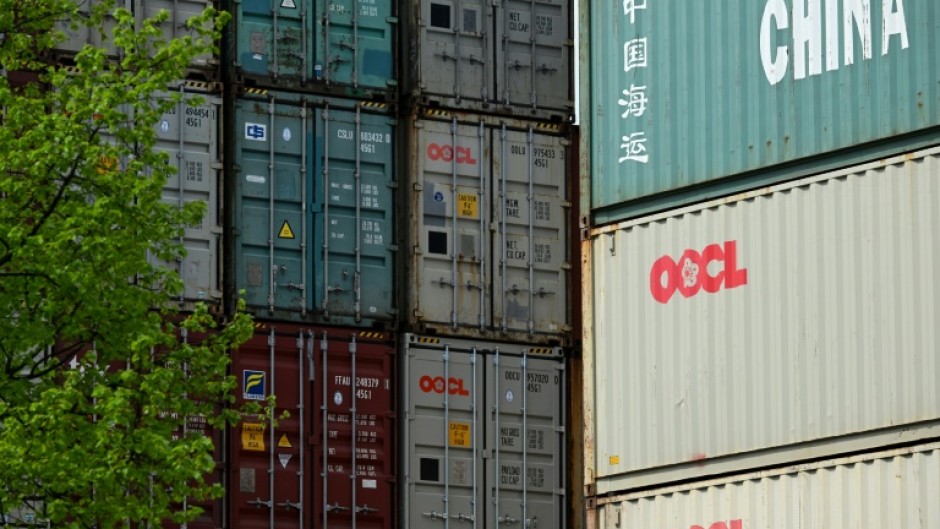
Chinese company monopolises printing of Nepal’s banknotes for nearly three years (Photo: @yicaichina/X/IANS)

Kathmandu, (IANS) China Banknote Printing and Minting Corporation appears to be monopolising the printing of Nepal’s banknotes, with the Chinese state-owned company winning bids seven times consecutively over the past three years.

On Friday, Nepal Rastra Bank (NRB), the central bank of the country, issued a letter of intent to award a contract to the Chinese company for the design, printing, supply, and delivery of 430 million pieces of NPR 1,000 denomination banknotes worth US$16.985 million.

According to the NRB’s notice, the Chinese company was selected as the substantially responsive, lowest evaluated bidder.

In nearly past three years, NRB has issued seven separate tenders for the design, printing, supply, and delivery of various denominations of banknotes. In each case, the Beijing-based company, located in the Xicheng District, emerged as the winning bidder.

Based on the contracts awarded during this period, the Chinese company is expected to earn around US$63 million from Nepal for printing approximately 2.38 billion pieces of banknotes.

The Chinese company does not have a long history of printing Nepal’s currency notes. In 2016, the Chinese company had secured the contract to print Nepal’s banknotes for the first time, according to the NRB.

On October 15 this year, NRB issued a letter of intent to print and supply 420 million pieces of NPR 50 denomination banknotes and related services. Its bid price of US$10.422 million was accepted as the lowest evaluated bid, according to the central bank’s notice.

Earlier, on June 22 this year, the same company was awarded a contract for the design, printing, supply, and delivery of 230 million pieces of NPR 500 denomination banknotes and related services. Its bid price of US$9.66 million was accepted as the substantially responsive, lowest evaluated bid.

On October 27 last year, the Chinese company won another bid to print Nepal’s banknotes. It was awarded the contract for printing and supplying 300 million pieces of NPR 100 denomination notes for US$8.996 million.

Similarly, on October 8 last year, the company won the bid to design, print, and supply 340 million pieces of NPR 10 denomination banknotes. It was awarded the contract for US$7.117 million as the lowest evaluated bidder.

Earlier, on July 10 last year, the company secured the contract for the design, printing, supply, and delivery of 350 million pieces of NPR 5 denomination banknotes at a bid price of US$5.158 million, which was also accepted as the lowest evaluated bid.

Likewise, on February 12, 2023, NRB issued a letter of intent to award the company a contract for the design, printing, supply, and delivery of 310 million pieces of NPR 20 denomination banknotes for US$4.698 million.

The last time an Indian company received a similar contract was on January 10, 2023, when NRB issued a letter of intent to award the Security Printing and Minting Corporation of India Limited a contract for the design, printing, supply, and delivery of 300 million pieces of NPR 50 denomination banknotes for US$5.048 million.

Earlier, on November 30, 2022, the same Indian company had been awarded a contract to print and supply 430 million pieces of NPR 1,000 denomination circulation banknotes for US$11.134 million.

Read More........

Singapore’s national identity excludes those who don’t look like a ‘regular family’

Pavan Mano, King's College London

Nationalism usually works on the basis that a nation should imagine itself as a “we”, with a common identity, history and culture. But it doesn’t always clearly say who the “we” are. Instead, it often works by saying who doesn’t belong – frequently by characterising these people in racialised ways.

Singapore is an interesting case study. Since independence in 1965, the small city-state has explicitly committed to a policy of multiracialism and multiculturalism. This principle is enshrined in its constitution, is widely accepted by Singaporeans and has become a firm pillar of national discourse.

Given this commitment, how does nationalism create exclusion in Singapore and what other forms could this take? In my March 2025 book, Straight Nation, I analyse Singapore’s version of a national identity to show how, while avoiding overtly racialised rhetoric and discrimination, it can define belonging in other ways.

Singaporean nationalism excludes some sections of society mainly through maintaining a set of heterosexual familial norms. This is one reason for the book’s title – it calls attention to how straightness sits at the heart of Singaporean identity. A certain kind of straight life is taken to be the model behaviour of a “normal” citizen.

Some of the things one is expected to do include starting a family – by meeting a member of the opposite sex, getting married and having children. This very specific version of heterosexuality is taken as the default in Singapore, and it ends up excluding a whole range of people.

Family and the nation

Heterosexuality being taken as normal and the expectations placed on the nuclear family are not uniquely Singaporean issues. But because of Singapore’s small size, the state has an outsize capacity to influence both how the “normal” Singaporean ought to live and the consequences that follow.

One of the most visible ways people are affected is through the public housing system. Almost 80% of Singaporean residents live in flats built by the country’s public housing authority, the Housing and Development Board (HDB). These flats are so ubiquitous that Singapore’s former prime minister, Lee Hsien Loong, referred to them as “national housing” in 2018.

The catch is that, with some small exceptions, one has to be married to buy a HDB flat. And because same-sex marriage is not recognised in Singapore, heterosexual marriage becomes a condition of access to this national symbol.

This obviously affects LGBTQ+ people, limiting their ability to access public housing and live independently. But the link between heterosexual marriage and public housing affects a whole range of other people. These include single people and parents, those who choose not to get married and people who are divorced.

There are other examples that demonstrate how it is taken as common sense that one’s life revolves around the nuclear family in Singapore – even though this might not be the case for everyone.

The opening anecdote in Straight Nation shows how the state treats the heterosexual nuclear family as containing the most important set of social relations. Like many other countries at the height of the COVID-19 pandemic, the Singaporean government imposed a lockdown from April to June 2020. When it ended, restrictions were lifted in stages.

Initially, only some in-person interactions were allowed. Singapore’s then-health minister and current deputy prime minister, Gan Kim Yong, said: “Children or grandchildren can visit their parents or grandparents”. He suggested this would “allow families to spend time and provide support to one another” after eight weeks of isolation.

Until the restrictions were further eased 17 days later, visiting one’s parents or grandparents was the only form of in-person social interaction permitted. There was no mention as to what people without a family or estranged from them were meant to do for support. The same applies to people reliant on extended family, such as those who have no have no surviving parents or grandparents, or even those who depend on a close friend.

Again, this assumption can produce exclusions that go beyond sexual difference. To be clear, not everyone will be affected in the same way. But reading Singapore as a straight nation and identifying how one particular kind of heterosexual expression is reified is helpful.

It allows onlookers to ask how these norms can place different kinds of pressure on different people. And perhaps identifying the way in which so many people are affected by this regime of straightness will also help Singapore imagine a future that is fairer and more liveable for everyone.The Conversation

Pavan Mano, Lecturer in Global Cultures, King's College London

This article is republished from The Conversation under a Creative Commons license. Read the original article.

Read More........

Smart driving new front in China car wars despite fatal crash


CHINA - Intelligent driving features are the new battleground in China's merciless car market, with competition spurring brands to world-leading advances - but a recent fatal crash has seen the government intervene to put the brakes on runaway enthusiasm.

Advanced driver-assistance systems (ADAS) help with tasks ranging from cruise control to parking and collision avoidance, with the ultimate aim being a fully self-driving car.

Automakers are pouring investment into their development, especially in the world's biggest car market China, which skews young and tech-savvy.

"Ten years ago, only 15 percent of customers said they would change car because of an intelligent cockpit - today it's 54 percent," Giovanni Lanfranchi of EV firm Zeekr said.

Almost 60 percent of cars sold in China last year had level-two ADAS features - where the driver is still in control but there is continuous assistance - or above, according to an AlixPartners report released last week.

The features "are emerging as a key competitive tool", said the consultancy's Yvette Zhang.

Some firms use their own proprietary technology, like start-up Xpeng and consumer electronics-turned-car company Xiaomi, while others are cooperating with tech giants such as Huawei.

Such software is being developed in Europe and North America too.

AFP | Hector RETAMAL

But in a survey of hundreds of global auto executives surveyed by AlixPartners, two-thirds said they believed China led the world in the field.

"The collection and processing of data, and the availability of software and machine-learning talent" is difficult to replicate, the report said.

The technology is not immune from the price wars that are a key feature of the Chinese market.

In February, domestic EV giant BYD announced it would release its "God's Eye" driving system on nearly all its cars, including on some models priced below $10,000.

- Over-promising? -

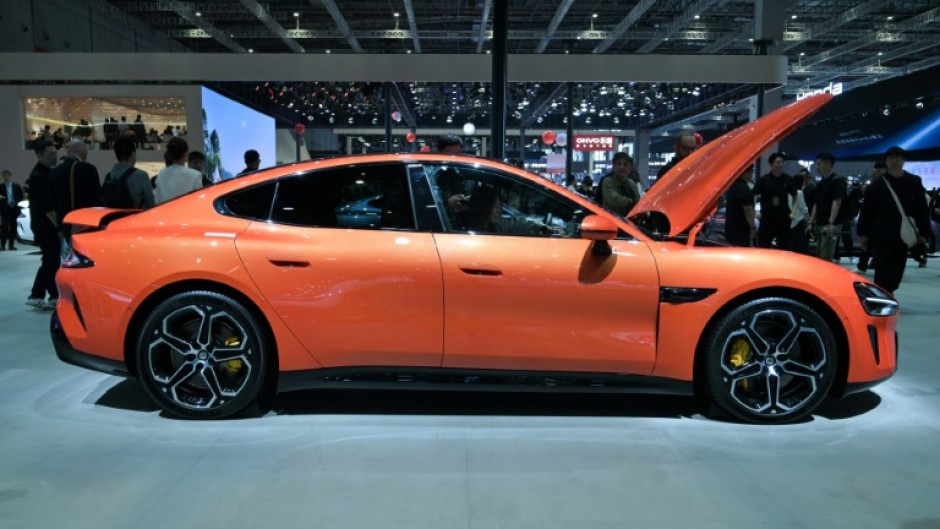
Then came a fatal accident in March involving a Xiaomi SU7 that had been in assisted driving mode just before it crashed.

The accident, in which three college students died, raised concerns over safety and the advertising of cars as being capable of "autonomous driving".

The issue is an industry-wide one - Tesla's US-released "Full Self-Driving" capability, for example, is still meant to be used under driver supervision.

AFP | Hector RETAMAL

"The price war has just been so brutal, companies are desperate to find any way to set themselves apart," said Tom Nunlist, associate director for tech and data policy at Trivium China.

"So the question is have they been over-promising on features and releasing things as quickly as possible, for the purposes of fighting this commercial battle."

China's Ministry of Industry and Information Technology seems to share those concerns.

After the crash, it held a meeting with leading automakers and other key players in which it made clear that safety rules would be more tightly enforced.

It warned automakers to test systems rigorously, "define system functional boundaries... and refrain from exaggerated or false advertising".

Reports said it will also crack down on the practice of improving ADAS via remote software updates.

- 'Sharp U-turn' -

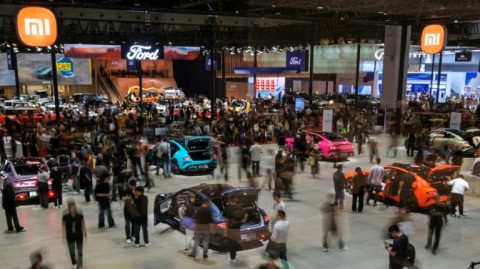
As the massive industry show Auto Shanghai kicked off last week, the shift in gear was obvious.

"In a sharp U-turn from just two months ago, carmakers have taken a low profile in terms of autonomous driving functions, but are emphasising safety instead," said UBS' Paul Gong in a note.

AFP | Hector RETAMAL

"Safety is the ultimate premium of new energy vehicles," a sign at BYD's booth read.

At the bustling Xiaomi booth, information boards touted the SU7's colour choices, chassis and hardware - but AFP saw no mention of ADAS at all.

"The autonomous driving function marketing race seems to have halted, at least temporarily," wrote Gong.

Zhang Yu, managing director of Shanghai-based consultancy Automotive Foresight, told AFP that he thought the crash was "only a setback in marketing terms, which is helpful for a healthy development" of the area.

"This accident was not related to tech or the system itself, it more concerns the ignorance of ADAS and boundary of autonomous driving," he added.

The technology itself continues to progress.

"That's why this is becoming a pressing issue because car companies are going to be wanting to release these features," Trivium's Nunlist said.

However, a truly autonomous car - level five on the scale - is "certainly not imminent", he added, predicting "very hard last-mile problems".

Read More........

Beijing consumers mull spending habits as tariffs kick in


Chinese consumers in Beijing mulled their their spending habits and said they are prepared to forego American brands if that means avoiding the pinch from the escalating trade war with Washington.

Some worried prices of their favorite products could escalate after US President Donald Trump's tariffs came into force Wednesday.

Outside a shopping mall in central Beijing, massage therapist Gao Xin, 26, listened to music on his iPhone and considered whether his next device would have to be a different brand.

"I have always used (US products) in the past, including the (phone) I use now, but if there is really a big wave of price increases, I may choose domestic ones."

Tariffs levied by both Beijing and Washington stand to have a complex impact on prices of goods from around the world as supply chains are hit by higher costs of components or equipment.

But prominent American brands like Apple -- even though it produces phones in China -- are an easy target for anxiety about price hikes caused by the trade war.

Nearby, a man sporting Oakley sunglasses said he would switch to a non-US brand if his favourite products became more expensive.

AFP | Pedro PARDO

China imported around $163 billion-worth of goods from the United States in 2024 -- 6.3 percent of the Asian country's imports.

After a tit-for-tat volley between Washington and Beijing, China faces cumulative tarrifs of 104 percent -- the highest imposed by Trump's sweeping assault on global trade.

"It's very worrying," said lawyer Yu Yan, 54, adding that she sees echoes of the Great Depression in recent events.

"The economy may fall into a depression, which is something we all don't want to see," she told AFP.

China's economy is already struggling from a property crisis, low consumption and high government debt.

The new tariffs could hurt the country's goal of achieving around five percent growth this year, Nomura analysts said last week.

- Heating up -

Stock markets around the world tumbled as Trump's measures against dozens of trading partners came into effect.

Some countries dispatched envoys to Washington to negotiate, while China -- Washington's top economic rival but also a major trading partner -- vowed to take "firm and forceful" steps.

Retaliatory duties of 34 percent are due to take effect just after midnight.

AFP | HECTOR RETAMAL

In Beijing, massage therapist Gao said he saw the tariffs that Beijing and Washington were lobbing at each other as "a means of intimidation".

"I think there will definitely be an impact, but for most ordinary people, I don't think it will be a big problem, unless you are doing some foreign trade," he said.

Tech professional Sun Fanxi said reading about the tit-for-tat measures made her nervous.

"I'm scared that (tariffs) will lead to a real hot war," the 27-year-old said. "That would be bad for everyone."

But she added that no matter what happens, she fully supports her country's moves.

"If the country wants us to do something, then so be it," she said.By Sam Davies Beijing consumers mull spending habits as tariffs kick in
Read More........

The US and China have reached a temporary truce in the trade wars, but more turbulence lies ahead

Peter Draper, University of Adelaide and Nathan Howard Gray, University of Adelaide

Defying expectations, the United States and China have announced an important agreement to de-escalate bilateral trade tensions after talks in Geneva, Switzerland.

The good, the bad and the ugly

The good news is their recent tariff increases will be slashed. The US has cut tariffs on Chinese imports from 145% to 30%, while China has reduced levies on US imports from 125% to 10%. This greatly eases major bilateral trade tensions, and explains why financial markets rallied.

The bad news is twofold. First, the remaining tariffs are still high by modern standards. The US average trade-weighted tariff rate was 2.2% on January 1 2025, while it is now estimated to be up to 17.8%. This makes it the highest tariff wall since the 1930s.

Overall, it is very likely a new baseline has been set. Bilateral tariff-free trade belongs to a bygone era.

Second, these tariff reductions will be in place for 90 days, while negotiations continue. Talks will likely include a long list of difficult-to-resolve issues. China’s currency management policy and industrial subsidies system dominated by state-owned enterprises will be on the table. So will the many non-tariff barriers Beijing can turn on and off like a tap.

China is offering to purchase unspecified quantities of US goods – in a repeat of a US-China “Phase 1 deal” from Trump’s first presidency that was not implemented. On his first day in office in January, amid a blizzard of executive orders, Trump ordered a review of that deal’s implementation. The review found China didn’t follow through on the agriculture, finance and intellectual property protection commitments it had made.

Unless the US has now decided to capitulate to Beijing’s retaliatory actions, it is difficult to see the US being duped again.

Failure to agree on these points would reveal the ugly truth that both countries continue to impose bilateral export controls on goods deemed sensitive, such as semiconductors (from the US to China) and processed critical minerals (from China to the US).

Moreover, in its so-called “reciprocal” negotiations with other countries, the US is pressing trading partners to cut certain sensitive China-sourced goods from their exports destined for US markets. China is deeply unhappy about these US demands and has threatened to retaliate against trading partners that adopt them.

A temporary truce

Overall, the announcement is best viewed as a truce that does not shift the underlying structural reality that the US and China are locked into a long-term cycle of escalating strategic competition.

That cycle will have its ups (the latest announcement) and downs (the tariff wars that preceded it). For now, both sides have agreed to announce victory and focus on other matters.

For the US, this means ensuring there will be consumer goods on the shelves in time for Halloween and Christmas, albeit at inflated prices. For China, it means restoring some export market access to take pressure off its increasingly ailing economy.

As neither side can vanquish the other, the likely long-term result is a frozen conflict. This will be punctuated by attempts to achieve “escalation dominance”, as that will determine who emerges with better terms. Observers’ opinions on where the balance currently lies are divided.

Along the way, and to use a quote widely attributed to Winston Churchill, to “jaw-jaw is better than to war-war”. Fasten your seat belts, there is more turbulence to come.

Where does this leave the rest of us?

Significantly, the US has not (so far) changed its basic goals for all its bilateral trade deals.

Its overarching aim is to cut the goods trade deficit by reducing goods imports and eliminating non-tariff barriers it says are “unfairly” prohibiting US exports. The US also wants to remove barriers to digital trade and investments by tech giants and “derisk” certain imports that it deems sensitive for national security reasons.

The agreement between the US and UK last week clearly reflects these goals in operation. While the UK received some concessions, the remaining tariffs are higher, at 10% overall, than on April 2 and subject to US-imposed import quotas. Furthermore, the UK must open its market for certain goods while removing China-originating content from steel and pharmaceutical products destined for the US.

For Washington’s Pacific defence treaty allies, including Australia, nothing has changed. Potentially difficult negotiations with the Trump administration lie ahead, particularly if the US decides to use our security dependencies as leverage to wring concessions in trade. Japan has already disavowed linking security and trade, and their progress should be closely watched.

The US has previously paused high tariffs on manufacturing nations in South-East Asia, particularly those used by other nations as export platforms to avoid China tariffs. Vietnam, Cambodia and others will face sustained uncertainty and increasingly difficult balancing acts. The economic stakes are higher for them.

They, like the Japanese, are long-practised in the subtle arts of balancing the two giants. Still, juggling ties with both Washington and Beijing will become the act of an increasingly high-wire trapeze artist.The Conversation

Peter Draper, Professor, and Executive Director: Institute for International Trade, and Jean Monnet Chair of Trade and Environment, University of Adelaide and Nathan Howard Gray, Senior Research Fellow, Institute for International Trade, University of Adelaide

This article is republished from The Conversation under a Creative Commons license. Read the original article.

Read More........

The global costs of the US-China tariff war are mounting. And the worst may be yet to come

The United States and China remain in a standoff in their tariff war. Neither side appears willing to budge.

After US President Donald Trump imposed massive 145% tariffs on Chinese imports in early April, China retaliated with its own tariffs of 125% on US goods.

US Treasury Secretary Scott Bessent said this week it’s up to China to de-escalate tensions. China’s Foreign Ministry, meanwhile, said the two sides are not talking.

The prospect of economic decoupling between the world’s two largest economies is no longer speculative. It is becoming a hard reality. While many observers debate who might “win” the trade war, the more likely outcome is that everyone loses.

A convenient target

Trump’s protectionist agenda has spared few. Allies and adversaries alike have been targeted by sweeping US tariffs. However, China has served as the main target, absorbing the political backlash of broader frustrations over trade deficits and economic displacement in the US.

The economic costs to China are undeniable. The loss of reliable access to the US market, coupled with mounting uncertainty in the global trading system, has dealt a blow to China’s export-driven sectors.

China’s comparative advantage lies in its vast manufacturing base and tightly integrated supply chains. This is especially true in high-tech and green industries such as electric vehicles, batteries and solar energy. These sectors are deeply dependent on open markets and predictable demand.

New trade restrictions in Europe, Canada and the US on Chinese electric vehicles, in particular, have already caused demand to drop significantly.

China’s GDP growth was higher than expected in the first quarter of the year at 5.4%, but analysts expect the effect of the tariffs to soon bite. A key measure of factory activity this week showed a contraction in manufacturing.

China’s economic growth has also been weighed down by structural headwinds, including industrial overcapacity (when a country’s production of goods exceeds demand), an ageing population, rising youth unemployment and persistent regional disparities. The property sector — once a pillar of the country’s economic rise — has become a source of financial stress. Local government debt is mounting and a pension crisis is looming.

Negotiations with the US might be desirable to end the tariff war. However, unilateral concessions on Beijing’s part are neither viable nor politically palatable.

Regional coordination

Trump’s tariff wars have done more than strain bilateral relationships; they have shaken the foundations of the global trading system.

By sidelining the World Trade Organization and embracing a transactional approach to bilateral trade, the US has weakened multilateral norms and emboldened protectionist tendencies worldwide.

One unintended consequence of this instability has been the resurgence of regional arrangements. In Asia, the Regional Comprehensive Economic Partnership (RCEP), backed by China and centred on the ASEAN bloc in Southeast Asia, has emerged as a credible alternative for economic cooperation.

Meanwhile, the Comprehensive and Progressive Agreement for Trans-Pacific Partnership (CPTPP) continues to expand, with the United Kingdom joining late last year.

Across Latin America, too, regional blocs are exploring new avenues for integration, hoping to buffer themselves against the shocks of resurgent protectionism.

But regionalism is no panacea. It cannot replicate the scale or efficiency of global trade, nor can it restore the predictability on which exporters depend.

Looming dangers

The greater danger is the world drifting into a Kindleberger Trap — a situation in which no power steps forward to provide the leadership necessary to sustain global public goods, or a stable trading system.

Economist Charles Kindleberger’s account of the Great Depression remains instructive: it was not the presence of conflict but the absence of leadership that brought about the global economy’s systemic collapse.

Without renewed global coordination, the economic fragmentation triggered by Trump’s tariff wars could give way to something far more dangerous than a recession – rising geopolitical and military tensions that no region can contain.

The political landscape is already fraught. The Chinese Communist Party, for instance, has long tethered its legitimacy to the promise of eventual unification with Taiwan. Yet the costs of using force remain prohibitively high.

Taiwanese President Lai Ching-te’s recent designation of China as a “foreign hostile force” have sharpened tensions. Beijing’s response has been calibrated – military exercises intended more as a warning than a prelude to conflict.

However, the intensifying trade war with the US may become the final straw that exhausts Beijing’s patience, leaving Taiwan as collateral damage in a US-China final showdown.

A role for collective leadership

China alone is neither able nor inclined to assume the mantle of global leadership. Its current focus is more on domestic priorities – sustaining economic growth and managing social stability – than on foreign policy.

Yet, Beijing can still play a constructive role in shaping the international environment through its cooperation with Europe, ASEAN and the Global South.

The objective is not to replace American hegemony, but to support a more multi-polar and collaborative system — one capable of sustaining global public goods in an era of uncertainty.

Paradoxically, a more coordinated effort by the rest of the world may ultimately help bring the US back into the fold. Washington may rediscover the strategic value of engagement — and return not as the sole leader, but as an indispensable partner.

In the short term, other states may seek to gain an advantage from the great power standoff. But they should remember that what begins as a clash between giants can quickly engulf bystanders.

In this volatile landscape, the path forward does not lie in exploiting disorder. Rather, nations must cautiously advance the shared interest in restoring a stable, rules-based global order.The Conversation

Kai He, Professor of International Relations, Griffith University

This article is republished from The Conversation under a Creative Commons license. Read the original article.

Read More........

Where things stand in the US-China trade war


CHINA - China has said it has received overtures from the United States for talks on tariffs - but warned it will need concessions as proof of "sincerity" before any negotiations can take place.

The world's two largest economies are locked in a tit-for-tat tariff war that threatens hundreds of billions in trade and has roiled global markets and supply chains.

AFP looks at how the trade war between China and the United States is playing out:

- What steps have the two sides taken so far? -

The United States has raised tariffs on Chinese imports to 145 percent, with cumulative duties on some goods reaching a staggering 245 percent.

As well as the blanket levies, China is also under sector-specific tariffs on steel, aluminium and car imports.

Sales of Chinese goods to the US last year totalled more than $500 billion -- 16.4 percent of the country's exports, according to Beijing's customs data.

China has vowed to fight the measures "to the end" and has unveiled reciprocal tariffs of up to 125 percent on imports of American goods, which totalled $143.5 billion last year, according to Washington.

Beijing has filed complaints with the World Trade Organization (WTO), citing "bullying" tactics by the Trump administration.

And it has gone after American companies, scrapping orders for Boeing planes, probing Google for "anti-monopoly" violations and adding US fashion group PVH Corp. - which owns Tommy Hilfiger and Calvin Klein - and biotech giant Illumina to a list of "unreliable entities".

Beijing has also restricted exports of rare earth elements - critical in the manufacturing of everything from semiconductors to medical technology and consumer electronics.

- What's been the impact so far? -

Beijing has long drawn Trump's ire with a trade surplus with the United States that reached $295.4 billion last year, according to the US Commerce Department's Bureau of Economic Analysis.

Chinese leaders have been reluctant to disrupt the status quo.

But an intensified trade war will likely mean China cannot peg its hopes for strong economic growth this year on its exports, which reached record highs in 2024.

US duties further threaten to harm China's fragile post-Covid economic recovery as it struggles with a debt crisis in the property sector and persistently low consumption.

The tariff war is already having an impact in the United States, with uncertainty triggering a manufacturing slump last month and officials blaming it for an unexpected slump in GDP in the first three months of the year.

"The cost on the US economy and livelihood is beginning to surface," Mei Xinyu, an economist at the state-affiliated Chinese Academy of International Trade and Economic Cooperation, told AFP.

"They are starting to truly feel the cost and impact of pursuing trade hegemony with China," he said.

The head of the WTO said in April that the US-China tariff war could cut trade in goods between the two countries by 80 percent.

Analysts expect the levies to take a significant chunk out of China's GDP, which Beijing's leadership hope will grow five percent this year.

Likely to be hit hardest are China's top exports to the United States - everything from electronics and machinery to textiles and clothing, according to the Peterson Institute of International Economics.

And because of the crucial role Chinese goods play in supplying US firms, the tariffs may also hurt American manufacturers and consumers, analysts have warned.

- Are talks likely? -

US President Donald Trump has repeatedly claimed that China has reached out for talks on the tariffs.

But Friday's statement by Beijing suggested it was Washington that's been reaching out.

While China's commerce ministry said it was "evaluating" the offer, it warned it would need concessions from Washington - namely the lifting of tariffs - before talks could go ahead.

"Tariffs cannot be used as a bargaining chip to pressure China. China cannot make any concessions on the tariff issue," Wang Wen, Dean of Chongyang Institute for Financial Studies at Renmin University of China, told AFP.

Analysts in China broadly agreed that pressure on the US economy was driving Washington's call for talks.

"The fact that the US is repeatedly saying it is talking with China proves that the US itself has taken a big hit from the trade war," Wang Yiwei, director of the Institute of International Affairs at Beijing’s Renmin University of China, said.

"China is certainly willing (to negotiate), and so is evaluating and observing the US side's sincerity -- is it all just bluff and bluster... or is it actually something real that could yield plans for serious talks?"

By Luna Lin And Matthew Walsh Where things stand in the US-China trade war
Read More........

Beijing consumers mull spending habits as tariffs kick in

Chinese consumers in Beijing mulled their their spending habits and said they are prepared to forego American brands if that means avoiding the pinch from the escalating trade war with Washington.

Some worried prices of their favorite products could escalate after US President Donald Trump's tariffs came into force Wednesday.

Outside a shopping mall in central Beijing, massage therapist Gao Xin, 26, listened to music on his iPhone and considered whether his next device would have to be a different brand.

"I have always used (US products) in the past, including the (phone) I use now, but if there is really a big wave of price increases, I may choose domestic ones."

Tariffs levied by both Beijing and Washington stand to have a complex impact on prices of goods from around the world as supply chains are hit by higher costs of components or equipment.

But prominent American brands like Apple -- even though it produces phones in China -- are an easy target for anxiety about price hikes caused by the trade war.

Nearby, a man sporting Oakley sunglasses said he would switch to a non-US brand if his favourite products became more expensive.

AFP | Pedro PARDO

China imported around $163 billion-worth of goods from the United States in 2024 -- 6.3 percent of the Asian country's imports.

After a tit-for-tat volley between Washington and Beijing, China faces cumulative tarrifs of 104 percent -- the highest imposed by Trump's sweeping assault on global trade.

"It's very worrying," said lawyer Yu Yan, 54, adding that she sees echoes of the Great Depression in recent events.

"The economy may fall into a depression, which is something we all don't want to see," she told AFP.

China's economy is already struggling from a property crisis, low consumption and high government debt.

The new tariffs could hurt the country's goal of achieving around five percent growth this year, Nomura analysts said last week.

- Heating up -

Stock markets around the world tumbled as Trump's measures against dozens of trading partners came into effect.

Some countries dispatched envoys to Washington to negotiate, while China -- Washington's top economic rival but also a major trading partner -- vowed to take "firm and forceful" steps.

Retaliatory duties of 34 percent are due to take effect just after midnight.

AFP | HECTOR RETAMAL

In Beijing, massage therapist Gao said he saw the tariffs that Beijing and Washington were lobbing at each other as "a means of intimidation".

"I think there will definitely be an impact, but for most ordinary people, I don't think it will be a big problem, unless you are doing some foreign trade," he said.

Tech professional Sun Fanxi said reading about the tit-for-tat measures made her nervous.

"I'm scared that (tariffs) will lead to a real hot war," the 27-year-old said. "That would be bad for everyone."

But she added that no matter what happens, she fully supports her country's moves.

"If the country wants us to do something, then so be it," she said.By Sam Davies Beijing consumers mull spending habits as tariffs kick in
Read More........

China plans to build the world’s largest dam – but what does this mean for India and Bangladesh downstream?

China recently approved the construction of the world’s largest hydropower dam, across the Yarlung Tsangpo river in Tibet. When fully up and running, it will be the world’s largest power plant – by some distance.

Yet many are worried the dam will displace local people and cause huge environmental disruption. This is particularly the case in the downstream nations of India and Bangladesh, where that same river is known as the Brahmaputra.

The proposed dam highlights some of the geopolitical issues raised by rivers that cross international borders. Who owns the river itself, and who has the right to use its water? Do countries have obligations not to pollute shared rivers, or to keep their shipping lanes open? And when a drop of rain falls on a mountain, do farmers in a different country thousands of miles downstream have a claim to use it? Ultimately, we still don’t know enough about these questions of river rights and ownership to settle disputes easily.

The Yarlung Tsangpo begins on the Tibetan Plateau, in a region sometimes referred to as the world’s third pole as its glaciers contain the largest stores of ice outside of the Arctic and Antarctica. A series of huge rivers tumble down from the plateau and spread across south and south-east Asia. Well over a billion people depend on them, from Pakistan to Vietnam.

Yet the region is already under immense stress as global warming melts glaciers and changes rainfall patterns. Reduced water flow in the dry season, coupled with sudden releases of water during monsoons, could intensify both water scarcity and flooding, endangering millions in India and Bangladesh.

The construction of large dams in the Himalayas has historically disrupted river flows, displaced people, destroyed fragile ecosystems and increased risks of floods. The Yarlung Tsangpo Grand Dam will likely be no exception.

The dam will sit along the tectonic boundary where the Indian and Eurasian plates converge to form the Himalayas. This makes the region particularly vulnerable to earthquakes, landslides, and sudden floods when natural dams burst.

Downstream, the Brahmaputra is one of south Asia’s mightiest rivers and has been integral to human civilisation for thousands of years. It’s one of the world’s most sediment-rich rivers, which helps form a huge and fertile delta.

Yet a dam of this scale would trap massive amounts of sediment upstream, disrupting its flow downstream. This could make farming less productive, threatening food security in one of the world’s most densely populated regions.

The Sundarbans mangrove forest, a Unesco World Heritage Site that stretches across most of coastal Bangladesh and a portion of India, is particularly vulnerable. Any disruption to the balance of sediment could accelerate coastal erosion and make the already low lying area more vulnerable to sea-level rise.

Unfortunately, despite the transboundary nature of the Brahmaputra, there is no comprehensive treaty governing it. This lack of formal agreements complicates efforts to ensure China, India and Bangladesh share the water equitably and work together to prepare for disasters.

These sorts of agreements are perfectly possible: 14 countries plus the European Union are parties to a convention on protecting the Danube, for instance. But the Brahmaputra is not alone. Many transboundary rivers in the global south face similar neglect and inadequate research.

Researching rivers

In our recent study, colleagues and I analysed 4,713 case studies across 286 transboundary river basins. We wanted to assess how much academic research there was on each, what themes it focused on, and how that varied depending on the type of river. We found that, while large rivers in the global north receive considerable academic attention, many equally important rivers in the global south remain overlooked.

What research there is in the global south is predominantly led by institutions from the global north. This dynamic influences research themes and locations, often sidelining the most pressing local issues. We found that research in the global north tends to focus on technical aspects of river management and governance, whereas studies in the global south primarily examine conflicts and resource competition.

In Asia, research is concentrated on large, geopolitically significant basins like the Mekong and Indus. Smaller rivers where water crises are most acute are often neglected. Something similar is happening in Africa, where studies focus on climate change and water-sharing disputes, yet a lack of infrastructure limits broader research efforts.

Small and medium-sized river basins, critical to millions of people in the global south, are among the most neglected in research. This oversight has serious real-world consequences. We still don’t know enough about water scarcity, pollution, and climate change impacts in these regions, which makes it harder to develop effective governance and threatens the livelihoods of everyone who depends on these rivers.

A more inclusive approach to research will ensure the sustainable management of transboundary rivers, safeguarding these vital resources for future generations.


Don’t have time to read about climate change as much as you’d like?
Get a weekly roundup in your inbox instead. Every Wednesday, The Conversation’s environment editor writes Imagine, a short email that goes a little deeper into just one climate issue. Join the 40,000+ readers who’ve subscribed so far.The Conversation


Mehebub Sahana, Leverhulme Early Career Fellow, Geography, University of Manchester

This article is republished from The Conversation under a Creative Commons license. Read the original article.

Read More........

India and China agree to resume air travel after nearly five years

FILE PHOTO: Travellers push trolleys with their luggage at the departure area of the Indira Gandhi International Airport in New Delhi, India, December 14, 2022. REUTERS/Anushree Fadnavis/File Photo

BEIJING/NEW DELHI (Reuters) -India and China have agreed to resume direct air services after nearly five years, India’s foreign ministry said on Monday, signalling a thaw in relations between the neighbours after a deadly 2020 military clash on their disputed Himalayan border.

Both sides will negotiate a framework on the flights in a meeting that will be held at “early date”, the ministry said after a meeting between India’s top diplomat and his Chinese counterpart.

Tensions soured between the two nations after the 2020 clash, following which India made it difficult for Chinese companies to invest in the country, banned hundreds of popular apps and severed passenger routes, although direct cargo flights continued to operate between the countries.
Relations have improved over the past four months with several high-level meetings, including talks between Chinese President Xi Jinping and Indian Prime Minister Narendra Modi in Russia in October.

On Monday, Chinese Foreign Minister Wang Yi told Indian Foreign Secretary Vikram Misri in Beijing that the two countries should work in the same direction, explore more substantive measures and commit to mutual understanding.

FILE PHOTO: Chinese Foreign Minister Wang Yi in Beijing’s Diaoyutai State Guesthouse on December 13, 2024. GREG BAKER/Pool via REUTERS//File Photo

“Specific concerns in the economic and trade areas were discussed with a view to resolving these issues and promoting long-term policy transparency and predictability,” the Indian foreign ministry statement said in a statement.

Their meeting was the latest between the two Asian powers following a milestone agreement in October seeking to ease friction along their frontier.

Reuters reported in June that China’s government and airlines had asked India’s civil aviation authorities to re-establish direct air links, but New Delhi resisted as the border dispute continued to weigh on ties.

In October, two Indian government sources told Reuters that India would consider reopening the skies and launch fast-tracking visa approvals.

Both nations have also agreed to resume dialogue for functional exchanges step by step and with an early meeting of the India-China Expert Level Mechanism, India’s foreign ministry said.

China and India should commit to “mutual support and mutual achievement” rather than “suspicion” and “alienation,” Wang said during the two officials’ meeting, according to the Chinese foreign ministry’s readout.(Reporting by Liz Lee, Ethan Wang and Yukun Zhang, Tanvi Mehta in New Delhi; editing by Christopher Cushing, Sonali Paul and Mark Heinrich) India and China agree to resume air travel after nearly five years
Read More........

China says ready to usher new era of development in Sri Lanka

Chinese President Xi Jinping expresses willingness to collaborate during historic meeting with President Anura Kumara Dissanayake in Beijing

Two countries sign several Memoranda of Understanding covering economic, social, and industrial sectors

China yesterday expressed readiness to collaborate with Sri Lanka towards a new era of development.

This was conveyed by Chinese President Xi Jinping during his meeting with the visiting Sri Lanka President Anura Kumara Dissanayake in Beijing.

Dissanayake, on a four-day State visit to China, received a warm welcome on arrival on Tuesday and held an official meeting with President Xi yesterday at the Great Hall of the People.

Upon President Dissanayake’s arrival at the Great Hall, he was warmly received by President Xi. The welcoming ceremony was conducted with great honour, including a ceremonial gun salute. Dissanayake, for the first time since assuming office as President, was sporting a jacket and tie.

Following initial cordial discussions between the two leaders, bilateral talks commenced.

During the discussions, President Xi emphasised China’s readiness to work closely with Sri Lanka in ushering in a new era of development.

He also recalled the longstanding relationship between the two countries, highlighting the close friendship that has existed for decades. President Xi reiterated China’s commitment to continuing its cooperation with Sri Lanka in the future.

Upon concluding the official meeting, both sides proceeded to sign several key Memoranda of Understanding (MoUs) aimed at strengthening collaboration in areas such as the economy, social development, and industry.

Foreign Affairs, Foreign Employment, and Tourism Minister Vijitha Herath, Transport, Highways, Ports, and Civil Aviation Minister Bimal Rathnayake, and Government Information Department Director General H.S.K.J. Bandara were also part of the delegation accompanying President Dissanayake.

Read More........

Formula 1 extends Chinese Grand Prix contract until 2030

Shanghai, (IANS): Formula 1 has announced a five-year extension of the Chinese Grand Prix, ensuring the iconic Shanghai International Circuit will remain on the calendar through the 2030 season.

The announcement follows Formula 1’s successful return to Shanghai in 2024 after a five-year hiatus. The event attracted a staggering 200,000 fans and witnessed Max Verstappen dominate the Sprint and the main Grand Prix, cementing the race as one of the season’s highlights.

Since its inaugural race in 2004, won by Rubens Barrichello, the 5.45km Shanghai International Circuit has been celebrated for its unique layout and technical challenges, its distinct corners, such as the tightening sequence of Turns 1 and 2 and the high-speed, high-g Turns 7 and 8, are loved by drivers and deliver thrilling on-track action.

The circuit has produced 10 different winners over the years, with Lewis Hamilton’s six victories and Fernando Alonso’s two being standout performances among current drivers.

The contract extension comes as Formula 1 enjoys unprecedented growth in China. The fanbase has soared to over 150 million, with more than half of these fans beginning their F1 journey in the past four years. Notably, women make up 50% of this audience, showcasing the sport's broadening appeal.

Viewership figures highlight this surge in interest, with TV audiences in 2024 rising by 39% compared to the 2023 season average. On social media, Formula 1 has added over a million followers across platforms such as Weibo, WeChat, Toutiao, and Douyin, bringing its total Chinese digital audience to 4.4 million.

The Chinese Grand Prix will feature prominently on the 2025 calendar, scheduled for March 21-23 as the season’s second round. It will also host the year’s first Sprint event, as well as the inaugural round of the F1 Academy, further boosting the weekend’s significance.

Stefano Domenicali, President and CEO of Formula 1, expressed his excitement: “Our return to China this season for the first time since 2019 was a fantastic moment for the sport, and it is incredible to see the levels of support that we enjoy in the country continuing to grow year-on-year. Shanghai is an incredible city, and the racetrack is a wonderful test for our drivers, so I am delighted that Formula 1 will continue its successful partnership with the Chinese Grand Prix for a further five years.”Guo Jianfei, Chairman of Shanghai Jiushi (Group) Co., Ltd., the event promoter, echoed this enthusiasm: “For many years, Jiushi Group and our subsidiary, Juss Sports, have always adhered to our original intention to strive for excellence in event organization, and this renewal is a testament to that. Looking ahead, we will continue to work closely with all partners, further strengthen our engagement with international audiences through the event platform, and consistently improve the event quality.” Formula 1 extends Chinese Grand Prix contract until 2030 | MorungExpress | morungexpress.com
Read More........

US-China trade war flares as both sides introduce new chip tech restrictions | Total Telecom


New US export controls on semiconductor technology this week have been met immediately by retaliatory measures from China

This week has seen the US Department of Commerce’s Bureau of Industry and Security (BIS) ramp up controls on its tech exports to China, particularly those related to the manufacture of semiconductors.

The additional restrictions cover 24 types of semiconductor manufacturing equipment and three types of software tools for developing or producing semiconductors. It also includes High-Bandwidth Memory (HBM), a computer memory interface at the heart of AI chip technology.

In addition to these restrictions, the update added 140 companies to the US’s infamous Entity List, 136 of which were Chinese. US companies looking to sell restricted items to entities designated on this list are required to acquire a specialised export licence from BIS, which is seldom granted. Companies to the list in this most recent batch include semiconductor fabs, tool companies, and investment companies that the US claims have links to the Chinese government.

These new measures, BIS says, are designed to slow China’s ability to “indigenise the production of advanced technologies” that may pose a threat to US national security. In particular, this includes the creation of advanced-node integrated circuits, which are used for advanced AI and military applications.

“They’re the strongest controls ever enacted by the US to degrade the PRC’s ability to make the most advanced chips that they’re using in their military modernization,” said Secretary of Commerce Gina Raimondo.

China has responded quickly to the new sanctions, banning shipments to the US of several ‘dual-use’ metals used to make semiconductors and military applications. This includes export bans on gallium, germanium, antimony and superhard materials, with stricter rules also to be put in place for graphite products.

“The US preaches one thing while practicing another, excessively broadening the concept of national security, abusing export control measures, and engaging in unilateral bullying actions. China firmly opposes such actions,” said China’s Commerce Ministry in a statement.

These retaliatory sanctions are effective immediately.

This trade dispute represents the latest sparks in the ever-increasing geopolitical clash for technology dominance between the US and China. Both nations are currently supporting multibillion-dollar state subsidy programmes to bolster domestic semiconductor production, aiming to reduce their reliance on the global supply chain.

In other chip-related news, this week saw the shock retirement of Intel CEO Patrick Gelsinger.

Intel has been struggling to remain competitive in recent years against the likes of TSMC and AMD, despite substantial internal restructuring and the laying off of 15,000 staff. In its most recent quarterly report, the company reported losses of $1.6 billion.The US telecoms industry is changing rapidly. Join the heart of the discussion at Connected America 2025 live in Dallas, Texas! US-China trade war flares as both sides introduce new chip tech restrictions | Total Telecom
Read More........

China hits tech firms with hefty fines as crackdown draws to close


BEIJING - Chinese regulators said they had fined fintech giant Ant Group almost $1-billion for "illegal acts" and handed an affiliate of rival Tencent a $415-million penalty, adding that a long-running crackdown on tech firms was drawing to a close.

Ant operates Alipay, the world's largest digital payments platform, which boasts hundreds of millions of monthly users in China and beyond.

It was one of the most prominent targets of a sweeping crackdown on the country's tech sector.

"In view of the illegal and irregular acts by Ant Group and its affiliates in previous years... (the companies) have been fined 7.123 billion yuan (US$984-million)," the China Securities Regulatory Commission (CSRC) said in a statement.

The penalty "included the confiscation of illegal income", added the statement, which was also carried by the country's central bank.

In its statement, the CSRC said that "at present, most of the outstanding problems in the financial business of platform enterprises have been rectified".

"The work focus of the financial management department has shifted from promoting the centralised rectification of the financial business of platform companies to normalised supervision," it said.

On Friday, Alibaba shares were up 3.44 percent in Hong Kong after reports the fine was coming, with analysts saying investors saw the punishment as a sign the crackdown was ending.

In a statement, Ant said it would "comply with the terms of the penalty in all earnestness and sincerity and continue to further enhance our compliance governance".

"Now the company has completed the related work on the rectification... In the future, Ant Group will uphold its mission and original aspiration," the company said.

"We will continue to pursue innovation with a firm commitment to integrity, and continue to enhance our R&D capabilities to better serve and create greater value for the physical economy, especially for consumers and small businesses," it added.The fine related to "corporate governance, financial consumer protection, participation in business activities of banking and insurance institutions, payment and settlement business, fulfilment of anti-money laundering obligations, and development of fund sales business", the CSRC statement said. China hits tech firms with hefty fines as crackdown draws to close
Read More........

EU seeks to take on China, US to reverse economic decline


BRUSSELS - The European Union's economy is falling further behind China and the United States, a major headache that will dominate leaders' talks on Thursday as they discuss how to stem the bloc's economic decline and bounce back.

From supply chain disruptions following the coronavirus pandemic to an energy crisis after Russia's invasion of Ukraine, Europe's economy has faced multiple challenges in recent years.

But it may yet face its biggest: the clean energy and digital transitions that Brussels has made its priority in the coming years will require additional annual investment of nearly 620 billion euros ($660-billion).

From artificial intelligence to solar panels, from computer chips to batteries, the EU is fast losing ground fast on innovation to other global powers.

The EU has been put further on the back foot as China and the United States have ploughed billions of dollars of state aid to prop up their critical industries.

What is needed is "radical change", former European Central Bank chief Mario Draghi said during a speech in Belgium on Tuesday, pointing to "other regions (that) are no longer playing by the rules".

"Our major competitors are taking advantage of the fact that they are continental-sized economies. We have the same natural size advantage in Europe, but fragmentation is holding us back," Draghi added.

The Italian ex-premier, increasingly touted as a potential successor to Ursula von der Leyen as European Commission chief, will present a report on the issue in the summer.

Official EU data shows the bloc's economic stagnation has lasted more than 18 months. While the United States grew by 2.5 percent and China by 5.2 percent in 2023, Eurostat data last month showed the EU economy grew by only 0.4 percent.

The EU's 27 member states want to define the strategic priorities for the European Commission's next five-year mandate following elections taking place across the bloc in June, EU seeks to take on China, US to reverse economic decline
Read More........

'Smart mines' show coal deeply embedded in China's future

AFP/File | WANG Zhao

One hundred metres underground inside a pit in northern China, miners extract lumps of coal with the flick of a finger on a smartphone, as the country tries to drag the traditionally dangerous and dirty work into the digital era.

The Hongliulin "intelligent mine" in coal-belt Shaanxi province is a flagship facility in a drive to modernise China's thousands of coal mines, even as the nation pledges to peak greenhouse gas emissions by 2030.

China is the world's biggest emitter of the pollutants driving climate change, and its promises to curb them are essential to keeping global temperature rises below two degrees Celsius.

But mine digitalisation -- which aims to improve safety and productivity -- shows the continued importance of coal in a country that last year produced nearly 60 percent of its electricity from the fossil fuel.

Smart mines are common in other coal-producing nations like Canada, but China has lagged and now the government is aiming to achieve basic digitalisation of all mines by 2035.

On a tour organised by telecoms giant Huawei -- whose technology underpins the changes at Hongliulin -- AFP journalists saw sensors, smart cameras and 5G relay boxes criss-crossing the facility.

AFP/File | WANG Zhao

Inside a control room crammed with screens displaying numbers, graphs and images, technical manager Wang Lei said he could monitor the air, temperature and other data in real time.

Digitalisation "has reduced the intensity of our work", 33-year-old electrician Ruan Banlin, who has worked in the mine for 10 years, told AFP.

- Climate change -

Huawei said the new methods had increased output per shift by almost a third.

That's good news for China's energy grid -- but not the planet.

Greenpeace this week reported Beijing has approved a surge in coal power this year, green-lighting as much in the first three months as for the whole of 2021.

"We're seeing a decrease in the number of coal mines while the clustering of production increases along with total output," the NGO's Xie Wenwen told AFP.

Asked about smart mining, Xie said it should be scrutinised closely.

AFP/File | WANG Zhao

"Obviously the safest thing we can do is leave the coal in the ground. That goes for climate as well as other risks," she said.

According to official figures, China had 4,400 coal mines at the end of 2022.

If it delivers on emissions pledges, those mines would be operating at minimum capacity and at a loss over coming decades, according to Greenpeace.

But Huawei's involvement suggests China is betting on coal retaining its importance in fuel supply for years.

The company -- whose net profit melted 69 percent year-on-year in 2022 -- is diversifying after US sanctions over cybersecurity and espionage concerns hammered its business.

Xu Jun, head of mining digitalisation for Huawei, said many competitors were setting up teams in the field.

"The investment in smart mining solutions is not contradictory to Huawei's investment in clean energy," the firm told AFP.

"Worldwide, coal and clean energy use will co-exist for a long time. The trend of intelligence in related industries is unstoppable."

- 'As safe as the ground' -

Safety is a major concern in the industry, where last year 245 people died in 168 accidents, according to official figures.

This year in February, a mine collapse in northern China killed around 50 people.

At Hongliulin, data on extraction, miner location and danger detection is centralised on a system designed to eliminate problems caused by human error and miscommunication.

AFP/File | WANG Zhao

Instead of people, robots patrol and inspect the dark and narrow underground corridors.

"It is much better now," said electrician Ruan. "The underground mine is almost as safe as the ground."

The management says the underground team has been cut 40 percent -- though not the overall workforce -- and only essential maintenance miners descend into the pit.

"We aim to achieve the ultimate goal of completely unmanned underground production," said Shi Chao, director of the mine's intelligence department.By Sébastien Ricci 'Smart mines' show coal deeply embedded in China's future
Read More........