France sets out long-term nuclear recycling plans

Lescure (second from left) and Le Maire (centre) pictured with La Hague Site Director Stéphanie Gaiffe (far left) and Orano CEO Nicolas Maes (on the right) during the visit (Image: Orano)

Minister for the Economy, Finance, Industrial and Digital Sovereignty Bruno Le Maire announced the decision to continue with France's treatment-recycling strategy for used nuclear fuel beyond 2040, with plans to extend the life of existing recycling plants and to launch studies for a new MOX fuel fabrication plant and a new used fuel processing plant.

The announcement was made during a visit by Le Maire and Minister Delegate for Industry and Energy Roland Lescure to Orano's La Hague recycling site, days after France's Nuclear Policy Council (Conseil de Politique Nucléaire) said on 26 February that the country would continue with its closed nuclear fuel cycle strategy.

Le Maire announced three measures that will be taken towards this goal: a sustainability/resilience programme extending the life of the La Hague and Melox recycling plants beyond 2040; the launch of studies for a new MOX fuel fabrication plant at the La Hague site; and the launch of studies for a new used fuel processing plant, also at La Hague, by 2045-2050.

"A new page in French nuclear history is about to open. The time for large-scale national projects has returned and the nuclear energy sector has a central role to play," Le Maire said during his visit to La Hague.

In a post on X, Le Maire said the visit to La Hague by the two ministers sends a strong signal. "Thanks to this strategy, we will ultimately reduce the volume of nuclear waste by 75%," he said. "Our message is clear: nuclear power occupies a central place in the decarbonisation of our economy, the strengthening of our energy sovereignty and the reindustrialisation of our country."

Orano CEO Nicolas Maes said the announcements provide for major investments for the La Hague site. "Processing-recycling is one of the French industry's centres of excellence, representing know-how that has been mastered for some 50 years in our plants and of which all the group's employees can be proud," he said.

From the very beginning of its nuclear programme France has chosen to pursue a closed fuel cycle, reprocessing used nuclear fuel to recover uranium and plutonium for re-use. Reprocessing and recycling fuel in this way also significantly reduces the activity and volume of radioactive waste material requiring final disposal.

In the French model, the reusable materials which make up some 96% of used fuel are separated at La Hague. The plutonium recovered from this processing is reused in MOX (mixed-oxide) fuels manufactured by Orano at the Melox plant. Some 10% of nuclear electricity in France today is generated by recycling materials in the form of MOX fuel, Orano said, and this can rise to 25% and to almost 40% if used MOX fuel is further recycled.

Only the plutonium recovered from processed fuel is currently used in MOX. Reprocessed uranium - or RepU - can be re-enriched for use as fuel in existing light-water reactors. Four of France's reactors - at the Cruas-Meysse plant in Auvergne-Rhône-Alpes - are certified to use such uranium. In February, Cruas 2 became the first of those units to operate with a full core of fuel made from recycled uranium.

Read More........

Private sector funding key to climate transition, World Bank chief says

WASHINGTON - The World Bank is working to slash how long it takes to get financing projects off the ground as part of a push to speed up and scale up the 79-year-old development lender, its president told AFP on Wednesday. 

It currently takes 27 months, on average, before "the first dollar goes out the door," Ajay Banga said in an interview in his brightly lit office in the Bank's headquarters close to the White House.

"If I can bring it down by one third over the first couple of years, that would be pretty good," he said. "The Bank needs to change and evolve."

Banga, an Indian-born, naturalized US citizen who previously ran the payments company Mastercard, took over the management of the bank in June on a pledge to boost its lending firepower by encouraging greater private investment in the fight against climate change.

In the seven months since, the 64-year-old has made some big changes, altering the development lender's mission statement to include a reference to climate change, and setting up a private sector advisory body to recommend solutions to address the "barriers to private sector investment in emerging markets."

He's also explored new ways to "sweat" the bank's existing balance sheet in order to boost lending capacity without additional funding from donor countries.

On Wednesday, Banga repeated a previous pledge to "fix the plumbing" of World Bank, and said he plans to "create the credibility" needed for the developed world to increase its capital investment in it.

"For that you have to become a better bank. You have to be quicker, faster, more focused on impact, less focused on input," he said. "Then you can say with credibility, 'I'm now ready to absorb more capital.'"

- Climate or development? -

As part of a push to increase its climate financing, the World Bank Group recently raised its target for climate-related projects from 35 percent of its annual financing to 45 percent.

"I think people in the global south recognize very well that you cannot fight poverty without fighting climate change," Banga said. "The only difference is, what do you mean by climate change?"

Whereas the developed world tends to discuss climate change in terms of mitigating carbon emissions, "the developing world tends to speak about climate change as adaptation," he said.

"They see the climate change impact on them in terms of irrigation, rainfall, soil degradation, loss of biodiversity, forestry cover, that kind of thing," he added.

To meet both of these challenges, the World Bank has decided that half of the 45 percent committed to climate financing in the next financial year will go to adaptation, and the other half to mitigation.

"You have to find these compromises, to enable the donors and the receivers to feel that the bank is navigating in the right way," Banga said.

- Growing the pie -

However, even if the Bank succeeds in raising additional capital from its members and squeezing additional dollars from its balance sheet, it is still unlikely to meet the scale of the challenge posed by climate change alone, Banga said.

The World Bank recently estimated that developing countries will need an average of $2.4 trillion each year between now and 2030 in order to address the "global challenges of climate change, conflict, and pandemics."

Given that the Bank's lending commitments in the most recent financial year were less than $130 billion, the only way to get close to this target is by encouraging far greater private sector participation, according to Banga.

To encourage the scale of private financing needed, Banga said he was working to resolve three outstanding issues.

The first is regulatory certainty, so investors have a "line of sight" to a country's longer-term policy priorities.

The second, more complex, challenge is foreign currency risk.

In many cases, private investors looking to invest in emerging economies are unable to hedge against the risk of fluctuations in the value of local currencies, because local markets simply aren't deep and wide enough, Banga said.

"That's the one that we're really trying to work on," he added.

The third issue is how to protect investors better from risks like war and civil unrest.

This task is currently split among three different World Bank Group institutions, and is done on far too small a scale, Banga explained.

If the bank is able to boost the amount of political risk guarantees it can provide, and simplifies access, they could play a significant role in unlocking private capital, he said.

"The reality is that that gap between tens and hundreds of billions to trillions is not a number that the bank can fill," he added.

"That's why you do eventually need the private sector."

da/dw

Read More........

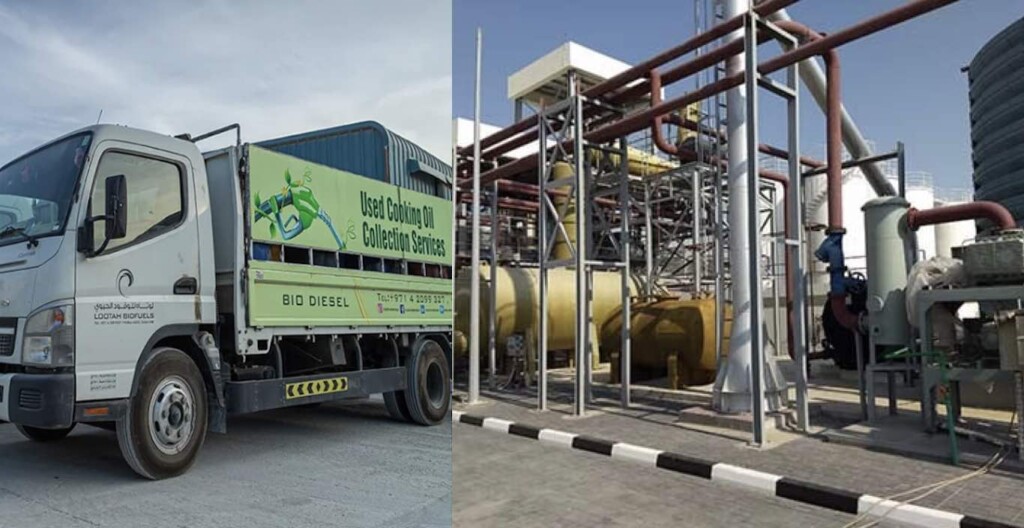
Dubai Company Buys Used Cooking Oil to Turn Into Biofuel for Cars Citywide to Reduce CO2 Emissions

Used cooking oil collection truck and one of the biofuel production plants – Credit: Lootah Biofuels
A Dubai-based company Lootah Biofuels is producing biodiesel from used cooking oil bringing sustainable transportation options to a major oil-producing country. The result is a fuel that is less expensive, renewable, and clean. The United Arab Emirates company now boasts having their own fuel outlets across the city of Dubai, delivering 60 million liters annually. It is the brainchild of Yousif Bin Saeed Al Lootah, who wants the UAE to be the first nation in the region to mandate that biofuels blends be featured alongside other fuel in all public stations. They pay for the used cooking oil collected, thus giving an incentive to providers like restaurants, bakeries, and food chains, which provide 500,000 liters of waste oil every month. The company says it converted the waste oil into 770 tons of biofuel last year. The Lootah Biofuels website reports that used cooking oil has the highest carbon saving ratio amongst all the available biodiesel feedstock—and calculates their product has caused the reduction of 500 million tons of CO2, so far.MORE RENEWABLE GOOD NEWS: United Dubai Company Buys Used Cooking Oil to Turn Into Biofuel for Cars Citywide to Reduce CO2 Emissions
Read More........

Indian business confidence high amid hope of stable govt

Indian business optimism has climbed to its highest since 2010, as a significant majority of businessmen expects revenues to rise and profitability to get a boost in the next 12 months, according to a report by global consultancy firm Grant Thornton. Businesses in the country are optimistic about their growth prospects as the country gears up for an election which is expected to return a more business-friendly administration, the Thornton report released today said. At 89 per cent, optimism amongst Indian business owners remains well ahead of the global average of 44 per cent. This optimism is driven by 92 per cent of Indian businesses expecting their revenues to rise in the next 12 months, while 87 per cent believe their profits will get a boost. The hope of a stable government, and a significant reduction in the volatility of the Indian rupee have also boosted the optimism level, the report said. While optimism has risen on several fronts, there are certain constraints being felt by businesses globally, the report said. Rising energy cost is a pressing constraint for India, besides other factors such as shortage of finance, regulations/red tape, and lack of skilled workers. Economic uncertainty remains a key constraint. However, the proportion of businesses globally citing this as a constraint to growth is down from 42 per cent to 38 per cent over the last three months. "Appreciation in the rupee, dramatic reduction in the gold imports, stock markets near lifetime highs, and improved forecasts for medium term GDP growth have all helped boost business optimism," Grant Thornton India national managing partner Vishesh Chandiok said. But Chandiok warned, "However the new regime will have its task cut out to demonstrate impact in the short term for the above to sustain, or else the sentiment will go down as quickly as it has improved.'' Source: domain-b.com
Read More........

BRICS summit delivers tangible results, Singh meets Putin & Invites the Chinese Premiere

The leaders of five major emerging economies on Wednesday wrapped up their latest round of summit in the South African city of Durban to promote their partnership for development, integration and industrialization. It is the first time for the BRICS nations, namely Brazil, Russia, India, China and South Africa, to hold their leaders' meeting on the continent of Africa. China Pledges to Enhance BRICS Cooperation While addressing the summit in his keynote speech, Chinese President Xi Jinping called on all BRICS members to work hand in hand for common development. He pledged that China would strengthen cooperation with other members to make economic growth of BRICS countries more robust and their cooperation better-structured and more productive. BRICS cooperation not only brings benefits to the peoples of the five countries, but also contributes to promoting democracy in international relations, Xi said. He said all members should manage their own affairs well by growing the economy and improving people's lives, strengthen coordination of macroeconomic policies, reform the international monetary and financial systems, and promote trade and investment liberalization and facilitation. They should jointly participate in the setting of international development agenda and make global development more balanced, he said. BRICS countries should work hard to boost cooperation in economy and trade, finance, infrastructure, movement of people and other fields, Xi said. He also called for improving global economic governance and increasing the say and representation of BRICS countries, and urged the BRICS nations to move toward the goal of integrated market, multi-tiered financial network, connectivity by land, air and sea, and greater cultural exchanges. Tangible Results: At the summit, the five BRICS members have achieved a number of tangible results, and agreed to expand their future cooperation to more sectors, according to a statement issued after the meeting. The most tangible outcomes, among others, is that the leaders have agreed to establish a development bank for mobilizing resources for infrastructure and sustainable development projects in the BRICS, as well as other emerging and the developing nations. The BRICS leaders believed that the bank serves as a supplement to the existing efforts of multilateral and regional financial institutions for global growth and development, adding that the initial contribution to the bank should be sustainable and sufficient. Meanwhile, the members also agreed to explore the construction of a financial safety net through the creation of a Contingent Reserve Arrangement (CRA). The leaders said the idea would help BRICS countries forestall short-term liquidity pressures, provide mutual support and further strengthen financial stability.  In the statement, the countries also expressed their common aspiration to
improve global economic governing make them more representative and to reflect the "growing weight" of the BRICS and other developing nations, adding that the leadership selection of international financial institutions should be open, transparent and merit-based. Additionally, the BRICS nations would explore the possibility of strengthening their cooperation between their state-owned firms, and promote the dialogues among the small and medium-sized companies. They would also consider to expand their cooperation to more sectors including public diplomacy, anti-corruption, drug control, youth exchanges, tourism, energy and sports. Also in the statement, the leaders of the BRICS countries voiced their opinions on a series of international hotspots including peace in the Middle East, Iranian nuclear issue, and the situation in Syria, Mali, Central African Republic, the Democratic Republic of Congo and Afghanistan. Cooperative Partnership between BRICS & Africa: Also on Wednesday, the leaders of the BRICS members and some African countries, after the summit, discussed their cooperation at the first BRICS Leaders-Africa Dialogue Forum, which is under the theme "Unlocking Africa's potential: BRICS and Africa cooperation on infrastructure." While addressing the forum, Chinese President Xi Jinping said the dialogue between leaders of BRICS and African countries reflected the political will of both sides to realize equality and inclusiveness and seek common development. Xi said the Chinese government is willing to form a cooperative partnership for transnational and trans-regional infrastructure, and help the African nations with the consultation, planning, feasibility research and project design of promoting interconnections and resource censor. He also promised to help Africa to train 300 managing and technical personnel specialized in the field of infrastructure, and encourage Chinese enterprises and financial institutions to participate in the building and operating the infrastructure. The Chinese leader also reaffirmed China's promise to give zero-tariff treatment to 97 percent of the tariff items of exports to China from the least developed nations having diplomatic ties with China. Other leaders of the BRICS nations said the BRICS countries would like to forge a cooperative partnership with Africa, and help Africa in constructing its infrastructure. The African leaders said Africa needs to strengthen its infrastructure, promote integration and industrialization, and lift over-all competitiveness and the capacity for sustainable development. The African nations are willing to set up with the BRICS members a cooperative partnership that highlights mutual support, mutual benefit and win-win results, said the leaders. Source: China.org.cnPutin meets with Indian Prime Minister Singh "on theВладимир Путин россия индия премьер-министр Индии Манмохан Синх сингх
sidelines" of BRICS summit: BRICS is an alliance for economic cooperation between Brazil, Russia, India, China and South Africa – hence the abbreviation. At the meeting, Mr. Putin suggested to Mr. Singh to exchange opinions on acute issues of relations between the two counties and of the world’s political life. “High-ranking Russian and Indian officials meet very often,” Mr. Putin said. “This gives us an opportunity to maintain friendly relations and to control the situation in every sphere of these relations.” The Indian Prime Minister thanked the Russian President for his personal contribution in partnership between the two countries. “When you came to India in December,” Mr. Singh said, “we had a good opportunity to discuss many aspects of relations between our two countries. I am very satisfied with the results of those talks.” “At present, India and Russia are actively cooperating in the sphere of security, in atomic energy and in many other spheres,” Manmohan Singh continued. “The mechanism of annual summits allows to have very detail discussions of all aspects of cooperation between our two countries and global political problems.” Finance ministers of the BRICS countries unable to reach agreement on development bank - Russia’s Finance Ministry Head: Finance  ministers of the BRICS countries  yet unable to reach agreement on keyАнтон Силуанов
questions concerning creation of the BRICS development bank – Head of Russia’s Finance Ministry Anton Siluanov said at a press conference in South African Durban. The parties also failed to reach an agreement on whether the BRICS members' involvement in the bank's management will be proportionate to the size of their contributions or whether they will manage it on a parity basis regardless of their contributions, he said. "We considered this issue today. A list of questions has been compiled to be answered, that is, the capital and the management mechanism, and also whether those who contribute more will have preferences or whether decisions will be made through a consensus. We agreed on the whole that we will continue working on establishing a BRICS bank after the unsettled issues are answered," Siluanov told journalists on the sidelines of a BRICS summit on Tuesday. The parties agreed to continue addressing these issues at the next meetings of the BRICS finance ministers, Siluanov said. It was agreed preliminarily that the establishment of a new bank would require each country's contribution of $2 billion, he said. "This is not a small amount of money. It will be not easy for us to discuss this at the parliament, and not only for us but also for the other countries. Therefore, this was discussed as an idea, and there are positive reviews on it, and we will continue working on a mechanism of its implementation," he said. BRICS agree on establishingбрикс страна национальная валюта россия индия китай юар бразилия деньги финансы
Bank of Development: The initial capital of the BRICS bank of development is expected to amount not less than $50 billion. It is not clear how the stakes will be distributed between the states. Durban is to host the BRICS summit on Wednesday. Besides the economic issues the leaders of BRICS are to discuss urgent international issues such as the Syrian crisis. Russia’s President Vladimir Putin has already arrived to Durban for talks. BRICS countries have agreed on establishing their Bank of Development (single financial institution for Brazil, Russia, India, China and South Africa), South Africa’s Finance Minister Pravin Gordhan said in Durban Tuesday. The initial capital of the BRICS bank of development is expected to amount not less than $50 billion. It is not clear how the stakes will be distributed between the states. Durban is to host the BRICS summit on Wednesday. Besides the economic issues the leaders of BRICS are to discuss urgent international issues such as the Syrian crisis. Russia’s President Vladimir Putin has already arrived to Durban for talks. Source: Voice of Russia, Singh meets Chinese President Xi Jinping :Durban: Prime Minister Manmohan Singh on Wednesday met Chinese President Xi Jinping during the summit of the BRICS nations - Brazil, Russia, India, China and South Africa - in Durban, South Africa. This was the first structured high-level contact between the two countries since the change of leadership in China. The meeting lasted for 45 minutes. Speaking to reporters after the meeting, Dr Singh said India values its ties with China. "The bilateral relationship with China is of great importance. As Prime Minister of India, it has been my great privilege to interact regularly with the Chinese relationship over the last decade. I hope to intensify such dialogue and communications with you and the new leadership of China to put our relations on an even higher growth trajectory," Dr Singh said. The two leaders discussed all contentious issues, including the boundary and Chinese dams along the Brahmaputra River. Chinese President was all praise
for Dr Singh for his statesmanship and was hopeful that he would continue to improve ties between both the countries. Mr Jinping said relationship with India is important to China. "The Chinese President, in fact, himself told Dr Singh that he knew about the good bonding our prime minister shared with his predecessors," an Indian official said. Mr Jinping invited Dr Singh to China and the Prime Minister too invited the Chinese Premiere to New Delhi. Both the leaders have accepted each other's invitations; the dates are yet to be worked out. Mr Jinping had last week propounded five proposals for improving bilateral ties with India. These included keeping aside differences on various issues while improving mutual ties and accommodation of each other's concerns while dealing with "core interests". He had also suggested that peace and tranquility should be maintained on the boundary pending settlement of the issue. Fifth BRICSA map highlighting the BRICS countries
BRICS is an international political organisation of leading emerging economies, arising out of the inclusion of South Africa into the BRICImage Link Wikimedia
Summit Declaration and action plan: Leaders of the BRICS nations, namely Brazil, Russia, India, China and South Africa wrapped up their latest round of summit Wednesday in South African city of Durban. The following is the full text of the declaration and action plan of the summit: Fifth BRICS Summit, Durban: 27 March 2013: BRICS and Africa: Partnership for Development, Integration and Industrialisation: eThekwini Declaration: 1. We, the leaders of the Federative Republic of Brazil, the Russian Federation, the Republic of India, the People's Republic of China and the Republic of South Africa, met in Durban, South Africa, on 27 March 2013 at the Fifth BRICS Summit. Our discussions took place under the overarching theme, "BRICS and Africa: Partnership for Development, Integration and Industrialization." The Fifth BRICS Summit concluded the first cycle of BRICS Summits and we reaffirmed our commitment to the promotion of international law, multilateralism and the central role of the United Nations (UN). Our discussions reflected our growing intra-BRICS solidarity as well as our shared goal to contribute positively to global peace, stability, development and cooperation. We also considered our role in the international system as based on an inclusive approach of shared solidarity and cooperation towards all nations and peoples. 2. We met at a time which requires that we consider issues of mutual interest and systemic importance in order to share concerns and to develop lasting solutions. We aim at progressively developing BRICS into a full-fledged mechanism of current and long-term coordination on a wide range of key issues of the world economy and politics. The prevailing global governance architecture is regulated by institutions which were conceived in circumstances when the international landscape in all its aspects was characterized by very different challenges and opportunities. As the global economy is being reshaped, we are committed to exploring new models and approaches towards more equitable development and inclusive global growth by emphasizing complementarities and building on our respective economic strengths. 3. We are open to increasing our engagement and cooperation with non-BRICS countries, in particular Emerging Market and Developing Countries (EMDCs), and relevant international and regional organizations, as envisioned in the Sanya Declaration. We will hold a Retreat together with African leaders after this Summit, under the theme, "Unlocking Africa's potential: BRICS and Africa Cooperation on Infrastructure." The Retreat is an opportunity for BRICS and African leaders to discuss how to strengthen cooperation between the BRICS countries and the African Continent. 4. Recognizing the importance of regional integration for Africa's sustainable growth, development and poverty eradication, we reaffirm our support for the Continent' s integration processes. 5. Within the framework of the New Partnership for Africa's Development (NEPAD), we support African countries in their industrialization process through stimulating foreign direct investment, knowledge exchange, capacity-building and diversification of imports from Africa. We acknowledge that infrastructure development in Africa is important and recognize the strides made by the African Union to identify and address the continent's infrastructure challenges through the development of the Program for Infrastructure Development in Africa (PIDA), the AU NEPAD Africa Action Plan (2010-2015), the NEPAD Presidential Infrastructure Championing Initiative (PICI), as well as the Regional Infrastructure Development Master Plans that have identified priority infrastructure development projects that are critical to promoting regional integration and industrialization. We will seek to stimulate infrastructure investment on the basis of mutual benefit to support industrial development, job-creation, skills development, food and nutrition security and poverty eradication and sustainable development in Africa. We therefore, reaffirm our support for sustainable infrastructure development in Africa. 6. We note policy actions in Europe, the United States and Japan aimed at reducing tail-risks in the world economy. Some of these actions produce negative spillover effects on other economies of the world. Significant risks remain and the performance of the global economy still falls behind our expectations. As a result, uncertainty about strength and durability of the recovery and the direction of policy in some major economies remains high. In some key countries unemployment stays unusually elevated, while high levels of private and public indebtedness inhibit growth. In such circumstances, we reaffirm our strong commitment to support growth and foster financial stability. We also underscore the need for appropriate action to be taken by advanced economies in order to rebuild confidence, foster growth and secure a strong recovery. 7. Central Banks in advanced economies have responded with unconventional monetary policy actions which have increased global liquidity. While this may be consistent with domestic monetary policy mandates, major Central Banks should avoid the unintended consequences of these actions in the form of increased volatility of capital flows, currencies and commodity prices, which may have negative growth effects on other economies, in particular developing countries. 8. We welcome the core objectives of the Russian Presidency in the G20 in 2013, in particular the efforts to increased financing for investment and ensure public debt sustainability aimed at ensuring strong, sustainable, inclusive and balanced growth and job creation around the world. We will also continue to prioritize the G20 development agenda as a vital element of global economic stability and long-term sustainable growth and job creation. 9. Developing countries face challenges of infrastructure development due to insufficient long-term financing and foreign direct investment, especially investment in capital stock. This constrains global aggregate demand. BRICS cooperation towards more productive use of global financial resources can make a positive contribution to addressing this problem. In March 2012 we directed our Finance Ministers to examine the feasibility and viability of setting up a New Development Bank for mobilizing resources for infrastructure and sustainable development projects in BRICS and other emerging economies and developing countries, to supplement the existing efforts of multilateral and regional financial institutions for global growth and development. Following the report from our Finance Ministers, we are satisfied that the establishment of a New Development Bank is feasible and viable. We have agreed to establish the New Development Bank. The initial contribution to the Bank should be substantial and sufficient for the Bank to be effective in financing infrastructure. 10. In June 2012, in our meeting in Los Cabos, we tasked our Finance Ministers and Central Bank Governors to explore the construction of a financial safety net through the creation of a Contingent Reserve Arrangement (CRA) amongst BRICS countries. They have concluded that the establishment of a self-managed contingent reserve arrangement would have a positive precautionary effect, help BRICS countries forestall short-term liquidity pressures, provide mutual support and further strengthen financial stability. It would also contribute to strengthening the global financial safety net and complement existing international arrangements as an additional line of defence. We are of the view that the establishment of the CRA with an initial size of 100 billion U.S. dollars is feasible and desirable subject to internal legal frameworks and appropriate safeguards. We direct our Finance Ministers and Central Bank Governors to continue working towards its establishment. 11. We are grateful to our Finance Ministers and Central Bank Governors for the work undertaken on the New Development Bank and the Contingent Reserve Arrangement and direct them to negotiate and conclude the agreements which will establish them. We will review progress made in these two initiatives at our next meeting in September 2013. 12. We welcome the conclusion between our Export-Import Banks (EXIM) and Development Banks, of both the "Multilateral Agreement on Cooperation and Co-financing for Sustainable Development" and, given the steep growth trajectory of the African continent and the significant infrastructure funding requirements directly emanating from this growth path, the "Multilateral Agreement on Infrastructure Co-Financing for Africa." 13. We call for the reform of International Financial Institutions to make them more representative and to reflect the growing weight of BRICS and other developing countries. We remain concerned with the slow pace of the reform of the IMF. We see an urgent need to implement, as agreed, the 2010 International Monetary Fund (IMF) Governance and Quota Reform. We urge all members to take all necessary steps to achieve an agreement on the quota formula and complete the next general quota review by January 2014. The reform of the IMF should strengthen the voice and representation of the poorest members of the IMF, including Sub-Saharan Africa. All options should be explored, with an open mind, to achieve this. We support the reform and improvement of the international monetary system, with a broad-based international reserve currency system providing stability and certainty. We welcome the discussion about the role of the SDR in the existing international monetary system including the composition of SDR's basket of currencies. We support the IMF to make its surveillance framework more integrated and even-handed. The leadership selection of IFIs should be through an open, transparent and merit-based process and truly open to candidates from the emerging market economies and developing countries. 14. We emphasize the importance of ensuring steady, adequate and predictable access to long term finance for developing countries from a variety of sources. We would like to see concerted global effort towards infrastructure financing and investment through the instrumentality of adequately resourced Multilateral Development Banks (MDBs) and Regional Development Banks (RDBs). We urge all parties to work towards an ambitious International Development Association(IDA)17 replenishment. 15. We reaffirm our support for an open, transparent and rules-based multilateral trading system. We will continue in our efforts for the successful conclusion of the Doha Round, based on the progress made and in keeping with its mandate, while upholding the principles of transparency, inclusiveness and multilateralism. We are committed to ensure that new proposals and approaches to the Doha Round negotiations will reinforce the core principles and the developmental mandate of the Doha Round. We look forward to significant and meaningful deliverables that are balanced and address key development concerns of the poorest and most vulnerable WTO members, at the ninth Ministerial Conference of the WTO in Bali. 16. We note that the process is underway for the selection of a new WTO Director-General in 2013. We concur that the WTO requires a new leader who demonstrates a commitment to multilateralism and to enhancing the effectiveness of the WTO including through a commitment to support efforts that will lead to an expeditious conclusion of the DDA. We consider that the next Director-General of the WTO should be a representative of a developing country. 17. We reaffirm the United Nations Conference on Trade and Development' s (UNCTAD) mandate as the focal point in the UN system dedicated to consider the interrelated issues of trade, investment, finance and technology from a development perspective. UNCTAD's mandate and work are unique and necessary to deal with the challenges of development and growth in the increasingly interdependent global economy. We also reaffirm the importance of strengthening UNCTAD's capacity to deliver on its programs of consensus building, policy dialogue, research, technical cooperation and capacity building, so that it is better equipped to deliver on its development mandate. 18. We acknowledge the important role that State Owned Companies (SOCs) play in the economy and encourage our SOCs to explore ways of cooperation, exchange of information and best practices. 19. We recognize the fundamental role played by Small and Medium-Sized Enterprises (SMEs) in the economies of our countries. SMEs are major creators of jobs and wealth. In this regard, we will explore opportunities for cooperating in the field of SMEs and recognize the need for promoting dialogue among the respective Ministries and Agencies in charge of the theme, particularly with a view to promoting their international exchange and cooperation and fostering innovation, research and development. 20. We reiterate our strong commitment to the United Nations (UN) as the foremost multilateral forum entrusted with bringing about hope, peace, order and sustainable development to the world. The UN enjoys universal membership and is at the center of global governance and multilateralism. In this regard, we reaffirm the need for a comprehensive reform of the UN, including its Security Council, with a view to making it more representative, effective and efficient, so that it can be more responsive to global challenges. In this regard, China and Russia reiterate the importance they attach to the status of Brazil, India and South Africa in international affairs and support their aspiration to play a greater role in the UN. 21. We underscore our commitment to work together in the UN to continue our cooperation and strengthen multilateral approaches in international relations based on the rule of law and anchored in the Charter of the United Nations. 22. We are committed to building a harmonious world of lasting peace and common prosperity and reaffirm that the 21st century should be marked by peace, security, development, and cooperation. It is the overarching objective and strong shared desire for peace, security, development and cooperation that brought together BRICS countries. 23. We welcome the twentieth Anniversary of the World Conference on Human Rights and of the Vienna Declaration and Program of Action and agree to explore cooperation in the field of human rights. 24. We commend the efforts of the international community and acknowledge the central role of the African Union (AU) and its Peace and Security Council in conflict resolution in Africa. We call upon the UNSC to enhance cooperation with the African Union, and its Peace and Security Council, pursuant to UNSC resolutions in this regard. We express our deep concern with instability stretching from North Africa, in particular the Sahel, and the Gulf of Guinea. We also remain concerned about reports of deterioration in humanitarian conditions in some countries. 25. We welcome the appointment of the new Chairperson of the AU Commission as an affirmation of the leadership of women. (more) 26. We express our deep concern with the deterioration of the security and humanitarian situation in Syria and condemn the increasing violations of human rights and of international humanitarian law as a result of continued violence. We believe that the Joint Communique of the Geneva Action Group provides a basis for resolution of the Syrian crisis and reaffirm our opposition to any further militarization of the conflict. A Syrian-led political process leading to a transition can be achieved only through broad national dialogue that meets the legitimate aspirations of all sections of Syrian society and respect for Syrian independence, territorial integrity and sovereignty as expressed by the Geneva Joint Communique and appropriate UNSC resolutions. We support the efforts of the UN-League of Arab States Joint Special Representative. In view of the deterioration of the humanitarian situation in Syria, we call upon all parties to allow and facilitate immediate, safe, full and unimpeded access to humanitarian organizations to all in need of assistance. We urge all parties to ensure the safety of humanitarian workers. 27. We welcome the admission of Palestine as an Observer State to the United Nations. We are concerned at the lack of progress in the Middle East Peace Process and call on the international community to assist both Israel and Palestine to work towards a two-state solution with a contiguous and economically viable Palestinian state, existing side by side in peace with Israel, within internationally recognized borders, based on those existing on 4 June 1967, with East Jerusalem as its capital. We are deeply concerned about the construction of Israeli settlements in the Occupied Palestinian Territories, which is a violation of international law and harmful to the peace process. In recalling the primary responsibility of the UNSC in maintaining international peace and security, we note the importance that the Quartet reports regularly to the Council about its efforts, which should contribute to concrete progress. 28. We believe there is no alternative to a negotiated solution to the Iranian nuclear issue. We recognize Iran's right to peaceful uses of nuclear energy consistent with its international obligations, and support resolution of the issues involved through political and diplomatic means and dialogue, including between the International Atomic Energy Agency (IAEA) and Iran and in accordance with the provisions of the relevant UN Security Council Resolutions and consistent with Iran's obligations under the Treaty on the Non-Proliferation of Nuclear Weapons(NPT). We are concerned about threats of military action as well as unilateral sanctions. We note the recent talks held in Almaty and hope that all outstanding issues relating to Iran' s nuclear program will be resolved through discussions and diplomatic means. 29. Afghanistan needs time, development assistance and cooperation, preferential access to world markets, foreign investment and a clear end-state strategy to attain lasting peace and stability. We support the global community's commitment to Afghanistan, enunciated at the Bonn International Conference in December 2011, to remain engaged over the transformation decade from 2015-2024. We affirm our commitment to support Afghanistan' s emergence as a peaceful, stable and democratic state, free of terrorism and extremism, and underscore the need for more effective regional and international cooperation for the stabilization of Afghanistan, including by combating terrorism. We extend support to the efforts aimed at combating illicit traffic in opiates originating in Afghanistan within the framework of the Paris Pact. 30. We commend the efforts of the AU, the Economic Community of West African States (ECOWAS) and Mali aimed at restoring sovereignty and territorial integrity of Mali. We support the civilian efforts of the Malian Government and its international community partners in realizing the transitional program leading up to the presidential and legislative elections. We emphasize the importance of political inclusiveness and economic and social development in order for Mali to achieve sustainable peace and stability. We express concern about the reports of the deterioration in humanitarian conditions in Mali and call upon the international community to continue to cooperate with Mali and its neighboring countries in order to ensure humanitarian assistance to civilian population affected by the armed conflict. 31. We are gravely concerned with the deterioration in the current situation in the Central African Republic (CAR) and deplore the loss of life. We strongly condemn the abuses and acts of violence against the civilian population and urge all parties to the conflict to immediately cease hostilities and return to negotiations. We call upon all parties to allow safe and unhindered humanitarian access. We are ready to work with the international community to assist in this endeavor and facilitate progress to a peaceful resolution of the conflict. Brazil, Russia and China express their sympathy to the South African and Indian governments for the casualties that their citizens suffered in the CAR. 32. We are gravely concerned by the ongoing instability in the Democratic Republic of the Congo (DRC). We welcome the signing in Addis Ababa on 24 February 2013 of the Peace, Security and Cooperation Framework for the Democratic Republic of the Congo and the Region. We support its independence, territorial integrity and sovereignty. We support the efforts of the UN, AU and sub-regional organizations to bring about peace, security and stability in the country. 33. We reiterate our strong condemnation of terrorism in all its forms and manifestations and stress that there can be no justification, whatsoever, for any acts of terrorism. We believe that the UN has a central role in coordinating international action against terrorism within the framework of the UN Charter and in accordance with principles and norms of international law. In this context, we support the implementation of the UN General Assembly Global Counter-Terrorism Strategy and are determined to strengthen cooperation in countering this global threat. We also reiterate our call for concluding negotiations as soon as possible in the UN General Assembly on the Comprehensive Convention on International Terrorism and its adoption by all Member States and agreed to work together towards this objective. 34. We recognize the critical positive role the Internet plays globally in promoting economic, social and cultural development. We believe it's important to contribute to and participate in a peaceful, secure, and open cyberspace and we emphasize that security in the use of Information and Communication Technologies (ICTs) through universally accepted norms, standards and practices is of paramount importance. 35. We congratulate Brazil on hosting the UN Conference on Sustainable Development (Rio+20) in June 2012 and welcome the outcome as reflected in "The Future we Want," in particular, the reaffirmation of the Rio Principles and political commitment made towards sustainable development and poverty eradication while creating opportunities for BRICS partners to engage and cooperate in the development of the future Sustainable Development Goals. 36. We congratulate India on the outcome of the 11th Conference of the Parties to the United Nations Conference on Biological Diversity (CBD COP11) and the sixth meeting of the Conference of the Parties serving as the Meeting of the Parties to the Cartagena Protocol on Biosafety. 37. While acknowledging that climate change is one of the greatest challenges and threats towards achieving sustainable development, we call on all parties to build on the decisions adopted in COP18/CMP8 in Doha, with a view to reaching a successful conclusion by 2015, of negotiations on the development of a protocol, another legal instrument or an agreed outcome with legal force under the Convention applicable to all Parties, guided by its principles and provisions. 38. We believe that the internationally agreed development goals including the Millennium Development Goals (MDGs) address the needs of developing countries, many of which continue to face developmental challenges, including widespread poverty and inequality. Low Income Countries (LICs) continue to face challenges that threaten the impressive growth performance of recent years. Volatility in food and other commodity prices have made food security an issue as well as constraining their sources of revenue. Progress in rebuilding macro-economic buffers has been relatively slow, partly due to measures adopted to mitigate the social impact of exogenous shocks. Many LICs are currently in a weaker position to deal with exogenous shocks given the more limited fiscal buffers and the constrained aid envelopes, which will affect their ability to sustain progress towards achieving the MDGs. We reiterate that individual countries, especially in Africa and other developing countries of the South, cannot achieve the MDGs on their own and therefore the centrality of Goal 8 on Global Partnerships for Development to achieve the MDGs should remain at the core of the global development discourse for the UN System. Furthermore, this requires the honoring of all commitments made in the outcome documents of previous major international conferences. 39. We reiterate our commitment to work together for accelerated progress in attaining the Millennium Development Goals (MDGs) by the target date of 2015, and we call upon other members of the international community to work towards the same objective. In this regard, we stress that the development agenda beyond 2015 should build on the MDG framework, keeping the focus on poverty eradication and human development, while addressing emerging challenges of development taking into consideration individual national circumstances of developing countries. In this regard the critical issue of the mobilization of means of implementation in assisting developing countries needs to be an overarching goal. It is important to ensure that any discussion on the UN development agenda, including the "Post 2015 Development Agenda" is an inclusive and transparent inter-Governmental process under a UN-wide process which is universal and broad based. 40. We welcome the establishment of the Open Working Group on the Sustainable Development Goals (SDGs), in line with the Rio+20 Outcome Document which reaffirmed the Rio Principles of Sustainable Development as the basis for addressing new and emerging challenges. We are fully committed to a coordinated inter-governmental process for the elaboration of the UN development agenda. 41. We note the following meetings held in the implementation of the Delhi Action Plan: . Meeting of Ministers of Foreign Affairs on the margins of UNGA. . Meeting of National Security Advisors in New Delhi. . Meetings of Finance Ministers, and Central Bank Governors in Washington DC and Tokyo.. Meeting of Trade Ministers in Puerto Vallarta. . Meetings of Health Ministers in New Delhi and Geneva. 42. We welcome the establishment of the BRICS Think Tanks Council and the BRICS Business Council and take note of the following meetings which were held in preparation for this Summit: . Fifth Academic Forum . Fourth Business Forumx. Third Financial Forum 43. We welcome the outcomes of the meeting of the BRICS Finance Ministers and Central Bank Governors and endorse the Joint Communique of the Third Meeting of the BRICS Trade Ministers held in preparation for the Summit. 44. We are committed to forging a stronger partnership for common development. To this end, we adopt the eThekwini Action Plan. 45. We agree that the next summit cycles will, in principle, follow the sequence of Brazil, Russia, India, China and South Africa. 46. Brazil, Russia, India and China extend their warm appreciation to the Government and people of South Africa for hosting the Fifth BRICS Summit in Durban. 47. Russia, India, China and South Africa convey their appreciation to Brazil for its offer to host the first Summit of the second cycle of BRICS Summits, i.e. the Sixth BRICS Summit in 2014 and convey their full support thereto. eThekwini Action Plan: 1. Meeting of BRICS Ministers of Foreign Affairs on the margins of UNGA. 2. Meeting of BRICS National Security Advisors. 3. Mid-term meeting of Sherpas and Sous-Sherpas. 4. Meetings of Finance Ministers and Central Bank Governors in the margins of G20 meetings, WB/IMF meetings, as well as stand-alone meetings, as required. 5. Meetings of BRICS Trade Ministers on the margins of multilateral events, or stand-alone meetings, as required. 6. Meeting of BRICS Ministers of Agriculture and Agrarian Development, preceded by a preparatory meeting of experts on agro-products and food security issues and the Meeting of Agriculture Expert Working Group. 7. Meeting of BRICS Health Ministers and preparatory meetings. 8. Meeting of BRICS Officials responsible for population on the margins of relevant multilateral events. 9. Meeting of BRICS Ministers of Science and Technology and meeting of BRICS Senior Officials on Science and Technology. 10. Meeting of BRICS Cooperatives. 11. Meetings of financial and fiscal authorities in the margins of WB/IMF meetings as well as stand-alone meetings, as required. 12. Meetings of the BRICS Contact Group on Economic and Trade Issues (CGETI). 13. Meeting of the BRICS Friendship Cities and Local Governments Cooperation Forum. 14. Meeting of the BRICS Urbanization Forum. 15. Meeting of BRICS Competition Authorities in 2013 in New Delhi. 16. 5th Meeting of BRICS Heads of National Statistical Institutions. 17. Consultations amongst BRICS Permanent Missions and/or Embassies, as appropriate, in New York, Vienna, Rome, Paris, Washington, Nairobi and Geneva, where appropriate. 18. Consultative meeting of BRICS Senior Officials in the margins of relevant sustainable development, environment and climate related international fora, where appropriate. New areas of cooperation to be explored, - BRICS Public Diplomacy Forum. - BRICS Anti-Corruption Cooperation. - BRICS State Owned Companies/State Owned Enterprises. - National Agencies Responsible for Drug Control. - BRICS virtual secretariat. - BRICS Youth Policy Dialogue. - Tourism.- Energy.- Sports and Mega Sporting Events.  Source: China.org.cn
Read More........

P5 1 expects Iran's positive response to new proposals - EU spokesman

The P5+1 group of countries mediating in international efforts to settle the nuclear problem of Iran expects that Iran will give a positive answer to its proposals made on Tuesday, says Michael Mann, the chief spokesperson for EU High Representative for Foreign Affairs and Security Policy Catherine Ashton.
Speaking at a news conference following the first day of negotiations between P5+1 and Iran in Almaty on Tuesday, Mann said that, while he could not predict Iran's response, P5+1 really hoped that Iran would display flexibility and a positive attitude toward the proposals. Tuesday's talks between the P5+1 and Iran were followed by several bilateral meetings, a European Union spokesman said. The P5+1 put a proposal before Iran during the meeting, held in Almaty. The proposal was discussed and there would be more discussions on Wednesday, Michael Mann, spokesman for EU foreign policy chief Catherine Ashton, told a briefing. He said several bilateral meetings had been held in the evening but that he had been asked not to elaborate. He declined to make detailed comments on sentiments at the meeting. He said the meeting had lasted two and a half hours. He declined to answer whether there had been bilateral U.S. Iranian talks after the meeting. Day one of Iran atomic talks wraps up in Kazakhstan: The first session of nuclear talks between Iran and a group of six international mediators has wrapped up in Kazakhstan’s Almaty. None of the participants has commented on the outcome of this breakthrough meeting, which followed an eight-month stall in the nuclear stand-off. It remains to be seen whether the meeting will continue later today. Michael Mann, spokesman for EU foreign policy chief Catherine Ashton, said at a press briefing earlier today that this round of talks would last for two days. Iran may halt 20% uranium enrichment if sanctionsФлаг Иран флаг знак радиации ядерное оружие Иран
are lifted Iran has agreed to consider dropping its uranium enrichment program if the UN lifts sanctions against the Islamic Republic, media have cited a source close to Iranian delegation involved in P5+1 nuclear talks. According to the source, Iran is willing to halt enriching uranium to 20% if the world community and the United Nations agree to scrap sanctions against Tehran. Mediators promise fresh offers in Iran nuclear talks International mediators have prepared a package of new offers to Tehran to try to reach a breakthrough in the stalled nuclear stand-off. “We have prepared a good and updated offer for the talks, which we believe is balanced and a fair basis for constructive talks," said Michael Mann, spokesman for EU foreign policy chief Catherine Ashton. He said the fresh offer would be more responsive to Iranian ideas. According to Mr. Mann, the EU may revise sanctions against Tehran based on its willingness to talk. EU says noиран флаг
breakthrough deal expected at Iran talks in Almaty World powers do not expect a breakthrough agreement at nuclear talks with Iran in the Kazakh city of Almaty, a spokesman for the European Union's foreign policy chief said on Tuesday. "It is clear that nobody expects to come from Almaty with a fully-done deal," Michael Mann told a news conference shortly after negotiations started. Talks are expected to run through Wednesday. The EU's Catherine Ashton oversees contacts with Iran on behalf of six powers: United States, Russia, China, Britain, France and Germany. Another round of talks on Iran’s nuclear problemAnother round of talks on Iran’s nuclear problem kicks off in Almaty
kicks off in Almaty Another round of talks on Iran’s nuclear problem is getting under way in the Kazakh city of Almaty later today. Taking part are the six international mediators (the five UN Security Council permanent member-states plus Germany), and the delegation of Iran. The parties to the talks will focus on Tehran’s ongoing effort to enrich uranium. The western nations are pressing Iran to give up the effort, since uranium, enriched to 20%, could be used by Iran to manufacture a nuclear bomb. But Tehran claims that its programme is exclusively peaceful in character and that it needs uranium as fuel for its research reactor. Deputy Russian Foreign Minister Sergei Ryabkov urged Iran in the run-up to the talks to cooperate more closely with the international community and voiced hope that the new round of talks would move into the stage of bargaining. The talks have resumed after an eight-month hiatus and are to last two days. The most recent negotiations between P5+1 and Tehran ran off in June 2012 in Moscow and lasted for two days. This time, the talks can last even longer since diplomats claimed they were intent on going the extra mile. The Iranian delegation is headed by the country’s National Security Council Secretary Saeed Jalili, while Russia is represented by Sergei Ryabkov and the US by Under Secretary for Political Affairs Wendy Sherman. The meeting with also be attended by EU’s High Representative Catherine Ashton. The world needs to know сергей рябков 2012 декабрь фото гр
Iranian nukes are peaceful – Moscow The world needs to see that Iran’s nuclear program is peaceful to discuss any weakening of the sanctions, Russia’s Deputy FM Sergey Ryabkov stated in Kazakhstan’s capital of Almaty Monday in the run-up to the Tuesday Big Six talks with Tehran. The diplomat urged Tehran to be more cooperative and expressed hope that the talks will result in a deal. Earlier, a US official claimed that the Big Six will offer Iran a swap – milder sanctions for nuclear concessions. RIA, TASS, Interfax, Source: Voice of Russia
Read More........

US, Japan vow 'strong action' on N. Korea: Obama

President Barack Obama on Friday said the United States and Japan are committed to "strong actions" in response to North Korea's "provocations" as he welcomed Japan's premier to the White House.
Prime Minister Shinzo Abe held his first meeting with Obama two months after his right-leaning Liberal Democratic Party swept back into power, on a visit aimed at sending a strong signal to China over a territorial row. North Korean nuclear tests – what next? Sergey Duz: Russia is calling on all countries notСеверная Корея ядерные испытания Северная Корея кндр ядерные испытания ядерные испытания
to use the fact that North Korea, despite a ban, has tested nuclear weapons, as a pretext for a military attack on North Korea. Russia also insists that attempts to persuade North Korea not to create, test or use nuclear weapons should not be stopped. At the same time, Russia does not believe that the fact that North Korea now has nuclear weapons presents a serious threat for security in the world. This position of Russia was recently expressed by the Russian Foreign Minister Sergey Lavrov. He said that although Russia condemns the North Korean nuclear tests, it would be wrong for countries neighboring North Korea to now start arming themselves against possible nuclear attacks from North Korea. Many analysts share Mr. Lavrov’s conviction that even if North Korea or, say, Iran start to produce nuclear weapons of their own, it would be wrong to be afraid that other countries, in response, will arm themselves with nuclear weapons very soon. Experts in military technologies, like, for example, Professor Peter Jones from the Stanford University, say that creating and making nuclear weapons very quickly is physically impossible. If we look back into history, we’ll see that within the last 50 years, only 4 countries in the world started to produce nuclear weapons of their own. Take the examples of Japan and South Korea, Professor Peter Jones says. At present, these two countries have everything to start producing nuclear weapons. Still, they don’t produce them – even in spite of the fact that they are close neighbors of the allegedly dangerous North Korea. Professor Jones is convinced that rumors about the “nuclear threat” are, to a big extent, being spread by high-ranking military officials who want their governments to allocate more money on defence. However, the Editor-in-Chief of the magazine “Rossiya v Globalnoy Politike” (“Russia in global policy”) Fyodor Lukyanov, in his turn, believes that Professor Jones in underestimating the nuclear threat. “The professor is right in saying that producing nuclear weapons is not a very easy task,” Mr. Lukyanov says. “But, still, it is not as difficult as he depicts it. After all, technologies that allow the production of nuclear weapons did not appear only yesterday. They were invented already in the first half of the 20th century.” “And, speaking about Japan and South Korea, it is wrong to say that they don’t arm themselves with nuclear weapons because they are not afraid of North Korea,” another Russian analyst, Evegeny Buzhinsky, adds. “The real reason is that Japan and South Korea are bound by certain agreements with the US. If they start producing nuclear weapons of their own, this may spoil their relations with the US.” Pyotr Topychkanov from the Moscow Institute of World Economy and International Relations says: “Fortunately, the threat of a nuclear war is low today. The time when the world was divided into two large camps, the “capitalist” and the Communist, has long passed. However, this doesn’t totally rule out the threat of a nuclear attack.” Well, it would be probably wrong to panic – but, on the other hand, it cannot be denied that the appearance of nuclear weapons in North Korea is hampering the process of a worldwide nuclear disarmament. In such a situation, politicians should be more careful not to make ill-considered steps. Source: Voice of Russia
Read More........

High skilled immigration bill introduced in US Congress

Targeting highly skilled talents from India and China, a bi-partisan group of US lawmakers have introduced a new bill in the Congress to create more than 125,000 new visas to attract global talents to America. The bill called Startup 3.0 proposes to help increase America's access to talent by creating a new set of conditional visas for 75,000 immigrant entrepreneurs and 50,000 foreign STEM (Science technology, engineering and math) graduate students.This will create half a million new American jobs, claimed authors of the bill, early this week. The bill has the support of top US companies and organisations like Microsoft, Google, National Small Business Association (NSBA), CTIA, Consumer Electronics Association (CEA), Financial Services Forum, Computer and Communications Industry Association (CCIA), TechAmercia, Information Technology Industry (ITI), Compete America, Silicon Valley Leadership Group, and TechNet. Startup 3.0 allows qualified companies to apply research and development tax credits to their payroll tax liability, up to $250,000. For small startups, it also makes permanent the 100% capital gains tax exemption on investments that are held for more than 5 years, in addition to the 28% exemption on qualified small business stock. These provisions will unlock over $7.5 billion in new investments which will result in more innovation and jobs. Finally, the bill helps cut red tape, by requiring a cost-benefit analysis of any significant rule being proposed by a federal or independent agency. "Too often we educate the world's best and brightest in STEM fields, only to send them back to countries like India and China to open businesses and compete against us. This bill will keep top talent here in the US to build businesses that hire Americans, and drive US innovation and competitiveness," Congressman Grimm said. "With a renewed focus on comprehensive immigration reform, it is imperative that we take commonsense steps to help the US compete and win the global competition for talented innovators and entrepreneurs," Senator Warner said. The bill has been welcomed by the White House. "I'm encouraged to see continued enthusiasm and momentum in Washington to support entrepreneurs," said Steve Case, Revolution LLC CEO and member of President Obama's Council on Jobs and Competitiveness. According to the authors of the bill, research has demonstrated the positive impact of immigrants on American job creation: more than 40 per cent of all Fortune 500 companies were founded by an immigrant or the child of an immigrant. Research shows that startups create three million jobs per year, on average. Among other things, the bill eliminates the per-country caps for employment-based immigrant visas - which hinder US employers from recruiting the top-tier talent they need to grow. Senator Christopher Coons said Startup Act 3.0 will help bring ideas and discoveries from the laboratory to the marketplace, help startups access the R&D Tax Credit which supports growth and job creation, and ensuring that when a foreign-born, American-educated graduate student in science, technology, engineering or math has a great idea to start a business, they do it here in the United States instead of going home to compete with us. Among other things, the bill eliminates the per-country caps for employment-based immigrant visas - which hinder US employers from recruiting the top-tier talent they need to grow. It makes permanent the exemption of capital gains taxes on the sale of startup stock held for at least five years - so investors can provide financial stability at a critical juncture of firm growth; and creates a limited research and development tax credit for young startups less than five years old and with less than $5 million in annual receipts. "America has long been seen as the land of opportunity for innovators and entrepreneurs. We must do everything possible to make certain that remains true," Senator Jerry Moran said. Source: Hindustan Times
Read More........

China says it firmly opposes NKorea's N-test

Beijing: China "firmly" opposes the latest nuclear test conducted by North Korea, the Chinese foreign ministry said on Tuesday. "On February 12, 2013, (North Korea) conducted another nuclear test in disregard to the common opposition of the international community," said the foreign ministry, adding that "the Chinese government is firmly opposed to this act," reported Xinhua. North Korea's official KCNA news agency has confirmed the nuclear test took place. "The scientific field for national defence of (North Korea) succeeded in the third underground nuclear test at the site for underground nuclear test in the northern part of the DPRK on Tuesday," said the news agency. Pyongyang has already conducted similar nuclear tests in 2006 and 2009. The foreign ministry said it is the firm stand of the Chinese side to bring about denuclearisation of the Korean Peninsula, prevent nuclear proliferation and safeguard peace and stability in northeast Asia. "We strongly urge (North Korea) to honour its commitment to denuclearisation and refrain from any move that may further worsen the situation.To safeguard peace and stability on the Peninsula and in Northeast Asia serves the common interests of all parties," said the statement. It added, "The Chinese government calls on all parties to respond in a cool-headed manner and persist in resolving the issue of denuclearisation of the Peninsula through dialogue and consultation within the context of the Six-Party Talks." The six-party talks, a negotiation mechanism that includes North Korea, South Korea, the US, China, Japan and Russia, were launched in 2003 but stalled in December 2008. North Korea quit the talks in April 2009. Source: News-Bullet
Read More........

Obama announces troop withdrawal, economic measures in State of the Union address

US President Barack Obama delivered his annual State of the Union address. Obama's speech took place in front of a joint session of Congress as many Americans watch from home. While inviting the president to give the yearly address, House Speaker John Boehner cited the country's "immense challenges" ahead. Obama urges Iran to diplomatic solution; US President Barack Obama told Iranian leaders it wasObama urges Iran to diplomatic solution
time they ended a standoff over the country's nuclear program, just two weeks before fresh talks with world powers. "The leaders of Iran must recognize that now is the time for a diplomatic solution, because a coalition stands united in demanding that they meet their obligations," Obama said in his State of the Union address. US President pledges not to send troops abroad to fight terrorists: To fight terrorists, the US does барак обама инаугурация президент сша
not have to send troops abroad or occupy other countries, said President Barack Obama while delivering his annual State of the Union address to Congress on Tuesday. He made it understood that to counter the terrorist threat the US will help such allies as Yemen, Libya and Somalia. The US leader also offered assurances that whenever necessary, the US will continue countering terrorists by resorting to various means. The US has recently been frequently criticized for using drones to deliver pinpoint strikes to wipe out militants. Criticism comes from the fact that the drones also kill civilians quite often. Afghan war willAfghan war will draw to a close by late 2014 – Obama
draw to a close by late 2014 – Obama:  The Afghan war will draw to a close by late 2014, the US President Barack Obama told Congress as he addressed the lawmakers with his annual State of the Union speech. President Obama's decision to reduce troop levels in Afghanistan by 34,000 by this time next year still gives the coalition enough muscle to support Afghan security forces as they battle through another fighting season this summer while staying on track to wrap up the combat mission in two years, military officials and analysts say. "Tonight, I can announce that over the next year, another 34,000 American troops will come home from Afghanistan," Obama said. "This drawdown will continue. And by the end of next year, our war in Afghanistan will be over." Obama said the US adherence to the idea of a united and sovereign Afghanistan will be in place also after the troop pullout. The President pointed out that talks are under way with the Afghan government on drafting an agreement that would be focused on training and equipping the Afghan forces, as well as on antiterrorist efforts. The man in the White House added that the US would go ahead with the talks with Russia on further nuclear arsenal reductions. Obama hails Obamacare, targetsObama hails Obamacare, targets medicare, drugs for savings
medicare, drugs for savings: President Barack Obama called on Congress to send him an immigration reform bill "in the next few months," upping the pressure on Senate and House members to find a compromise. "We know what needs to be done," Obama said in his State of the Union address. "As we speak, bipartisan groups in both chambers are working diligently to draft a bill, and I applaud their efforts. Now let’s get this done. Send me a comprehensive immigration reform bill in the next few months, and I will sign it right away." Obama has devoted considerable attention to immigration reform during the first weeks of his second term, including in a major address on the topic in Las Vegas at the end of last month. In that speech, the president said Congress needed to deal with immigration "in a timely manner" - without setting an exact timeframe - or else he would send his own legislation for a vote. Obama signs executive order on cyber defense: Barack Obama has signed an executive order on cybersecurity following Obama signs executive order on cyber defense
rumors that he would do so. In his State of the Union address he cited “growing threat from cyber-attacks” as the reason he used his executive power against the will of lawmakers. The order, which does not have the same force as a law, directs the secretary of homeland security to "increase the volume, timeliness and quality" of information on cyber threats shared between the government and the private sector. To aid the process, the order will ease the process of sharing classified cyber threat information with eligible companies that provide or support critical infrastructure. It calls for expedited security clearance for some employees of such companies as well. Obama's executive action also orders the creation of a set of standards to reduce cybersecurity risks as well as a voluntary program, including incentives, for companies to adopt them. Cyber attacks in recent months targeted a succession of major U.S. companies and government agencies, continuing to raise the stakes in the debate about how the government and the private sector can best protect sensitive information. Obama delivers State of the Union address In a State of the Union address focused on creating middle-class jobs, President Barack Obama called on lawmakers to help pull working Americans out of poverty by raising the federal minimum wage and pegging it to
inflation. Obama's proposal to boost the wage floor to $9 an hour revives an old campaign pledge to the working poor that was derailed by the Great Recession and the stubbornly high unemployment rate of his first term. It also sets the stage for a fight with congressional Republicans and powerful business lobbies, who no doubt will assail the measure as a job-killer during a fragile recovery. "Even with the tax relief we’ve put in place, a family with two kids that earns the minimum wage still lives below the poverty line. That’s wrong," Obama said. "Tonight, let’s declare that in the wealthiest nation on Earth, no one who works full time should have to live in poverty, and raise the federal minimum wage to $9 an hour. This single step would raise the incomes of millions of working families. "It could mean the difference between groceries or the food bank; rent or eviction; scraping by or finally getting ahead. For businesses across the country, it would mean customers with more money in their pockets." State Of The Union 2013 Live (VIDEO), Reuters, Huffington Post, RT, USA Today, AFP, RIA, TASS, Source:Voice of Russia
Read More........

BRICS to strengthen cooperation in health sector

A map highlighting the BRICS countries
BRICS is an international political organisation of leading emerging economies, arising out of the inclusion of South Africa into the BRICImage Link Wikimedia
New Delhi, Jan 10: Health officials of the BRICS countries - Brazil, Russia, India, China and South Africa - Thursday discussed ways to strengthen cooperation in areas of manufacturing affordable health products and developing advanced health technologies. The two-day deliberations begin Thursday with meeting of health secretaries and senior advisers, while the health ministers would participate on Friday. The meeting will result in adoption of a Delhi Communique, which will see concrete plans on issues like integrated management of non-communicable prevention, coordination and financing of research and development for medical products, strengthening health surveillance and drug discovery and development. Addressing the meeting, India's Health Secretary P.K. Pradhan said BRICS countries represent 43 percent of the world's population and this is both a strength and challenge for them. "Although we have been able to make significant progress in providing better health facilities to our peoples, we must recognize that much more still needs to be done," said Pradhan. He said that the BRICS countries have several unique strengths such as the capacity for manufacturing affordable health products and research in some cutting edge areas. "At the same time, we know that a large number of health challenges of the BRICS countries are common. We must together rise to the occasion with specific and agreed plans of collaboration to harness our strengths and overcome our weaknesses," he said. This is the second meeting of BRICS health ministers following the first at Beijing in July 2011. The Beijing Declaration emphasised the need for technology transfer as a means to empower developing countries, and the importance of generic medicines in realising the right to health. It also emphasised the fostering of cooperation among BRICS countries to make available and improve medical technology. It was agreed to establish a technical working group to discuss specific proposals. Source: iGovernment.in
Read More........

Rajnath Singh to head BJP after Gadkari quits


New Delhi: Rajnath Singh was on Wednesday unanimously elected president of BJP, capping last minute dramatic turn of events which saw Nitin Gadkari being forced out of the race for the second term. The 61-year-old senior party leader from Uttar Pradesh takes the baton back from Nitin Gadkari whom he handed  over the post in 2009. Singh, who emerged as the consensus candidate on Tuesday night after Gadkari 
dramatically opted out of the race for a second term, was the only candidate to  file the nominations and was declared elected unopposed. Gadkari was among the first ones to wish the new party president soon after the announcement by election officer Thawar Chand Gehlot in the presence of top party leaders including LK Advani, Sushma Swaraj, Arun Jaitley and Venkaiah Naidu. Gadkari, whose  candidature was
being pushed strongly by RSS, suddenly quit the race in the midst of allegations of impropriety by his company Purti Group. I am taking over as BJP president in unhappy circumstances: Rajnath Singh.After taking over, Rajnath Singh said, "I accept this not as a post, but as a responsibility" and said he would take the battle to a decisive end by bringing BJP to power." He said he was taking over in not very conducive
conditions in the wake of allegations levelled against the outgoing chief Nitin Gadkari. Singh said though the party wanted Gadkari to continue as party president for a second term, but he took a moral high by deciding not to contest for a second term till his name was cleared of all charges. The new chief exuded confidence of steering the party in the forthcoming assembly elections in various states later this year and expressed the hope to see formation of an NDA regime led by BJP in the next general elections. A  BJP
parliamentary board meeting thanked outgoing president Nitin Gadkari for his "dynamic" leadership for the last three years and unanimously endorsed Singh as his successor. Rajnath Singh and incumbent Nitin Gadkari arrived at the party office in the same car for a meeting of the party's parliamentary board, after which he filed his nomination. Earlier, Rajnath Singh met party leader LK Advani. Rajnath Singh was chosen for the BJP president's post after several senior leaders objected over giving a second term to
Gadkari, who is facing corruption charges. Gadkari also made an announcement on Tuesday evening saying he will not seek a second term as he wanted his name cleared of the corruption charges. The BJP president has traditionally been elected unopposed. Rajnath's Singh's name emerged after a series of meetings involving party leaders Arun Jaitley, Venkaiah Naidu, Ram Lal and Ananth Kumar. Revolt in BJP forces out Nitin Gadkari Rajnath Singh is set to be BJP president, capping an internecine battle that saw
two white-moustachioed patriarchs biting the dust but not before thwarting each other.Nitin Gadkari, the incumbent battling corruption charges and enjoying the blessings of the RSS chief, put in his papers on Tuesday night after it became clear that sarsanghchalak Mohan Bhagwat had run into an ambush attributed to LK Advani. Advani drew the satisfaction of foiling Bhagwat's candidate but he had to accept the diktat of the RSS that picked Rajnath, a former BJP president. Till late on Tuesday evening, it appeared that Bhagwat would have his way. But two events appeared to have turned the tide against the RSS chief and
Gadkari. The income tax department focus on the corruption charges on him that the BJP chief and the Sangh have stoutly denied. Even then, the Gadkari camp appeared so confident that a media statement referred to his "re-election", only to retract an hour later. Advani, backed by his peers Murli Manohar Joshi and Yashwant Sinha, refused to accept Bhagwat's proposal to renew Gadkari's term. Apart from the notion
that Gadkari's reinstatement would hobble the BJP's anti-corruption campaign against the UPA, Advani's stiff opposition stemmed from his fear that Gadkari was a front for the Sangh. Sources said the Advani camp had concluded that under Gadkari, Bhagwat hoped to intervene "directly and decisively" in the party's affairs. Bhagwat, on the other hand, was unprepared to countenance Advani looming like a shadow over the BJP. The RSS-Advani equation, said sources, was so "skewed" with mutual distrust that the Sangh suspected that Advani, once the "apple of its eye", could manipulate himself as a prime minister frontrunner if the BJP gained an edge in the 2014 polls. In the afternoon, prodded by Advani, Yashwant, the former
finance and foreign minister, signalled that he might contest against Gadkari. Sinha sent an emissary to collect the nomination papers and the voter list from the BJP office. Unlike Mahesh Jethmalani, the Mumbai lawyer supposed to take on Gadkari, nobody regarded Sinha as a "lightweight". By coincidence, Advani and Gadkari were in Mumbai to attend a Sangh event today and they shared the dais. Both met Suresh "Bhaiyyaji" Joshi, Bhagwat's second-in-command. Joshi's message to Advani was terse: if he couldn't accept Gadkari, he had to settle for the Sangh's second choice, Rajnath. A similar request earlier was rejected by Advani, who never trusted Rajnath because he saw him as a Sangh "puppet". Joshi made it clear that none of Advani's nominees were acceptable. In Delhi, opposition leaders, Arun Jaitley and Sushma Swaraj were called on by another senior Sangh functionary, Suresh Soni. Sushma's name was earlier broached by Advani. But she declined his offer, signalling that in the power sweepstakes, she opted
to be on the RSS's right side. Former president M Venkaiah Naidu and the general secretary (organisation), Ramlal, were part of the meeting at Jaitley's house.Word reached from Nagpur, which houses the Sangh headquarters, that Rajnath was the RSS's choice and, by implication, the BJP should endorse his candidacy without ado, the sources said. Jaitley did have a patchy relationship with Rajnath in the latter's earlier tenure. But sources said he too figured out that a crisis had to be averted and, in the circumstances, the leader from Uttar Pradesh was perhaps the best bet. Sources said Rajnath was on the Sangh's radar for the past few days. In his first innings, Rajnath had ejected Narendra Modi from the BJP's top decision-making panel, the parliamentary board, ostensibly to please the RSS whose relations with Modi had then plunged to a nadir. Rajnath has since made up with Modi, around whom the BJP's prime minister debates are swirling. Many Congress leaders were praying that Gadkari remains BJP president and a permanent punching bag. Asked if the tax raids backfired, a Congress leader demurred and said Gadkari could not claim the moral high ground since he did not voluntarily step down but was hounded out. Who is Rajnath Singh? Rajnath Singh was born on July 10, 1951 in a farmer's family in Chanduli. He received his basic education in the village and subsequently he completed his MSc Physics from Gorakhapur University UP. He worked as a lecturer of Physics at KB Post-Graduate College Mirzapur, UP. He was an active RSS worker since his student life. He became the RSS karyavah (General Secretary) of Mirzapur city in 1972.
Also remained organisational secretary of ABVP Gorakhpur division from 1969 to 1971. He entered politics in 1974 and soon became secretary of Bharatiya Jana Sangh, Mirzaur. In 1975, he became district president of Jana Sangh and district coordinator of JP movement. He was imprisoned during Emergency. In 1977, he was elected as an MLA in UP Assembly.In 1983, he became a state secretary of UP BJP and 1984 he became a state president of BJP's Youth Wing (BJYM). In 1986, he became national general secretary of BJYM and subsequently national president of BJYM in 1988. He was elected MLC for UP Legislative Council in 1988 and became education minister in 1991. During his tenure as education minister in UP he established some landmarks by introducing the Anti Copying Act and Vedic Mathematics in the syllabus and correction of various portions of' history textbooks. He became MP Rajya Sabha in 1994 and also the chief whip of the BJP in Rajya Sabha. In 1997, he became state president of UP BJP. In 1999, he became Union surface transport minister. In October, 2000, he became chief minister of UP and was twice elected as MLA from Haidargarh constituency in Barabanki. In 2002, he became national general secretary of BJP. In 2003, he became Union minister of agriculture and subsequently for food processing. In July 2004, he was again appointed as national general secretary of BJP. He became the BJP national president in December 2005. - The Telegraph, Calcutta, Image Link Flickr, Source: News Bullet
Read More........