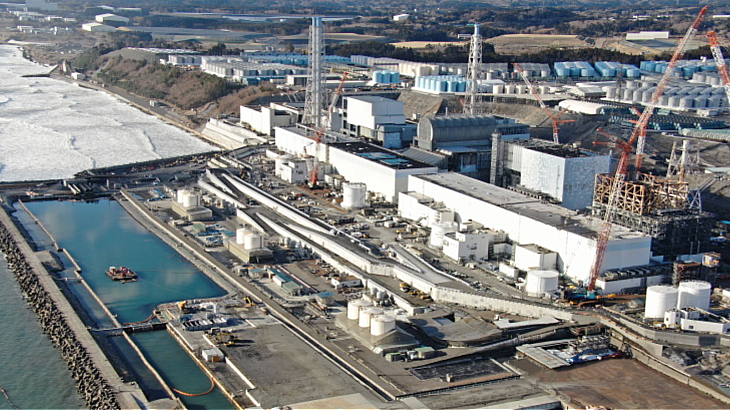
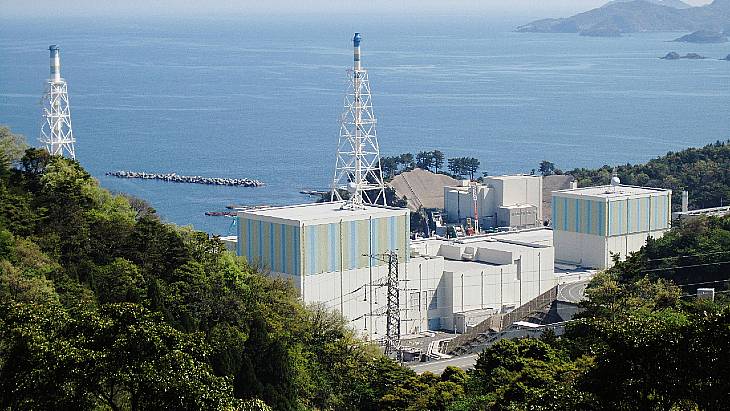
(Image: Tepco)
By Alex Hunt: The decommissioning process for the Fukushima Daiichi site and surroundings is scheduled to be completed by 2051. It will require many innovations, and careful planning. Here are some of the details outlined at an event at the International Atomic Energy Agency's General Conference in Vienna.
What happened?
On 11 March 2011 a major earthquake struck Japan. It was followed by a 15-metre tsunami which disabled the power supply and cooling of three reactors at the Fukushima Daiichi nuclear power plant and all three cores largely melted in the first three days. More than 100,000 people were evacuated from the area as a precaution because of radioactive releases in the wake of the accident. After two weeks, the three reactors were stable and official ‘cold shutdown condition’ was announced in mid-December. According to World Nuclear Association, there have been no deaths or cases of radiation sickness from the nuclear accident but there have been 2313 disaster-related deaths among evacuees from Fukushima prefecture, which are in addition to the 19,500 killed by the earthquake and tsunami. Since the accident, work has been taking place to safely decommission the reactors and the surrounding areas, with large areas of the evacuated areas now back open for people to live in. The air dose rate is now similar, or lower, than major cities, the Japan-hosted event Reconstruction and Decommissioning in Fukushima heard:
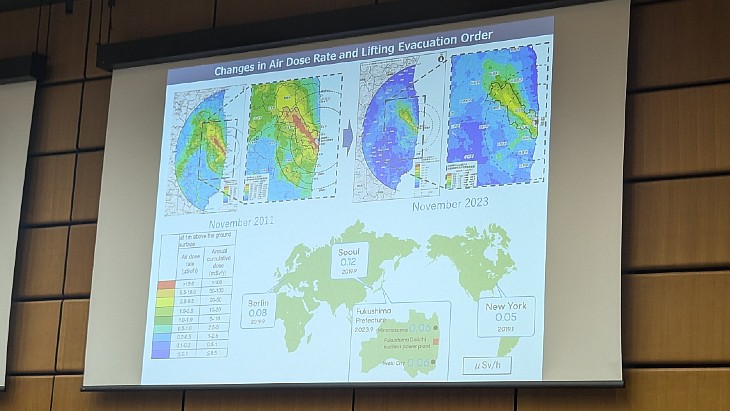
(Image: WNN photo of slide in Reconstruction and Decommissioning in Fukushima presentation)
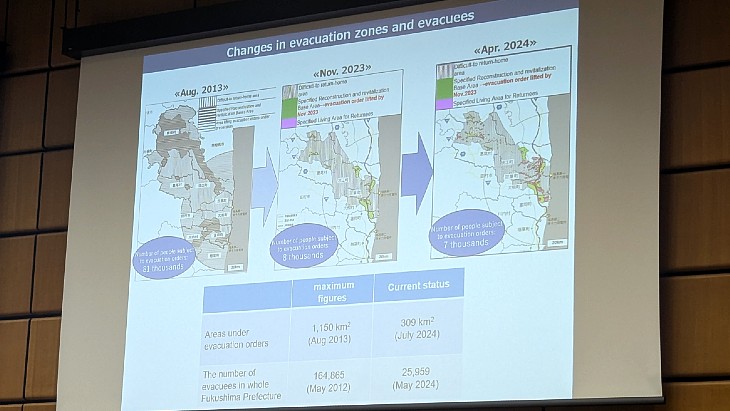
It has meant that the evacuation area which covered 81,000 people's homes in August 2013 had been cut to 7000 people's homes by April this year and the intention is to lift all the evacuation areas "even if it will take many years to do so".
(Image: WNN photo of slide in Reconstruction and Decommissioning in Fukushima presentation)
The decommissioning process so far
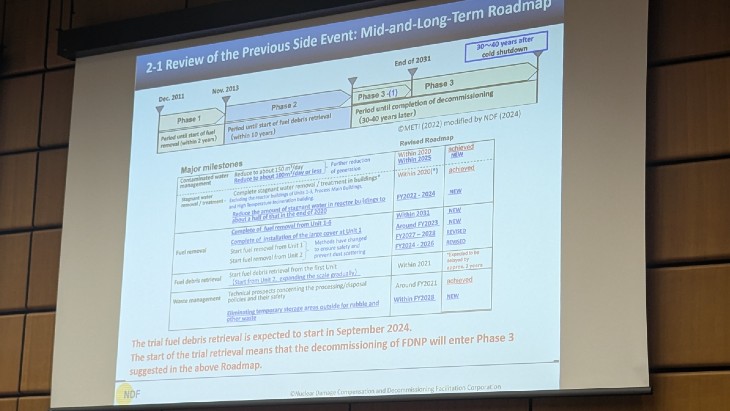
The decommissioning of any nuclear power plant is a long process, so it is no surprise that the timescales for decommissioning the Fukushima Daiichi plant are lengthy, with the completion currently scheduled to take place up to 40 years after cold shutdown - so by 2051. The different phases in the decommissioning roadmap start with the post-accident period to achieving cold shutdown in 2011, and then a two-year period to November 2013 when the start of fuel removal began. The third, and final phase, began in September with the start of trial fuel debris removal in unit 2.
(Image: WNN photo of slide in Reconstruction and Decommissioning in Fukushima presentation)
Fuel removal
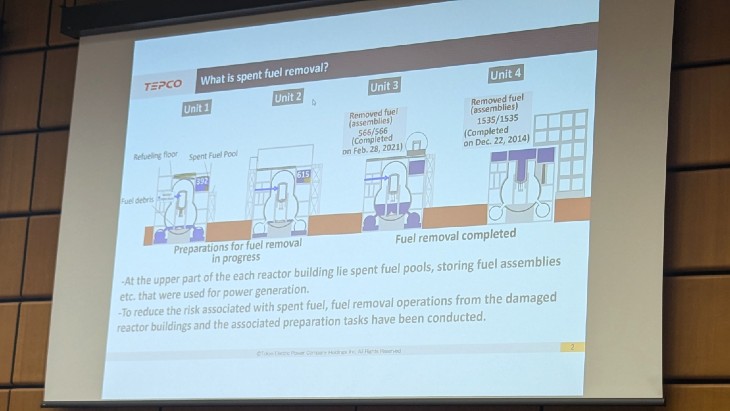
The situation in each reactor is different. Fuel removal from used fuel pools was completed for unit 4 in December 2014 and for unit 3 in 2021. The aim is to start fuel removal from unit 2 this year and for unit 1 from 2027/28.
(Image: WNN photo of slide in Reconstruction and Decommissioning in Fukushima presentation)
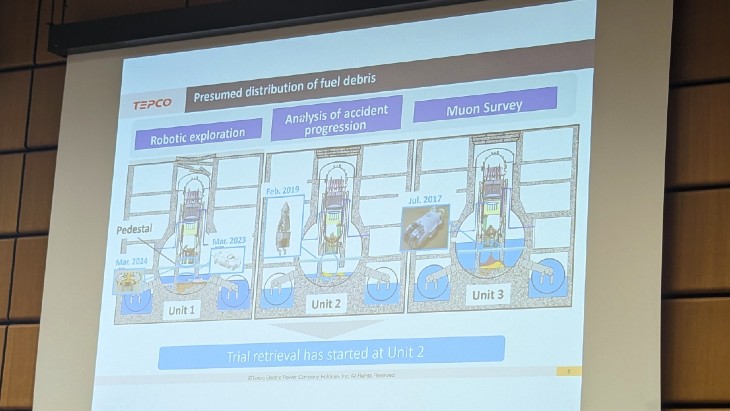
There is also the extremely complicated task of removing the fuel debris from the reactors, with a fair amount of uncertainty about the distribution in each of the reactors:
(Image: WNN photo of slide in Reconstruction and Decommissioning in Fukushima presentation)
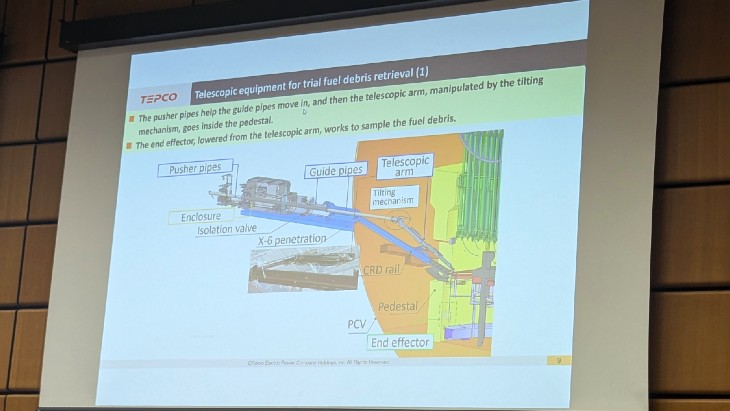
A trial process began last month, trying to remove fuel debris in unit 2, using a long narrow grabber tool:
(Image: WNN photo of slide in Reconstruction and Decommissioning in Fukushima presentation)
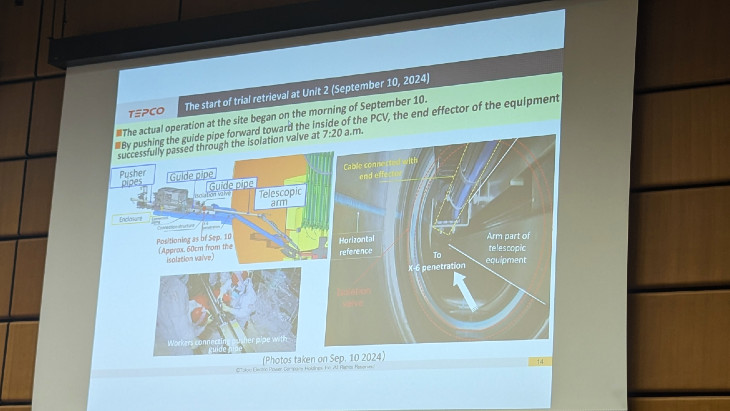
The plan is to sample granular fuel debris weighing 3 grams or less by lowering an end effector (gripper) with a camera mounted on it, to the bottom. Before the start of the process in September, the telescopic-arm-type equipment was tested in mock up facilities set up by the Japan Atomic Energy Agency (JAEA) in Naraha.
Yasutaka Denda, from Tokyo Electric Power Company (Tepco), explained that a few kilograms a day would be collected - but the process would also provide important information about how the accident progressed, as well as information about the location of the fuel debris.
(Image: WNN photo of slide in Reconstruction and Decommissioning in Fukushima presentation)
Larger scale fuel debris removal
Kosuke Ono, Executive Director, Head of the Decommissioning Strategy Office, Nuclear Damage Compensation and Decommissioning Facilitation Corporation (NDF) explained the options in the selection process for methods to further expand the scale of fuel debris retrieval “that will determine the success or failure to complete longterm decommissioning”.
The government, NDF and Tepco are all involved in the process. Full-scale fuel debris retrieval starts with unit 3 and he said the “property and distribution of fuel debris greatly varied depending on the accident progression” - and comprised a likely mix of fuel rods still in their original form, fallen gravel-like fuel pellets, melted and resolidified metal/ceramic materials and fission products stuck in narrow parts.
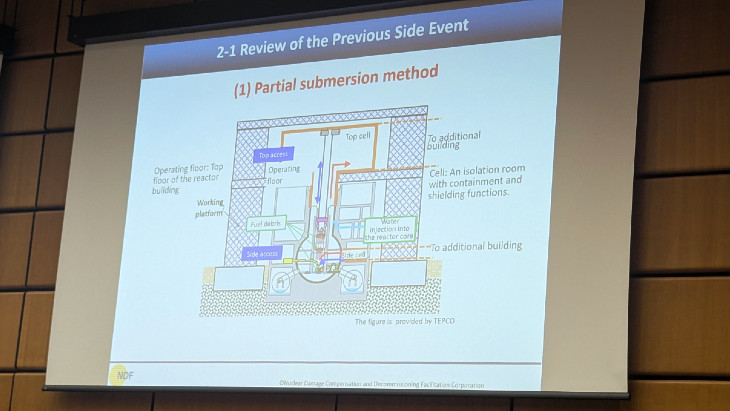
He said there were three methods considered - the partial submersion method:
(Image: WNN photo of slide in Reconstruction and Decommissioning in Fukushima presentation)
He said that this was the easiest method to understand, but stressed that it would need a lot of planning and would need remote operation of equipment.
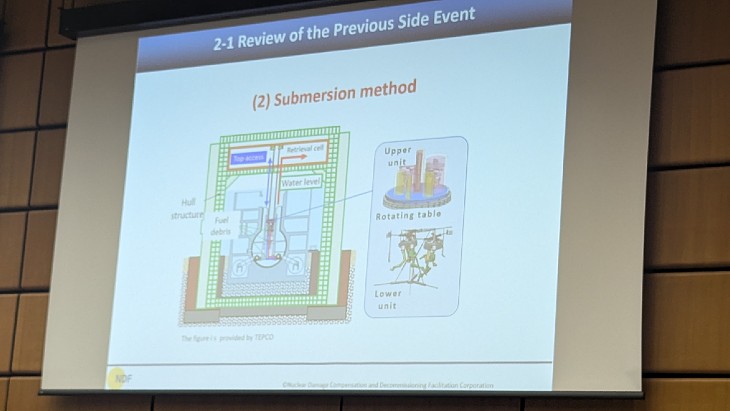
The second option was the submersion method. He described this method as "like making a big bathtub and sinking the reactor building into it - water is a very effective radiation shield and this method may be faster than the partial submersion method". However there was no engineering confirmation about whether it was possible to build such a huge structure and what would happen if there were leaks, so this option has not been selected - although a method using water as a radiation shield could be required if the partial submersion method does not work.
(Image: WNN photo of slide in Reconstruction and Decommissioning in Fukushima presentation)
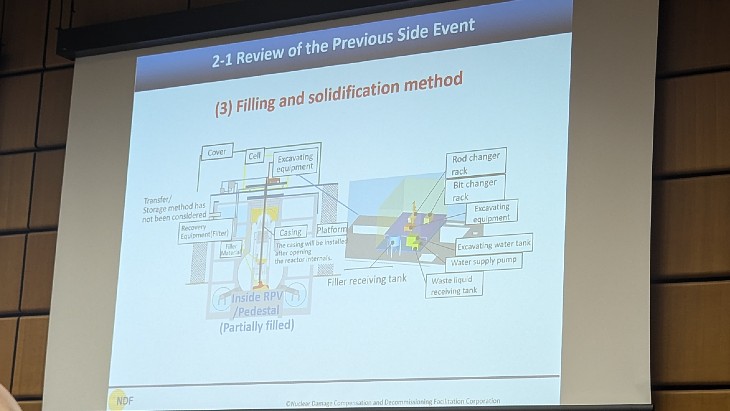
The third option considered was the filling and solidification method. This method uses mortar/cement - this has been the least studied and there are on-going studies of which material could be used.
(Image: WNN photo of slide in Reconstruction and Decommissioning in Fukushima presentation)
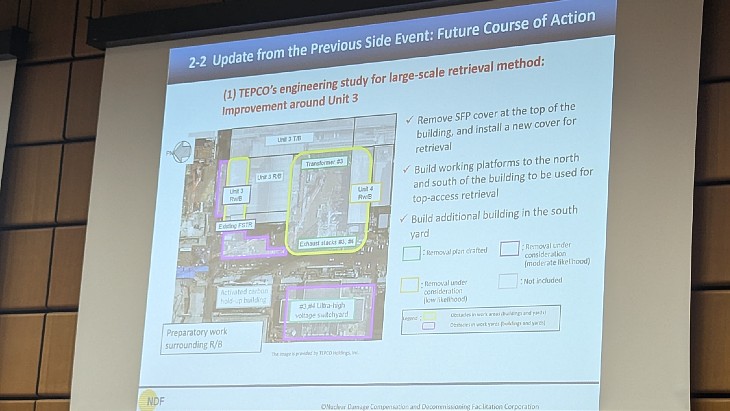
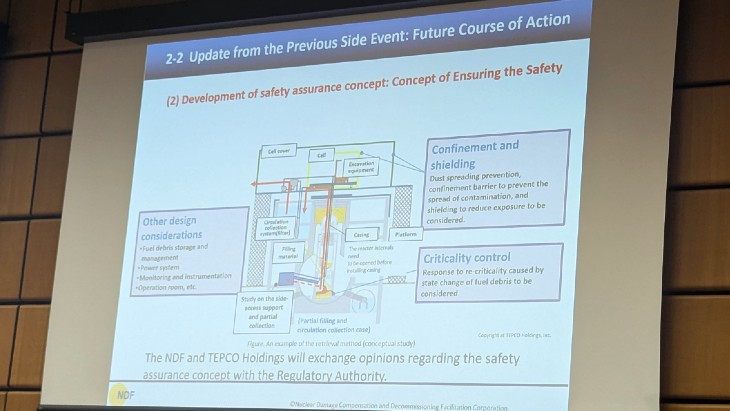
He said that more information was needed about the situation inside the reactors, but the recommendation at this stage has been to start design studies and research and development utilising the partial submission method. Micro-drones and endoscopic investigations would be used to build up a picture of inside the reactor vessels.
There would need to be a new cover on unit 3 for retrieval to ensure no release of radioactive material during the process and a new building constructed to store the fuel debris. There would also need to be a number of nearby buildings demolished, which would themselves take a long time, to ensure the highest standards of safety.
(Image: WNN photo of slide in Reconstruction and Decommissioning in Fukushima presentation)
A further round of public explanatory sessions is planned to be held in Fukushima Prefecture in November and December to outline the fuel debris retrieval methods and how it would work.
(Image: WNN photo of slide in Reconstruction and Decommissioning in Fukushima presentation)
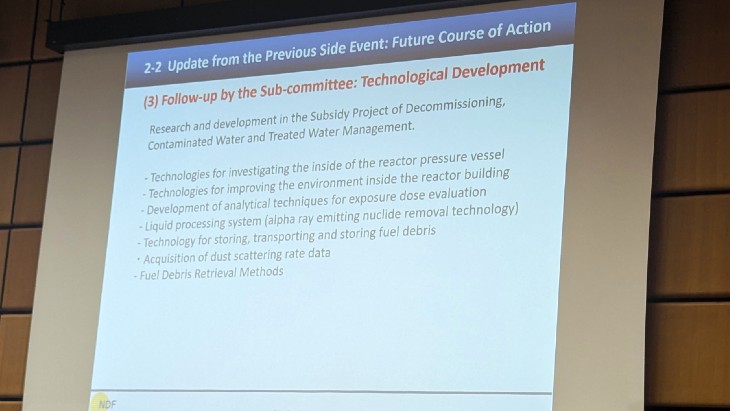
Among the technological innovations that will be needed, will be a way to investigate the inside of the reactor pressure vessel - how to drill a hole so as to be able to see inside and to improve the environment inside.
(Image: WNN photo of slide in Reconstruction and Decommissioning in Fukushima presentation)
Off-site environmental remediation
Yoshitomo Mori, from Japan’s Environment Ministry, said that by March 2018, 100 municipalities in 8 prefectures had had full scale decontamination completed. He said that since 2014, when it started as a small-scale pilot project, approximately 13.76 million cubic metres of soil and waste had been removed and transported to the Interim Storage Facility.
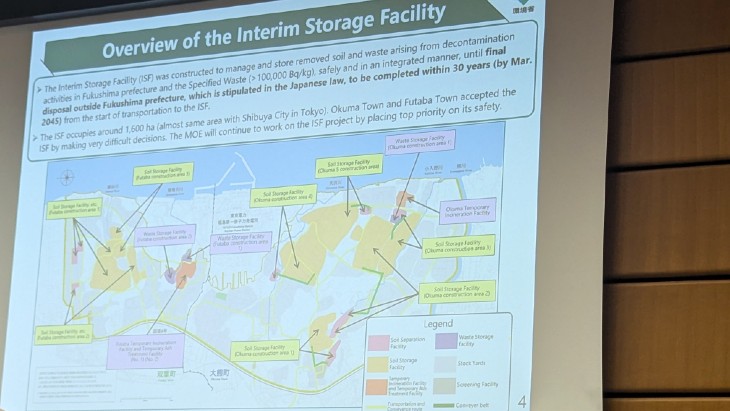
The Interim Storage Facility was built to manage and store removed soil and waste arising from decontamination, until final disposal outside Fukushima Prefecture, which is stipulated in Japanese law to be completed within 30 years (by March 2045). The facility occupies about 1600 hectares:
(Image: WNN photo of slide in Reconstruction and Decommissioning in Fukushima presentation)
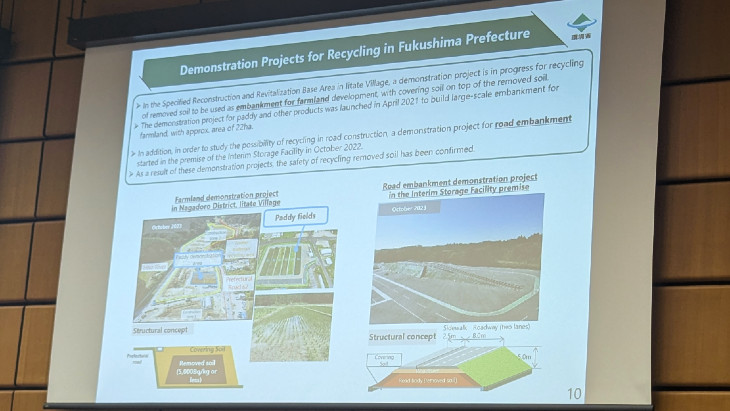
He stressed the importance of recycling the removed soil, which was equivalent to the volume of 11 Tokyo Domes (the baseball stadium). This scale, he said, showed the need for some form of volume reduction. About 75% of the soil has relatively low radioactivity and is to be recycled in lower levels in public works projects. There are a number of different demonstration projects taking place.
(Image: WNN photo of slide in Reconstruction and Decommissioning in Fukushima presentation)
There have also been pot plants placed in national ministries using recycled soil as part of the efforts to build public understanding of its safety. Studies have been taking place on selecting technology, and a site, for final disposal, and from 2025 they will “proceed to processes for studies and coordination related to the selection of a final disposal site”.
Water management - the ALPs treated water
The highest profile issue in the past few years relating to Fukushima has been the issue of the contaminated water - in part used to cool melted nuclear fuel - treated by the Advanced Liquid Processing System (ALPS), which removes most of the radioactive contamination, with the exception of tritium. This treated water is currently stored in tanks on site. Japan announced in April 2021 it planned to discharge ALPS-treated water into the sea over a period of about 30 years. It started to discharge the water on 24 August last year and has completed the release of eight batches, a total of 62,400 cubic metres of water, with the ninth release beginning at the end of September.
The process has been overseen and is monitored by the International Atomic Energy Agency, whose Department of Nuclear Safety and Security's Director, Gustavo Caruso, gave a presentation outlining the work the agency had been doing, and said that the IAEA had concluded ahead of the first release that "the discharge of the ALPs treated water, as currently planned by Japan, will have a negligible impact on people and the environment" and was "consistent with relevant international safety standards". He said that IAEA measurements had confirmed the water release was safe and would continue to corroborate the Japanese data relating to the ALPS treated water discharge, and would continue to carry out independent tests to "help build confidence in Japan and beyond". Read more here on the
IAEA's guide to ALPS treated water discharge.
Reconstruction is under way
So what about the future? With large areas of the previously evacuated area now decontaminated and open for people and businesses to move to, or return to, initiatives have begun to encourage them to do so, with a plan for "creative reconstruction: not simply reconstruction". The aim is to develop and build on specialist expertise and industries in areas such as robots, drones and decommissioning, as well as agriculture and the environment and research and development:
Fukushima Daiichi: How is the decommissioning process going to work?












 TOKYO - Former world number one Naomi Osaka said she "would love to play" at this year's Paris Olympics if she is granted a spot by tennis chiefs.

.jpg?ext=.jpg)
