Romania Hits 94% Recycling After Launching Largest Return Plan in the World

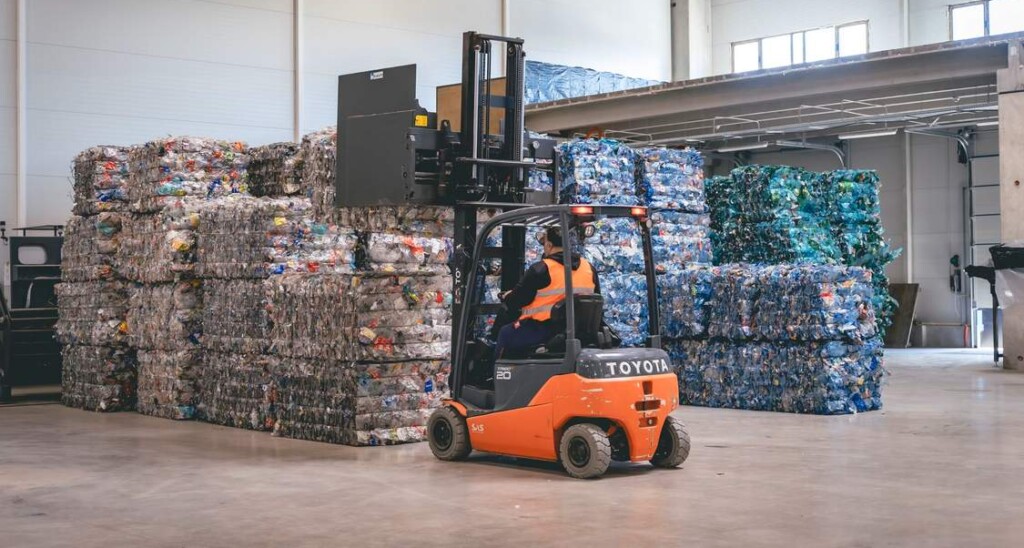
A recycling depot operated by RetuRO, Romania’s plastic return system organizer – credit Eduard Voicu / RetuRO

If you had to guess where in the EU you would find the most sophisticated and effective recycling system for beverage containers, how long before you’d say Romania?

Beating out Scandinavia, Belgium, Germany, and the Netherlands, the Romanian government’s private-public partnership with the logistics firm RetuRO, has led to an incredible 94% collection rate of plastic, glass, and metal containers in just two years.

The method is simple, but a RetuRO executive said that its secret to success comes from the fact that there was no existing recycling system already working that had to be overwritten: it was a fresh idea.

Fresh, but not new. Each retailer that sells products which come in recyclable containers are given a tax credit for the cost of installing return infrastructure like reverse vending machines and other installations. Then, the customer, when they buy each item, are charged a deposit that is returned with a few cents extra when they return the items.

With all the extras, one Transylvanian woman was able to buy food for her cats for the whole week.

“We are the largest fully integrated deposit return system globally,” said Gemma Webb, the chief executive of RetuRO, the company running the system in a public-private partnership.

Even though product return rates are as high as 94% in some months, those products as a proportion of the country’s total recyclable waste remains small; less than 15%. As far as that is from seeing the recyclability of all waste, it’s still awfully far from where the country has come.

Between 2011 and 2021, recycling rates for plastic, glass, and metal beverage containers hovered around 11-12%, and rarely changed. Only 1% of all materials recycled or thrown away eventually made it back into the economy, according to the Guardian.

Romanians returned some seven-and-a-half billion beverage containers between November 2023 and the end of September 2025, 4 billion of which were polyethylene terephthalate, the ubiquitous “PET” plastic that permeates world society. One study found that 90% of surveyed Romanians had used the system at least once.The Guardian reported that the plastic contained in a single PET plastic beverage container can produce 25 more over the materials lifespan if properly recycled. Romania Hits 94% Recycling After Launching Largest Return Plan in the World
Read More........

Yiwu: The world’s largest trading hub

A worker loads rolls of steel plate at a steel market in China's Zhejiang province. via AP -

I had the privilege of travelling to Yiwu City in Zhejiang Province with a delegation from the Caribbean, hosted by China’s Ministry of Foreign Affairs.

What we witnessed was nothing short of breathtaking: the deliberate construction of what China envisions as the largest trading hub in the world – a city that has already earned the title of the "world’s supermarket."

For anyone unfamiliar with Yiwu, think of it as the national showroom of China.

The country is massive, and for foreign businesses, navigating where to start can feel overwhelming. Yiwu solves this by serving as a central starting point: vendors, manufacturers and traders from all over China have permanent setups there.

Once connections are made in Yiwu, those relationships extend into every corner of the country.

From street peddlers to a global marketplace

Yiwu’s rise is a story of grassroots entrepreneurship.

In the late 1970s, poor farmers and traders, forbidden by the state to do business, set up illicit roadside markets to survive.

By 1982, local leaders broke ranks with Beijing and legalised trading under the "Four Allows" policy – allowing farmers to sell, long-distance trafficking, multi-channel competition and the creation of markets.

Fast forward to today, and Yiwu is home to over 75,000 individual booths trading 400,000 products across 40 industries.

It is estimated that nearly 600,000 foreign visitors come annually, with 15,000 foreign traders living permanently in the city.

The numbers behind the "world’s supermarket"

Yiwu’s economy continues to surge. Between January and July 2024, its import and export value hit US$53.1 billion, up 18.1 per cent year-on-year.

Exports reached US$47.0 billion, led by labour-intensive goods like textiles (up 23.5 per cent) and mechanical and electrical products (up 15.6 per cent).

A fashion accessories vendor talks to a customer on the phone at the Yiwu International Trade Market in Yiwu, eastern China's Zhejiang province. AP PHOTO -

Sporting goods spiked by 37.8 per cent, driven by global events like the European Cup and Olympics.

But perhaps more interesting is Yiwu’s pivot from "sell global" to "buy global."

The city is addressing its 1:10 import-to-export imbalance, aiming to push imports to US$14 billion by the end of 2024 and US$42 billion by 2030.

For Caribbean exporters, that means an opening: Yiwu doesn’t just want to sell to the world – it wants to buy from it.

The future: Yiwu’s global digital trade centre

The crown jewel of Yiwu’s evolution is the Yiwu Global Digital Trade Centre (GDTC) – a CNY 8.2 billion project spanning 1.25 million square metres. It is described as a "sixth-generation market," blending physical trade with cutting-edge technologies like AI, blockchain, IoT and 5G.

At its heart is the "digital brain" – a sci-fi inspired hub that integrates product display, business exchanges and data services.

Already, 30,000 Yiwu merchants use AI daily, producing multilingual videos in English, Spanish and Arabic to promote products. Blockchain underpins transaction trust, offering tamper-proof trade records.

Yiwu is also positioning itself financially with Yiwu Pay, a global payment platform partnered with over 400 banks across 100 countries, designed for the small-value, high-volume transactions typical of e-commerce.

Why this matters for the Caribbean

For small businesses in the Caribbean, Yiwu is a game-changer. Unlike most wholesale hubs that demand massive bulk orders, Yiwu vendors often allow minimum order quantities (MOQs) as low as ten-50 pieces.

Add in the logistics advantage – the ability to consolidate products from dozens of suppliers into one shipment – and Caribbean SMEs can now test products and scale without crippling upfront costs.

At the same time, the risks are clear.

China’s growing influence in the Caribbean has sparked debates around trade imbalances and debt dependencies

In 2020, the region held a US$51.2 billion trade deficit with China.

Countries like Suriname already owe over 14 per cent of GDP in debt to China, complicating IMF negotiations.

This means our engagement with Yiwu must be strategic, not passive.

It cannot be about replacing one dependency with another, but about diversifying supply chains and positioning the Caribbean as both a buyer and a seller in this new global ecosystem.

Final thoughts

Walking through Yiwu’s Global Digital Trade Centre felt like looking into the future of commerce.

This is beyond just a marketplace – it’s China’s bid to redefine global trade.

For the Caribbean, the message is clear: Yiwu offers lower sourcing costs, global logistics, and a path to sell into China’s vast consumer market. But we must engage strategically, aware of the geopolitical stakes.

The global trading map is being redrawn – and if the Caribbean wants a seat at the table, it starts here.

Keron Rose is a Caribbean-based digital strategist and digital nomad currently living in Thailand.

He helps entrepreneurs across the region build their digital presence, monetise their platforms and tap into global opportunities.

Through his content and experiences in Asia, Rose shares real-world insights to help the Caribbean think bigger and move smarter in the digital age.Listen to the Digipreneur FM podcast on Apple Podcasts, Spotify, or YouTube. Yiwu: The world’s largest trading hub - Trinidad and Tobago Newsday:
Read More........

India surpasses Europe, US in locomotive production to emerge as world leader


IANS Photo

New Delhi, (IANS): India has emerged as a global leader in railway locomotive manufacturing, achieving a record production of 1,681 locomotives in the financial year 2024-25, according to a Railway Ministry statement issued on Wednesday.

This milestone surpasses the total locomotive production of regions such as Europe, the United States, South America, Africa, and Australia, reaffirming India’s growing dominance in the global railway sector.

"The continuous rise in locomotive production is a direct result of strategic decisions taken to strengthen the Make in India initiative. Between 2004 and 2014, India produced a total of 4,695 locomotives, with a national annual average of 470. In contrast, from 2014 to 2024, locomotive manufacturing witnessed a significant surge, with 9,168 locomotives produced, raising the annual average to approximately 917," the Railways statement said.

Indian Railways' locomotive manufacturing units have achieved a remarkable milestone by producing 1,681 locomotives in various categories during the financial year 2024-25. This marks an increase of 209 locomotives, or 19 per cent, compared to the 1,472 locomotives produced in the previous financial year 2023-24, the statement said.

This record-breaking production is the highest ever for locomotive manufacturing in the country, reflecting the significant achievements of all units in enhancing railway infrastructure and capacity.

The production of 1,681 locomotives during the year comprised 700 manufactured at the Chittaranjan Locomotive Works, 477 produced at Banaras Locomotive Works, 304 made at Patiala Locomotive Works, and 100 locomotives each manufactured at the Madhepura and Marhowrah units located in Bihar.

The majority of the locomotives produced in the country were intended for freight trains. Among the 1,681 locomotives produced in the financial year 2024-25, as many as 1,047 were WAG-9/9H locomotives. These locomotives are a class of heavy-duty, three-phase AC electric locomotives used by Indian Railways for freight operations, known for their high speed and power, and are the only freight-dedicated three-phase AC locomotives in India. They are among the most powerful freight locomotives in India, with the WAG-9H having a higher power rating than the standard WAG-9. The other locomotives include WAG-9 Twin locomotives, of which 148 units were produced during the year, WAP-5 locomotives (2), and WAP-7 locomotives (272).The rest were WAG-12B locomotives, and WDG 4G/6G locomotives, at 100 each and five NRC locomotives. India surpasses Europe, US in locomotive production to emerge as world leader | MorungExpress | morungexpress.com
Read More........

Sri Lanka shines at World Travel Market 2025: Showcasing island’s tourism excellence to world


In collaboration with the Sri Lanka Tourism Promotion Bureau (SLTPB), the High Commission of Sri Lanka in London has marked a remarkable level of participation by the nation’s tourism industry at World Travel Market (WTM) 2025, held from 4–6 November 2025 at the ExCel London. A delegation of 92 leading travel and tourism partners represented the island, highlighting its vibrant and rapidly growing tourism sector to an international audience. The Sri Lanka Pavilion provided a dynamic platform for B2B meetings, networking, and collaboration between global travel and hospitality professionals.

During his welcome remarks at the opening of the Sri Lanka Pavilion, High Commissioner Nimal Senadheera expressed his appreciation to all partners and participants, noting that their collective effort created a powerful platform to showcase the island as a premier global destination. He highlighted that over 1.8 million visitors had already been welcomed by Sri Lanka in 2025, with the United Kingdom remaining the second-largest source market, contributing more than 170,000 arrivals by October. The Pavilion was also graced by The Lord Hannett of Everton OBE, the United Kingdom’s Trade Envoy to Sri Lanka, who praised the strong partnership between the two nations and emphasised the importance of continued collaboration in trade, tourism, and culture. SLTPB Chairman Buddhika Hewawasam noted that Sri Lanka’s renewed focus on sustainable tourism, wellness, and wildlife reflected its commitment to responsible, high-quality growth and meaningful travel experiences.

Parallel to the Sri Lanka Pavilion, a press conference was held on 5 November at WTM, bringing together a significant gathering of UK travel and tourism media, journalists, and PR representatives. The event provided a high-profile platform to share the latest developments in the sector, including government priorities, enhanced air connectivity through Sri Lankan Airlines, and sustainable tourism initiatives. Speakers included High Commissioner Senadheera, SLTPB Chairman, SLTPB Director of Marketing Dushan Wickramasuriya, Regional Manager Europe and Americas at Sri Lankan Airlines Chinthaka Weerasinghe, and, BGTW Chair Chris Coe. Also present at the head table were SLAITO President Nalin Jayasundera and, THASL President M. Shanthikumar representing the country’s travel and hospitality sectors.

Visitors to the Sri Lanka Pavilion were treated to a vibrant celebration of the island’s culture and heritage, featuring traditional dance performances and the serving of renowned Ceylon Tea, offering guests an authentic taste of the island’s warmth and hospitality. The Pavilion at WTM 2025 once again reaffirmed the country’s position as a resilient, innovative, and welcoming destination, ready to inspire travellers and strengthen global tourism partnerships. Sri Lanka shines at World Travel Market 2025: Showcasing island’s tourism excellence to world | Daily FT
Read More........

World Communication Award Winners 2025


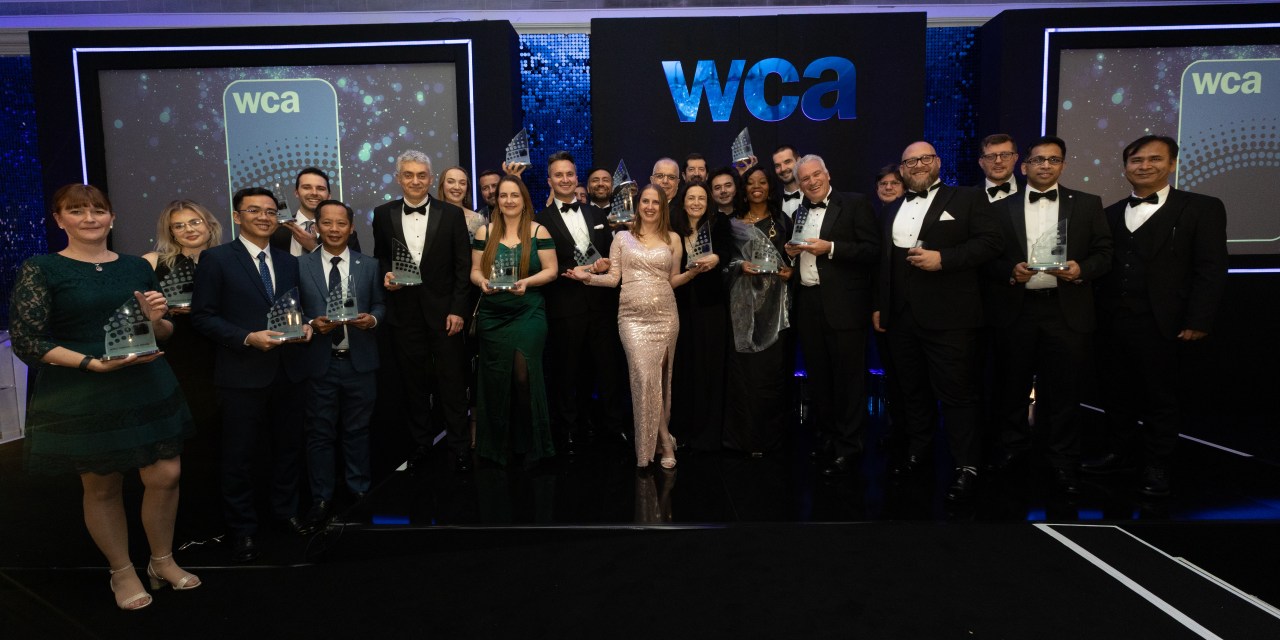
Posted by Harry Baldock, World Communication Awards: Total Telecom is thrilled to unveil the exceptional winners of the 2025 World Communication Awards (WCAs)

For over two decades, the WCAs has been the definitive global benchmark for technological excellence and industry leadership. With a rigorous, independent review panel of over 80 judges, the WCAs ensure that every award recognises genuine, real-world impact and future-defining innovation that is transforming the global telecom ecosystem.

This year’s Award winners celebrate companies, big and small, from all around the world, that are going above and beyond for their customers.

A huge congratulations to all of our worthy winners, all of which can be found below:
5G Award

Winner: Singtel, in partnership with Ericsson, for Singtel 5G+

This year’s 5G Award category saw an incredibly strong field, showing 5G finally coming of age.

The Singtel successfully redefined network value by utilising slicing, including integrating a Security-as-a-Slice feature that is actively blocking over 6.6 million threats monthly for its customers.

The judges said the entry showed “the democratization of consumer network slicing, turning a technical capability into everyday customer value.”

(Silver Award: KT, AICT Company) 

Access Innovation

Winner: Ericsson and Telstra for the world’s first 5G triple-band FDD Massive MIMO

The Access Innovation category represents the pinnacle of engineering ingenuity, showcasing innovation in the competitive race to build next-generation networks.

The winning solution from Ericsson, used by Telstra, replaces multiple legacy radios with a single unit, dramatically boosting capacity while simplifying network deployment and reducing power consumption.

The judges described the technical innovation as “exceptionally strong” and noted its importance as a foundation for future RAN intelligence.

(Silver Award: Rakuten Symphony, Rakuten Site Management’s Fiber Manager) 

AI Innovation

Winner: Jio Platforms for JioBrain

The AI Innovation category showcases the cutting edge of network intelligence, recognising the transformative impact AI is having on the telecoms industry.

The JioBrain was a standout entry. Built entirely in-house, the solution is already processing a massive 350 billion data points daily across Jio’s operations. The scale of its results was highly impressive, delivering 40% fewer outages, 30% lower OPEX, and 20% higher ARPU across 200+ million 5G users.

(Silver Award: Chunghwa Telecom)

Best Digital Transformation Programme

Winner: Ericsson and IOH for their Digital Monetization Platform

This Award celebrates projects that tackle complexity head-on, delivering profound and measurable improvements to both operations and customer experience.

Ericsson and Indosat Ooredoo Hutchison successfully unified a highly fragmented BSS landscape, migrating over 88 million subscribers to a single, end-to-end digital monetisation platform.

This solution not only improved service innovation and process agility but also opened up vital new revenue streams for IOH.

(Silver Award: Jazz and Huawei)

Best Network Evolution Initiative

Winner: Colt Technology Services for their global Optical network

This category celebrates vision and ambition when it comes to network design. Colt demonstrated a highly innovative, multi-faceted approach to network evolution, leading trials on quantum-safe network security while also delivering Terabit-scale capacity at a global scale.

The judges praised this comprehensive approach, suggesting the company is leading the way with their preparation for a post-quantum world.

(Silver Award: Telefónica Global Solutions)

Best operator in a Growth Market

Winner: Lumitel

The Best Operator in a Growth Market category celebrates operators who successfully navigate the myriads of unique challenges presented by developing markets.

According to one judge, Lumitel presented “an extraordinary example of how a telecom operator can transform one of the world’s most challenging markets [Burundi] into a digitally connected society”, adding that the operator had “not only met but exceeded its objectives, proving that connectivity can be a lifeline for national progress.”

(Silver Awards: Smart Axiata)

Best Wholesale Operator

Winner: Orange Wholesale

This was a highly competitive category, bringing together network giants from around the world.

Orange Wholesale showed remarkable agility in handling their customers’ evolving needs, building unique solutions leveraging technologies from eSIM to satellite. This is a global leader that has evolved its business model through a strong blend of customer-led innovation, technology deployment, and collaborative partnerships.

(Silver Award: Colt Technology Services, Wholesale SIP)

Beyond Connectivity Award

Winner: VEON for JazzCash

This category celebrates companies that go above and beyond for their customers, delivering value and support far outside the scope of their traditional business.

The JazzCash mobile money platform is doing just that, playing a key role in the lives of 48 million people in Pakistan, supporting financial inclusion and driving the national economy. The judges praised the solution’s broad impact, calling it a “great case of going beyond connectivity to deliver systemic change” and building a solution of national importance.

(Silver Award: PT Telkomsel)

Cloud Award

Winner: Jio Platforms for its Cloud Platforms and Private MEC

According to one of the judges, Jio Platforms entry for this category showed the company had “raised the bar in telco cloud innovation, offering a unique solution that is as wide-reaching as it is specialised”.

With a combination of sovereign design, massive real-world deployment, measurable business and customer outcomes, and proven sustainability, this entry was the clear winner in this category.

(Silver Award: Rakuten Symphony for Rakuten Cloud)

Connected Communities Award

Winner: Airband for its next generation Fixed Wireless Access

This category celebrates agile providers who use cutting-edge technology to connect communities left behind by traditional infrastructure rollout.

Airband has showed impressive progress in this regard, with its upgraded Fixed Wireless Access solution offering a ten-fold improvement on its previous iteration. The judges were highly impressed by the “genuine technological innovation” on show and the scale of the impact being achieved for underserved communities.

(Silver Award: Fibrus)

Crisis Response Award

Winner: Palestine Telecommunications Company – Jawwal

This category celebrates those companies that continue to support their customers in exceptionally difficult circumstances.

This Jawwal has showed incredible resilience and operational agility in keeping connectivity available for customers despite 80% of its network being damaged and 2 million people being displaced. From the deployment of FWA to the reuse of copper networks, this organisation continues to demonstrate significant technical skill and flexibility in keeping its customers online.

(Silver Award: Prima Limited, ICN1 Earthquake crisis response in Vanuatu)

Cyber Security Award

Winner: Jio Platforms for its Quantum-Safe Security Suite

This award recognises the critical importance of future-proofing digital infrastructure by addressing both current and imminent threats.

The Jio Platforms’ Quantum-Safe Security Suite demonstrated both a deep understanding of the current cybersecurity landscape and the huge challenges on the horizon. Judges said the entry’s “foresight, R&D excellence, and rapid execution has set a new industry benchmark – and placed India at the forefront of global cyber resilience”.

(Silver Award: Bridge Alliance and Aeris Communications, Aeris IoT WatchtowerTM)

Enterprise Service of the Year

Winner: China Broadcasting Network & AsiaInfo Technologies for their Smart Wind Farm private 5G network

Considered a “standout submission” by the judges, this category’s winner combines bespoke engineering with AI-driven interference management and a unique network architecture, to deliver impressive results at a Smart Wind Farm.

One judge commented that this was the “benchmark case of how CSP-enabled private networks can unlock new efficiencies, safety standards, and economic benefits for enterprise businesses”.

(Silver Award: Singtel, Singtel 5G+ Priority and Enterprise Mobile Protect)

Future Award

Winner: Singtel for its Quantum-Safe Network

From innovative solutions to novel business models, the future award celebrates companies looking to capture the opportunities that are only just emerging.

Singtel’s Quantum-Safe Network blends technical refinement with commercial availability, providing a solution to one of the biggest challenges on the horizon for telcos: building future-ready cyber resilience at scale.

(Silver Award: Cohere Technologies)

People and Culture Award

Winner: Viettel Group

This category looks to highlight organisations that place employee well-being and a culture of continuous learning at the core of their strategy, driving both sustainable growth and technological excellence.

With a comprehensive 360° care model focused on employees’ physical, mental, social, and spiritual well-being, Viettel showed incredible dedication to staff, prioritizing reskilling and upskilling over layoffs.

(Silver Award: Deutsche Telekom – Europe Segment, DT Europe Talent Powerhouse)

Platform Award

Winner: Singtel for the Paragon Platform

Singtel’s Paragon Platform aims to help telecoms providers augment their service offerings and create new revenue streams beyond connectivity. With impressive results so far, this top-notch platform sets the standard for 5G orchestration and business model transformation.

(Silver Award: Rakuten Symphony, Rakuten Cloud-Native Platform)

Satellite Telecoms Award

Winner: Telefonica Global Solutions

Telefonica Global Solutions successfully combines GEO, MEO, and LEO satellite capabilities into a single service model, providing customers with a self-managed, cloud-style orchestration interface for real-time control across orbits.

The judges were highly impressed by the commercial results, noting the solution demonstrates that “satellite can scale like cloud, serve like fibre, and impact lives far beyond the reach of terrestrial networks.”

(Silver Award: VEON and Kyivstar, Kyivstar/Starlink)

Social Contribution Award

Winner: Helium

In a category all about giving back to the community you serve, Helium impressed by flipping the traditional telecom model, empowering individuals to become network builders and expand connectivity access from the ground up.

The judges praised the company’s disruptive business model, stating that it “stands out for reimagining connectivity as a shared resource rather than a corporate commodity, creatively redistributing both the responsibility and the rewards of building digital inclusion.”

(Silver Award: Moldcell Foundation)

Submarine Networks Award

Winner: EllaLink

A new category this year, aimed at shining a light on some of the world’s most critical and often underappreciated infrastructure.

EllaLink has not only been working hard to expand and upgrade its network, but also to introduce new sensing technology to support marine researchers. This unique combination of market impact, engineering excellence, and societal contribution set the winner apart.

(Silver Award: Telin)

Sustainability Award

Winner: Vodafone & Closing the Loop, One for One

Sustainability is a huge topic at the World Communication Awards, attracting many entries from across the industry. Vodafone’s partnership with Closing the Loop showed major impact with their focus on e-waste – a significant challenge across the sector.

With very impressive results, the judges said this entry was an excellent example of an operator embedding sustainability directly into its core customer offering.

(Silver Award: KT, AI-based ES Orchestrator)

Total Experience Award

Winner: Sparkle

The competition in the Total Experience Award category was exceptionally strong this year, underscoring the vital importance of customer-centric strategies in today’s market.

Sparkle provided a truly holistic approach, integrating AI-based automation and real-time digital tools with a uniquely personalized, human-centered service model. For this company, CX is a company-wide mission, driving measurable outcomes and long-term loyalty.

(Silver Award: China Mobile (Guangdong) & Huawei, AI+BOSS)

Next Gen Award

Winner: Chiago Akpata – Senior Manager, Regulatory Affairs at Bayobab

This category is dedicated to the future leaders of the telecoms sector, highlighting those whose impact far exceeds their years.

Chiago Akpata has showed incredible skill in navigating the complex intersection of telecommunications, digital infrastructure, and public policy, having a lasting and transformative effect on the business.

(Silver Award: Sam Sham, RETN)

Startup of the Year Award

Winner: nodeQ

This category is all about the potential to do something special and impact the telecoms industry at scale.

nodeQ showcased their potential to do just that, developing cutting edge technology to better map telcos shifting security needs and prepare for an uncertain future.

Judges described this company as providing “world-class deep-tech with a significant first-mover advantage.”(Silver Award: A5G Networks) World Communication Award Winners 2025 | Total Telecom
Read More........

World cereal output to pass record threshold in 2025 – FAO


The Food and Agriculture Organization of the United Nations (FAO) has released updated forecasts for world cereal markets in 2025. Thanks to larger-than-expected wheat harvests, especially in Argentina, global cereal output is now foreseen to surpass three billion tonnes for the first time ever, rising 4.9 percent to 3.003 billion tonnes. Coarse grain and rice outputs are both expected to increase from the previous year, with world rice output projected to grow by 1.6 percent, led by Bangladesh, Brazil, China, India and Indonesia.

The new Cereal Supply and Demand Brief also offers preliminary updates on trends in the ongoing winter wheat season in the northern hemisphere and coarse grain plantings in the southern hemisphere.

World cereal utilization in 2025/26 is now expected to increase by 2.1 percent from the previous year. Based on the updated forecasts, global cereal stocks are predicted to expand by 6.5 percent to a record high of 925.5 million tonnes, while the new forecast for world trade in cereals in 2025/26 points to a 3.3 percent increase to 500.6 million tonnes.More details are available here. custom title
Read More........

Ahmedabad named host of Centenary Commonwealth Games 2030

Ahmedabad named host of Centenary Commonwealth Games 2030. Photo credit: IOA

Glasgow (Scotland), (IANS) Ahmedabad, India, has officially been confirmed as the host city for the Centenary Commonwealth Games in 2030, marking a historic milestone for the Commonwealth Sport Movement. This will be the second time that India will host the Commonwealth Games after New Delhi in 2010.

The decision confirms that the world’s most populous nation will host the landmark edition of the Games after delegates from 74 Commonwealth member nations and territories approved India’s bid at the Commonwealth Sport General Assembly in Glasgow on Wednesday.

India put forward a strong vision for the 2030 Games, with Ahmedabad, Gujarat, as the main host city. This plan builds on the groundwork laid by Glasgow 2026 and allows India to celebrate its centenary in a memorable way.

Moments after Amdavad was chosen to host the 2030 Commonwealth Games, 20 Garba dancers and 30 Indian dhol drummers spontaneously performed in the General Assembly Hall. Their vibrant cultural display surprised delegates and offered a glimpse of the heritage and pride that athletes and fans can anticipate from a Games held in Gujarat, India.

Garba is Gujarat’s traditional folk dance. The performance included members of Glasgow’s Indian community and individuals from other parts of the Commonwealth. It showcased both diversity and unity as part of the Movement, marking the journey from the Glasgow 2026 Commonwealth Games to its Centenary edition.

The inaugural Commonwealth Games took place in 1930 in Hamilton, Canada. At the latest Games in Birmingham, England, in 2022, Australia led the medal tally. The top five nations also included England, Canada, India, and New Zealand.

Donald Rukare, President of Commonwealth Sport, said, “This is the start of a new golden era for Commonwealth Sport. After a 'Games reset', we head to Glasgow 2026 in fantastic shape to welcome the 74 teams of the Commonwealth before setting our sights on Amdavad 2030 for a special Centenary edition of the Commonwealth Games.

“India brings scale, youth, ambition, rich culture, enormous sporting passion, and relevance, and I'm delighted to report strong interest from a range of nations to host the 2034 Games and beyond. We start our next century for the Commonwealth Games in good health.”

PT Usha, President of the Commonwealth Games Association of India, said, “We are deeply honoured by the trust shown by Commonwealth Sport. The 2030 Games will not only celebrate a hundred years of the Commonwealth Movement but also lay the foundation for the next century. It will bring together Athletes, communities, and cultures from across the Commonwealth in a spirit of friendship and progress.”

Aside from confirming the hosts for 2030, Commonwealth Sport also announced that 15 to 17 sports will be included at Amdavad 2030.

The Amdavad 2030 team will collaborate with Commonwealth Sport and the International Federation community to develop a vibrant and engaging sports programme that resonates locally while appealing globally.

This will follow Commonwealth Sport’s recent Sport Programme Review, which outlines the sports included in the Commonwealth Games: Athletics and Para Athletics, Swimming and Para Swimming, Table Tennis and Para Table Tennis, Bowls and Para Bowls, Weightlifting and Para Powerlifting, Artistic Gymnastics, Netball, and Boxing.

The process to finalise the remaining sports in the programme will begin next month, with the complete line-up for the Centenary Games being announced next year.

The sports being considered include: Archery, Badminton, 3x3 Basketball and 3x3 Wheelchair Basketball, Beach Volleyball, Cricket T20, Cycling, Diving, Hockey, Judo, Rhythmic Gymnastics, Rugby Sevens, Shooting, Squash, Triathlon, Para Triathlon, and Wrestling. The host may also suggest up to two new or existing sports.

Duncan Scott, multiple Commonwealth champion swimmer, said, “The Commonwealth Games are a special part of my career. Taking part in the home Games is incredible, so I’m excited for Indian Athletes who’ll get to do that in 2030. And for everyone else, we’ve got an opportunity to expand our horizons and experience the ambition and colour of Amdavad and India. I loved the chance to compete in the Gold Coast in Australia as part of a travelling Team Scotland.

“We look forward to handing over the Games to Amdavad in great shape after welcoming all to Glasgow next year.”

Jaismine Lamboria, World Champion Boxer from India, said, “It truly is a proud moment to see India become the host of the Centenary Commonwealth Games. Amdavad will give Athletes and fans a very warm and vibrant welcome, and having the opportunity to compete on home soil in 2030 will be a huge motivation for me and for many others. I’m excited for the next decade for Indian sport.”

Read More........

The world’s carbon emissions continue to rise. But 35 countries show progress in cutting carbon

Global fossil fuel emissions are projected to rise in 2025 to a new all-time high, with all sources – coal, gas, and oil – contributing to the increase.

At the same time, our new global snapshot of carbon dioxide emissions and carbon sinks shows at least 35 countries have a plan to decarbonise. Australia, Germany, New Zealand and many others have shown statistically significant declines in fossil carbon emissions during the past decade, while their economies have continued to grow. China’s emissions have also been been growing at a much slower pace than recent trends and might even be flat by year’s end.

As world leaders and delegates meet in Brazil for the United Nations’ global climate summit, COP30, many countries that have submitted new emissions commitments to 2035 have shown increased ambition.

But unless these efforts are scaled up substantially, current global temperature trends are projected to significantly exceed the Paris Agreement target that aims to keep warming well below 2°C.

These 35 countries are now emitting less carbon dioxide even as their economies grow. Global Carbon Project 2025, CC BY-NC-ND

Fossil fuel emissions up again in 2025

Together with colleagues from 102 research institutions worldwide, the Global Carbon Project today releases the Global Carbon Budget 2025. This is an annual stocktake of the sources and sinks of carbon dioxide worldwide.

We also publish the major scientific advances enabling us to pinpoint the global human and natural sources and sinks of carbon dioxide with higher confidence. Carbon sinks are natural or artificial systems such as forests which absorb more carbon dioxide from the atmosphere than they release.

Global CO₂ emissions from the use of fossil fuels continue to increase. They are set to rise by 1.1% in 2025, on top of a similar rise in 2024. All fossil fuels are contributing to the rise. Emissions from natural gas grew 1.3%, followed by oil (up 1.0%) and coal (up 0.8%). Altogether, fossil fuels produced 38.1 billion tonnes of CO₂ in 2025.

Not all the news is bad. Our research finds emissions from the top emitter, China (32% of global CO₂ emissions) will increase significantly more slowly below its growth over the past decade, with a modest 0.4% increase. Emissions from India (8% of global) are projected to increase by 1.4%, also below recent trends.

However, emissions from the United States (13% of global) and the European Union (6% of global) are expected to grow above recent trends. For the US, a projected growth of 1.9% is driven by a colder start to the year, increased liquefied natural gas (LNG) exports, increased coal use, and higher demand for electricity.

EU emissions are expected to grow 0.4%, linked to lower hydropower and wind output due to weather. This led to increased electricity generation from LNG. Uncertainties in currently available data also include the possibility of no growth or a small decline.

Fossil fuel emissions hit a new high in 2025, but the growth rate is slowing and there are encouraging signs from countries cutting emissions. Global Carbon Project 2025, CC BY-NC-ND

Drop in land use emissions

In positive news, net carbon emissions from changes to land use such as deforestation, degradation and reforestation have declined over the past decade. They are expected to produce 4.1 billion tonnes of carbon dioxide in 2025 down from the annual average of 5 billion tonnes over the past decade. Permanent deforestation remains the largest source of emissions. This figure also takes into account the 2.2 billion tonnes of carbon soaked up by human-driven reforestation annually.

Three countries – Brazil, Indonesia and the Democratic Republic of the Congo – contribute 57% of global net land-use change CO₂ emissions.

When we combine the net emissions from land-use change and fossil fuels, we find total global human-caused emissions will reach 42.2 billion tonnes of carbon dioxide in 2025. This total has grown 0.3% annually over the past decade, compared with 1.9% in the previous one (2005–14).

Carbon sinks largely stagnant

Natural carbon sinks in the ocean and terrestrial ecosystems remove about half of all human-caused carbon emissions. But our new data suggests these sinks are not growing as we would expect.

The ocean carbon sink has been relatively stagnant since 2016, largely because of climate variability and impacts from ocean heatwaves.

The land CO₂ sink has been relatively stagnant since 2000, with a significant decline in 2024 due to warmer El Niño conditions on top of record global warming. Preliminary estimates for 2025 show a recovery of this sink to pre-El Niño levels.

Since 1960, the negative effects of climate change on the natural carbon sinks, particularly on the land sink, have suppressed a fraction of the full sink potential. This has left more CO₂ in the atmosphere, with an increase in the CO₂ concentration by an additional 8 parts per million. This year, atmospheric CO₂ levels are expected to reach just above 425 ppm.

Tracking global progress

Despite the continued global rise of carbon emissions, there are clear signs of progress towards lower-carbon energy and land use in our data.

There are now 35 countries that have reduced their fossil carbon emissions over the past decade, while still growing their economy. Many more, including China, are shifting to cleaner energy production. This has led to a significant slowdown of emissions growth.

Existing policies supporting national emissions cuts under the Paris Agreement are projected to lead to global warming of 2.8°C above preindustrial levels by the end of this century.

This is an improvement over the previous assessment of 3.1°C, although methodological changes also contributed to the lower warming projection. New emissions cut commitments to 2035, for those countries that have submitted them, show increased mitigation ambition.

This level of expected mitigation falls still far short of what is needed to meet the Paris Agreement goal of keeping warming well below 2°C.

At current levels of emissions, we calculate that the remaining global carbon budget – the carbon dioxide still able to be emitted before reaching specific global temperatures (averaged over multiple years) – will be used up in four years for 1.5°C (170 gigatonnes remaining), 12 years for 1.7°C (525 Gt) and 25 years for 2°C (1,055 Gt).

Falling short

Our improved and updated global carbon budget shows the relentless global increase of fossil fuel CO₂ emissions. But it also shows detectable and measurable progress towards decarbonisation in many countries.

The recovery of the natural CO₂ sinks is a positive finding. But large year-to-year variability shows the high sensitivity of these sinks to heat and drought.

Overall, this year’s carbon report card shows we have fallen short, again, of reaching a global peak in fossil fuel use. We are yet to begin the rapid decline in carbon emissions needed to stabilise the climate.The Conversation

Pep Canadell, Chief Research Scientist, CSIRO Environment; Executive Director, Global Carbon Project, CSIRO; Clemens Schwingshackl, Senior Researcher in Climate Science, Ludwig Maximilian University of Munich; Corinne Le Quéré, Royal Society Research Professor of Climate Change Science, University of East Anglia; Glen Peters, Senior Researcher, Center for International Climate and Environment Research - Oslo; Judith Hauck, Helmholtz Young Investigator group leader and deputy head, Marine Biogeosciences section at the Alfred Wegener Institute, Universität Bremen; Julia Pongratz, Professor of Physical Geography and Land Use Systems, Department of Geography, Ludwig Maximilian University of Munich; Mike O'Sullivan, Lecturer in Mathematics and Statistics, University of Exeter; Pierre Friedlingstein, Chair, Mathematical Modelling of Climate, University of Exeter, and Robbie Andrew, Senior Researcher, Center for International Climate and Environment Research - Oslo

This article is republished from The Conversation under a Creative Commons license. Read the original article.

Read More........

World Boxing Cup Finals: Minakshi, Preeti, Arundhati, Nupur win gold as Indian women shine bright on historic final day


IANS Photo

Greater Noida (Uttar Pradesh), (IANS): Minakshi (48kg), Preeti (54kg), Arundhati Choudhary (70kg), and Nupur (80+kg) powered to gold medals as India’s women boxers delivered riches on a landmark day for the nation at the World Boxing Cup Finals 2025 in front of a packed house at the Shaheed Vijay Singh Pathik Sports Complex.

Their triumphs came in several key divisions that will feature at the 2028 Olympic Games—where boxing moves to full gender parity—highlighting India’s growing competitive strength on the road to Los Angeles.

Their dominant performances capped a remarkable campaign for the host nation, which also saw Jadumani Singh, Pawan Bartwal, Abhinash Jamwal, and Ankush Phangal finish with well-earned silver medals, underlining India’s rising stature across both men’s and women’s Olympic-class weight categories.. Seven more Indians will be fighting for gold in Session 7, including reigning World Champion Jaismine Lamboira, two-time former World Champion Nikhat Zareen, and dual World Boxing Cup medalist Hitesh Gulia.

Minakshi set the tone for the day with a near-flawless 5:0 win over reigning Asian Champion Farzona Fozilova, unleashing her trademark aggression from the opening bell. The World Champion combined speed with razor-sharp accuracy, cracking open the bout with a blistering left–right combination in Round 1 and maintaining complete control through assertive jabs, clean counters, and airtight defence.

Preeti followed with another dominant 5:0 performance, overpowering Italy’s World Championship medallist Sirine Charrabi with relentless pressure. She repeatedly drove Charrabi into the corner, landing crisp face punches and dictating the tempo through superior footwork and sustained attacking bursts.

Arundhati Choudhary—former Youth World Champion—delivered one of the day’s most complete performances, dismantling Uzbekistan’s Aziza Zokirova with a commanding 5:0 win. Returning after 18 months, she blended sharp offence with disciplined defence, scoring heavily with decisive jabs and maintaining total tactical control across all three rounds. The gold surge continued as Nupur edged Uzbekistan’s Sotimboeva Oltinoy 3:2 in a tense, tactical showdown.In the men’s finals, India picked four silver medals. Jadumani Singh (50kg) fought with heart but fell 1:4 to Uzbekistan’s Asilbek Jalilov, while Pawan Bartwal (55kg), who had produced one of the tournament’s biggest upsets earlier in the week, went down to Samandar Olimov. Abhinash Jamwal (65kg) lost a spirited contest 1:4 to Japan’s seasoned Shion Nishiyama, and Ankush Phangal (80kg) was bested by England’s defending World Cup champion Shittu Oladimeji. World Boxing Cup Finals: Minakshi, Preeti, Arundhati, Nupur win gold as Indian women shine bright on historic final day | MorungExpress | morungexpress.com
Read More........

Worldwide spending on AI is expected to be nearly $1.5 trillion in 2025: Report

IANS Photo

New Delhi, (IANS): Worldwide spending on artificial intelligence (AI) is expected to be nearly $1.5 trillion in 2025, up nearly 50 per cent up from $987,904 in 2024, a report said on Monday.

Further, the overall global AI spending is likely to top $2 trillion in 2026, led by AI integration into products such as smartphones and PCs, as well as infrastructure, according to a business and technology insights company Gartner, Inc report.

Mirroring last year's spending graph, generative AI integration in smartphones would lead the spending at $298,189 this year as well, followed by AI services ($282,556), AI-optimised servers ($267,534), AI processing semiconductor ($209,192), AI application software ($172,029) and AI infrastructure Software ($126,177).

"The forecast assumes continued investment in AI infrastructure expansion, as major hyperscalers continue to increase investments in data centres with AI-optimised hardware and GPUs to scale their services," said John-David Lovelock, Distinguished VP Analyst at Gartner.

"The AI investment landscape is also expanding beyond traditional U.S. tech giants, including Chinese companies and new AI cloud providers. Furthermore, venture capital investment in AI providers is providing additional tailwinds for AI spending," he added.

According to the report, the AI spending would reach $2.02 trillion in 2026 following a similar growth trajectory.

In 2026, spending on Generative AI integration in smartphones is likely to be at $393,297. Meanwhile, the spending on AI Services would reach $324,669, and for AI-optimised servers, it would go around $329,528

Similarly, AI processing semiconductor ($267,934), AI application software ($269,703) and AI infrastructure software ($229,885) will also put weight in spending on AI.

The other segments, attracting AI spending, would be AI PCs by ARM and x86, AI-optimised IaaS, and GenAI Models.Gartner providers equip tech leaders and their teams with role-based best practices, industry insights and strategic views into emerging trends and market changes to achieve their mission-critical priorities and build the successful organisations of tomorrow. Worldwide spending on AI is expected to be nearly $1.5 trillion in 2025: Report | MorungExpress | morungexpress.com
Read More........

Indian entrepreneurs outpace global counterparts on adopting luxury lifestyles, mobility

Image/IANS)

New Delhi, (IANS) Unlike their global counterparts, entrepreneurs in India are overwhelmingly positive about their personal wealth outlook, with 95 per cent predicting their wealth will grow over the next few years, a report showed on Monday.

Among them, 56 per cent believe their wealth will improve significantly, while 39 per cent expect moderate growth.

Rich entrepreneurs in India are spending their wealth on luxury lifestyle as their optimism and global outlook help them expand their horizons across borders, according to research from HSBC Private Bank.

The HSBC’s 'Global Entrepreneurial Wealth Report 2025' reveals that allocations toward real estate for personal use (64 per cent), health and wellness (61 per cent), and luxury experiences (59 per cent) are significantly higher among entrepreneurs in India compared to their global counterparts.

“Their investments in luxury lifestyles, global mobility, and diversified portfolios signal not just confidence in their wealth trajectory but also their readiness to capitalize on the next wave of global opportunities and deepening international wealth corridors as globalisation enters a new phase,” said Sandeep Batra, Head of International Wealth and Premier Banking, HSBC India.

This optimism is particularly pronounced in markets such as the UK, the UAE, India, and Singapore. Key drivers of this optimism in India are opportunities for new investments and ventures (64 per cent), positive performance of investment portfolios (56 per cent), favourable economic outlook for the local economy (54 per cent) and positive business performance (43 per cent).

According to the report, entrepreneurs in India have a particularly global outlook, with 73 per cent holding multi-residency status — significantly higher than the global average of 56 per cent. The vast majority are open to relocating abroad, with the UK and US emerging as the top destinations, followed by Switzerland, UAE, and Singapore.Among those entrepreneurs looking to make a personal move, the primary motivations for cross border movements include better quality of life for themselves and their families (78 per cent); access to new investment opportunities (75 per cent); and expansion of business into new markets (71 per cent).Indian entrepreneurs outpace global counterparts on adopting luxury lifestyles, mobility | MorungExpress | morungexpress.com
Read More........

Maldives world's 1st country to eliminate mother-to-child transmission of HIV, syphilis and hepatitis B


IANS Photo

New Delhi,  (IANS): In a landmark public health achievement, Maldives has become the first country in the world to achieve ‘triple elimination’ of mother-to-child transmission (EMTCT) of hepatitis B, HIV and syphilis, the World Health Organization (WHO) said on Monday.

Maldives was currently validated by the WHO for eliminating -to-child transmission hepatitis B. The country, had, achieved WHO validation or EMTCT of HIV and syphilis in 2019.

"Maldives has shown that with strong political will and sustained investment in maternal and child health, elimination of mother-to-child transmission of these deadly diseases, and the suffering they bring, is possible,” said Dr Tedros Adhanom Ghebreyesus, WHO Director-General.

“This historic milestone provides hope and inspiration for countries everywhere working towards the same goal," he added.

Mother-to-child transmission leads to infections that affect millions worldwide.

In the WHO South-East Asia Region alone, provisional estimates indicate that in 2024, more than 23 000 pregnant women had syphilis and over 8,000 infants were born with congenital syphilis.

About 25,000 HIV-positive pregnant women required treatment to prevent transmission to their babies, while hepatitis B continues to affect more than 42 million people in the Region, the WHO said.

“The landmark feat is an important step towards ‘Healthy Beginnings, Hopeful Futures,’ for improving maternal and newborn health by ending preventable deaths and prioritising long-term well-being," said Dr Catharina Boehme, Officer-in-Charge, WHO South-East Asia Regional Office.

In Maldives, over 95 per cent of pregnant women have received antenatal care, with nearly universal testing for HIV, syphilis and hepatitis B.

With a strong strong immunisation system, no babies were born with HIV or syphilis in 2022 and 2023. A 2023 national survey confirmed zero hepatitis B among young children (first grade of school), surpassing elimination targets, the WHO said."This historic validation is a moment of immense pride for the Maldives and a reflection of our nation’s steadfast commitment to protecting mothers, children and future generations,” said Abdulla Nazim Ibrahim, Minister of Health, Maldives, while pledging to sustain the progress for the future. Maldives world's 1st country to eliminate mother-to-child transmission of HIV, syphilis and hepatitis B | MorungExpress | morungexpress.com
Read More........

FIFA WC qualifiers: Ronaldo sets another record but Hungary deny Portugal early qualification

Credit: FIFA

Lisbon, (IANS) Cristiano Ronaldo set another record but Portugal conceded a last-gasp equaliser against Hungary to keep their dreams of direct qualification for the FIFA World Cup on hold.

Ronaldo became the outright leading marksman in World Cup qualifying history. His two goals – the first his 40th in qualifying to set the landmark – put Portugal on the verge of qualification but Dominik Szoboszlai struck late to deny Portugal qualification for a seventh successive global finals after a 2-2 draw.

Attila Szalai silenced Lisbon by heading home the opener, but the 40-year-old tapped in crosses from full-backs Nelson Semedo and Nuno Mendes to swing Roberto Martinez’s charges ahead. The woodwork denied Bruno Fernandes and Ruben Dias enhancing the lead and Szalai equalising after the restart.

Hungary kept themselves five points behind Portugal, and in with a chance of the section’s automatic ticket, when Daniel Lukacs did majestically to set up Dominik Szoboszlai.

Portugal’s next chance to confirm their place in the World Cup finals tournament next year will be against Republic of Ireland in Dublin next month.

Republic of Ireland claimed their first win in World Cup qualifying after edging out 10-man Armenia at the Aviva Stadium in Dublin.

Visiting captain Tigran Barseghyan was given his marching orders in the 52nd minute of this contest before Evan Ferguson combined with Will Smallbone to score the only goal of a cagey encounter.

Meanwhile, Cote d'Ivoire have qualified for the FIFA World Cup 26. The Elephants secured their place at the tournament in Canada, Mexico and the USA on Tuesday, with a 3-0 victory over Kenya in their final Group F fixture ensuring they topped the section ahead of Gabon.They will compete in the World Cup for the first time since Brazil 2014, where they were eliminated in the group stage, as they have been in each of their appearances to date. FIFA WC qualifiers: Ronaldo sets another record but Hungary deny Portugal early qualification | MorungExpress | morungexpress.com
Read More........

First-ever Startup World Cup in India in Oct, $1 million prize money up for grabs

IANS Photo

Mumbai, September 15 (IANS): Digital technology industry forum India Mobile Congress (IMC) announced on Saturday that it will host the inaugural edition of the Startup World Cup India, where startups will pitch their ideas for a chance to compete in the global finale.

The event from October 8–11 at Yashobhoomi Convention Centre, New Delhi, allows local founders to compete for a chance to participate in the $1 million global finale in San Francisco, the US.

Over 300 startups have submitted applications, from which 15 startups will be shortlisted to pitch to a curated jury comprising venture capitalists, entrepreneurs, and policy leaders, an official statement said.

"As a key feature of the Aspire programme this year, the 'Startup World Cup' supports IMC’s larger goal: to make India a global leader in deep-tech and digital innovation," the statement said.

Hosting the Startup World Cup India for the first time, 'IMC 2025' highlights its commitment to placing Indian startups at the forefront of the global innovation economy, said Ramakrishna P., CEO of India Mobile Congress.

"With 'IMC Aspire', we are not just giving startups a platform to pitch, but a pathway to scale globally," he added.

Launched in 2023, IMC Aspire's third edition this year is set to connect over 500 startups with 300 investors, accelerators, and venture funds. The four-day 'IMC 2025' is expected to draw over 1.5 lakh visitors from more than 150 countries, showcase over 400 exhibitors, and host 800 speakers in 100 conference sessions.

The discussions span topics such as next-generation connectivity, electronics manufacturing, AI-driven solutions, IoT, and more, the release noted.

India has moved up from rank 81 to 39 in the Global Innovation Index in less than a decade.

Read More........

World Athletics C'ships: United States wins three of four relay titles on final day in Tokyo

World Athletics C'ships: United State

okyo (Japan), September 21 (IANS) The United States underlined their sprinting power by claiming three out of four relay gold medals on the last day of the World Athletics Championships here on Sunday. Botswana delivered the day's surprise in the men's 4x400m relay, clocking 2 minutes 57.76 seconds to edge the Americans by just 0.07, as South Africa settled for bronze.

"I had to run the most strategic leg because of the weather," said Botswana's Busang Collen Kebinatshipi. "I am happy to be crossing the finish line first. I am really grateful to have come home with two gold medals."

"We came here dreaming of becoming world champions. It took a lot of courage for me," teammate Letsile Tebogo added.

The U.S. women responded in style in the 4x400m relay, where Sydney McLaughlin-Levrone's outstanding 47.82-second anchor secured victory in a championship record 3:16.61. Jamaica finished second in 3:19.25, with the Netherlands third in 3:20.18.

The Americans also triumphed in the women's 4x100m, winning in 41.75 seconds to narrowly beat Jamaica (41.79). Germany took bronze in 41.87, reports Xinhua.

"It's crazy to be going home with three gold medals. I added my name to the history books once again. I am right where I want to be," said Melissa Jefferson-Wooden.

In the men's 4x100m, Noah Lyles brought the baton home as the United States clinched gold in a world-leading 37.29. Canada finished second in 37.55, while the Netherlands set a national record of 37.81 to secure bronze.

Olyslagers wins women's high jump gold

Australia's Nicola Olyslagers won the women's high jump title on Sunday, clearing 2.00 meters to claim her first world crown on countback. The victory adds a long-awaited world title to Olyslagers' Olympic silver from Tokyo in 2021.

Poland's Maria Zodzik also went over 2.00m, setting a personal best to secure silver in her breakthrough on the global stage.

Reigning champion and 2024 Olympic gold medalist Yaroslava Mahuchikh of Ukraine and Serbia's rising talent Angelina Topic both cleared 1.97m to share the bronze medal.

American Hocker wins men's 5,000m title

American Cole Hocker stormed to victory in the men's 5,000 meters final at the World Athletics Championships on Sunday. The 24-year-old, the 1,500m gold medalist at the 2024 Paris Olympics, clocked 12 minutes 58.30 seconds to claim his first title from the world championships.

Hocked was disqualified from the 1,500m final and said he was confident ahead of the competition.

"I had a lot of bodies ahead of me, but I felt very strong, enough to pass them one by one," he said. "I felt like I raced perfectly today. The 5,000m is a whole different challenge. "

"Every time I run the 5,000m, I am pushed out of my comfort zone. The 1,500m is still my speciality, but for the next world championships, I want to run the 5k again. My goal was to win both, but I will settle for one."

Belgium's Isaac Kimeli followed close behind in 12:58.78 while France's Jimmy Gressier clinched bronze in 12:59.33 to add to his 10,000m title.

Kenya's Odira wins women's 800m with championship record

Kenya's Lilian Odira captured the women's 800 meters crown on Sunday, setting a championship record of one minute 54.62 seconds. The 26-year-old surged ahead in the final stretch to secure the title in a race where the top three athletes all dipped under one minute and 55 seconds.

"The 800m is always very tactical, I didn't have any expectations, I was just following the pace of the race," said Odira. "This is my first World Championships and I am really grateful to be leaving it as the world champion. "

Read More........

World Athletics Championships: Neeraj Chopra eyes repeat of history in Tokyo

Bengaluru: Winner India's Neeraj Chopra (centre), runner-up Kenya's Julius Yego (left) and second runner-up Sri Lanka's Rumesh Pathirage pose for a picture with their medals during the presentation ceremony of the Neeraj Chopra Classic 2025 international javelin competition, at Kanteerava Stadium, in Bengaluru on Saturday, July 5, 2025. (Photo: IANS)

Tokyo, September 16 (IANS) Indian javelin star Neeraj Chopra, who cherishes Tokyo’s National Stadium as the stage of his historic Olympic gold in 2021, will return to the venue on Wednesday, aiming for another milestone at the 2025 World Athletics Championships.

Chopra enters the competition as the defending champion, having created history in Budapest two years ago by becoming India’s first-ever world champion in athletics with a throw of 88.17m. Pakistan’s Arshad Nadeem had secured silver on that occasion with an effort of 87.82m.

However, the cross-border rivalry intensified in Paris last year when Nadeem dethroned Chopra as Olympic champion with a massive throw of 92.97m, while the Indian settled for a silver with the best effort of 89.45m.

World No. 2 Chopra will be aiming for his third medal at the World Championships, having previously clinched silver in Eugene, USA, three years ago. Earlier this season, he finally crossed the 90m mark with a national record throw of 90.23m in the Diamond League event in Doha, Qatar. However, that effort currently ranks him third on the world list, behind Germany’s Julian Weber and Brazil’s Luiz da Silva.

The men’s javelin field looks stacked, with three athletes having surpassed 90m this year and another five who have done so in past seasons.

A total of 37 competitors, divided into two groups, will compete for 12 spots in Thursday’s final, with the automatic qualification standard set at 84.50m. Chopra, 27, begins his campaign in Group A, while Nadeem is placed in Group B.

India will also be represented by Sachin Yadav (Group A), along with Rohit Yadav and Yashvir Singh (Group B).

Leading the global contenders is Julian Weber, the in-form Diamond League champion and current season leader with a throw of 91.51m. The field also boasts two-time world champion Anderson Peters of Grenada, 2012 Olympic gold medallist Keshorn Walcott (Trinidad and Tobago), and Tokyo 2020 silver medallist Jakub Vadlejch of Czechia, making the competition in Tokyo even more formidable.

Asian Games gold medallist Annu Rani will spearhead India’s challenge in the women’s javelin throw.

Rani, who has recorded a season-best effort of 62.59m, faces a formidable field that includes reigning World Champion Haruka Kitaguchi of Japan, Austria’s world leader Victoria Hudson with a 67.76m throw, and Serbia’s Adriana Vilagos, who has reached 67.22m this season.

The women’s javelin qualifiers are set to begin on Friday, with the medal round scheduled for Saturday.

World Athletics Men's javelin throw schedule: Men's javelin throw qualification for Group A will begin at 3:40 pm, while the Group B throws will commence at 5:15 pm on Wednesday. The final of the event will start at 3:53 pm on Thursday.

World Athletics Women's javelin throw schedule: Women's javelin throw qualification for Group A will start at 4 pm on Friday, while for Group B it will start at 5:30 pm. The final is slated to commence at 5:35 pm on Saturday.Live streaming details: Live streaming of the men's and women's javelin throw events at the World Athletics Championships will be available on JioHotstar in India. Live telecast will be on Star Sports Select 1, Star Sports Select 1 HD, Star Sports Select 2, and Star Sports Select 2 HD TV channels in India. World Athletics Championships: Neeraj Chopra eyes repeat of history in Tokyo | MorungExpress | morungexpress.com
Read More........