UK’s Sizewell C achieves financing landmark

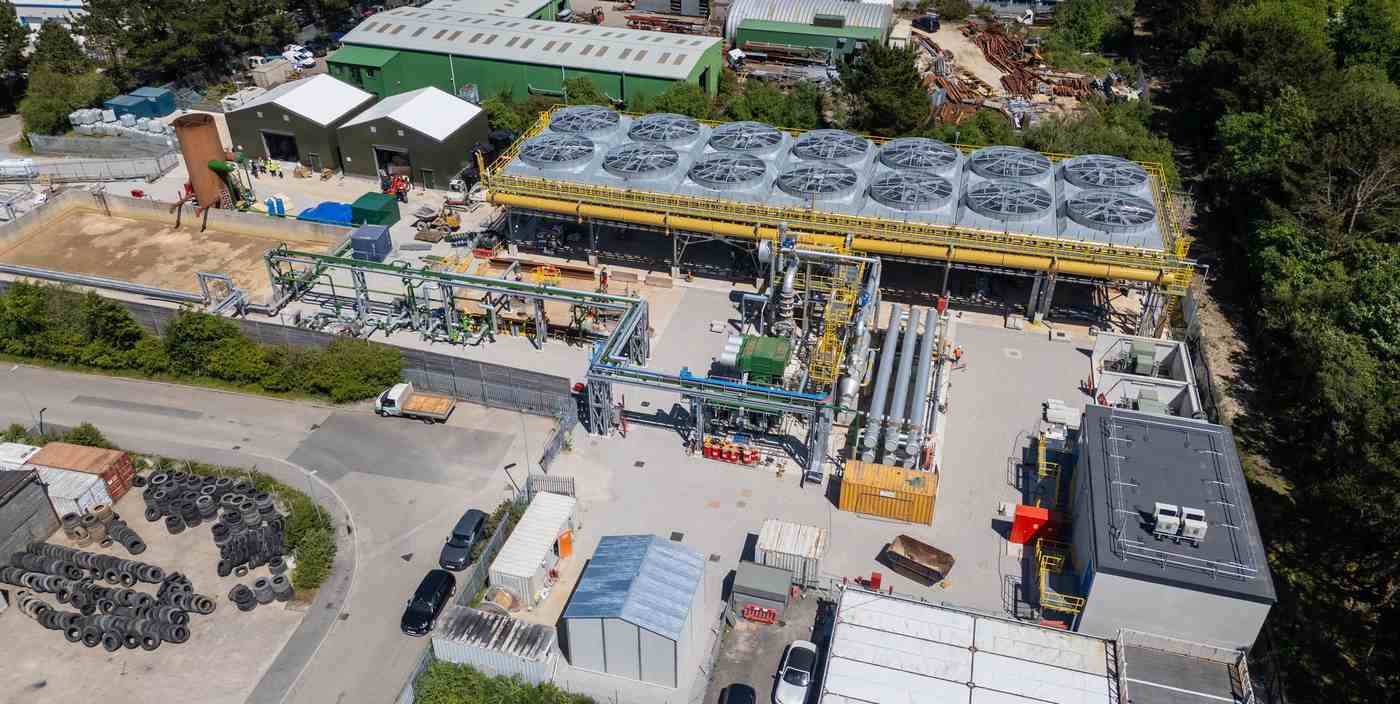
How the new plant could look (Image: Sizewell C)

The Sizewell C project to build two of EDF’s EPR reactors on England’s east coast has reached Financial Close, including GBP5 billion (USD6.5 billion) in export credit financing by BpifranceAE as well as debt financing from the UK’s National Wealth Fund.

France's EDF, announcing the financial closing of the project, said it would invest a maximum of GBP1.1 billion during the construction period and would have a stake of 12.5%, with the UK government having 44.9%, La Caisse 20%, Centrica 15% and Amber Infrastructure 7.6%.

It added: "EDF will not invest new cash at financial close due to the reimbursement of the development costs incurred since 2015 and a payment in return for the Hinkley Point C project expertise that Sizewell C benefits from, as well as the series effect."

Thirteen banks have supported the GBP5 billion debt raise: ABN Amro Bank; Banco Bilbao Vizcaya Argentaria; Santander CIB; BNP Paribas; Crédit Agricole Corporate and Investment Bank; CaixaBank; Citibank; Crédit Industriel et Commercial; HSBC Bank; Lloyds Bank; National Westminster Bank; Natixis and Societe Generale.

Sizewell C said "this landmark moment sees funding for the project beginning to flow, unlocking full-scale construction of the Suffolk-based plant".

The plan is for the estimated GBP38 billion Sizewell C plant to feature two EPR reactors producing 3.2 GW of electricity, enough to power the equivalent of around six million homes for at least 60 years. It would be a similar design to the two-unit plant being built at Hinkley Point C in Somerset, with the aim of building it more quickly and at lower cost as a result of the experience gained from what is the first new nuclear construction project in the UK for about three decades. A final investment decision for the Sizewell C project was taken in July this year.

Sizewell C has used the Regulated Asset Base (RAB) funding model, which will see consumers contributing towards the cost of new nuclear power plants during the construction phase. Under the previous Contracts for Difference system developers finance the construction of a nuclear project and only begin receiving revenue when the power plant starts generating electricity.

Sizewell C said the "financing model attracts private investment that would not otherwise be possible. Government estimates that using the RAB can save consumers GBP30 billion, compared with other models, as a result of lower financing costs".

UK Energy Secretary Ed Miliband said: "By backing nuclear we are creating thousands of high-quality jobs across the country, supporting British supply chains and keeping the lights on with homegrown energy for generations to come."

Tom Greatrex, Chief Executive of the Nuclear Industry Association, the trade association for the UK’s civil nuclear industry, said: "Reaching financial close for Sizewell C is a landmark moment for the UK's clean energy future. It proves that new nuclear can attract significant investment - a vital step towards energy security, skilled jobs, and achieving net zero. The financing model used for Sizewell C is crucial to unlocking further private investment in new nuclear projects, cutting our reliance on fossil fuels, and driving an industrial revival across Britain."

EDF also noted the wider benefits for the French state-owned group: "The EDF group will contribute to the project as a supplier of engineering studies (EDF/Edvance), the main primary circuit including the nuclear boiler, steam generators and safety control system (Framatome) and, for the conventional island, the turbo-alternator unit (Arabelle Solutions). For the French nuclear industry more broadly with some 40 French suppliers, it will help to perpetuate skills, capitalise on experience and generate economies of scale for the EPR2 programme in France."Sizewell C said that Clifford Chance acted as legal adviser, Rothschild & Co acted as lead financial adviser across equity, debt and credit ratings, and BNP Paribas acted as joint debt financial adviser to Sizewell C on the capital raise. HSBC acted as French Authorities and Green Loan Coordinator, alongside Santander CIB as Documentation Coordinator on the GBP5 billion export credit backed facility. UK’s Sizewell C achieves financing landmark
Read More........

Neos Networks launches DDoS Mitigation to strengthen business-critical connectivity


Posted by Harry Baldock, Reading, UK – 3rd July– Neos Networks, the UK’s leading provider of business connectivity, has today announced the launch of advanced Distributed Denial of Service (DDoS) Mitigation as an integrated feature of its Dedicated Internet Access (DIA) service.

This latest enhancement supports Neos’s growing secure networking proposition and responds directly to the demands of public sector and private businesses for resilient, high-capacity internet access with built-in security.

Powered by Corero’s industry-leading platform, the DDoS Mitigation service uses adaptive behavioural analytics to detect and neutralise attacks in real-time. By analysing traffic patterns and drawing on telemetry across multiple geographies, it proactively identifies malicious activity, stopping threats before they can disrupt customer operations. The service is hosted directly on Neos’s core infrastructure, able to be turned on for customers in close to real-time, with no need for customer-premises hardware.

The DDoS services are offered in a tiered model that allows customers to easily add or remove features as their requirements change: 
  • DDoS Mitigation – Always-on, real-time protection with auto-mitigation, weekly reports, and 24/7 monitoring for customer internet services.
  • DDoS Monitoring – Continuous traffic monitoring and monthly threat reports, with a fast upgrade path to DDoS Mitigation.
  • DDoS Standard – DDoS protected-core network included with all DIA circuits.
David Bruce, Chief Revenue Officer at Neos Networks, said: “Businesses are demanding DDoS protection by default – they want reliable, secure internet access, without needing to invest in or manage additional on-site infrastructure. Our latest enhancements reflect this shift in how organisations can access secure and reliable connectivity. Whether it’s a direct customer looking for peace of mind, or a wholesale partner aiming to offer added value without the complexity, our tiered DDoS offering provides the flexibility and simplicity they need.”

This launch builds on Neos’s broader DIA connectivity portfolio, offering 10Gbps bandwidths with management options for fully managed and wires-only services. Neos provides a range of IP addressing options and offers robust Cloud Connect services, delivering private connectivity to many Cloud Service Providers, including AWS and Azure. All these services are quotable and orderable in minutes on LIVEQUOTE.

ENDS

About Neos Networks

Neos Networks has the UK’s largest business-dedicated network. With over 600 points of presence and 90 data centres nationwide, Neos provides high-capacity critical connectivity for businesses, from telecoms and energy to banking and emergency services.

Agile and customer-focused with almost limitless scale, Neos enables emerging technologies like AI, 5G and IoT, making connectivity work for Britain.

Read More........

Zen bolsters The Fibre Hub with Sky Business Wholesale Ethernet partnership


Posted by Harry Baldock, Press Release: Zen Internet and Sky Business Wholesale have announced a strategic partnership that will see Zen’s partners and direct business customers gain access to Sky’s Ethernet-enabled exchange footprint.

Spanning over 2,800 exchanges, with more than 80 per cent enabled for 10 Gb services, the collaboration marks a significant step forward for Zen in delivering high-performance, scalable connectivity solutions to businesses across the UK.

The partnership lays the foundation for a long-term strategic relationship, with growth and innovation at its core. By aligning API strategies and automation capabilities, both organisations aim to accelerate quoting, ordering, and service delivery bringing greater speed and efficiency to its partners and direct business customers.

The partnership further strengthens Zen’s partner portal, ‘The Fibre Hub’, after its launch in May. The Fibre Hub already offers access to a full fibre (FTTP) footprint of nearly 20 million premises via infrastructure providers Openreach, CityFibre, ITS and Freedom Fibre, with Trooli products coming soon.

Zen will now also provide its channel partners and direct business customers access to Sky Business Wholesale’s Ethernet-enabled exchange footprint and 10 GB Ethernet services. This builds on Zen’s offering of Ethernet over FTTP and business-grade connectivity products from CityFibre and ITS.

David Barber, Strategy Director at Zen Internet, said:

“Sky’s network reach is a strong strategic fit for Zen. This partnership expands choice and flexibility for our channel and UK businesses we serve directly, enabling us and the channel to compete more effectively on price, coverage and service. It is another significant step in bringing genuine infrastructure competition to the UK market.

“As we continue to build relationships with more key network providers, we’re on track to offer the widest geographic reach and the best commercial advantage for the channel and for direct business customers.”

Damian Saunders, Managing Director at Sky Business Wholesale, added:

“We’re excited to partner with Zen, a business that shares our focus on innovation and customer choice. This is just the beginning of a broader collaboration that will bring real value and better outcomes for the channel and business customers alike.”

The move is in line with Zen’s ambitions to bringing better value connectivity to UK businesses while also offering greater choice to Partners through The Fibre Hub.

How is the UK connectivity ecosystem changing in 2025? Join the discussion at Connected Britain, the UK’s largest digital economy event. Zen bolsters The Fibre Hub with Sky Business Wholesale Ethernet partnership | Total Telecom
Read More........

VMO2 taps Age UK to help elderly customers manage 3G switch-off


Posted by Harry Baldock, Press Release: Virgin Media O2 and Age UK are working together to provide additional support to the small number of older mobile phone users who will need to upgrade their handsets to continue using mobile data once 3G is switched off.

Virgin Media O2 will support Age UK’s work to develop and distribute new informative content designed for older people and their families to help them better understand the 3G switch-off. The charity will provide key information on its website and social media channels and, via its Advice Line, support older people and their families who are seeking advice in relation to the 3G switch off.

Virgin Media O2’s contribution will also help to fund Age UK’s Digital Champions programme, which supports disadvantaged older people through local awareness sessions, practical hands-on digital skills tuition and tailored guidance so they can stay connected and confidently use new devices.

This activity will complement the work Virgin Media O2 is already doing to raise awareness of the switch-off and encourage the small number of customers who will be impacted to take action. The operator is already writing directly to all customers currently without a 4G or 5G handset, offering free compatible devices for known vulnerable customers and discounts on new handsets for all others.

Virgin Media O2’s 3G network first launched more than 20 years ago and today carries less than 2% of all network data – a figure that continues to fall. Switching off this older technology – as agreed by the Government and all mobile network operators in 2021 – allows providers like Virgin Media O2 to reallocate mobile spectrum to more efficient 4G and 5G services and improve customers’ overall experience with faster data speeds, more reliable streaming and higher quality voice calls.

Customers who don’t upgrade to a 4G or 5G device before 3G is switched off will still be able to use voice calls and send text messages as they currently do for now, but they will not be able to use mobile data.

Virgin Media O2 and Age UK County Durham collaborated in a similar way earlier this year when the city of Durham became the first area to have the company’s 3G network switched off. Further local switch-offs have since been completed in other parts of the UK – Norwich, Telford and Guildford on 16 July, and Torquay will follow in August – ahead of a wider programme that will see the 3G network withdrawn across the country by the end of 2025.

O2 customers continue to be encouraged to visit their local store or call to access more information and support, while Tesco Mobile, giffgaff and Sky Mobile are supporting their own customers through this migration. Anybody with an old, unwanted handset is able to recycle their device through O2 Recycle where they could receive cash in exchange for their old phone and play their part in disposing of old equipment responsibly to protect the environment.

Jeanie York, Virgin Media O2’s Chief Technology Officer, said: “We’re continuing to push ahead with our plans to switch off 3G across the UK by the end of this year, allowing us to reallocate mobile spectrum to more efficient 4G and 5G services and give our customers a better overall experience.

“While we know that the vast majority of our customers already have a 4G or 5G handset and do not need to take any action, our priority has always been to support the minority who may be impacted.

“Given that many of these customers are likely to be older and potentially less tech-savvy, it makes perfect sense to partner with Age UK as we carry out this migration. We’ll draw on their expertise and significant reach to raise awareness among customers who will need to upgrade their device to continue using mobile data once 3G is withdrawn.”

Caroline Abrahams, Charity Director at Age UK, said: “The 3G switch-off may feel daunting for many older people so it’s important that we do all we can to support those affected.

“We’re very grateful for this funding from Virgin Media O2 as this will enhance our services, including our Advice Line, so that older customers can get the help needed when 3G is switched off.

“It’s important to note that for those using a 3G network who don’t wish to change their handset, for now they will still be able to make phone calls and send texts as they do today – it’s just their mobile data this change will affect.

“Anyone who is feeling worried and would like some support can get in touch with their provider to find out more about their options and make sure they are ready for the change, or they can call Age UK’s Advice Line for free on 0800 169 65 65.”

O2 customers can find out more about the 3G switch off on its website. Tesco Mobile customers can find out more here, Sky Mobile customers should visit here for further information, while giffgaff customers can access further support here.How is the UK connectivity ecosystem changing in 2025? Join the discussion at Connected Britain, the UK’s largest digital economy event VMO2 taps Age UK to help elderly customers manage 3G switch-off
Read More........

Rolls-Royce SMR named as UK's selected technology

A rendering of a Rolls-Royce SMR power plant (Image: Rolls-Royce SMR)

Following a two-year competition, Rolls-Royce SMR has been selected as the preferred bidder to construct the UK's first small modular reactors.

The UK aims to grow nuclear energy capacity to 24 GW by 2050, with a mix of traditional large-scale power plants and small modular reactors (SMRs). In July 2023, the Great British Nuclear arms-length body, set up to help deliver that extra capacity, began the selection process for which SMR technology to use. There were initially six companies shortlisted, with four shortlisted companies - GE Hitachi, Holtec, Rolls-Royce SMR and Westinghouse - entering negotiations last September. In February, the four SMR vendors were issued with an Invitation to Submit Final Tenders, three of which were submitted in April, with Westinghouse withdrawing.

Great British Nuclear, which has now been renamed Great British Energy - Nuclear as it moves to its delivery phase, today announced that Rolls-Royce SMR has been selected as its preferred partner to develop SMRs, subject to final government approvals and contract signature.

It said it is aiming to sign contracts with Rolls-Royce SMR later this year and will form a development company. It will also aim to allocate a site later this year and connect projects to the grid in the mid-2030s. A final investment decision is expected to be taken in 2029.

"This announcement is a defining moment for the UK's energy and industrial future," said Simon Bowen, Chairman of Great British Energy – Nuclear. "By selecting a preferred bidder, we are taking a decisive step toward delivering clean, secure, and sovereign power. This is about more than energy - it's about revitalising British industry, creating thousands of skilled jobs, and building a platform for long-term economic growth."

Rolls-Royce SMR CEO Chris Cholerton said: "This is a day to celebrate a milestone achievement. This success is testament to our incredible team which has developed a world-leading technology and worked tirelessly over the last two years to ensure we could provide a winning tender to GBN.

"As well as delivering affordable, clean energy to support our nation's energy independence - deploying three of our units will drive domestic growth by creating thousands of highly skilled, well-paid jobs and supply chain opportunities. We are the only SMR company with multiple commitments to build projects in Europe, testament to our differentiated design and compelling offer."

The company noted it has already been selected by Czech utility ČEZ to deliver up to 3 GW of electricity in the Czech Republic and that in Sweden Rolls-Royce SMR is in the final two SMRs in their technology selection process.

The Rolls-Royce SMR is a 470 MWe design based on a small pressurised water reactor. It will provide consistent baseload generation for at least 60 years. 90% of the SMR - measuring about 16 metres by 4 metres - will be built in factory conditions, limiting on-site activity primarily to assembly of pre-fabricated, pre-tested, modules which significantly reduces project risk and has the potential to drastically shorten build schedules.

The Rolls-Royce SMR design is progressing through the final stage of the assessment by the UK nuclear regulators, the only SMR design to have so far reached that stage. The Generic Design Assessment is a three-step process carried out by the Office for Nuclear Regulation (ONR), the Environment Agency (EA) and Natural Resources Wales to assess the safety, security, and environmental protection aspects of a nuclear power plant design that is intended to be deployed in Great Britain. Successful completion of the GDA culminates in the issue of a Design Acceptance Confirmation from the ONR and a Statement of Design Acceptability from the EA.

The selection of Rolls-Royce SMR as the winner of the UK Small Modular Reactor competition was welcomed by the Nuclear Industry Association, with its Chief Executive Tom Greatrex saying: "This is a hugely significant moment for Rolls-Royce SMR and for the British nuclear programme. These SMRs will provide essential energy security and clean power alongside large scale reactors, all the while creating thousands of well-paid, skilled jobs, opportunities for growth right across the country and significant export potential. We look forward to working with Rolls-Royce SMR and all other potential SMR vendors, including those not successful today, on making Britain the best place to build new nuclear anywhere in the world."

The original plan had been for two or three SMR technologies to be selected in the process. And in a statement in the House of Commons Energy Secretary Miliband said that other SMR technology companies may be part of private sector projects in the UK that "may want to come in and build sooner" than the government-backed scheme.

Reaction from Holtec

In response to the announcement on Tuesday, one of the two other shortlisted contenders, Holtec International, said it was disappointed and said its plans for a manufacturing facility in South Yorkshire "will now be scaled back in size and jobs while being delayed in terms of timeframe".

It congratulated Rolls-Royce SMR and said: "Despite the outcome from this competition, Holtec remains resolute in its belief that Holtec’s SMR-300 is among the most advanced, safe, and deployable reactor designs in the world. Our participation in the tender has further reinforced the global interest in our technology, and we are grateful for the opportunity to showcase our capabilities."

"Looking ahead, Holtec is intensifying its focus on partnerships with private-sector clients in the United Kingdom that can move at pace and international stakeholders who are seeking proven, scalable SMR solutions," its statement added.

Large plant plans

The selection of Rolls-Royce SMR came as Chancellor Rachel Reeves announced the UK government will make a GBP14.2 billion (USD19.2 billion) investment to build Sizewell C nuclear plant in Suffolk as part of its Spending Review. The EDF-led plan is for Sizewell C to feature two EPRs. It would be a similar design to the two-unit plant being built at Hinkley Point C in Somerset, with the aim of building it more quickly and at lower cost as a result of the experience gained from what is the first new nuclear construction project in the UK for about three decades.

Miliband told members of parliament that Wylfa, in North Wales, was being considered by Great British Energy - Nuclear for potential future nuclear use, for either a further gigawatt-scale plant, or as a site for multiple SMRs.

What is an SMR?

Small modular reactors - also known as SMRs - are smaller nuclear power plants and are intended to be designed so that their parts can be factory-produced and assembled on site in a modular way allowing costs to fall as increasing numbers of the same SMR design are built.

The widely-accepted definition of an SMR is that it is a nuclear power reactor which has an output level of up to 300 MWe, which is about one-third of the power generated by a traditional-sized nuclear power plant unit. Each SMR could power about 600,000 homes, probably for 60-80 years.There are more than 70 different SMR designs in development, with Russia, China and Argentina leading the way in terms of constructing them so far with many other countries having hopes and plans for fleets of SMRs during the 2030s. Rolls-Royce SMR named as UK's selected technology
Read More........

VMO2 Business merges with Daisy Group to build IT and telecoms ‘powerhouse’


Posted by Harry Baldock

The combined business is valued up to £3 billion

Today, Virgin Media O2 (VMO2) Business and Daisy Group have announced their intention to merge, creating a new B2B communications and IT giant.

The combined company will have roughly 700,000 customers, annual revenues reaching around £1.4 billion, and an estimated value of £2.5–£3 billion.

VMO2 will own 70% of the merged business and Daisy Group will hold 30%.

The deal is expected to deliver around £600 million in synergies, primarily through “leveraging Virgin Media O2’s own networks, reducing duplicated costs, pursuing cross and up sell opportunities and integrating IT systems”, according to the companies’ press release.

Roughly half of this total cost saving is expected to be delivered within three years.

VMO2 CEO Lutz Schüler described the deal as the “perfect pairing”, saying the deal would create a B2B “powerhouse”.

“For us, it’s a big step forward in our journey to boost B2B growth and provide UK businesses of all sizes with the best digital and connectivity offerings,” he said. “Following completion, the new company will have the scale, talent, focus and infrastructure needed to drive digital transformation and provide business customers with an innovative one-stop shop for all their communications and IT needs. We can’t wait to get started on this next chapter in partnership with Daisy.”

Daisy founder Matthew Riley will serve as Chair of the organisation, while VMO2 Business’s managing director Jo Bertram will handle the day-to-day operations as CEO.

The deal is subject to typical regulatory oversight from the Competition and Markets Authority, but an inside source told Sky News that the companies did not expect any objections.Assuming approval, the deal is expected to close in early H2 this year. VMO2 Business merges with Daisy Group to build IT and telecoms ‘powerhouse’
Read More........

Two Hundred Companies Sign Up for Permanent Four-Day Work Week in the UK

– credit Anna Dziubinska on Unsplash

A group of 200 UK businesses and charities have signed a pledge that company work weeks will be shortened to 4 days without a loss in pay

Including marketing and advertisement; tech, it, and software; and charity groups as well, the companies employ more than 5,000 people.

Organized by the 4 Day Week Foundation, it follows something less than a trend but more than a fad in which a mixture of employees and executives believe that a happier, more balanced workforce is key to driving productivity.


That balance, they would argue, can be achieved by far more people through the reduction of the 5-day work week to a 4-day one.

“[With] 50% more free time, a four-day week gives people the freedom to live happier, more fulfilling lives,” Joe Royle, the foundation’s campaign director, told the Guardian.

“As hundreds of British companies and one local council have already shown, a four-day week with no loss of pay can be a win-win for both workers and employers.”

This sentiment isn’t shared by all workplaces, but market competition should demonstrate over time whether or not firms that implement unorthodox work hours are in fact as productive or more so than traditional ones.

Economics says that with all else being equal, if enjoying more free time leads to greater employee retention and motivation, then these 4-day work week firms will begin to out-compete the old ones, which in turn will be forced to adapt or risk losing market share.

London firms have been the most enthusiastic, with 59% of the 200 workplaces being located in the capital. With so many firms for talented workers to choose from, it’s no wonder that some are looking to seek advantage in attracting this talent through more desirable working terms.

Last year, GNN reported extensively on a report that was released by a county government in Washington called San Juan, detailing their one-year experiment with a 32-hour, or 4-day work week. In the report, quitting and retiring decreased by 48%, while 55% of employees said their workflow wasn’t interrupted even though they lost an entire working day’s worth of time to complete it.Even in the famously hard-working nation of Japan, a 4-day workweek seems to strengthen productivity. Two Hundred Companies Sign Up for Permanent Four-Day Work Week in the UK
Read More........

One-in-ten UK farmers lack internet connectivity


The majority of farmers (60%) say internet connectivity is critical to running their farm, yet almost one-in-ten farms (8%) do not have any internet connectivity at all

A nationwide survey of UK farmers has revealed that poor internet connectivity risks stifling growth and productivity on Britain’s farms, with unreliable broadband holding back the adoption of new technology including AI and real-time monitoring capabilities.

The Censuswide survey, commissioned by CityFibre, the UK’s largest independent full fibre platform, found that although almost two-thirds of farmers surveyed* (60%) believe internet connectivity is critical[1] for day-to-day farming activities, nearly one-in-ten farms (8%) have no internet connectivity at all.

Against a backdrop of stubbornly low economic growth and the rapid rise in smart technology, the wide-ranging survey raises real concerns that UK farms are being held back due to poor internet connectivity. Despite almost 60% of farmers expecting their use of technology to increase[2] over the next five years, issues around reliability and speed of internet connection were cited as the second biggest barrier (42%) to their use of new farming technologies, after purchasing cost (50%).

Meanwhile, for those who already have access to full fibre broadband, almost half (47%) said the main benefit was the use of precision farming technologies that were previously unavailable to them, with greater efficiency in day-to-day operations (37%), diversification of farmland (33%) and greater access to administration tools (32%) also cited as key benefits.

However, the risks associated with poor internet connectivity go well beyond day-to-day operations, with farmer’s mental health and family life also impacted. The survey highlights the impact of social isolation among rural communities, with farmers feeling they miss out on local community matters as a result of broadband issues. Meanwhile, 9-in-10 farmers admit to avoiding using the internet during busy times of the day, causing disruption to daily schedules, especially among family members who rely on the internet for other tasks, including education and hobbies.

The findings of the comprehensive survey reinforce the importance of accelerating the rollout of full fibre internet in rural areas through government initiatives like Project Gigabit, which is delivering fast, reliable broadband to mostly rural communities which would otherwise be left behind with slow speeds. CityFibre has been awarded nine Project Gigabit contracts, totalling over £865m in government subsidies to serve more than 500,000 hard to reach homes and businesses. Alongside co-investment from CityFibre, the awards have unlocked almost £1.2bn in combined public and private investment in rural broadband.

Commenting on the survey findings, Greg Mesch, CEO, CityFibre said:“Farmers need access to the cream of the crop when it comes to connectivity, if we are going to reap the full economic and technological benefits of Britain’s farms.

“Government initiatives such as Project Gigabit are helping to bring faster internet access to rural and harder-to-reach communities and we know the difference that full fibre makes, which is why our teams are hard at work, laying miles of cable and climbing countless telegraph poles to bring faster, better broadband to millions of people.”

Mark Ullyott, a mixed arable and bed & breakfast pig farmer from Middleton-on-the-Wolds, East Riding of Yorkshire, said: “Strong internet connectivity is essential for modern-day farming – not just optional. In a world that is reliant on so many online services, it is vital to complete simple mandatory tasks that many of us take for granted, such as using basic portals.

“We are also seeing a surge in cutting edge technology being introduced across the industry, and farmers who are unable to access reliable broadband risk being left behind. Ideally we would have more options available to us, including full fibre, but at the moment, satellite internet is our only option. We simply wouldn’t be able to run the business without it.”

Rachel Hallos, NFU Vice President, said: “To confidently produce more home-grown food we need to be as efficient and productive as possible. Reliable internet and mobile access are key to achieving this. Lack of connectivity not only impacts the day-to-day operations of rural businesses but also the safety of our workforce. Leaving a farmer with no way of communicating in a crisis is dangerous, and this lack of access is preventing UK farmers and growers from doing what they do best – running successful and profitable food producing businesses.

“Better internet access can unlock greater productivity, growth and investment into the rural economy, especially at a time when businesses are being required to meet more of their legal and regulatory obligations online.”

CityFibre has begun work in nine of its Project Gigabit areas and will connect over 1.3 million homes and business across rural and hard-to-reach areas connected to full fibre broadband over the next five years. The UK government programme has already delivered on its original aim of bringing gigabit-capable connectivity to 85% of the country by the end of 2025, and is now working towards nationwide coverage by 2030.Those wanting to sign up to the CityFibre network can see when services are available in their area by using the postcode checker at www.cityfibre.com. One-in-ten UK farmers lack internet connectivity | Total Telecom
Read More........

Octopus Group eyes UK MVNO launch


Octopus Group, the investment group behind Octopus Energy, is preparing to make its move into the UK mobile market, The Telegraph reported over the weekend.

According to the article, the company is exploring plans to launch a mobile virtual network operator (MVNO) that could challenge the dominance of the UK’s current biggest four operators, EE, Virgin Media O2, Vodafone, and Three.

Octopus’s mobile service would operate by leasing capacity from an existing network, instead of investing in its own infrastructure. Sources speaking to The Telegraph indicated that discussions have taken place via Fern Trading, Octopus’s telecoms investment arm, with at least one major network operator. The project appears linked to Y Corporation, a mobile provider owned by Fern Trading, which currently has a wholesale agreement with Three.

Y Corporation is reportedly considering an eSIM-only model targeting both enterprise and consumer markets. Adam Dunlop, former head of TalkTalk’s consumer division, was appointed to drive the mobile expansion earlier back in January.

The mobile push follows Octopus Energy’s success in the utilities sector, where it now supplies over 13 million customers, and has overtaken British Gas to become the UK’s largest household energy supplier.

A new mobile service under the Octopus brand would complement the group’s growing telecoms footprint, which includes broadband providers such as Cuckoo and AllPoints Fibre. Fern Trading recently announced plans to merge several of its altnets into a single entity to strengthen its market position ahead of expected industry consolidation. The move comes at a key time for the UK’s mobile sector, with Vodafone and Three’s £15 billion merger set to reshape the market landscape. Should Y Corporation continue its partnership with Three post-merger, it would gain access to the UK’s largest mobile network. Octopus Group eyes UK MVNO launch
Read More........

Second-last high level waste shipment departs UK for Germany

(Image: Sellafield Ltd)

The second of three planned shipments of high-level radioactive waste has left the Sellafield site in northwest England and is being transported by rail and sea to its destination at the Isar interim storage facility in Germany.

Seven flasks containing the vitrified residues - the radioactive waste has been transformed into a stable glass-like form - travelled by rail to the port of Barrow-in-Furness before being loaded on to Pacific Grebe, a specialist nuclear transport vessel operated by the UK's Nuclear Transport Solutions, which set sail on Wednesday.

The first shipment, of six flasks each with 28 containers of high level waste, to Biblis, took place in 2020.

The waste comes from the reprocessing and recycling of Germany's used nuclear fuel at the Sellafield site, with Nuclear Transport Solutions saying: "Vitrified Residue Returns are a key component of the UK’s strategy to repatriate high- level waste from the Sellafield site, fulfil overseas contracts and deliver on government policy."

According to Germany's Federal Office for the Safety of Nuclear Waste Management (BASE) the transport licence was approved in December, with the repatriation of German waste a binding requirement under international law.

In its guide to the waste it says that until 2005 German utilities shipped used fuel from nuclear power plants to La Hague in France and Sellafield in the UK for reprocessing: "The resulting liquid waste was then melted down into glass and has since been gradually returned to Germany. The last shipment of this waste from France was returned in November 2024." There is one more shipment planned, after the current one, from the UK to complete the repatriation.

The federal office issued a licence in April 2023 for the storage of the vitrified waste at the Isar interim storage facility, which is licensed to hold a maximum of 152 casks of high-level radioactive waste and "according to current plans, there will be 28 fewer high-level waste casks there than originally intended, including the casks containing the vitrified waste".

According to German nuclear specialist GNS: "The waste is massively shielded from external radiation. In the reprocessing plant, the waste is mixed with liquid silicate glass and poured into cylindrical stainless steel containers, which are then sealed tightly after hardening. These containers, filled with the hardened glass mixture, are called "glass moulds". For transport and storage, the moulds are placed in ... massive, more than 100-tonnes cast iron and stainless steel containers, which have been proven in extensive tests to provide both strong shielding and to be safe under extreme conditions."

Until 2011 reprocessed waste was sent to the Gorleben interim storage facility in Lower Saxony, where 108 casks of vitrified radioactive waste have been stored, which was "already a large proportion of the total waste to be returned from reprocessing". According to BASE, as part of the Site Selection Act of 2013 to seek a repository for high-level radioactive waste, the remaining vitrified waste abroad was to be stored in interim storage facilities at nuclear power plant sites.

"The aim was to avoid giving the impression that Gorleben had already been chosen as the site for a final storage facility during the open-ended search for a repository site. In 2015, the federal government, the federal states and the utility companies agreed to store the remaining radioactive waste in Biblis, Brokdorf, Niederaichbach (Isar nuclear power plant) and Philippsburg," BASE says.

France's Orano completed the 13th and final rail shipment from France of vitrified high-level nuclear waste, to Philippsburg, in Germany in November 2024. In total 5310 tonnes of German used fuel was processed at Orano's La Hague plant up to 2008. The inter-governmental agreement governing those operations included a provision that the equivalent in mass and radioactivity of the waste contained in the used fuel elements must be returned to Germany.Until March 2011 Germany obtained a quarter of its electricity from nuclear energy, using 17 reactors. Following the Fukushima Daiichi accident eight reactors were closed immediately and the rest were scheduled to be closed by the end of 2022. Following the start of the Russia-Ukraine war, there was a brief extension for the last three operating nuclear power reactors - Isar 2, Emsland and Neckarwestheim 2 - but they closed in April 2023. Second-last high level waste shipment departs UK for Germany
Read More........

Emotions run high as power outage shuts London's Heathrow


A police helicopter was the only vehicle visible in the sky above Heathrow airport on Friday, as the regular drone of flights went silent after a fire at a power station shuttered Europe's busiest airport.

On the ground, dozens of confused, stranded passengers stood around with their suitcases outside airport hotels. Many who AFP spoke to complained about the cost of shifting their bookings and a lack of information from Heathrow or airlines.

For veteran athlete Kevin Dillon, 70, Heathrow's day-long closure meant he would miss the opening ceremony of the World Masters Athletics Championships in Florida.

The runner, sporting a Great Britain tracksuit, said he had come from Manchester to catch his flight so he could compete.

The authorities are facing questions over how the fire at the electricity substation left such a crucial piece of national infrastructure closed for the day.

"I'm just surprised they didn't have a backup system," Dillon said.

Jake Johnston, from Los Angeles, was set to travel back to the United States on Friday but his airline, Virgin Atlantic, has rebooked his flight for Monday.

The 24-year-old said he and his friends were lucky: they found hotels for around £150 a night ($194).

Since then, several passengers have complained of airport hotels jacking up prices. According to Johnston, when he checked again later, hotel prices had risen to around £600.

- 'Need to be there' -

Bolaji N'gowe was not so optimistic. He was on his way home to Canada after visiting his mother in Lagos, Nigeria, when his flight was diverted from Heathrow to Gatwick airport, south of London.

"I have been in Gatwick since 4:00 am (0400 GMT)," he told AFP at the UK's second-busiest airport, which accepted some flights bound for Heathrow, while others were diverted to Paris, Madrid, Frankfurt and other European cities.

"I'm trying to book another flight... I'm trying to call Air Canada, no one is answering the phone," said N'gowe, adding that the earliest flight he had found was for Sunday.

"Between the ticket and the hotel, I have to spend more that £1,500," he added.

Talia Fokaides was meant to leave London for Athens in the morning to be with her mother, who was due to undergo open-heart surgery.

When she heard Heathrow was closed, she rushed to Gatwick and found a flight to the Greek capital for midday.

"I don't care about the money, I just need to be on a flight and home by the end of the day," Fokaides told AFP, her voice shaking with emotion.

"We were given no info, we were left on our own. I don't understand how it's possible," she added. "I just need to be there."

Some 1,350 flights had been due to land or take off from Heathrow and its five terminals on Friday, according to the flight tracking website Flightradar24.

Heathrow is one of the world's busiest airports and usually handles around 230,000 passengers daily and 83 million every year.

- 'Powerless' -

Mohammed al-Laib, a Tunisian national who works in London, was supposed to go to Dubai to be reunited with his wife, whom he had not seen in months.

AFP | Adrian DENNIS

Heading to the information desk at Gatwick, he said he did not know if another flight would be available.

"I feel powerless," he said.

Meanwhile, 28-year-old Muhammad Khalil had been waiting at London's Paddington station since early morning looking for alternative flights to Pakistan.

He had so far been unsuccessful, with Heathrow the main airport in the UK for long-haul international flights.

Khalil had also hoped to be reunited with his wife after five months. He had been planning the trip for three months.

"I've spent so much money on tickets and everything. I had to take the day off from my job," Khalil told AFP.

"You can't imagine how stressful it is for me."

Callum Burton, 21, from Kent in southern England, was stranded at Newark airport near New York after visiting his girlfriend for his 21st birthday.

Burton told AFP via social media that his flight had boarded and was ready to depart before it was rescheduled for 15 hours later, then cancelled.

He was not expecting to leave until Sunday or Monday, and said that he was "very tired and disappointed".By James Pheby And Alexandra Del Peral Emotions run high as power outage shuts London's Heathrow
Read More........

UK announces planning reforms to speed up nuclear projects

The Rolls-Royce SMR is one of four designs under consideration for the UK's SMR programme (Image: Rolls-Royce SMR)

The UK government has announced plans to reform planning requirements and regulatory rules as part of measures to streamline the process of constructing new nuclear power plants in England and Wales, including small modular reactors.

"More nuclear power plants will be approved across England and Wales as the prime minister slashes red tape to get Britain building - as part of his Plan for Change," the government said. "Reforms to planning rules will clear a path for smaller, and easier to build nuclear reactors – known as small modular reactors (SMRs) – to be built for the first time ever in the UK."

The reforms include allowing new plants to be built anywhere across England and Wales, not just in the eight existing nuclear sites specified in current planning rules. However, the government said there will "continue to be robust criteria for nuclear reactor locations, including restrictions near densely-populated areas and military activity, alongside community engagement and high environmental standards".

It said "the refreshed planning framework will help streamline the process to encourage investment and enable developers to identify the best sites for their projects, supporting development at a wider range of locations". Developers will be "encouraged to bring forward sites as soon as possible at the pre-application stage in the planning process, speeding up overall timelines".

The reforms also include removing the expiry date on nuclear planning rules so that projects do not get "timed out" and industry can plan for the long-term.

For the first time, in addition to large-scale nuclear power plants, new nuclear technologies such as SMRs and advanced modular reactors will be included, "providing flexibility to co-locate them with energy-intensive industrial sites such as AI data centres".

In addition, a Nuclear Regulatory Taskforce will be established to ensure nuclear regulation incentivises investment to deliver new projects more quickly and cost efficiently, while upholding high safety and security standards. The taskforce - which will report directly to the prime minister - will speed up the approval of new reactor designs and streamline how developers engage with regulators. This taskforce will better align the UK with international partners so reactor designs approved abroad could be approved more quickly, minimising expensive changes. It will also examine how to reduce duplication and simplify processes where there are multiple regulators covering overlapping issues, as well as ensuring regulatory decisions are both safe and proportionate.

"This country hasn't built a nuclear power station in decades - we've been let down, and left behind," said Prime Minister Keir Starmer. "Our energy security has been hostage to Putin for too long, with British prices skyrocketing at his whims. I'm putting an end to it - changing the rules to back the builders of this nation, and saying no to the blockers who have strangled our chances of cheaper energy, growth and jobs for far too long."
Reforms welcomed

Last month, the government announced plans to limit legal challenges to major infrastructure projects - including nuclear power plants - to just one hearing in court instead of the current three hearings. It has also set out reforms to end the block and delay to building homes and infrastructure from current environmental obligations.

The announced planning reforms were welcomed by industry, with Tom Greatrex, chief executive of the Nuclear Industry Association, saying: "This is the prime minister's strongest signal yet that new nuclear is critical to the growth and clean power mission. A more streamlined planning system will give certainty to investors, the supply chain and communities, and will enable us to get on with building new nuclear plants on more sites and at pace for a cleaner, more secure power system.

"We need to make Britain the best possible place to build new nuclear, both large-scale and SMRs, which means avoiding unnecessary stumbling blocks and ensuring regulations are proportionate to our urgent need for low-carbon power, energy security and good jobs."

Simone Rossi, CEO of EDF Energy - which is constructing the Hinkley Point C plant and plans to build Sizewell C - said: "As a major operator, investor and developer, EDF welcomes the proposals designed to speed up new nuclear projects in the UK and unlock economic growth. Nuclear is essential to a secure, low-carbon energy system and is the ideal partner to renewables. There is a great opportunity to build new infrastructure across England and Wales, to replace aging stations and take advantage of available skills, existing grid connections and supportive communities.

"The opportunity will only be fully realised with the necessary reforms to planning and regulation, alongside continuing to build on the critical work at Hinkley Point C and Sizewell C to further develop skills and supply chains."

Great British Nuclear (GBN) continues to progress the SMR competition, with contract negotiations currently under way. A final decision on which design or designs will be included in the UK's official SMR programme is expected to be taken in the coming months.

GBN Chair Simon Bowen said: "Nuclear energy is a powerful tool for growing the UK's economy. By expanding the range of sites where safe, secure, reliable, and clean nuclear energy plants can be built, there is huge potential to positively transform areas facing economic uncertainty. "Today's announcement also signals exciting opportunities to co-locate nuclear energy generation on data centre sites and to decarbonise industrial processes. Nuclear is one of the safest and cleanest forms of energy generation. The new independent nuclear regulation taskforce will help unlock growth and investment by providing clarity and certainty while ensuring regulations are fit for purpose." UK announces planning reforms to speed up nuclear projects
Read More........

EV sales hit record in UK but still behind target


LONDON - The UK car industry sold a record number of all-electric vehicles in 2024 but still fell short of the government's mandated targets, an industry trade body said.

Battery electric vehicles made up 19.6 percent of new cars sold last year, said the Society of Motor Manufacturers and Traders, which was below the government's 22-percent target for carmakers.

The SMMT reported a "record annual volume" of 382,000 battery electric vehicles sold in the UK last year.

The automobile trade body had already warned in October that carmakers were at risk of missing government targets, with manufacturers facing government penalties of £15,000 ($18,625) per polluting vehicle sold above the limits.

However, the government has since assured that it expects all manufacturers to avoid the penalties in 2024 by taking advantage of flexibility mechanisms that will take into account, among other things, emissions reductions across the whole fleet.

The group's chief executive, Mike Hawes, said that while the market share of electric vehicles grew, this came at a "huge cost" to the industry.

He referred to the "billions invested in new models" supplemented by "unsustainable" incentives provided by the industry.

Hawes urged the government to review the mandate and to do more to stimulate private demand, including improving charging infrastructure.

The SMMT also warned that reaching the thresholds in 2025 will be "even more intense" with the mandates pushed up to 28 percent of cars sold.

There are also concerns over the Labour government's pledge to bring forward the ban on the sale of new petrol and diesel vehicles to 2030, after the previous Conservative government pushed it back to 2035.

Overall, the SMMT reported that the number of new vehicles registered in the UK increased to almost 2 million, up by 2.6 percent year-on-year.

It said that growth was mainly driven by business purchases as demand from private buyers dropped.Despite a second successive year of growth, the overall car market remains below pre-pandemic levels. EV sales hit record in UK but still behind target
Read More........

UK officially joins Asia-Pacific trade bloc CPTPP

London, (IANS): The U.K. officially joined the Comprehensive and Progressive Agreement for Trans-Pacific Partnership (CPTPP) on Sunday, becoming the first European nation to join the Asia-Pacific trade bloc. The 12-country landmark trade agreement is expected to boost the British economy by 2 billion pounds (about 2.52 billion U.S. dollars) annually in the long term, according to the Department for Business and Trade, Xinhua news agency. The department noted on its website that the UK's accession to CPTPP is a cornerstone of the government's Plan for Change, which aims to deliver economic growth and increase household incomes. The plan is projected to raise household wages by 1 billion pounds (1.26 billion dollars) annually while benefiting all regions of the country. "Agreements like this boost trade and create opportunities for UK companies abroad, supporting jobs, raising wages, and driving investment across the country," said British Business and Trade Secretary Jonathan Reynolds. Ian Stuart, CEO of HSBC UK, underscored the significance of the trade bloc, stating: "Since the announcement of the UK's accession in July 2023, we have seen an increase in payments between CPTPP markets and the UK, and we expect this growth to continue." The UK will enter into the agreement with eight of the bloc’s 11 existing members who first ratified the accession on Sunday – Japan, Singapore, Chile, New Zealand, Vietnam, Peru, Malaysia and Brunei. It will then, on Christmas Eve, enter into force with Australia, who later ratified the deal. Canada and Mexico are yet to finally rubber-stamp the UK’s membership, but it is understood that officials expect them to do so at some point in the future. It is expected that the CPTPP will get larger in the coming years, and last month it was announced Costa Rica would be the next country to work through the process of joining. The deal will offer UK firms lower tariffs and fewer barriers when trading across three continents, with financial services, manufacturing and food and drink sectors set to benefit. UK officially joins Asia-Pacific trade bloc CPTPP | MorungExpress | morungexpress.com
Read More........

Hamilton to race final three grands prix of Mercedes career


Lewis Hamilton will race the final three grands prix of his Mercedes career after the seven-time world champion raised doubts about his immediate future in Brazil earlier this month.

The British driver, who is moving to Ferrari next season, is understood to have been in Mercedes' factory preparing on the simulator as usual ahead of Saturday's Las Vegas Grand Prix.

The team confirmed the 39-year-old will also address the media, in line with his regular pre-race commitments, on Wednesday.

Hamilton endured one of the worst performances of his glittering career at the Brazilian Grand Prix, crossing the line in 10th.

"That was a disaster of a weekend, guys," he said on the radio. "The worst the car has ever been. Thank you for contributing to try and great job to all the guys at the pit-stop.

"If this is the last time I get to perform it was a shame it wasn't great but (I am) grateful for you."

The cryptic message led some to believe that Hamilton was ready to call a premature end to his Mercedes career with three rounds to come.

But in a Mercedes press release ahead of this weekend's race in the United States, team principal Toto Wolff said: "We head to Las Vegas ready to tackle the final three races of the season.

"We are focused on ending this year as strongly as possible and providing some more highlights as we close out 2024.

"We are looking forward to the races ahead, to ending our incredible journey with Lewis on a high and to building momentum for 2025."

Red Bull's Max Verstappen is on the brink of a fourth successive world championship title ahead of the race on Saturday night.Hamilton, who has won two races this season to take his career tally to 105, is down in seventh in the drivers' standings, two points behind team-mate George Russell. Hamilton to race final three grands prix of Mercedes career
Read More........

VMO2 launches UK’s first 5G standalone small cells in Birmingham


The installments will boost connectivity for the city’s residents

Virgin Media O2 (VMO2) has introduced the UK’s first 5G standalone (SA) small cells in Birmingham, boosting mobile connectivity in some of the city’s busiest areas, it claimed in a press release this week. These new 5G small cells, installed on street furniture around Broad Street and Fleet Street, are designed to improve mobile capacity where demand is highest.

Initial performance data suggests that the new 5G SA cells provide a smoother mobile experience, helping customers with activities like browsing and streaming.

Unlike large cell towers, the small units can be fitted onto existing structures to bring focused coverage improvements in urban spaces. This latest installation adds to Virgin Media O2’s ongoing rollout of small cells across the country.

The 5G standalone network, launched by Virgin Media O2 earlier this year, now covers over 300 towns and cities. Unlike older 4G and 5G networks, standalone 5G offers faster speeds and lower delay times, giving O2 customers better,faster and more reliable connections at no extra cost.

Partnering with Ontix and Alpha Wireless, VMO2 has also introduced MIMO (Multiple Input Multiple Output) technology, which allows speeds of up to 300Mbps in Birmingham’s city centre.

MIMO works by using multiple antennas at both the transmitter (in this case, the small cells) and receiver (such as a user’s smartphone), allowing for simultaneous data streams. This technique maximises the efficient use of available spectrum, meaning more data can be transmitted at once, leading to higher speeds and lower latency.

“Small cells are playing a vital part in our mission to bring reliable mobile coverage to all customers and improve services in the busiest areas,” said VMO2 CTO Jeanie York. “Having already turned on our cutting-edge 5G standalone network in more than 300 towns and cities, available to customers at no extra cost, we’re working hard to ensure all our customers consistently receive an exceptional network experience wherever they are and even at the busiest times,” she continued. VMO2 launches UK’s first 5G standalone small cells in Birmingham
Read More........

BT pledges £4m to help support UK apprentice schemes


A key focus of the fund will be on enhancing the digital skills of young people

UK incumbent BT has launched a £4 million Apprenticeship Fund to support small and medium-sized enterprises (SMEs), charities, and public sector organisations across England.

The funds will be delivered over the next four years, helping these organisations to recruit and train apprentices.

Since 2017, companies in the UK with an annual wage bill over £3 million have been required to pay an ‘apprenticeship levy’, with 0.5% of the company’s annual wage bill being paid to the government to support various apprenticeship programmes. Larger businesses such as BT can transfer up to 50% of their levy to other companies directly, which is what BT is doing here.

BT has partnered with Babington, a leading apprenticeship training provider, to manage the fund and guide applicants through the process.

Eligible organisations can apply for funding and, if successful, will be matched with appropriate training providers within 20 days. The fund could support up to 550 apprentices and is expected to generate a £21 million economic impact.

“SMEs make a significant contribution to our economy, but their uptake of apprenticeships is low,” said Chris Sims, Managing Director for Small and Medium Business at BT in a press release.

“By sharing up to £4 million from our apprenticeship levy funds, we’re giving these businesses the financial support they need to invest in talent. This not only helps create a more skilled, diverse, and competitive workforce, it also provides SMEs with additional resources to grow and scale their business,” he continued.

The fund is available to SMEs, charities, and public sector organisations across England, including the NHS. It focuses on apprentices aged 22 and older and seeks to support local economic growth, reduce the digital divide, and enhance social mobility. As one of the UK’s largest employers, BT is already a major player in the UK’s apprenticeship landscape, having recruited around 3,000 apprentices and graduates in the past five years. BT pledges £4m to help support UK apprentice schemes
Read More........

Connected Britain 2024: Startup of the Year shortlist


On Day 1 of Connected Britain (September 11), ten startups from the Startup Village will pitch their ideas to a panel of judges, including investors and industry experts. The winner will be awarded the Connected Britain 2024 Startup of the Year Award at the prestigious Connected Britain Awards ceremony later that evening.

After a competitive first round of judging, here are the ten startups shortlisted from the 90 attending the show this year!


Specialising in advanced building management solutions, the company focuses on integrating technology to enhance the efficiency and functionality of commercial spaces. Their offerings include smart building technologies for managing lighting, heating, cooling, and security, all designed to be energy-efficient and user-friendly.


This eSIM marketplace provides a variety of affordable data plans for over 190 countries. The platform allows users to compare, select, and purchase eSIM plans in three steps, simplifying international travel by eliminating roaming fees and ensuring global connectivity.


Based in Oxford, yWe Media focuses on ethical digital solutions in media and audio. It offers privacy-friendly products such as cookie-free analytics and customisable podcast hosting. The company emphasizes ethical data usage and helping businesses avoid reliance on large corporations.


Providing comprehensive electric vehicle (EV) solutions, EV Mobiliti offers services including public and rapid charging, charge station booking, and consultancy. Its MELT system prevents internal combustion engine (ICE) vehicles from blocking EV charging slots, and their priority booking service enhances charging efficiency and revenue for charge station operators.


This startup delivers AI-powered voice assistants designed to boost customer service for businesses. Its solutions handle call routing, FAQ answering, appointment scheduling, and real-time transcription. With a focus on data security and customisation, Appella AI integrates with over 100 apps to align with specific business needs while ensuring accurate and reliable AI interactions.

An AI-driven platform aimed at mid-to-large enterprises, Thinking Machine optimises telecom and IT procurement costs. The platform continuously audits contracts and invoices to identify savings opportunities, reduce hidden costs, and streamline vendor management, providing immediate financial benefits without complex integrations.


Focusing on cybersecurity, Qomodo offers solutions for identity verification and fraud prevention. Its tools ensure secure and seamless online transactions, helping businesses mitigate risks associated with identity theft and fraud. It provides real-time identity verification, user authentication, and risk assessment to enhance trust and safety in digital interactions.


Specialising in advanced logistics and supply chain solutions, Halleyx offers a platform that optimises and streamlines logistics operations. Its tools enable real-time tracking, management, and analysis of supply chains, enhancing efficiency and transparency for businesses.


Founded in 2018 and based in Cambridge, Lumilinks helps organisations effectively use their data. Led by data science expert Dr. Tim Drye, the company offers services such as data storage, visualisation, and analysis. They transform complex data into understandable charts and graphs and use advanced techniques like machine learning to predict future trends.


Polaris is a live GPS-sharing public safety app. It acts as “digital North Star” for humans globally, starting from women and girls. IT does this by providing AI-powered self-protection features, connecting users to 24/7 multilingual helplines, and digitally integrating with user’s local emergency institutes. Source: https://totaltele.com/connected-britain-2024-the-startup-of-the-year-shortlist/
Read More........

New UK PM Starmer appoints cabinet, names country's first female Chancellor

Britain's Labour Party Prime Minister Keir Starmer speaks to the media and supporters supporters in London, Friday, July 5, 2024. Labour leader Stammer won the general election on July 4, and was appointed Prime Minster by King Charles III at Buckingham Palace, after the party won a landslide victory.(IANS)

London, (IANS) New UK Prime Minister Keir Starmer has appointed his cabinet, making Angela Rayner the Deputy Prime Minister and Rachel Reeves the country's first female Chancellor of the Exchequer.

Starmer's cabinet included a record 11 women in the team of 25.

Meanwhile, Yvette Cooper was appointed Home Secretary, David Lammy was named Foreign Secretary and John Healey was appointed Defence Secretary.

Other appointments include Shabana Mahmood as Justice Secretary, Wes Streeting as Health Secretary, Bridget Phillipson as Education Secretary, and Ed Miliband as Energy Secretary.

In his first speech as Prime Minister at Downing Street on Friday, Starmer pledged to get the country's "struggling" healthcare system back on track, secure British borders, and attend to the need for schools and affordable homes.

"Our country has voted decisively for change and a return of politics to public service," he said.

However, "changing a country is not like flicking a switch", said Starmer, noting that the world has become "more volatile".

He said the work for change will begin immediately but will time.

The new Prime Minister highlighted his focus on things that "working-class families like mine can build their lives around".

"If I asked you now whether you believed that Britain will be better for your children, I know too many of you will say no -- and so my government will fight until you believe again," he said. New UK PM Starmer appoints cabinet, names country's first female Chancellor | MorungExpress | morungexpress.com
Read More........

Keir Starmer: what we know about Britain’s new prime minister and how he will lead

All prime ministers bring their own personality and approach to the job. Each has a different style of leadership, which can shape how things work and what gets done. Herbert Asquith famously summed it up when he said being prime minister is all about “what the holder chooses and is able to make of it”.

When searching for clues as to how Keir Starmer will choose to be Britain’s prime minister, there isn’t too much to go on. When asked directly on a recent podcast, he declared “an inclusive, determined prime minister who will look out for everyone in the country”. This only takes us so far, as it’s rather hard to imagine anyone saying the opposite (except, perhaps, Nigel Farage). But sifting through what we know, we can at least make a start at piecing together the puzzle.

In terms of his personality and approach, Starmer has been described as “methodical, professional, good on detail but lacking in flair”. He is very likely to be what the late MP and historian David Marquand called a “pragmatic operator”. Not for Starmer the visionary appeal or oratory fireworks of a Tony Blair or Harold Wilson. But nor is he simply a “machine politician”.


Want more politics coverage from academic experts? Every week, we bring you informed analysis of developments in government and fact check the claims being made.

Sign up for our weekly politics newsletter, delivered every Friday throughout the campaign and beyond.


Starmer comes across as a quiet, experienced man, who speaks of values and of being a socialist (though the public are unsure if he is, or if that’s a good or bad thing). He can justifiably say he has a more authentic working-class background than many of his predecessors.

We do know that Starmer only became a member of parliament in 2015, so, at 52, was a relative latecomer to politics. He has spent the entirety of his political career in opposition. His predecessors, going back to Theresa May, came to the role with substantial experience of being a government minister (though, you may point out, it didn’t do them much good).

Yet Starmer’s time in parliament has been more intense than most. He was deeply involved in Brexit, and then led his party during the pandemic. As leader of the opposition, he saw two prime ministers removed in quick succession (and played a large role in removing at least one, with his methodical lawyer’s approach). Now, he has taken down a third.

Man on a mission

Importantly, Starmer has led what is effectively a large government department. His five years as director of public prosecutions (DPP) means he comes into Number 10 as an experienced leader having, rather unusually, run a state organisation before his political career had even begun.

Starmer’s experience as DPP implies an emphasis on delivering. We can expect him to focus on fixing problems, finding solutions, and getting things done. We can also perhaps expect more emphasis on outcomes and an end to the politicisation and battles with the bureaucratic machinery of government that characterised the previous administration.

It has been suggested that Starmer’s will be a mission-led government, organised around a set of guiding, longer-term missions with the goal of delivering certainty and sustained change. This idea is not new or particularly radical but it may appear so after the seeming chaos and short-termism of recent years.

How, and how swiftly, decisions are made – or not made – will be the crucial test. Starmer’s apparent indecision over the net zero agenda could be the shape of things to come. Being methodical and interested in detail can be shorthand for delay and indecision.

He has hinted at being a consultative leader: “The best decisions I’ve made in my life were those held up to the light and that survived scrutiny. The worst were when nobody said ‘boo’”. However his penchant for “undersharing”, as noted by his deputy Angela Rayner, may mean he keeps decision-making concentrated in a small group of confidants.

Man of mystery

A Starmer-led government is likely, especially with a large parliamentary majority, to be empowered to make changes. As a self-described socialist and progressive, Starmer can hardly avoid it. But how radical will he be? One former Labour minister spoke of how “he is very impressive, but he never strays too far beyond the boundaries. Even when he was a radical lawyer, he was one of a conventional sort.”

Where exactly Starmer sits remains a mystery or “a mystery wrapped in a riddle wrapped in something sensible and beige”. A supporter explained how “one of Keir’s greatest strengths is that he’s never been from, or beholden to, a particular faction of the Labour party”.

But one truism of political leadership is that what begins as a strength ends as a weakness. Lots of the fault lines within the Labour party are already visible, from child poverty to Gaza. Other issues are bubbling away. Starmer’s ability to float above the fray can’t last, and there are likely to be plots and challenges (especially if a large majority means underemployed backbenchers).

Here, Starmer sits within perhaps another classic dilemma of the Labour party and of Labour prime ministers: what David Marquand called the “progressive dilemma”, namely how far can you, and do you, push change, without stretching the support of the broad coalition who put you in the job? The approach has so far been caution, supported by a disciplined shadow cabinet, but a large majority may transform the situation.

Yet other leaders have made huge changes quietly. Theresa May, for example, pushed through a net zero law so silently that “nobody even noticed the Tories’ biggest legacy”.

However, to revisit the warning of Asquith, being prime minister is about what a leader is “able” to do. Events blow all governments off course, and plenty have been overwhelmed by crises. Starmer would do well to heed the warning of boxer Mike Tyson that “everyone has a plan until they get punched in the mouth”.

After his win, there is a weight of expectation on Starmer. But trust in all politicians is low and damaged. There will be pressing domestic issues over migration, public service funding, and the NHS. Abroad, as one Labour advisor warned, there is a “stormy world” from Gaza and Ukraine to the US election. The true test of what Prime Minister Starmer may be is when his methodical approach meets a messy world.The Conversation

Mark Bennister, Associate Professor of Politics, University of Lincoln and Ben Worthy, Lecturer in Politics, Birkbeck, University of London

This article is republished from The Conversation under a Creative Commons license. Read the original article.

Read More........