Romania Hits 94% Recycling After Launching Largest Return Plan in the World

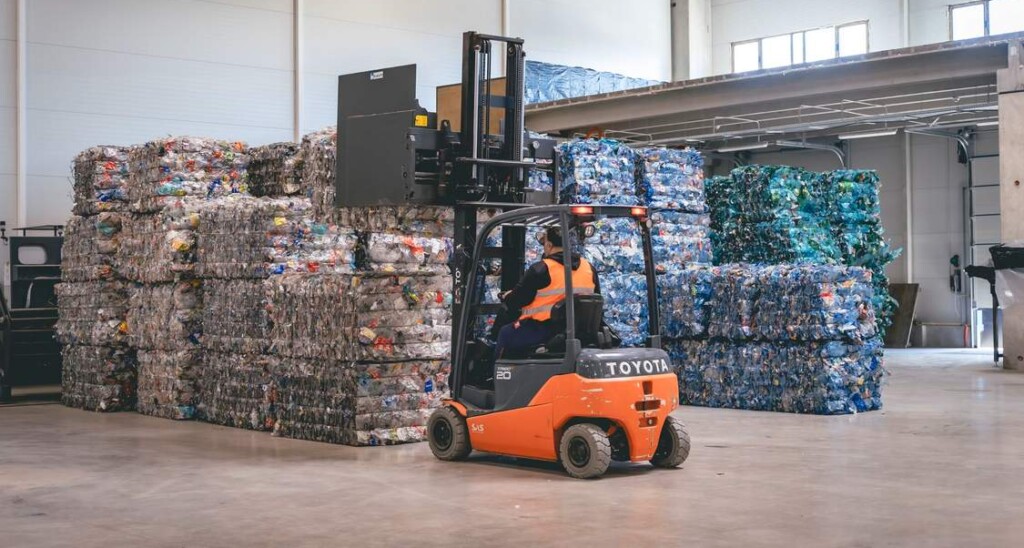
A recycling depot operated by RetuRO, Romania’s plastic return system organizer – credit Eduard Voicu / RetuRO

If you had to guess where in the EU you would find the most sophisticated and effective recycling system for beverage containers, how long before you’d say Romania?

Beating out Scandinavia, Belgium, Germany, and the Netherlands, the Romanian government’s private-public partnership with the logistics firm RetuRO, has led to an incredible 94% collection rate of plastic, glass, and metal containers in just two years.

The method is simple, but a RetuRO executive said that its secret to success comes from the fact that there was no existing recycling system already working that had to be overwritten: it was a fresh idea.

Fresh, but not new. Each retailer that sells products which come in recyclable containers are given a tax credit for the cost of installing return infrastructure like reverse vending machines and other installations. Then, the customer, when they buy each item, are charged a deposit that is returned with a few cents extra when they return the items.

With all the extras, one Transylvanian woman was able to buy food for her cats for the whole week.

“We are the largest fully integrated deposit return system globally,” said Gemma Webb, the chief executive of RetuRO, the company running the system in a public-private partnership.

Even though product return rates are as high as 94% in some months, those products as a proportion of the country’s total recyclable waste remains small; less than 15%. As far as that is from seeing the recyclability of all waste, it’s still awfully far from where the country has come.

Between 2011 and 2021, recycling rates for plastic, glass, and metal beverage containers hovered around 11-12%, and rarely changed. Only 1% of all materials recycled or thrown away eventually made it back into the economy, according to the Guardian.

Romanians returned some seven-and-a-half billion beverage containers between November 2023 and the end of September 2025, 4 billion of which were polyethylene terephthalate, the ubiquitous “PET” plastic that permeates world society. One study found that 90% of surveyed Romanians had used the system at least once.The Guardian reported that the plastic contained in a single PET plastic beverage container can produce 25 more over the materials lifespan if properly recycled. Romania Hits 94% Recycling After Launching Largest Return Plan in the World
Read More........

FIFA WC qualifiers: Ronaldo sets another record but Hungary deny Portugal early qualification

Credit: FIFA

Lisbon, (IANS) Cristiano Ronaldo set another record but Portugal conceded a last-gasp equaliser against Hungary to keep their dreams of direct qualification for the FIFA World Cup on hold.

Ronaldo became the outright leading marksman in World Cup qualifying history. His two goals – the first his 40th in qualifying to set the landmark – put Portugal on the verge of qualification but Dominik Szoboszlai struck late to deny Portugal qualification for a seventh successive global finals after a 2-2 draw.

Attila Szalai silenced Lisbon by heading home the opener, but the 40-year-old tapped in crosses from full-backs Nelson Semedo and Nuno Mendes to swing Roberto Martinez’s charges ahead. The woodwork denied Bruno Fernandes and Ruben Dias enhancing the lead and Szalai equalising after the restart.

Hungary kept themselves five points behind Portugal, and in with a chance of the section’s automatic ticket, when Daniel Lukacs did majestically to set up Dominik Szoboszlai.

Portugal’s next chance to confirm their place in the World Cup finals tournament next year will be against Republic of Ireland in Dublin next month.

Republic of Ireland claimed their first win in World Cup qualifying after edging out 10-man Armenia at the Aviva Stadium in Dublin.

Visiting captain Tigran Barseghyan was given his marching orders in the 52nd minute of this contest before Evan Ferguson combined with Will Smallbone to score the only goal of a cagey encounter.

Meanwhile, Cote d'Ivoire have qualified for the FIFA World Cup 26. The Elephants secured their place at the tournament in Canada, Mexico and the USA on Tuesday, with a 3-0 victory over Kenya in their final Group F fixture ensuring they topped the section ahead of Gabon.They will compete in the World Cup for the first time since Brazil 2014, where they were eliminated in the group stage, as they have been in each of their appearances to date. FIFA WC qualifiers: Ronaldo sets another record but Hungary deny Portugal early qualification | MorungExpress | morungexpress.com
Read More........

Changing rules of travel to Europe

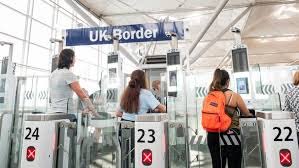
Travellers using self sevice kiosk in the UK. Photo courtesy UK Times -

11-09-20254, RECENTLY, there have been significant shifts in European Union (EU) immigration policies that change the rules of travel to most European countries.

Effective November 10, a new digital system called the Entry/Exit System (EES) will come into effect, transforming the way non-EU travellers enter and exit the Schengen Area. This high-tech upgrade aims to enhance security and streamline border-crossing procedures. The EES is a digital leap for EU borders that makes a significant shift from archaic passport-stamping to a more modern, computerised and biometric approach.

The new system applies to non-EU citizens entering the Schengen Area for short stays and includes tourists, business travellers and others who do not need a visa to visit Europe.

When travellers from outside the EU arrive at a Schengen border, they will scan their passports at self-service kiosks. These machines will retrieve important information like names, travel document details, fingerprints and facial images from the passport.

EU's Home Affairs Commissioner Ylva Johansson announced the launch date during a visit to eu-LISA, the EU Agency for the operational management of large-scale IT systems in the areas of freedom, 

security and justice.

The agency was established to provide a long-term solution for the operational management of large-scale IT systems, which are essential instruments in implementing EU asylum, border management and migration policies.

Johansson emphasised the EES’ role in improving border security, saying, "With the EES we will know exactly who enters the Schengen area with a foreign passport. We will know if people stay too long, countering irregular migration."

The next major change takes effect in May 2025, when visitors from over 60 visa-exempt countries will be required to have the European Travel Information and Authorisation System (ETIAS) travel authorisation to enter 30 European countries for short stays.

ETIAS is very similar to the American Electronic System for Travel Authorisation (ETAS) and does background checks to identify potential security risks posed by applicants seeking to enter Europe’s external borders. Using criminal records and security databases from criminal-justice institutions such as Europol and Interpol, the ETIAS creates a security network to keep European citizens and visitors safe.

Once ETIAS kicks in, citizens of the US, Canada, the UK and many other countries, including TT, who previously enjoyed visa-free travel with only a passport to most EU countries, will now require an ETIAS travel authorisation to enter any of 30 participating EU countries. ETIAS will work together with the EES, adding another layer to the EU’s border-management strategy.

The ETIAS travel authorisation will be required by visitors who plan to stay in a participating country for 90 days or less and will be valid for three consecutive years or until the passport expires, whichever comes first.

The ETIAS travel authorisation is linked to a traveller’s passport, so if you get a new passport, you will need to get a new ETIAS travel authorisation.

The cost of the ETIAS travel authorisation is €7 (TT$52.46). However, the fee will be waived for travellers under 18 years old or over 70.

According to the European Commission, the new requirements will assist border authorities to "identify security, irregular migration and high epidemic risks posed by visa-exempt visitors." Under ETIAS, travellers will undergo security screenings before they arrive in the participating EU country, preventing those who pose a security threat from entering.

ETIAS was approved in 2016 as part of an international effort to increase security. It was originally scheduled to begin in 2021, but a series of setbacks, including the covid19 pandemic and a lack of infrastructure to support the programme, delayed its start multiple times.

Having a valid ETIAS travel authorisation does not guarantee an automatic right of entry.

When visitors arrive, border agents will verify that they meet the entry requirements. Visitors who do not meet the entry requirements will be refused entry.

According to the ETIAS website, TT will be a launch member and citizens will be eligible to apply online for travel authorisation in 2025.

The website also saystravellers must have a machine-readable e-passport. The present TT passport, though machine-readable, is not an e-passport. Therefore it may not contain all the biometric data of the applicant required to process the ETIAS application.

The implications of this are unclear, and hopefully, TT citizens who do not have an e-passport will not be required to obtain Schengen visas to enter Schengen countries.

The introduction of the EES and ETIAS will enable authorities to track easily how people enter and exit the EU. It will make it very easy for authorities to track illegal immigration and those who have overstayed their welcome. This will lead to stricter enforcement of immigration rules and affect future entry authorisations for those who did not comply with their authorised stay duration.

EES and ETIAS integrate into broader Schengen visa policies by enhancing the EU’s ability to effectively monitor the movements of non-EU citizens within the Schengen Area, thereby creating a more secure and efficient border-management system.

Digitised border-control data will enable the EU to efficiently manage migration flows and improve security with very targeted and accurate real-time data on who enters and leaves the Schengen Area.

The implementation of EES and ETIAS showcases the EU’s commitment to using technology to address complex immigration challenges.

As these tools evolve, they pave the way for more technologically advanced border management procedures in the future.

Short-term visitors to the EU will need to be familiar with the new procedures at EU borders to plan ahead for ETIAS approval. Travellers will need to apply in advance of their planned travel to the EU, giving enough time to resolve any problems that may arise, such as needing to appeal a refusal.

Since e-passports significantly enhance border control measures, other countries may soon mandate deadlines for all visitors to have e-passports. Therefore, affected countries should proactively give top priority to issuing e-passports to their citizens.TT, as a signatory to the Chicago Convention, has a serious international treaty obligation to comply with the Standards of ICAO Annex 9 – Facilitation. Changing rules of travel to Europe - Trinidad and Tobago Newsday
Read More........

Zayo Europe partners with Ciena for German network boost


Press Release: Posted by Harry Baldock, Leading network infrastructure provider Zayo Europe has deployed Ciena’s optical technology to launch a new German network covering 3,000km of fibre across 8 core domestic metros including Frankfurt, Munich, Hamburg, Dusseldorf and Berlin. The network also extends to a 14th key hub across the border in Strasbourg, France.

With Ciena’s Reconfigurable Line System (RLS) and WaveLogic 6 Extreme (WL6e) solutions, Zayo Europe can now offer universal 400G wave services across key German markets, with the scope to scale to 800G and 1.6Tb/s in the future as required. This will enable Zayo Europe’s customers to meet the rising data demands driven by increased AI adoption and cloud usage.

“Germany is a key strategic market for Zayo Europe, and with the EU pushing to advance AI capabilities across the continent, there’s a pressing need for networks within Germany that can support these new workloads. Our approach to service delivery, utilising the latest generation optical networking technology powered by Ciena, enables us to provide our customers with ultra-low latency connectivity and unparalleled support for AI and cloud services.” said Colman Deegan, CEO, Zayo Europe.

“There’s a growing need for high-capacity networks across Germany to meet the demands of an increasingly digital economy. As a Carrier Managed Services partner leveraging Ciena optical technology, Zayo Europe can offer differentiated wavelength services across its entire European footprint, including key long haul routes across Germany.” said Virginie Hollebecque is Vice President and Leader of EMEA at Ciena.

Ciena’s WL6e is the industry’s first high-bandwidth coherent transceiver using state-of-the-art 3nm silicon to drive significant economic benefits for operators, including a 50% reduction in space and power per bit. Ciena’s 6500 RLS is a compact, simple-to-deploy, photonic layer solution that improves scalability, reduces footprint, and offers more flexibility and programmability.How is the German connectivity market changing in 2025? Join the discussion at Connected Germany 2025 live in Munich Zayo Europe partners with Ciena for German network boost | Total Telecom
Read More........

I don't want to put any pressure on myself for 90m: Neeraj Chopra

Paris: Men's Javelin silver medalist Neeraj Chopra of India on the podium during the medal ceremony at the Paris Olympics 2024, in Paris, France, on Friday, August 9, 2024. (Photo: IANS/Biplab Banerjee)

Ostrava (Czech Republic), (IANS) As he builds towards his ultimate goal — a top finish at the 2025 World Athletics Championships in Tokyo — Olympic and World Champion Neeraj Chopra says he isn’t placing himself under the pressure of chasing 90-metre throws every time he steps out, though he’s quietly confident ahead of the Golden Spike meet in Ostrava on Tuesday.

“I feel good, but I don't want to put any pressure on myself for 90m. But I'll try really hard,” Chopra said told reporters ahead of Tuesday’s Golden Spike Athletics meet . “I've already thrown 90m this year after a little bit more improvement in technique. So let's see when it comes next time, but I am ready.”

The 27-year-old javelin superstar, fresh off his Paris Diamond League win (88.16m) over German Julian Weber, is focusing more on technical refinement than chasing numbers every meet. “Recently we've done a good training in Nymburk (Czech Republic), so I'll do my best here in Ostrava,” he added.

Part of Chopra’s excitement at competing in Ostrava stems from childhood memories. “When I was a kid, I watched a lot of videos and photos of athletes like Usain Bolt competing here. I came last year but I didn't compete because of injury,” he recalled.

His primary focus, though, remains the World Championships in Tokyo from September 13 to 21 — where he hopes to add to his gold from the previous edition. “Main goal for the season is obviously World Championships in Tokyo,” said Chopra.

The Haryana athlete is also looking forward to a milestone moment on home soil — the inaugural Neeraj Chopra Classic in Bengaluru on July 5. “This will be my first really serious competition in India with international athletes. I still have to manage a lot of things before competition, but it will be a good experience,” he said. “Now it would not be good if I say no to people. And I'm happy that now in India people recognise other sports than cricket.”

Working with Czech legend Jan Zelezny, the three-time Olympic gold medallist and world record holder, has been a major boost. “I am really happy to work with such a great athlete and coach,” Chopra said. The growing popularity of their partnership hasn’t gone unnoticed. “When I competed at Diamond League in Doha, there were a lot of Indian people who wanted to take pictures with Jan. And they are sometimes… you know… very intense. So I was a bit worried about him. But he left to the hotel quickly,” he laughed.Zelezny, for his part, is pleased with the progress. “I am happy about the situation. It's important for javelin and throws in general, as athletics is not only about sprints,” the Czech great said. “Neeraj opened the doors to other countries, it's great for our sport. I don't want to put any pressure on myself for 90m: Neeraj Chopra | MorungExpress | morungexpress.com
Read More........

Ireland Shuts Last Coal Plant, Becomes 15th Coal-Free Country in Europe

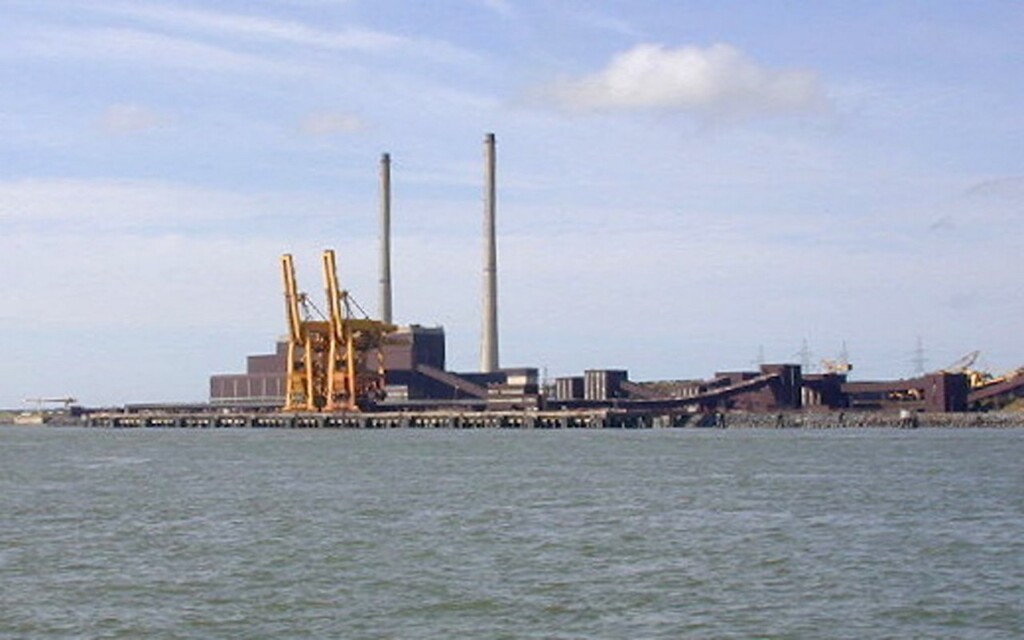
The Moneypoint power station – credit, Charles W Glynn, Wikimedia Commons, CC BY-SA 4.0

Ireland will become the fifteenth European nation without coal in its energy mix following a recent announcement.

The ESB Moneypoint power station was built in the 1980s to help alleviate the effects of the oil shock, and remains today in County Claire as the last coal-capable asset in the country.

It will be converted to burn emergency oil reserves following a surge in renewable energy production.


Even that is planned to cease in 2029, but starting from June this year, Moneypoint will no longer be present in the wholesale electricity market.

11 terawatt-hours of electricity was generated by wind turbines last year, and made up 37% of Ireland’s total energy generation, reports Ember, a renewables-focused think tank.


“Ireland has quietly rewritten its energy story, replacing toxic coal with homegrown renewable power,” said Alexandru Mustață, campaigner on coal and gas at Europe’s Beyond Fossil Fuels.

“But this isn’t ‘job done’. The government’s priority now must be building a power system for a renewable future; one with the storage, flexibility, and grid infrastructure needed to run fully on clean, domestic renewable electricity,” Mustață warned.

According to Beyond Fossil Fuels, Ireland joins Belgium, Sweden, Austria, Portugal, and the UK, who have already stopped using coal, accompanied by Spain and Slovakia who are also completing their coal phase-outs this year.

Cyprus, Lithuania, Latvia, Switzerland, Estonia, Norway, Malta, Albania, and Luxembourg never burned coal at the grid level. This leaves Serbia, Montenegro, Poland, Germany, France, Italy, Slovenia, Bosnia Herzegovina, North Macedonia, Finland, Hungary, Bulgaria, Czechia, Romania, Croatia, Greece, Denmark and the Netherlands who rely on coal to some degree.Some of these have existing commitments to abandon coal like Germany and Romania, and others, like Poland and Serbia, who don’t. Italy, France, Greece, Finland, Denmark, Hungary and the Netherlands will reach their commitments in the next 5 years. Ireland Shuts Last Coal Plant, Becomes 15th Coal-Free Country in Europe
Read More........

Kylian Mbappe wins European Golden Boot

Kylian Mbappe has won the 2024/25 European Golden Boot thanks to his 31-goal haul in La Liga, leading the way with 62 points, Football Today reports.

Mbappe scored eight fewer league goals than Sporting CP’s Viktor Gyokeres, who was, however, handicapped by having his goals multiplied by a coefficient of 1.5 as opposed to Mbappe’s 2.

The 26-year-old netted a double in Real Madrid’s final game of the season on Saturday against Real Sociedad to take the lead in the Golden Boot race.

Nonetheless, he would have been looking anxiously over his shoulders earlier today with Mohamed Salah in action against Crystal Palace.

Salah needed three goals to share the award with Mbappe and four to win it outrightly, but could only find the back of the net once in Liverpool’s 1-1 draw.

A whopping six goals behind at kick-off, Robert Lewandowski was the last of Mbappe’s competitors to take to the field on Sunday and scored twice inside the opening 17 minutes to give himself a glimmer of hope.

However, the Poland international missed several opportunities to add to his tally and had been substituted off by the time Barcelona got a late penalty, which Dani Olmo converted.

Lewandowski ended the season on 27 league goals, four behind Mbappe, confirming the Frenchman’s status as winner of the European Golden Boot award.

Mbappe is the first player in football history to win the Champions League, World Cup and European Golden Boot awards, further cementing his status as one of the world’s best players.

While the season ended relatively well for Mbappe on a personal level, he would have liked more collective glory to go along with it, as Madrid could only manage to win the European Super Cup and the FIFA Intercontinental Cup.Under the tutelage of newly appointed manager Xabi Alonso, Los Blancos will be looking to go all the way in June’s Club World Cup tournament. Source Article
Read More........

Sweden is a nearly cashless society – here’s how it affects people who are left out

Around the world, cards and apps are the default way to pay – but nowhere is the transition away from cash more obvious than in Sweden. The Bank of Sweden notes that the amount of cash in circulation in the country has halved since 2007.

Part of this is due to a unique Swedish law that prioritises “freedom of contract” above any legal requirement to accept cash. In other words, it is up to businesses – including banks – whether they take cash. Public transport, stores and services typically do not accept cash as payment, and there is no infrastructure for paying bills over the counter.

The transition to cashlessness accelerated when a group of banks created the mobile payment app Swish in 2012. By 2017, Sweden was using less cash than other European countries. Today, more than 80% of the population has a Swish account.

For most Swedes, the cashless economy is swift and convenient. As long as you have a bank account and can access the technology, you probably live a cashless life already. But for the few people who still depend on cash, life is getting harder.

Our recent research shows how this affects the worst-off groups in Sweden’s cashless society. Our interviewees live in poverty-induced cash dependence, meaning they rely on cash payments because they are unbanked, lack credit or cannot afford digital technology.

While it is difficult to measure just how many people depend on cash, older people, particularly, are struggling to pay bills digitally.

Some of those we interviewed are homeless or have mental health issues. Others live on a very low income. The obstacles they face are both practical and cultural. They feel like delinquents, undervalued and locked out of participating in much of daily life.

Being cash-dependent in Sweden

If cash is the only money you have or the only money you can manage without help, you are confined to “cash bubbles”. Cash works like a local currency, isolated from the rest of the economy.

In the cash bubble, you can buy necessities and go to no-frills cafes, but you can’t pay for parking and you can’t pay bills without help. Volunteers at local community groups told us that they spend most of their time doing people’s banking for them.

A Ukrainian refugee, who can’t get a bank account because of their migration status, worried about a bill from the local health clinic that they had no technical means of paying.

Homeless people who sleep in cars can’t use the cashless parking meters, so an illicit market has emerged where people with smartphones and bank accounts pay for their parking at a substantial extra cost. It’s expensive to be digitally poor.

Our interviewees felt left behind in a society that does not care about their ability to participate. With a mix of shame, anger and resignation, they described everyday humiliations. One woman saved up to buy her grandchild a gift she wanted, only to be told at the till – grandchild in hand – that they didn’t accept her money. “I felt like a thief,” she told us.

Sweden’s cashless transition

Swedes are known to be early and uncritical adopters of technology – this has become part of the country’s self-image. In 2017, business researchers predicted that cash would be irrelevant in Sweden by March 2023. It didn’t quite happen, but near enough.

Over the last 150 years, technological innovations and entrepreneurship have propelled the country from severe poverty to being one of the richest in Europe.

The Swedish case is even more special due to the pervasive role of banks in the payment and identification infrastructure. Banks created the widely used payment app Swish, and also issue the electronic ID needed to access public services like the tax authority and benefits for illness, disability and unemployment.

Consequently, if you are not a bank customer, you can’t access these public services.

During the pandemic, fears of contamination made handling physical money seem like a health hazard. “I hate cash. It’s dirty,” as one Swedish tech entrepreneur put it.

All of these factors combined have led to a modern Swedish society where digital money is good and cash is associated with crime and dirt. For people who still depend on cash payments, this stigma adds to their sense of being left out.

In Sweden, as in many other countries, a fully cashless economy feels inevitable in the coming years. But as we have found, people who rely on cash due to poverty are left without the means to manage independently or even to pay their bills.

This is not just a practical issue, but an emotional one. There is a sense of loneliness, of loss of community and human connection in the digital economy. As one of our interviewees said: “It’s not just cashlessness. I feel that human beings have disappeared. We live like robots; click here, click that. Digitisation has made people lonely.”The Conversation

Moa Petersén, Associate Professor in Digital Cultures, Lund University and Lena Halldenius, Professor of Human Rights Studies, Lund University

This article is republished from The Conversation under a Creative Commons license. Read the original article.

Read More........

UK officially joins Asia-Pacific trade bloc CPTPP

London, (IANS): The U.K. officially joined the Comprehensive and Progressive Agreement for Trans-Pacific Partnership (CPTPP) on Sunday, becoming the first European nation to join the Asia-Pacific trade bloc. The 12-country landmark trade agreement is expected to boost the British economy by 2 billion pounds (about 2.52 billion U.S. dollars) annually in the long term, according to the Department for Business and Trade, Xinhua news agency. The department noted on its website that the UK's accession to CPTPP is a cornerstone of the government's Plan for Change, which aims to deliver economic growth and increase household incomes. The plan is projected to raise household wages by 1 billion pounds (1.26 billion dollars) annually while benefiting all regions of the country. "Agreements like this boost trade and create opportunities for UK companies abroad, supporting jobs, raising wages, and driving investment across the country," said British Business and Trade Secretary Jonathan Reynolds. Ian Stuart, CEO of HSBC UK, underscored the significance of the trade bloc, stating: "Since the announcement of the UK's accession in July 2023, we have seen an increase in payments between CPTPP markets and the UK, and we expect this growth to continue." The UK will enter into the agreement with eight of the bloc’s 11 existing members who first ratified the accession on Sunday – Japan, Singapore, Chile, New Zealand, Vietnam, Peru, Malaysia and Brunei. It will then, on Christmas Eve, enter into force with Australia, who later ratified the deal. Canada and Mexico are yet to finally rubber-stamp the UK’s membership, but it is understood that officials expect them to do so at some point in the future. It is expected that the CPTPP will get larger in the coming years, and last month it was announced Costa Rica would be the next country to work through the process of joining. The deal will offer UK firms lower tariffs and fewer barriers when trading across three continents, with financial services, manufacturing and food and drink sectors set to benefit. UK officially joins Asia-Pacific trade bloc CPTPP | MorungExpress | morungexpress.com
Read More........

EU gives €127m funding boost to 6G research


The funding will focus on 6G innovation and sustainable network development

At the 5G-Techritory event this week, Smart Networks and Services Joint Undertaking (SNS JU) has announced the recipients of €127 million in funding set aside for 6G research in Europe.

The SNS JU was set up in 2021 with the aim of developing industrial leadership in 5G and 6G networks and services.

Sixteen projects have been chosen to drive forward Europe’s 6G development, with a focus on sustainable, AI-driven, and secure communication networks.

This year’s SNS JU call had 1,874 applications from 33 European countries requesting a combined €863 million, far surpassing the available funding.

The winning 16 projects involve 301 organisations across 25 countries.

Among the winners were the following projects: FLECON-6G, which aims to create a flexible, secure “Network of Networks” for 6G. UNITY-6G, which will develop an AI-driven architecture for a sustainable 6G network. AMBIENT-6G, which focuses on energy-harvesting technology for long-lasting IoT devices. 6G MIRAI and 6G ARROW, which represent international collaborations with Japan and South Korea, exploring seamless connectivity across networks.

“The projects selected highlight the diversity of 6G development happening across Europe, from infrastructure to applications to security. SNS JU is proud to support these efforts to ensure Europe remains at the forefront of 6G research and innovation and help realise its potential to transform lives and society,” said Erzsébet Fitori, Executive Director of SNS JU in a press release. EU gives €127m funding boost to 6G research
Read More........

EU seeks to take on China, US to reverse economic decline


BRUSSELS - The European Union's economy is falling further behind China and the United States, a major headache that will dominate leaders' talks on Thursday as they discuss how to stem the bloc's economic decline and bounce back.

From supply chain disruptions following the coronavirus pandemic to an energy crisis after Russia's invasion of Ukraine, Europe's economy has faced multiple challenges in recent years.

But it may yet face its biggest: the clean energy and digital transitions that Brussels has made its priority in the coming years will require additional annual investment of nearly 620 billion euros ($660-billion).

From artificial intelligence to solar panels, from computer chips to batteries, the EU is fast losing ground fast on innovation to other global powers.

The EU has been put further on the back foot as China and the United States have ploughed billions of dollars of state aid to prop up their critical industries.

What is needed is "radical change", former European Central Bank chief Mario Draghi said during a speech in Belgium on Tuesday, pointing to "other regions (that) are no longer playing by the rules".

"Our major competitors are taking advantage of the fact that they are continental-sized economies. We have the same natural size advantage in Europe, but fragmentation is holding us back," Draghi added.

The Italian ex-premier, increasingly touted as a potential successor to Ursula von der Leyen as European Commission chief, will present a report on the issue in the summer.

Official EU data shows the bloc's economic stagnation has lasted more than 18 months. While the United States grew by 2.5 percent and China by 5.2 percent in 2023, Eurostat data last month showed the EU economy grew by only 0.4 percent.

The EU's 27 member states want to define the strategic priorities for the European Commission's next five-year mandate following elections taking place across the bloc in June, EU seeks to take on China, US to reverse economic decline
Read More........

Euro 2024: 'I'll always give my best for this shirt...', says Ronaldo after penalty miss against Slovenia

Frankfurt, (IANS) Portugal pulled through in their Round of 1 matchup vs Slovenia. The game remained goalless after 120 minutes and it was Diogo Costa who proved to be the hero as the goalkeeper saved three penalties in the shootouts.

Despite the win, a lot of the focus was on Cristiano Ronaldo as the Euros top goalscorer of all-time failed to convert a penalty in the 105th minute of the game and missed the chance to give his side the victory.

"This will be my last Euro, of course. But I’m not moved by this, I’m moved by enthusiasm. I was sorry for the fans. I'll always give my best for this shirt, whether I miss it or not. And I'll do this my whole life. You have to take responsibility," said Ronaldo in the post-game conference.

Following the penalty miss, Ronaldo was seen crying, breaking the hearts of many football fans around the world. The five-time Ballon d’Or winner later went on to turn his disappointment into a smile as he scored a penalty during the shootouts.

"I could have given the national team the advantage, but I didn’t manage it, Oblak saved. I didn’t miss once during the year, when I needed it most Oblak saved.It’s a feeling of sadness and joy at the same time, but the most important thing is the progress, the team deserved it," added the all-time top scorer of the Euros.

Portugal’s win has set up a firecracker bracket in the European Championship. The 2016 winners will take on France in the quarterfinals of the tournament and the winner of the match-up will be facing the winner of the match between Spain and Germany."Slovenia spent almost the entire time defending, the team deserves congratulations, especially our goalkeeper who made three good saves. Even the strongest people have their days, I was down and I was sad because the team needed me," Ronaldo concluded. Euro 2024: 'I'll always give my best for this shirt...', says Ronaldo after penalty miss against Slovenia | MorungExpress | morungexpress.com
Read More........

Fico ally Peter Pellegrini sworn in as Slovakia President


Bratislava, (IANS/DPA) Peter Pellegrini, a close ally of left-wing populist Prime Minister Robert Fico, was sworn in as the President of Slovakia on Saturday.

The 48-year-old took the oath of office in a ceremony at the Slovak Philharmonic in Bratislava in the presence of the members of parliament.

Pellegrini won the run-off election in April with 53.1 per cent votes, defeating former Foreign Minister Ivan Korcok.

Ukraine featured prominently in the campaign, with Pellegrini advocating a cautious stance on arms deliveries to Kyiv - a position in line with Russia-friendly Fico.

Pellegrini previously served as the Prime Minister from 2018 to 2020 and also as the parliamentary Speaker.

The incumbent, Zuzana Caputova, a lawyer and rights activist, did not run for a second five-year term despite her continued popularity as the President.

Pellegrini's 'Voice - Social Democracy' party is part of Slovakia's governing coalition, led by Fico. The right-wing populist Slovak National Party (SNS) is also part of the fractious coalition.

Presidents in Slovakia have few executive powers, although they can veto laws. The President is the Commander-in-Chief of the armed forces and represents the country of nearly 5.5 million in visits abroad.

With the swearing-in of Pellegrini, the left-wing nationalist camp now holds the two most important political offices in the country.

The opposition fears that the coalition will now push through controversial plans such as the proposed dissolution of the public radio and television broadcaster RTVS.

Slovakia and its fellow EU members were stunned by an assassination attempt against Fico last month that left the Prime Minister seriously injured. Fico ally Peter Pellegrini sworn in as Slovakia President | MorungExpress | morungexpress.com
Read More........

Meloni set to act as kingmaker for next European Commission President

Brussels, (IANS/DPA) Italian Prime Minister Giorgia Meloni Meloni is all set to act as kingmaker for the next European Commission President as she is polling well ahead of her rivals as Italians, Estonians, Latvians, Maltese, Czechs and Slovakians go to vote in the European Parliament elections on Saturday.

Meloni could be poised to act as kingmaker for the next European Commission president if her Brothers of Italy (FdI) makes major gains.

Incumbent Commission President Ursula von der Leyen has been openly courting Meloni in the hope of winning the confirmatory votes of the European Conservatives and Reformists (ECR) group, a pan-European soft-eurosceptic bloc that Meloni now leads and whose ranks FdI candidates aim to join if elected to the European Parliament.

As the EU's third-most populous country, Italy can send a total of 76 delegates to the 720-seat European Parliament, putting anyone who wins big there in a powerful position at EU level.According to a "poll of polls" compiled by the news website Politico, the conservative FdI is in first place with 27 per cent, six points ahead of the centre-left Democratic Party. Meloni set to act as kingmaker for next European Commission President | MorungExpress | morungexpress.com
Read More........

Polish ministry approves plans for Rolls-Royce SMRs

How a Rolls-Royce SMR might look (Image: Rolls-Royce SMR)

Polish industrial group Industria's plan to construct a power plant based on Rolls-Royce's small modular reactor (SMR) has been approved by the Ministry of Climate and Environment.

Industria submitted its application for a decision-in-principle in December last year to Polish Climate and Environment Minister Paulina Hennig-Kloska. The application concerns the construction of a nuclear power plant using Rolls-Royce SMR technology - a 470 MWe design based on a small pressurised water reactor - and a used nuclear fuel storage facility as an integral part of the power plant.

On 10 May, Hennig-Kloska issued the ministry's decision-in-principle, saying that she believes the investment would be in the public interest and in line with Poland's energy and climate policies. The application was positively assessed by the Head of the Internal Security Agency and the Minister of State Assets.

The decision-in-principle represents official state approval for the planned investment in accordance with the assumptions and concept presented by the company. It is the first decision in the process of administrative permits for investments in nuclear power facilities in Poland that an investor may apply for. Obtaining it entitles Industria to apply for a number of further administrative arrangements, such as a siting decision or construction licence.

"Today's decision-in-principle by Poland's Environment Minister is extremely positive news and allows us to advance our commercial and technical discussions on the deployment of Rolls-Royce SMR power plants in Poland," said Rolls-Royce SMR's Director of Strategy and Business Development Alan Woods. "Poland is one of a number of key export opportunities for Rolls-Royce SMR as we look to build on our progress in the UK and exploit the important competitive advantage our SMR design has over its competitors."

Last year, state-owned Industria - part of Industrial Development Agency JSC (IDA) - selected Rolls-Royce SMR technology to fulfil the zero-emission energy goals of the Central Hydrogen Cluster in Poland and as part of their plans to produce 50,000 tonnes of low-carbon hydrogen every year.

In July 2023, Industria signed a letter of intent with the Kostrzyn-Słubicka Special Economic Zone SA (KSSSE) regarding cooperation on the location of a modular power plant based on Rolls-Royce SMR technology in the areas covered by the KSSSE.

Poland's Ministry of Climate and Environment issued a decision-in-principle in July last year on copper and silver producer KGHM Polska Miedź SA's plan to construct a NuScale VOYGR modular nuclear power plant with a capacity of 462 MWe consisting of six modules, each with a capacity of 77 MWe.

In December, the ministry issued decisions-in-principle to Orlen Synthos Green Energy for the construction of power plants based on GE Hitachi Nuclear Energy's BWRX-300 SMR at six locations. A total of 24 BWRX-300 reactors are planned at the sites.

The ministry has also issued decisions-in-principle for the construction of two large nuclear power plants: one for a 3750 MWe plant in Pomerania using Westinghouse's AP1000 technology, the other for a plant comprising two South Korean-supplied APR1400 reactors in the Patnów-Konin region.Researched and written by World Nuclear News. Polish ministry approves plans for Rolls-Royce SMRs : New Nuclear - World Nuclear News
Read More........

Poland's nuclear programme making good progress, says IAEA : New Nuclear

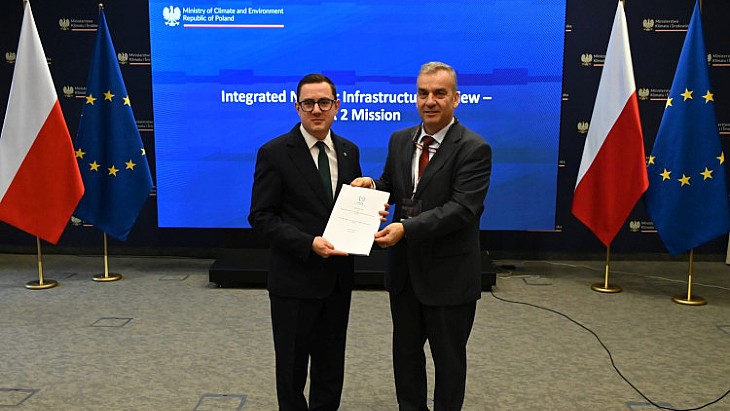
Ceyhan, right, presents the draft report to Motyka (Image: Polish Climate Ministry)

An International Atomic Energy Agency review mission has praised steps taken to develop the necessary infrastructure for a safe and sustainable nuclear power programme in Poland. Meanwhile, Bechtel marks the start of site field work for the country's first nuclear power plant.

The 11-day IAEA mission to Poland - a Phase 2 Integrated Nuclear Infrastructure Review - took place from 15 to 25 April at the invitation of the Polish government and used the IAEA's Milestones Approach to review the status of 19 nuclear infrastructure issues. The aim is the check the readiness of a country to invite bids or negotiate a contract for their first nuclear power plant.

The 10-person team "identified good practices that would benefit other countries developing nuclear power in the areas of contracting approach, strategic approach to funding, early authorisation of technical support organisations to support the nuclear regulator, engagement with the electrical grid operator, stakeholder involvement and industrial involvement".

Mission team leader Mehmet Ceyhan, Technical Lead of the IAEA Nuclear Infrastructure Development Section, said: "The Polish Nuclear Power Programme (PNPP) was initiated with clear objectives and is progressing towards the construction stage in a structured way. We observed strong and dedicated teams in each of the key organisations that will help to achieve the government’s objectives for the PNPP."

Among the areas highlighted for further action was "the need to further review its legal and regulatory framework, and finalise the preparatory work required for the contracting and construction stages".

Miłosz Motyka, Undersecretary of State for the Ministry of Climate and Environment of Poland, said: "Poland's cooperation with the IAEA is a long-term collaboration, and the review mission is extremely valuable and beneficial for the implementation and execution of the Polish nuclear power programme."

The collaboration with the IAEA also involved a September 2023 Integrated Regulatory Review Service mission to the country which found Poland's nuclear regulatory framework met IAEA safety standards.

Field work getting under way

Meanwhile, a symbolic kick-off ceremony was held by US-firm Bechtel at its Warsaw office to mark the start of geological surveys for Poland's first nuclear power plant at the Lubiatowo-Kopalino site in the Pomeranian municipality of Choczewo.

Bechtel is a member of the US consortium responsible for the implementation of the nuclear power plant project which is set to feature three Westinghouse AP1000 units. The field work is due to start in May on an area covering about 30 hectares with approximately 220 research points being constructed with depths of 20 to 210 metres. Bechtel has awarded the contract for the geological work to PSD Poland, with the work expected to be completed in November.

The findings will be crucial for the earthworks design for the plant and will also inform the Location Report which Polskie Elektrownie JÄ…drowe (PEJ) will need to submit to obtain a construction permit from Poland's National Atomic Energy Agency, the PPA.

The event was attended by the US Ambassador to Poland Mark Brzezinski, who called it "another important step forward as Poland and the United States work together to create a civil nuclear industry in Poland, and it shows that the United States is delivering on our shared commitment to Poland’s energy security and supporting Poland’s energy transition".

Leszek Hołda, Bechtel Poland Country Manager, said: "The commencement of the initial fieldwork for the construction of this plant is a significant moment for the Polish economy, the companies that will participate in the supply chain, and the local community."

Leszek Juchniewicz, a member of the board of directors and acting president of PEJ, said this was an important time for the enterprise and showed that "the project to build Poland's first nuclear power plant is gaining momentum".

Project background

PEJ - a special-purpose vehicle 100% owned by the State Treasury - is responsible for the construction project of the first nuclear power plant in Poland.

In November 2022, the then Polish government selected the Westinghouse AP1000 reactor technology. An agreement setting a plan for the delivery of the plant was signed in May last year by Westinghouse, Bechtel and PEJ. The Ministry of Climate and Environment in July issued a decision-in-principle for PEJ to construct the plant. The aim is for Poland's first AP1000 reactor to enter commercial operation in 2033.

Under an engineering services agreement signed in September last year, in cooperation with PEJ, Westinghouse and Bechtel will finalise a site-specific design for a plant featuring three AP1000 reactors. The design/engineering documentation includes the main components of the power plant: the nuclear island, the turbine island and the associated installations and auxiliary equipment, as well as administrative buildings and infrastructure related to the safety of the facility. The contract also involves supporting the investment process and bringing it in line with current legal regulations in cooperation with the PAA and the Office of Technical Inspection.Researched and written by World Nuclear News Poland's nuclear programme making good progress, says IAEA : New Nuclear - World Nuclear News
Read More........

SES to buy Intelsat for $3.1bn

Posted by Georgia Sweeting: The deal comes less than a year after the two companies broke off merger talks

Luxemburg-based satellite company SES has signed a deal to buy Intelsat Holdings for $3.1 billion.

A joint press release from the two companies explained the combination as creating “a stronger multi-orbit operator with greater coverage, improved resiliency, expanded suite of solutions, enhanced resources to profitably invest in innovation, and benefit from the collective talent, expertise, and track record of both companies.”

Once combined, SES’s orbital assets will include 100 Geostationary Earth Orbit and 26 Medium Earth Orbit satellites.

The deal gives Intelsat an enterprise value stands of $5 billion, with SES suggesting the deal will deliver synergies worth €2.4 billion ($2.6 billion).

“Going forward, customers will benefit from a more competitive portfolio of solutions with end-to-end offerings in valuable Government and Mobility segments, combined with value-added, efficient, and reliable offerings for Fixed Data and Media customers,” said SES CEO Adel Al-Saleh.

Rumours related to a potential acquisition had first began to swirl last year, with SES confirming talks were taking place in a statement. However, these discussions appeared to fizzle out, leaving it unclear if discussions were ongoing.

Now, the deal has been unanimously approved by both company boards and is expected to close in the latter half of next year, pending regulatory approval.

The deal represents the latest stage in consolidation of the global satellite industry, as European companies attempt to compete against newer rivals such as Elon Musk’s Starlink, which launched in 2019 and has come to dominate in terms of sheer scale.

However, in terms of financials and with its well-established customer base, this newly combined SES–Intelsat could become an even more significant player in the satellite communications industry.

Indeed, some industry onlookers suggest that this combination could itself create a dominant market leader.

“The combined entity is poised to be the world’s largest satellite company in terms of revenue, and could dominate the market, leveraging its extensive resources and expertise to shape the future of satellite communications and deliver on new use cases,” commented Christof Kern, Business Development Lead in Satellite & Space at satellite consultancy TTP.

In related news, this week Intelsat announced that it will install and operate ruggedised multi-orbit satellite terminals on farm equipment from CNH in remote areas of Brazil. This will enable farmers to effectively implement precision farming, the practice of using technology to use precise amounts of water, fertiliser, and pesticides to maximise crop yield. The satellites will provide the connectivity allowing farmers to implement the practice. Source: https://totaltele.com/author/georgia-sweeting/e: 
Read More........

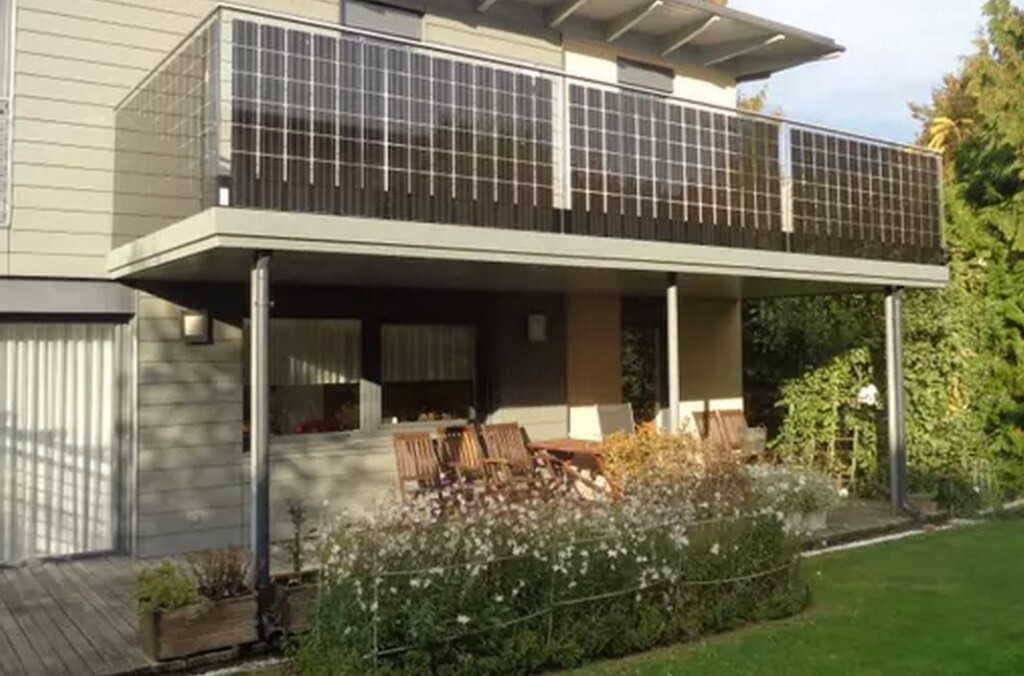
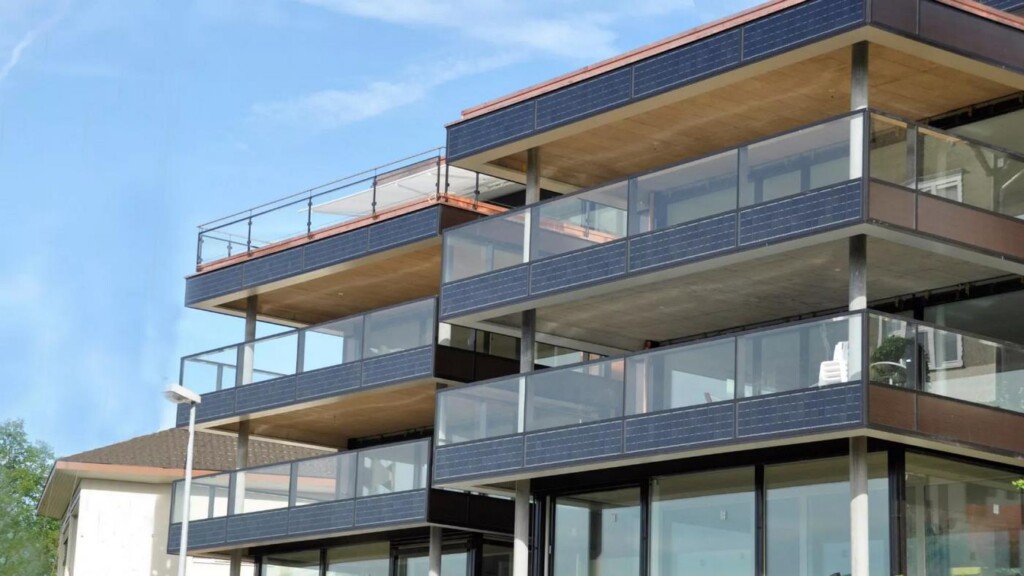
Solar Balconies Are Booming in Germany and You Can Plug in and Install Them Yourself

A solar balcony from Ertex Solar Austria.

Solar panels are finding their way onto all sorts of surprising surfaces, and now Central Europeans are beginning to line their balcony rails with them; because why not?

To mark the 70th anniversary of the solar cell’s mainstream entry into society, data acquired by Euronews claims that 400,000 German households have already connected their verandas and balconies to solar panels.

New data shows at least 50,000 of the PV devices were added in the first quarter of 2024 alone.

Easy to install—such that many do it themselves, the technology makes every bit of sense as rooftop PV solar panels. In the Northern Hemisphere, during the winter months especially, the sun comes at such a shallow angle that panels on a balcony may even exceed the power generation of those mounted on a roof.

They won’t generate more power, because they’re plugged into smaller sockets, but they present less of a hazard than rooftop solar, and may not even require installation fees. They can also be installed where people may not have the requisite sunlight, the property access, or the structural strength to install rooftop panels.

Jan Osenberg, a policy advisor at the SolarPower Europe association, told Euronews that 200 megawatts is a rough estimate of how much electricity is generated by solar balconies, compared to 22 gigawatts from all of Germany’s rooftop solar panels.

The technology has been a boom in Germany’s strong solar culture. More power is generated by solar in Germany than any other country in Europe.
A solar balcony from Ertex Solar Austria.

“Rooftop solar really has this empowering momentum that people who start to have a solar system, they start to track their electricity consumption, they start to feel themselves as being someone who is a frontrunner in the energy transition, someone who supports the energy transition and is already a part of it,” says Osenberg.

Some German states offer subsidies for a solar balcony kit, which pays for itself in electricity savings after around 3-5 years of its 20-year lifespan. However, at 24 kilograms—over 50 pounds—installation needs to be taken deadly seriously, as a panel falling three or four stories onto someone might be lights out.

Europe has been getting progressively more inventive with the placement of its solar panels. GNN has reported on solar power installations. Source: https://www.goodnewsnetwork.org/solar-balconies-are-booming-in-germany-and-you-can-plug-in-and-install-them-yourself/
Read More........

New study reveals the world’s most searched-for jobs

In 2019, Brother UK, the office electronics supplier, analysed a year’s worth of Google search data. The study revealed the most popular jobs worldwide, and they discussed whether culture and economy impacted careers globally.

In 2023, Brother UK conducted a new study investigating how the global job market has changed in the last three years. Brother UK wanted to determine whether a pandemic, economic uncertainties, remote/hybrid working, and AI technologies have transformed how the world searches for jobs.

The most searched-for jobs in the UK

Teaching assistant jobs are still the most searched-for in the UK. However, there are signs that interest may be waning. In 2019, over 288,000 people searched Google for teaching assistant roles. But since 2020, the average yearly searches have shrunk by 5% to 275,000.

UK search data shows that the most significant search increase in the education sector was from qualified teaching positions. While teachers still wish to continue teaching, they may consider switching schools for better career prospects.

A recent poll from the National Education Union showed that teachers were more likely to look for a promotion at another school rather than at the school where they were currently employed.

In 2019, the second and third most searched-for jobs in the UK were estate agents, with 105,700 searches and project managers, with 99,300 searches. While searches for both jobs increased, they were knocked out of the top five by a surge of interest in teaching and cabin crew jobs.

The aviation industry experienced heavy turbulence at the start of the pandemic due to fewer flights. As international travel restrictions were gradually lifted, airlines that managed to weather the storm have needed to rehire talent back into the workforce.

Photography jobs saw one of the most significant declines in UK searches. Searches for photography roles fell by 17% and failed to make the 10 most searched-for jobs in 2023. Stock image photographers are also facing steep competition from AI, which can produce photorealistic artwork cheaply.

The most searched-for jobs in the UK:

1 Teaching assistant 
2 Cleaner 
3 Teacher 
4 Cabin crew 
5 Project manager 
6 Human resources 
7 Estate agent 
8 Receptionist 
9 Graphic designer 
10 Accountant 

*Avg. yearly searches for listed jobs

The most searched-for jobs in Europe

Across the continent, human resources careers emerged as the most searched-for. However, our study revealed that there were regional variations depending on the job market in each country.

Germany saw the highest search volumes for firefighter jobs. Data from the Economic Research Institute indicates that firefighters in Germany can expect to earn around €45,931 per year. While this is slightly below Germany’s national average salary, the outlook for firefighters is positive. Over the past five years, firefighter salaries have increased by 18%, with predictions their wages will continue to grow in the coming years.

Teaching assistants emerged as the second most searched job in Europe, with most searches coming from the UK. European countries outside the UK, specifically Ireland and Germany, also saw significant growth in teaching assistant roles.

The most searched-for jobs in Europe:

1 United Kingdom Teaching Assistant 
2 Germany Firefighter 
3 Spain Airline pilot 
4 France Animator 
5 Switzerland Admin 
6 Austria Courier 
7 Belgium Nurse aide 
8 Portugal Airline pilot 
9 Cyprus Cabin crew 
10 Malta Airline pilot 

*Avg. yearly searches for listed jobs

The world’s most searched-for jobs, overall

Interest in human resources was not limited to European countries. Global job search data revealed that HR jobs were the most sought-after globally. The US led the way, with the highest volume of HR job searches in the last three years, followed by the UK and India.

There was a substantial increase in the number of job searches. Accounting jobs were identified as the second most searched in the world, seeing average yearly search volumes double, reflecting a considerable increase in demand. This is beaten by the rise in demand for graphic design roles, which tripled.

Job searches around the world:

1 Human resources 
2 Accountant 
3 Graphic designer 
4 Mechanical engineer 
5 Civil engineer 
6 Data analyst 
7 Cleaner 
8 Receptionist 
9 Teacher 
10 Journalist 

*Avg. yearly searches for listed jobs

The search for science and technology jobs

STEM (Science, Technology, Engineering, and Mathematics) jobs have been in high demand, crucial for driving innovation and advancing society. In our previous study, mechanical engineering stood out as the most sought-after job within STEM and the most searched job globally.

Mechanical engineering continues to be a highly sought-after career path, with a 77% increase in average yearly searches for engineering jobs. Unsurprisingly, mechanical engineering remained the most searched-for STEM job globally, with many searches coming from South Africa, which saw an average yearly search volume of 123,730.

A standout data trend was the growing searches for careers in data analytics. Global job searches for data analytics hit a yearly average of 780,677, making the top 10 which it had failed to reach previously. The US, UK and Canada job markets were most interested in data analytics careers.

Science & Technology job searches:

1 India Civil engineer 
2 USA Data analyst 
3 UK Data analyst 
4 South Africa Mechanical engineer 
5 Canada Data analyst 


*Avg. yearly searches for listed jobs

The most caring countries

In 2019, Australia was found to be the most caring country, with Australians searching for more jobs in social care than other professions. Since 2020, little has changed. Our friends Down Under might be even more caring, with average yearly searches for social care jobs increasing by 48%.

Our job search data suggests that Mexico is among the most caring countries, with nursing being the most-searched job in Mexico.

It’s not surprising that nursing is a popular job search in Mexico. In addition to helping others, Mexican nurses receive better pay and job security than other jobs in the country. According to data from the Mexican Competitions Institute, nursing is the seventh most sought-after job in the country. Nurses can expect to be paid 34% more than the median national income.

Social care sector job searches:

1 Spain Nurse aide 
2 Australia Social worker 
3 Colombia Nurse aide 
4 Mexico Nurse 
5 France Caregiver 
6 Ireland Social worker 

*Avg. yearly searches for listed jobs

Finance-focused countries

In the last three years, several countries have been making money moves. In 2019, the top country for accounting roles was the US, and this remains unchanged. In fact, there has been a 3.2% increase in yearly searches for accounting jobs in the US.

In 2019, Canada followed closely behind their North American neighbours, ranking second as the country with the most job searches in finance. Like the USA, the average yearly searches for accountant jobs in Canada have increased by 23% in the last three years. Despite this, Canada was outpaced by noticeable increases in India and the UK.

The professional services focus on finance jobs has extended beyond India and the UK. Previously, Singapore, the UAE and Kenya also appeared in the top 10 for job searches in accountancy. Like Canada, all three countries saw search volumes for accountant jobs increase by 38%. However, they were outpaced by Germany and South Africa.

Finance sector job searches:

1 UK 
2 India 
3 USA 
4 Canada 
5 South Africa 
6 Germany 
*Avg. yearly searches for accountant/accounting jobsYou can find more information about the research here: https://www.brother.co.uk/business-solutions/worlds-most-searched-for-jobs New study reveals the world’s most searched-for jobs
Read More........

Margrethe II, Queen of Denmark, announces abdication

Margrethe II in 2012, Image: Johannes Jansson.
During her annual New Year's Eve address on Sunday, Margrethe II, Queen of Denmark, informed the public that she planned to step down on January 14. Crown Prince Frederik, her oldest son, is to succeed her.

She is 83 years old and has served as Queen for nearly 52 years. In her live television address, Margrethe also discussed global issues like climate change.

In Denmark, the monarch serves as head of state; the parliament is in charge of forming the government.

Margrethe received high levels of support from the Danish people, with about 80 percent of the public approving of her as of 2022. Prime Minister Mette Frederiksen expressed gratitude for the queen's decades of service on the throne, calling her the "epitome of Denmark" in a statement.

Since the death of the United Kingdom's Queen Elizabeth II, she has been the longest-reigning sitting monarch in Europe and the world's only reigning queen.

Born days after the Nazi invasion of Denmark in 1940, she ascended to the monarchy in 1972. During her childhood, the 1953 Act of Succession gave women the ability to inherit the throne, and she became the first female monarch of Denmark in over 500 years.

Since Denmark has no formal coronation ceremonies, Crown Prince Frederik is set to be proclaimed King immediately after Margrethe formally abdicates.

The queen explained that her February back operation had led her to consider moving on. "The surgery naturally gave rise to thinking about the future," she said.

During her reign, she frequently traveled around her country without formal accompaniment and visited deployed Danish soldiers in the War in Afghanistan at 70 years old. Margrethe is also known for her interest in archaeology and the arts. Under a pseudonym, she was the illustrator of a 1977 Danish-language version of The Lord of the Rings. Source: https://en.wikinews.org, under the terms of the Creative Commons Attribution 2.5 License
Read More........