Paris, (IANS) Aryna Sabalenka defeated Naomi Osaka in a thrilling fourth-round match at Roland Garros, securing a 7-5, 6-3 victory to advance to her 14th consecutive Grand Slam quarterfinal.
Sabalenka is the only player left in the women's draw who's played in a major final. She will face No. 25 seed Diana Shnaider next, who booked her first career Grand Slam quarterfinal with a three-set win over No. 19 seed Madison Keys.
Osaka won the first two games of the match as Sabalenka struggled to get going. Five unforced errors -- including a double fault on break point -- handed Osaka the early advantage.
The top seed quickly shook that off. Two clean forehand winners helped pocket a break back, and she cruised on serve for the rest of the match. Not only did she not face a break point for the rest of the match, she was barely pushed past deuce, WTA reports.
The only game that went to deuce on Sabalenka's serve was the sixth game of set two, with Osaka ahead 3-2. A tight tussle in a six-minute game, which immediately followed a 2-2 hold by Osaka where Sabalenka failed to convert break point, sparked a four-game run for Sabalenka that ended the match.
After falling just short of her first French Open title 12 months ago, Sabalenka is fully focused on finishing the job this year.
"I'm not really overthinking, I was able to kind of, like, separate myself from what's going on this year at the Roland Garros," she said. "I have been around. Anything can happen. That's tennis. That's sport, you know?“I'm just trying, once again, you know, to be focused on myself and make sure that when I'm there competing, I'm bringing my best level that I have, and I'm there, I'm fighting, and you know, I'm doing everything I can to get this trophy.” French Open: Sabalenka beats Osaka to reach 14th consecutive major QF | MorungExpress | morungexpress.com
Being that many of the so-called “forever chemicals” are involved in making products water-resistant, a French ban on their use in the textile, fashion, and cosmetics industries should serve to greatly reduce the nation’s population to their exposure.
There are hundreds of forever chemicals often called per or poly fluoroalkyl substances (PFAS) like perfluorooctanoic acid (PFOA) and perfluorooctane sulfonic acid (PFOS). They are used in the manufacturing of non-stick pans, waterproof clothing, waterproof treatments, ski wax, fire-fighting equipment, and much more.
Their exposure has been linked to numerous health conditions, from cancer to birth defects, and their presence has been recorded in most human organs, and in every Earthbound environment assayed for them, including the summit of Everest.
The French lower-house, the National Assembly, adopted the bill put forward by the Green Party with 231 votes to 51 in February of last year, following a green light from the Senate. 14 of the deputies tested their hair and presented the results on the floor as a demonstration—all of the samples contained forever chemicals.
Signed by President Emmanuel Macron, it entered into effect at the start of the year, and comes with a provision that will see the government routinely testing for PFAS in civic water supplies.
The legislation bans the chemicals’ use in clothing, cosmetics, ski wax, but fell short of including non-stick pan coatings. “Essential” emergency equipment was also exempt from the ban.
A ban in Denmark along similar lines will come into effect in July.Many of the known PFAS were banned in a UN treaty signed during the Stockholm Convention of 2001. 150 Member States ratified the treaty, but certain notable producers declined to do so. The European Union has been studying a possible ban on the use of PFAS in consumer products. France Bans Forever Chemicals in Cosmetics, Fashion, and Ski Wax
The Penly site in Normandy, northern France, where the first pair of EPR2 reactors is planned (Image: EDF)
France's Nuclear Policy Council - headed by President Emmanuel Macron - has agreed that a subsidised government loan should be issued to state-owned power utility EDF to cover at least half the construction costs of six EPR2 reactors.
In February 2022, Macron announced that the time was right for a nuclear renaissance in France, saying the operation of all existing reactors should be extended without compromising safety and unveiling a proposed programme for six new EPR2 reactors, with an option for a further eight EPR2 reactors to follow. The first three pairs of EPR2 reactors are proposed to be built, in order, at the Penly, Gravelines and Bugey sites. Construction is expected to start in 2027. The cost was originally estimated at EUR51.7 billion (USD56.4 billion), but this was revised to EUR67.4 billion in 2023.
The EPR2 reactor is a pressurised water reactor project developed by EDF and Framatome. It meets the general safety objectives of the third generation of reactors. Its aim is to incorporate design, construction and commissioning experience feedback from the EPR reactor, as well as operating experience from the nuclear reactors currently in service.
At a 17 March meeting, the Nuclear Policy Council (CPN) "examined the main principles of the financing and regulatory framework" for the construction of the six EPR2s, the Elysee Palace (the official residence of the French president) said in a statement. "This framework is based on a subsidised government loan covering at least half of the construction costs and a Contract for Difference on nuclear production at a maximum price of EUR100 (USD109) per MWh in 2024 value."
A Contract for Difference is essentially where there is a future fixed price guaranteed for electricity generated, with the government either paying the difference between the market price and the agreed sale price, or receiving payment if the market price is higher.
Elysee said: "This important milestone will allow discussions between the government and EDF to be finalised in the coming weeks and allow for rapid initiation of discussions with the European Commission, with a view to EDF making a final investment decision in 2026."
The Council requested EDF "step up its cost and schedule control efforts" and to present a binding cost and timeframe estimate by the end of the year.
The CPN also validated the action plan aimed at securing the upstream part of the nuclear fuel cycle and "in particular the support that the State will provide to Orano for France's uranium supply in the medium and long term".
Regarding used fuel processing, the Council confirmed continued investment in Orano's programme of upgrades in downstream activities at its La Hague site. This programme includes the storage of used fuel in a new pool installed at La Hague, which should be commissioned by 2040 to meet the needs of the existing nuclear fleet and then the EPR2 reactors.
"These facilities will ensure the proper operation of the fleet, as well as the continued reprocessing of fuel under the best economic and safety conditions, reinforcing France's leadership in controlling all industrial stages of the uranium cycle," Elysee said. "The Council also approved the principle of funding this programme primarily led by EDF, as a future customer of these facilities, and of governance led by Orano, involving EDF, the French Alternative Energies and Atomic Energy Commission (CEA), and government services."
The CPN requested that industry (EDF, Framatome, Orano), the CEA, and all stakeholders involved in fast neutrons submit to the government a work programme and a proposal for industrial organisation by the end of 2025.
In addition, the Council mandated the General Secretariat for Investment to continue supporting the development of small modular reactors by "prioritising the projects most likely to lead to the commissioning of a demonstrator at the beginning of the 2030s". The CPN also asked the CEA to make the relevant site data from Marcoule and Cadarache available to companies that request it and to initiate discussions with a view to establishing the most advanced projects on these sites.Set up by former President Nicolas Sarkozy in 2008, the CPN is a top-level ministerial council on nuclear energy policy. The council sets main policy features as well as their implementation in terms of export, international cooperation, industrial policy, energy policy, research, safety, security and environmental protection. EDF may get state loan for six new reactors
Paris, (IANS): Pavel Durov, the founder and CEO of the encrypted messaging service Telegram, was released after paying a five-million-euro (about $5.6 million) bail, but he is required to report to the police twice a week, Paris Public Prosecutor Laure Beccuau said.
Durov is officially placed under investigation on six charges and he was prohibited from leaving France during the investigation, Beccuau added on Wednesday night as reported by Xinhua news agency.
Durov was arrested by French Police at an airport outside Paris on Saturday night.
Beccuau said on Monday that the Telegram founder is accused of 12 criminal offences, including failing to act against Telegram users involved in cyberbullying, sharing pedophilic content and glorifying terrorism.
He added the arrest "comes in the context of a judicial investigation opened on July 8, 2024".
It also concerns "refusal to communicate, at the request of competent authorities, information or documents necessary for carrying out and operating interceptions allowed by law," the Paris prosecutor said.
In response to the arrest, the Telegram group said on its X account that the company "abides by European Union (EU) laws, including the Digital Services Act".
"It is absurd to claim that a platform or its owner is responsible for abuse of that platform," it added.
French President Emmanuel Macron said on Monday that the arrest of Durov is "in no way a political decision".
Durov's arrest in France "took place as part of an ongoing judicial investigation," Macron said on social media platform X.
After the arrest, Russia's embassy in Paris has referred a note to the French Foreign Ministry demanding consular access to Durov, the TASS news agency quoted Russian Foreign Ministry Spokeswoman Maria Zakharova as saying.
Lescure (second from left) and Le Maire (centre) pictured with La Hague Site Director Stéphanie Gaiffe (far left) and Orano CEO Nicolas Maes (on the right) during the visit (Image: Orano)
Minister for the Economy, Finance, Industrial and Digital Sovereignty Bruno Le Maire announced the decision to continue with France's treatment-recycling strategy for used nuclear fuel beyond 2040, with plans to extend the life of existing recycling plants and to launch studies for a new MOX fuel fabrication plant and a new used fuel processing plant.
The announcement was made during a visit by Le Maire and Minister Delegate for Industry and Energy Roland Lescure to Orano's La Hague recycling site, days after France's Nuclear Policy Council (Conseil de Politique Nucléaire) said on 26 February that the country would continue with its closed nuclear fuel cycle strategy.
Le Maire announced three measures that will be taken towards this goal: a sustainability/resilience programme extending the life of the La Hague and Melox recycling plants beyond 2040; the launch of studies for a new MOX fuel fabrication plant at the La Hague site; and the launch of studies for a new used fuel processing plant, also at La Hague, by 2045-2050.
"A new page in French nuclear history is about to open. The time for large-scale national projects has returned and the nuclear energy sector has a central role to play," Le Maire said during his visit to La Hague.
In a post on X, Le Maire said the visit to La Hague by the two ministers sends a strong signal. "Thanks to this strategy, we will ultimately reduce the volume of nuclear waste by 75%," he said. "Our message is clear: nuclear power occupies a central place in the decarbonisation of our economy, the strengthening of our energy sovereignty and the reindustrialisation of our country."
Orano CEO Nicolas Maes said the announcements provide for major investments for the La Hague site. "Processing-recycling is one of the French industry's centres of excellence, representing know-how that has been mastered for some 50 years in our plants and of which all the group's employees can be proud," he said.
From the very beginning of its nuclear programme France has chosen to pursue a closed fuel cycle, reprocessing used nuclear fuel to recover uranium and plutonium for re-use. Reprocessing and recycling fuel in this way also significantly reduces the activity and volume of radioactive waste material requiring final disposal.
In the French model, the reusable materials which make up some 96% of used fuel are separated at La Hague. The plutonium recovered from this processing is reused in MOX (mixed-oxide) fuels manufactured by Orano at the Melox plant. Some 10% of nuclear electricity in France today is generated by recycling materials in the form of MOX fuel, Orano said, and this can rise to 25% and to almost 40% if used MOX fuel is further recycled.
Only the plutonium recovered from processed fuel is currently used in MOX. Reprocessed uranium - or RepU - can be re-enriched for use as fuel in existing light-water reactors. Four of France's reactors - at the Cruas-Meysse plant in Auvergne-Rhône-Alpes - are certified to use such uranium. In February, Cruas 2 became the first of those units to operate with a full core of fuel made from recycled uranium.
The 2024 Summer Olympics, kicking off in Paris on July 26, will be novel for more than just the first inclusion of breakdancing. The event will also be the first instalment of the quadrennial sportsfest since the International Olympic Committee (IOC) unveiled its Olympic AI Agenda.
You might be wondering why the Olympics – founded in 1896 in imitation of the famous athletic contest of ancient Greece – needs an “AI agenda”. What can computers do to help the human body’s quest to reach higher, faster and stronger?
The answer, according to the IOC, is quite a lot. The committee’s far-reaching agenda envisions a world in which AI systems aid athletes in reaching their peak performance, help to ensure fair play, optimise event operations, and transform the spectator experience.
The goal, according to IOC president Thomas Bach, is “to set the course for the AI future of sport with responsible leadership by embracing the change while preserving the Olympic values”.
Spotting talent, training athletes, rehabilitating injuries
Most of what the IOC has in mind is quite specific to sport, but some of it is the kind of AI applications that could be used by organisations in many fields.
Chief among sport-focused uses of AI are those that focus on individual athletes. By evaluating huge data sets based on performance, physical traits, and skills, AI systems can make it easier to spot talent. These systems could operate on a large scale and might identify people who are currently being missed.
AI could also play a role in helping talented individuals become world-class athletes. We are already seeing AI systems designed to support coaches by providing personalised training plans.
Optimising training and uncovering hidden patterns in the behaviour of individuals or groups of athletes is another promising application of AI models. Coaches can use these models to adapt training strategies continuously through feedback.
AI training systems can be more affordable and accessible than traditional coaching. There are also AI tools that can analyse video of movements such as a tennis swing in real time and provide feedback – and some need no more equipment than a smartphone.
Organisations such as Swimming Australia are already using AI tools to interpret athlete data using natural language.
AI-powered tools are also changing injury prevention and rehabilitation. By analysing biomechanical data, training logs and medical records, AI can identify injury risk factors and provide personalised recommendations to avoid them.
For instance, AI models can analyse an athlete’s movement patterns to detect imbalances, suggesting targeted exercises and corrective techniques to reduce injury risk and enhance recovery. Research also shows AI technologies can identify knee injuries with accuracy comparable to physicians, potentially reducing the need for specialised medical practitioners.
Refereeing and judging
The IOC also believes another key use for AI is to help make sport more fair.
Technological aids for officials are not new. Think of cricket’s decision review system, the NRL’s bunker, and electronic line calling in tennis. The FIFA World Cup’s “semi-automated” offside technology uses AI.
AI judging is also coming to gymnastics. For casual viewers, it can be hard to understand why one gymnast gets a higher score than another.
In a bid to make judging more transparent, a judging support system was employed across all apparatus at the 2023 world championships. This AI-based tool strictly matches gymnast movements to the rulebook, and may make the sport more accessible for viewers.
Viewing experience
New technologies and digital innovations also make the Olympic Games more accessible for fans.
During the 2020 Tokyo games (actually held in 2021 due to the COVID pandemic), digital engagement doubled compared to the Rio games of 2016, with Australia being one of the top countries for consuming digital content.
A recent survey showed Australian audiences generally oppose AI-produced political news, but they are more accepting of AI-generated sports content.
More recent research from IBM showed 55% of global tennis fans surveyed believe AI will positively impact sports. This sentiment reflects a growing acceptance of AI’s role in enhancing the experience for fans.
The IOC wants to use AI to create “more personalised fan experiences”, but we don’t yet know exactly what those will be.
Improving efficiency
Away from the sport itself, AI will also be used in an effort to improve efficiency, reduce costs and enhance sustainability in the Olympics. This will be for things such as optimising transportation, workforce training, logistics and ticket sales.
The IOC plans to share the knowledge gained from this year’s games with other sports organisers to help them create more engaging and cost-effective events.
AI technology will be used to safeguard athletes and officials from social media abuse. An expected half a billion social comments will be monitored during the 2024 Paris Olympics, with abusive posts automatically erased to protect athletes.
Change or be changed
In sport as in the rest of society, it will be crucial to establish guidelines for safe and responsible implementation of AI. An important first step is to ensure data fed to AI systems is secure, accurate, fair and inclusive.
In 2014, the IOC launched a program of reform in a fast-moving world with the motto “change or be changed”. This imperative has taken on a new urgency with the rapid progress of AI technologies in recent years.
As we have seen, AI is making inroads at this year’s games, and we can expect to see even more of it at the Los Angeles games due in 2028 and the 2032 games booked for Brisbane. Are we ready to embrace it?
PARIS - Thierry Henry's France side are firm favourites to progress following a kind group draw for men's football at the 2024 Olympic Games on Wednesday, as the hosts wait to see if Kylian Mbappe will be made available. "Nothing is easy," said Henry after the draw, but his side, already amongst the favourites for the gold medal on home turf, avoided potential pitfalls in not drawing Morocco and Egypt. Les Bleus are in Group A of the 16-team tournament with New Zealand, USA and the winners of the AFC-CAF play-off, as they seek to win a second Olympic gold after success in 1984. "It's never easy to win a home tournament, I think Brazil and Spain did it (in 2016 and 1992, respectively) but it doesn't happen often," said Henry. "We will try to make it happen, but it'll be a long journey." It is understood that Paris Saint-Germain superstar Mbappe is also very keen to represent his country at the Olympics, but he would likely have little time to rest after Euro 2024. Football's world governing body FIFA does not oblige clubs to release players for the Olympics, which could complicate Mbappe's situation even more. Spain, the silver medallists in Tokyo, will feature in Group C against Egypt, Dominican Republic and the second qualifier from the AFC. Group D will include Paraguay, Israel, Mali and the first qualifier from the AFC. Men's football at the 2024 Olympics is primarily restricted to players born after January 1, 2001, but each side is allowed to select three players over the age of 23 for their squad. The men's tournament will begin on July 24, two days before the Games opening ceremony, and conclude with the final in Paris on August 9.The top two teams in each group will qualify for the quarter-finals. Hosts France get kind Olympic draw as Mbappe uncertainty lingers
The Flamanville 3 EPR, where fuel loading is expected to start next month (Image: EDF / Alexis Morin and Antoine Soubigou))
France's nuclear industry giants - EDF, Framatome and Orano - have each reported improved results for 2023, compared with 2022, and expect continued growth in 2024, partly due to France's plan to build new reactors. EDF - which was renationalised last year - recorded sales of EUR139.7 billion (USD150 billion) and earnings before interest, tax, depreciation and amortisation (EBITDA) of EUR39.9 billion in 2023. The group's net income totalled EUR10 billion, following record annual losses of EUR17.9 billion in 2022. The company said its "exceptional" results were "driven by a very good operational performance, achieving a significant 41.4 TWh increase in nuclear generation in France in a context of historically high prices". It added: "Coming after the sudden drop in nuclear power output in France in 2022 due to the stress corrosion phenomenon and exceptional regulatory measures to limit price rises for consumers, these results have reduced net financial debt." In France, nuclear power output totalled 320.4 TWh, in the upper end of the range announced for the year. EDF said: "This turnaround was achieved by good management of the stress corrosion repairs and reactor outages, thanks to efficiency and reactivity of the teams to improve the fleet availability." As of the beginning of January 2024, 46 French reactors were online, representing total capacity of 50 GWe. Of the 16 reactors most sensitive to stress corrosion, 15 had been repaired by the end of 2023, and the final one will be repaired during its ten-year inspection, which starts this month. Additionally, the 2023 programme of checks on welds repaired during reactor construction has been completed. EDF estimates that its nuclear output in France will be 315-345 TWh in 2024 and 335-365 TWh in 2025 and 2026. EDF's UK nuclear fleet generated 37 TWh of electricity last year, providing about 13% of Britain's total power demand. Output was 15% lower than in 2022 due to station closures and statutory outages but nearly four times the forecast when EDF acquired the fleet in 2009. In the UK, EBITDA was GBP3.4 billion (USD4.3 billion) and net investment was GBP3.6 billion, meaning investment was greater than EBITDA for the sixth year running. EDF said it will invest a further GBP1.3 billion in the five generating stations over the next three years in a concerted effort to keep nuclear output stable after several years of decline due to older stations retiring. This comes on top of GBP7.5 billion of investment since EDF acquired the fleet 15 years ago. "The strong operating performance of EDF in the UK and the support of the Group enabled us to continue to invest significantly in Britain in 2023," said Simone Rossi, CEO of EDF in the UK. "EDF is a long-term partner to Britain, and I am proud of our role over 25 years strengthening the country's energy security and cutting carbon emissions." With regards to its new build projects, EDF noted that at the Flamanville 3 EPR projects in France the tests to requalify the entire installation were successfully completed, in preparation for fuel loading in March. Meanwhile, at the Hinkley Point C project in the UK, EDF announced last month that the plant was now unlikely to be operational before 2030, with the overall cost revised to between GBP31 and GBP34 billion (in 2015 prices). It noted an impairment of EUR12.9 billion was booked, mainly relating to Hinkley Point C assets but also including EDF Energy goodwill, partly as a result of aging plants. It added that since the start of 2024 construction at Hinkley Point C was being financed by the shareholders on a voluntary basis, and EDF is currently financing all costs. "2023 marks the return of the company's operational performance at a better level, after a year of industrial difficulties and exceptional regulation unfavourable effects in 2022," said EDF Chairman and CEO Luc Rémont. "With these good results, EDF has met its financial targets and reduced its financial debt. They also reflect the hard work put in by all EDF's teams to turn generation levels around, and provide appropriate sales offers for customers, and innovative solutions in response to the needs of the electricity system. "Finally, 2023 saw the start of key actions for the company’s future, with an intensive focus on change and efficiency improvements so we can remain the leader in carbon-free, competitive electricity production that is available at all times. I am certain that all these steps will continue to bring benefits over the next few years." In February 2022, French President Emmanuel Macron announced that the time was right for a nuclear renaissance in France, saying the operation of all existing reactors should be extended without compromising safety and unveiling a proposed programme for six new EPR2 reactors, with an option for a further eight EPR2 reactors to follow. EDF and Framatome are developing the EPR2 as a simplified version of the EPR design which incorporates design, construction and commissioning experience feedback from the EPR reactor, as well as operating experience from the nuclear reactors currently in service. EDF proposes to build three pairs of EPR2 reactors, in order, at Penly, Gravelines and Bugey. EPR projects help Framatome: Meanwhile, nuclear engineering group Framatome reported revenue of almost EUR4.1 billion in 2023, with an organic increase of 9.1% compared with 2022. It said this growth was driven by the development of EPR projects in France and the UK and by an increase in service activities for EDF in France. EBITDA was EUR598 million, an increase of 4.7% compared with 2022. "The execution of projects was well controlled, and optimisation of overhead costs continued," it said. "Production in plants was in line with customer commitments despite supply chain tensions." Framatome noted its Installed Base Business Unit executed several primary component replacement operations for EDF on the French fleet and for Eskom in South Africa. It also strengthened its position on the highly competitive North American market, while equipment was successfully delivered to the Angra 3 project in Brazil and to Bruce Power in Canada. Framatome's Instrumentation and Control Business Unit continued to grow, driven by new build and modernisation projects in France, the UK and Central Europe. Losses were recorded in North America and have given rise to remedial actions, it said. The Projects and Components Business Unit activities were supported by the completion of weld repair work on the main secondary circuit and hot tests on the Flamanville 3 EPR. In the UK, several of the primary components for Hinkley Point C were delivered and the fabrication of forged parts and equipment for the Sizewell C project is well under way. "2022 was also marked by the ramp-up of design engineering work for the first serial production forgings of the EPR2 programme," Framatome said. Investments have been launched within the scope of the ramp-up in production of an industrial programme linked to the EPR2 programme in France. These investments relate to manufacturing and assembly activities for the primary and auxiliary equipment components. Orano optimistic for 2024: Fuel cycle company Orano reported revenue of EUR4.8 billion in 2023, up 13.1% on a like-for-like basis, supported by rising market prices and increased front-end and back-end activity. EBITDA was EUR1.2 billion, up from EUR1.0 billion the previous year. "Thanks to its good results and in particular its continuous deleveraging over the past 6 years, Orano has put itself in working order to support the new nuclear energy prospects and meet the climate and sovereignty challenges," said Orano CEO Nicolas Maes. "The decision to increase our enrichment production capacity is a concrete illustration of this, and foreshadows other development projects in our nuclear base, and our new activities in nuclear medicine and the battery value chain. "Therefore, 2024 marks the start of a new cycle of development and investment in areas that are more essential and meaningful than ever."Researched and written by World Nuclear News. Improved fortunes for French nuclear sector : Corporate - World Nuclear News
French President Emmanuel Macron, who contracted Covid-19 last week, is doing better, his office said on Wednesday.
Macron tested positive for the virus on Thursday showing symptoms of fatigue, coughing and muscle aches.
The president, who was self-isolated in an official residence near Paris from where he is running meetings remotely, had promised daily updates on his health.
He is now “showing signs of improvement,” the Elysee palace said, without giving details.
All previous daily updates had said that the 43-year old president was in a “stable” condition.
The French authorities are concerned that the holiday period could see a new spike in infections after the country’s total Covid death toll went above 60,000 last week.
Authorities said late Tuesday that nearly 12,000 new cases had been reported in the previous 24 hours and 386 deaths.
A vaccination campaign will be started on Sunday, with health workers and older people among the first to get Covid shots, the government said.The EU gave the green light for the Pfizer-BioNTech Covid-19 vaccine on Monday, paving the way for the first inoculations to start across 27 countries soon after Christmas. Source: https://www.daily-bangladesh.com/
The King of Morocco, Mohamed VI , one of the world's richest men, has bought a palace near the Eiffel Tower in Paris, France. He bought the impressive Parisian property that previously belonged to a Saudi royal family member for €80 million.
It is reported that he bought the palace through Champ de Mars in consultation with Khalid bin Sultan, a former Saudi defense minister and member of the royal family.
Paris property agents said the palace had 12 bedrooms, a swimming pool, a playground, a private garden, a spa and a private parking facility. Source: https://www.daily-bangladesh.com/:
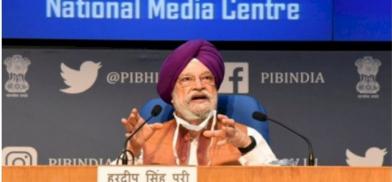
Civil Aviation Minister Hardeep Singh Puri on Thursday said India will allow limited flight operations from US and France under the 'Air Bubble' arrangements made with these countries. Accordingly, these flight services will be operated under certain pre-conditions.
Besides these, operations of Lufthansa flights to India under the arrangement with Germany will commence.
He said that similar arrangement are under advance stages of negotiations with the UK.
In aviation parlance, 'Air Bubble' travel arrangements are established between two countries under a certain set of safety and travelling conditions such as high demand, legal entry and exit norms and airlines' willingness to operate on these sectors.
Puri said that India has allowed Air France to operate 28 flights to Delhi, Bengaluru and Mumbai from July 18 to August 1.
Similarly, US-based United Airlines has been allowed to operate 18 flights between July 17-31st.
At present, the civil aviation authorities of India and the UAE have agreed to allow operations of special repatriation flights between the two countries during July 12-26.
As per the arrangement, chartered flights operated by UAE carriers to fly out Indians from the UAE will be allowed to carry ICA (Federal Authority for Identity and Citizenship) approved UAE residents to their native country on their return leg.
Further, Indian carriers operating repatriation flights to bring back Indians from the UAE will be allowed to carry the ICA-approved UAE residents on their onward journey from India to the Gulf country.
Currently, the suspension on scheduled commercial international flight operations to and from India have been extended till July 31.
In repatriation operations under the Vande Bharat Mission, Puri said that till July 15, 687,467 passengers have been brought back to India.
On domestic operations, the minister said that passenger traffic is still under 33 per cent of capacity which comes to 100,000 passengers per day.
Muscat: His Majesty Sultan Haitham Bin Tarik has sent a cable of congratulations to President Emmanuel Macron of the French Republic, on his country's National Day. In his cable, His Majesty expressed his sincere congratulations along with his best wishes of good health and happiness to President Macron and the friendly people of France further progress and prosperity. Source: https://timesofoman.com/
French researchers use malaria drug to cure 36 patients
Researchers think they've found a cure for corona virus.
French physician-researchers have completed a largely successful clinical trial using a drug originally developed to treal malaria, the New York Post reported.
Hydroxychloroquine, sold under the brand name Plaquenil — and also used to treat arthritis and other ailments — was determined to be effective in killing the deadly bug in laboratory experiments, Forbes reported, citing findings published March 9 in the Clinical Infectious Diseases journal.
The drug developed in 1955 is showing signs that it may also help cure COVID-19 — especially when combined with an antibiotic, a promising new study reveals.
“(W)e predict that the drug has a good potential to combat the disease,” the study’s authors, most from the Chinese Academy of Sciences in Wuhan, wrote in a letter published in Cell Discovery on Wednesday, according to the report.
36 patients — including 20 treated individuals and 16 infected controls — were enrolled in the study, led by Didier Raoult, an infectious disease expert from l’Institut Hospitalo-Universitaire in Marseille.
The treated group was given 600 mg of Plaquenil each day.
The researchers found 50% of the treated group turned from positive to negative for the virus by the 3rd day. By day 6, that figure was up to 70%.
Of the 20 test patients, 6 who were treated with both Plaquenil and the antibiotic azithromycin showed impressive results — with 5 testing negative at day 3. All 6 of them tested negative at day 6.
“Despite its small sample size our survey shows that hydroxychloroquine treatment is significantly associated with viral load reduction/disappearance in COVID-19 patients and its effect is reinforced by azithromycin,” the study concluded. Source: https://www.lexingtonchronicle.com
PARIS: France was preparing for eventual resurgence of coronavirus epidemic and targeted lockdown would be imposed to preserve economic and social activities, Prime Minister Jean Castex said Wednesday.
"The virus is still here," Castex told local broadcaster BFMTV. "It was time to prepare for a second wave of the epidemic... It is the role of the State to prepare, to anticipate."
"But we would not proceed to a general lockdown like in March, as that has terrible economic and human consequences. Any new lockdown would be targeted," he added.
Castex, who had orchestrated the de-confinement plan, stressed "the need to preserve economic and social life" while implementing emergency measures to contain the epidemic resurgence.
France had put its 67 million residents into lockdown from March 17 to May 11 to curb the spread of the virus. Only necessary journeys were allowed, all non-essential businesses were shut down, factories halted production and borders were closed.
The restrictive rules triggered the country's worst post-war economic recession. The government expected growth to shrink by 11 percent this year and the public budget gap to widen by 11.4 percent.
As of Wednesday, France had registered 29,861 deaths caused by the coronavirus and 165,719 confirmed positive cases. A total of 8,336 infected people remain in hospitals, of whom 582 need life support.Source:https://timesofoman.com/
The Flamanville EPR (Image: Alexis Morin and Antoine-Soubigou/EDF)
Quality deviations have been detected on certain welds of the main secondary system in the EPR reactor under construction at Flamanville, northern France, EDF announced today. The utility has informed the French regulator of the discovery, but has yet to determine whether the unit's start-up, expected at the end of this year, will be delayed.
In a pressurised water reactor, steam generators transfer reactor core heat from the primary coolant loop into a secondary loop where it can be used to generate electricity. The secondary loop is a closed system in which steam produced in the steam generator is conducted towards the turbine. Once condensed, the water is returned to the steam generator.
EDF said the first quality deviation in the welding of the main secondary system was detected on 21 March during the initial comprehensive inspection, a regulatory requirement prior to the reactor starting up. This inspection includes an examination of the welds in the primary and secondary systems, and allows an initial reference state of the plant to be established before it begins operating.
Each of the welds had been declared compliant by the consortium of contractors in charge of manufacturing the system, EDF noted.
Following the detection of deviations, EDF decided to carry out additional checks on the 150 welds in question in order to identify exactly which ones are subject to quality deviations. It has also ordered a report into the causes and nature of the deviations, in order to define the necessary corrective actions and methods to be proposed to the French nuclear safety regulator, the Autorité de Sûreté Nucléaire (ASN), so as to meet safety requirements. EDF said it expects to complete the checks and the report by the end of May.
EDF said it today notified the ASN of "a significant event relating to the detection of deviations in the performance checks of the welds".
The part of the main secondary system which directs the steam from the steam generator towards the turbine is already subject to a deviation with respect to the correct application of "high-quality" requirements, EDF noted. This deviation was notified to ASN on 22 February.
"Following the current checks and the licensing process by ASN, EDF will be able to specify whether the project requires an adjustment to its timetable and its costs," EDF said.
Construction work began in December 2007 on the 1650 MWe unit at the Flamanville site in Normandy - where two reactors have been operating since 1986 and 1987. The dome of the reactor building was put in place in July 2013 and the reactor vessel was installed in January 2014. The reactor was originally expected to start commercial operation in 2013, but owing to delays this is now expected late this year.
EDF's roadmap for the Flamanville 3 project, drawn up in September 2015, sees fuel loading and start-up of the reactor at the end of the fourth quarter of 2018. It also sets the project cost at €10.5 billion (at the 2015 rate, excluding interim interest).
Cold functional tests - which verify the leak-tightness of the primary circuit - began at Flamanville 3 on 18 December and were completed on 6 January. Testing of the reactor building to confirm its airtightness was completed on 3 April. Hot functional tests - which involve checking the equipment under similar temperature and pressure conditions to those under which it will operate - are due to start in July.
The first-of-a-kind EPR at Finland's Olkiluoto plant has been under construction since 2005 and has seen several revisions to its start-up date. In October, the schedule for OL3 commencing regular electricity production was again revised from the end of 2018 to May 2019. The unit began functional hot tests in December.
The Taishan 1 EPR in China, which has been under construction since 2009, has completed functional hot tests and will be the first EPR to operate. It is expected to start up later this year, while Taishan 2 is scheduled to begin operating next year.
The Paris Summit brought out a global agreement on curtailing the global warming. How much change is the treaty actually going to bring on mother earth?
Mona: All eyes were on Paris second time around in a month’s time. Only the top world leaders gathered the second time to save the earth. Paris Summit was extended by a day as 196 parties sat together to form a global agreement on the reduction of climate change. Two weeks of intense negotiations led to a deal to limit the rise in global temperature to less than 2C. India emerged a key player at the talks. Young turks from Chandigarh share their reflections on the treaty.
Too good to be true: The United Nations Climate Change Conference 2015 (COP 21) comes across a goody goody deal for all nations from developed to developing, including the US, China, India and Iceland but it’s not comprehensive. While the aim is noble, who does what, when and how remains largely unlettered in order to curtail the rising temperature. It’s tougher for developing nations than the developed, for while we have to carry on development, industry being a significant key player in it; and, also cut our carbon footprint at the same time. Mostly so as majority of our huge population still lives in villages, we are still dependent on coal, thermal power and also unaware of what all the deal is about.— Pankaj Thakur, B Tech Electronics and computer science:
Wait and watch: One good thing that comes out of COP 21 is that funds would be transferred to India but what remains to be seen is if they would put it to the intended use. While it is relatively easier for advanced nations to put regulations in practice, in developing countries the major thrust is on basic infrastructure, lifting its population above poverty level. Though the summit aims at cutting global warming, ‘how’ remains to be seen. The US and China, the most polluting countries in the world, though have pledged their support to the cause, it isn’t going to be an easy game either for them to follow the agreed guidelines. — Anil Sharma, B Sc, Biotech:
How and when of it: Paris Climate Talks paved way for us to take responsibility for having disturbed the ecological balance and reversing it. The agreement keeps in mind the holistic view and has different expectations from countries in different stages of development. Like China is allowed to peak its industrial capacity before it joins hand with advanced countries to play a responsible part. But when and how is still fuzzy. The treaty looked good on paper but I was quite dejected reading an article today on how even if every Intended Nationally Determined Contributions (INDCs) follow the norms, we still wouldn’t be able to curtail global warming as aimed. — Sarthak Negi, B Tech Mechanical engineering:
A tall order: Global warming is a real challenge and you see not even the half of the world is bothered about it. Advanced nations and its citizens who have been there and seen all are now acting in tandem to protect the earth but look at the scene in India or many African countries. While our indigenous ways helped preserving nature and maintaining balance, modern ways of the world have played havoc with the traditional lifestyle. In race to have a good life, how a country like India is going to fall in line of the guidelines of (COP 21) seems a tall order. — Rajinder Saini, M Sc Physics. Source: http://www.tribuneindia.com/
Obama talks with Turkish President as other world leaders applaud at the G-20 summit in Antalya (Photo: AP)
World leaders united on Sunday to denounce terrorism at a heavily-guarded summit in Turkey after the gun and bomb assaults in Paris, despite divisions over conflict-riven Syria. US President Barack Obama, Vladimir Putin of Russia, China’s President Xi Jinping and other leaders gathered at the Mediterranean resort of Antalya two days after the Paris attacks claimed by Islamic State jihadists. Mr Obama condemned the killing of 129 people in Paris as well as a double suicide bombing in Ankara in October as attacks “on the civilised world” and vowed to “redouble our efforts” to eliminate the ISIS network. “We stand in solidarity with France in hunting down the perpetrators of this crime and bringing them to justice,” Mr Obama declared after talks with his host, Turkish President Recep Tayyip Erdogan. The Paris killings darkened the mood of the summit of the Group of 20 top world economies, with security and the Syrian conflict now eclipsing an economic agenda that will also deal with the spreading refugee crisis, climate change and tax avoidance. Mr Erdogan said the summit agenda was now “very different” given the massacre in Paris, with the leaders to condemn the attacks in their communique or a separate statement. “I believe that our stance against international terrorism will find its expression in a very strong, tough message at the G20 summit,” Mr Erdogan said. “This terrorist action is not only against French people but all humanity.” Russia’s Mr Putin said that overcoming global terror was possible only “if all the international community unites its efforts”. Mr Putin is key to the gathering, which is taking place without French leader Francois Hollande who remains home to lead his shaken country in the aftermath of the attacks. Russia launched its own Syrian air campaign in September but the West suspects the Russian bombardment is aimed at propping up the regime of President Bashar al-Assad, a difference that risks driving a wedge through the summit. European Union President Donald Tusk said that Russian actions in Syria must be focused on ISIS and not the anti-Assad Opposition. Mr Erdogan wants to use the summit to cement his status as a global leader after winning a resounding victory in an election in October, held three weeks after a twin suicide bombing in Ankara that killed 102 people and was blamed on Islamic State militants. All musical events, including at the official dinner on Sunday night, have been cancelled as a mark of respect for the Paris victims. World leaders observed a minute of silence to remember the victims of terror attacks in Paris and Ankara at the start of a two-day G20 summit. Turkey is deeply opposed to Russia’s airstrikes but has received only a lukewarm reaction so far to its proposal for a safe zone free of ISIS jihadists to be created inside Syria as a haven for refugees. Top diplomats gathered in Vienna on Saturday agreed a fixed calendar for Syria that would see a transition government in six months and elections in 18 months but failed to agree on the future of Mr Assad. The refugee crisis is a key topic at the summit here, with Turkey housing some 2.2 million Syrian refugees from the conflict but the European Union urging Ankara to do more to prevent migrants undertaking risky boat crossings to the EU. European Commission head Jean-Claude Juncker warned that the attacks in Paris should in no way poison the sensitive debate over refugees. “Those who organised, who perpetrated the attacks are the very same people who the refugees are fleeing and not the opposite,” Mr Juncker said. Source: The Asian Age
France’s auction for the allocation of 700 MHz band spectrum will begin on November 16th, with four candidates taking part: Bouygues Telecom, Free Mobile, Orange and SFR. Telecoms regulator ARCEP will issue an update on the status of the auction at the end of each day, up until the end of the procedure which could take one or several days. These updates will include:
the price reached on each block at day’s end;
whether this is the closing price for a block (i.e. requests from the four candidates total six blocks) or whether the bidding will continue the next day as the four candidates are still requesting more than six blocks in total.
ARCEP will not provide any details on the requests made by the candidates while the auction is still ongoing. Once the auction is complete, ARCEP will issue a communique on the quantity of spectrum awarded to each candidate, and the price paid for the frequencies. The 700 MHz band is currently being used by DTT services. The French Government decided that, with improvements to DTT compression standards, it was possible to free up the 700 MHz band, and to allocate 2 × 30 MHz to mobile operators to enable them to keep pace with the exponential increase in mobile data traffic. This band will be freed up progressively across the country between 2016 and 2019. Source: Article, Image: flickr.com
French economist Jean Tirole won the Nobel Economics Prize on Monday, for his analysis of big companies, market power and regulation, the Royal Academy of Sciences said. Tirole, the second Frenchman to be honoured this year, is "one of the most influential economists of our time," the jury said. "Many industries are dominated by a small number of large firms or a single monopoly," the jury said of the economist, from Toulouse 1 Capitole University. "Left unregulated, such markets often produce socially undesirable results -- prices higher than those motivated by costs, or unproductive firms that survive by blocking the entry of new and more productive ones." The power of markets and the importance of strong and appropriate regulation has been a central issue in the management of national economies in recent years. This has been the case especially since the 1980s, when policies in advanced countries moved progressively to allowing markets a freer role, and privatised former state monopolies, with the aim of raising competition and reducing inflation. One of the chief contributions of 61-year-old Tirole is the insight that market dominance works differently in different industries, according to the jury. Undercutting prices not all bad It noted that undercutting prices has traditionally been disciplined under competition, or anti-trust, law, because setting prices below production costs is one way of getting rid of competitors -- but this is not necessarily true of all markets. In the newspaper market, for example, giving away papers free can be a way of attracting readers and thus new advertisers to cover the losses arising from production and distribution. "In this case, it is doubtful whether undercutting should be banned," the jury said. "The best regulation or competition policy should therefore be carefully adapted to every industry's specific conditions." Tirole's research has also showed that some companies -- for example producers of widely used but patented software -- are able to dominate not just their own industry, but also neighbouring industries further down the production chain. "If the innovation is sold to only one firm, this firm makes a high profit because it becomes more efficient than its competitors. The producer can then set his price considerably higher," the jury said. The jury argued that Tirole's work has provided a framework for designing policies for a number of industries, ranging from telecommunications to banking. The citation
comes amid growing controversy over the market power of such companies as Amazon and Google. "Drawing on these new insights, governments can better encourage powerful firms to become more productive and, at the same time, prevent them from harming competitors and customers," it said. The prize will be awarded at a ceremony in Stockholm on December 10, the anniversary of the death in 1896 of the prizes' creator, Swedish scientist and philanthropist Alfred Nobel. The economics prize is the only Nobel not originally included in Nobel's last will and testament. It was established in 1968 by the Swedish central bank to celebrate its tricentenary, and first awarded in 1969. The other prizes have been awarded since 1901. The award of this year's prize to a French national marked a departure from American dominance on the list of laureates. Over the past decade, 18 out 20 economics prize laureates have been from the United States, including one Israeli-American. Last year, US scholars Eugene Fama, Lars Peter Hansen and Robert Shiller won for their work on spotting trends in the asset markets. The economics prize winds up this year's Nobel season, marked the award of the peace prize to 17-year-old Pakistani Malala Yousafzai and India's Kailash Satyarthi, and the literature prize to French writer Patrick Modiano. Source: Hindustan Times, Image: https://upload.wikimedia.org
By Graham Beattie: French novelist Patrick Modiano has won the Nobel Prize in Literature "for the art of memory with which he has evoked the most ungraspable human destinies and uncovered the life-world of the Occupation," the Swedish Academy said. The prize is worth 8 million kronor (about $1.1 million). In its biography of the winner, who was born near Paris less than three months after the end of World War II in Europe, the Academy said that "Modiano's works centre on topics such as memory, oblivion, identity and guilt. The city of Paris is often present in the text and can almost be considered a creative participant in the works. Rather often his tales are built on an autobiographical foundation or on events that took place during the German Occupation. He sometimes draws material for his works from interviews, newspaper articles or [his] own notes, which he has accumulated over the years. His novels show an affinity with one another, and it happens that earlier episodes are extended or that persons recur in different tales." The New York Times said that "many of his fictional works delve into the moral dilemmas that citizens faced during World War II, and some play with the detective genre." Most of Modiano's titles translated into English are out of print, although that may change soon. Those works include 1978 Prix Goncourt-winner Missing Person (Rue des Boutiques Obscures), translated by Daniel Weissbort and published by Verba Mundi/David R. Godine; Suspended Sentences: Three Novellas, translated by Mark Polizzotti, to be published by Yale University Press in February; Out of the Dark (Du Plus Loin de l'Oubli), translated by Jordan Stump and published by University of Nebraska Press; Honeymoon (Voyage de noces), published by Verba Mundi/David R. Godine; and Dora Bruder, translated by Joanna Kilmartin and published by University of California Press. Modiano also has written children's books and film scripts, including the screenplay for Lacombe Lucien, the 1974 movie directed by Louis Malle and set during the Nazi Occupation of France. Surce: Beattie's Book Blogat


_93079.jpg)


.jpg?ext=.jpg)


 Muscat: His Majesty Sultan Haitham Bin Tarik has sent a cable of congratulations to President Emmanuel Macron of the French Republic, on his country's National Day. In his cable, His Majesty expressed his sincere congratulations along with his best wishes of good health and happiness to President Macron and the friendly people of France further progress and prosperity.


 France’s auction for the allocation of 700 MHz band spectrum will begin on November 16th, with four candidates taking part: Bouygues Telecom, Free Mobile, Orange and SFR. Telecoms regulator ARCEP will issue an update on the status of the auction at the end of each day, up until the end of the procedure which could take one or several days. These updates will include:


