More than 1 billion 5G subscriptions expected in India by 2031: Report
Luxury tourism is a risky strategy for African economies – new study of Botswana, Mauritius, Rwanda
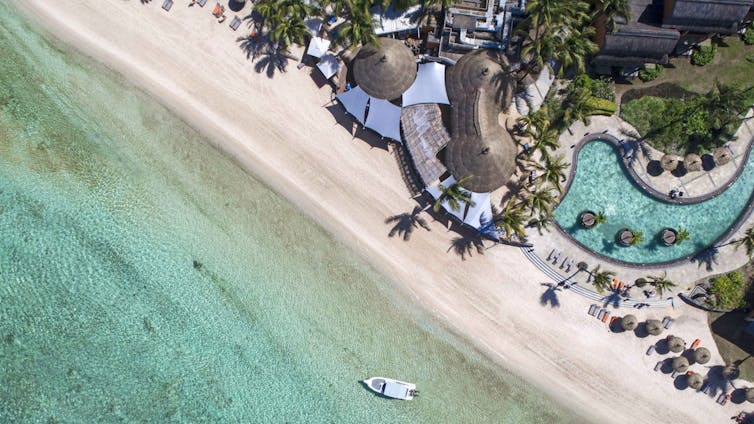
Mauritius led the luxury tourism trend in Africa with all-inclusive resorts. Heritage Awali/yourgolftravel.com, CC BY-NC-ND
Pritish Behuria, University of ManchesterHow successful is luxury tourism in Africa? What happens if it fails to produce higher tourism revenues: can it be reversed? And does it depend on what kind of government is in place?
Pritish Behuria is a scholar of the political economy of development who has conducted a study in Botswana, Mauritius and Rwanda to find answers to questions like this. We asked him about his findings.
What is luxury tourism and how prevalent is it in Africa?
Luxury tourism aims to attract high-spending tourists to stay at premium resorts and lodges or visit exclusive attractions. It’s a strategy that’s being adopted widely by governments around the world and also in African countries.
It’s been promoted by multilateral agencies like the World Bank and the United Nations, as well as environmental and conservation organisations.
The logic underlying luxury tourism is that if fewer, high-spending tourists visit, this will result in less environmental impact. It’s often labelled as a “high-value, low-impact” approach.
However, studies have shown that luxury tourism does not lead to reduced environmental impact. Luxury tourists are more likely to use private jets. Private jets are more carbon intense than economy class travel. Supporters of luxury tourism also ignore that it reinforces economic inequalities, commercialises nature and restricts land access for indigenous populations.
In some ways, of course, the motives of African countries seem understandable. They remain starved of much-needed foreign exchange in the face of rising trade deficits. The allure of luxury tourism seems almost impossible to resist.
How did you go about your study?
I have been studying the political economy of Rwanda for nearly 15 years. The government there made tourism a central part of its national vision.
Over the years, many government officials and tourism stakeholders highlighted the challenges of luxury tourism strategies. Even so, there remains a single-mindedness to prioritise luxury tourism.
I found that, in Rwanda, luxury tourism resulted in a reliance on foreign-owned hotels and foreign travel agents, exposing potential leakages in tourism revenues. Crucially, tourism was not creating enough employment. There was also a skills lag in the sector. Employees were not being trained quickly enough to meet the surge of investments in hotels.
So I decided to investigate the effects of luxury tourism in other African countries. I wanted to know who benefits and how it is being reversed in countries that are turning away from it.
I interviewed government officials, hotel owners and other private sector representatives, aviation officials, consultants and journalists in all three countries. Added to this was a thorough review of economic data, industry reports and grey literature (including newspaper articles).
What are your take-aways from Mauritius?
Mauritius was the first of the three countries to explicitly adopt a luxury tourism strategy. In the late 1970s and early 1980s the government began to encourage European visitors to the island’s “sun-sand-sea” attractions. Large domestic business houses became lead investors, building luxury hotels and buying coastal land.
Over the years, tourism has provided significant revenues for the Mauritian economy. By 2019, the economy was earning over US$2 billion from the sector (before dropping during the COVID pandemic).
However, tourism has also been symbolic of the inequality that has characterised Mauritius’ growth. The all-inclusive resort model – where luxury hotels take care of all of a visitor’s food and travel needs themselves – has meant that the money being spent by tourists doesn’t always enter the local economy. A large share of profits remains outside the country or with large hotels.
After the pandemic, the Mauritian government took steps to loosen its focus on luxury tourism. It opened its air space to attract a broader range of tourists and re-started direct flights to Asia. There’s growing agreement within government that the opening up of tourism will go some way towards sustaining revenues and employment in the sector. Especially as some other key sectors (like offshore finance) may face an uncertain future.
And from Botswana?
Botswana followed Mauritius by formally adopting a luxury tourism strategy in 1990. Its focus was on its wilderness areas (the Okavango Delta) and wildlife safari lodges. For decades, there were criticisms from scholars about the inequalities in the sector.
Most lodges and hotels were foreign owned. Most travel agencies that booked all-inclusive trips operated outside Botswana. There were very few domestic linkages. Very little domestic agricultural or industrial production was used within the sector.
Guides take tourists across Botswana’s Okavango delta in boats. Diego Delso/Wikimedia Commons, CC BY-SAHowever, I found that the direction of tourism policies had also become increasingly political. Certain politicians were aligned with conservation organisations and foreign investors in prioritising luxury tourism. Former president Ian Khama, for example, banned trophy hunting on ethical grounds in 2014. He pushed photographic tourism, where travellers visit destinations mainly to take photos. But critics allege he and his allies benefited from the push for photographic tourism.
Photographic tourism is closely linked with the problematic promotion of “unspoilt” wilderness areas that conform to foreign ideas about the “myth of wild Africa”.
President Mokgweetsi Masisi reversed the hunting ban once he took power. He argued it had adverse effects on rural communities and increased human-wildlife conflict. He believed that regulated hunting could be a tool for better wildlife management and could produce more benefits for communities.
Since the latter 2010s, Botswana’s government has loosened the emphasis on luxury tourism and tried to diversify tourism offerings. It has relaxed visa regulations for Asian countries, for example, to allow a wider range of tourists to visit more easily.
What about Rwanda?
Of the three cases, Rwanda was the most recent to adopt a luxury tourism strategy. However, it has remained the most committed to this strategy. Rwanda’s model is centred on mountain gorilla trekking and premium wildlife experiences. It’s augmented by Rwanda’s attempt to become a hub for business and sports tourism through high-profile conferences and events.
Gorillas are a key attraction for luxury tourists in Rwanda. Gatete Pacifique/Wikimedia Commons, CC BY-SARwanda invited global hotel brands (like the Hyatt and Marriott) to build hotels and invested heavily in the country’s “nation brand” through sponsoring sports teams. The “luxury” element is managed through maintaining a high price to visit the country’s main tourist attraction: mountain gorillas. Rwanda is one of the few countries where mountain gorillas live.
After the pandemic, the government lowered prices to visit mountain gorillas but has also regularly stated its commitment to luxury tourism.
What did you learn by comparing the three?
I wanted to know why some countries reverse luxury tourism strategies once they fail while others don’t.
It is quite clear that luxury tourism strategies will always have disadvantages. As this study shows, luxury tourism repeatedly benefits only very few actors (often foreign investors or foreign-owned entities) and does not create sufficient employment or provide wider benefits for domestic populations. My research shows that the political pressure faced by democratic governments (like Botswana and Mauritius) forced them to loosen their luxury tourism strategies. This was not the case in more authoritarian Rwanda.
Rwanda’s position goes against a lot of recent literature on African political economy, which argues that parties with a stronger hold on power would be able to deliver better development outcomes.
While that may be case in some sectors, the findings of this study suggest that weaker political parties may actually be more responsive to changing policies that are creating inequality than countries with stronger political parties in power.![]()
Pritish Behuria, Reader in Politics, Governance and Development, Global Development Institute, University of Manchester
This article is republished from The Conversation under a Creative Commons license. Read the original article.
Worldwide spending on AI is expected to be nearly $1.5 trillion in 2025: Report
58pc Indian organisations boost learning & development budgets for FY25: Report
New Delhi, (IANS): About 58.5 per cent of organisations in India have increased their learning and development budgets for FY25, according to a report on Monday.
India expected to clock 7.2 pc GDP growth in 2024-25: Report
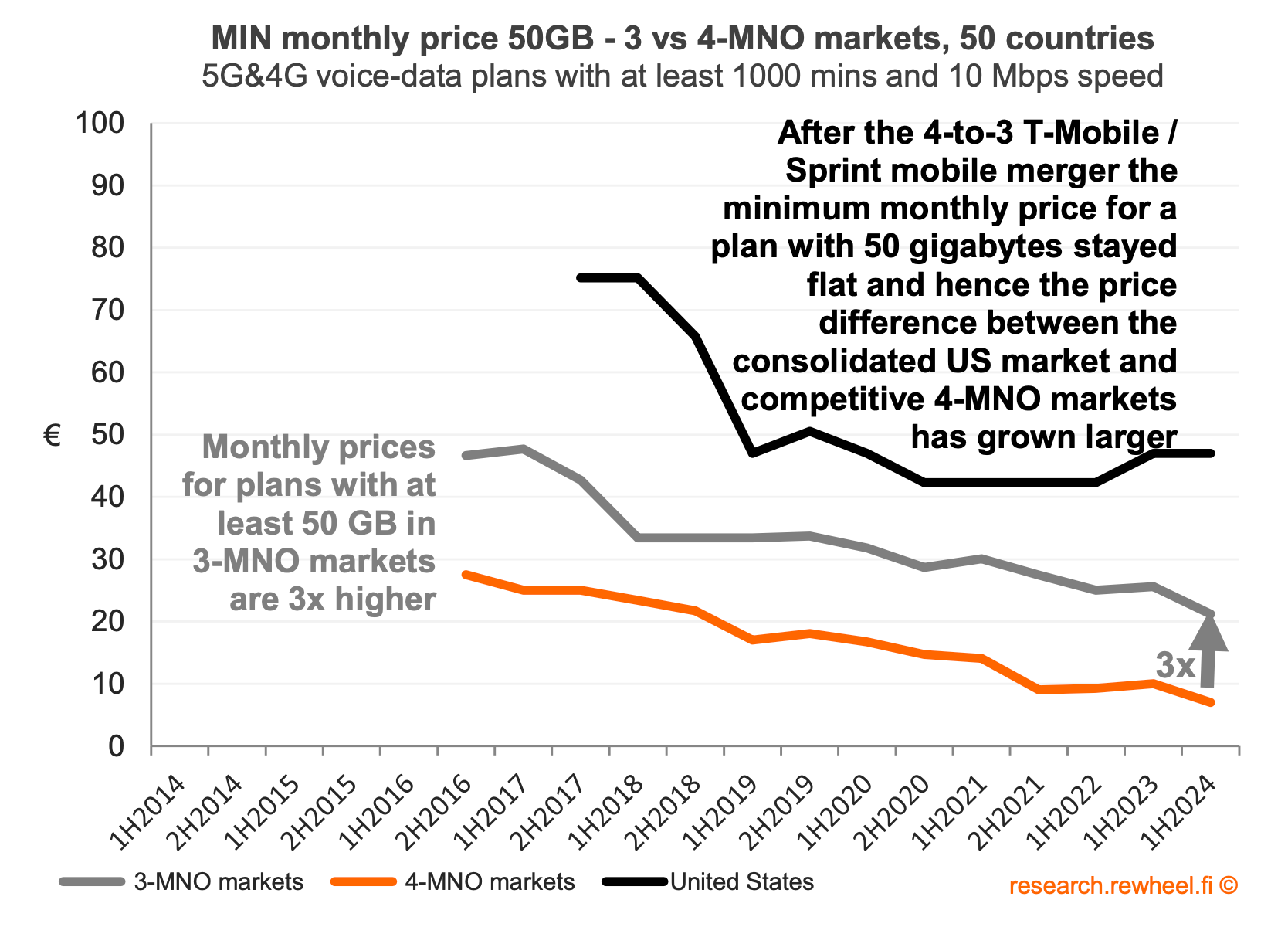
US mobile customers harmed by T-Mobile’s Sprint purchase according to report


India’s entertainment & media industry to reach $73.6 bn by 2027: Report
India will remain fastest growing economy; South Asia outlook poor: UN report
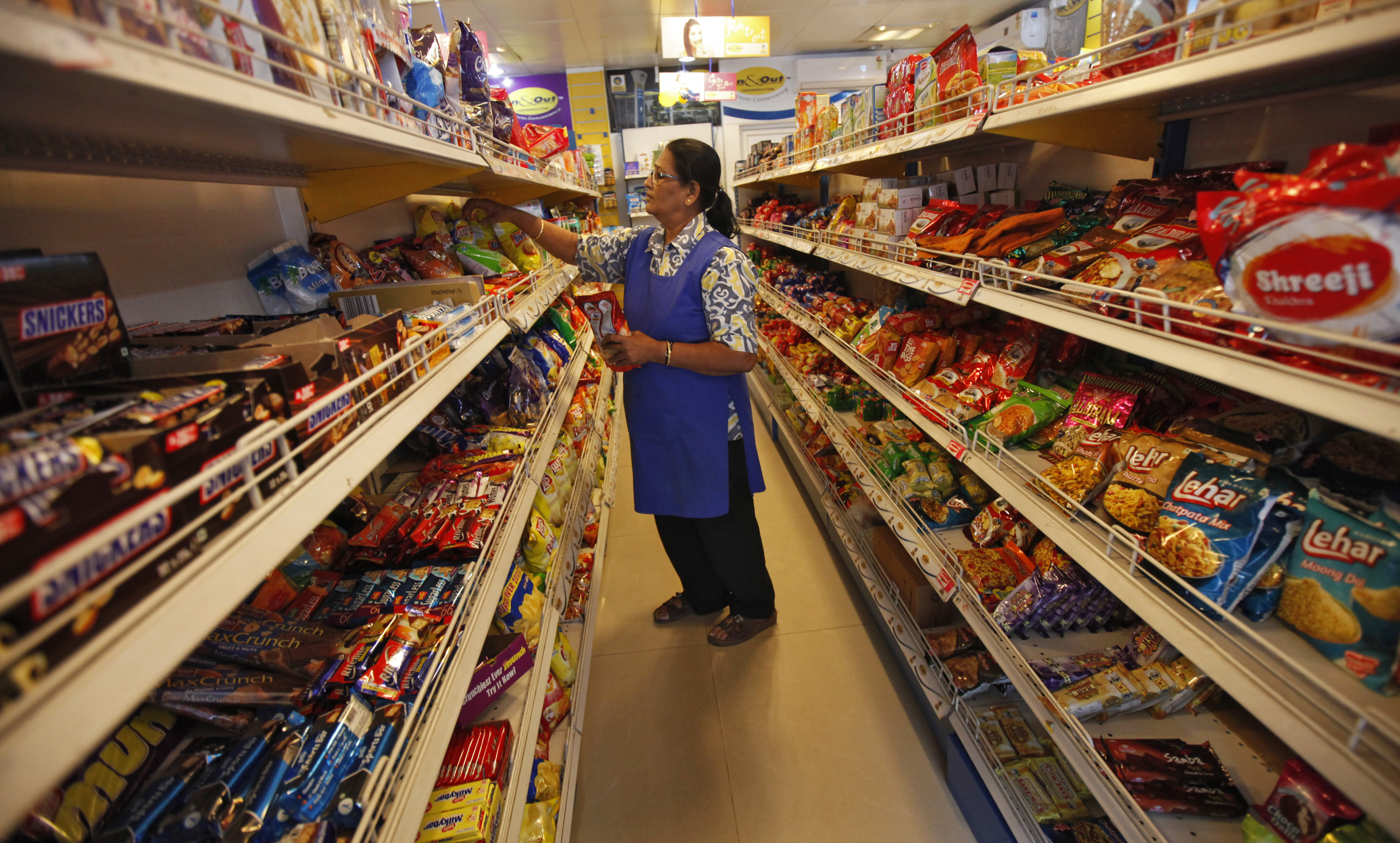
FILE PHOTO: A worker arranges food packets inside a retail store in Kolkata October 24, 2013. REUTERS/Rupak De Chowdhuri/File PhotoRussia slams leakage of IAEA report on Iran

800-page report shows how Tarrant eluded detection

India reports 61,537 new COVID-19 cases in 24 hrs
India's agricultural exports can grow to $70 billion: Report
iPhone 7 to be water resistant: reports

Though Apple has not mentioned it in its iPhone 7 presentation, speculation is rife that the iPhone7 would feature resistance against water infiltration. The speculation has been sparked by the fact that earlier this year iPhone 6s and 6s Plus were found to have a built-in gasket. According to www.bgr.com, which cited unconfirmed reports, the iPhone 7 will possibly be waterproof. According to the report, although Apple was not commenting on reports such as these, its actions showed it was aiming for a waterproof iPhone at some point in the future, just like what it did to the iPhone 6s, though it was not fully water resistant. The article further said that the Business Insider had come across a new patent application called the "Electronic Device with Hidden Connector." The technology would automatically seal an opening, like headphone and USB ports, reportedly using an elastomer that would be able to expand and seal the opening the moment the connector was removed. This would protect the opening from accidental water damage since liquid would not be able to get into the device, assuming that the elastomer completely sealed-off before any liquid got in. Meanwhile, The Verge, reported that the material was rubber that could ''lose and regain its shape to keep the sensitive inner-workings of a device protected.'' A rubber seal which would enclose the ports on the device, such as for the power cord and when a plug was being inserted the flexible rubber enclosing would make way for it. With the removal of the plug, the rubber would then take its original shape and enclose the port. Besides water, the elastomer would offer protection against dust, debris and gas. Source: domain-b.com, Image: https://upload.wikimedia.org
35% of female characters in Indian movies shown with nudity: UN report
Apple copyright case could cost Samsung $2bn
If Apple wins, experts say that the cost may be passed on to Samsung's customers iPhone 6: new phone 'to get pressure and heat sensors' JURY selection gets underway today in the legal battle between Apple and Samsung in the US District Court in San Jose. Apple is suing its rival for damages amounting to $2bn (£1.2bn) for infringement of copyright. The case is the latest in a long-running feud between the two tech firms. Each side accuses the other of ripping off protected designs and features. A string of rulings have found in each side's favour, but so far years of litigation between the two firms have had little real effect. In 2012, Samsung lost its first major court battle with Apple and was ordered to pay $930m in damages. That amount is "pocket change" to Apple, one of the richest companies in the world, says the New York Times, and it made little impact on Samsung either, whose market share has grown enormously since the ruling: one in every three smartphones sold worldwide in 2013 was a Samsung. So could this latest skirmish between the two tech companies have any real effect? What does Apple claim? Apple says that Samsung took key features of its phones and tablets including the slide-to-unlock feature that brings a smartphone or tablet to life with a single swipe gesture. It also claims that the South Korean electronics company took tap-from-search, a feature that allows users to instantly make a phone call or view a location on a map by tapping on a link in their mobile browsers. Apple identifies similarities between the voice-activated assistant Siri and Google's voice controls, and infringements of their autocorrect and unified search software. According to Apple's attorneys "Apple revolutionised the market in personal computing devices. Samsung, in contrast, has systematically copied Apple's innovative technology and products, features and designs, and has deluged markets with infringing devices". How does Samsung respond? Samsung says that Apple is at fault and that it has actually stolen a considerable amount of Samsung's intellectual property, The Guardian explains. "Samsung has been a pioneer in the mobile device business sector since the inception of the mobile device industry," Samsung's attorneys claim. "Apple has copied many of Samsung's innovations in its Apple iPhone, iPod, and iPad products." How will the case be adjudicated? The case will be heard by a jury presided over by judge Lucy Koh , who also oversaw the last trial in which Samsung was found to have infringed one of Apple's patents. Each side will have just 25 hours to present their case. How much is at stake? Apple is seeking about $2bn in damages from Samsung for selling phones and tablets that violate its software patents. Apple's lawyers say that the company is owed $40 per Samsung device that has been sold with software that violates its intellectual property. If it loses the case, Apple's legal costs are expected to come to around $6m. How does Google fit in? Some experts say that the real target of the suit is in fact Google, whose Android operating system is at the heart of many of the alleged violations. The New York Times notes that Apple's founder Steve Jobs once said: "I'm going to destroy Android, because it is a stolen product." Many of the features Apple is going after are actually properties of Google not Samsung. "Google's been lurking in the background of all these cases because of the Android system," Mark McKenna, a property law professor at Notre Dame University told the New York Times. "Several people have described the initial battle between Samsung and Apple as really one between Apple and Google." But Apple cannot sue Google directly, because it is only when Android software is implemented in a device that it potentially breaches Apple's patents. How will this affect consumers? If Apple does succeed in winning damages, some experts believe that the cost may be passed on to Samsung's customers. Tech Radar says that "if Apple gets its way, we could see Samsung Galaxy device prices hiked up to cover the shortfall." Will Samsung have to pull its products? Probably not. After winning its previous court case Apple tried to have some Samsung products banned - "a goal that Apple identified as more important than monetary compensation," says Bloomberg - but failed. If it wins this case it "can then try anew for a sales ban" against Samsung but it "will prove difficult", believes Bloomberg. Not least because the presiding judge, Lucy Koh, twice rejected Apple's requests for a ban after the 2012 case. iPhone 6 will spark 'massive upgrade' with super-size screen: 18 March Demand for a new, larger-screened iPhone 6 will lead to a “massive upgrade cycle” among existing Apple customers and lure back former fans who have switched to Android, according to an Apple analyst. “Large-screen envy is prevalent among the iPhone installed base,” said Brian Marshall, head of International Strategy and Investment’s technology team. He predicted that Apple will launch two versions of the iPhone 6 this summer, with screens measuring 4.7 and 5.5 inches. Both would be significantly larger than the current 5S and 5C models, which both have a 4-inch screen – and the larger of the two would eclipse the 5.1-inch Samsung Galaxy S5, expected to be a strong rival to the iPhone when it goes on sale next month. “It is hard to argue that larger screen iPhones won’t increase the replacement rate,” writes Chuck Jones in Forbes. “I have an iPhone 5 and have found the screen size limiting when I’m reading emails or websites. The key question is how high could the replacement rate move up to since much of the recent install base is locked in for two years.” Marshall predicts that as much as 14 per cent of an estimated 260 million iPhone users could upgrade to the new model in the second half of the year. That, he says, could lead to a significant rise in revenue for the company. Reports last week (see below) from component suppliers suggest that Apple is preparing to build the iPhone 6 in record numbers. iPhone 6: Apple paves way for 'biggest ever' launch 18 March APPLE is gearing up for its biggest-ever product launch, reports suggest, with preparations underway to build 90 million iPhone 6 handsets this year. An analyst at Citigroup Global Markets told the Commercial Times that Foxconn, Apple's Chinese manufacturer, was "expected to land orders for 90 million units of the iPhone 6 from Apple in 2014". The analyst, Wei Chen, went on to say that the new handset is expected to outsell the current model. "Buoyed by shipments of iPhone 6, Apple's smartphone shipments are expected to rise 23 per cent in 2014 compared to 13 per cent growth posted a year earlier," he said. Most industry commentators had predicted that the iPhone 6 would go on sale in autumn this year, but these new figures hint at an earlier release date, according to technology news website BGR. "Assuming the 90 million iPhone 6 order is accurate, it may mean that Apple may launch the 2014 iOS smartphones a lot earlier than anticipated," it suggests. Apple sold 50 million iPhone 5S handsets, launched in October 2013, before the end of the year. If it expects 90 million iPhone 6 sales by the end of 2014, it must either be planning for significantly higher demand, or an earlier release date. The early launch theory received fresh backing today with reports that Apple has signed a deal with Samsung to manufacture a substantial proportion of the A8 computer chips that will sit at the heart of the iPhone 6. That contradicts earlier reports that the contract would be awarded exclusively to another company, Taiwan Semiconductor Manufacturing Company (TSMC). "[Apple's] latest move is being read by analysts as its way of ensuring that the pre-set production and release calendars for the iPhone 6 will take place as planned," the International Business Times reported. "With two heavyweight names, Samsung and TSMC, jointly handling the A8 production duties this year, there is little room for delays to mar the iPhone 6 release date." In addition, The Wall Street Journal reported recently that Apple is planning to expand its engineering teams in Shanghai and Taipei as it seeks faster sales growth in China. "The hiring push reflects Apple's need for more engineers to work with Asian suppliers on developing components for iPhones and iPads as it plans for faster and more-frequent product releases," the paper reports. "Apple also is increasing its number of supply-chain managers, following criticism over factory conditions at some of its suppliers." In the past Apple has sought to limit its product range to a few highly profitable devices that would be updated once a year or less. As it faces increasing competition at the top end of the smartphone market, it is responding with a wider range of products. Last year's iPhone update included two models for the first time - the premium 5S and the slightly cheaper 5C - and some analysts are predicting that the iPhone 6 will come in two sizes. Although Apple has not confirmed any details of the new handset, industry insiders have suggested that the new phone is likely to feature a larger, more scratch-resistant screen, vivid colour reproduction making use of "quantum dot" technology and a new operating system. Apple has not commented on any of these reports. For further concise, balanced comment and analysis on the week's news, try The Week magazine. Subscribe today and get 6 issues completely free. Source: The Week UK,
China and India to boost trade
The Indian Merchant's Chamber made it very clear that the one-day conference was meant to persuade Chinese companies to invest more in India. That's because India's trade deficit with China widened to a record of nearly 40 billion US dollars in the 2011-2012 fiscal year, a 42 percent increase from the previous fiscal year, and nearly one-fifth of India's overall trade deficit with the world. "We are looking at a district to see if there are infrastructure opportunities for large investments and large projects in India where the
Chinese could invest and do built, operate and transport," said Niranjan Hiranandani. The president added that agreements have already been signed for China to invest in and build a high-speed railway system and modernize existing railway platforms. Indian business leaders also pledged to continue investing here in China, especially in eastern China, which generates one-third of the trade between the two countries. "Well, in Shanghai region, when I say Shanghai region, Shanghai, Jiangsu and Zhejiang, these three provinces, we have about 150 companies, from IT sector, from manufacturing, from pharmaceuticals. Some are trading companies, basically sourcing from China and selling it to India. So it's happening both ways, it's not just Chinese companies, it's Indian companies also. And we would like this two-way investments to increase further," said Naveen Srivastava. Bilateral trade has grown dramatically from 3 billion US dollars in 2001 to 74 billion in 2011, and leaders in both countries want that number to hit 100 billion by 2015. Source: ICS - International Channel Shanghai. Interview With Indian Ambassador To China: There have been numerous reports recently about China's plan to invest 300 billion US dollars in India over the
next 5 years. A large portion of the money will go to the energy and telecom industries. But there has also been plenty of debate about whether the investment will be beneficial to either side. He Jian had a chance to talk to Ashok K. Kantha, India's ambassador to China about the investment climate in his country and its prospects for improvement. Source: ICS - International Channel Shanghai,