Germany: even the closest friends don’t like to be fooled

.Subscribe
As the saga sparked by Edward Snowden continues to rage, more countries around the globe join the chorus of those outraged by the US spying programs. Even America’s closest allies seemed to be surprised by the “elastic conscience” of its long-standing partner. 
One of the most offended by the NSA eavesdropping was German Chancellor Angela Merkel. Considering that as a child of the former East Germany, Merkel grew up with her phone being tapped, no wonder that Der Spiegel’s report on the American surveillance agency listening to her phone calls, had a special resonance for Merkel. "This contradicts the interest of German people. There are no grounds for spying. Every German citizen is disappointed. The level of trust between the two countries needs to be restored,"Angela Merkel said. But sentiments aside, there are serious political consequences for this credibility gap. On October 24, the US ambassador was asked to come to the Ministry of Foreign Affairs of Germany because of the reports of phone tapping of the German Chancellor. Soon after that Merkel herself called the US President, Barack Obama asking for an explanation, Obama replied that the surveillance was carried out without his knowledge and was stopped in 2010. On October 28th, Hans-Peter Friedrich, head of the German Ministry of Interior Affairs announced that Germany should send US diplomats out of the country because of the possible wiretapping on Merkel. Jens Stomber, a coordinator for the NSA scandal with the Pirate Party in Germany, predicts it’s not the end of the story, as not only German politicians, but ordinary people have come to realize that the US is not trustworthy anymore. “I think in the past, maybe our government blindly trusted the US and I think from the Snowden leaks we can, of course, learn that you cannot trust the US in an unlimited way. And what is happening now, of course, in Europe if you look at what happened with the Swift agreement, which was suspended yesterday, or at least there was a decision to question it. So, there will be a vote in the European Council as many steps will follow. We are already in a discussion for a new date of protection reform all over Europe, so Europe is clearly taking steps to stand united against US surveillance and protect their citizens, I think so,”Jens Stomber said. Despite the strong words, experts says it's not likely that Germany and other targeted countries would sever relations with the US, but we are likely to witness an impact on the way they do business. Just a couple of weeks ago, the European Parliament suspended the service used to help the US track terrorist bank accounts known as the Terrorist Finance Tracking Program in direct response to the news the NSA monitored the international data-sharing system known as "SWIFT," which is used to transfer money electronically in Europe. Seems like the message that the world sends to the US is clear – even the closest friends don’t like to be fooled. Source: Article,
Read More........

Will Prez Obama rein in NSA?

President Barack Obama is expected to restrict National Security Agency access to Americans’ phone records and rein in spying on foreign leaders, according to people familiar with a White House review of the government’s surveillance programs. Obama could unveil his highly anticipated decisions as early as next week. On Thursday, the president is expected to discuss his review with congressional lawmakers, while his top lawyer plans to meet with privacy groups. Representatives from tech companies are meeting with White House staff on Friday. The White House says Obama is still collecting information before making final decisions. Among the changes Obama is expected to announce is more oversight of the National Intelligence Priorities Framework, a classified document that ranks U.S. intelligence-gathering priorities and is used to make decisions on scrutiny of foreign leaders. A presidential review board has recommended increasing the number of policy officials who help establish those priorities, and that could result in limits on surveillance of allies. Documents released by former NSA systems analyst Edward Snowden revealed that the US was monitoring the communications of several friendly foreign leaders, including German Chancellor Angela Merkel. The revelations outraged Merkel as well as other leaders, and US officials say the disclosures have damaged Obama’s relations around the world. Obama and Merkel spoke by phone Wednesday, but US officials would not say whether they discussed the NSA. Source: Hindustan Times
Read More........

Obama clearly knew about Merkel’s phone bugging – Russian official

Photo: EPA
Barack Obama and his administration must have been told about the bugging of German Chancellor Angela Merkel's phone, a senior Russian lawmaker has argued. Obama has reportedly told the German leader he had known nothing about the NSA operation when the two of them spoke earlier this month. "You can’t possibly believe that the Obama administration knew nothing about Merkel’s tapping due to a huge amount of NSA operations," tweeted Alexei Pushkov, Russian parliament’s chief of foreign affairs committee. "It’s just laughable," he opined. Earlier, the Wall Street Journal cited its sources in the US government as saying that the National Security Agency had been spying on 35 foreign leaders for over five years. The massive data scooping program then caught the attention of Obama’s administration, which ordered to halt them. Some of the operations were stopped at once while others are still pending, the paper says. Germany’s Der Spiegel magazine also said Obama and Merkel had a phone call where the US leader apologized for the NSA’s activities and vowed he had been kept in the dark on them. He reportedly claimed he would have scrapped the program as soon as he had learned that the spy agency was monitoring the chancellor’s phone. Germany has "no new information on US spying claims The German government said Monday it has "no new information" on allegations of wiretapping by the United States' intelligence services. "We are in the process of clearing up this serious case," said government spokesman Steffen Seibert. "Germany and the US can solve these problems together," he said. Voice of Russia, RIA, dpa. Source: Voice Of Russia
Read More........

Life and diary of Anna Frank: Video Game

Анна Франк
The life story of Anna Frank whose name became one of the symbols of European Jews’ tragedy during the Nazi time and World War II transformed into video games, one of which was created by young German designer Kira Resari.
That’s how her tragic life looks on a display: Anna is sitting at a table at her shelter in Amsterdam and reading. She needs to go upstairs to bring some potatoes for dinner but she hesitates as it’s dangerous because it’s October 20, 1942. Anna and her family are Jews. Nazis could find them at any time and deport to Germany. “By the example of Anna Frank I wanted people to feel what a person forced to live and interact with six or seven people in a less than 50-square-meters room. Besides, during the game you realize that all your actions have certain and sometimes very serious repercussions because you can’t cancel them,” Resari says. This computer game that only exists as a piIot sample is 25-year-old Kira Resari’s bachelor’s degree work. His teacher gave him the idea. The main moments of Anne Frank’s life story remain unchanged, so it will be impossible to save Anne Frank from deportation. The action develops during one day only. Resari believes that computer games, just like books and films, may touch upon the subjects of the Holocaust and WW2. Swiss publicist Yves Kugelmann, a member of the council of the Anne Frank Foundation, does not quite share his opinion. "We live at an age of technological domination. Ever after the TV appeared people started asking if there was any point in expatiating on this subject and if we have the right to do so. I believe that we have this right. Another problem is how to do this and here a lot of questions remain unanswered." The Swiss publicist believes that it is impossible to communicate the contents of this book in its entirety. "We believe that promoting those events, not only in the case of Anne Frank, is a controversial issue because the equipment is in the limelight anyway. At the same time, the sophistication and the whole point of those texts are lost." Very few people have had a chance to test this game so far, apart from the teachers from Macromedia University for Media and Communication. At present Kira Resari is looking for sponsors. As soon as a sponsor appears the game designer will promote his game as a cultural asset because he says that cultural centres may be interested in his product. Source: Voice Of Russia
Read More........

Confirmed: John F Kennedy did say he was 'a jam doughnut'

президент Джон Кеннеди США
Legend has it that US president John F Kennedy made a whopping grammatical gaffe with his iconic declaration "Ich bin ein Berliner" 50 years ago, essentially telling his audience — and the world — "I am a jam doughnut".
The historical lore was that JFK, in his first faltering words of German, was wrong to use the indefinite article "ein" and should have said "Ich bin Berliner" to declare his solidarity with the embattled Cold War city. Not so, says Anatol Stefanowitsch, a Berlin professor of linguistics. "The sentence 'Ich bin ein Berliner' is grammatically absolutely acceptable," he said.  The phrase came up twice in the speech, delivered in Kennedy's broad Boston accent. It was his brainchild and translated into German for him by official interpreters — JFK had written it out phonetically on notecards so he would be understood. Stefanowitsch notes that while "Berliner" is a German word for a filled pastry, the context of Kennedy's declaration made his sentence abundantly clear to the cheering throngs. "The confusion derives from the fact that (in German), you normally express your belonging to a predefined group in a sentence without an article, such as 'Ich bin Student' or indeed 'Ich bin Berliner'," he said. "The sentence 'Ich bin Berliner' is clear and cannot refer to 'doughnuts' because that is not a predefined group," he explained. Stefanowitsch said the construction with the article "ein" is used when a speaker wants to say that he doesn't literally belong to the group, Berliners in this case, but rather wants to express that he has something in common with them. "That is exactly what Kennedy wanted to do — he did not want to claim to actually be a resident of the city of Berlin but rather to say that he shared something with the Berliners, namely their love of freedom," Stefanowitsch said. At the end of his 10-minute address, Kennedy uttered the immortal words: "All free men, wherever they may live, are citizens of Berlin and therefore, as a free man, I take pride in the words 'Ich bin ein Berliner'." So there would have been no blank stares or giggles from the crowd of 450 000 Germans that summer's day? "Kennedy not only delivered a grammatically correct sentence but rather the only sentence that made sense there," Stefanowitsch said. Voice of Russia, iAfrica, Source: Voice Of Russia
Read More........

I was Hitler's food taster, says woman

London: Margot Woelk, now a 95-year-old woman, says she was the "food taster" of Adolf Hitler for more than two years, and had to taste the dictator's food to ensure it was not poisoned. Woelk ate fresh fruit and vegetables including asparagus, peppers and peas, and was one of a dozen women Hitler used to protect himself at his Eastern front headquarters, also known as the "Wolf's Lair", the Daily Mail reported. She was taken there in 1942 when evacuated from Berlin to Gross Partsch -- Parcz in modern-day Poland. Her husband had then gone for fighting. "Of course, I was afraid. If the food had been poisoned, I would not be here today. We were forced to eat it, we had no choice," she said. "Between 11 and 12 o'clock, we had to taste the food, and only after all 15 of us had tried it was it was driven to the headquarters by the SS." "It was all vegetarian, the most delicious fresh things, from asparagus to peppers and peas, served with rice, and salads. It was all arranged on one plate, just as it was served to him," she said. Woelk does not recall tasting any meat, fish or drinks. There was always an hour's delay before Hitler ate his meal so that effects of any poison in the food could be seen in the women. Woelk had to report every day, but was only used when Hitler's personal train was in the station. She lived with her mother-in-law outside the headquarters until an unsuccessful assassination attempt on Hitler's life by Claus von Stauffenberg in July 1944. She was then confined to a school building. When Hitler abandoned the lair in November 1944, an officer helped the woman escape to Berlin. Woelk said she believes the other tasters were shot by the advancing Russians. In 1946, she was reunited with her husband who she had presumed dead. The couple lived together until he died in 1990, the daily said. Source: News-Bullet
Read More........

Hitler has had it with Tesla and the EV Industry

Using a classic scene from the 2004 German movie 'Der Untergang'" (The Downfall) that depicted the final twelve days of Adolf Hitler in his Berlin bunker and Nazi Germany in 1945, the folks over at
EVCast created a short parody with Hitler blowing a fuse on Tesla and the rest of electric-car industry. If you're looking for a quick laugh, then just hit the jump and enjoy. Via: Autoblog Green , Source: EVCastCarscoop
Read More........

EU summit: new plans instead of summing 2012 up

A summit of the European Union took place recently. Initially, it was planned that the summit will sum up the results of the outgoing year. But in the end, the main topics of the agenda turned out to be the financial aid to Greece and the creation of a bank union.
Both topics divided the summit’s participants into two antagonistic parties. Some of the participants believed that it would be better to help Greece, some were concerned that this would only cause more problems. The suggestion to endue the European Central Bank with much broader authorities also stirred a heated debate. However, the sides had to find a certain compromise – and found it. The outgoing year was very difficult for many Europeans – mainly, for Greeks. Representatives of the European Group had to come to Athens to check how Greece was implementing reforms, in exchange for which it received financial aid from several other countries and international organizations, practically every month. However, the reforms went on rather slowly. Since the beginning of this year, Greece’s state debt reached the point of 160% of the country’s GDP. The millions of euros that a number of international creditors allocated, although reluctantly, to Greece, turned out to be of little help. Meanwhile, rating agencies lowered Greece’s ratings nearly with every coming day. In November, it turned out that Greece was standing on the threshold of another financial default. But the authority of Germany’s Chancellor Angela Merkel and France’s President Francois Hollande, who insisted that another tranche should be allocated to Greece, outweighed the voices of those who were against this – and Greece received another € 50 bln. However, experts say that this sum will most likely be not enough for Greece to cope with the crisis in the next year. Europe should look for some other ways to stop the crisis in Greece, and there already exists a suggestion of creating a bank union. "The main task now is not to let the crisis in Greece spread to neighboring countries," Russian financier Maxim Shein says. "I find it a good idea that the European Central Bank will control the situation in Greece," Mr. Shein says. "But I think that this was in fact done to endue the Central Bank with more possibilities to help European banks if they need this help. This may stop the financial crisis to spread further." At present, there are about 6,000 financial and credit organizations in Europe. Germany and France’s idea is that the European Central Bank should control them all and interfere in their activities if it finds this necessary. Initially, the project even included it that the Central Bank should have the right to veto bargains of amalgamation of banks. But the UK was categorically against this, and its position was also supported by the Czech Republic. As a result, a decision was adopted that the Cenral Bank will be allowed to possess control only over 150 European financial organizations, which have assets in various countries. "The principled position of the UK turned out to be very well-timed," another Russian financier, Alexey Terekhov, says. "The UK has always, to a certain extent, distanced itself from the rest of Europe," Mr. Terekhov says, "and it is not unexpected that the UK now wants independence for its banks as well. Speaking about what is behind the position of the Czech Republic, I would suppose that the reason probably is that the Czech Republic is now experiencing no financial crisis at all. In such a situation, for Czech banks, coordinating their actions with the Central bank would be nothing but unnecessary bureaucracy." In whole, Europe is experiencing a very difficult situation. But many experts believe that there is a chance that the measures suggested at the recent EU summit may help Europe to overcome the crisis, although this will most likely take a long time. It may hardly be expected, experts say, that in the foreseeable future, the measures of tough economy that Greece is trying to implement would help it much. As for the bank union, experts predict that any feasible results of its work will appear not earlier than in 2 years from now. It looks like in such a situation, it is only new wise decisions of politicians that may really help Europe. Source: Voice of Russia
Read More........

Google Play for UK, Germany and France

Google has confirmed in a Google TV blog post that starting November 13th, Google Play music and movies will be available on Google TV in the UK, Germany and France. The post updated an earlier comment that suggested the service was launching in more countries on that date, “but stay tuned as we’re bringing Google Play to more countries all the time,” said Google. The superseded post had suggested that Australia and Canada would also see launches. Source: Advanced Television
Read More........

HDTV to become obsolete?

The broadcasting industry is gearing up for the ‘next big thing’, and well beyond today’s 3D, ‘smart’ TVs and HDTV. With the giant IFA consumer electronics show in Berlin now underway, and just days away from IBC, the professional end of the broadcasting industry, the talk is all about Ultra-HDTV. We expect the first announcements regarding future 4K transmissions to be made this coming week, at IBC. The high-end set manufacturers (Sony, Panasonic, LG, Samsung and Toshiba) all have 4K units on show, and there’s a growing amount of 4K-for-TV experimental footage now emerging (view online HERE). Hollywood, of course, has been 4K for years. Incidentally, IFA also has plenty of 8K displays on show and achieving retina-matching qualities. LG and Sony have both made commitments to put their 4K sets on sale this side of Christmas – albeit at eye watering prices! Last month’s Olympics also saw some very demanding ‘full’ Ultra-HD tests take place from the Olympic Park, with 8,000-line (8K) transmissions beamed to special viewing sites in the UK, Japan and the USA. Audience reaction was highly positive. Japan’s public broadcaster NHK has been spearheading the move towards this next-generation transmission system and has invested considerably in the technology (and has achieved some notable patents in the process). However, despite the success of these 8K transmissions it is probable that the first step for broadcasters and consumers will be 4K resolution (which is in effect 3840 x 2160 pixels for home viewing) display, and can be compressed efficiently by the new HVEC/H.265 compression algorithms. Ericsson has just unveiled its first H.265 professional encoder targeting the telco and second screen market. Satellite operators such as SES already have plans for 4K (and 8K if needed), and its playout arm (SES Platform Services, SPS) is also planning for 4K. Same with the set-top box industry. Pace, for example, says it is fully-prepared for 4K/H.265 demands. Now all the industry needs is a couple of years to start assembling programming – other than movies. My guess? Sport, sport and more sport will be the early 4K driver for pay-TV fans. Other ‘event-led’ TV will fill in the gaps. And my best guess? Four years away, the Rio de Janeiro Olympic Games could prove to be a real motivator for set sales and compelling content. Make a diary date now. Source: Advanced Television
Read More........

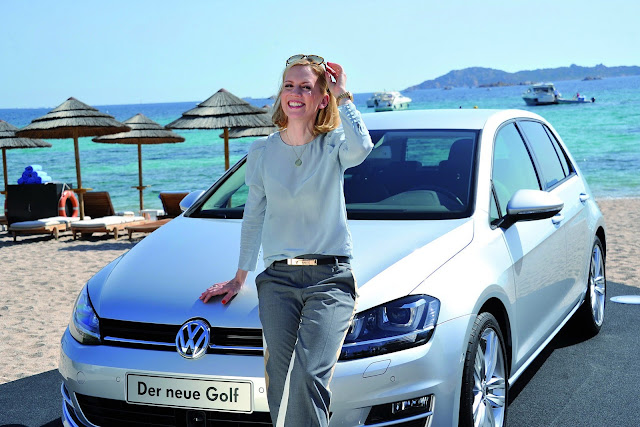
VW Extends New Golf Mk7 Range with Three New Engines, 4Motion and Tech Pack

In exactly a month's time to the day, Volkswagen will begin deliveries of the seventh generation of its Golf (which is already available for order), in Germany and other European countries. The automaker is wasting no time enriching the range of the Golf Mk7, as VW announced today the addition of three new petrol engines, the option of 4Motion all-wheel drive on certain models, and a new “Driver Assistance Pack”.The new engines that are available for order are the 104hp (105PS) 1.2-liter TSI BlueMotion Technology, the 120hp (122PS) 1.4-liter TSI BlueMotion Technology and the 138HP (140PS) 1.4-litre TSI with Active Cylinder Technology and BlueMotion Technology. All three gasoline units may be combined with either a 6-speed manual gearbox or a 7-speed dual clutch transmission (DSG). VW's 4Motion all-wheel drive system is offered as an option in conjunction with a 6-speed manual gearbox on two diesel engines, the 104hp (105PS) 1.6-liter TDI BlueMotion Technology and the 148hp (150PS) 2.0-liter TDI BlueMotion Technology. Finally, the German automaker has added a driver assistance package on the options list of
the Comfortline and Highline trim grades. The package starts at €1,690 (depending on the model) and includes the following features: -ACC adaptive cruise control - “Front Assist” surroundings monitoring system with City Emergency Braking function - Bi-xenon headlights with LED daytime running lights and cornering lights - “Dynamic Light Assist” dynamic main beam control - Light and sight pack - “Lane Assist” lane-keeping assistant - Anti-theft warning system “Plus” - Traffic sign detection According to Volkswagen, the package saves customers up to €605 in the Comfortline and up to €415 in the Highline if they were to order the items separately.Source: Carscoop
Read More........

Royal wedding puts Luxembourg in the spotlight

Luxembourg becomes the world's spotlight at the wedding of Grand Duke Guillaume and Countess Sophie de Lannoy
The wedding of Grand Duke Guillaume and Countess Sophie de Lannoy, dubbed as the wedding of the year, puts Luxembourg in the spotlight. The world’s only Grand Duchy, and one of the smallest country’s in the world, rarely enjoys this media frenzy, let alone a gathering of some of the world’s most glamorous personalities, heads of states, dignitaries. Luxembourg is an independent country smaller than the smallest U.S. state, Rhode Island. It would certainly fit 138 times in its neighboring country, Germany. It didn’t win any medal at the recent London Olympics and in fact, the last it did was during the 1952 games. But despite this, Luxembourgers enjoy a lifestyle better off than the U.S., or any of the biggest countries for that matter. In fact, the grand duchy enjoys the distinction as one of the most developed countries, with an advanced economy. It’s the second wealthiest countries in terms of per capita income, at a little over $80,000. The country also enjoys a very high human development index, at 0.867, which placed it 25th all over the world. The country’s economy depends heavily on steel manufacturing, although it has diversified over a variety of sectors including chemicals and rubbers. Banking and finance are the two key players in keeping the economy afloat. The country is the second largest investment fund hub in the world, after the
Luxembourg's Grand Ducal Family
U.S., and the largest in Eurozone. Until 1867, Luxembourg came under the rule of the Bourbons, Habsburgs, Hohenzollerns and the French. In 1867, Luxembourg was official recognized as a sovereign grand duchy, with the King of the Netherlands as its sovereign. Upon the death of King William III, the grand duchy passed on to Adolphe of Nassau-Weilburg. The country’s strategic position caused it to be invaded by the Germans, despite the fact that Luxembourg maintained its neutrality. In became a founding member of the UN and NATO in 1946 and 1949 respectively. The current Grand Duke, Henri inherited the throne in 2000 after his father, Grand Duke Jean abdicated. He is married to Maria Teresa Mestre y Batista-Falla, from Cuba, whom he met while studying in Geneva. Today, his heir apparent, Grand Duke Guillaume, marries Belgian noblewoman Countess Stephanie de Lannoy Hereditary Grand Duke Guillaume was born on November 11, 1981 at the Grand Duchess Charlotte Maternity Hospital in Luxembourg. He was christened Guillaume Jean Joseph Marie. Guillaume had attended Lycée Robert-Schumann in Luxembourg, Beau Soleil and Institut Le Rosey in Switzerland, and the Royal Military Academy in Sandhurst. He also attended the University of Durham and Brunel University, both in England. In 2009, he finished his bachelor’s degree in letters and political science at the Institut Albert-le-Grand in Angers. Since becoming his father’s heir apparent, the Grand Duke has been active in numerous duties, including serving as Honorary Chairman of the Board of Economic Development of Luxembourg and representing his father in the celebrations in honor of Prince Christian of Denmark's christening in January 2006, Queen Sonja of Norway's birthday in July 2007 and later on in September 2007, during the 40th birthday celebrations of the heir-apparent to the Dutch throne, the Prince of Orange. Grand Duke Guillaume has dated Countess Stephanie de Lannoy for two years prior to the announcement of their engagement in April 2012. Countess Stephanie is the daughter of Count Philippe de Lannoy and the late Alix della Faille de Leverghem. She was born on February 18, 1984 and grew up at the family estate, the Chateau d’Anvaing. Source: Royal Splendor
Read More........

150m pay TV subs by 2017


Pay TV subscriptions for the 95 operators across 25 countries will increase from a collective 96.2 million in 2007 to 140.9 million by 2017. Simon Murray, Principal Analyst at Digital TV Research, said: “Despite losing TV subscribers, UPC/Liberty Global will remain Europe’s largest pay TV operation by some distance. Germany’s Unitymedia will lead the way for Liberty Global.” Murray continued: “UPC/Liberty Global will not be the only operator to experience falling TV subscriber numbers between 2011 and 2017. In fact, this will happen for 31 of the 95 operators covered in this report – or a third of the total. Subscriber numbers will fall for various reasons, the most common of which is increased competition. Traditional pay TV operators now face greater rivalry than ever before – either from other pay TV platforms such as IPTV or satellite or from “free” multichannel TV services such as DTT and online TV and video.” Declining subscriber numbers will affect cable operators more than other operators. Many of these established players have the legacy of a large analog subscriber base. Although most of these homes are expected to convert to digital packages from the same operator, some will be tempted to migrate to other platforms. This is especially true of the ‘refusniks’, who do not want to pay any more for TV services and may be most attracted to free-to-air DTT. BSkyB (available in the UK and Ireland) will drop from second to third in the subscriber ranking, although its subscriber count will increase between 2011 and 2017. Russia’s Tricolor will move up from fourth in 2011 to second place in 2017 by adding nearly 5 million subscribers. The low-cost DTH player also has many “subscribers”, which do not pay to receive the service and have therefore not been included in this report. Total subscription and VoD revenues for the 95 operators increased from $26.0 billion in 2007 to $33.7 billion in 2011. However, the total will only reach $35.4 billion by 2017. Subscription and VoD revenues will fall for 35 of the 95 operators (37 per cent) covered in this report between 2011 and 2017. These revenues are for subscriptions and VoD only, and therefore do not include other revenues such as broadband, telephony, advertising, equipment sales and rental, etc. These revenues will fall (or at least slow in growth) for numerous reasons, including greater competition, which will see operators reduce package prices (and often the number of channels on offer) to retain existing subscribers and/or attract new subscribers. Another major factor is the operators’ drive to convert their subscribers to triple-play and double-play bundles, which are more lucrative to them overall than standalone TV subs but mean lower TV ARPUs (average revenue per user). BSkyB will remain at the top of the revenues’ league, recording $7.2 billion subscription and VoD revenues by 2017. UPC will stay in second place and will remain someway behind. The European Pay TV Operator Forecasts report is available from Digital TV Research. Source: Advanced Television
Read More........

One million “turn on” to Nissan Leaf

The Big Turn On, Nissan's ambitious on-line campaign designed to get one million people ‘turned on' to electric vehicles, has hit its target ahead of time. The campaign encourages communities to support electric vehicles, and the city with the most “turn ons” will be given 30 Quick Chargers. The Big Turn On is a 100 day campaign to demonstrate the benefits of electric vehicles, and to bust the myths that surround, them through online influencers, owners, and celebrities. The initial plan was to reach the one million mark in 100 days, however the campaign has so captured the imagination of the public that the milestone was reached on 21 June, 15 days ahead of schedule.
Read More........

Nobel winner says AIDS cure could come by 2050


THE Nobel laureate, Francoise Barre-Sinoussi, who helped to discover HIV says there is hope for an AIDS cure following recent discoveries. She cited a patient in Berlin who appears to have been cured through a bone marrow transplant, "which proves that finding a way of eliminating the virus from the body is something that is realistic." Other sources of optimism are the small minority of patients - less than 0.3 per cent - who exhibit no symptoms of the virus without ever receiving treatment; and a small group in France who received antiretroviral drugs and now live without treatment or symptoms, Ms Barre-Sinoussi said. "There is hope ... but don't ask me for a date because we do not know." She also said that it would be possible "in principle" to eliminate the AIDS pandemic by 2050, if barriers to drug access could be eliminated. Barriers such as economic, political and social. Source: Sam Daily Times
Read More........

European leaders push ahead with plans but drop demands for all nations to be included .........For Now!


Britain will be spared a swingeing new tax on City transactions as European leaders confirmed they will press ahead with plans for a single currency superstate. Eurozone leaders vowed to plough on with the Robin Hood tax plans alone yesterday as they declared that a Brussels summit next week will be a ‘defining moment’ in EU history. Nine countries yesterday vowed to impose new taxes on financial deals – which Britain thinks will cripple economic growth – but demands for all 27 EU nations to be included were dropped. In a sign that next week’s summit will usher in new measures to set up a eurozone superstate, Germany, France, Italy and Spain all agreed it will lead to a ‘clear medium and long-term vision for greater integration’. German Chancellor Angela Merkel told the meeting in Rome: ‘The lesson from the crisis is not less Europe but more Europe.’ Spanish PM Mariana Rajoy said the leaders had agreed on the need for ‘a political, banking and fiscal union’. Italian prime minister Mario Monti warned that leaders may have just one week to save the euro with Spanish banks teetering on the brink of collapse.Source: The Coming Crisis
Read More........

Germans "plot to take control of Europe" (Third time's a charm)

GERMANY is plotting a European power grab using the economic ­crisis as a smokescreen. A group of 10 EU foreign ministers and officials – none from Britain – has held talks in Berlin this week on exploiting eurozone debt problems to create a superstate. A European army, an IMF-style monetary fund and a finance minister for the whole EU were among radical suggestions put forward. The group aims to set the scene for a summit in Brussels next week of EU leaders – and to encourage further thinking about how “political union” might be achieved. Tuesday’s meeting of the 10-nation “reflection group”, including France, Italy, Spain and Austria as well as non eurozone EU members Poland and Denmark, underlined how many influential figures on the Continent wish to see a United States of Europe – and was immediately seen by some as a plan for Berlin domination. German Foreign Minister Guido Westerwelle, who chaired the talks, urged: “We should take advantage of the crisis to take a historic step towards more integration.”Source: The Coming Crisis
Read More........

Why Germany should exit the euro

The Coming Crisis: (CNN) -- With Greece probably heading for an exit from the euro, the European and global economies may be facing disaster. However, there is still time for European leaders to reverse this destructive dynamic with one simple, outside-the-box solution: Instead of pushing Greece out of the eurozone, Germany should voluntarily withdraw and reissue its beloved deutsche mark. The analysis of the problems of the euro and the European Union has long been upside down, focused on the debt and competitive weaknesses of the so-called peripheral countries (Greece, Italy, Spain, Portugal and Ireland) and especially of Greece. But issues of debt and competitiveness existed and were dealt with rather easily long before the euro arrived, through periodic devaluation of the currencies of the less-competitive countries against those of the more competitive countries, and especially against the deutsche mark. The problem now is not the weaknesses of the periphery, it's the excessive competitive strength of Germany. Not only is the German economy inherently strong as a result of the high productivity of its workforce, its exports have added competitiveness because the euro is undervalued as far as Germany is concerned. Source: The Coming Crisis
Read More........

'Markets are facing a rerun of the Great Panic of 2008': Head of World Bank warns Europe is heading for 'danger zone'

The head of the World Bank yesterday warned that financial markets face a rerun of the Great Panic of 2008.
On the bleakest day for the global economy this year, Robert Zoellick said crisis-torn Europe was heading for the ‘danger zone’. Mr Zoellick, who stands down at the end of the month after five years in charge of the watchdog, said it was ‘far from clear that eurozone leaders have steeled themselves’ for the looming catastrophe amid fears of a Greek exit from the single currency and meltdown in Spain. The flow of money into so-called ‘safe havens’ such as UK, German and US government debt turned into a stampede yesterday. In Berlin the two-year government bond yield fell below zero for the first time, with the bizarre result that jittery international investors are now paying – rather than being paid – for lending to Germany. There was a raft of dismal economic news from around the world, with manufacturing output falling in Britain and Europe, unemployment jumping in the eurozone and America, and fast-emerging economies such as Brazil and China showing signs of running out of steam. Source: The Coming Crisis
Read More........

Greece will run out of money soon, warns deputy prime minister

Greece's deputy prime minister has said the country will run out of money in six weeks unless it honours its bitterly-disputed EU bailout deal. Speaking exclusively to The Sunday Telegraph, Theodoros Pangalos said he was "very much afraid of what is going to happen" after Greek voters rejected the deal in elections last Sunday. "The majority of the people voted for a very strange mental construction," he said. "We want to be in the EU and the euro, but we don't want to pay anything for the past." The main beneficiary of the election, the hard-Left Syriza coalition, came a startling second on a promise to tear up the deal, which promises EU loans to keep massively-indebted Greece afloat, but demands crippling spending cuts in return. Germany, the principal lender, has said it will stop payments if Greece breaks its promises on spending. Mr Pangalos warned: "There is a school of thought that says the Germans are bluffing. They need Greece and will never throw us out of the eurozone. But what will happen, which is almost certain, is they will not give us the money to pay our debts. "We will be in wild bankruptcy, out-of-control bankruptcy. The state will not be able to pay salaries and pensions. This is not recognised by the citizens. We have got until June before we run out of money.Source: The Coming Crisis
Read More........