Every year, Delta Airlines hosts a special, one-of-a-kind trip to place the heads of ambitious Black students squarely in the clouds.
Climbing aboard a Boeing 757 as it took off from Hartsfield-Jackson International Airport in Atlanta, 100 local teens were the latest passengers on Delta’s “Dream Flights” program, a give-back initiative that introduces students to the concept of a career in aerospace and aviation.
Organized in partnership with the Organization of Black Aerospace Professionals (OBAP), the concept goes right back to that famous quote Whoopi Goldberg said when she saw Lieutenant Uhuru in Star Trek: “I just saw a black woman on TV and she ain’t no maid!”
“When I met my first Black pilot, that’s when I realized I could do it too,” said Delta captain Justin Mutawassim. “Now, I get to show these students—especially Hayden—that they can follow that same path.”
17-year-old Hayden Lynch has Mutawassim as a program mentor, and years before he stepped onboard Delta flight 2025, he became smitten with aviation after receiving a drone for Christmas.
At the helm was First Officer Dana Nelson, Delta’s first Black woman pilot, hired in 2001. The theme continued with an all-black cabin crew and co-pilot Lyob Makonnen.
This year, their final destination was NASA’s Kennedy Space Center on Florida’s “Space Coast.” Once there, the students wandered around with necks craned to see towards the ceiling to gaze at the collection of historic rockets, shuttles, and simulators used in NASA missions past. The trip finished with a panel discussion hosted by OBAP aviators and astronauts on how to navigate turbulence, whether in the cockpit, or in life.
This year was the 25th edition of Delta’s Dream Flight. They’ve transported and inspired more than 4,000 students throughout that time.
A proposed constellation of satellites has astronomers very worried. Unlike satellites that reflect sunlight and produce light pollution as an unfortunate byproduct, the ones by US startup Reflect Orbital would produce light pollution by design.
The company promises to produce “sunlight on demand” with mirrors that beam sunlight down to Earth so solar farms can operate after sunset.
It plans to start with an 18-metre test satellite named Earendil-1 which the company has applied to launch in 2026. It would eventually be followed by about 4,000 satellites in orbit by 2030, according to the latest reports.
So how bad would the light pollution be? And perhaps more importantly, can Reflect Orbital’s satellites even work as advertised?
Bouncing sunlight
Sunlight can be bounced off a wristwatch to produce a spot of light . M. Brown
In the same way you can bounce sunlight off a watch face to produce a spot of light, Reflect Orbital’s satellites would use mirrors to beam light onto a patch of Earth.
But the scale involved is vastly different. Reflect Orbital’s satellites would orbit about 625km above the ground, and would eventually have mirrors 54 metres across.
When you bounce light off your watch onto a nearby wall, the spot of light can be very bright. But if you bounce it onto a distant wall, the spot becomes larger – and dimmer.
This is because the Sun is not a point of light, but spans half a degree in angle in the sky. This means that at large distances, a beam of sunlight reflected off a flat mirror spreads out with an angle of half a degree.
What does that mean in practice? Let’s take a satellite reflecting sunlight over a distance of roughly 800km – because a 625km-high satellite won’t always be directly overhead, but beaming the sunlight at an angle. The illuminated patch of ground would be at least 7km across.
Even a curved mirror or a lens can’t focus the sunlight into a tighter spot due to the distance and the half-degree angle of the Sun in the sky.
Would this reflected sunlight be bright or dim? Well, for a single 54 metre satellite it will be 15,000 times fainter than the midday Sun, but this is still far brighter than the full Moon.
Last year, Reflect Orbital’s founder Ben Nowack posted a short video which summarised a test with the “last thing to build before moving into space”. It was a reflector carried on a hot air balloon.
In the test, a flat, square mirror roughly 2.5 metres across directs a beam of light down to solar panels and sensors. In one instance the team measures 516 watts of light per square metre while the balloon is at a distance of 242 metres.
For comparison, the midday Sun produces roughly 1,000 watts per square metre. So 516 watts per square metre is about half of that, which is enough to be useful.
However, let’s scale the balloon test to space. As we noted earlier, if the satellites were 800km from the area of interest, the reflector would need to be 6.5km by 6.5km – 42 square kilometres. It’s not practical to build such a giant reflector, so the balloon test has some limitations.
So what is Reflect Orbital planning to do?
Reflect Orbital’s plan is “simple satellites in the right constellation shining on existing solar farms”. And their goal is only 200 watts per square metre – 20% of the midday Sun.
Can smaller satellites deliver? If a single 54 metre satellite is 15,000 times fainter than the midday Sun, you would need 3,000 of them to achieve 20% of the midday Sun. That’s a lot of satellites to illuminate one region.
Another issue: satellites at a 625km altitude move at 7.5 kilometres per second. So a satellite will be within 1,000km of a given location for no more than 3.5 minutes.
This means 3,000 satellites would give you a few minutes of illumination. To provide even an hour, you’d need thousands more.
And yet, that vast constellation would deliver only 20% of the midday Sun to no more than 80 locations at once, based on our calculations above. In practice, even fewer locations would be illuminated due to cloudy weather.
Additionally, given their altitude, the satellites could only deliver illumination to most locations near dusk and dawn, when the mirrors in low Earth orbit would be bathed in sunlight. Aware of this, Reflect Orbital plan for their constellation to encircle Earth above the day-night line in sun-synchronous orbits to keep them continuously in sunlight.
Cheaper rockets have enabled the deployment of satellite constellations. SpaceX/Flickr, CC BY-NC
Bright lights
So, are mirrored satellites a practical means to produce affordable solar power at night? Probably not. Could they produce devastating light pollution? Absolutely.
In the early evening it doesn’t take long to spot satellites and space junk – and they’re not deliberately designed to be bright. With Reflect Orbital’s plan, even if just the test satellite works as planned, it will sometimes appear far brighter than the full Moon.
A constellation of such mirrors would be devastating to astronomy and dangerous to astronomers. To anyone looking through a telescope the surface of each mirror could be almost as bright as the surface of the Sun, risking permanent eye damage.
The light pollution will hinder everyone’s ability to see the cosmos and light pollution is known to impact the daily rhythms of animals as well.
Although Reflect Orbital aims to illuminate specific locations, the satellites’ beams would also sweep across Earth when moving from one location to the next. The night sky could be lit up with flashes of light brighter than the Moon.
The company did not reply to The Conversation about these concerns within deadline. However, it told Bloomberg this week it plans to redirect sunlight in ways that are “brief, predictable and targeted”, avoiding observatories and sharing the locations of the satellites so scientists can plan their work.
The consequences would be dire
It remains to be seen whether Reflect Orbital’s project will get off the ground. The company may launch a test satellite, but it’s a long way from that to getting 250,000 enormous mirrors constantly circling Earth to keep some solar farms ticking over for a few extra hours a day.
Still, it’s a project to watch. The consequences of success for astronomers – and anyone else who likes the night sky dark – would be dire.
The number of satellites visible in the evening has skyrocketed.
Poster showing keynote speakers at TiE Con 2023 May 3-5. Photo: courtesy ICC
The India Community Center started in February 2003 by successful entrepreneurs in California with the mission to “Unite. Serve. Celebrate” is partnering with the global non-profit, The Indus Entrepreneurs (TiE) to TiEcon 2023. The TiE Silicon Valley chapter (one of the 61 chapters across 14 countries) is hosting their annual flagship event, TiEcon 2023, in-person at the Santa Clara Convention Center on May 3-5, with 200+ prominent tech speakers, a press release from ICC said. “With 1000’s of attendees, this is your best opportunity to network, learn, and grow in your field,” notes the press release. TiEcon 2023 has the goal of highlighting well-known industry thought leaders in areas such as AI/ML, Cloud/Edge, Cybersecurity, Healthcare, Manufacturing, Supply Chain, Web 3 & Metaverse, Climate Tech, Global Connect, Rocketship India, and GenAI tracks, through engaging in stage conversations. Organizers said an added bonus was the opportunity for startup founders to separately apply for value-priced entrepreneurship programs and Expo at TiEcon 2023 “to substantially accelerate their startup journey.” These are TiE50 Awards, Expo, Startup Bootcamp, Mentor Connect, AI/ML Bootcamp, and VC Connect. The India Community Center was started by Silicon Valley’s Gadhwani brothers, Anil and Gautam, first generation successful Indian American entrepreneurs. The ICC describes itself as a Broad-based and inclusive Community Center with the mission to preserve the culture, values, and heritage of India for future generations based on the vision and ideals of the Founding Fathers of India. The ICC, located in Milpitas, California, is funded by membership fees and community donations and holds events year-round. It had some 150 volunteers by 2021, according to the website.The Indus Entrepreneurs (TiE) was founded in 1992, in Silicon Valley by a group of successful entrepreneurs, corporate executives, and senior professionals with roots in the Indus region of India. TiE Global is a nonprofit organization devoted to entrepreneurs in all industries, at all stages, from incubation, throughout the entrepreneurial lifecycle. With a global reach and a local focus, the heart of TiE efforts lies in its five foundational programs, – Mentoring, Networking, Education, Funding, and Incubation, the organization website says. With 15,000 members currently, TiE is among the largest entrepreneurial organizations and according to the organization, TiEcon “is the is the largest professional and networking conference for entrepreneurs.” (tie.org/about/) India Community Center in California partnering with TiE to host 2023 business conference
Unfortunately, many of of these enterprises won’t last long: 30% of new businesses fail within two years, and half don’t last past five, according to the Small Business Administration. While some of these unlucky founders will pursue new ventures, many others will try to rejoin the traditional labor force.
So we surveyed more than 700 hiring professionals to determine whether founders really can get new jobs that easily, as well as seven former entrepreneurs who successfully made the transition back into the workforce.
We found that former business owners were actually less likely to get interviews compared with applicants with only traditional experience. This was true regardless of whether they had sold or closed their businesses. And the longer they were out of the traditional workforce, the worse their chances of success were.
Why do employers hesitate to take a chance on former business owners?
It starts at the earliest stages, with the recruiters who screen people into – or out of – consideration for interviews. We found that recruiters worried that entrepreneurs would jump ship to start their own companies as soon as they can. This is a problem for employers, since hiring is a long, expensive process that can take months or even years to pay off.
For example, one recruiter told us, “I am looking for candidates that will be long-term employees, as we invest quite a bit into each hire. When I interview people, it is generally a red flag if they say they want to start their own business or already have a business on the side.”
A related fear: A worker who leaves to start a new venture might be tempted to poach talent, clients and tactics from their old employer.
Recruiters were also concerned that former entrepreneurs may refuse to take directions. Spending time as your own boss can make it difficult to adapt to a lower place on the organizational hierarchy. As one recruiter in our study put it, former business owners “are used to being the one who makes all the decisions.”
They also raised issues of job fit, questioning whether ex-entrepreneurs’ knowledge and abilities would translate to traditional work. “The concern would be the skills they have developed don’t transfer,” said one of our interviewees. In addition, for entrepreneurs who have worked alone, it can be difficult for recruiters to know how well they’ll perform with others.
Even when a former entrepreneur is a good match for a position, recruiters can fail to make the connection because of stereotypes or misunderstandings about their experience. A former bakery owner we interviewed recalled applying for a position and being pigeonholed based on their experience: “They said, ‘Oh, I wish we were hiring for a baker!’ and I said, ‘No, no, no, I’m applying for your front office.’ It was like they thought all I knew was just a baker, but that is far from the truth.”
Landing an interview
Our research adds to a growing body of evidence that ex-entrepreneurs struggle to get interviews and offers. Thankfully, it also offers insights that organizations can use to improve their applicant pool – and that enterprising job seekers can use to boost their odds.
Our study found that former entrepreneurs face less bias when they apply to roles that seem entrepreneurish – in other words, that are in line with stereotypes about business owners. So, for example, they’re more likely to land interviews when applying for positions with a lot of autonomy, such as in new business development, rather than those that require following lots of rules, such as in legal compliance.
Relatedly, our research suggests that recruiters – perhaps unintentionally – have biases against ex-entrepreneurs. Acknowledging such tendencies is a good first step toward minimizing their influence. Moreover, not all recruiters are equally affected: Another recent study showed that recruiters who also have prior entrepreneurial experience – as well as women and those who were recently hired – were less likely to screen out former business owners. So organizations with more diverse hiring teams and a deeper understanding of entrepreneurial experience might see less-biased results.
For their part, ex-entrepreneur job applicants would be wise to highlight in-demand aspects of their work history. For instance, a recent survey by Boston Consulting Group found that executives rank innovation as one of their top three priorities. Former entrepreneurs should emphasize their many valuable characteristics – such as being passionate and creative – that contribute to innovation.
The lack of a traditional employment history may create obstacles for entrepreneurs trying to rejoin the workforce. Recruiters who overlook their value risk missing out on strong candidates.
By Paul Ebeling: Donald Trump, “Hillary’s getting all ‘pumped up’ for the Debate, let’s have a drug test.” Donald Trump suggested Saturday that Hillary Clinton has not been seen in public lately because she was getting “Pumped Up” for their last debate Wednesday in Las Vegas and said that both candidates should take a drug test before they meet in Las Vegas. “She’s getting pumped up for Wednesday night,” the GOP nominee told a rally in Portsmouth, NH. “I don’t know, maybe, we are like athletes, right?” “Hey, look, I beat 17 Senators, Governors, I beat them all,” he said. “We are like athletes. “Hillary beat Bernie Sanders, but it looks like Bernie got a bad deal, based on WikiLeaks, right? “But we’re like athletes, right?” Donald Trump said. “But with athletes, they make them take a drug test, right? “I think we should take a drug test prior to the debate. I do. Why don’t we do that? “We should take a drug test prior, because I don’t know what’s going on with her.” Donald Trump then commented on Hillary Clinton’s energy levels during last Sunday’s debate at Washington University in St. Louis. “But at the beginning of her last debate, she was all pumped up,” he said. “But at the end, it was like, ‘Oh, take me down.’ “She could barely reach her car. So, let’s have her take a drug test,” Donald Trump said. “I’m willing to do it.” Donalld Trump andMrs. Clinton will debate at the University of Nevada-Las Vegas. Trumpeting for Trump. Source: http://www.livetradingnews.com/
St. Louis (US): Republican Donald Trump and his Democratic rival Hillary Clinton sparred over a number of issues including the billionaire’s lewd comments about women and the former State Department Secretary’s deleted emails, in the second presidential debate here on Sunday night. The two presidential nominees accused each other with Clinton saying Trump was “not fit to be the President”, while the billionaire taking on her over the whole birther claim against President Barack Obama, saying: “You owe Obama an apology.” Beginning the debate, CNN’s Anderson Cooper asked about the 2005 video in which Trump made lewd comments about women, saying: “You bragged that you sexually assaulted women — do you understand that?” Responding to Cooper, Trump said: “No that’s not what I said. This was locker room talk… I am not proud of it but this is locker room talk.” He then pivoted to terrorism and “bad things happening” in the world. Taking on Trump over the issue of lewd comments, Clinton said: “I’ve spent a lot of time thinking over the last 48 hours about what we heard and saw.” Clinton said though she had differences on policies and principles with the Republican candidates in the past but for Trump, she said: “…he was not fit to be president and commander in chief.” “I think it’s clear to anyone who heard it (video) that it represents exactly who he is. We’ve seen him rate women on their appearance, ranking them from one to 10… it’s not only women, it’s not only this video… This is who Donald Trump is,” she added. Trump then accused former President and the Democrat’s husband Bill Clinton of doing much worse than talking about sexual assault. Clinton quoted US first lady Michelle Obama saying: “When they go low, we go high.” Trump then targeted Clinton on the email issue and said: “If I win, I am going to instruct my attorney general to get a special prosecutor to look into your (email) situation… you ought to be ashamed of yourself,” he said. Clinton responded: “Everything he just said is absolutely false and I am not surprised.” There was also a moment in the debate when Trump insisted Clinton to answer the question about healthcare first, after nearly jumping in to answer despite it not being his turn. “Go ahead, I’m a gentleman,” he quipped. Clinton called reining in the cost of the Affordable Care Act the highest priority of the next
president. She “agrees” that premiums have gotten too high. Clinton added she wants to save what works with Obamacare but warned repealing it wholesale would lose all those benefits that came with the new healthcare system. “Obamacare will never work. It’s very bad health insurance,” Trump said, insisting that it is too expensive. Trump claimed Clinton “acid washed” 33,000 personal emails to delete them, something he said was an “expensive process”. When asked by a woman in crowd about Muslims in the US being targeted and facing hate crime, Trump said: “Muslims have to report it when they see hate going on. Muslims have to report the problems when they see them.” Trump also spoke about the parents of the dead and the Gold Star Iraq war soldier. “Captain Khan is an American hero… if I were president at the time he’d be alive today,” he said. “I would not have had our people in Iraq, Iraq was a disaster.” On his proposed Muslim ban, Trump said: “This is the greatest Trojan horse of our time. I don’t want to have hundreds of thousands of people coming in from Syria when we know nothing about their values, nothing about their love for our country. Source: ummid.com
Anti-Donald Trump protesters clash with his supporters outside his election rally event in San Diego. AFP
Washington, May 28Donald Trump brought his message of walls and deportations to the doorstep of America's busiest border crossing on Friday as the presumptive Republican presidential nominee greeted supporters in San Diego, amid one of the largest counter-protests organised against him. The scene inside the San Diego Convention Center during Trump's speech was relatively placid, while outside demonstrators opposed to his controversy-ridden White House bid marched and chanted, carrying signs criticising his rhetoric against illegal immigration. Waving US and Mexican flags, more than 1,000 people turned out for anti-trump rallies in San Diego, a city on the US-Mexico border whose San Ysidro port of entry sees nearly 300,000 people a day cross legally between the countries. San Diego is considered a binational city by many who live and work on opposite sides of the border, and about a third of the city's population is Latino. During Trump’s speech on Friday, some protesters outside the convention centre scaled a barrier and lobbed water bottles at police. One man was pulled off the wall and arrested as others were surrounded by fellow protesters and backed away from the confrontation. After the convention center emptied, clusters of Trump supporters and anti-Trump demonstrators began to mix in the streets, many exchanging shouted epithets and some throwing water bottles at one another. Police in riot gear declared the gathering an
unlawful assembly and ordered the crowd to disperse, herding the crowd out of the city's hotel and restaurant-filled Gaslamp Quarter. San Diego police said on Twitter that 35 arrests were made during the protest. No property damage or injuries were reported, the police said. "Fantastic job on handling the thugs who tried to disrupt our very peaceful and well attended rally," Trump tweeted to police afterwards. Trump has weathered months of blowback from all ends of the political spectrum for his immigration policy, which calls for the building of a wall along the US-Mexico border and deporting the nearly 11 million undocumented immigrants who reside in the United States. While Trump is running unopposed in the June 7 California Republican primary, his stance on border control and deportation seems unlikely to resonate with the electorate at large in a state where political fallout from a Republican-backed crackdown on illegal immigrants 20 years ago cost the party dearly. — Reuters No debate with Sanders: Shortly before taking the stage in San Diego, Donald Trump issued a statement ruling out a one-on-one debate with second-place Democratic hopeful Bernie Sanders killing off a potentially high-ratings television spectacle The suggested debate, an idea first raised during a talk show appearance by the New York billionaire, would have sidelined Hillary Clinton but given Sanders a huge platform ahead of California primary, A day after saying he would welcome a Sanders debate, Trump called the idea 'inappropriate', declaring that he should only face the Democrats’ final choice 200 jail beds reserved for Republican convention: The US city that would host the crucial Republican National Convention in July has reserved 200 beds at the jail anticipating protests during the mega meet that would officially nominate Donald Trump as the party's presidential candidate According to a local media outlet - Cleveland.com - the city which would host the GOP convention in July, Cuyahoga County, will keep 200 beds open at the County Jail for those who may be arrested during the Republican National Convention. The county will be paid up to $250,000 by the city of Cleveland to house those arrested from July 16 through July 23, according to a proposal submitted to the county's Board of Control, which meets on May 31 Raises $6 m in first fund raising event: Donald Trump has raised $6 million and received pledges for another $4 million in his first fundraising event after emerging as presumptive Republican presidential nominee Trump, who self-funded his primary election campaign by putting more than $40 million from his own pocket, has said he intends to raise $1 billion Source: http://www.tribuneindia.com
Novak Djokovic of Serbia (R) and Roger Federer of Switzerland pose with their trophies after their men's singles final match. — AFP
New York, September 14: Novak Djokovic clinched his third Grand Slam title of 2015 and 10th career major with a 6-4, 5-7, 6-4, 6-4 triumph over sentimental favourite Roger Federer in the US Open final today. Shrugging off a three-hour rain delay and the overwhelming hostility of the Arthur Ashe Stadium crowd, the 28-year-old world number one captured his second title in New York to add to his 2011 triumph. The defeat shattered 34-year-old Federer's bid to become the oldest US Open champion in 45 years and left him marooned on 17 Grand Slam titles, the last of which came at Wimbledon in 2012. Djokovic added the US Open title to his Australian Open and Wimbledon victories this year. Had it not been for a heartbreaking loss to Stan Wawrinka in the French Open final in June, the rock-solid Serb would have been celebrating a rare calendar Grand Slam. Djokovic's 10 majors takes him level with American Bill Tilden and just one shy of Bjorn Borg and Rod Laver on the all-time list. Federer was ultimately undone by 54 unforced errors and is ability to convert just four of 23 break points. "I have tremendous respect for Roger and the challenge he presents," said Djokovic, who is now 21-21 in career meetings with Federer. "He's the best player ever. I knew I needed to play my best in order to win. It's an incredible evening." He added: "I love this sport and all these achievements are incentive for me to keep on going." Federer insisted he would be back to try again in 2016. "I love tennis. I'll see you back here next year," said the veteran. "I'm pleased with where my game is, but playing a great champion like Novak is always difficult." With the likes of Robert Redford, Sean Connery and David Beckham watching, and with Eva Asderaki-Moore making history as the first woman to umpire the men's singles final, Djokovic was dialled in from the start despite heavy rain forcing a three-hour delay and an evening start. He forced five-time champion Federer, playing in his first US Open final in six years, to save three break points in a six-minute opening game. The top seed held to love and then broke for 2-1 --- it was just the third time in 84 service games at the tournament that the Swiss veteran had been broken. However, with the playing surface still damp from the hours of rain, the Serb suffered a worrying fall in the next game, turning over on his right ankle and bloodying his elbow. Federer pounced to retrieve the break but the Serb was soon back in the ascendancy and Federer was broken again in the seventh game. Federer saved a set point in the ninth, but conceded the first set with a netted backhand in the 10th game. —AFP. Source: Article
US President Barack Obama landed in New Delhi on Sunday for the start of a 3-day visit to India, receiving a hug from Prime Minister Narendra Modi as he disembarked from Air Force One. In a departure from protocol, Mr Modi drove to the airport to greet the President and his wife, Michelle. Source: Video
A few decades ago, interactive robots with human-like motion capabilities were only a figment of imagination, but technology has progressed quiet a distance since then. During his visit to Japan, U.S. President Barack Obama saw this firsthand after meeting up with Honda's humanoid robot ASIMO at Tokyo's National Museum of Emerging Science and Innovation (known as "Miraikan"). ASIMO, which stands for Advanced Step in Innovative Mobility, greeted the president in English: "Mr. President, I am ASIMO, a humanoid robot. It is a pleasure to meet you." And that's not all, as ASIMO chit-chatted and even kicked a soccer ball to President Obama who said he was "impressed" with the robot – though, from the CNN video, it does seem that ASIMO's jumping act was a little bit…awkward. "I keep training every day so that someday in the future I can help people in their homes," ASIMO told the president. By John Halas, Source: Carscoops
Twitter Inc said it bought social data provider Gnip to provide enhanced data analytics capabilities to its business customers. Twitter did not disclose the price it paid for Gnip. "Together we plan to offer more sophisticated data sets and better data enrichments, so that even more developers and businesses big and small around the world can drive innovation using the unique content that is shared on Twitter," the microblogging company said in a blog. Founded in 2008, Gnip has a four-year-old partnership with Twitter and helps companies analyze data across every public tweet. Gnip also has partnerships with other social media companies such as Tumblr, WordPress, Foursquare, Disqus, IntenseDebate, StockTwits and GetGlue. Twitter's shares were little changed at $41.02 in late morning trading on the New York Stock Exchange. Source: Hindustan Times
Tennis star Roger Federer was chosen to portray King Arthur from the oft-neglected Disney classic "The Sword in the Stone." With his blowing hair and youthful good looks, Federer makes a fine representation of the once and future king. One must compliment whoever came up with this choice regardless of Roger's
looks, considering the chance it gave photographer Annie Leibovitz to make that punny play on the word "court." Federer, 26, is seen with his sword drawn posing on a rock as the gallant King Arthur in an image set against a background shot at Tintagel Castle in Cornwall. the tennis player said: "I did feel strong on
that rock. I'm higher than everybody. I got the sword. I got the armour. It felt very funny and good actually." "The Sword in the Stone" was the last animated feature film from his studio that premiered before Walt Disney's death ("The Jungle Book" came out some months later). Walt surely would have been pleased with this shot. Source: Article
President Barack Obama early on Thursday signed legislation that ends a US government shutdown and raises the US debt ceiling, the White House said.
The US Congress has passed a bill to reopen the government and raise the federal debt limit, with hours to spare before the nation risked default. The Democratic-controlled Senate's bipartisan compromise won approval by 81 votes to 18. The deal was then passed by 285-144 in the House of Representatives, whose Republican leadership begrudgingly agreed to support the measure. It came hours before the deadline to raise the $16.7tn (£10.5tn) limit. Office of Management and Budget Director Sylvia Mathews Burwell said in a separate statement that the government will try to get back to full operating status as smoothly as possible. "This has been a particularly challenging time for Federal employees and I want to thank our Nation's dedicated civil servants for their continued commitment to serving the American people," she wrote. Most employees furloughed for the past two weeks are expected back to work Thursday, Burwell said in a directive to federal agencies. The last day of the shutdown in 3 minutes: US shutdown ends: House joins Senate in passing deal to avoid default, bill goes to Obama The US House has passed a Senate-approved deal to lift the debt ceiling and end the government shutdown after 16 days. The 11th hour deal was finally approved to end a partial government shutdown and pull the world's biggest economy back from the brink of a historic debt default that could have threatened financial calamity. The White House said Barack Obama would sign the bill on Wednesday night, and Obama vowed to begin reopening the government immediately. "Employees should expect to return to work in the morning," said Sylvia Mathews Burwell, director of the Office of Management and Budget. However, offers only a temporary fix and does not resolve the fundamental issues of spending and deficits that divide Republicans and Democrats. It funds the government until January 15 and raises the debt ceiling until February 7, so Americans face the possibility of another government shutdown early next year. World Bank President Jim Yong Kim said "the global economy dodged a potential catastrophe" with congressional approval of the deal to raise the $16.7 trillion US debt ceiling. "It is one of the most shameful chapters I have seen in the years I've spent in the Senate," Senator John McCain said after the deal approval. No US government shutdown: employees to return to work on Thursday White House budget office says federal workers should plan to return to work Thursday morning, The Voice of Russia's US correspondent Roman Mamonov reports. President Barack Obama ordered all federal employees to return to work on Thursday after Congress passed a bill extending the nation's borrowing authority and ending a two-week government shutdown. "Now that the bill has passed the United States Senate and the House of Representatives, the president plans to sign it tonight and employees should expect to return to work in the morning," said Office of Management and Budget director Sylvia Mathews Burwell. US House passes bill to reopen gov't, increase debt limit The US House of Representatives late on Wednesday passed legislation to avoid a damaging default on government debt and to reopen federal agencies shuttered when funding ran out on Oct. 1. The House vote came hours after the Senate overwhelmingly approved the bill. President Barack Obama earlier on Wednesday said he will promptly sign the bill into law. Obama says will sign bill immediately to reopen government, lift debt ceiling President Barack Obama said on Wednesday he will sign legislation to reopen the US government and avert a debt default as soon as it reaches the White House. Speaking after the Senate voted to end the fiscal impasse, but before the House of Representatives took a vote, Obama said the government will reopen immediately after he signs the bill, ending a 16-day shutdown. "We can begin to lift this cloud of uncertainty and unease from our businesses and from the American people," he said. Obama says Washington must 'regain' trust of Americans President Barack Obama sought Wednesday to heal the wounds of a debt ceiling and government shutdown showdown, and warned Washington must stop governing by crisis. Obama said US leaders needed to "earn back" the trust of the American people after the crisis, in a short statement after the Senate voted to back a compromise deal and before the House of Representatives was expected to do likewise. US Senate passes legislation to avert default, fund government and raise debt limit ceiling The US Senate, racing to avert a government default, on Wednesday passed legislation raising the Treasury Department's borrowing authority and sent the measure to theHouse of Representatives for final passage. The legislation also would end a partial government shutdown by providing new funds for federal agencies that have been closed since Oct. 1. The US Senate approved a deal on Wednesday to end a political crisis that partially shut down the federal government and brought the world's biggest economy to the edge of a debt default that could have threatened financial calamity. The Republican-controlled House of Representatives was expected to take up the measure later on Wednesday after Speaker John Boehner dropped the party's efforts to link the spending measure to changes in President Barack Obama's healthcare law. The deal, however, offers only a temporary fix and does not resolve the fundamental issues of spending and deficits that divide Republicans and Democrats. It funds the government until Jan. 15 and raises the debt ceiling until Feb. 7, so Americans face the possibility of another government shutdown early next year. US stocks surged, nearing an all-time high, on news of the deal. The stand-off between Republicans and the White House over funding the government forced the temporary lay-off of hundreds of thousands of federal workers from Oct. 1 and created concern that crisis-driven politics was the "new normal" in Washington. Senator John McCain, whose fellow Republicans triggered the crisis with demands that President Barack Obama's signature "Obamacare" healthcare law be defunded, said on Wednesday the deal marked the "end of an agonizing odyssey" for Americans. "It is one of the most shameful chapters I have seen in the years I've spent in the Senate," said McCain, who had repeatedly warned Republicans not to link their demands for Obamacare changes to the debt limit or government spending bill. The Senate passed the measure on a 81-18 vote, and the House was expected to follow suit, clearing the way for Obama to sign it into law no later than Thursday, when the Treasury says it will hit the $16.7 trillion debt ceiling. Fully reopening the government was expected to take several days. While essential functions like defense and air traffic control have continued, national parks and agencies like the Environmental Protection Agency have been largely closed. Although the deal would only extend US borrowing authority until Feb. 7, the Treasury Department would have tools to temporarily extend its borrowing capacity beyond that date if Congress failed to act early next year. The agreement includes some income verification procedures for those seeking subsidies under the healthcare law, but Republicans surrendered on their attempts to include other changes, including the elimination of a medical device tax. Voice of Russia, Reuters, AFP, BBC. Source: The Voice of Russia
Washington: Amazon founder and chief executive officer Jeffrey P Bezos has agreed to buy the newspaper assets of The Washington Post Company for $ 250 million, the daily has announced. The Post announced the deal yesterday. This would be Bezos’s maiden entry into the newspaper industry, which in the last few years has seen a decline in circulation and a drastic drop in print revenue. “This will be uncharted terrain and it will require experimentation,” he said in an interview to The Post. “There would be change with or without new ownership. But the key thing I hope people will take away from this is that the values of The Post do not need changing. The duty of the paper is to the readers, not the owners,” he said. "This is a day that my family and I never expected to come." "The Washington Post Company is selling the newspaper that it has owned and nurtured for eight decades," The Washington Post publisher Katharine Weymouth, said in a note to Post employees. However, Seattle-based Amazon will have no role in the purchase; Bezos himself will buy the news organisation and become its sole owner when the sale is completed, probably within 60 days, the Post reported. According to the daily, while the discussion in this regard was going on for the past six months now, very few people were aware about it. For much of the past decade, however, the paper, whose reporters have broken such stories as the Pentagon Papers, the
Watergate scandals and disclosures about the National Security Administration’s surveillance program in May, has been unable to escape the financial turmoil that has engulfed newspapers and other “legacy” media organisations. “The rise of the Internet and the epochal change from print to digital technology have created a massive wave of competition for traditional news companies, scattering readers and advertisers across a radically altered news and information landscape and triggering mergers, bankruptcies and consolidation among the owners of print and broadcasting properties,” the daily said. “Every member of my family started out with the same emotion-shock-in even thinking about. But when the idea of a transaction with Jeff Bezos came up, it altered my feelings,” said Donald Graham, the Post Co’s chief executive. “The Post could have survived under the company’s ownership and been profitable for the foreseeable future. But we wanted to do more than survive. I’m not saying this guarantees success but it gives us a much greater chance of success,” said Graham whose family held the newspaper for four generations. Source: News-Bullet
There's much to be said following President Obama's State of the Union Address last night. For those of us here at SiliconANGLE, one of the more concerning topics he discussed was of a recent executive order on cybersecurity. While addressing the matter, Mr. Obama urged congress to take action to protect the nation's computer infrastructure from cyber attacks. The comments by the president were "calls for unity," as Mark "Rizzn" Hopkins pointed out. "It was a form of bullying" that Obama used to shame the opposition party into "falling into line." Though these sorts of rhetorical claims are not too uncommon in the world of politics, it should be noted that Mr. Obama brought up the topic in context to issues of national security, including it with issues such as nuclear armament. Mr. Hopkins suggested that the president may have been making the issue sound more dramatic than it actually was, and further continuted to suggest that the cyber security executive order signed by the president was limited in potential and lacked any real direction. Mr. Hopkin's description of the order summed it up rather nicely, noting "I'm going to sign this order and have somebody about 15 layers beneath me come up with some good ideas that will hopefully
slap a band-aid on the with problem of security that we have the United States Government." He continued on saying, "A call for best practices is literally what it is...A lot of hand waiving." "There's no possible way you can look at this executive order and see anything good coming out of it." Powerful words, but considering the executive order is non-binding, and lacks the power to enable agencies to take any action on the matter, Mr. Hopkins actually sees this as a positive measure, in place of a corresponding piece of legislation. "It's much more complex than any enterprise situation...It's almost comical to think that it can be done with any type of legislation." So then perhaps it's best that Mr. Obama has issued an executive order, rather than leaving the job to congress, especially given the lampoonery of the highly criticized CISPA bill -- a bill described by Mark Hopkins as "nobody wants that - nobody in their right mind seems to think it's a good idea, but that's what's in the bill." There's no question that the government needs to have a secure network, but given the impotence of President Obama's order, and the laughably bad legislation regarding cyber security in the past, it would seem that perhaps the government would do well to stay out of the realm of cyber security, at least for now.
US President Barack Obama delivered his annual State of the Union address. Obama's speech took place in front of a joint session of Congress as many Americans watch from home. While inviting the president to give the yearly address, House Speaker John Boehner cited the country's "immense challenges" ahead. Obama urges Iran to diplomatic solution; US President Barack Obama told Iranian leaders it was
time they ended a standoff over the country's nuclear program, just two weeks before fresh talks with world powers. "The leaders of Iran must recognize that now is the time for a diplomatic solution, because a coalition stands united in demanding that they meet their obligations," Obama said in his State of the Union address. US President pledges not to send troops abroad to fight terrorists: To fight terrorists, the US does
not have to send troops abroad or occupy other countries, said President Barack Obama while delivering his annual State of the Union address to Congress on Tuesday. He made it understood that to counter the terrorist threat the US will help such allies as Yemen, Libya and Somalia. The US leader also offered assurances that whenever necessary, the US will continue countering terrorists by resorting to various means. The US has recently been frequently criticized for using drones to deliver pinpoint strikes to wipe out militants. Criticism comes from the fact that the drones also kill civilians quite often. Afghan war will
draw to a close by late 2014 – Obama: The Afghan war will draw to a close by late 2014, the US President Barack Obama told Congress as he addressed the lawmakers with his annual State of the Union speech. President Obama's decision to reduce troop levels in Afghanistan by 34,000 by this time next year still gives the coalition enough muscle to support Afghan security forces as they battle through another fighting season this summer while staying on track to wrap up the combat mission in two years, military officials and analysts say. "Tonight, I can announce that over the next year, another 34,000 American troops will come home from Afghanistan," Obama said. "This drawdown will continue. And by the end of next year, our war in Afghanistan will be over." Obama said the US adherence to the idea of a united and sovereign Afghanistan will be in place also after the troop pullout. The President pointed out that talks are under way with the Afghan government on drafting an agreement that would be focused on training and equipping the Afghan forces, as well as on antiterrorist efforts. The man in the White House added that the US would go ahead with the talks with Russia on further nuclear arsenal reductions. Obama hails Obamacare, targets
medicare, drugs for savings: President Barack Obama called on Congress to send him an immigration reform bill "in the next few months," upping the pressure on Senate and House members to find a compromise. "We know what needs to be done," Obama said in his State of the Union address. "As we speak, bipartisan groups in both chambers are working diligently to draft a bill, and I applaud their efforts. Now let’s get this done. Send me a comprehensive immigration reform bill in the next few months, and I will sign it right away." Obama has devoted considerable attention to immigration reform during the first weeks of his second term, including in a major address on the topic in Las Vegas at the end of last month. In that speech, the president said Congress needed to deal with immigration "in a timely manner" - without setting an exact timeframe - or else he would send his own legislation for a vote. Obama signs executive order on cyber defense: Barack Obama has signed an executive order on cybersecurity following
rumors that he would do so. In his State of the Union address he cited “growing threat from cyber-attacks” as the reason he used his executive power against the will of lawmakers. The order, which does not have the same force as a law, directs the secretary of homeland security to "increase the volume, timeliness and quality" of information on cyber threats shared between the government and the private sector. To aid the process, the order will ease the process of sharing classified cyber threat information with eligible companies that provide or support critical infrastructure. It calls for expedited security clearance for some employees of such companies as well. Obama's executive action also orders the creation of a set of standards to reduce cybersecurity risks as well as a voluntary program, including incentives, for companies to adopt them. Cyber attacks in recent months targeted a succession of major U.S. companies and government agencies, continuing to raise the stakes in the debate about how the government and the private sector can best protect sensitive information. Obama delivers State of the Union address In a State of the Union address focused on creating middle-class jobs, President Barack Obama called on lawmakers to help pull working Americans out of poverty by raising the federal minimum wage and pegging it to
inflation. Obama's proposal to boost the wage floor to $9 an hour revives an old campaign pledge to the working poor that was derailed by the Great Recession and the stubbornly high unemployment rate of his first term. It also sets the stage for a fight with congressional Republicans and powerful business lobbies, who no doubt will assail the measure as a job-killer during a fragile recovery. "Even with the tax relief we’ve put in place, a family with two kids that earns the minimum wage still lives below the poverty line. That’s wrong," Obama said. "Tonight, let’s declare that in the wealthiest nation on Earth, no one who works full time should have to live in poverty, and raise the federal minimum wage to $9 an hour. This single step would raise the incomes of millions of working families. "It could mean the difference between groceries or the food bank; rent or eviction; scraping by or finally getting ahead. For businesses across the country, it would mean customers with more money in their pockets." State Of The Union 2013 Live (VIDEO), Reuters, Huffington Post, RT, USA Today, AFP, RIA, TASS, Source:Voice of Russia
A documentary film made by fifteen year-old Jayshree Janu Kharpade, a tribal girl from Wada taluka of Thane district, has won an award in the Asian American Film Festival held in New York recently. Jayashree, who studies in Eklavya Parivartan Vidyalaya here, made the 27-minute-long documentary- 'Fire in our Hearts' on the lives of the children in the brick kiln owners. In 2003, when she was eight, Jayshree had to quit school. After her mother's death, she had to tend to her three younger brothers while her father worked at a brick kiln. In the film, which won the 'One to Watch' award at the festival, Jayshree documented her family and village as well as the tenacious efforts of the tribal union for the equal rights to education. "It shows that if tribal girls are given an opportunity, they can excel. However, the sorry state is that they have been ignored by the society and it is high time we bring them into the main stream," Vivek Pandit, chief of the Shramajivi Sanghatana said. It was the story of the girl's struggle that made documentary filmmaker Joyce Chopra of New York-based NGO, By Kids, approach Jayshree. A two-member team flew down from New York in February this year and stayed for a month in the boarding school to teach Jayshree to handle the camera. After a week of lessons on how to handle the camera, the girl marched to her village in Wada to document the story of her life. The Asian American International Film Festival (AAIFF) is produced by Asian CineVision (ACV), a nonprofit media arts organization devoted to the development, promotion and preservation of Asian and Asian American film and video. Source: Screen India
Aerialist Nik Wallenda made a historic tightrope crossing over Niagara Falls on Friday night, stepping onto safe ground in Canada to wild cheers after completing his journey through wind and mist on a 2-inch (5-cm) cable. Wallenda, a member of the famed Flying Wallendas family of aerialists, took a little more than 25 minutes to walk 1,800 feet (550 metres) from the US side in the dark of night over treacherous waters and rocks in a nationally televised event. Arriving on the Canadian side, he hugged his family and greeted Canadian officials, who playfully requested the 33-year- old American's passport. Asked the purpose of his visit, Wallenda told the officials he had come to inspire people. More than 150 years ago, French aerialist Charles Blondin, known as The Great Blondin, famously walked a high wire strung farther down the Niagara gorge, but a trek over the brink of the falls had never before been attempted. Wallenda appeared fully in control through the stunt, taking small, steady steps on a slick cable through swirling winds. Oh my gosh it's an unbelievable view, he said as he crossed over the falls. This is truly breathtaking. ABC, the television network that broadcast the event with a five-second delay, occasionally interviewed him along the walk, asking him about conditions and how he was coping. That mist was thick and it was hard to see at times, he said later in the walk, when he was asked about the greatest challenge. Wind going one way, mist another. It was very uncomfortable for a while. The network had also insisted he wear a safety tether - a first for the performer - that would connect him to the cable should he fall, and said it would stop broadcasting if he unhooked it. Wallenda fought the condition at first, eventually agreeing. But he gave himself an out: he would unhook only if directed to do so by his father, who designed the harness and acted as his safety coordinator. As it turned out, the tether was never tested. Wallenda walked the wire with what appeared to be perfect balance. ROAR OF THE FALLS: Wallenda said at one point that his hands hurt from holding the balance pole, and the walk proved physically tiring. The sounds of the falls blocked out noise from an estimated crowd of tens of thousands, he told the TV audience. Hopefully it will be very peaceful and relaxing, Wallenda said beforehand. I'm often very relaxed when I'm on the wire. There may be some tears because this is a dream of mine. Since the Great Blondin took his high-wire walk, a ban had been in place on similar stunts over the famed falls. Wallenda waged a two-year crusade to convince US and Canadian officials to let him try the feat. A private helicopter rescue team was part of the $1.3 million that Wallenda said he had spent on the walk. Reyam Rashed, who moved to the area from Yemen last year, said she was most concerned as Wallenda neared the wire's low point, before he began walking back up the rope in the final push toward Canada. I just felt like he was going to get dizzy, she said. At first, I thought he was not going to make it. I was impressed, she said. Wallenda's great-grandfather Karl Wallenda died in 1978 during a walk between two buildings in Puerto Rico at age 73. Wallenda repeated that walk last year with his mother. Wallenda said he would next prepare for a walk over the Grand Canyon in Arizona, which would be the first ever attempted and roughly three times longer than the walk over Niagara Falls. I just happen to have a permit, he said during an interview on ABC.Source: Indian Express

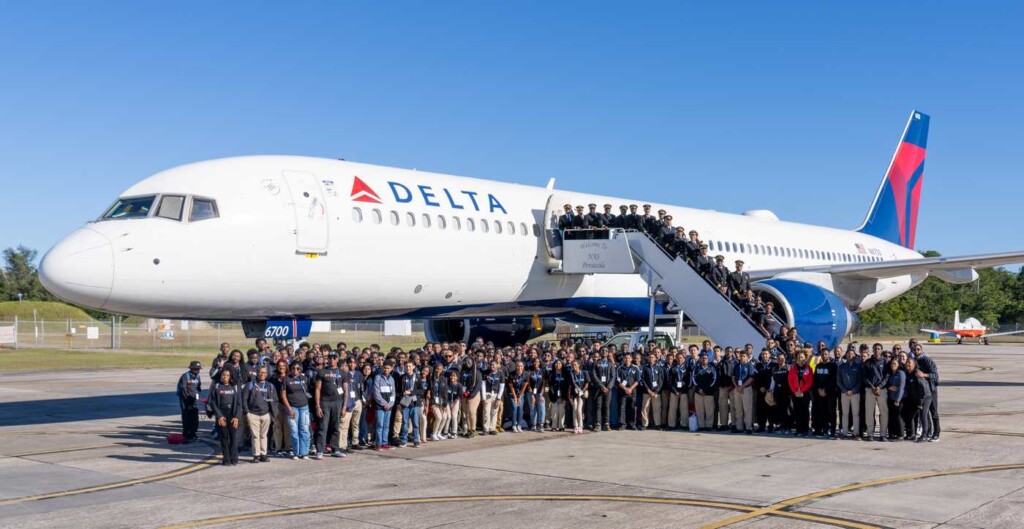 Delta’s 24th Dream Flight – credit, Delta Airlines
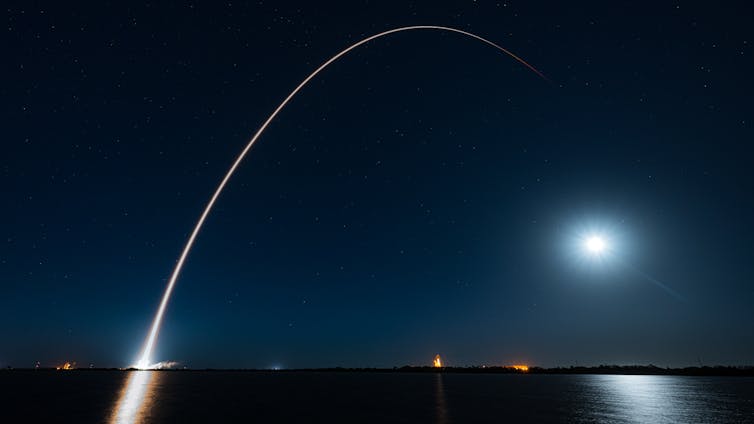 Can a new satellite constellation create sunlight on demand?





.png)
