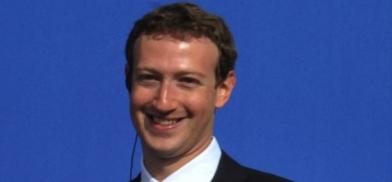
Facebook chief Zuckerberg braces for civil unrest


Facebook chief Mark Zuckerberg on Thursday warned of the potential for civil unrest as votes are tallied in a US election that will be “a test” for the social network.

Zuckerberg expressed his concern while describing safeguards against misinformation and voter suppression at the leading social network that are intended to avoid the kinds of deception and abuse that played out four years ago.

“I’m worried that with our nation so divided and election results potentially taking days or weeks to be finalized there is a risk of civil unrest,” said Zuckerberg, who had also been grilled during a session on Capitol Hill earlier this week.

“Given this, companies like ours need to go well beyond what we’ve done before.”

Confusion early this week over political ads at Facebook marred the onset of what was supposed to be a cooling-off period ahead of the US presidential election on November 3.

Rival parties complained Facebook was undermining campaign efforts after blunders arose around a ban on new paid political ads being published in the week before Election Day.

“We’re investigating the issues of some ads being paused incorrectly, and some advertisers having trouble making changes to their campaigns,” Facebook product manager Rob Leathern said in a tweet when the ban kicked on Tuesday.

Political ad publishers can sidestep the ban by getting the advertisements loaded into Facebook prior to the deadline, and then disseminating them to a wider audience later.

California-based Facebook has tightened its rules on political advertising ahead of the 2020 election in other ways too, including prohibiting attempts to undermine the electoral process.

In the Facebook paid posts library — a list viewable by the public — for President Donald Trump’s campaign, what appeared to be a victory ad is already visible.

And on Tuesday, senior media advisor for Democratic presidential contender Joe Biden, Megan Clasen, tweeted a screen capture of a Trump Facebook ad showing a picture of the president and the message “Election Day Is Today.”

But the former vice president’s campaign had been told by Facebook they could not launch ads saying election day was “today” or even “tomorrow,” Clasen said in the tweet.

Democratic political strategist Eric Reif said on Twitter that he and others were working to have ads restored that had been mistakenly removed by Facebook.

“While next week will be a test for Facebook, I am proud of the work we have done here,” Zuckerberg said.

“I also know that our work doesn’t stop after November 3rd,” Zuckerberg said.“So we will keep anticipating new threats, evolving our approach and fighting to protect the integrity of the democratic process and the right of people to make their voices heard around the world.” Source:https://www.daily-bangladesh.com/
Read More........

Facebook chief Zuckerberg braces for civil unrest


Facebook chief Mark Zuckerberg on Thursday warned of the potential for civil unrest as votes are tallied in a US election that will be “a test” for the social network.

Zuckerberg expressed his concern while describing safeguards against misinformation and voter suppression at the leading social network that are intended to avoid the kinds of deception and abuse that played out four years ago.

“I’m worried that with our nation so divided and election results potentially taking days or weeks to be finalized there is a risk of civil unrest,” said Zuckerberg, who had also been grilled during a session on Capitol Hill earlier this week.

“Given this, companies like ours need to go well beyond what we’ve done before.”

Confusion early this week over political ads at Facebook marred the onset of what was supposed to be a cooling-off period ahead of the US presidential election on November 3.

Rival parties complained Facebook was undermining campaign efforts after blunders arose around a ban on new paid political ads being published in the week before Election Day.

“We’re investigating the issues of some ads being paused incorrectly, and some advertisers having trouble making changes to their campaigns,” Facebook product manager Rob Leathern said in a tweet when the ban kicked on Tuesday.

Political ad publishers can sidestep the ban by getting the advertisements loaded into Facebook prior to the deadline, and then disseminating them to a wider audience later.

California-based Facebook has tightened its rules on political advertising ahead of the 2020 election in other ways too, including prohibiting attempts to undermine the electoral process.

In the Facebook paid posts library — a list viewable by the public — for President Donald Trump’s campaign, what appeared to be a victory ad is already visible.

And on Tuesday, senior media advisor for Democratic presidential contender Joe Biden, Megan Clasen, tweeted a screen capture of a Trump Facebook ad showing a picture of the president and the message “Election Day Is Today.”

But the former vice president’s campaign had been told by Facebook they could not launch ads saying election day was “today” or even “tomorrow,” Clasen said in the tweet.

Democratic political strategist Eric Reif said on Twitter that he and others were working to have ads restored that had been mistakenly removed by Facebook.

“While next week will be a test for Facebook, I am proud of the work we have done here,” Zuckerberg said.

“I also know that our work doesn’t stop after November 3rd,” Zuckerberg said.“So we will keep anticipating new threats, evolving our approach and fighting to protect the integrity of the democratic process and the right of people to make their voices heard around the world.” Source: https://www.daily-bangladesh.com/
Read More........

WhatsApp Pay to empower millions of Indians through Jio platform: Zuckerberg


Reiterating his commitment to launch WhatsApp Pay for over 400 million users of the messaging platform in India, Facebook CEO Mark Zuckerberg said that the Reliance Jio partnership is a huge opportunity to enable small businesses and individuals in the country to buy and sell things through WhatsApp.

Talking to analysts during an earnings call on Thursday, Zuckerberg said that a lot of people use WhatsApp, especially in India.

"We want to enable that. That starts with enabling payments. A big part of the partnership that we have with Jio will be to wire up and get thousands of small businesses across India on-boarded onto WhatsApp, to do commerce there," the Facebook CEO emphasised.

Facebook-owned WhatsApp has been testing its payments platform in India for quite some time now but has not been successfully in launching it owing to regulatory hurdles.

Reliance Industries (RIL) Chairman Mukesh Ambani said this month that the new commerce platform JioMart and Whatsapp will be working closely to create growth opportunities for millions of Indian small merchants and kirana shops.

"Over 400 million WhatsApp users in India bring unique value to our partnership," Ambani said at the company's first annual general meeting.

Zuckerberg said that they are really excited about the opportunity in India.

"Once we prove that out with Jio in India, we're planning on expanding it to more folks in India and to other countries as well. But, there's no doubt that India is a huge opportunity," he told the analysts.

According to a latest Goldman Sachs report, the recent RIL and Facebook partnership can potentially increase the monetization levels of India internet as consumers in the relatively higher income bands (Urban Mass and Urban Middle) are monetized through transactions - redirecting traffic from social media to e-commerce, O2O, financial services.


"We believe the recent Reliance Industries (RIL) and Facebook partnership could increase monetization levels of India internet, and garner 25% of all internet Gross Transaction Value (GTV) by FY25," Goldman Sachs said.

"With a user base of 400 million-plus in India, and three out of the top five apps in the country (in terms of Daily Active Users and time spent), we believe Facebook, along with its partner RIL, can bring more transacting users (100 million currently) into the fold, especially in e-commerce, the largest internet category," the report mentioned.

In India, there are more than 15 million monthly WhatsApp Business app users.

In April, Facebook announced a $5.7 billion, or Rs 43,574 crore, investment in Jio Platforms.

"It is the largest country by the size of our community that we're serving already. And it should be one of the fastest growing business opportunities as well to help businesses grow there, and we're very excited about that," Zuckerberg said during the earnings call. (IANS) Source: https://southasiamonitor.org
Read More........

Facebook to buy virtual reality headset company Oculus in $2 bln deal

Washington, Mar. 26 (ANI): Facebook is buying the maker of the virtual reality headset, the Oculus Rift, for about two billion dollars in cash and stock. The social networking company announced it has agreed to buy the virtual reality technology company Oculus VR. According to CNET, Facebook said with the acquisition, it plans to extend Oculus' virtual reality capabilities beyond gaming into areas such as communications, media, entertainment and education. Facebook CEO Mark Zuckerberg views virtual reality as the next big thing in social. In a statement he said has the chance to create the most social platform ever, and change the way people work, play, and communicate. The deal, valued at about two billion dollars, includes 400 million dollars in cash and 23.1 million shares of Facebook common stock, and allows for an additional 300 million dollars earn-out in cash and stock based on milestones. Oculus was founded by 21-year-old Palmer Luckey in 2012. The company launched a Kickstarter campaign to fund development and raised more than 2.4 million dollars from online backers. The deal for Oculus is expected to close in the second quarter of this year, the report added. (ANI). Source: News Track India
Read More........

India’s Air Costa Aims To Go International

Now leasing a pair of Embraer E170s, Air Costa became Embraer’s largest-ever Indian customer in February, when it placed an order for 50 of the company’s planned E2s. (Photo: Air Costa)
Five-month-old Indian regional airline Air Costa plans to start international operations once India lifts its rule that limits new carriers to domestic services during their first five years of operation. Ahead of that revision, the carrier, which ordered a mix of 50 Embraer E190-E2s and E195-E2s at the Singapore Air Show in February, has applied for a national permit to fly pan-India, Vivek Choudhary, chief commercial officer and vice president of corporate finance of parent company LEPL Projects Ltd., told AIN. He noted that the range of the E2s would allow the carrier to fly to neighboring Southeast Asia and Middle East countries. “We will also look at code shares with [international] carriers in future,” he added. Scheduled for first deliveries in 2018, Air Costa’s E190-E2s will arrive configured with six business and 92 economy seats. The larger E195-E2s will carry 12 business and 106 economy seats. With the state of Andhra Pradesh recently split into two and given the location of Air Costa’s base in Vijayawada, the intended new capital of the new state of Seemandhra, the airline appears bound to benefit from new infrastructure and increased traffic flow. “The decision to base ourselves here is a conscious one, as we get a first movers’ advantage through benefits from the state government on fuel and parking,” said Choudhary. “In another three years, Vijayawada will be an international airport.” The airline plans then to tap 30 percent of the international traffic into Hyderabad (which will then become capital of the split state called Telengana), largely comprising Indian expats heading to Vijayawada. Air Costa has already registered 75-percent load factors as it concentrates on connecting second- and third-tier cities. Its fleet consists of two dual-class E170s on a 10-year lease and plans call for another two all-economy E190s to arrive early next month. “By the end of the year we will have six aircraft, with four more arriving every quarter until 2018,” said Choudhary. According to India’s regional aviation policy, carriers operating airplanes lighter than 40 tons and with fewer than 80 seats incur no route navigation facility charges and only a 4-percent fuel tax, compared with the average of 35 percent. However, the policy prohibits regionals from flying to large cities outside the southern region. “The policy is not clearly defined…We can take off from three southern metros—Chennai, Hyderabad and Bangalore—to any small city outside the region but have to return to the South [before connecting to another city outside the region], making it restrictive,” said Choudhary. The airline is in discussions with the ministry of civil aviation to extend the regional policy rule to 120-seaters because “most markets in the region require 100 to 120 seats,” he added. “So we would need bigger aircraft.” Air Costa’s move to buy 50 E2s might have raised eyebrows among those unconvinced of the prospects for regional jets in India following the failure of former Indian E-Jet operator Paramount Airlines. Choudhary dismisses any comparisons with Paramount, however: “In spite of Paramount and the bankruptcy of Kingfisher, aircraft were leased to us,” he said. “This basically endorses our business plan and strategy.” Embraer vice president for the Asia-Pacific region Mark Dunnachie added that, even in India, passengers will pay a premium to fly in a jet rather than a turboprop. “We’re believers in right-sizing,” he said. “A passenger is willing to pay five to ten dollars extra for comfort.”Source: Article
Read More........

Can Mark Zuckerberg lecture Barack Obama on privacy?

Zuckerberg has often been accused of a lax attitude to internet privacy, but the NSA revelations may have changed that FACEBOOK CEO Mark Zuckerberg telephoned US President Barack Obama yesterday to express his frustration over the US government's electronic surveillance of the internet. Zuckerberg made the announcement in a message posted on his Facebook page, in which he said he was "confused and frustrated" by the actions of the US authorities. "When our engineers work tirelessly to improve security, we imagine we're protecting you against criminals, not our own government," he told Facebook users. The 29-year-old Facebook founder said that the US government "should be the champion for the internet, not a threat". His criticism comes after the revelation that the US National Security Agency (NSA) even posed as Facebook to try and fool surveillance targets' into logging on and giving away passwords, the BBC reports. A number of major internet companies have expressed concern over the government's attitude to internet privacy. Last month senior executives from Facebook, Google, Microsoft, Yahoo, Twitter, AOL and LinkedIn called on the US government to sign an agreement not to collect bulk data. But some argue that Facebook's own lax approach to data protection dilutes the potency of Zuckerberg's attack. So does Facebook have the right to admonish the government over privacy concerns? And why do the major internet companies care about your secrets in the first place? How Facebook embraced anonymity Before Facebook, the default position for online communication was anonymity, says Business Week. Zuckerberg changed all that, encouraging users to create Facebook pages with their own real name, then to use that identity around the web. Zuckerberg once told David Kirkpatrick, author of /The Facebook Effect/, that "having two identities for yourself is an example of a lack of integrity". The issue of whether users should be allowed to communicate using pseudonyms has reportedly been a matter of fierce debate within Facebook. After holding out for years Zuckerberg last month did a volte-face saying "if you're always under the pressure of real identity, I think that is somewhat of a burden". Some believe that Zuckerberg's directional shift may have been motivated by the company's dip in growth, particularly among younger users. Studies indicate that 18 to 29-year-old internet users are adopting new services that allow more flexibility and privacy in the way content is shared. Snapchat, for example, which permanently erases content after transmission, has experienced explosive growth in the last year – so much so that Facebook offered to buy the company in December for $3bn cash. Why trust matters So why does user privacy matter to businesses? Primarily, it is because users are the lifeblood of any digital company, and if they lose trust in a service they might stop using it. Google and Facebook sell advertising against users' browsing habits, so it is essential for their business models that users keep turning up. Earlier this month the European Commission vice president Neelie Kroes said that allegations of spying by the NSA and other agencies had significantly diminished public trust in the internet, the BBC reports. "Trust can never again be taken for granted," she said. The information leaked by former NSA contractor Edward Snowden had come as a "wake-up call", and people should not "snooze through it", Kroes said. Recent efforts by Google, Microsoft and Facebook to distance themselves from government surveillance may be a matter of principle, but they also happen to align with their collective corporate interest. So does Zuckerberg have the right to lecture Obama about internet privacy? He may not have the right, but he certainly has an interest. · For further concise, balanced comment and analysis on the week's news, try The Week magazine. Subscribe today and get 6 issues completely free. Source: The Week UK
Read More........

Facebook not a part of NSA surveillance program

The Founder of Facebook is calling for more transparency from the NSA. Mark Zuckerberg said the Federal government failed to balance security with privacy when they started several surveillance programs. Kevin Tripp, The Voice of Russia correspondent, shared Zuckerberg's point of view on this matter.
What is Mark Zuckerberg’s main concern with these NSA surveillance programs? He has got a couple of concerns. The first one you’ve already touched on is that he believes it is the US government’s job to protect all of the American citizens and to protect our freedoms while also insuring our security but he believes that the US government and the NSA specifically did a bad job of balancing those two competing interests and as he said “the government blew it” to quote Mark Zuckerberg. He is also concerned that there is not enough transparency about these programs. He says that PRISM program, the controversial program that monitored a lot of Internet traffic was something that he never gave the government permission to use on Facebook servers that contradicts some documents that have been leaked. Nonetheless, he says this was not something he necessarily willingly went along with, at least when it comes to PRISM. He likes to see more transparency from the NSA and from the Federal government about what exactly the types in number of requests that they’ve been making have been with the Pfizer court in the last few months and years. Since the revelations about the NSA programs big internet companies such as Facebook, Yahoo, Google who have all been in this discussion about what exactly they can and have given up to the Federal government, I haven’t really heard much from these companies in the way of criticizing the NSA and it seems that Mark Zuckerberg is trying to separate himself from these surveillance programs, trying to condemn them, trying to show the American people that Facebook is different. Do you think that is what he is doing? Do you think it is effective? I think that is one of the things he is trying to do – is show that this was not something that he supported or was necessarily in concert with. But he is also trying to show that Facebook in his opinion is some place that values security and the information that the users share on Facebook. That is a problem that Facebook faces on its own. Even before the NSA programs people that use Facebook or considered using it were worried about security and what kind of data Facebook was sharing with the companies and venders that do business with Facebook, so you pile on the NSA allegations on top of that and Facebook I think more than any other tech company has really these two problems to deal with that sort of pile on on top of each other and can lead to greater concerns among its users. So, I think it is one of the reasons he has come out and asked for greater transparency. He has released a transparency report that shows that 9000 or less reports have been made in the last 6 months. He is saying it is not 10 million or a 100 million, it is 9000 or less but he is also suing the Federal government along with Yahoo and Google and Microsoft to try to reveal the exact number and type of requests that the NSA has been making. So, he has been able to show some transparency with respect to these NSA programs and how they affected Facebook and Facebook users but he is also trying to get even more transparency along with some of his competitors in Silicone Valley and in Seattle. Do you think that Facebook users will be seeing anything different in the way that they use Facebook, do you think anything will be changed in the near future? Facebook is always evolving. Their security parameters and the menu of options you have to control the security. Some people say they do it for the better, some people they do it for the worse. So, I think you will continue to see changes made by Facebook, the interesting thing will be to see if they address the NSA programs and surveillance by any nationality or any foreign country specifically so that their users could feel more comfortable. Source: Article
Read More........

Russian tech giant Milner and Facebook founder Zuckerberg announce $3M mathematics prize

Milner, who made his fortune in high-tech investments, told The Guardian that he wanted the new Breakthrough Prize in Mathematics to encourage people to think more deeply about life. The prize will be awarded for the first time next year. "If you take the largest scales possible, there are a number of scientists, individuals, who operate at that scale, they think about the whole universe. I think that we focus too much on small scales as human beings, and not enough on larger scales. That’s really the problem we’re trying to address here," he told the paper Thursday. The new prize was unveiled at an awards ceremony in the United States for two other multi-million-dollar research prizes established by Milner. The Fundamental Physics Prize, which he founded last year, was shared between Michael Green of Cambridge University and John Schwarz of the California Institute of Technology. Green succeeded Stephen Hawking as the Lucasian professor of mathematics at Cambridge in 2009. Hawking won the first Fundamental Physics Prize last year. The Breakthrough Prize in Life Sciences has been awarded to six scientists for their work, and each won $3 million. Milner, a self-described "failed physicist", co-founded the prize a year ago in partnership with Silicon Valley entrepreneurs including Zuckerberg; Sergey Brin, the Russian-American co-founder of Google; and Jack Ma, a Chinese entrepreneur. The glitzy event in California was presided over by Hollywood star Kevin Spacey. Not everyone was impressed by the largesse of Milner and his fellow billionaires, however. One "prominent physicist" who asked not to be identified told The Guardian that the money could be put to better use, saying: "The great philanthropists of the 19th and 20th centuries, like the Rockefellers and the Carnegies, did not create prizes – they created universities and research institutes that have enabled thousands of scientists to make great breakthroughs over the succeeding decades." "By contrast, giving a prize has a negligible effect on the progress of science. A few already well-recognized people get enriched, but there is little value added in terms of the progress of science compared with the multiplier effect of creating new institutions for scientific research." Source: Voice Of Russia
Read More........

Zuckerberg donates $500mln to charity

Zuckerberg said on Tuesday that he made a contribution of 18 million Facebook shares to the Silicon Valley Community Foundation to “lay the foundation for new projects.”
The gifts are part of Zuckerberg's involvement in The Giving Pledge. Launched by Microsoft founder Bill Gates and investor Warren Buffett in 2010, the group asks US billionaires to give away at least half their wealth during their lifetime or after their death and to publicly state their intention with a letter explaining their decision. Voice of Russia, Reuters, Surce: Voice of Russia
Read More........

Time puts Pussy Riot on candidates' list for 2012 Person of the Year, public does not agree

Pussy Riot панк-группа
Members of the Pussy Riot punk band were announced candidates for Time Magazine’s 2012 Person of the Year. The women can find their names next to US President Barack Obama, US Secretary of State Hillary Clinton, Syrian leader Bashar al-Assad, Egyptian President Mohamed Morsy, and Olympic champion Michael Phelps. “In a year when so many voices of liberty and dissent have suffered harsh retribution, the Russian feminist punk group Pussy Riot has paid a particularly steep price for provocative political expression,” the magazine wrote about the nominee. Two of the members were given two years in jail for a February 2012 performance in Moscow’s main cathedral denouncing the Russian Orthodox Church’s support of President Vladimir Putin, the magazine reminds. At the same time a poll shows that 70 percent of people do not share Time’s decision and think the notorious punk band members do not deserve the award. Among the 38 candidates one can find inanimate objects, the Higgs Boson, for instance. “It was in the 1960s that Scottish physicist Peter Higgs first posited the existence of a particle that causes energy to make the jump to matter. But it was not until last summer that a team of researchers at Europe's Large Hadron Collider — Rolf Heuer, Joseph Incandela and Fabiola Gianotti — at last sealed the deal and in so doing finally fully confirmed Einstein's general theory of relativity,” Time noted. Another candidate is the Mars Curiosity rover. At the moment Egyptian President Mohamed Morsy is leading as he has received support of 47 thousand online voters. “His and his party's electoral victory this summer heralded a new moment for the Arab world's most populous nation, so long kept underfoot by the Western-backed authoritarian regime of Hosni Mubarak,” Time wrote. In previous years Time selected Facebook CEO Mark Zuckerberg, US President Barack Obama, Federal Reserve Chairman Ben Bernanke as the award’s winners. In 2007 the magazine’s editors selected Russia’s President Vladimir Putin. In mid December editors of the magazine will name this year's winner. Meanwhile anyone can vote online for the person he/she considers as the person who influenced most the news this year for better or worse on the magazine’s website. Source: Voice of Russia
Read More........

Sending message to Facebook’s Mark Zuckerberg ‘comes with $100 price tag’

London Social networking giant Facebook will ensure your messages will reach the inbox of the company''s CEO MarkZuckerberg- but it will cost you. The firm is asking users to pay 100 dollars for sending their messages to Zuckerberg, and some others selected members. The charge is part of a test of a system designed by Facebook to both raise some revenue and reduce spam, the Telegraph reports. It was first introduced in December, with a charge of 1 dollar for the sender of a message to reach the inbox of a Facebookmember who is not their friend. According to the report, Facebook said that it wanted to determine whether adding a "financial signal" improves its formula for delivering "relevant and useful" messages to members'' inboxes. Now, in order to reach VIPs with large numbers of followers who are not friends, including Zuckberg, Facebook members involved in the test, which is currently only running in the United States, face a charge of 100 dollars. The VIPs that are part of the test will receive only one message from a stranger to their main inbox each week, the report said. Facebook has not said how many public figures are involved or whether they have been informed, but said it had set a threshold of number of followers to decide who to include, the report added. Image Link Flickr, Source: Express India
Read More........

Facebook's stock sinks, so who should buy it?

Investors are dumping Facebook's stock, spooked by slowing revenue growth, the lack of a financial outlook and plans to spend more money in the coming months. Are they right? Only if they are thinking in the short term. Investors can expect Facebook's stock to be volatile for a few years. But analysts say those willing to wait will likely be rewarded - someday. "I view it as a tomorrow stock," says Christian Bertelsen, chief investment officer at wealth management firm Global Financial Private Capital. "The whole thing on Facebook is, look, if your time horizon is hourly, weekly or even monthly, this is not the stock for you," he adds. "You need to take a much longer-term view on it." That's about three or four years, he says. Founded in CEO Mark Zuckerberg's Harvard dorm room in 2004, Facebook was a product of the PC era. Now, in the age of mobile computing, a growing number of people are accessing Facebook through their iPhones, Android gadgets and tablet computers. Yet Facebook is only now starting to figure out how to make money from its mobile audience. "The company is going through an almost painful transition from desktop to mobile," Baird analyst Colin Sebastian says. He calls Facebook "a speculative investment," but one with plenty of potential. "With almost one billion users, Facebook is amassing the most comprehensive user profile database in existence," Sebastian says. This, he adds, offers a "significant opportunity" to reap a big chunk of the global advertising market, which is currently at $500 billion a year. "Amazon comes to mind immediately," Bertelsen says. After that company went public in 1997, at the time mainly just an online bookstore, critics were quick to cry dot-com bust, call its business a broken, and so on. Today, it is the world's biggest online retailer, selling everything from DVDs to vacuum cleaners to Web storage. "Now they are the retailer to the world," he adds. Amazon.com Inc.'s stock price grew to more than $200 a share, from less than $2. Of course, Facebook has started out much higher, at $38. Facebook's first earnings report since its rocky initial public offering on May 18 was the second coming that didn't quite materialize. So investors sent Facebook's stock to its lowest level ever on Friday. Shares fell $3.14, or nearly 12 percent, to close at $23.71 after hitting $22.28 in the morning. The previous low was $25.52, reached on June 6. The stock dropped despite the fact that Facebook's second-quarter results met Wall Street's expectations, with revenue one-third higher than last year. Given the rocky economy and investors' heightened sensitivity to a stock's value, betting on a company becomes a "show-me story" for many of them, Sebastian says. That means investors want proof rather than Facebook's word that it can grow its revenue and make a profit. Facebook, for now, is more of a tell-me story, one whose success or failure will play out in the coming quarters, or even years. The company hasn't shown all it can do. Its revenue growth slowed. The company's revenue nearly tripled in 2010, compared with 2009. In the first quarter of this year, revenue climbed 44 percent, higher than the 32 percent increase in the second quarter. Following in Google's footsteps, it did not offer financial guidance for the coming quarters, which makes it a riskier bet for investors. Facebook also said it plans to increase its investments in the coming quarters. Higher expenses could mean lower profits. Facebook, which is based in Menlo Park, Calif., was valued at $104 billion when it went public two months ago. That means investors placed a higher value on its stock than established companies such as McDonald's, Pepsi and even Amazon. With Facebook's stock hitting a new low on Friday, the company lost as much as 39 percent of its value. It's now around $66 billion, a little more than 3M, the company that makes Scotch tapes, stethoscopes and sandpaper. It's also in the same range as American Express. Despite the doubts, Mike Magan of Carmel, Ind., plans to keep the 10 shares he bought at $34.25 each a few days after Facebook went public. "I bought this thinking it was going to be something I was going to pass down to my kids," said Magan, who works for an industrial marketing firm. "I see this as a company that will be an Apple." Other stocks he owns include Apple, naturally, which he bought a decade ago. Back then, it was trading at around $8 to $10. Now, it's pushing $600 as the world's most valuable company, thanks to successes with the iPhone and the iPad - the same devices confounding Facebook. "My purchase of Facebook was a vote of confidence," Magan says, adding that he buys stock about every three to four years. Analysts are generally positive on Facebook. Of the 27 analyst ratings available from FactSet, 15 are "Buy" or equivalent, while just three are a "Sell." Analysts tend to have longer-term views of stocks than many day-to-day investors. "We don't view these results as dramatically good or bad," Citi analyst Mark Mahaney says. "Key questions remain: the future of Facebook mobile monetization and the future of Facebook user engagement."Source: Hindustan Times
Read More........

Sonia, Manmohan among world's most powerful: Forbes

Washington: Congress president Sonia Gandhi and Prime Minister Manmohan Singh are ranked 12th and 19th, respectively, on the Forbes list of 'The World's Most Powerful People'. US President Barack Obama retains his top position. As leader of India's ruling party, Sonia Gandhi, 65, who was ranked sixth on Forbes list of Power Women, "has the reins of the world's second-most-populous country and tenth-largest economy", the US business magazine said. "Son Rahul is next in line to take over India's most famous political dynasty," it suggested. Listing Manmohan Singh, 80, 19th on the power list, Forbes says: "The Oxford- and Cambridge-educated economist is the architect of India's economic reforms, but Singh's quiet intellectualism is increasingly seen as timid and soft." German Chancellor Angela Merkel moves up to number two from fourth place last year, followed by Russian President Vladimir Putin (No.3), Bill & Melinda Gates Foundation Co-chair Bill Gates (No.4) and Pope Benedict XVI (No.5). Rounding out the Top 10 are US Federal Reserve Chairman Ben S Bernanke (No.6), Saudi Arabian King Abdullah bin Abdulaziz al Saud (No.7), European Central Bank Ppresident Mario Draghi (No.8), General Secretary of the Communist Party of China Xi Jinping (No.9) and British Prime Minister David Cameron (No.10). Facebook CEO Mark Zuckerberg (No.25) dropped out of the Top 10 to 25, from No.9 in 2011. Pakistan Army chief General Ashfaq Parvez Kayani is listed 28th on the list, while Zaheer ul-Islam the "new head of Pakistan's notorious intelligence service" Inter-Services Intelligence is ranked 52nd. Among the 14 newcomers to the list are LinkedIn co-founder Reid Hoffman (No.71), the world's most powerful venture capitalist and SpaceX CEO Elon Musk (No.66), the entrepreneur behind Paypal, Tesla Motors and the private space industry. They are joined by President Francois Hollande (No.14) of France, North Korea Supreme Leader Kim Jong-Un (No.44) and Microsoft CEO Steve Ballmer (No.46). Among the drop-offs are Chinese President Hu Jintao, who is on his way out of office and US Treasury Secretary Timothy Geithner and Secretary of State Hillary Clinton - both of whom have announced they won't return to their powerful posts for Obama's second term. Forbes said it assembled the list using four criteria: power over lots of people, financial resources controlled, whether the person has power in various spheres of life, and whether that person actively uses the power. Source: News Bullet
Read More........

Facebook bought social location application Glancee after Instagram

Facebook has made its second major acquisition this year after buying social location application Glancee. The app - dubbed a 'friendly stalking' application - locates nearby Facebook (and, as of now, Twitter) users with similar interests to be your 'friends', located via their phones. Along with its purchase of Instagram for $1 billion, it's an indication that Facebook is keen to beef up its expertise in mobile technology - both apps are focused on phones and tablets, rather than desktop PCs. For an undisclosed sum Facebook, took ownership of all of Glancee’s technology and its staff in its latest attempt to crack location based services. Glancee quietly tracks users’ locations and suggests people nearby who have similar interests by comparing their profiles on Twitter and Facebook. It is different from Foursquare because users do not have to check in and works in the background until it  finds  a  good  match  nearby. 
Users can then ask to been dubbed ‘friendly stalking’. become ‘favourites’ with people they would like to know, aprocess that has Glancee generated a significant amount of buzz at the SXSW festival this year and appears to have impresed Facebook more  than Highlight,  a  similar  location  sharingapp. The  difference with Highlight is that it shows the exact location of other users on a map, whereas Glancee just tells you they are nearby. Experts said that the sale was not another Instagram which had 35million users and was a potential threat to Facebook. Glanceee only has been downloaded 30,000 times and 20,000 users using it in the background on their iPhone. But Facebook is keen to make it a success after its similar ‘Places’ app failed miserably. It also bought Gowalla, which again carried out a similar function - but shut it down months later. Facebook’s move was greeted with some scepticism on some technology websites and writing on Venturebeat Jolie O'Dell said it was bad for Glancee users. She said: ‘Unfortunately for the app’s users, this was a talent grab. ‘It looks like Facebook is shutting Glancee down; users are being offered the chance to download their data, and the app has been yanked from the App Store and Google Play’s Android apps section’. In a statement Facebook said it was ‘thrilled’ to acquire Glancee. Source: Ananta-Tec
Read More........

Facebook Search engine,Its True?


Facebook.com, will create a new surprise by creating a new search engine.facebook search engine, will help people better navigate all the existing social networking.Facebook has put two dozen technicians to work on an ambitious project led by former Google engineer, Lars Rasmussen. According to undisclosed sources, the purpose of Facebook with this project is to help filter out the amount of contenton its site, such as status updates, articles, video and other information around the web that the 'like'. Facebook has so far not done much to improve or make money from its search engine, which currently allows people to find other users, brand, status updates and some more web results through collaboration with Bing, Microsoft's search engine. However, Facebook has not been too focused attention on the small search engine box located in the top of the page. So if it really makes its own social search engine, Facebook will go 'hunting' on the Google. As is known internet giant's move into the opposite direction with the launch of social networking, Google. According to the West Coast editor of technology website The Next Web, Drew Facebook can make a very different search experience from Google by using large amounts of personal data. "With the list, 'like' and the collection of data, Facebook could allow us to perform a direct search with a limited group of people," he said, as quoted by the Telegraph, Saturday (03/31/2012). But though it was rumored to make a search engine, a Facebook spokesman declined to comment. Source: Ngecamp Business
Read More........

Facebook share price hits all time LOW - nearly half value at float - And this was Before revealing it has more than 83million FAKE accounts

Facebook's share price today hit an all time low of $19.82 which values the social networking giant at almost half its May initial offering price of $38. The company’s stock dropped 88 cents on Thursday, dropping to its new low after the company posted disappointing earnings last week. It also directly followed the revelation
Read More........

Amazon, Apple, Facebook and Google Jockey for Dominance

A significant portion of the digital experience now rests in the hands of four companies—Amazon, Apple, Facebook and Google. “Other than content creation, it’s difficult to imagine any aspect of today’s digital landscape where at least one of the Big Four fails to play a prominent, if not defining, role,” said eMarketer in the new report “The Changing Digital Landscape: Key Trends Marketers Need to Know.” “Their clashes are reshaping the digital landscape, affecting hardware, software, services, the delivery and sale of content, advertising, and commerce.”  All four companies are not competing equally in all of these realms, of course. But by a combination of necessity and design, “all have expanded far beyond their core competencies in an effort to strengthen their appeal to users, solidify their standing with marketers and maintain their easily eroded relevance in the fast-moving digital economy,” said eMarketer. For example, with Android, Google initially took on Apple in the smartphone arena. Google introduced its own Nexus One smartphone at the beginning of 2009. Although the device itself was a commercial failure, it accomplished Google’s larger goal of jumpstarting the Android platform. And now Google is moving into device manufacturing, introducing its own Nexus 7 tablet. By comparison, Facebook, as a platform that sits across every device and operating system, finds itself at a competitive disadvantage. The persistent rumors of a Facebook-developed phone reflect this current liability. “Expansionary moves on the part of the Big Four reflect a corresponding evolution in the digital world: Tight, increasingly verticalized integration of hardware, software, content, services, advertising and commerce has become table stakes,” said eMarketer. “Competing effectively now requires direct control over many, if not most of these assets, and enough leverage in areas of strength to compensate for areas of weakness.” Overall, the influence the Big Four wield over the digital experience is broad-reaching. “In many ways, it is their world; everyone else—consumers and marketers alike—simply play (or work) in it.Source: Media News Line
Read More........

Half of Americans polled see Facebook as a fad: report

domain-b: Nearly half of the 1,000 people surveyed in America by news agencies AP and CNBC were of the opinion that the social network Facebook was just another passing fad, even as the remaining half felt the asking price of its initial public offer was too high. However, more than half of the people felt Facebook as a good investment option although 17 per cent had no idea of the company's working after it goes public. The report comes after Facebook announced a hike in the price band of its IPO to $34-$38 from $28-$35, which raises the expected sale proceeds at the upper end to about $12.8 billion. Menlo Park, California-based Facebook, which boasts of a 900 million subscriber base, raised the offer price of its IPO following a rush for it shares. But many of the investing majors, including iconic investor Warren Buffet, are keeping off the IPO. Yet, the survey found that a majority (51 per cent) of those polled have a favorable opinion about the company, while 23 per cent felt nothing in favour of Facebook as an investment option. Half of those polled were neutral as they had never heard of Facebook CEO Mark Zuckerberg while over a third of those polled see him in a favorable light and 14 per cent have an unfavorable opinion about him. About 42 per cent of active investors have a good impression about Zukerberg, while 14 per cent have negative opinion, the report said. The survey of 1,004 persons, conducted over the phone between 3 and 7 May, revealed that a mere 13 per cent of the people trusted Facebook to keep their personal information private. About 59 per cent said they have little or no faith in the company's privacy policy. Nearly 25 per cent of those polled said they don't even use Facebook because of privacy concerns.Source: domain-b.com
Read More........

Women Click on More Facebook Ads than men


Women have flocked to social sites, and marketers are eager to reach them there. Not only do they participate in a number of social media activities at high levels, but they are also more likely than men on such sites to click on ads, according to an April release by Facebook ad management solutions provider AdParlor. Worldwide, AdParlor found that the average clickthrough rate for men on Facebook ads  was 0.066% in Q1 of this year and 0.048% in Q2. Women, by contrast, clicked at rates of 0.073% in Q1 and 0.063% in Q2—differences of 10.6% and 31.3%, respectively. Though click rates for both genders varied in each quarter, women consistently showed higher ad responsiveness. Meanwhile, costs per click, initially higher for females, dropped below that for males, though cost per thousands (CPMs) remained higher. In the US, in almost every instance, costs per click and CPMs were higher for both genders than worldwide rates in each quarter of 2011, and clickthrough rates tended to be higher too. Similar to worldwide behaviors, differences between the clicking rates of men and women were pronounced in the US: During Q4, females’ click rate of 0.075% was 12% higher than males’ rate of 0.067%. In Q3 the difference was even starker, at 21.2%. Facebook users did not display the same click behavior in every country studied by AdParlor. In Brazil, for example, while women had significantly higher click rates from Q1 through Q3 of 2011, they were beaten out by men in Q4. Canada, one of the US’s closest neighbors both geographically and culturally, saw quarterly click rates across genders either even, nearly even or led by men. Most marketing on Facebook, especially that conducted by large brands, consists of non-advertising efforts, but many small businesses and other marketers are still using Facebook’s easy, self-serve system to drive traffic either to their own sites or to Facebook pages. eMarketer estimates US advertisers will spend $2.58 billion on the site this year, with another $2.48 billion coming from advertisers elsewhere in the world. Source: Media News Line
Read More........

Mark Zuckerberg's wife Priscilla Chan 'daughter of Asian refugee'

Deccan Chronicle, ANI, London: Priscilla Chan, whose transformation into the wife of the world's youngest billionaire Mark Zuckerberg is more remarkable than it may seem, is the child of a Chinese-Vietnamese father who arrived in America with his family in the 70s after spending time in a refugee camp. Later Dennis Chan, 47, raised enough money to open a Chinese restaurant, where he worked gruelling 18-hour days as he dreamt of his first-born daughter living the American dream. Priscilla was raised largely by her grandmother as her mother Yvonne also worked long hours at the Taste of Asia in Boston. At the 1,200-pupil state-run Quincy High School in the working-class town of Quincy, near Boston, it quickly became clear that Priscilla was bright - and determined to get on. "She came up to me during that first year, when she was 13, and said, 'What do I have to do to get into Harvard University?'" theDaily Mail quoted Peter Swanson, 66, her science teacher and tennis coach, as saying. "I was stunned. In all my years of teaching I have never had a 13-year-old ask a question like that. She knew what she wanted, even back then. I encouraged her to join the tennis team because I knew that Harvard would require her to have a well-rounded resume." "She was mostly raised by her Chinese grandmother, who spoke no English. She was a very dignified woman who clearly was a huge influence in Priscilla's life. The grandmother was her emotional support. Her parents were working long hours - 18-hour days - at the restaurant." "Priscilla worked incredibly hard at her studies and graduated top of her class. She gave me a voucher for a free meal at her family's restaurant as a gift." "It was clear the family came from humble beginnings but were prepared to work around the clock to make something of their new life in America. Priscilla had that drive within her. She did everything she needed to round out her resume and make it attractive to Harvard. And she joined the tennis club - she was not a natural athlete but with hard practice she steadily improved. When she got into Harvard she ran up to me grinning from ear to ear and said, 'See, I told you I would get to Harvard!'" he said. Swanson visited Priscilla and her new husband at their 3.5-million-pound home in Palo Alto, California, last year. "Mark was at the kitchen table working on his computer. Priscilla introduced us and he grinned and said, 'Behind every great man there is a great woman'. People are saying how lucky she is to marry him, but he knows he's the lucky one. Priscilla is the ultimate story of the American dream made good. Her parents came to the States with virtually nothing and she has married a self-made billionaire. It doesn't get much better than that," he said. Priscilla has closely guarded her family's humble roots, releasing only a few titbits through Facebook's PR machine. Her 'official' biography states that after Quincy High, she studied biology at Harvard where she met Zuckerberg as they queued for the toilet at a party in 2003.Source: Deccan Chronicle
Read More........