€631bn ‘Made for Germany’ initiative presents major opportunity for telcos


Major investments planned by both the private and public sectors could see connectivity flourish

This week, a consortium of 61 German companies have announced the launch of the ‘Made for Germany’ initiative, aimed at streamlining private sector dialogue with government and roadblocks for investment.

According to a shared press release, the initiative aims to create “a key point of contact for the government, working to define priorities, develop targeted measures and implement reforms effectively”. This, the companies say, will help to boost Germany as an economic hub and create a stable and inviting investment landscape for investors.

The 61 private companies participating in the initiative include major players from a wide variety of industries, from banking and automotive to semiconductors and pharmaceuticals. The full list of initiative members can be found here.

The initiative is supported by a collective pledge to invest €631 billion by 2028, demonstrating the companies’ continual commitment to the growth of the national economy.

The investments reportedly includes a mix of both planned and new capital investments and R&D efforts, although exactly how much of the total comprises new commitments is unclear.

“Germany needs a new operating system – one focused on growth, technology, and competitiveness. The time for change is now. Government and business must forge a new kind of partnership and take joint responsibility for society,” said Roland Busch, the CEO of Siemens. “This initiative embodies that spirit of solidarity and stands for a fresh start: with less bureaucracy, and more innovation. Germany is home to world-class companies, has a strong industrial base, and exceptional talent. We have everything it takes to reclaim a leading economic role – especially in digitalization and artificial intelligence.”

Busch’s reference to ‘joint responsibility’ should not come as a surprise given the recent pressure on the German government to make its investment landscape more appealing. In fact, the initiative’s announcement follows major government reforms to debt handling announced earlier this year. These reforms focus primarily on revising the strict borrowing rules that were introduced after the 2008 global financial crisis, removing what has been described as a ‘fiscal straitjacket’ on Germany’s economic growth.

In parallel, the government also pledged to create a €500 billion infrastructure fund to modernise the nation’s infrastructure and bolster national defence. Industries targeted for this funding include energy, transport, R&D, education, and healthcare.

“We are facing one of the largest investment initiatives that we have seen in Germany in recent decades,” said German Chancellor Friedrich Merz at a news conference announcing the ‘Made for Germany’ initiative. “The investment tasks we are facing cannot be achieved by public budgets alone. On the contrary, the lion’s share must be provided by private investors.”

But what does this all mean for the German telecoms sector?

While Deutsche Telekom and United Internet (1&1) are the only explicitly telecoms companies directly listed as participating in the ‘Made for Germany’ initiative, the sector as a whole has much to gain from its creation. When combined with the newly created infrastructure fund, the German market can expect €1 trillion to be poured into infrastructure and industrial projects in the coming years, all of which will need to be backed by the provision of high quality connectivity. This opportunity will be particularly acute around heavy industries like the automotive sector, where digitalisation efforts to expand the use of robotics, IoT, and AI will rely on high capacity low-latency connectivity – at least, that is what the telcos will argue.

At the same time, the reduction in bureaucratic hurdles and closer public–private cooperation could allow for the further acceleration of fibre rollouts, an area where Germany still significantly lags behind the rest of Europe.

In short, as the German public and private sectors grow more closely aligned on investment, German telcos will strive to position themselves key enablers of national digital transformation, without whom economic growth will remain unattainable.How is the German connectivity market changing in 2025? Join the discussion at Connected Germany live in Munich €631bn ‘Made for Germany’ initiative presents major opportunity for telcos | Total Telecom
Read More........

Second-last high level waste shipment departs UK for Germany

(Image: Sellafield Ltd)

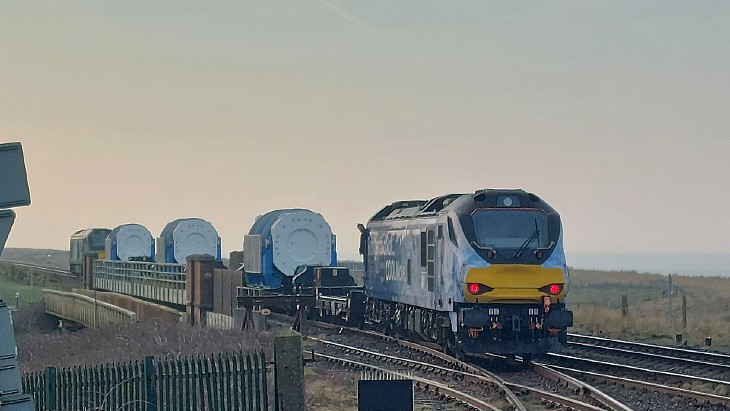
The second of three planned shipments of high-level radioactive waste has left the Sellafield site in northwest England and is being transported by rail and sea to its destination at the Isar interim storage facility in Germany.

Seven flasks containing the vitrified residues - the radioactive waste has been transformed into a stable glass-like form - travelled by rail to the port of Barrow-in-Furness before being loaded on to Pacific Grebe, a specialist nuclear transport vessel operated by the UK's Nuclear Transport Solutions, which set sail on Wednesday.

The first shipment, of six flasks each with 28 containers of high level waste, to Biblis, took place in 2020.

The waste comes from the reprocessing and recycling of Germany's used nuclear fuel at the Sellafield site, with Nuclear Transport Solutions saying: "Vitrified Residue Returns are a key component of the UK’s strategy to repatriate high- level waste from the Sellafield site, fulfil overseas contracts and deliver on government policy."

According to Germany's Federal Office for the Safety of Nuclear Waste Management (BASE) the transport licence was approved in December, with the repatriation of German waste a binding requirement under international law.

In its guide to the waste it says that until 2005 German utilities shipped used fuel from nuclear power plants to La Hague in France and Sellafield in the UK for reprocessing: "The resulting liquid waste was then melted down into glass and has since been gradually returned to Germany. The last shipment of this waste from France was returned in November 2024." There is one more shipment planned, after the current one, from the UK to complete the repatriation.

The federal office issued a licence in April 2023 for the storage of the vitrified waste at the Isar interim storage facility, which is licensed to hold a maximum of 152 casks of high-level radioactive waste and "according to current plans, there will be 28 fewer high-level waste casks there than originally intended, including the casks containing the vitrified waste".

According to German nuclear specialist GNS: "The waste is massively shielded from external radiation. In the reprocessing plant, the waste is mixed with liquid silicate glass and poured into cylindrical stainless steel containers, which are then sealed tightly after hardening. These containers, filled with the hardened glass mixture, are called "glass moulds". For transport and storage, the moulds are placed in ... massive, more than 100-tonnes cast iron and stainless steel containers, which have been proven in extensive tests to provide both strong shielding and to be safe under extreme conditions."

Until 2011 reprocessed waste was sent to the Gorleben interim storage facility in Lower Saxony, where 108 casks of vitrified radioactive waste have been stored, which was "already a large proportion of the total waste to be returned from reprocessing". According to BASE, as part of the Site Selection Act of 2013 to seek a repository for high-level radioactive waste, the remaining vitrified waste abroad was to be stored in interim storage facilities at nuclear power plant sites.

"The aim was to avoid giving the impression that Gorleben had already been chosen as the site for a final storage facility during the open-ended search for a repository site. In 2015, the federal government, the federal states and the utility companies agreed to store the remaining radioactive waste in Biblis, Brokdorf, Niederaichbach (Isar nuclear power plant) and Philippsburg," BASE says.

France's Orano completed the 13th and final rail shipment from France of vitrified high-level nuclear waste, to Philippsburg, in Germany in November 2024. In total 5310 tonnes of German used fuel was processed at Orano's La Hague plant up to 2008. The inter-governmental agreement governing those operations included a provision that the equivalent in mass and radioactivity of the waste contained in the used fuel elements must be returned to Germany.Until March 2011 Germany obtained a quarter of its electricity from nuclear energy, using 17 reactors. Following the Fukushima Daiichi accident eight reactors were closed immediately and the rest were scheduled to be closed by the end of 2022. Following the start of the Russia-Ukraine war, there was a brief extension for the last three operating nuclear power reactors - Isar 2, Emsland and Neckarwestheim 2 - but they closed in April 2023. Second-last high level waste shipment departs UK for Germany
Read More........

'Lost year': Germany electric car sales go into reverse

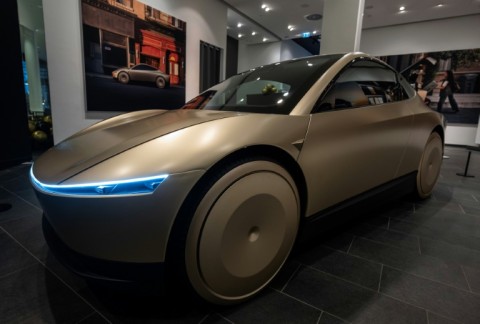
Sales of new electric vehicles in Germany plunged last year, official figures showed Monday, as a slow switch to battery-powered cars deepened the woes of the country's flagship auto industry.

Just 380,609 EVs were registered in 2024 in Europe's largest auto market, 27.4 percent fewer than in the previous year, the KBA federal transport authority said.

After years of growth, demand for battery-powered cars lost momentum as the German economy has struggled and key subsidies were withdrawn.

The slump in EV sales amounted to a "lost year for electro-mobility", said EY analyst Constantin Gall.

AFP/File | Ronny HARTMANN

The sudden end of the support programme in 2023 amid a government budget crisis had led to "massive uncertainty among potential buyers", he said.

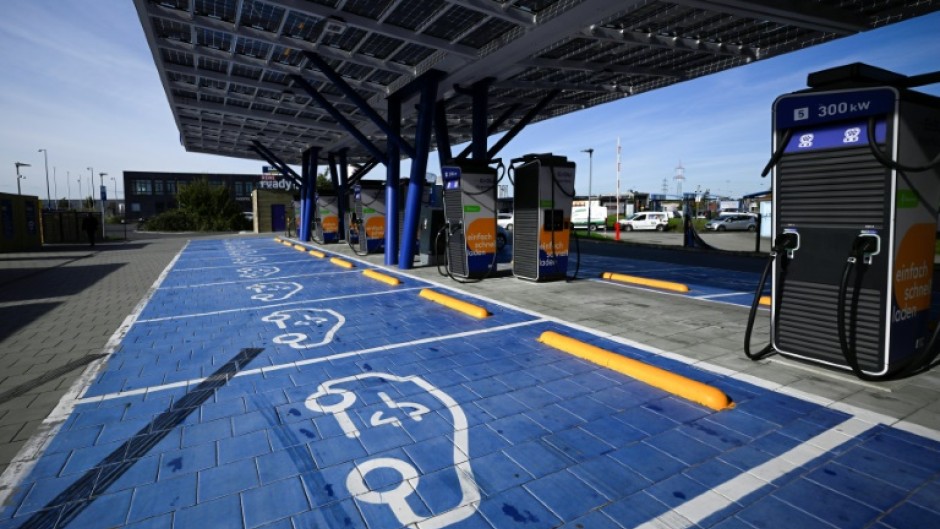
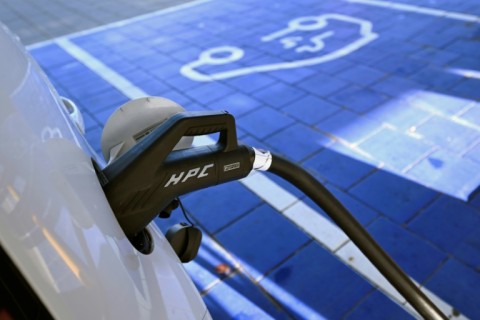
High prices for new EV models, still patchy charging infrastructure and range limitations were putting off new buyers in Germany, he said.

The drop in EV sales led an overall decline in the German car market, which has struggled to recover since the coronavirus pandemic.

Some 2.8 million new cars were sold in 2024 in Europe's top economy, one percent fewer than in the previous year.

- Industry struggles -

AFP/File | Jens Schlueter

Weak demand for new cars at home has compounded the challenges facing Germany's auto industry, alongside high production costs and rising competition from China.

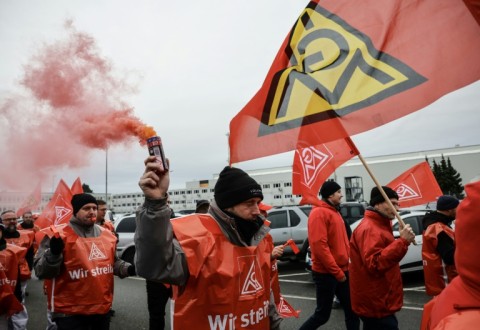
Europe's biggest carmaker Volkswagen announced a deal with unions at the end of last year to reduce production capacity in Germany by some 730,000 units and cut 35,000 jobs.

The drastic cuts were needed to put the core Volkswagen brand on a sustainable footing and to fund investments in the manufacturer's struggling electric strategy, the group said.

AFP/File | John MACDOUGALL

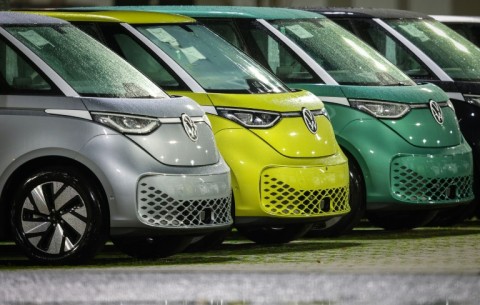
The difficulties at VW did not stop it from keeping the top spot in sales with 536,888 new registrations in Germany.

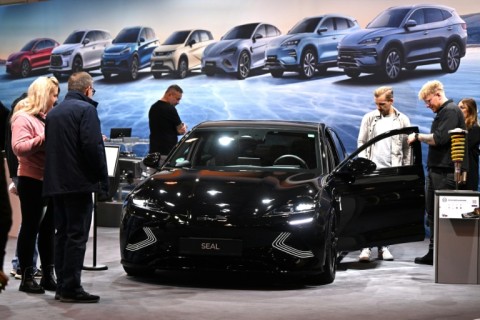
Chinese manufacturers who have gobbled up market share in their domestic market and spooked European producers have yet to make major inroads in Germany.

Combined, brands such as BYD, XPeng and MG Roewe sold some 25,000 units in Germany.

Tesla's market share also dropped to 1.3 percent from 2.2 percent, as the US electric vehicle maker shifted only 38,000 units in Germany.

AFP/File | Ina FASSBENDER

The overall slump in electric car sales in Germany saw battery-powered vehicles lose market share relative to traditional combustion engines and hybrid cars.

Electric cars made up 13.5 percent of sales in 2024, down from 18.4 percent in the previous year.

Sales of hybrid cars rose by 12.7 percent to almost 950,000 as consumers looked to hedge their bets with cars than can run on both electricity and fossil fuel.

- Subsidy scheme -

Gall said "strong impulses" were needed to kickstart the electric car market.

AFP/File | WANG Zhao

A new support programme could provide a "significant boost" to sales of battery-powered cars, he said, but remained uncertain about the outlook as Germany is headed for new elections on February 23.

Chancellor Olaf Scholz, whose government scrapped the previous subsidy scheme, has called on the campaign trail for a new support programme on the European level.

Opposition politicians have also called for the ailing auto industry to get more assistance, while criticising European plans to phase out combustion engines.

Manufacturers could cut prices themselves as they look to shift more EVs and stay on track to meet stricter EU emissions targets coming into force in 2025, Gall said.

AFP/File | Ina FASSBENDER

Progress in bringing down EV prices could lead to a rise in sales, but the sector would struggle to rise above volumes seen in 2023, he said.

A "hoped-for paradigm shift" in consumer preferences had yet to come, Gall added. "For large parts of the population, combustion engines remain significantly more popular than electric cars."By Sebastien Ash 'Lost year': Germany electric car sales go into reverse
Read More........

AHK Sri Lanka organises first-ever delegation to ‘Hannover Messe 2024’ in Germany

With the aim of promoting investment opportunities in Sri Lanka and building confidence among current and potential investors, the German Industry and Commerce Delegation to Sri Lanka (AHK Sri Lanka) organised a three-day delegation to the Hannover Messe from 24 to 26 April.

AHK Sri Lanka had invited Minister of State for Investor Promotion Dilum Amunugama to lead the delegation along with other Government officials and representation of the Sri Lankan business community. This was the first time that Sri Lanka had officially participated at the Hannover Messe which is considered to be the world’s leading industrial trade fair.

During the visit, AHK Sri Lanka organised meetings with potential investors such as Hamburg Port Consulting, Linde Engineering, and SAP, and facilitated site visits to prominent establishments such as Continental Tires, one of the world’s largest tyre manufacturers. These engagements provided valuable insights into Sri Lanka’s business environment and investment opportunities, further bolstering investor confidence.

State Minister Amunugama observed that as Germany is the industrial powerhouse of Europe and given Sri Lanka’s target of encouraging export-led economic growth, Sri Lanka has much to gain from strengthening trade and business linkages with Germany.

During the meetings with German trade associations and businesses, the State Minister stated that Sri Lanka remains committed to international sustainability standards of green economy, strong labour rights, and inclusive growth, and mentioned the country’s record as one of the most ethical sourcing destinations.

He added that Sri Lanka’s key product to the EU under GSP+, apparel, has earned the reputation of garments without guilt. He also stated that Sri Lanka is implementing necessary reforms to ensure long-term stability of the economy, while highlighting that Sri Lanka possesses great potential for creation of renewable energy such as green hydrogen.

Furthermore, when State Minister Amunugama met with the senior management of the Continental group, he appreciated the confidence they had placed in Sri Lanka as a destination for growth and sustainability. Commenting on the delegation’s participation in the Hannover Messe, Schönburg emphasised the importance of showcasing Sri Lanka’s investment opportunities on a global platform.

“The Hannover Messe provides a unique opportunity to highlight Sri Lanka’s potential as an attractive investment destination. By engaging with international stakeholders and showcasing our strengths, we aim to foster meaningful partnerships and drive sustainable economic growth. I am very pleased that Honourable Dilum Amunugama has accepted our invitation to lead the delegation, as his presence in Hannover has sent a strong, positive signal to everyone we have spoken to,” she said.

AHK Sri Lanka organised Sri Lanka’s participation at the Hannover Messe 2024 with the support of the Embassy of Sri Lanka in Berlin and Deutsche Messe AG.

The delegation’s presence at Hannover Messe signifies a concerted effort to position Sri Lanka as a favourable investment destination, leveraging its strategic location, skilled workforce, and conducive business environment.

The 2025 edition of Hannover Messe is scheduled for 31 March to 14 April 2025. AHK Sri Lanka organises first-ever delegation to ‘Hannover Messe 2024’ in Germany | Daily FT
Read More........

18 years on, Germany hopes to relive World Cup 'fairytale' with Euro 2024

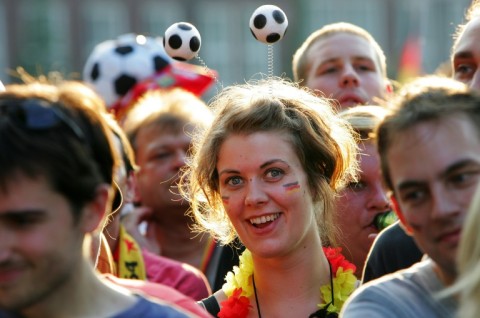
BERLIN - As Germany prepares to host Euro 2024, the 2006 World Cup -- the last major international football tournament on German soil -- still plays a formative role in the nation's collective consciousness.

Now widely known as the Summer Fairytale (Sommermaerchen), the tournament is remembered as the moment a unified Germany shook off the shadows of its dark past and showed the world a new, modern face.

On the field, the German team coached by Jurgen Klinsmann overcame dire pre-tournament predictions to make it to the semi-finals.


Despite losing in extra time to eventual champions Italy and eventually finishing third, Germany's performance kick-started a decade of dominance that peaked with the 2014 World Cup triumph in Brazil.

Off the field, the tournament changed not only the way the world saw Germany, but the manner in which Germany saw itself.

Philipp Lahm, a key player in 2006 who captained Germany to World Cup glory eight years later, told AFP: "In 2006 we were able to experience the whole nation standing behind the team and giving us energy.

"The celebrations are good. That people come here to Germany and celebrate a big festival together."

- 'Where are all the Germans?' -

German sports sociologist and philosopher Gunter Gebauer told AFP the tournament had a sudden and long-lasting impact.

"Before the tournament, the mood in Germany was very, very poor. The economy was not going well. The weather was bad and the football was atrocious.

"And then the World Cup started and during Germany's first game against Costa Rica, Philipp Lahm scored and the sun burst through -- it was almost like something from the Bible."

Living in a middle-class Berlin suburb, Gebauer saw a neighbour unfurl a German flag from his balcony, previously considered a "taboo" due to the nation's post-World War II reservations with nationalism.

"From there, we saw German flags and singing the anthem at Germany games -- something which just didn't exist before."

AFP | ODD ANDERSEN

The dissolving of internal reservations meant World Cup visitors saw a different side to the straight, rule-enforcing Germans familiar from national stereotypes.

"Foreigners who came to Germany were delighted with the German public.

"The English people asked 'where are all the bloody Germans? We've only come across friendly people who are partying everywhere'."

Wolfgang Maennig, a rower who won gold for Germany at the 1988 Seoul Olympics, is now a professor of sports economics at Hamburg University.

- 'Feel-good effect' -

In an interview with AFP, Maennig said while the economic benefits of large events were often negligible, "the feel-good effect was the essence of the 2006 World Cup."

Before the World Cup, "Germans were not exactly considered world leaders when it comes to being welcoming," but after 2006 "Germany has improved significantly in international perceptions."

"I believe that foreigners see us completely differently, no longer as unenthusiastic, somewhat peculiar people, but as open and happy, which made us more comfortable with how we see ourselves."

Jan Haut, a sports sociologist at Goethe University, told AFP "the German people became a bit less stiff. They were more comfortable and confident celebrating victories of the national team".

"What was rather new was that Germans themselves became more aware that in other countries the picture of Germany isn't as bad as the Germans had thought," he added.

- 'Only football can do this' -

While 18 years have passed and both Germany and the world have changed, many parallels remain.

Germany again is wracked by economic uncertainty, infrastructure concerns and fears of poor on-field performances.

Haut said the world's attention would again shine a light on Germany, for bad and for good.

"In the worst case, there might be some surprises -- maybe that people become aware that things don't work so well in Germany currently, like public transport."

After the humiliation of two successive World Cup exits in the group stage, Germany have shown signs of life under coach Julian Nagelsmann.

They won just three of 11 games in 2023 but rebounded with strong wins over France and Netherlands in March.

Whatever the team's results in the tournament, Maennig said Germany could bank on the unifying impact of the national sport.

"As a rower I say this with a bit of sorrow in my voice, but only football can bring people together like this. The cafes and restaurants show the games on monitors and you can sit and watch in a friendly atmosphere.

Read More........

Solar Balconies Are Booming in Germany and You Can Plug in and Install Them Yourself

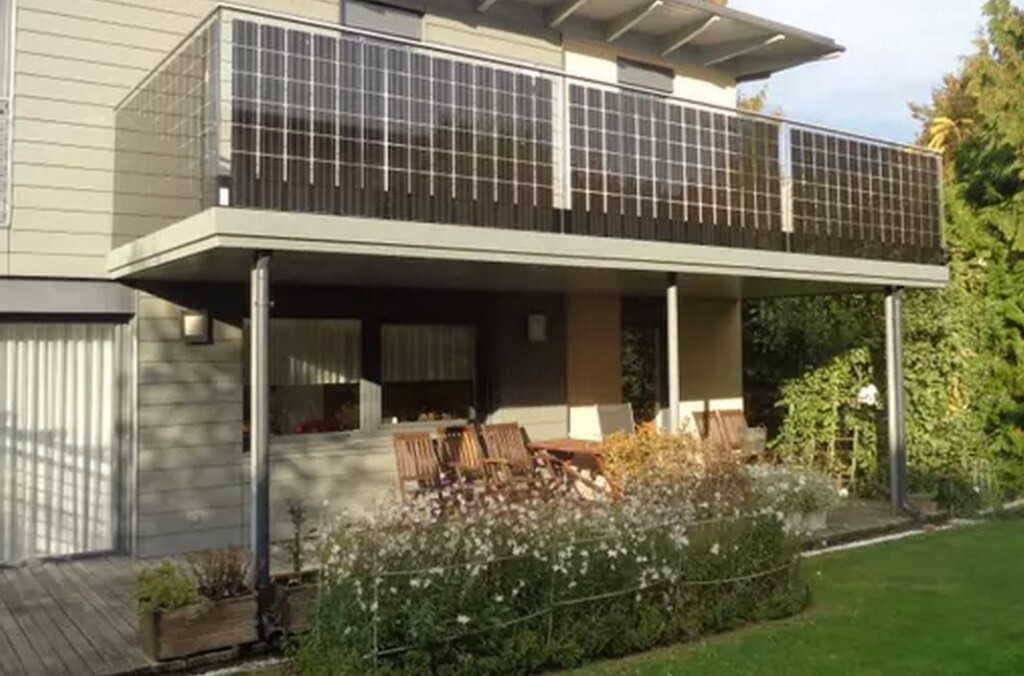
A solar balcony from Ertex Solar Austria.

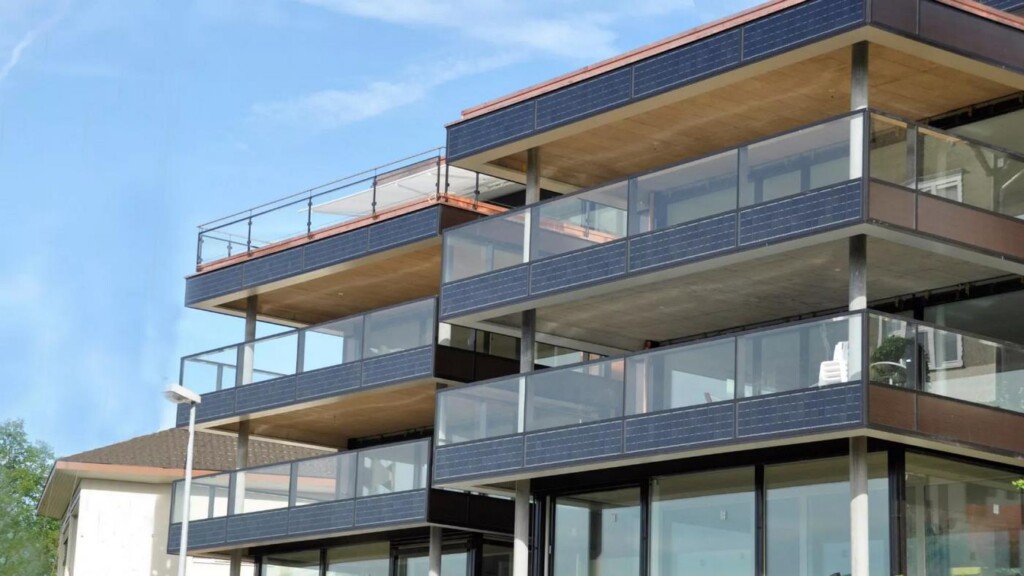
Solar panels are finding their way onto all sorts of surprising surfaces, and now Central Europeans are beginning to line their balcony rails with them; because why not?

To mark the 70th anniversary of the solar cell’s mainstream entry into society, data acquired by Euronews claims that 400,000 German households have already connected their verandas and balconies to solar panels.

New data shows at least 50,000 of the PV devices were added in the first quarter of 2024 alone.

Easy to install—such that many do it themselves, the technology makes every bit of sense as rooftop PV solar panels. In the Northern Hemisphere, during the winter months especially, the sun comes at such a shallow angle that panels on a balcony may even exceed the power generation of those mounted on a roof.

They won’t generate more power, because they’re plugged into smaller sockets, but they present less of a hazard than rooftop solar, and may not even require installation fees. They can also be installed where people may not have the requisite sunlight, the property access, or the structural strength to install rooftop panels.

Jan Osenberg, a policy advisor at the SolarPower Europe association, told Euronews that 200 megawatts is a rough estimate of how much electricity is generated by solar balconies, compared to 22 gigawatts from all of Germany’s rooftop solar panels.

The technology has been a boom in Germany’s strong solar culture. More power is generated by solar in Germany than any other country in Europe.
A solar balcony from Ertex Solar Austria.

“Rooftop solar really has this empowering momentum that people who start to have a solar system, they start to track their electricity consumption, they start to feel themselves as being someone who is a frontrunner in the energy transition, someone who supports the energy transition and is already a part of it,” says Osenberg.

Some German states offer subsidies for a solar balcony kit, which pays for itself in electricity savings after around 3-5 years of its 20-year lifespan. However, at 24 kilograms—over 50 pounds—installation needs to be taken deadly seriously, as a panel falling three or four stories onto someone might be lights out.

Europe has been getting progressively more inventive with the placement of its solar panels. GNN has reported on solar power installations. Source: https://www.goodnewsnetwork.org/solar-balconies-are-booming-in-germany-and-you-can-plug-in-and-install-them-yourself/
Read More........

Merkel, Macron meet as Germany takes on high-stakes EU presidency

Chancellor Angela Merkel and French President Emmanuel Macron

AFP/Berlin: Chancellor Angela Merkel hosts French President Emmanuel Macron for talks on Monday, days before Germany takes on the rotating presidency of the European Union with the economy in the throes of the most severe storm since World War II.

Berlin's chairing of the 26-member bloc will be its last with Merkel in charge, and could be the one that defines the legacy of the leader dubbed the ‘eternal chancellor’.

With the future of the bloc's relationship with Britain to be determined, a crucial shift to a lower carbon world in the balance and crises from Libya to Syria all jostling for attention, there is no shortage of burning issues to tackle.

But the COVID0-19 pandemic and the economic devastation it has wrought have become a bull in the painstakingly arranged EU china shop.

‘This crisis that we're currently experiencing is different compared to any other we have experienced since the founding of Europe,’ Merkel, in power since 2005, told parliament in an address laying out priorities for the EU presidency.

‘Alone in Europe, it has claimed more than 100,000 lives. A few weeks of economic standstill was enough to endanger what we have built up over years.’

With all to play for, member states are anxiously looking to Europe's biggest economy to take charge.

In an interview published Saturday, European Commission chief Ursula von der Leyen said it was ‘very fortunate that Germany is taking over the presidency at this time of a major crisis.’

Merkel's long experience and credibility ‘helps enormously,’ she told the Handelsblatt newspaper.

So high are the expectations that Germany's EU ambassador Michael Clauss said in jest they are making him ‘sleep badly, because I think the expectations are already a bit overstretched.’

‘We have to act as honest brokers, otherwise we won't have the support of the council.’

- German 'bulldozer' -

Besides its geopolitical weight and economic heft, Germany is taking on custodianship of the bloc with a strong hand as it has so far withstood the health emergency better than most other member states.

Its economy also entered the crisis well-endowed to fight the impact.

Crucially, compared to the debt crisis that threatened to sink the single currency zone in 2009-2010, Germany looks very different today -- it's out with Scrooge and in with Lady Bountiful.

Once an obstinate champion of budgetary rigour, Merkel's government has ditched its no-new-debt dogma to throw resources at the crisis.

At home, its programme to shore up the economy totals more than a trillion euros in spending, loans and guarantees.

Together with Macron, Merkel had sketched out the backbone of the 750 million-euro ($840-million) fund proposed by von der Leyen to bolster the bloc's economy.

The fund would offer grants -- with no repayment obligation -- to countries hardest hit by the pandemic, a major policy U-turn for Berlin.

With an eye on the devastating blow taken by the worst-hit countries like Spain or Italy, Merkel explained that it was ‘imperative that Germany not only thinks of itself but is prepared for an extraordinary act of solidarity’.

‘In such a crisis, everyone is expected to do what is necessary. And what is necessary in this case is rather extraordinary,’ she told the Sueddeutsche Zeitung newspaper.

The recovery fund is likely to be among the key points raised when Merkel and Macron hold talks at German government retreat Meseberg on Monday, with frugal nations such as Austria and the Netherlands sharp critics.

But observers believe that the EU's biggest paymaster Berlin will ram through a yes.

‘When the Germans are certain they are right, it's very bulldozer, there is no margin for discussion,’ a high-ranking EU official said.

- 'Swan song' -

An EU diplomat agreed, saying: ‘On the recovery fund, I expect Germany to dictate the whole process. Merkel is holding all the cards and (EU Council chief) Charles Michel will follow that.

‘She also wants to get Brexit out of the way and she will always go for the deal as she wants to keep the West together. Third leg will be restoring ties with US after the election there.’

Merkel, who has ruled out running for a fifth term next year, won't have much time.

Brexit talks will have to be done by the end of the year, while in November, focus will be on whether US President Donald Trump, whose relationship with Merkel has been frosty at best, manages to hold on to his job.

What is clear is that Merkel's fingerprints will be all over the EU's roadmap through the next six months.

‘This will be a very Merkel presidency, her swan song,’ said the EU diplomat, adding that she would be using it ‘to craft her legacy’.Merkel,  Source:https://www.gulf-times.com/
Read More........

Some 4,000 volunteer to test coronavirus vaccine in German study

Some 4,000 volunteer to test coronavirus vaccine in German study

Some 4,000 volunteers have registered as subjects for a coronavirus vaccination study at the University Hospital in the south-western German city of Tuebingen.

‘It's a real luxury situation, unlike usual clinical trials,’ study director Peter Kremsner told dpa on Friday. ‘Normally we have trouble coming up with enough test subjects.’ A clinical study began at the university clinic in mid-June to test the tolerability of a vaccine developed by the Tuebingen biopharmaceutical company CureVac.

Since then, around 50 people have received the drug. According to Kremsner, no surprising side effects have yet occurred.

So far everything has been fine, Kremsner said, adding that the study had not revealed any sensational or concerning findings.

Not all of the people who volunteered will be able to take part.

A total of 168 subjects are to be vaccinated - in addition to Tuebingen, also in test centres in Hanover and Munich, as well as Ghent, Belgium.

The clinical trial is a so-called phase 1 trial. If it is successful, investigations with significantly more test subjects will follow.

CureVac is working on so-called mRNA vaccines. mRNA is a kind of messenger molecule that contains the building instructions for the production of proteins. For their vaccine, the Curevac researchers provided mRNA with the building instructions for a protein of the coronavirus Sars-CoV-2.

After vaccination, human cells form this protein, which the body recognizes as foreign. It forms antibodies and other immune cells against it.

Compared to other countries in Europe, Germany has not been as hard hit by the coronavirus. As of Saturday morning, the Robert Koch Institute - the country's disease authority - reported six more deaths from the day before, bringing the total to 9,060.

Since the beginning of the coronavirus crisis, the country now has a total of 198,556 confirmed cases, after 378 new ones on Saturday. Source: https://www.gulf-times.com
Read More........

Volkswagen to cut 30,000 jobs to save $3.9 bn

Volkswagen AG today announced that it will cut around 30,000 jobs globally in order to save €3.7 billion ($3.9 billion) in expenses, as the German carmaker seeks to recover from the emissions scandal, which has so far cost it $20 billion.

The car giant, which employs 624,000 people in 34 countries, said that the 30,000 job cuts include 23,000 in Germany, but will create 9,000 new jobs as it shifts to electric and self-drive technology.

This exercise should bring in annual savings of $3.9 billion (€3.7 billion) by 2020.

The company said that the plan is the most radical in its history. Volkswagen executive in charge of VW brand cars, Herbert Diess, said that the company needed to brace itself for drastic changes as the automobile industry shifted to electric vehicles.

Volkswagen CEO, Matthias Mueller, said it was ''the biggest modernisation programme in the history of the group's core brand.''

''The VW brand needs a real shake-up and that is exactly what the future pact has turned out to be,'' he added.

Volkswagen, Europe's largest automaker, has been grappling with the emission cheating scandal that has hit sales and so far cost the company around $20 billion.

The company fitted its cars with so-called default devices software that changed engine performance during emissions testing.

In June, the Wolfsburg-based company agreed to pay up to $14.7 billion to settle claims, in what would be one of the largest consumer class-action settlements ever in the United States. (See: Emissions scam: VW to pay up to $14.7 m to settle claims)

Volkswagen may yet face further fines as customers in other countries demand compensation.

The VW group has 12 brands from seven European countries: Volkswagen passenger cars, Audi, Seat, Skoda, Bentley, Bugatti, Lamborghini, Porsche, Ducati, Volkswagen Commercial Vehicles, Scania and MAN.

Apart from the emission scandal, the company has struggled with profit margins well below those of its rivals, weighed down by onerous labour contracts and a complex corporate structure. Source: domain-b.com
Read More........

Merkel named Time’s Person of the Year

Image by Gerd Altmann from Pixabay

Time magazine today named German Chancellor Angela Merkel its "Person of the Year 2015", saying her deft leadership has helped preserve and promote an open, borderless Europe in the face of economic turmoil, ongoing refugee and the Ukraine crises. She beat some of the world's best-known politicians and leaders including Iranian President Hassan Rouhani, Russian President Vladimir Putin, ISIS leader Abu Bakr Al-Baghdadi and Republican presidential hopeful Donald Trump for the annual honour. "At a moment when much of the world is once more engaged in a furious debate about the balance between safety and freedom, the Chancellor is asking a great deal of the German people, and by their example, the rest of us as well. To be welcoming. To be unafraid. To believe that great civilizations build bridges, not walls, and that wars are won both on and off the battlefield," Time said. Time said Merkel was chosen as the person of the year because she is the "de facto leader" of a continent. — PTI. Source: Article
Read More........

German apple queens visit Chancellery

The German Chancellery, normally only a place where top politicians convene, was host to seven apple queens from various German cultivation areas on October 8, German website Fruchthandel.de reports.In front of the Chancellery's cabinet room, they presented richly filled fruit baskets with various German apple varieties to Chancellor Angela Merkel, the Federal Ministers and State Secretaries. Angela Merkel was pleased with a very extraordinary basket: hers was completely filled with Boskoop apples, the Chancellor's favourite apple. The other cabinet members were also presented with freshly harvested apples by the ambassadors. Apart from the red Boskoop, the fruit baskets contained the Elstar, Jonagold, Holsteiner Cox and Jonagored varieties. The apple queens' visit to the Chancellery is a tradition in Germany. At the start of the season, the apple queens celebrate the apple harvest in Germany by presenting the fruit baskets. Source: Article
Read More........

TVS Motor to roll out bikes for BMW next year

Chennai, May 5 (IANS) Two- and three-wheeler maker TVS Motor Company will start rolling out bikes  for German auto major BMW during the second half of next year, a top company official said Monday. The company will also launch new products to fill up the vacuum in its product line-up. Speaking about the tie-up with the German group, Venu Srinivasan, chairman and managing director of TVS Motor, told newsmen: "It will be ready in the second half of next calendar year. It will be brand new platform for the BMW." Last year TVS Motor and BMW signed an agreement to jointly develop motorcycles in the 250-500cc range to be sold through their respective distribution network. The company has invested around Rs.150 crore for the project and will be using its existing and new vendor base for making the bikes. Meanwhile, launching the company's new Star City Plus 110cc motorcycle priced at Rs.44,000 (ex-showroom New Delhi), Srinivasan said the company will be introducing new products in bikes as well as scooter segment every quarter to fill up its product line. He said the company will be launching bikes in the high volume commuter segment where the company is not present in a major way. Srinivasan said the commuter segment is around 600,000 units per month and TVS Motor's share in that segment is around 35,000 units. The launch of new model is expected to take the company's sales volume to around 50,000 units per month in the commuter segment in six months time. Srinivasan said TVS Motor will soon come out with new bike and scooter models. Source: News Track India
Read More........

Spied: BMW Gets to Work on Next Generation 5-Series


Much in the same way as humans and animals, automobiles are also tied to the vicious cycle of life and death. At the same time that the first examples of the facelifted BMW 5-Series F10 sedan, F11 Touring and F07 Gran Turismo models are arriving in dealerships across the world, the engineering minds in Munich have started field tests of the car that will gradually replace them starting from late 2016 or early 2017. Our spy photographers nabbed one of the very first camouflaged prototypes of the next generation 5-Series in Touring (station wagon) shape as it was being transferred on a delivery truck. It's too early and there are too many dummy panels on the test car to know definite details, butthe new 5er is expected to benefit from a weight reduction and new tech features, all while evolving the design of the current model. By the time the next 5-Series arrives, further advancements in the field of hybrid powerplants and electric motors will allow BMW to expand its range as well. Photo Credits: CarPix for CarScoop, Source: Carscoops
Read More........

Kia Guns for BMW with New Cross GT Concept at Chicago Auto Show

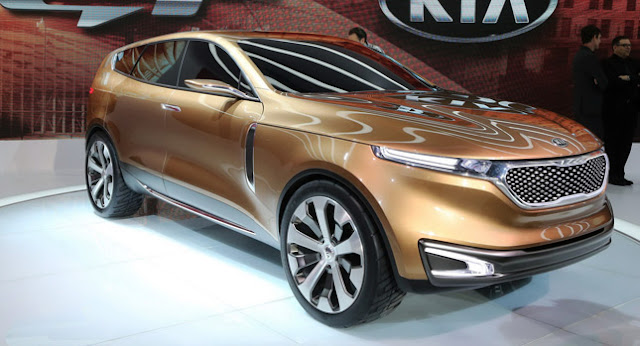
Whereas Germany's premium carmakers are looking to expand their reach in smaller segments, Korea's Hyundai and Kia are actively flirting with the idea of enhancing their range with more premium and larger-size vehicles. At this week's Chicago Auto Show, Kia pulled the covers off the new Cross GT concept, which it describes as "blurring the line" between GT sedan study and a luxury crossover vehicle. The reference to the rear-wheel drive GT sedan also has to do with the fact that the Cross GT is based on the same chassis. The Koreans state that, while purely conceptual,the Cross GT reveals the brand's "intentions to potentially offer a larger premium SUV than the current Sorento in certain markets". Kia may not say it directly, but with this concept, it is aiming towards the likes of the BMW X5 and X6. At 122.0 inches (3,099mm), the Cross GT’s wheelbase is longer than Sorento’s by 15.7 inches (399mm), and its overall length of 192.8 inches (4,897mm) is 8.4 inches (213mm) greater than Kia's CUV. Also, with a width of 79.1-inch (2,009mm), it's 4.9 inches (124mm) wider than Sorento, but its overall height of 65.3 inches (1659mm) is 1.6 inches (41mm) shorter for a more aggressive stance. Penned at the Kia Design Center America (KDCA) in Irvine, California, the four-seater model sports dual rear-hinged doors (more commonly referred to as “suicide” doors) and a clam-shell design for the traditional glass hatch and tailgate. For its motivation, the concept utilizes a parallel hybrid system linking a 3.8-liter V6 engine to an 8-speed automatic transmission and torque-vectoring all-wheel-drive. The electric motor is positioned between the V6 and the transmission, offering an emissions-free driving range of 20 miles (32km). Combined, the V6 and the electric motor produce 400hp and 500 lb-ft of peak torque. Commenting on the Cross GT, Kia's newly appointed president and global design chief, Peter Schreyer, said: “The debut of the GT in 2011 heralded a new frontier for Kia, both from a design and a business perspective. It beautifully illustrated to the world that the brand was ready to explore the possibility of perhaps one day offering a full-size rear-wheel-drive luxury saloon. The Cross GT, with its raised stance and large cargo area, allows us to envision the GT in the form of a full-size luxury crossover.”Source:n Carscoops
Read More........

iTunes Store Sets New Record with 25 Billion Songs Sold

California: Apple announced that music fans have purchased and downloaded more than 25 billion songs from the iTunes Store (www.itunes.com), the world’s most popular online music, TV and movie store. The 25 billionth song, “Monkey Drums” (Goksel Vancin Remix) by Chase Buch, was purchased by Phillip Lüpke from Germany. As the downloader of the 25 billionth song, Phillip will receive a €10,000 iTunes Gift Card. “We are grateful to our users whose passion for music over the past 10 years has made iTunes the number one music retailer in the world,” said Eddy Cue, Apple’s senior vice president of Internet Software and Services. “Averaging over 15,000 songs downloaded per minute, the iTunes Store connects music fans with their favourite artists, including global sensations like Adele and Coldplay and new artists like The Lumineers, on a scale we never imagined possible.” “In a lot of ways, iTunes has leveled the playing field for musicians. Whether you’re unsigned, indie, major, whatever—it’s the place most people go to buy digital music,” said Wesley Schultz, guitarist and lead vocalist of The Lumineers. “iTunes doesn’t exclude any musicians simply because they’re not yet established or popular.” The iTunes Store is the world’s most popular music store with a catalogue of over 26 million songs and over 25 billion songs downloaded, and is available in 119 countries. The iTunes Store is the best way for iPhone, iPad, iPod, Mac and PC users to legally discover, purchase and download music online. All music on the iTunes Store comes in iTunes Plus, Apple’s DRM-free format with high-quality 256 kbps AAC encoding for audio virtually indistinguishable from the original recordings. iTunes in the Cloud lets you download your previously purchased iTunes music to your devices at no additional cost, and new music purchases can be downloaded automatically to your iOS devices. Apple designs Macs, the best personal computers in the world, along with OS X, iLife, iWork and professional software. Apple leads the digital music revolution with its iPods and iTunes online store. Apple has reinvented the mobile phone with its revolutionary iPhone and App Store, and is defining the future of mobile media and computing devices with iPad. Source: India-Education
Read More........

Carscoop's A-Z Guide to the 2013 Detroit Motor Show, the Final List

The North American International Auto Show(NAIAS) that takes place in Detroit is the first major event of the year for the automotive industry. In 2013, the show opens its doors on January 14 for the media and on the 19th for the public, who can visit the Cobo Center until the 27th and view all the new models on display. Perhaps the most eagerly anticipated premiere is that of the all-new, seventh-generationCorvette. GM, however, has a second ace up its sleeve for the 2013 NAIAS: the world debut of the Cadillac ELR hybrid coupe, aka the production version of the Converj concept that was launched at the same event four years ago. Germany's premium carmakers are also coming on strong – something only natural, since the U.S. market is extremely valuable to them. BMW has chosen Detroit to preview its brand-new 4-Series, the coupe version of the 3-Series saloon that may be billed as a concept, but is effectively ready to enter production. Munich's archrival, Mercedes-Benz, will premiere the CLA premium compact saloon and the
heavily revised E-Class in both saloon and convertible form. Their Japanese challengers won’t be outdone: Lexus will launch the third-generation IS sedanwith a design that closely resembles the LF-CC concept while Infiniti has the Q50 executive saloon that replaces the G series. Last, but not least, even though Ferrari decided to keep a hold on the F150 hypercar, visitors of the show will have the opportunity to see the new Maserati Quattroporte that spearheads the Trident’s assault in the luxury segment. You can scroll down to view the cars that debuted at the 2013 Detroit Motor Show. By Andrew Tsaousis, Source: Carscoop's
Read More........

Blackberrys’ looking at adding more EBOs

With the target of touching Rs 630 crores this year, men’s formal and casual wear label Blackberrys from Mohan Clothing Company plans to perk up its EBO presence by launching 10 more outlets by this year-end. “Apart from increasing our store count from 150 to 160 by end of 2012, we are adding to our MBOs in the south and exploring export opportunities. We are currently present in 800 MBOs and large formats like Shoppers Stop, Lifestyle and Central,” explains Yogesh Tiwari, Vice President Sales & Marketing, Mohan Clothing Company. Established in 1991, Blackberrys is a leading Indian men’s wear brand. Over the years, it has established itself as the manufacturer of trousers, suits and jackets, gradually completing the wardrobe look with shirts and accessories. “The model is based on a design conscious product delivery system with a strong back-up of global and local sourcing. Catering to the self assured and confident youth, we stand for innovations in product and have created a strong image of ‘sharp edged clothing’, says Tiwari, adding, “Blackberrys is equipped with the latest manufacturing facility in three factories. The 22,000 sq. ft. plant has been especially designed for manufacturing suits and jackets. Our aim is to delight the fashion forward customer with great style and care teamed with speed and innovation.” The brand works on the philosophy of offering garments with a fashion twist making it different others in the market. Therefore, they have a small percentage of basic products. Today, 80 per cent of our shirts are in slim fits which is in vogue and is being consumed voraciously by the customers. “To put a figure we are at about 90 per cent fashion and approximately 10 per cent regular.” Brand’s A/W 12 range includes a wide range of jackets, coats, tuxedos, shirts, trousers in niche looks. Woven from imported fabrics from Turkey, Germany, Italy and Korea the warmth and feel would give customer a chance to be the trendsetter of the season. The trouser shades are in mustard, green, blue and red. Elaborating on the product offerings, Tiwari states, “We approach our offerings not category wise (i.e. how quintessentially other players do – shirts, trousers, suits etc) but through the window of usage occasion in the day of a customer. Thus, the Blackberrys wardrobe includes dress line trousers, khakis, shirts, suits and jackets. We are also planning to introduce the casual or sports line in a dressed-up manner with accessories matching the look like stoles, scarves and bow ties.” Commenting on the industry prospects, Tiwari sums up saying, “The industry outlook is definitely on the upswing. A brand needs just a million plus customers to reach Rs 500 crores turnover. If you add one lakh customers, you will grow 20 per cent on value. The consuming class in our kind of segment is huge and consumers are moving up. So the problem will be escalation of demand, if we are able to handle that, I don’t see any other issue.”Source: Fashion United
Read More........

Hitler is back?

Recently the name of Adolf Hitler, the former leader of National Socialism, who drew the German people and the whole humankind into the bloodiest war of the XX century, which burned the lives of 60 million people, has more and more often appeared in mass media. 
By: N. Pavlova, Hitler's name has been surfacing here and there in different context. In Austria the tomb stone on Hitler's parent's grave was destroyed, since it had turned into a place of worship of neo-Nazi and extremists. Turkey banned the video with Germany's Reichkanzler advertising men's shampoo. In India the owner of a men's clothing store called his store with the Fuhrer's name in order to draw customers, causing the Jewish community of Ahmedabad in the state of Gujarat to appeal to have him change the store sign. Last summer, the Italian prosecutors received a signal that some wine trader sold wine in bottles with the labels depicting the portraits of Adolf Hitler and Benito Mussolini. The prosecutors started investigation based on the complaint filed by an American couple, whose relatives died in Oswenzim. In Great Britain the bed linen that had belonged to the creator of the Third Reich was sold at an auction for 2000 pounds. Even in Germany itself the interest in the dictator does not disappear. Two years ago in Berlin in the German History Museum an exhibition took place entitled «Hitler and the Germans. United people and crimes». Every new generation is bothered by the questions: how could it happen that Hitler got to power, what kind of person he was, what were the reasons for his cruelty, what effect his personality had on the people around him? German filmmaker Nico Hofmann is once again ready to investigate those reasons in his new saga about Hitler. The TV series will show the Fuhrer's life beginning with 1914 and ending with his inglorious death after the fall of Berlin in 1945. The German publication Spiegel online, which by the way has a monthly „wake fort he devil“, reports about this risky project. There is always an newsworthy event: political debates around the Fuhrer’s family estate in Austria (whether to demolish it, let people live there or turn it into a monument) or an art exhibition in one of the galleries in Great Britain, where one can play golf with Hitler. Where does this never-ending interest towards Hitler's personality and his surroundings come from? Did Adolf Schicklgruber really have a certain dark charisma, which to this day attracts both scientists and ordinary people? This is the subject of our conversation with Professor Doctor Hans-Henning Schröder, a German historian and political scientist from the German Institute of International Politics and Security. «On the one hand, the film about Rommel is still a film about resistance. You know, Hitler forced him to commit suicide. We are talking about a soldier, who went all the way from a supporter to an opponent of Hitler. Rommel is the central character of the film; he is still very popular in Germany, perhaps because his son was the mayor of Stuttgart. The era of the Third Reich is still being investigated, hence, the figure of Rommel, who took a very complicated path. On the other hand, there is still potential for the far-right radicals in Germany. According to the latest research, about 9% of the Germans support the far-right radical ideas, while in the Eastern regions this figure in even higher – 16%. Such people support the ideas of national patriotism and have anti-democratic views. Such a situation is typical not only of Germany, but also of other countries. Naturally, in Germany the government's efforts are aimed against this phenomenon». The British daily newspaper Daily Mail in its questions and answers section announced that over 39 187 books were written about Hitler, while 85 640 books were written about Napoleon. But Napoleon died 191 years ago, while Hitler 67 years ago. If the interest for Hitler does not decrease, he can easily breach the gap. And given all this, I would like to ask about Hitler's book „Mein Kampf“. Mass media report that it can be published again. Is that so? «German law, including Bavaria, which owns the rights to this publication and uses its rights to prohibit its further publishing anywhere in the world, forbids publishing this book. However, the international law limits copyright to a term of 80 years. At the end of 2015 this term will be over, after which anybody will be able to publish the book. And now the German government is looking for a way to prevent this process in the future». Source: Voice of Russia
Read More........

Google Play for UK, Germany and France

Google has confirmed in a Google TV blog post that starting November 13th, Google Play music and movies will be available on Google TV in the UK, Germany and France. The post updated an earlier comment that suggested the service was launching in more countries on that date, “but stay tuned as we’re bringing Google Play to more countries all the time,” said Google. The superseded post had suggested that Australia and Canada would also see launches. Source: Advanced Television
Read More........

Q3 roundup of global retail leaders

In the third of this year's regular series of updates, IGD retail have rounded up the main developments at the leading global grocery retailers - Carrefour, Tesco, Metro and Walmart - since August. Divestment has been key feature for Carrefour: (1) In the fourth quarter Carrefour announced the sale of its business in Colombia to Cencosud, and of its Malaysian operations to Japanese retailer Aeon. Carrefour is clearly prioritising resource allocation to more mature markets where it holds a strong position, and emerging markets where it can harness growth potential (2) At the first half results presentation, when a 0.9% increase in net sales was reported, CEO Georges Plassat also outlined three areas of future focus: assets, merchandise and people (3) A survey by French trade magazine Linéaires revealed that Carrefour significantly lowered prices over the first half, closing the gap with price leader Leclerc and showing that in France, the group is well on the way to delivering EDLP. The price initiatives are beginning to kick in, and Q3 results indicated signs of improvement in French hypermarkets, especially in food sales (4) Carrefour has identified e-commerce as an area where it can accelerate in 2012. In line with this, it launched trials of virtual shopping walls at train stations in Lyon and Paris, during September and October, Tesco: improving UK performanceTesco: In China, Tesco closed four stores to concentrate on fewer regions and on key strategic areas. In South Korea, a sale and leaseback deal generated GBP300m which is likely to be invested back into the development of Tesco's business in the country. First half results revealed modest group sales growth and improving UK performance, alongside a fall in group trading profit, as the retailer invests in its plan to build a better Tesco. Performance from international operations was mixed, impacted by local economic conditions. Online has been a focus, both at home and internationally. Tesco is growing its network of dark stores in the UK, and plans to open two more over the next 18 months. In China, Tesco became the first supermarket retailer to launch a website offering recipe ideas, nutritional information and food education. Slovakia became the latest country to welcome online grocery shopping this year, following the launch of the service in the Czech Republic and Poland. Metro confident on positioning: Third quarter sales, reported last week, were up 2%, but EBIT was down 39%. European performance was mixed, with a sales fall of 2% in Germany, and divestments (Makro UK and Saturn France) impairing growth in western Europe. In Asia/Africa, sales were up 32.2% (+19% in local currency). Despite the difficulties and the uncertain economic outlook, Metro CEO Olaf Koch is confident that the group is on the right track with the strategic measures taken so far. The group continues to expect a rise in sales for the full year. In central and eastern Europe, Metro is to continue expanding the Real hypermarket business in Ukraine, while there have been rumours that it is considering the sale of operations in Russia. Metro revealed a new management structure at Real, as it attempts to realign the business and improve its profitability. Further east, more cash & carry outlets are expected to open in India by the end of the year, taking the total to 15. Metro sees potential for more than 100 Indian stores in the long term. Walmart's multichannel developments continue: At the annual analysts' meeting in October, Walmart outlined its plans for growth. These include accelerating small format store growth in the US, investing in price and e-commerce. Multichannel developments have continued apace. The launch of an advanced search engine for Walmart.com, tests of a self-scanning app and same-day delivery for online, and this week's collaboration between Mattel and Walmart Canada all reinforce the importance of e-commerce, in which CEO Mike Duke has said "we will play to win." Second quarter results, at the end of August, indicated ongoing momentum at home, with four successive quarters of positive comparable sales growth delivered in the core US stores. Although international growth slowed, these operations continue to be Walmart's main growth engine. Source: Fresh-Plaza
Read More........