Xi wishes Trump, Melania speedy recovery


Chinese President Xi Jinping on Saturday wished a speedy recovery to his US counterpart Donald Trump and First Lady Melania Trump.

Learning President Trump and Melania have tested positive for COVID-19, he and his wife, Peng Liyuan, extend sympathy to them and wish them a speedy recovery, Xi said in a message to Trump.

Meanwhile, world leaders have wished Donald Trump and his wife Melania Trump a speedy recovery after Trump made the announcement of getting infected with coronavirus.

“Tonight, @FLOTUS and I tested positive for Covid-19. We will begin our quarantine and recovery process immediately. We will get through this TOGETHER!” Trump tweeted on Friday. Source: https://www.daily-bangladesh.com/
Read More........

China flaunts its military might, says will cut force by 300,000

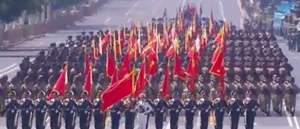
China on Thursday commemorated the 70th anniversary of the defeat of Japan in World War II, in a huge military parade, participating 12,000 troops and a display of its smart weapons, including the YJ ant-ship cruise missiles. The display of military might, aimed at sending a strong message to the rest of the world about the scale, depth and sophistication of its military deterrent, comes ahead of President Xi Jinping's proposed visit to the United States. The proposed troop reduction, however, is not an olive branch, but a sign of the growing technological sophistication of its armed forces. Thursday's spectacle held in front of Tiananmen Gate in Beijing, involved more than 12,000 troops, 500 pieces of military hardware and 200 aircraft of various types, representing what military officials say is the Chinese military's most cutting-edge technology. China showed off the J-11 multirole fighter jets - an adaptation of Russia's highly capable Su-27 fighters - the J-15 newly developed aircraft-carrier borne planes and the KJ-500 early warning command post in the sky. Most of the weaponry demonstrating China's full-spectrum fighting skills, was indigenous, including the Beidu satellite navigation system, which is set to compete with US-owned Global Positioning System (GPS), following a recent alliance between Chinese entrepreneur Jack Ma's Alibaba group and Norinco, a state-run military enterprise. Despite the show of strength, the Chinese President Xi Jinping softened the tone of the power show by announcing that the size of the PLA would be reduced by 300,000. He, however, did not give a time line. This will be the fourth reduction of forces in the 2.3 million-strong armed forces since the start of a modernization process that commenced in the eighties. "We Chinese love peace. No matter how much stronger it may become, China will never seek hegemony or expansion. It will never inflict its past suffering on any other nation," Xi observed. Japan, meanwhile, said it was ''disappointed'' as there were no signs of rapprochement in Xi's speech to mark the 70th anniversary of Tokyo's WWII defeat, while Beijing opted to show off its growing might with a huge military parade. ''Tokyo had requested that Beijing make sure that the event was not so anti-Japanese, but instead contain elements of rapprochement between Japan and China,'' top government spokesman Yoshihide Suga said. ''It was disappointing that such elements were not in President Xi Jinping's speech today.'' Suga also hit out at China's soaring military spending and reiterated Tokyo's objection to UN Secretary General Ban Ki-moon's attendance at the highly choreographed commemoration events in Beijing. Source: Article
Read More........

BRICS, S. American countries 'rising power' in int'l structure

Chinese President Xi Jinping said Wednesday BRICS and South American countries, as emerging states and developing countries, constitute "the rising power" in the international structure. Chinese President Xi Jinping delivers a speech at the Brazilian National Congress in Brasilia, Brazil, July 16, 2014. (Xinhua/Liu Jiansheng) "We should jointly push the international order toward a fairer and more rational direction, maintain the rights of people's self-choice for choosing social system and development path, strengthen global governance and attract more attention to the issue of development from the international community," he said. Xi made the remarks in a dialogue between BRICS countries' leaders and presidents from 11 South American nations, a sideline event after the conclusion of the sixth BRICS summit held in Brazil's coastal city of Fortaleza. Heads of state from BRICS countries, including Xi, Brazilian President Dilma Rousseff, Russian President Vladimir Putin, Indian Prime Minister Narendra Modi, and South African President Jacob Zuma attended the dialogue. Also present were Surinamese President Desi Bouterse, Argentine President Cristina Fernandez, Bolivian President Evo Morales, Colombian President Juan Manuel Santos, Chilean President Michelle Bachelet, Ecuadorian President Rafael Correa, Guyanese President Donald Ramotar, Paraguayan President Horacio Cartes, Peruvian President Ollanta Humala, Uruguayan President Jose Mujica, and Venezuelan President Nicolas Maduro. During the dialogue, Xi said efforts should be made to strengthen the connectivity between the two large markets of BRICS and South America. "BRICS countries can actively participate in infrastructure construction, resource exploration, industrial development and fund-rising projects in South America," he said. The two sides could also increase people-to-people exchanges for friendship among the peoples, he noted. Xi hailed the long history of the exchanges between China and South America. "The cooperation between China and South American countries constitute one of the key directions for China to strengthen its cooperation with developing countries," he said. "We are willing to continue to be your good friend and partner for the overall growth of China-Latin American cooperation," the Chinese leader said. China will host the informal economic leaders' meeting of the Asia-Pacific Economic Cooperation (APEC) later this year, and "is working with all economies, including South American members, to foster the framework for Asia-Pacific economic integration and intra-connected network, and develop the future-oriented Asia-Pacific partnership," he said, adding that China wishes to see the active participation of South American nations. The South American leaders present all expressed that the dialogue offered an opportunity to share development experiences and blueprint future development. They believed that the two sides boast huge cooperation potentials and should push forward pragmatic cooperation for advancing regional economic integration. They welcomed the BRICS countries' establishing a development bank and creating a contingent reserve arrangement, and hoped the mechanism could provide fund-rising support and increase capabilities of relevant countries to cope with financial risks. They believed that BRICS-South American cooperation is not only conducive to each's growth but also to the democratization of international relations and to the peace, stability and prosperity of the world.  Source: China.org.cn
Read More........

Modi meets Chinese President Xi Jinping, terms 'very fruitful meeting'

Prime Minister, Narendra Modi, met Chinese President Xi Jinping shortly after his arrival in Fortaleza, Brazil, today on the eve of the Sixth BRICS Summit. The 80-minute meeting was the Prime Minister's first summit-level interaction with China. The two leaders observed that India and China had enormous opportunities to not only forge mutually beneficial partnerships, but also serve as catalytic agents of Asian and global prosperity. President Xi Jinping underscored the importance of the bilateral relationship and said When India and China meet, the whole world watches. The two leaders were pleased with the opportunity to meet within a few weeks of the assumption of office by Prime Minister. They expressed satisfaction at the high momentum of bilateral engagement during the past few weeks, including the visit of Vice-President of India Shri Hamid Ansari to China and the visit of Chinese Foreign Minister Wang Yi to India as President Jinping's Special Envoy, in June. Both sides emphasized on the need to find a solution to the Boundary Question. The Prime Minister stressed the importance of strengthening mutual trust and confidence, and maintaining peace and tranquility on the border. He said that if India and China could amicably resolve the
Boundary Question, it would set an example for the entire world, on peaceful conflict resolution. Narendra Modi suggested the addition of one more route for the Kailash-Mansarovar Yatra, keeping in view the terrain difficulties. President Xi Jinping accepted this as a suggestion for consideration. The Prime Minister called for enhanced Chinese investment in the infrastructure sector in India, and hoped that the trade imbalance between the two countries is resolved. President Xi Jinping agreed that balance in trade is necessary for a sustainable economic relationship. He also said enhanced services exports from India to China could be one way to address the issue. China has invited India to attend an APEC meeting in November this year. President Xi Jinping also said India should deepen its engagement with the Shanghai Cooperation Organization (SCO). The Prime Minister said India currently has observer status in the SCO, and was ready to accept additional responsibility, if asked to. Shri Narendra Modi warmly recalled his visits to China as Chief Minister. He underlined that relations between countries are built on the strength of relations between their people. He expressed hope for increase in tourism and ties between the people of the two ancient civilizations. Prime Minister expressed hope that President Xi Jinping's planned visit to India this year was an opportunity to chart a new and ambitious agenda for the strategic partnership between India and China. He expressed appreciation for the invitation extended to him to visit China and looked forward to an early visit.(Source PIB). Source: News Track India
Read More........

US-China challenges beyond 2015

By Dan Steinbock: In the near-term, Washington must manage austerity with pro-growth policies, even amid secular stagnation. In turn, Beijing seeks to manage local debt challenges with subdued but solid growth. In both the United States and China, policy outcomes have far-reaching, global implications. The U.S. budget deal: avoiding downside risks in 2014 After weeks of private talks, House and Senate negotiators, led by Sen. Patty Murray (D-WA) and Rep. Paul Ryan (R-WI), struck a budget agreement. The latter would replace $63 billion of the sequestration cuts slated for 2014-15 with alternative savings measures. The bipartisan objective was to surpass the 2011 budget-cutting law, particularly the automatic spending cuts (the so-called ‘sequester’), to avoid still another government shutdown and to ensure some stability to fiscal policy-making over the next two years. In contrast to the once-hoped for “grand bargain,” the new plan is modest. While it was designed not to redesign the tax code and not to touch federal entitlement programs, it seeks to ensure more spending for domestic and defense programs in the short-term. The costs will be offset by embracing deficit-reduction measures over a decade. But although the budget deal was promoted as a rare bipartisan breakthrough, it was neither rare nor a breakthrough. To defer the next debt crisis, Washington is resorting to still another timeout. While 203,000 jobs were created in November, a robust recovery would require 200,000-300,000 new jobs per month. Further, unemployment rate remains 7 percent, while alternative unemployment, which includes both the unemployed and the under-employed, is still 13.2 percent. Despite 45 months of private-sector job growth and half a decade of quantitative easing (QE), the labor force participation rate – those aged 16 and over who are working or
Tying the knots [By Jiao Haiyang/China.org.cn]
actively looking for work – is 63 percent, the lowest since 1978. Concurrently, the share of the population with a job has collapsed to 58.6 percent. Most importantly, the budget deal, in its original form, leaves unaddressed the renewal of expanded unemployment benefits for the long-term unemployed. Indeed, the deal could cause 1.3 million Americans now receiving these benefits to receive none after Christmas, while 5 million jobless workers could be left in the lurch in 2014. While Washington hopes that economic growth should quicken, annualized growth is likely to remain less than 2 percent in 2013 and at best around or above 2.5 percent in 2014-15. Further, any premature tapering in the next 3-4 months could accelerate downside risks. Indeed, the Fed may not consider hiking rates until unemployment rate plunges to 6.5 percent, which is not likely to occur until late 2014. Consequently, the Fed may continue its third round of QE until March 2014, while record-low policy-rates could prevail well until the end of 2015. The bipartisan budget deal is designed to avoid the downside risks – not to realize the upside potential. The Chinese reforms: ensuring upside potential in 2014 When the budget deal was announced in Washington, the annual Central Economic Work Conference began in Beijing, only a month after the Chinese leadership officially launched the reform plans during the Party’s Third Plenum. During the Chinese leadership transition, most analysts in the West argued that reformers had lost in Beijing. In reality, China opted for tough leaders who could implement broad reforms. In particular, President Xi Jinping and Premier Li Keqiang are decisive economic reformers. If the Third Plenum outlined the official broad contours of China’s economic policies for 5-10 years ahead, the Work Conference shall determine the objectives in the near-term. At the Plenum, the reform proposals focused on tripartite reforms comprising the market, government and corporations. The eight core sectors include finance, taxation, state assets, social welfare, land, foreign investment, innovation and good governance. Further, the reform blueprint seeks to relax control over market access, establish a basic social security package and allow sales of collectively-owned rural land. With new urbanization, the old household registration system (hukou), which continues to discourage migration, will be gradually phased out. The reform plans are moving in parallel with increasing financial deregulation, which, in turn, is supported by the recent launch of Shanghai’s free-trade zone (FTZ). While the FTZ advocates seek to make the renminbi fully convertible in the next few years, Beijing’s reformers hope to make the Chinese currency into a major international currency and a reserve currency, in the next few years. The Work Conference, too, reflects the ongoing shift away from extensive growth, which relied on investments and net exports for three long decades, toward intensive growth, which will be built on consumption, innovation and sustainability in the medium-term. However, even the new reforms are predicated on adequate economic growth, which is deemed to require 7.5 percent growth in the next two years. Nonetheless, Premier Li Keqiang’s 7 percent bottom-line target in 2014 is likely to require stronger than anticipated credit and investment growth. Elusive calm through 2014-15: Thanks to the House and Senate negotiators, the budget deal has the potential to ensure stability until the mid-decade in the United States. In order to deliver their compromise, however, mainstream constituencies in each party must keep their vocal and extremist minorities in line. This will not be easy because the mid-term elections are no longer and the end of the Obama era is looming. Instead of a sustained solution, the bipartisan negotiators have set aside the critical debt-reduction objectives, even though U.S. debt amounts to $17.3 trillion and U.S. total debt already exceeds $60.2 trillion. Total interest for 2013 alone amounts to $2.6 trillion, which is more than all three largest budget items combined – that is, Medicare/Medicaid, social security, plus defense expenditures. China, too, remains haunted by difficult challenges. In particular, Beijing must manage its growth transition, even as it seeks to contain local debt that soared as collateral damage from the 2009 stimulus package. While probabilities for hard landing are fading for 2014-15, deleveraging challenges loom thereafter. Further, if local government deleveraging, along with legacy debts, begins already in late 2014, the potential for downside risks could increase after mid-decade. What Washington has not achieved is an accord on a sustainable, long-term blueprint for tax and spending policies over the next decade. That would require credible, bipartisan cooperation over a medium-term debt/deficit plan. What China has not achieved yet is a detailed blueprint for local debt management over the next few years. That requires decisive consensus in Beijing, which does exist, but also tough implementation at local level and across Chinese provinces, which is more challenging to achieve. The last thing the ailing Europe and Japan, and the slowing large emerging economies need is still another U.S. debt debacle, or a protracted slowdown in China. However, if the looming post-2014-15 challenges can be overcome, global prospects could be blessed by another period of slower, though more sustainable growth and increasing prosperity. Dr. Dan Steinbock is Research Director of International Business at India China and America Institute (USA) and Visiting Fellow at Shanghai Institutes for International Studies (China) and the EU Center (Singapore). See also www.differencegroup.net. Source: China.org.cn
Read More........

China urges US to respect air zone

China urges US to respect air zone
Photo: RIA Novosti
Chinese leaders urged the United States to respect the establishment of a new air defence identification zone (ADIZ) with an "objective and fair attitude," the Foreign Ministry said on Thursday. The call to respect the zone was made during talks with US Vice President Joe Biden, who met President Xi Jinping and Vice President Li Yuanchao on Wednesday, ministry spokesman Hong Lei said. Biden was scheduled to meet Premier Li Keqiang on Thursday after telling Xi that US leaders "don't recognize the zone, that we have deep concerns about it," a US official said. Biden "indicated to Xi that we are looking to China to take steps to lower tensions," including the opening of communication with Japan, the official said. Declared on November 23, the zone covers the Japanese-controlled Senkaku islands, which lie near oil and gas reserves and are claimed by China as the Diaoyu and Taiwan as the Tiaoyutai. Biden held talks in Tokyo on Tuesday with Japanese Prime Minister Shinzo Abe. He is scheduled to travel to Seoul later Thursday to meet South Korean leaders, who have also expressed concern about China's move. Voice of Russia, dpa, Source: Article
Read More........

'Reforms in China will happen' - expert

'Reforms in China will happen' - expert
China’s leadership is promising wide-range reforms in the country that will give markets a “decisive” economic role. A communiqué issued by China’s ruling elite at the end of a four-day meeting reinforced the reformist rhetoric of President Xi Jinping signaling an eventual end to state-mandated prices in the world’s second-largest economy. The Voice of Russia talked to Mr Francesco Sisci from “il Sole 24 ore”, an Italian national daily business newspaper.
A four-day session of top Communist officials in China had been touted for months as a make-or-break moment for reform, expected to produce a plan for how to revamp the Chinese economy so it depends more on domestic demand and less on exports abroad and heavy government spending back home. The communiqué called for fewer investment restrictions, greater rights for farmers and a more transparent system for local and national government taxing and spending—all areas where economists say China badly needs reform. But instead of specific plans the communiqué ambiguously emphasized the need to "encourage, support and guide" the private sector, while at the same time reaffirming "the leading role of the state-owned economy." China is under pressure to replace a growth model heavy reliant on investment and exports, since, after three decades of exponential growth, the country's economy is now slowing down. The first policy blueprint from President Xi Jinping a year into his reign said : ’Market forces would play a major role in the economy’. But also said: ‘The Communist Party’s hands need to stay strong’. These contradictions hint on a difficult role to head for economic reforms in China. Let’s try and get more insight on this as we are joined live on the phone from Beijing by Mr Francesco Sisci,who is a commentator for “il Sole 24 ore”, an Italian national daily business newspaper. First of all, let me ask you this: the communiqué is rather ambiguous in its statements, so do you think we should really expect major changes in the functioning of the Chinese economy in the near future? I think, yes. I think the communiqué is actually very carefully crafted not to oppose all the vested interests which are still very strong in the country but if you go into the language actually, you’ll see indications pointing at the need to reform state owned enterprises while the private sector has to be supported, sustained. So these are to me close indication that reforms will happen. If the changes do take place, do you think will we see an increase in the growth rate of the Chinese economy? Well, I don’t think so. I mean, the growth rate is still quite high. I mean, this year we expect 7,5%. In a way because of the size of Chinese economy overall I don’t think there is a time when we have to expect 10 %-12% growth rate per year as a decade ago or some years ago. But 7,5%, 7%, 8% is still a very sizable growth rate. The one-child policy in China has been contributing to the shrinkage of the country's workforce. Do you think the government might adopt changes to the policy in order to boost economic growth? There has been adaptation to the policy, I mean the past few years. And what we have seen is losing up of general policy. First of all first child now can have two children and restrictions in the countryside are much looser. And we are expecting in the next few years maybe not an overall abolition of the one-child policy, but certainly less restrictions. What do you think will happen to state-owned enterprises in China if they will be privatized? I don’t think that state-owned enterprises will be privatized or will be totally privatized. But I think the State may retain a golden share so to speak in some of those companies but their control will be diluted, private money will be welcomed into state-owned companies. And this also will help private companies. And especially what will be important is that state-owned enterprises will somehow lose their preferential policies with the state. Source: Article
Read More........

BRICS summit delivers tangible results, Singh meets Putin & Invites the Chinese Premiere

The leaders of five major emerging economies on Wednesday wrapped up their latest round of summit in the South African city of Durban to promote their partnership for development, integration and industrialization. It is the first time for the BRICS nations, namely Brazil, Russia, India, China and South Africa, to hold their leaders' meeting on the continent of Africa. China Pledges to Enhance BRICS Cooperation While addressing the summit in his keynote speech, Chinese President Xi Jinping called on all BRICS members to work hand in hand for common development. He pledged that China would strengthen cooperation with other members to make economic growth of BRICS countries more robust and their cooperation better-structured and more productive. BRICS cooperation not only brings benefits to the peoples of the five countries, but also contributes to promoting democracy in international relations, Xi said. He said all members should manage their own affairs well by growing the economy and improving people's lives, strengthen coordination of macroeconomic policies, reform the international monetary and financial systems, and promote trade and investment liberalization and facilitation. They should jointly participate in the setting of international development agenda and make global development more balanced, he said. BRICS countries should work hard to boost cooperation in economy and trade, finance, infrastructure, movement of people and other fields, Xi said. He also called for improving global economic governance and increasing the say and representation of BRICS countries, and urged the BRICS nations to move toward the goal of integrated market, multi-tiered financial network, connectivity by land, air and sea, and greater cultural exchanges. Tangible Results: At the summit, the five BRICS members have achieved a number of tangible results, and agreed to expand their future cooperation to more sectors, according to a statement issued after the meeting. The most tangible outcomes, among others, is that the leaders have agreed to establish a development bank for mobilizing resources for infrastructure and sustainable development projects in the BRICS, as well as other emerging and the developing nations. The BRICS leaders believed that the bank serves as a supplement to the existing efforts of multilateral and regional financial institutions for global growth and development, adding that the initial contribution to the bank should be sustainable and sufficient. Meanwhile, the members also agreed to explore the construction of a financial safety net through the creation of a Contingent Reserve Arrangement (CRA). The leaders said the idea would help BRICS countries forestall short-term liquidity pressures, provide mutual support and further strengthen financial stability.  In the statement, the countries also expressed their common aspiration to
improve global economic governing make them more representative and to reflect the "growing weight" of the BRICS and other developing nations, adding that the leadership selection of international financial institutions should be open, transparent and merit-based. Additionally, the BRICS nations would explore the possibility of strengthening their cooperation between their state-owned firms, and promote the dialogues among the small and medium-sized companies. They would also consider to expand their cooperation to more sectors including public diplomacy, anti-corruption, drug control, youth exchanges, tourism, energy and sports. Also in the statement, the leaders of the BRICS countries voiced their opinions on a series of international hotspots including peace in the Middle East, Iranian nuclear issue, and the situation in Syria, Mali, Central African Republic, the Democratic Republic of Congo and Afghanistan. Cooperative Partnership between BRICS & Africa: Also on Wednesday, the leaders of the BRICS members and some African countries, after the summit, discussed their cooperation at the first BRICS Leaders-Africa Dialogue Forum, which is under the theme "Unlocking Africa's potential: BRICS and Africa cooperation on infrastructure." While addressing the forum, Chinese President Xi Jinping said the dialogue between leaders of BRICS and African countries reflected the political will of both sides to realize equality and inclusiveness and seek common development. Xi said the Chinese government is willing to form a cooperative partnership for transnational and trans-regional infrastructure, and help the African nations with the consultation, planning, feasibility research and project design of promoting interconnections and resource censor. He also promised to help Africa to train 300 managing and technical personnel specialized in the field of infrastructure, and encourage Chinese enterprises and financial institutions to participate in the building and operating the infrastructure. The Chinese leader also reaffirmed China's promise to give zero-tariff treatment to 97 percent of the tariff items of exports to China from the least developed nations having diplomatic ties with China. Other leaders of the BRICS nations said the BRICS countries would like to forge a cooperative partnership with Africa, and help Africa in constructing its infrastructure. The African leaders said Africa needs to strengthen its infrastructure, promote integration and industrialization, and lift over-all competitiveness and the capacity for sustainable development. The African nations are willing to set up with the BRICS members a cooperative partnership that highlights mutual support, mutual benefit and win-win results, said the leaders. Source: China.org.cnPutin meets with Indian Prime Minister Singh "on theВладимир Путин россия индия премьер-министр Индии Манмохан Синх сингх
sidelines" of BRICS summit: BRICS is an alliance for economic cooperation between Brazil, Russia, India, China and South Africa – hence the abbreviation. At the meeting, Mr. Putin suggested to Mr. Singh to exchange opinions on acute issues of relations between the two counties and of the world’s political life. “High-ranking Russian and Indian officials meet very often,” Mr. Putin said. “This gives us an opportunity to maintain friendly relations and to control the situation in every sphere of these relations.” The Indian Prime Minister thanked the Russian President for his personal contribution in partnership between the two countries. “When you came to India in December,” Mr. Singh said, “we had a good opportunity to discuss many aspects of relations between our two countries. I am very satisfied with the results of those talks.” “At present, India and Russia are actively cooperating in the sphere of security, in atomic energy and in many other spheres,” Manmohan Singh continued. “The mechanism of annual summits allows to have very detail discussions of all aspects of cooperation between our two countries and global political problems.” Finance ministers of the BRICS countries unable to reach agreement on development bank - Russia’s Finance Ministry Head: Finance  ministers of the BRICS countries  yet unable to reach agreement on keyАнтон Силуанов
questions concerning creation of the BRICS development bank – Head of Russia’s Finance Ministry Anton Siluanov said at a press conference in South African Durban. The parties also failed to reach an agreement on whether the BRICS members' involvement in the bank's management will be proportionate to the size of their contributions or whether they will manage it on a parity basis regardless of their contributions, he said. "We considered this issue today. A list of questions has been compiled to be answered, that is, the capital and the management mechanism, and also whether those who contribute more will have preferences or whether decisions will be made through a consensus. We agreed on the whole that we will continue working on establishing a BRICS bank after the unsettled issues are answered," Siluanov told journalists on the sidelines of a BRICS summit on Tuesday. The parties agreed to continue addressing these issues at the next meetings of the BRICS finance ministers, Siluanov said. It was agreed preliminarily that the establishment of a new bank would require each country's contribution of $2 billion, he said. "This is not a small amount of money. It will be not easy for us to discuss this at the parliament, and not only for us but also for the other countries. Therefore, this was discussed as an idea, and there are positive reviews on it, and we will continue working on a mechanism of its implementation," he said. BRICS agree on establishingбрикс страна национальная валюта россия индия китай юар бразилия деньги финансы
Bank of Development: The initial capital of the BRICS bank of development is expected to amount not less than $50 billion. It is not clear how the stakes will be distributed between the states. Durban is to host the BRICS summit on Wednesday. Besides the economic issues the leaders of BRICS are to discuss urgent international issues such as the Syrian crisis. Russia’s President Vladimir Putin has already arrived to Durban for talks. BRICS countries have agreed on establishing their Bank of Development (single financial institution for Brazil, Russia, India, China and South Africa), South Africa’s Finance Minister Pravin Gordhan said in Durban Tuesday. The initial capital of the BRICS bank of development is expected to amount not less than $50 billion. It is not clear how the stakes will be distributed between the states. Durban is to host the BRICS summit on Wednesday. Besides the economic issues the leaders of BRICS are to discuss urgent international issues such as the Syrian crisis. Russia’s President Vladimir Putin has already arrived to Durban for talks. Source: Voice of Russia, Singh meets Chinese President Xi Jinping :Durban: Prime Minister Manmohan Singh on Wednesday met Chinese President Xi Jinping during the summit of the BRICS nations - Brazil, Russia, India, China and South Africa - in Durban, South Africa. This was the first structured high-level contact between the two countries since the change of leadership in China. The meeting lasted for 45 minutes. Speaking to reporters after the meeting, Dr Singh said India values its ties with China. "The bilateral relationship with China is of great importance. As Prime Minister of India, it has been my great privilege to interact regularly with the Chinese relationship over the last decade. I hope to intensify such dialogue and communications with you and the new leadership of China to put our relations on an even higher growth trajectory," Dr Singh said. The two leaders discussed all contentious issues, including the boundary and Chinese dams along the Brahmaputra River. Chinese President was all praise
for Dr Singh for his statesmanship and was hopeful that he would continue to improve ties between both the countries. Mr Jinping said relationship with India is important to China. "The Chinese President, in fact, himself told Dr Singh that he knew about the good bonding our prime minister shared with his predecessors," an Indian official said. Mr Jinping invited Dr Singh to China and the Prime Minister too invited the Chinese Premiere to New Delhi. Both the leaders have accepted each other's invitations; the dates are yet to be worked out. Mr Jinping had last week propounded five proposals for improving bilateral ties with India. These included keeping aside differences on various issues while improving mutual ties and accommodation of each other's concerns while dealing with "core interests". He had also suggested that peace and tranquility should be maintained on the boundary pending settlement of the issue. Fifth BRICSA map highlighting the BRICS countries
BRICS is an international political organisation of leading emerging economies, arising out of the inclusion of South Africa into the BRICImage Link Wikimedia
Summit Declaration and action plan: Leaders of the BRICS nations, namely Brazil, Russia, India, China and South Africa wrapped up their latest round of summit Wednesday in South African city of Durban. The following is the full text of the declaration and action plan of the summit: Fifth BRICS Summit, Durban: 27 March 2013: BRICS and Africa: Partnership for Development, Integration and Industrialisation: eThekwini Declaration: 1. We, the leaders of the Federative Republic of Brazil, the Russian Federation, the Republic of India, the People's Republic of China and the Republic of South Africa, met in Durban, South Africa, on 27 March 2013 at the Fifth BRICS Summit. Our discussions took place under the overarching theme, "BRICS and Africa: Partnership for Development, Integration and Industrialization." The Fifth BRICS Summit concluded the first cycle of BRICS Summits and we reaffirmed our commitment to the promotion of international law, multilateralism and the central role of the United Nations (UN). Our discussions reflected our growing intra-BRICS solidarity as well as our shared goal to contribute positively to global peace, stability, development and cooperation. We also considered our role in the international system as based on an inclusive approach of shared solidarity and cooperation towards all nations and peoples. 2. We met at a time which requires that we consider issues of mutual interest and systemic importance in order to share concerns and to develop lasting solutions. We aim at progressively developing BRICS into a full-fledged mechanism of current and long-term coordination on a wide range of key issues of the world economy and politics. The prevailing global governance architecture is regulated by institutions which were conceived in circumstances when the international landscape in all its aspects was characterized by very different challenges and opportunities. As the global economy is being reshaped, we are committed to exploring new models and approaches towards more equitable development and inclusive global growth by emphasizing complementarities and building on our respective economic strengths. 3. We are open to increasing our engagement and cooperation with non-BRICS countries, in particular Emerging Market and Developing Countries (EMDCs), and relevant international and regional organizations, as envisioned in the Sanya Declaration. We will hold a Retreat together with African leaders after this Summit, under the theme, "Unlocking Africa's potential: BRICS and Africa Cooperation on Infrastructure." The Retreat is an opportunity for BRICS and African leaders to discuss how to strengthen cooperation between the BRICS countries and the African Continent. 4. Recognizing the importance of regional integration for Africa's sustainable growth, development and poverty eradication, we reaffirm our support for the Continent' s integration processes. 5. Within the framework of the New Partnership for Africa's Development (NEPAD), we support African countries in their industrialization process through stimulating foreign direct investment, knowledge exchange, capacity-building and diversification of imports from Africa. We acknowledge that infrastructure development in Africa is important and recognize the strides made by the African Union to identify and address the continent's infrastructure challenges through the development of the Program for Infrastructure Development in Africa (PIDA), the AU NEPAD Africa Action Plan (2010-2015), the NEPAD Presidential Infrastructure Championing Initiative (PICI), as well as the Regional Infrastructure Development Master Plans that have identified priority infrastructure development projects that are critical to promoting regional integration and industrialization. We will seek to stimulate infrastructure investment on the basis of mutual benefit to support industrial development, job-creation, skills development, food and nutrition security and poverty eradication and sustainable development in Africa. We therefore, reaffirm our support for sustainable infrastructure development in Africa. 6. We note policy actions in Europe, the United States and Japan aimed at reducing tail-risks in the world economy. Some of these actions produce negative spillover effects on other economies of the world. Significant risks remain and the performance of the global economy still falls behind our expectations. As a result, uncertainty about strength and durability of the recovery and the direction of policy in some major economies remains high. In some key countries unemployment stays unusually elevated, while high levels of private and public indebtedness inhibit growth. In such circumstances, we reaffirm our strong commitment to support growth and foster financial stability. We also underscore the need for appropriate action to be taken by advanced economies in order to rebuild confidence, foster growth and secure a strong recovery. 7. Central Banks in advanced economies have responded with unconventional monetary policy actions which have increased global liquidity. While this may be consistent with domestic monetary policy mandates, major Central Banks should avoid the unintended consequences of these actions in the form of increased volatility of capital flows, currencies and commodity prices, which may have negative growth effects on other economies, in particular developing countries. 8. We welcome the core objectives of the Russian Presidency in the G20 in 2013, in particular the efforts to increased financing for investment and ensure public debt sustainability aimed at ensuring strong, sustainable, inclusive and balanced growth and job creation around the world. We will also continue to prioritize the G20 development agenda as a vital element of global economic stability and long-term sustainable growth and job creation. 9. Developing countries face challenges of infrastructure development due to insufficient long-term financing and foreign direct investment, especially investment in capital stock. This constrains global aggregate demand. BRICS cooperation towards more productive use of global financial resources can make a positive contribution to addressing this problem. In March 2012 we directed our Finance Ministers to examine the feasibility and viability of setting up a New Development Bank for mobilizing resources for infrastructure and sustainable development projects in BRICS and other emerging economies and developing countries, to supplement the existing efforts of multilateral and regional financial institutions for global growth and development. Following the report from our Finance Ministers, we are satisfied that the establishment of a New Development Bank is feasible and viable. We have agreed to establish the New Development Bank. The initial contribution to the Bank should be substantial and sufficient for the Bank to be effective in financing infrastructure. 10. In June 2012, in our meeting in Los Cabos, we tasked our Finance Ministers and Central Bank Governors to explore the construction of a financial safety net through the creation of a Contingent Reserve Arrangement (CRA) amongst BRICS countries. They have concluded that the establishment of a self-managed contingent reserve arrangement would have a positive precautionary effect, help BRICS countries forestall short-term liquidity pressures, provide mutual support and further strengthen financial stability. It would also contribute to strengthening the global financial safety net and complement existing international arrangements as an additional line of defence. We are of the view that the establishment of the CRA with an initial size of 100 billion U.S. dollars is feasible and desirable subject to internal legal frameworks and appropriate safeguards. We direct our Finance Ministers and Central Bank Governors to continue working towards its establishment. 11. We are grateful to our Finance Ministers and Central Bank Governors for the work undertaken on the New Development Bank and the Contingent Reserve Arrangement and direct them to negotiate and conclude the agreements which will establish them. We will review progress made in these two initiatives at our next meeting in September 2013. 12. We welcome the conclusion between our Export-Import Banks (EXIM) and Development Banks, of both the "Multilateral Agreement on Cooperation and Co-financing for Sustainable Development" and, given the steep growth trajectory of the African continent and the significant infrastructure funding requirements directly emanating from this growth path, the "Multilateral Agreement on Infrastructure Co-Financing for Africa." 13. We call for the reform of International Financial Institutions to make them more representative and to reflect the growing weight of BRICS and other developing countries. We remain concerned with the slow pace of the reform of the IMF. We see an urgent need to implement, as agreed, the 2010 International Monetary Fund (IMF) Governance and Quota Reform. We urge all members to take all necessary steps to achieve an agreement on the quota formula and complete the next general quota review by January 2014. The reform of the IMF should strengthen the voice and representation of the poorest members of the IMF, including Sub-Saharan Africa. All options should be explored, with an open mind, to achieve this. We support the reform and improvement of the international monetary system, with a broad-based international reserve currency system providing stability and certainty. We welcome the discussion about the role of the SDR in the existing international monetary system including the composition of SDR's basket of currencies. We support the IMF to make its surveillance framework more integrated and even-handed. The leadership selection of IFIs should be through an open, transparent and merit-based process and truly open to candidates from the emerging market economies and developing countries. 14. We emphasize the importance of ensuring steady, adequate and predictable access to long term finance for developing countries from a variety of sources. We would like to see concerted global effort towards infrastructure financing and investment through the instrumentality of adequately resourced Multilateral Development Banks (MDBs) and Regional Development Banks (RDBs). We urge all parties to work towards an ambitious International Development Association(IDA)17 replenishment. 15. We reaffirm our support for an open, transparent and rules-based multilateral trading system. We will continue in our efforts for the successful conclusion of the Doha Round, based on the progress made and in keeping with its mandate, while upholding the principles of transparency, inclusiveness and multilateralism. We are committed to ensure that new proposals and approaches to the Doha Round negotiations will reinforce the core principles and the developmental mandate of the Doha Round. We look forward to significant and meaningful deliverables that are balanced and address key development concerns of the poorest and most vulnerable WTO members, at the ninth Ministerial Conference of the WTO in Bali. 16. We note that the process is underway for the selection of a new WTO Director-General in 2013. We concur that the WTO requires a new leader who demonstrates a commitment to multilateralism and to enhancing the effectiveness of the WTO including through a commitment to support efforts that will lead to an expeditious conclusion of the DDA. We consider that the next Director-General of the WTO should be a representative of a developing country. 17. We reaffirm the United Nations Conference on Trade and Development' s (UNCTAD) mandate as the focal point in the UN system dedicated to consider the interrelated issues of trade, investment, finance and technology from a development perspective. UNCTAD's mandate and work are unique and necessary to deal with the challenges of development and growth in the increasingly interdependent global economy. We also reaffirm the importance of strengthening UNCTAD's capacity to deliver on its programs of consensus building, policy dialogue, research, technical cooperation and capacity building, so that it is better equipped to deliver on its development mandate. 18. We acknowledge the important role that State Owned Companies (SOCs) play in the economy and encourage our SOCs to explore ways of cooperation, exchange of information and best practices. 19. We recognize the fundamental role played by Small and Medium-Sized Enterprises (SMEs) in the economies of our countries. SMEs are major creators of jobs and wealth. In this regard, we will explore opportunities for cooperating in the field of SMEs and recognize the need for promoting dialogue among the respective Ministries and Agencies in charge of the theme, particularly with a view to promoting their international exchange and cooperation and fostering innovation, research and development. 20. We reiterate our strong commitment to the United Nations (UN) as the foremost multilateral forum entrusted with bringing about hope, peace, order and sustainable development to the world. The UN enjoys universal membership and is at the center of global governance and multilateralism. In this regard, we reaffirm the need for a comprehensive reform of the UN, including its Security Council, with a view to making it more representative, effective and efficient, so that it can be more responsive to global challenges. In this regard, China and Russia reiterate the importance they attach to the status of Brazil, India and South Africa in international affairs and support their aspiration to play a greater role in the UN. 21. We underscore our commitment to work together in the UN to continue our cooperation and strengthen multilateral approaches in international relations based on the rule of law and anchored in the Charter of the United Nations. 22. We are committed to building a harmonious world of lasting peace and common prosperity and reaffirm that the 21st century should be marked by peace, security, development, and cooperation. It is the overarching objective and strong shared desire for peace, security, development and cooperation that brought together BRICS countries. 23. We welcome the twentieth Anniversary of the World Conference on Human Rights and of the Vienna Declaration and Program of Action and agree to explore cooperation in the field of human rights. 24. We commend the efforts of the international community and acknowledge the central role of the African Union (AU) and its Peace and Security Council in conflict resolution in Africa. We call upon the UNSC to enhance cooperation with the African Union, and its Peace and Security Council, pursuant to UNSC resolutions in this regard. We express our deep concern with instability stretching from North Africa, in particular the Sahel, and the Gulf of Guinea. We also remain concerned about reports of deterioration in humanitarian conditions in some countries. 25. We welcome the appointment of the new Chairperson of the AU Commission as an affirmation of the leadership of women. (more) 26. We express our deep concern with the deterioration of the security and humanitarian situation in Syria and condemn the increasing violations of human rights and of international humanitarian law as a result of continued violence. We believe that the Joint Communique of the Geneva Action Group provides a basis for resolution of the Syrian crisis and reaffirm our opposition to any further militarization of the conflict. A Syrian-led political process leading to a transition can be achieved only through broad national dialogue that meets the legitimate aspirations of all sections of Syrian society and respect for Syrian independence, territorial integrity and sovereignty as expressed by the Geneva Joint Communique and appropriate UNSC resolutions. We support the efforts of the UN-League of Arab States Joint Special Representative. In view of the deterioration of the humanitarian situation in Syria, we call upon all parties to allow and facilitate immediate, safe, full and unimpeded access to humanitarian organizations to all in need of assistance. We urge all parties to ensure the safety of humanitarian workers. 27. We welcome the admission of Palestine as an Observer State to the United Nations. We are concerned at the lack of progress in the Middle East Peace Process and call on the international community to assist both Israel and Palestine to work towards a two-state solution with a contiguous and economically viable Palestinian state, existing side by side in peace with Israel, within internationally recognized borders, based on those existing on 4 June 1967, with East Jerusalem as its capital. We are deeply concerned about the construction of Israeli settlements in the Occupied Palestinian Territories, which is a violation of international law and harmful to the peace process. In recalling the primary responsibility of the UNSC in maintaining international peace and security, we note the importance that the Quartet reports regularly to the Council about its efforts, which should contribute to concrete progress. 28. We believe there is no alternative to a negotiated solution to the Iranian nuclear issue. We recognize Iran's right to peaceful uses of nuclear energy consistent with its international obligations, and support resolution of the issues involved through political and diplomatic means and dialogue, including between the International Atomic Energy Agency (IAEA) and Iran and in accordance with the provisions of the relevant UN Security Council Resolutions and consistent with Iran's obligations under the Treaty on the Non-Proliferation of Nuclear Weapons(NPT). We are concerned about threats of military action as well as unilateral sanctions. We note the recent talks held in Almaty and hope that all outstanding issues relating to Iran' s nuclear program will be resolved through discussions and diplomatic means. 29. Afghanistan needs time, development assistance and cooperation, preferential access to world markets, foreign investment and a clear end-state strategy to attain lasting peace and stability. We support the global community's commitment to Afghanistan, enunciated at the Bonn International Conference in December 2011, to remain engaged over the transformation decade from 2015-2024. We affirm our commitment to support Afghanistan' s emergence as a peaceful, stable and democratic state, free of terrorism and extremism, and underscore the need for more effective regional and international cooperation for the stabilization of Afghanistan, including by combating terrorism. We extend support to the efforts aimed at combating illicit traffic in opiates originating in Afghanistan within the framework of the Paris Pact. 30. We commend the efforts of the AU, the Economic Community of West African States (ECOWAS) and Mali aimed at restoring sovereignty and territorial integrity of Mali. We support the civilian efforts of the Malian Government and its international community partners in realizing the transitional program leading up to the presidential and legislative elections. We emphasize the importance of political inclusiveness and economic and social development in order for Mali to achieve sustainable peace and stability. We express concern about the reports of the deterioration in humanitarian conditions in Mali and call upon the international community to continue to cooperate with Mali and its neighboring countries in order to ensure humanitarian assistance to civilian population affected by the armed conflict. 31. We are gravely concerned with the deterioration in the current situation in the Central African Republic (CAR) and deplore the loss of life. We strongly condemn the abuses and acts of violence against the civilian population and urge all parties to the conflict to immediately cease hostilities and return to negotiations. We call upon all parties to allow safe and unhindered humanitarian access. We are ready to work with the international community to assist in this endeavor and facilitate progress to a peaceful resolution of the conflict. Brazil, Russia and China express their sympathy to the South African and Indian governments for the casualties that their citizens suffered in the CAR. 32. We are gravely concerned by the ongoing instability in the Democratic Republic of the Congo (DRC). We welcome the signing in Addis Ababa on 24 February 2013 of the Peace, Security and Cooperation Framework for the Democratic Republic of the Congo and the Region. We support its independence, territorial integrity and sovereignty. We support the efforts of the UN, AU and sub-regional organizations to bring about peace, security and stability in the country. 33. We reiterate our strong condemnation of terrorism in all its forms and manifestations and stress that there can be no justification, whatsoever, for any acts of terrorism. We believe that the UN has a central role in coordinating international action against terrorism within the framework of the UN Charter and in accordance with principles and norms of international law. In this context, we support the implementation of the UN General Assembly Global Counter-Terrorism Strategy and are determined to strengthen cooperation in countering this global threat. We also reiterate our call for concluding negotiations as soon as possible in the UN General Assembly on the Comprehensive Convention on International Terrorism and its adoption by all Member States and agreed to work together towards this objective. 34. We recognize the critical positive role the Internet plays globally in promoting economic, social and cultural development. We believe it's important to contribute to and participate in a peaceful, secure, and open cyberspace and we emphasize that security in the use of Information and Communication Technologies (ICTs) through universally accepted norms, standards and practices is of paramount importance. 35. We congratulate Brazil on hosting the UN Conference on Sustainable Development (Rio+20) in June 2012 and welcome the outcome as reflected in "The Future we Want," in particular, the reaffirmation of the Rio Principles and political commitment made towards sustainable development and poverty eradication while creating opportunities for BRICS partners to engage and cooperate in the development of the future Sustainable Development Goals. 36. We congratulate India on the outcome of the 11th Conference of the Parties to the United Nations Conference on Biological Diversity (CBD COP11) and the sixth meeting of the Conference of the Parties serving as the Meeting of the Parties to the Cartagena Protocol on Biosafety. 37. While acknowledging that climate change is one of the greatest challenges and threats towards achieving sustainable development, we call on all parties to build on the decisions adopted in COP18/CMP8 in Doha, with a view to reaching a successful conclusion by 2015, of negotiations on the development of a protocol, another legal instrument or an agreed outcome with legal force under the Convention applicable to all Parties, guided by its principles and provisions. 38. We believe that the internationally agreed development goals including the Millennium Development Goals (MDGs) address the needs of developing countries, many of which continue to face developmental challenges, including widespread poverty and inequality. Low Income Countries (LICs) continue to face challenges that threaten the impressive growth performance of recent years. Volatility in food and other commodity prices have made food security an issue as well as constraining their sources of revenue. Progress in rebuilding macro-economic buffers has been relatively slow, partly due to measures adopted to mitigate the social impact of exogenous shocks. Many LICs are currently in a weaker position to deal with exogenous shocks given the more limited fiscal buffers and the constrained aid envelopes, which will affect their ability to sustain progress towards achieving the MDGs. We reiterate that individual countries, especially in Africa and other developing countries of the South, cannot achieve the MDGs on their own and therefore the centrality of Goal 8 on Global Partnerships for Development to achieve the MDGs should remain at the core of the global development discourse for the UN System. Furthermore, this requires the honoring of all commitments made in the outcome documents of previous major international conferences. 39. We reiterate our commitment to work together for accelerated progress in attaining the Millennium Development Goals (MDGs) by the target date of 2015, and we call upon other members of the international community to work towards the same objective. In this regard, we stress that the development agenda beyond 2015 should build on the MDG framework, keeping the focus on poverty eradication and human development, while addressing emerging challenges of development taking into consideration individual national circumstances of developing countries. In this regard the critical issue of the mobilization of means of implementation in assisting developing countries needs to be an overarching goal. It is important to ensure that any discussion on the UN development agenda, including the "Post 2015 Development Agenda" is an inclusive and transparent inter-Governmental process under a UN-wide process which is universal and broad based. 40. We welcome the establishment of the Open Working Group on the Sustainable Development Goals (SDGs), in line with the Rio+20 Outcome Document which reaffirmed the Rio Principles of Sustainable Development as the basis for addressing new and emerging challenges. We are fully committed to a coordinated inter-governmental process for the elaboration of the UN development agenda. 41. We note the following meetings held in the implementation of the Delhi Action Plan: . Meeting of Ministers of Foreign Affairs on the margins of UNGA. . Meeting of National Security Advisors in New Delhi. . Meetings of Finance Ministers, and Central Bank Governors in Washington DC and Tokyo.. Meeting of Trade Ministers in Puerto Vallarta. . Meetings of Health Ministers in New Delhi and Geneva. 42. We welcome the establishment of the BRICS Think Tanks Council and the BRICS Business Council and take note of the following meetings which were held in preparation for this Summit: . Fifth Academic Forum . Fourth Business Forumx. Third Financial Forum 43. We welcome the outcomes of the meeting of the BRICS Finance Ministers and Central Bank Governors and endorse the Joint Communique of the Third Meeting of the BRICS Trade Ministers held in preparation for the Summit. 44. We are committed to forging a stronger partnership for common development. To this end, we adopt the eThekwini Action Plan. 45. We agree that the next summit cycles will, in principle, follow the sequence of Brazil, Russia, India, China and South Africa. 46. Brazil, Russia, India and China extend their warm appreciation to the Government and people of South Africa for hosting the Fifth BRICS Summit in Durban. 47. Russia, India, China and South Africa convey their appreciation to Brazil for its offer to host the first Summit of the second cycle of BRICS Summits, i.e. the Sixth BRICS Summit in 2014 and convey their full support thereto. eThekwini Action Plan: 1. Meeting of BRICS Ministers of Foreign Affairs on the margins of UNGA. 2. Meeting of BRICS National Security Advisors. 3. Mid-term meeting of Sherpas and Sous-Sherpas. 4. Meetings of Finance Ministers and Central Bank Governors in the margins of G20 meetings, WB/IMF meetings, as well as stand-alone meetings, as required. 5. Meetings of BRICS Trade Ministers on the margins of multilateral events, or stand-alone meetings, as required. 6. Meeting of BRICS Ministers of Agriculture and Agrarian Development, preceded by a preparatory meeting of experts on agro-products and food security issues and the Meeting of Agriculture Expert Working Group. 7. Meeting of BRICS Health Ministers and preparatory meetings. 8. Meeting of BRICS Officials responsible for population on the margins of relevant multilateral events. 9. Meeting of BRICS Ministers of Science and Technology and meeting of BRICS Senior Officials on Science and Technology. 10. Meeting of BRICS Cooperatives. 11. Meetings of financial and fiscal authorities in the margins of WB/IMF meetings as well as stand-alone meetings, as required. 12. Meetings of the BRICS Contact Group on Economic and Trade Issues (CGETI). 13. Meeting of the BRICS Friendship Cities and Local Governments Cooperation Forum. 14. Meeting of the BRICS Urbanization Forum. 15. Meeting of BRICS Competition Authorities in 2013 in New Delhi. 16. 5th Meeting of BRICS Heads of National Statistical Institutions. 17. Consultations amongst BRICS Permanent Missions and/or Embassies, as appropriate, in New York, Vienna, Rome, Paris, Washington, Nairobi and Geneva, where appropriate. 18. Consultative meeting of BRICS Senior Officials in the margins of relevant sustainable development, environment and climate related international fora, where appropriate. New areas of cooperation to be explored, - BRICS Public Diplomacy Forum. - BRICS Anti-Corruption Cooperation. - BRICS State Owned Companies/State Owned Enterprises. - National Agencies Responsible for Drug Control. - BRICS virtual secretariat. - BRICS Youth Policy Dialogue. - Tourism.- Energy.- Sports and Mega Sporting Events.  Source: China.org.cn
Read More........

China picks Li Keqiang as new premier

China's legislature elected Li Keqiang as premier on Friday, installing an English-speaking bureaucrat as the man in charge of the economy, the world's second-largest, and its aim of reviving growth through consumer-led expansion.
The largely rubber-stamp National People's Congress, as expected, chose Li, 57, to replace Wen Jiabao. Nearly 3,000 delegates gathered in Beijing's Great Hall of the People to vote on Li's appointment, putting the final stamp of approval on a generational transition of power. Li drew only three no votes and six abstentions from the carefully selected parliament. Li rose and shook hands with Xi Jinping, who was elected president by the legislature on Thursday, as legislators applauded. A beaming Wen walked over to Li, shook his hand and exchanged words. While Xi is the country's top leader, Li heads China's State Council, or cabinet, and is charged with executing government policy and overseeing the economy. As premier, Li is faced with one of the world's widest gaps between rich and poor, an economy over-reliant on investment spending and a
The newly-elected Chinese President Xi Jinping (L) talks to Premier Li Keqiang. 
persistently frothy housing market that has stoked resentment among the middle class. More than any other Chinese party leader until now, Li was immersed in the intellectual and political ferment of the decade of reform under Deng Xiaoping, which ended in the 1989 Tiananmen Square protests that were crushed by troops. As a student at Peking University, Li befriended ardent pro-democracy advocates, some of whom later became outright challengers to party control. His friends included activists who went into exile after the June 1989 crackdown. Li, who has a degree in law and a doctorate in economics, will take the reins of an economy whose growth slowed in 2012 to a 13-year low, albeit at a 7.8 percent rate that is the envy of other major economies. Analysts have described the Wen years as a lost decade during which economic reforms slowed and state-backed industries tightened their grip on the economy. Both Xi and Li will need to deliver a blueprint to stabilise the real estate market. They need to do this quickly to calm a market in which real estate prices have soared 10-fold in major cities during the last decade. Across China, people are resentful of the widening income inequality gap. China has 2.7 million U.S. dollar millionaires and 251 billionaires, according to the Hurun Report, but 13 percent of its people live on less than $1.25 per day, according to United Nations data. The average annual urban disposable income is just 21,810 yuan ($3,500). Xi Jinping named president of China Artyom Kobzev: XiСи Цзиньпин председатель КНР
Jinping has been named president of China at  the session of the Chinese Assembly of People’s Representatives in Beijing. This is one of 3 top-level posts in China. Xi Jinping became the General Secretary of the Communist Party of China and the Supreme Commander-in-Chief last November. In other words, all power is now concentrated in him. After Xi Jinping was elected president of China at the 12th session of the Chinese Assembly of People’s Representatives the process of the transfer of power to the 5th generation of the Chinese leaders was completed. Xi Jinping took the helm of the Communist Party of China in November of last year, and his election was no surprise at all. The political system of China is such that the names of the future leaders became known long before they are officially named. By the well-established tradition, the sessions of the Chinese Assembly bring no surprises either, Head of the Centre for the Russian-Chinese Studies at the Lomonosov Moscow State University Yevgeny Zaitsev says. "It is very unlikely that someone - a kind of Chinese Boris Yeltsyn will appear on the rostrum to say that China will soon undergo radical changes. Such events are always carefully planned and prepared, and if there are surprises, they are sanctioned by the leadership of the Communist Party of China." Another political tradition in China is the continuity of the course pursued by the Chinese leaders. They say that a new leader needs approximately 5 years to formulate his policy. However, Xi Jinping has proved to be an exception to the rule. His political style became evident as soon as he was elected the General Secretary of the Communist Party of China, Deputy Editor-in-Chief of the “Power” magazine Alexander Gabuyev says. "He delivered a short program speech during a ceremony to present the new Standing Committee of the Political Bureau of the Communist Party of China. He mentioned neither Marxism nor socialism or any other terms the people of China were so tired of. Instead, he spoke about the unemployment, about slowed economic growth, about the lack of a clear pension system in China, about corruption, and about many other things the people in China are concerned about. He promised that in the coming 10 years his government would tackle all these issues." It would be good to mention here that as distinct from Hu Jintao, Xi Jinping has concentrated the party, political and military power in his hands. Last November he became the chairman of the Central Military Commission. Just to compare: the former Chinese leader Jiang Zimin handed over his control of China’s military sector to Hu Jintao only 2 years after he became president of China. China's Xi Jinping formally elected as president by parliament China's parliament formally electedXi Jinping.
heir-in-waiting Xi Jinping as the country's new president on Thursday, succeeding Hu Jintao, putting the final seal of approval on a generational transition of power. The largely rubber stamp National People's Congress chose Xi in a tightly scripted ceremony at the Great Hall of the People in Beijing. Xi was appointed party and military chief - where real power lies - in November. Voice of Russia, Reuters, TASS, Source: Voice of Russia
Read More........

2012 Recap. Dark Side of China's Successful Economy

Photo: EPA
The change of leadership in China is the key event of this year but also of the past decade. Many analysts call the new (fifth) generation of the Chinese Communist Party’s leadership generation “4 plus”, as if it were a hint that a high degree of continuity is ensured here.
By: Daria Manina, Talking with newsmen, the new General Secretary of the Communist Party of China Xi Jinping said the Communist Party would remain committed to the course aimed at economic development. Hu Jintao who has left his post kept saying the same for 10 years. And if the former Communist Party leader fulfilled his promises, the current leader Xi Jinping may find himself in a situation where not all his promises will be realized. Experts are sure that the economic development model that was formed by China earlier has exhausted itself. Today China’s economy relies on domestic consumption. The crisis of 2008 has shown that under the conditions when the main consumers in Europe and America are not ready to spend their money, to stake on foreign trade would not be beneficial. To raise the population’s level of income is one of the options that is expected to be helpful in raising China’s economy and in providing stability guarantees to other countries as well, Head of the Centre for Political Studies and Forecasting Andrei Vinogradov says: "The world relies on China as an economic growth locomotive. Should the growth of China’s economy continue, this will be a great support for all during a crisis. China is facing a serious problem now – to find a balance between domestic consumption and economic growth, and also between the outlooks on the two markets - domestic and foreign." There is one more step that the world is expecting the new Chinese leaders to make – new measures to strengthen the national currency. However, in this case there is a danger of losing the world markets, Head of the Analytical Department of the IFC METROPOL Mark Rubinshtein says: "This is not only an economic but also a political issue because Chinese goods will rise in price abroad, which may reduce the demand for them and cause damage to the Chinese export, the locomotive of the Chinese economy." We should not forget about the “currency wars” as well. Although China has made certain concessions, it is rather doubtful that Washington will persuade it into doing something else. Profesor Alexander Gabuyev from the Lomonosov Moscow State University has something to say about a possible fall in China’s exports. "This branch of industry, with enterprises being concentrated in the south-east of the country, creates jobs for Chinese citizens., and in case of a sharp fall in exports, social disturbances will break out there. Thus, the Chinese government has driven itself into a trap. We’ll see what will happen." We should not forget about the role which Chinese goods play in Europe – hence, the Europeans want China to face problems. Today China’s stand is an insurance guarantee against inflation for the rest of the world, economist Dmitry Tratas says. "China helps both the U.S. and European economies to maintain inflation at a sufficiently low level. It is no secret that the financial regulators of the USA and the eurozone have saturated financial markets with money in recent years. According to the existent theory, this should be accompanied by an inflation outbreak, which is non- existent so far, among other things, because of China’s export of cheap goods." Analysts say that China’s GDP growth is expected to range from 7 to 7.5 per cent in the coming years, and then it will start falling. However, experts say that it is necessary to take into consideration the fact that China’s statistics is not transparent and that it provides only figures allowed by the Chinese leadership. A change of government will occur in China in March next year. Xi Jinping will become China’s President. Experts believe that the spring session of the All- Chinese Assembly of People’s Representatives will unveil the economic plan for the future. SourceVoice of Russia
Read More........

China to focus on quality, efficient growth in 2013

Chinese authorities yesterday vowed to focus on quality and efficiency of economic growth in 2013, highlighting their resolve to usher in sustainable and healthy economic development after the previous pursuit of fast-track growth. According to a statement following the closure of central economic work conference, which set the tone for economic policymaking next year, "enhancing quality and efficiency of economic growth" would be a "central task." The two-day conference served to point to what could be expected of the economic policies eyed by the new top leaders of the Communist Party of China, who decided to maintain a proactive fiscal policy coupled with a prudent monetary policy in 2013 as they expected global economy to maintain a low growth. "The global economy has entered a period of profound transition and correction from a period of fast growth in the pre-crisis years," the statement said, warning of increasing protectionism. Easing measures included the latest round of quantitative easing in the US as also the monetary easing in other economies, that had again pushed up global inflationary pressure. Xinhua quoted Yao Jingyuan, a researcher from the Councilor's Office of the State Council, or China's cabinet, as saying that the most prominent problem with the Chinese economy was no longer growth rate but its quality and efficiency, which would remain unsteady and unsustainable if the issues were not solved. China's new leaders made a solemn commitment to reform in the conference's communique - especially their readiness to show "even greater political courage and wisdom" to push ahead with reform, open new fronts and fulfill new tasks. The conference outlined the general direction which would be followed in the year ahead. The detailed policies would not evolve until they are passed by the annual session of the National People's Congress in March. However, what was obvious was that the new leaders did not want to keep the public waiting for a much-needed sense of certainty and direction. In fact, a clear message had already gone during party chief Xi Jinping's recent inspection trip to Guadong, that the leadership would press ahead with reform. The city had seen many pilot projects in the early years of reform and opening up most noticeably the special economic zone of Shenzhen. Shenzen has transformed itself from an impoverished fishing village into a city with a population of 12 million, and is a place that evokes the memory of China's first generation of reform leaders as also the risks they took to liberate the country from the shackles of an old economic system that did not work. Source: Domain-B
Read More........

North Korea's new leader Kim burnishes credentials with rocket

The rocket, which North Korea says put a weather satellite into orbit, has been labeled by the United States, South Korea and Japan as a test of technology that could one day deliver a nuclear warhead capable of hitting targets as far as the continental United States North Korea successfully launched a rocket on Wednesday, boosting the credentials of its new leader and stepping up the threat the isolated and impoverished state poses to its opponents. The rocket, which North Korea says put a weather satellite into orbit, has been labeled by the United States, South Korea and Japan as a test of technology that could one day deliver a nuclear warhead capable of hitting targets as far as the continental United States. “The satellite has entered the planned orbit,” a North Korean television news-reader clad in traditional Korean garb triumphantly announced, after which the station played patriotic songs with the lyrics “Chosun [Korea] does what it says.” The rocket was launched just before 10 a.m. Korea time (01000 GMT), according to defense officials in South Korea and Japan, and easily surpassed a failed April launch that flew for less than two minutes. The North American Aerospace Defense Command (NORAD) said that it “deployed an object
North Korean youths dance before the Pyongyang Grand Theater in Pyongyang to celebrate Wednesday’s rocket launch. (PHOTO: AP, Jon Chol Jin)
that appeared to achieve orbit,” the first time an independent body has verified North Korean claims. North Korea followed what it said was a similar successful launch in 2009 with a nuclear test that prompted the United Nations Security Council to stiffen sanctions that it originally imposed in 2006 after the North's first nuclear test. The state is banned from developing nuclear and missile-related technology under UN resolutions, although Kim Jong-un, the youthful head of state who took power a year ago, is believed to have continued the state's “military first” programs put into place by his deceased father Kim Jong-il. North Korea lauded Wednesday's launch as celebrating the prowess of all three Kims to rule since it was founded in 1948. “At a time when great yearnings and reverence for Kim Jong-il pervade the whole country, its scientists and technicians brilliantly carried out his behests to launch a scientific and technological satellite in 2012, the year marking the 100th birth anniversary of President Kim Il Sung,” its KCNA news agency said. Washington condemned Wednesday's launch as a “provocative action” and breach of UN rules, while Japan's UN envoy called for a Security Council meeting. However, diplomats say further tough sanctions are unlikely to be agreed at the body as China, the North's only major ally, will opppose them. “The international community must work in a concerted fashion to send North Korea a clear message that its violations of United Nations Security Council resolutions have consequences,” the White House said in a statement. U.S intelligence has linked North Korea with missile shipments to Iran. Newspapers in Japan and South Korea have reported that Iranian observers were in the North for the launch, something Iran has denied. Japan's likely next prime minister, Shinzo Abe, who is leading in opinion polls ahead of an election on Dec. 16 and who is known as a North Korea hawk, called on the United Nations to adopt a resolution “strongly criticising” Pyongyang. Beijing block: China had expressed “deep concern” prior to the launch which was announced a day after a top politburo member, representing new Chinese leader Xi Jinping, met Kim Jong-un in Pyongyang. On Wednesday its tone was measured, regretting the launch but calling for restraint on possible counter-measures, in line with previous policy when it has effectively vetoed tougher sanctions. “China believes the Security Council's response should be cautious and moderate, protect the overall peaceful and stable situation on the Korean peninsula, and avoid an escalation of the situation,” Chinese Foreign Ministry spokesman Hong Lei told journalists. Bruce Klingner, a Korea expert at the Heritage Foundation, told a conference call: “China has been the stumbling block to firmer UN action and we'll have to see if the new leadership is any different than its predecessors.” A senior adviser to South Korea's president said last week it was unlikely there would be action from the UN and that Seoul would expect its allies to tighten sanctions unilaterally. Kim Jong-un, believed to be 29 years old, took power when his father died on Dec. 17 last year and experts believe the launch was intended to commemorate the first anniversary of the death. The April launch was timed for the centennial of the birth of Kim Il Sung, the grandfather of its current ruler. Wednesday's success puts the North ahead of the South which has not managed to get a rocket off the ground. “This is a considerable boost in establishing the rule of Kim Jong-un,” said Cho Min, an expert at the Korea Institute of National Unification. There have been few indications the secretive and impoverished state, where the United Nations estimates a third of the population is malnourished, has made any advances in opening up economically over the past year. North Korea remains reliant on minerals exports to China and remittances from tens of thousands of its people working on labor projects overseas. The 22 million population often needs handouts from defectors who have escaped to South Korea in order to afford basic medicines. Given the puny size of its economy - per capita income is less than $2,000 a year - one of the few ways the North can attract world attention is by emphasizing its military threat. Pyongyang wants the United States to resume aid and to recognize it diplomatically, although the April launch scuppered a planned food deal. It is believed to be some years away from developing a functioning nuclear warhead although it may have enough plutonium for around half a dozen nuclear bombs, according to nuclear experts. The North has also been enriching uranium, which would give it a second path to nuclear weapons as it sits on vast natural uranium reserves. “A successful launch puts North Korea closer to the capability to deploy a weaponized missile,” said Denny Roy, a senior fellow at the East-West Center in Hawaii. “But this would still require fitting a weapon to the missile and ensuring a reasonable degree of accuracy. The North Koreans probably do not yet have a nuclear weapon small enough for a missile to carry.” Pyongyang says that its development is part of a civil nuclear program, but has also boasted of it being a “nuclear weapons power.”Source: TodaysZaman
Read More........

Sonia, Manmohan among world's most powerful: Forbes

Washington: Congress president Sonia Gandhi and Prime Minister Manmohan Singh are ranked 12th and 19th, respectively, on the Forbes list of 'The World's Most Powerful People'. US President Barack Obama retains his top position. As leader of India's ruling party, Sonia Gandhi, 65, who was ranked sixth on Forbes list of Power Women, "has the reins of the world's second-most-populous country and tenth-largest economy", the US business magazine said. "Son Rahul is next in line to take over India's most famous political dynasty," it suggested. Listing Manmohan Singh, 80, 19th on the power list, Forbes says: "The Oxford- and Cambridge-educated economist is the architect of India's economic reforms, but Singh's quiet intellectualism is increasingly seen as timid and soft." German Chancellor Angela Merkel moves up to number two from fourth place last year, followed by Russian President Vladimir Putin (No.3), Bill & Melinda Gates Foundation Co-chair Bill Gates (No.4) and Pope Benedict XVI (No.5). Rounding out the Top 10 are US Federal Reserve Chairman Ben S Bernanke (No.6), Saudi Arabian King Abdullah bin Abdulaziz al Saud (No.7), European Central Bank Ppresident Mario Draghi (No.8), General Secretary of the Communist Party of China Xi Jinping (No.9) and British Prime Minister David Cameron (No.10). Facebook CEO Mark Zuckerberg (No.25) dropped out of the Top 10 to 25, from No.9 in 2011. Pakistan Army chief General Ashfaq Parvez Kayani is listed 28th on the list, while Zaheer ul-Islam the "new head of Pakistan's notorious intelligence service" Inter-Services Intelligence is ranked 52nd. Among the 14 newcomers to the list are LinkedIn co-founder Reid Hoffman (No.71), the world's most powerful venture capitalist and SpaceX CEO Elon Musk (No.66), the entrepreneur behind Paypal, Tesla Motors and the private space industry. They are joined by President Francois Hollande (No.14) of France, North Korea Supreme Leader Kim Jong-Un (No.44) and Microsoft CEO Steve Ballmer (No.46). Among the drop-offs are Chinese President Hu Jintao, who is on his way out of office and US Treasury Secretary Timothy Geithner and Secretary of State Hillary Clinton - both of whom have announced they won't return to their powerful posts for Obama's second term. Forbes said it assembled the list using four criteria: power over lots of people, financial resources controlled, whether the person has power in various spheres of life, and whether that person actively uses the power. Source: News Bullet
Read More........

China blocks access to Bloomberg and Businessweek sites


Web users in mainland China are unable to access Bloomberg's websites, after they were blocked by local authorities. The news agency thinks the move is a response to an article published about the fortunes of Vice President Xi Jinping's extended family. China has repeatedly blocked sensitive stories. Two days ago, the New York Times' social media accounts were suspended for several hours. Xi Jinping is set to become the country's next president. "Our Bloomberg.com and Businessweek.com websites are currently inaccessible in China in reaction, we believe, to a Bloomberg News story that was published on Friday morning," Bloomberg told the BBC. "Everything else is up and running - consumer and free public [sites] facing are blocked. Terminals are not disrupted." The article talks about the multi-million dollar wealth of some of the Vice President's relatives. The fortune amounts to investments in firms with total assets of $376m (£240m), an 18% indirect stake in a rare-earths company with $1.73bn (£1.12bn) in assets and a $20.2m (£12.8m)
Some Chinese web users try to find a way round the restrictions
holding in a technology company. "As Xi climbed the Communist Party ranks, his extended family expanded their business interests to include minerals, real estate and mobile-phone equipment, according to public documents compiled by Bloomberg," said the story. The article said that the vice president's extended family also owns an empty villa at the South China Sea in Hong Kong, with an estimated value of $31.5m (£20.1m), and at least six other Hong Kong properties that have a combined estimated value of $24.1m (£15m).Great Firewall It is not the first time China's authorities blocked access to a foreign website. The country closely monitors all internet content that crosses its borders, and several other western firms failed to penetrate what is known as the Great Firewall of China. Websites of YouTube, Google+, Twitter, Dropbox, Facebook and Foursquare are all banned in the communist nation. The move to block access to Bloomberg and Businessweek demonstrates that the wealth of the family of the country's possible next leader is also a sensitive subject for Beijing. "The government has always been very careful in, on the one hand, emphasising how they want to contain corruption but yet also worrying about how reports of this nature might galvanise public opinion against the Communist Party," said Dali Yang, a political scientist at the University of Chicago Center in Beijing. The New York Times launched a Chinese language version of its website two days ago, aiming to tap into the world's biggest internet market. But at least three of the newspaper's accounts with China's Twitter-like services got suspended within hours of the launch of its Chinese language portal.Source: SAM Daily Times
Read More........