How to maximise 5G network value in the AI era


The evolution of mobile networks will transform how people connect, work, and interact with technology. At this year’s Mobile World Congress (MWC) Barcelona, Huawei’s Corporate Senior Vice President and President of lCT Sales & Service, Li Peng highlighted the role of 5G advancements in improving the user experiences and creating new business opportunities, in his keynote speech

“We’re rapidly entering a fully intelligent world. Intelligent applications are spreading everywhere, placing new demands on networks,” said Li. “By embracing and evolving 5G, we can unlock the infinite potential of mobile networks. Huawei is willing and ready to work with carriers and industry partners around the world to promote digital enablement, reinforce network foundations, and bring AI to all. Together, we can shape the D.N.A for an intelligent world.”

Improving mobile networks

Li emphasised how the way people interact with technology is changing. With the rise of voice assistants, cloud-based applications, and smart services, mobile networks must offer faster speeds and lower latency. As mobile experiences become more interactive (such as AI-powered voice and visual assistants) networks also must evolve to meet these increased demands.

To be able to do this, networks need to transition from 5G NSA (non-standalone) to 5G SA (standalone) and eventually to 5G-A. Key technologies like Control and User Plane Separation (CUPS), which separates control and user data traffic to improve network efficiency, and Guaranteed Bit Rate (GBR), which ensures a minimum data rate for specific services, will be essential to improving network responsiveness and efficiency.

Managing increased network traffic

Li also discussed the rapid growth of digital content production and distribution. As high-quality videos and interactive media become more widely used, mobile data usage is expected to rise to an “unprecedented” level, again highlighting the need for more spectrum, more network capacity, and greater upload and download bandwidth.

Expanding coverage for smart devices and IoT

As smart devices and cloud services become more widespread, the demand for fast, reliable network coverage continues to grow. By 2030, over a billion people are expected to rely on cloud-based services, which will require seamless access to data and applications. Additionally, smart vehicles and other IoT devices will need continuous network coverage across cities, highways, and rural areas. Carriers will need to continue expanding 5G networks to provide the coverage necessary for these increased needs.

Improving network management with smarter operations

With networks becoming more complex, Li emphasised the importance of smarter operations and maintenance (O&M) systems. Many carriers are already using AI-powered tools to enhance efficiency, predict network issues, reduce downtime, and optimise network traffic in real time. By making these improvements, carriers can provide better service reliability and faster response times, ensuring a more seamless and consistent mobile experience. Some carriers who are already using AI agents, and those with self-learning capabilities can increase troubleshooting efficiency by 30%, by predicting and locating faults in just a few seconds.

New business opportunities

Li also highlighted how carriers can explore new ways to generate revenue. By offering premium services based on network speed, reliability, and custom features, telecom operators can cater to different customer groups. In China for example, telcos have partnered with industries like insurance and hospitality to offer new communication services through Open APIs, leading to increased revenue growth from business clients.

Li predicted that the combination of 5G-A and AI technologies could lead to double-digit growth in Data of Usage (DOU) and Average Revenue Per User (ARPU), creating big opportunities for carriers to monetise their networks.“The opportunities are huge,” concluded Li. “And the time to act is now. Pioneers are already scaling up fast in over 200 cities around the world. They’re taking solid steps forward, unlocking incredible new value.” How to maximise 5G network value in the AI era
Read More........

Trump endorses wearing masks, saying doing so is 'patriotic'


Washington: US President Donald Trump called wearing masks "patriotic," seemingly endorsing the practice after an interview aired just the previous day in which he denied the effectiveness of doing so in curbing the spread of the coronavirus.

Trump in his tweet on Monday didn't explicitly say he would don masks from now on, but said "many people say that it is Patriotic to wear a face mask when you can't socially distance. There is nobody more Patriotic than me, your favorite President!" Xinhua news agency reported.

Along with the words, the president posted a picture of himself wearing a mask while visiting Walter Reed National Military Medical Center in Maryland on July 11, the first time he wore a mask in full view of the press since the pandemic reached the United States. He was spotted wearing one behind the scene at a Ford plant in Michigan in May.

Having resisted wearing a mask in the past, Trump has until recently denied the effectiveness of masks in curtailing the spread of the virus.

"I don't agree with the statement that if everyone wore a mask, everything disappears," he said in an interview with Fox News anchor Chris Wallace aired Sunday, confirming that he won't issue a national mask mandate.

The Monday tweet came as the confirmed cases in the United States surpassed 3.8 million and death toll topped 140,800, according to an update by Johns Hopkins University on Monday afternoon. Both of the figures are the world's largest, leading those of other nations by wide margins.

Earlier in the day, Trump told reporters that he would resume the daily coronavirus briefings at the White House, possibly as soon as 5 p.m. ET on Tuesday.

"I think it's a great way to get information out to the public as to where we are with the vaccine, with the therapeutics, and generally speaking where we are," Trump said. "So I think we'll start that, probably starting tomorrow."

Trump appeared at the briefings featuring the White House Coronavirus Task Force almost daily between March and April, before the gatherings at the White House West Wing came to a sudden halt.

Vice President Mike Pence and other task force members held the media sessions a few times during the past month when cases spiked sharply in the country. Source: https://english.madhyamam.com
Read More........

Lia Samantha: Using Fashion to Counter Racism in Colombia

Lia Samantha: Using Fashion to Counter Racism in Colombia
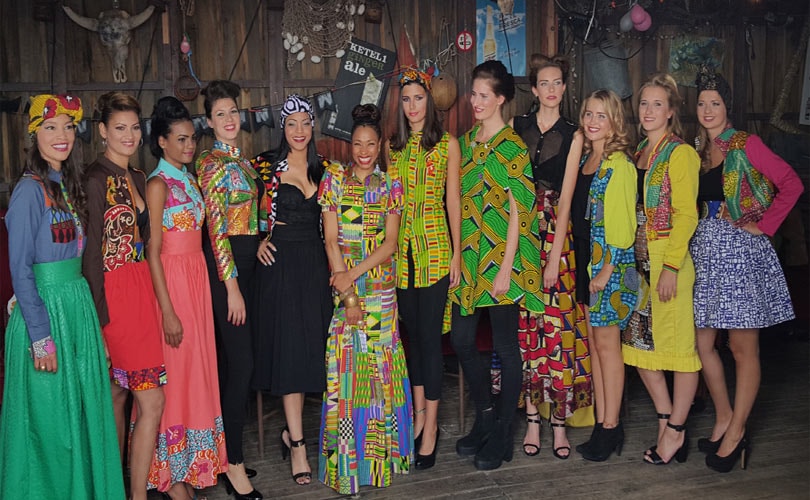
Vivian Hendriksz: Tuesday, 01 September 2015, INTERVIEW: When looking at fashion emerging from Latin-America today, traditional African prints, with vivid reds, magentas, emeralds and blue may not spring to mind straight away. But it is these contrasting and bold colours that are at the center of Lia Samantha Lozano Rendón collections, a rising singer/designer whose designs are increasingly in demand and worn by women ranging from Miss Universe 2014, Paulina Vega, to tv presenters and office workers. When asked why her designs revolve around Africa colours and patterns, the answer is more complex than previously thought: "I created my own fashion label to better understand myself, my cultural roots and my own heritage, I am not just Colombian, I have roots in Africa as well and see fashion as a medium to better learn about the richness of my history." Born and raised in Bogota, Lia Samantha identifies herself and her designs as Afro-Colombian, which is a statement in itself as she hails from a country where the lines between ethnicity and race tend to be blurred.  Lia Samantha: 'I see fashion as a medium to better learn about the richness of my history' According to the most recent national census, 85.9 percent of the Colombian population identify as "without ethnicity", 10.6 percent as Afro-Colombian and only 3.4 percent as indigenous, suggesting that the majority of Colombians do not identify with concepts such as race and ethnicity, but merely apply it to others. Growing up in a city where the predominant population is white, Lia experienceracism<.u> from a young age onwards. "Up until recently, you could turn on a television in Colombia and not see a single person of colour present - not even in the soap opera's, or in the news or the daily shows - they were simply not present. So I thought to myself, okay I am Colombian but I feel completely ignored by the media and telecommunications, people of colour are simply not visible." It was father, who hails from Chocó, a region known for its large, mixed population, who gave her tools she needed to express herself and connect with her roots. "It is thanks to my father that I grew up listening to a lot of 'black' music, which led to my discovery of our heritage and roots. Music has been the tool which led to the discovery of other artistic experiments, such as fashion design." Studying Fashion Design at the
Lia's designs: 'a reinterpretation of African dress, with a modern twist'
National United Corporation of Higher Education in Colombia, she launched her independent label in 2010, spreading her time between designing, presenting and touring with her band Voodoo SoulJah. "In fact, the first time I came into contact with African fabrics was when I was in Toronto, Canada, travelling with my band," she explains. "It was incredible, I found this African-Canadian community, with local stands and I bought all of these fabrics, it was so drawn to them." "I am greatly inspired by the more traditional style of African dress, how tribal women dress and adorn themselves. I would say my designs are a reinterpretation of these traditions, but with a modern twist. I take these traditional fabrics and use them to create contemporary and modern garments for all." A fan of designers such as Stella Jean, Ozwald Boateng and Mimi Plange, she aims to take her designs to the next level as they have. "What's funny though, is that before I began designing I knew nothing about Mimi Plange, or Stella Jean. But unconsciously I have been doing something similar, in my own way, from Colombia. I was simply inspired by African culture from a young age and when I discovered these other designers, it was like wow, there are other African-descended designers who have the same feelings and thoughts as I do." Her desire to keep the dialogue between her African roots and fashion today whilst trying to initiate change in her home country is also evident in her choice of models. Whilst the majority of fashion designers tend to favour skinny, pale-skinned models, Lia Samantha prefers to promote inclusion. "When I went to ColombiaModa last year, (where she debuted her second collection to standing ovation) I was looking for black girls, with natural afros as well as blondes with blue eyes and latina girls with indigenous features."
'As racism is rife in Colombia, I believe that I can use my fashion to start a change'
"As racism is rife in Colombia, I believe that I can use my fashion to start a change. I refuse to exclude anyone, especially as someone who is from Afro-Colombian descent and uses African fabrics, I refuse to dictate who wears and does not wear my designs or sell my clothes solely to African women. I want my designs to be available to everyone. I have witnessed myself that all women look beautiful in my designs, from Miss Universe 2014, to the every day woman. I don't care if they are white, black, blue, purple, green, blue all of them look like queens in African fabrics." However, there are more reasons why Samantha embraces vibrant colours and patterns in her designs apart from cultural significance. "Another reason I love using color is that our ancestors did seek out elegance by wearing black," she points out. "There is nothing elegant about hiding yourself under a black mantel - for indigenous and African tribes a true sense of elegance is found in the wearing of colors, showing your own colours and seducing those around you with colours, just like the natural world around us. To me, there is nothing more elegant than the male peacock showing off his tail feathers of color in all his glory. Nothing more, elegant that a flower blossoming in the morning sun, presenting the full array of its colored beauty. In short, I am trying to change the fixed concept we have of fashion now, which has been the same for a long time."Source: Article
Read More........

Asia Institute Interview with Mr. N R Narayana Murthy

N R Narayana Murthy, Founder and Chairman Emeritus of Infosys Technologies Pvt Ltd., India.
SEOUL, KOREA — N R Narayana Murthy, Founder and Chairman Emeritus of Infosys Technologies Pvt Ltd., India. Mr. Murthy is a legendary Indian business known for building Infosys Technologies from a local company to a global leader in consulting and technology services. This Interview concerns the position of SMEs (small and medium-size enterprise) in Korea and in the world. Emanuel Pastreich: A major issue in Korea these days is the proper relationship between major multinational companies and small and medium-size enterprises (SMEs). There are many who see the large firms as a threat to smaller companies, and especially to small mom and pop stores. At the same time, it is not clear that the relationship is innately adversarial. What do you feel should be the proper relationship between small or medium size enterprises and larger corporations? And what role should government play in terms of regulating large companies so as to protect smaller ones? Narayana Murthy: Well, I can say one thing with confidence. Whatever the government does, it has to make sure that there are incentives in place for smaller companies to become big. This point may seem minor, but it is not. Unfortunately, during seventies, the government of India put in place an industrial policy that included many incentives for companies to remain small. Therefore, what the businessmen did in response was to create more and more small companies as they tried to expand their operations. Ironically, the attempt to help small companies created an artificial environment that held companies back from expanding and realizing their full potential. I understand the motivations of governments to offer incentives that make it easier to establish and maintain small-scale companies today. But, at the same time we must be careful not to give so many incentives that the company does not want to grow bigger or to pursue excellence. Emanuel Pastreich: It certainly is true that often policies undertaken with one intention can have almost the opposite effect. Narayana Murthy: Another realm in which I think government can play a meaningful role is in setting out incentives for small companies that create the mindset of a large company CEO among small scale entrepreneurs. I think this point is critical. If you start to think like a big company CEO, no matter how small your business is, suddenly you find yourself in a new world and many opportunities will open up for you quite naturally—opportunities that were previously invisible. Once SME CEOs adapt that perspective, they can take advantage of their relationship with larger firms. Let us consider my own business of software development, and specifically the large-scale development of software and information services. Infosys has invested very heavily in quality processes, tools and training. It is unlikely that a small company could make such an investment by themselves. Infosys spends approximately 350 million US dollars on its training and R & D. which is beyond the means of an SME. Ideally, the government could offer incentives for larger companies to provide access for smaller companies to their quality control programs, their training programs, productivity improvement and research and development infrastructure as long as it is not proprietary. At the same time, it is also possible for the government to create a centralized infrastructure that can be employed by smaller companies for nominal rates. Emanuel Pastreich: The idea is certainly appealing, but I fear that deep cultural traits of competitiveness make it hard to adopt such policies in Korea on a large scale. That said, some places, like Chungnam Techno Park, have already adopted such practices for SMEs with great impact. Narayana Murthy: I feel that government can play a role in promoting a symbiotic relationship between large firms and SMEs. For example, government can help link smaller companies to larger companies through mechanisms that allow a large company to feel comfortable working together with a smaller company because the government has endorsed the relationship and provides support - guarantees the relationship. If something goes wrong in that relationship, larger companies will have the means to resolve the disagreements and claim their losses. Generally, the larger companies say that the consequential losses are more important than actual losses. What they mean is that the losses as a result of damage to a firm’s reputation with customers from a problem involving smaller firms they cooperate with is far more serious than the monetary value of just that transaction. Obviously, nobody can provide complete insurance against all consequential liabilities from work with smaller firms, but at least the government can think in terms of creating a safety net, an insurance mechanism that covers possible problems and thereby means that larger companies will not hesitate about working with the smaller companies. The Japanese offer a very exciting model for how government can help smaller companies to link up with larger companies in a mutually beneficial manner. Japan has created a very positive value chain that places many smaller companies under the care of a large company. I believe that Korea is already taking steps to create a symbiotic relationship between SMEs and major firms. I can imagine an innovative mechanism for marketing and sales of smaller companies in which close cooperation with larger companies plays a significant role.  Emanuel Pastreich: So should we assume that SMEs have to be protected, or that large firms somehow owe them something? Narayana Murthy: It is certainly not the case that large firms are the strong player in every respect. I would say that smaller companies have an advantage in innovation because their speed in taking advantage of opportunities is very high in comparison with the larger companies that are slower and more bureaucratic. Smaller companies do not need help in innovation and speed but they do need help in improving quality and productivity, in training their employees, and expanding sales and marketing. Emanuel Pastreich: You suggest that government can play an essential role as a mechanism for cooperation between large and small firms. But there is much talk in Korea about how firms should take their own initiative in creating a symbiotic relationship with smaller firms. For example, Samsung, of its own initiative, has worked to promote a symbiotic relationship with smaller companies for growth. Obviously there can be a role for government, but perhaps there also can be symbiotic relationships that can be worked out between larger and smaller companies? Or, perhaps, between companies and NGOs or local community groups? Narayana Murthy: I have found that in any relationship, even between a husband and wife, both the parties will have to bring sustained complimentary value to each other. Otherwise the relationship will die. Therefore, in a symbiotic relationship between a larger company and a set of smaller companies, the two parties will have to sit down and define the sustainable complementary value each party brings to the other. The larger company may, perhaps, bring the power of its finances, its brand, its access to markets, its marketing and its sales capacity. The smaller company will bring to the table its speed in innovation and its institutional flexibility, its focus, and its specialized skills for producing unique components and customizing to meet special needs. But the day the larger company itself develops these competencies, the relationship will fail. No degree of artificial regulation can undo this reality. Therefore, the smaller company will have to constantly innovate and demonstrate how it can bring unique value to the larger company. The same is true for the small firm’s expectation of the value of working with a larger firm. Symbiotic relations are critical but they must be based on this understanding of sustained complimentary value between the two parties subject to constant evaluation. Emanuel Pastreich: In the Korean case, the political debate goes beyond small suppliers in the supply chain who work with large conglomerates. Another critical issue is how large firms are now starting to run chains of outlets that sell products at very low prices and undercut small shops of limited means. We also have large companies who set up direct competitors with local family businesses. For example, SPC Group’s Paris Baguette chain for bread and pastries competes directly with mom and pop bakeries. A large part of the Korean economy is made up of small shops, and there have been lots of calls to limit the ability of large companies to engage in practices perceived as undermining the well-being of these smaller companies.  Narayana Murthy: We find the same political issue in India. One of the main reasons why the state governments are so reluctant to bring large foreign retailers into their regions is because they feel such big firms will take away the business from the mom and pop stores. But the reality of business is completely different from the perception. The big retailers can bring the power of technology and the economies of scale in purchasing. Therefore, they can provide better prices to consumers. Because they invest heavily in technology for logistics and for cold storage for food items, they provide fresher produce. Well, entry of large retailers may result in loss of jobs for a million people in India. But, more than 400 million Indians will benefit immensely from cheaper prices and fresher items, thanks to these large retailers. We have to take the utilitarian view in this case. At the end of the day, it is the mom-and-pop stores that are there at the street corner. If you want a carton of milk any time of the day, you can go and get it there. You do not want to drive down to the big retailer. So, there will be a role for both the small and the large retailer in any economy. The answer to the problem of how to protect small retailers is not endless regulation to limit the entry and growth of large retailers. Rather, the smaller stores have to bring in innovation to give them an advantage. For example, small stores can deliver products to the customer’s house. Or, they can keep their shop open until midnight, or they can open their shop in the morning as early as 5 or 6 AM. In other words, small firms can provide a differentiated value proposition that will give them a real advantage. If they can innovate, they can bring better value to the consumer than the large technology-driven retailer. Emanuel Pastreich: You mentioned the question of innovation previously. What is the best way to encourage innovation amongst these smaller shops? Narayana Murthy: About ten years ago, one of the janitors at our company came up to me and said, “Sir, you keep talking so much about innovation. But, I really don’t understand what you mean by it.” I replied, “Friend, sit down with me here. I will explain the meaning of innovation. You are in charge of eight conference rooms here at Infosys. It is your responsibility to make sure that these eight conference rooms are clean and are maintained in good order. Every morning when you come to the office, ask yourself the following questions: What can I do to maintain my conference rooms cheaper, faster and better? The answer is innovation.” He understood the gist of innovation and has become very successful in using innovation to make himself more and more useful day after day.
At a generic level, we have to keep asking ourselves a basic set of questions: 

  • How can I do things faster today as compared to yesterday? 
  • How can I do things cheaper today as compared to yesterday? 
  • How can I do things with a higher level of excellence today as compared to yesterday? 

Emanuel Pastreich: Let us hear a bit about your own experience. When you started Infosys, it was not a big company. What were some of the critical issues for you in your evolution? How did you take advantage of your strengths as a small firm? Narayana Murthy: In 1992, we were a firm of about two million dollars (USD) in revenue; last year, 2011, our sales were about seven billion (USD). I recall when IBM, Microsoft, Oracle and a few others came to Bangalore back in the early nineties, my friends told me “your company is going to be in serious trouble! All your best employees will leave you and go to work for those multinationals and it will be very difficult for you to get new employees of that quality”. So, we sat down and thought long and hard about what we could do to attract employees. We realized that these multinational companies would pay much higher salaries. So, we decided that until such a time that we can also pay our youngsters competitive salaries, we would provide them with stock options. Thanks to our stock options scheme, they made a lot more money than they could if they had joined a big multinational company. We went public in 1993 and we gave away about 35% of the company’s equity. We knew that big companies, like IBM, would not be in a position to give stock options in India. So we created a unique differentiation with these big companies. Another important issue we focused in on was improving the working environment. We knew that those multinational companies were able to provide a good working environment. They offered their employees a big office, whilst we had small offices. They had very good technology and recreation facilities. So, we decided to go public as early as possible and raised money to create India’s first software campus. That was something that those multinationals were not able to do. Why? Because, at that time, they were not committed to investing in India to create infrastructure in the country. Most rented offices in city centers. These city centers did not provide enough parking space and cafeterias. So, when we decided to go out of town and create huge office space, invest in the best technology and infrastructure, establish quality food courts, and create an environment like a central research center, not a local branch office, we created differentiation which the multinationals could not match at that time.  Also, we decided that we had to provide exciting work opportunities for our young people. That’s why we decided to go public and enhance the brand equity of the company so we could bring home bigger and more complex projects for our employees and also enhance our sales force. These strategic decisions of our company greatly enhanced our position and we were able to attract quality people in larger numbers than most multinational competitors. At the end of the day, no matter how small you are, and no matter what industry you are in, if you ask ‘what differentiation can I create with reference to my competitor that is valued by my customer,’ you will find a way forward. Source: Korea Times
Read More........

Google car: no steering wheel, no brakes

Google has revealed a prototype of its latest car - and this one doesn't even have a steering wheel or pedals, CNN reports. The car will only have a stop and go button. For the past four years, Google has been working on self-driving cars with a mechanism to return control of the steering wheel to the driver in case of emergency. But Google’s brightest minds now say they can’t make that handoff work anytime soon.
Their answer? Take the driver completely out of the driving. The vehicle looks a bit like the ultracompact Fiat 500 or the Mercedes-Benz Smart car if you take out the steering wheel, gas pedal, brake and gear shift. Unlike Google's previous self-driving vehicles, which have been based on conventional cars adapted to navigate around without a driver, this model has been designed from scratch. "They won't have a steering wheel, accelerator pedal, or brake pedal... because they don't need them," Google said in a statement. The car can carry two passengers and has a maximum speed of 25 miles per hour. Google says the car's most important feature is its safety. The driver has a button he or she can push to stop the car in case of emergency. "They have sensors that remove blind spots, and they can detect objects out to a distance of more than two football fields in all directions, which is especially helpful on busy streets with lots of intersections," the company said. With its front designed to look like a friendly smiley face, the Google autonomous car is not just efficient and futuristic, but also cute to look at. Google said it planned to build around 100 prototypes, which it will start testing in a few months. The company started developing its self-driving cars in 2005, and is testing previous models across the US They are expected to be available to buy
by 2020. Google co-founder Sergey Brin  said in an interview on Tuesday night the cars are part of Google's effort to reengineer transportation. "What I'm excited about is how we could change transportation today," Brin said. "If you look at people who are too old, too young, or disabled, and can't get around, that's a big challenge for them." "We took a look from the ground up of what a self-driving car would look like," Brin said at the Code conference. It's unclear if Google plans to manufacture the cars or if it will decide instead to supply the technology to carmakers. But Brin said he's hopeful regulators will agree that cars can operate safely without a driver. So far the cars have operated without incident, Brin said.  The car would also be summoned with a smartphone application. It would pick up a passenger and automatically drive to a destination selected on a smartphone app without any human intervention.  The vehicles will also have electronic sensors that can see about 600 feet in all directions. Despite that, they will have rearview mirrors because they are required by California’s vehicle code. The front of the car will be made from a foamlike material in case the computer fails and it hits a pedestrian. The new Google strategy for autonomous cars is a break from many competing vehicle projects, experts say. Mercedes, BMW and Volvo have introduced cars that have the ability to travel without driver intervention in limited circumstances — though none completely eliminate the driver. In the interview, Mr. Brin acknowledged those advances, but said they were incremental. "That stuff seems not entirely in keeping with our mission of being transformative," he said. The cars are intended for driving in urban and suburban settings, not on highways. The low speed will probably keep the cars out of more restrictive regulatory categories for vehicles, giving them more design flexibility. Google is having 100 cars built by a manufacturer in the Detroit area, which it declined to name. Nor would it say how much the prototype vehicles cost. They will have a range of about 100 miles, powered by an electric motor that is roughly equivalent to the one used by Fiat’s 500e. The current plan is to conduct pilot tests in California, starting with Google employees between buildings around its sprawling corporate campus there. Laws permit autonomous vehicles in California, Nevada and Florida. Brin said the change in Google’s car strategy did not mean that the company was giving up on its ultimate goal of transforming modern transportation. "Obviously it will take time, a long time, but I think it has a lot of potential," he said. "Self-driving cars have the potential to drive in trains much closer together and, in theory, in the future at much higher speeds. "There is nothing to say that once you demonstrate the safety, why can’t you go 100 miles per hour?" Olga YazhgunovichSource: Voice Of Russia
Read More........

In Conversation with Hemant Pandey for his upcoming film Rajula

Hemant Pandey has played the character of ‘Puran Mama’ in the ongoing film ‘Rajula’ which is based on the famous folk tale of Uttarakhand, Rajula-Malushahi and the film has been just released under PVR Director's Rare cut. Hailing from the theater background, Hemant Pandey, has proved his talent in the field of acting. The veteran actor, known for his famous role of Pandeyji in TV series ‘Office Office, has also worked in big banner films like Krrish, Ready, Mujhe Kucch Kehna Hai, Rehnaa Hai Terre Dil Mein, etc. The most recent film in which he acted is ‘2 Nights in Soul Valley’ which was released in 2012. Hemant is known for playing comedy character role but here he played a negative character, spoke to Santanu Ganguly, in an exclusive interview:
  • 1. First thing first tell us something more about your character ‘Puran Mama’ in an upcoming film ‘Rajula’…As you know I belong to Pithoragarh, Uttarakhand and when Manoj Chandola came to me with the concept I instantly said, yes. From childhood we grew up hearing the 700 years old folk tale Rajula-Malushahi and I was getting the chance to be part of such an epic so I nodded in positive. The writer and director Nitin Tewari, has given a modern treatment to the story keeping the core of the story intact and my character has an important contribution to the film. This will be revealed when you what the film (smiles).
  • 2. You are well established in Hindi film industry then why you choose to do a regional film like Rajula now…I like to differ here…Rajula is story of Uttarakhand but this film has compared that era with the modern scenario and showed the struggle of a women in our society brilliantly. And such a film in my opinion shouldn’t be only considered as regional film. Plus we have dialogues in regional language, hindi and English with subtitles.Now why I choose this film; one reason being this film has originated from Uttarakhand and I belong to this place so automatically your inner soul instigates you to say – yes.
  • 3. How was the total experience of doing this film? The USP of the film is its narration. The film has shaped brilliantly and gives the true picture of the ‘Land of Gods.’ The shooting of the film was an adventure in itself. The cast and crew where extremely good to work. Karan and Ashima has pulled their character well and they were able to do just to such an epic love story. Uttarakhand is known for its natural beauty and the breath taking sights around the Himalayas, the Bhabhar and the Terai were a life time experience to be shooting around there.
  • 4. Tell us something about your upcoming projects… Currently my film ‘Prakash Electronics’ is in post production phase and there are few other projects but it’s too earlier to say anything. Source: Article
Read More........

2014 Brazil World Cup: 'Our group is the biggest surprise'

© Photo: Vesti.Ru
The eyes of the soccer fans are turned to Brazil - the world cup draw for the 2014 has just been held. 32 best teams have just found out the names of their opponents. The tournament kicks off in Brazil next year. Denis Kazansky, Russian sports analyst and soccer commentator, shares the first impressions about the draw. What's the biggest surprise of the draw so far? Our group is the biggest surprise because we hope it will be some easy choice for us and I think that we are in very good position. There is only one top quality team in our group. Who is us? Belgium, Algeria, South Korea and Russia. Belgium is a top quality team and I think they are the toughest to beat. But as for Algeria and South Korea, I suppose that Russian side can be good with them and I think we have lots of expectation from that group and we can gain some wins from there. How can you comment on the chances of the teams? In the group H I think we with the Belgium have to be qualified from the group. As for others, I can say that it is very tough competition in group D – Uruguay, Costa Rica, England and Italy, it will be very interesting - Italy and England. And as for group G, I think that the most important picture is Germany versus USA because the head coach of the USA Juergen Klinsmann is ex-coach of German national site and they will face each other - Joachim Low versus Klinsmann. So, it will be very interesting. I think that we don’t have so-called death group in this competition. What chance does America have to win it all? Zero because I think that the group G where USA is, Germany, Portugal, Ghana are too tough for them. They are very good but I think that Portugal and Germany could qualify from that group. As for USA I am not so sure about it. What about Russia? As I said, Russia has very good chances and I think along with Belgium National site we can qualify and be there in the playoff spot. England? It is tough to say but because of Italy, Uruguay and Costa Rica, I think they are open to beat and I think that England and Italy will qualify from that group. Source: Article
Read More........

Terminator axed? France calls for ban on killer robots


International committee to consider asking nations not to develop autonomous killing machines
WHEN Hollywood invented the Terminator - a killer robot played by Arnold Schwarzenegger - it was pure science fiction. But now, France is calling for an international ban on developing exactly that: fully-autonomous killing machines. On Friday, nations will vote on whether to consider imposing a ban, at the annual Convention on Conventional Weapons (CCW) in Geneva, says Sky News. How real is the prospect of a self-guiding robot attacking human targets with lethal force? Who is developing autonomous military robots? The US, UK, Israel and South Korea are all already flying armed drones with some degree of autonomy. On the ground, the US is developing battlefield robots including the remarkable Big Dog - though there is no indication they would ever be weaponised. According to the Campaign to Stop Killer Robots: "Several nations with high-tech militaries, including China, Israel, Russia, the United Kingdom, and the United States, are moving toward systems that would give greater combat autonomy to machines."Who is campaigning against them? A group of 44 NGOs including Human Rights Watch has banded together under the banner of the Campaign to Stop Killer Robots to lobby governments to impose a ban on developing such weapons. Now France, in its role as chair of the CCW, will ask nations to consider
a ban. What exactly do the French want to ban? Sky reports that France is calling for a ban on the development of "any fully autonomous weapon that could select and fire on targets without human intervention". While an Arnie-shaped murderous robot is a real future possibility, opponents of the systems are more immediately concerned by the drones already hovering overhead - it would be a small step to allow them to select and attack their own targets. Friday's vote will not see the robots stopped in their tracks, however - it is only to decide whether weapons of this kind should fall under the CCW's mandate, paving the way for a future debate on a ban. Would a ban really work? Professor Noel Sharkey of the International Committee for Robot Arms Control (ICRAC) told The Times: "It is possible to prevent the development and proliferation of autonomous robot weapons, but only if we act now before there is too much investment." He pointed to an example set in 1995 when the CCW banned the development of lasers intended to blind enemy combatants. · For further concise, balanced comment and analysis on the week's news, try The Week magazine. Subscribe today and get 6 issues completely free. Source: The Week UKImage
Read More........

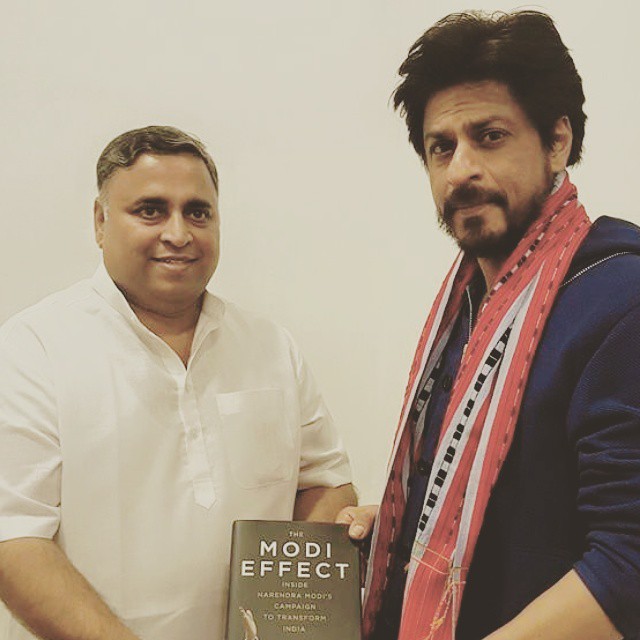
My Hollywood role should make Indians proud: Shahrukh

Not interested in taking up a stereotypical role created for Asians in Hollywood, Bollywood's superstar Shahrukh Khan says "to get a role not specific to my colour or the way I speak or act is very difficult". 
He has been active in Hindi films for over two decades, has featured in more than 80 films and won the tag of "superstar", but the 47-year-old has yet to find a suitable role in international films. A hugely popular actor in many countries, one whose face has become synonymous with the huge draw of the Indian film industry, particularly the Mumbai-based Hindi film industry, King Khan feels he doesn't have the USP to work in Hollywood. Asked what made him think so, he said: "I didn't talk in terms of fan following." "I think the kind of role I would want to do in a Hollywood film is one that makes India proud. To get a role like that is not specific to my colour, or the way I speak, look or act or my age, it's very difficult," SRK told IANS in an exclusive interview. "I mean you can't go to a big filmmaking world and say write a role for a 47-year-old actor who is brown, has hair like this, acts this way, dances a bit... the role should be something that Indians should be proud of. It's too specific for me to have a USP."  PHOTO GALLERY: Shahrukh Khan & Deepika Padukone at ‘The Brunch Night with Chennai Express. He however appreciated Indian faces who are doing well on the international arena. "There are a few young boys and girls, who are doing really well internationally, and I pray they make it big," he said. Shahrukh Khan relishes and cherishes all the love and attention showered on him on the home turf and is set to woo his fans with Chennai Express. In fact, he is right now busy driving the buzz around the comedy drama, coming out Friday, his first film with new age master of comedies Rohit Shetty. Sharing his experience of working with Shetty, Shah Rukh said: "Rohit is fantastically organised. The best part about him is that he has a group of 200 trained people working under him. Rohit knows what he wants. He always delivers the best." PHOTOS: SRK goes ‘Balle Balle’ in Punjab "Chennai Express", Shah Rukh's second film with Deepika Padukone after the 2007 super duper hit Om Shanti Om, has a popular train scene from his Dilwale Dulhania Le Jayenge (DDLJ). Interestingly, in "Chennai Express" the name of Shah Rukh's character is Rahul, a screen title he has donned in a string of hits. He confesses to being a director's actor. "I'm a director's actor. I belong to a world which directors create. I enjoy being with them in their world. I want the world to see me as an actor who moulds himself according to the character his director creates for him," said Shahrukh Khan. The Hindi film industry, which is celebrating its 100 years this year, has evolved with new filmmakers enlivening the silver screen with new subjects, Shah Rukh said, adding it's not a new trend. "There's 'Gangs of Wasseypur', 'Barfi!'... all kinds of films are being made, which is good," said Shah Rukh. "There have always been all kinds of filmmakers who make films like 'Iron Man', 'Batman' and 'Chak De! India'. It's always parallel. When I did DDLJ, there was 'Maya Memsaab' too. "I always try to work on a different genre. I feel the industry has given me name, fame and money and I won't ever forgive myself if I won't do anything beneficial for Indian cinema and my fans." PHOTO GALLERY: Shahrukh Khan, Deepika Padukone walk the ramp. From romantic to villainous and from action to superhero - SRK has delved into a variety of roles. Asked how he is in real life, Shah Rukh said: "I am a little like all of them. There are parts and portions of me that you see in my characters also. If I play a father, I do it the way I would do it with my kids. If I play a lover, I behave the same way I am in real life. I would say I am a funny person but also gentle and kind."Source: ArticleImage: flickr.com
Read More........

Davos 2013 - An Insight, An Idea with Marissa Mayer

An insight, an idea: Erik Schatzker, Marissa Mayer
DAVOS/SWITZERLAND, 25JAN13 - Erik Schatzker (L), Anchor and Editor-at-Large, Bloomberg Television, USA and Marissa Mayer (R), Chief Executive Officer, Yahoo, USA; Young Global Leader prepare for the session 'An insight, an idea with Marissa Mayer' at the Annual Meeting 2013 of the World Economic Forum in Davos, Switzerland, January 25, 2013. Marissa Ann Mayer is President and CEO of Yahoo!. Previously, she was a long-time executive and key spokesperson for Google. Mayer was ranked number 14 on the list of America's most powerful businesswomen of 2012 by Fortune magazine. Wikipedia
Read More........

Matt Damon for Esquire US August 2013

On Brad Pitt: “If you can control the celebrity side of celebrity, then it’s worth it. I look at Brad—and I have for years—and when I’m with him I see the intensity of that other side of it. And the paparazzi and the insane level of aggression they have and their willingness to break the law and invade his space—well, I wonder about that trade. I remember telling him that I walk my kids to school, and his face just fell. He was very kind, but he was like, ‘You b*stard.’ Because he should be able to do that, too. And he can’t.”  On keeping his married life private: “I got lucky, I fell in love with a civilian. Not an actress and not a famous
actress at that. Because then the attention doesn’t double—it grows exponentially. Because then suddenly everybody wants to be in your bedroom. But I don’t really give them anything. If I’m not jumping up and down on a bar, or lighting something on fire, or cheating on my wife, there’s not really any story to tell. They can try to stake me out, but they’re always going to get the same story—middle-aged married guy with four kids. So as long as that narrative doesn’t change too much, there’s no appetite for it.” On child actors:
“My mother thought it was child abuse. She literally did. She was a professor who specialized in early childhood development, and she thought putting a child onstage or in a commercial or in a movie was child abuse. So when I did Elysium with Jodie Foster, I asked her. I mean, she’s basically been acting since she was born. I figured, if anyone’s going to know, it should be her, right? So I asked her. And she sort of smiled and said, ‘It depends on the child.’ Courtesy of Esquire, Source: Smartologie
Read More........

China to phase out organ donation from executed criminals


China will begin phase out organ donation from executed criminals next years, as it moves towards a voluntary system, says a government expert. In an interview in the World Health Organization’s Bulletin, Wang Haibo, of the Ministry of Health, agrees that “an organ transplantation system relying on death-row prisoners’ organs is not ethical or sustainable”. Despite the existence of a black market in organs, China has banned the sale of organs. Although his words are appropriately optimistic about the success of a new system for allocating organs, Mr Wang said that there are some formidable obstacles. About 1.5 million people are waiting for organ transplants annually, but only 15,000 register for donation in all of China, according to China Youth Daily. The first of these is Chinese cultural norms. Although the head of China’s transplant policy, Jiefu Huang, told the media in June that ”What lags behind is not the tradition or moral status of Chinese people; it’s our system,” Mr Wang constantly refers to social inertia. The second is suspicion of corruption. Citizens need to be reassured that their organs will not be sold on a market. The third is lack of enabling legislation. In other countries, brain death is enough to declare a person dead and to remove vital organs. However, there is no law defining brain death. Only 9% of organs come from brain dead patients. “I have been asked many times by our international colleagues: ‘How can China do organ donation after death without brain death legislation?’ That is exactly the research question that needs to be addressed in the new system. It is not customary – in terms of our culture, law and medical practice – to take brain death as the definition of death in China. Members of the public want organ donation to save lives, but they also want to be sure that, when this involves organ procurement after death, that their loved one is definitely dead.” And legal clarity may not motivate potential donors. As Mr Wang says, “even with legal recognition of death determination on neurological criteria or brain death legislation, there is no guarantee of the success of donation in terms of public willingness to donate. Source: BioEdge
Read More........

I'm bullish, billion aspirations drive India: Mukesh Ambani

Mukesh Ambani
Despite concerns about slowing economy, the nation's wealthiest man, Mukesh Ambani, is bullish on the India Story - and hinges his bet on the millions striving to move up in the economic pyramid. "India has had some slow growth but I am really very optimistic on India," said Ambani told CNN's Fareed Zakaria. "I'm very bullish on India, because it's really the aspirations of a billion people. And ours is a country where all the billion count. And they have aspirations. "India is really a bottom-up story. It's not a top-down story," the chairman of Reliance Industries Ltd (RIL) told his celebrated interviewer, who, like him, has his roots in Mumbai. Asia's second wealthiest man, Ambani, whose net worth is close to $21 billion according to Forbes magazine, cited that his confidence in the Indian growth story stemmed from the country's billion consumers moving to make their lives better. Ambani, whose business spans petrochemicals, oil and gas, telecom and how retail, also spoke about India as a land of opportunities. He talked about his late father Dhirubhai Ambani started Reliance with $100 and then when he joined the firm in the 80s, the market value of the company was $30-40 million. "In 30 years, the opportunities that were provided by this country have enabled us to create wealth for India. So, we've created a million millionaires just by investing in Reliance out of ordinary Indians. And that is the process of creating wealth for the country. Once you create opportunity, wealth comes," he said. Ambani is also bullish on the global economic health, especially the United States. "Well, I'm more optimistic than most. And my view is that this year we will see the beginning of a recovery, particularly in the US," he said. RIL, which has business interests and investments tied up in the US market, has reportedly put in at least $5.2 billion through joint ventures with Chevron, Carrizo Oil and Gas, Pioneer Natural Resources so far. Image Link Flickr, Source: Hindustan Times
Read More........

'I'm sorry.' Cycling career was one big lie admits Armstrong

'If there's a truth and reconciliation commission, I'll be the first man in the door,' he tells Oprah
BY Gavin Mortimer, "ONE BIG LIE". That's how Lance Armstrong described a cycling career that brought him seven Tour de France titles and a reputation as the sport's greatest star. The Texan rider finally admitted the truth during an astonishing interview with Oprah Winfrey last night, confessing to the chat show host that he had used banned substances and blood transfusions for most of his career. Armstrong dated his doping back to the mid-1990s and said he continued to cheat for a decade, stressing that when he made a comeback in 2009 he was clean. There were other damning admissions from the disgraced rider, who was described by the United States Anti-Doping Agency (USADA) last October as a "serial cheat". Yes, he told Winfrey, he had been a bully. "I was a bully in the sense that I tried to control the narrative and if I didn't like what somebody said, I tried to control that. I was just trying to perpetuate the story and hide the truth". Armstrong verdict: 'clever, calculating, callous and arrogant', He singled out the former masseuse Emma O'Reilly as someone who had suffered particularly as a result of her attempts a decade ago to alert the world to Armstrong's doping. "Emma O'Reilly is one of these people that I have to apologise to," said Armstrong, who had described the Irishwoman as "a prostitute and an alcoholic" in a bid to destroy her credibility. "She is one of these people that got run over, got bullied." O'Reilly was also one of the people who got sued by Armstrong in his aggressive strategy to suppress the truth of what he was doing. Asked by Winfrey how many others he'd sued, Armstrong replied: "To be honest, Oprah, we sued so many people I don't know... I was a guy who expected to get whatever he wanted and to control every outcome. It's inexcusable. There are people who will never forgive - I understand that." Contrary to what many in the cycling world had feared before the interview aired, Armstrong did not try and portray himself as the victim. "I don't look around and say 'Oprah, I am getting so screwed here'. Were there days early on when I said that? Absolutely, but those days are fewer and fewer and further and further in between." Occasionally during the interview, the 41-year-old revealed glimpses of the psychology that had helped him construct his 'one big lie'. "I went and looked up the definition of cheat," he told Winfrey, "and the definition is to gain an advantage on a rival or foe, but I didn't view it that way. I viewed it as a level playing field." In his view, "the issue of performance-enhancing drugs was 'We're going to pump up our tyres and we're going to put water in our bottles, and oh yeah, that too is going to happen'." Ultimately it appears that at the height of his fame Armstrong came to believe his own fairy tale of the cancer sufferer turned sporting champion. "This story was so perfect for so long," he explained. "You overcome the disease, you win the Tour de France seven times - it was this mythic, perfect story, and it wasn't true." Reaction to last night's interview was swift. Travis Tygart, head of USADA, the body who did most to bring Armstrong to justice, said: "Tonight, Lance Armstrong finally acknowledged that his cycling career was built on a powerful combination of doping and deceit. "His admission that he doped throughout his career is a small step in the right direction. But if he is sincere in his desire to correct his past mistakes, he will testify under oath about the full extent of his doping activities." Armstrong didn't address that possibility directly, although he did tell Winfrey: "It's not my place to say 'Hey guys, let's clean up cycling', [but] if there was a truth and reconciliation commission, and I'm invited, I'll be the first man in the door." Nor did Armstrong appear willing to bring others down with him: "It's hard to talk about these things and not mention names, but there are other people in this story," he said. "I didn't invent the [doping] culture, but I didn't try to stop the culture. That's my mistake." Perhaps the hardest word of all for Armstrong to utter was the one that until now had never passed his lips. "I view this situation as one big lie that I repeated a lot of times," he said. "I'm sitting here today to acknowledge that and to say I'm sorry for that." The second part of the interview will be aired tonight (2 am Saturday, UK time). Source: The Week UK
Read More........

I won’t change my Bold image ever – Emraan Hashmi

The boldest hero and the film industry’s very own serial kisser Emraan Hashmi says he will never change his Bold image. “I feel my audience relate with the bold shade of my image so I won’t change it”, says Emraan who talked with Page3Bollywood.com and also revealed his excitement for his upcoming film Raaz 3. One more sequel film with Bhatt camp, isn’t this becoming typical for you? Absolutely not, because I feel until you are getting good script and good filmmakers; no matter how many time you repeat the venture. For me Bhatt camp means a lot, I started my career with them and the kind of films and character I did with their films are the best experience of my career. You will be completing 10 years in the industry soon, how do you find your journey? It’s really been a wonderful journey for me. I think since last 4 years I have started growing more as an actor. I really feel the original ‘Jannat’ was the good turning point of my career. I am just growing by days. I never wanted to jump in acting field so my career is been very surprising to me. You haven’t yet been a part of a 100 crore club, don’t you feel to be part of it? Why 100 or 200 crore, I want to be a part of 500 crore film . . .(laugh) but I won’t do any sub -standard films though it will have the ability to get 100 crore business at box office’’. I would eventually do a film that will be on my terms and if it touches 100 crore mark, it will be great and if it not it will also be fine with me. I want to have a consistent run rate at the box office. It will be good if every film is doing a minimum Rs 50 crore business. The money keeps coming in consistently. I would not compromise with the script to achieve the golden benchmark.You have said that you want to a clean film so are trying to change your image? No ways. I will never change my bold image. “I feel my audience relate with the bold shade of my image so I won’t change it”. But yes, as an actor it’s my job to play various kind of character. I want to do a Universal certified film which everyone can watch. So I wish to do a clean film. So is that a reason you chosen Ghanchakkar, a full fresh comedy film? No, that is not the exactly reason. I liked the script, it has nice story line and a good humor. We also heard that after Raaz 3, you will not be doing any sequel film? Yes, probably I won’t do any more sequel film unless I get the good franchise. I also wish to do different type of cinemas and don’t wish to be in a typical type. You will be coming with many interesting projects, can u elaborate more? One I have with Vishal Bhardwaj Ek Thi Daayan and another is with Rajkumar Gupta's Ghanchakkar. Daayan is a supernatural film with not so much of horror. 50% of its shooting is done. We are now shooting in Mumbai.a. Source: Page3
Read More........

I have never seen 100-Crore – Salman Khan

No matter how much his movies earns at box office, the Megastar Salman Khan says he have never seen 100 crore on his table. Especially when it’s their home production film, actor says they always get into loss. So why at all Salman is saying so . . . check out his exclusive interview where he opens up everything about his upcoming movie ‘Dabangg 2’ releasing December 21st. Do you think the sequel film will get the benefit of first Dabangg’s mega success? The film means a lot to me because we have taken lot of extra effort to make it different from 1st Dabangg. Dabangg has become a brand because of its ‘hatke’ title and its unique style. Moreover I think people connects themselves with this brand so who have liked 1st Dabangg, they will watch the sequel but the success of sequel is totally depend upon the response of audience. What was your thinking when you decided to do Dabangg and even the sequel? The script of Dabangg was lying on the tables of many big production houses for 2 years, no one was ready to make the film on it but when we made a film on it everyone got amazed with the response. I personally liked the script and found very appealing to the mass audience, and after that with the amazing response we went for the sequel. Dabangg has a lot of Desi style and belongs 80’s era? No it’s not like that, Dabangg’s style is today’s style which connects with today’s masses. Its style and its category is very hatke’ that doesn’t match with 70’s or 80’s era at all. ‘Chulbul Pandey’ is today’s character. After a long time such a unique character has come, a corrupt police officer who is good at heart, who sings-dance-fights everything in very ‘hatke’ style. How was it working under brother’s direction? Very nice because I was more comfortable, as I knew if anything goes wrong or though I give any kind of suggestion, I didn’t have go down anywhere as Arbaz is a brother. We just have one year age difference so our tuning is also good. We fought a lot on set, also tore each other’s clothes, and over all enjoyed a lot. Was it easy or difficult for sequel and what will be difference that audience will see? The first Dabangg ended on a happy not, there was no villain left or any bitter moment remained with anyone, so it was more difficult for us to work on script where we had to show how and why the story goes ahead. With that we also had to keep in mind that the sequel should not go much bigger than Dabangg or it should not also be lesser than 1st part, we had to make a balance film so that people should enjoy the film and not compare with first one. Well about difference, all the characters are same , just a story has moved forward. This time the romance is one step ahead because I think people likes to watch romance of married couple too. You have now become a star who gives a guarantee of 100 crore film? What is 100 or 200 Crore yaar, I have never seen 100 crores. When it’s our home production film we don’t earn any profit, in-fact we bear a loss because all the time we goes over budget. May it Partner, Hello Brother, Pyaar Kiya Toh. . . or anyone, we have never earned any profit. I think only with Dabangg, Arbaz has managed to earn some profit for 1st time. So now you are full confident for Dabangg 2? Yes, I am; we have seen the film and we all liked it, we think we have delivered our best. Now we are just waiting for response of audience. No matter how much film earns, for me it is successful only if my audience likes it. So can we also say the sequel series will continue? Yes, of-course; in-fact we are ready with Dabangg 3, it will have the story of Chulbul Pandey’s personal life and all. But Dabangg 3 will only come if Dabangg 2 gets the same success. Source: Page3
Read More........

Be your own man: Tata's advice to Cyrus Mistry


Mumbai: Be your own man, Ratan Tata has advised Cyrus Mistry, who will succeed him at the helm of the $100 billion Tata group two weeks from now. "I don't think it is right to have a ghost to shadow over somebody," says Tata, dismissing any notion that his larger-than-life persona would linger even after he retires on December 28 when he turns 75. The Tata patriarch has told Mistry, 31 years younger, "you should be your own person, you should take your own call and you should decide what you want to". Tata spoke about his 50 years with the group, 21 as its chairman, the highs and lows of his tenure, his equation with Mistry and his post-retirement plans during an expansive interview to PTI in his office at "Bombay House", the group headquarters. Mistry, currently Vice Chairman of the conglomerate that spans automobiles, IT, hotels, tea and steel across 80 countries, has been working closely with Tata to prepare for the transition. Have you passed on a success mantra to  Mistry?,  the  outgoing  chairman  was
In Pic: Ratan Tata with Cyrus Mistry. PIC/AFP.asked. "No, I told him the same things that I told myself when JRD (late J R D Tata) handed over the mantle to me. The first reaction of anybody is to be Mr J R D Tata because you are filling his shoes. "I instantly told myself, 'I can never do that'. I will never be him much as I try to imitate him. So I took a decision to be myself and to do what I thought was the right thing. I told Cyrus the same thing," he said. During the transition, Mistry had asked him from time to time, 'is this ok, that ok'. He had responded by telling him that he should look at things as "if I were not there because you should be your own person". He had told Mistry, "if you want my inputs I will give it to you but be your own man and be yourself and just be driven by the fact that every act you do and every move you make has to stand the test of public scrutiny". That, he said, was the test he had given himself. "If it stands the test of public scrutiny, do it....if it doesn't stand the test of public scrutiny then don't do it." Asked if his counsel would be available to his successor, Tata replied, "Yes, certainly. He knows where to reach me and, we in fact, would talk business and stay in touch after I leave." He then disclosed that the two of them would have lunch every couple of weeks "over something and we will talk about whatever he wants to talk about". Tata, who will remain Chairman of the various Tata trusts, which hold 66 per cent shares of Tata Sons, was asked as to whether this would not give him a large influence over the group. He replied, "I don't want to say I will have a large influence over the group. I think I would have to wear a different hat of being the major shareholder. The same kind of view that a shareholder might have, not a Chairman's  view  of  the  company. "I should  not
be involved in the business of the company or how the company goes about its growth. But at the same time I should be concerned about the return I get on my shares because it is the only income that the trusts have."The dividend from Tata Sons was to be distributed for charity by the trusts. "So I should protect that," he said. Looking ahead to the future of the group, Tata said that he personally believed that it was poised to continue to grow. "Where it would grow, I think Cyrus Mistry should have his space and define where he would like it to grow," he said. His 20 years at the helm was enough time to charter course. Quite often an organisation has played out one course and is ready to go in a different direction, he said. Often, an unwillingness to have that "course correction brings about the demise of an organisation because when you bring fresh blood into it, he sees things in another way," Tata said. The group would continue to grow at the same kind of growth that it had achieved but the patriarch warned, "competition is growing all the time and sustainability of business is becoming more and more difficult". He went on to say, "So I am sure Cyrus will bring new ideas and new things. I feel very confident that the organisation and his leadership will grow." Asked about the changes he had not been able to achieve in the group, Tata said that he had wanted a more open, flat organisation where there is not much hierarchy, where there is much more informal working relationship at all levels. "We are very hierarchical, not feudal--given to honouring years of experience... We don't touch each other's feet but we still almost bow down every time when one passes." Describing his long tenure as a "journey of great learning", Tata said that he had a role model to look up to in Mr J R D Tata whom he had got to know about six years after he joined the group. He knew him but was not close to him and they had come close together because they were both pilots. Did he have any regrets in life? "No, I don't like to look back. There are many things that, if I have to relive, may be I will do it another way. But I would not like to look back and think what I have not been able to." What is the legacy he would leave at the Tatas? "Apart from values and ethics which I have tried to live by, the legacy I would like to leave behind is a very simple one--that I have always stood up for what I consider to be the right thing and I have tried to be as fair and equitable as I could be. "I may have hurt some people along the way but I would like to be seen as somebody who has done his best to do the right thing for any situation and not compromised," the Tata patriarch, one of the world's most influential business leaders, concluded. Be your own man: Tata's advice to Cyrus Mistry
Read More........

Mallya discovers the virtue of khadi

Formula One’s paddock, a highly exclusive area where team buildings are housed, usually has an air of indifference about it: drivers, tycoons and socialites move freely without being bothered, or sometimes even noticed. But that changed on Saturday, as Kingfisher boss Vijay Mallya made his first public appearance in recent weeks. The high-flying Force India F1 owner had became elusive after the Kingfisher Airlines crisis broke out, triggering speculation that he may give the Indian Grand Prix a miss. As the broadcasters showed images of Mallya, clad in a Force India t-shirt, speaking to his team deputy in the paddock, mediapersons made a beeline for him. Mallya was eventually spotted in front of the F1 management building, giving a British journalist an exclusive interview. “Was there any doubt about my presence here? Obviously if I am not at my home grand prix, why should I be anywhere else?” Mallya was heard telling the reporter. Asked how he arrived in the country, Mallya retorted: “You are probably referring to my plane being seized? I don’t owe anybody money. Why should my plane be at risk?” While he refused to take any questions on Kingfisher, he was more forthcoming on Twitter. “I have learnt the hard way that in India, wealth should not be displayed. Better to be a multi-billionaire politician dressed in khadi,” he tweeted. “Kingfisher is probably the most written about airline in the world thanks to Indian media. Top of mind brand recall must be at its highest,” he tweeted. Image Link Photobucket, Source: Indian Express
Read More........

IMF chief: World economy uncertain

(CNN) -- The global economy is under a "veil of uncertainty" as economic issues grip the U.S., eurozone and developing markets such as China, the head of the International Monetary Fund said Thursday in Japan.  Christine Lagarde, the managing director of the IMF, said that while "more difficult to analyze and pin down," elevated levels of uncertainty are resulting in slower growth. "We need action to lift the veil of uncertainty." Moreover, the world banking system is still in danger four years after the bankruptcy of Lehman Brothers helped catalyze the 2008-2009 financial crisis and still haunted by an unregulated "shadow banking system" of hedge funds and non-regulated derivatives trading. The global financial system is "on the road to being safer, but not yet safer," Lagarde said in an interview with CNN on the sidelines of the IMF meetings being held this week in Tokyo. "I think it's attributable to the fact that (the banking system) was so damaged to begin with -- it was such a massive shock to financial institutions that it actually took a while to measure the depth of the difficulty and the scope of the changes that have to take place Source: The Coming Crisis
Read More........

Foreign governments are effectively influencing CNN’s coverage

Journalist Amber Lyon says she is the victim of CNN censorship in an exclusive interview to the Voice of Russia. Lyon shot her documentary “iRevolution: Online Warriors of the Arab Spring” produced by CNN about Bahrain and the Arab Spring which was censored. She claims that foreign governments are effectively influencing CNN’s coverage, and this happens not only with reports on Bahrain, but also with Georgian coverage.
.Subscribe
By Rob Sachs: Journalists covering the Arab Spring often times they found themselves in danger situations. The subject itself risks their reputations, livelihoods and sometimes ever they lives by speaking out. Such was the situation in Bahrain when journalist Amber Lyon shot her documentary “iRevolution: Online Warriors of the Arab Spring” produced by CNN. Now Lyon says she is the victim of censorship.  CNN reports on Georgia were government sponsoredTell us about your experiences in Bahrain?
How did it all come about that you were selected to go there and report? I was working at documentary investigative unit at CNN. That unit has been dissolved, that’s why I’m no longer with the network. And we had gone over there to do a documentary on social media and how it had galvanized the Arab Spring. And while we were there, one of the countries we focused on was Bahrain. So we were in Bahrain reporting and happened to notice the Saudi troops entering the country and really created a massive police state and activists were going missing, our sources were going missing. They had militarized the hospitals, we have seen ambulance drivers who were beaten, doctors, journalists and protestors as well. So we shifted our focus on human rights’ abuses in this country and while we were there filming these abuses, crew was violently detained by Bahraini security forces at machine gunpoint. But we were able to actually get out with some of this video and bring it back and start airing that on CNN. Where did your dispute with CNN begin? It happened first – and I know CNN will say that it already did lots of Bahrain stories, and that’s true – when we first returned I went on air quite often to really urgently inform the public of what was going on, because some of the people were at that time being tortured. And I got on air very frequently and easily at the beginning. But then phone calls started coming in from Bahrain and also from the numerous PR companies representing Bahrain. And eventually I started noticing that these PR statements were being added into my reporting by editors in order to give Bahrain’s side of the story. But in many situations that was just propaganda. So it started concerning me. It also became more and more difficult, because these were stories on air and I had to cut out some much of red tape. It almost became ridiculous and so time-consuming that it was difficult to get Bahrain covered on air. Three months later we finished our documentary in June and it aired on CNN U.S., but didn’t air on CNN International. And that’s where this dispute on censorship raised. When it comes to black and white of the situation here is that after it didn’t air on CNN international, I began an investigation and found out that CNN is taking money from regime in order to create sponsored content. Let’s go back. You said that your documentary did, in fact, air on CNN, but not on CNN International. Was there an agreement that it’d be aired on CNN International? Because in their defense they said that they never intended to air it on CNN International. What was your understanding? My understanding was, of course, a lot of documentaries didn’t air on CNN International. And that’s a great and easy excuse. That being said, the entire documentary was filmed overseas with this audience in mind. And if you count employee’s salaries and everything else, documentary was well over 300,000 to produce and if it was free content, we would just have given CNN International. What really prompted me was this long-time CNN executive contacting me, writing me, meeting with me, calling me, telling me he needs to look into this, telling me that something suspicious is going on. And when I started looking into it, I found out that Bahrain is actually a paying customer at CNN. Bahrain is giving CNN undisclosed amount of money to create positive content. CNN may say that it’s independent. But you watch some of this content and tell me what you think! They’re going live on Bahrain’s pearl divers at a time when the country is going through horrific human rights’ abuses and majority of the people are revolting! And they’re taking money not only from Bahraini regime – Kazakhstan, Georgia, numerous amounts of countries in exchange for creating these hour-long-plus programs that viewers don’t know are being sponsored by actual regimes. Regardless of whether they say they censor that Bahrain documentary or not – this network calls itself “the most trusted name in news” – and they’re taking money from regimes in exchange for content! That crashes all journalistic ethics. CNN’s response was that alongside many other news’ organizations, they have a very small amount of advertising from the Bahrain Economic Development Board. What you’re saying here is much heavier charges. Do you think that foreign governments are effectively influencing CNN’s coverage and American news outlets have effectively been convinced to air positive stories about countries because of monetary issues? Of course! It’s blank and white. You watch this content! In some cases they have government officials disguised as experts in these reports. Watch the report on Georgia! Watch the report on Bahrain! It’s not editorially independent or it’s a lot rosier than news typically is. We, as journalists, re supposed to be watchdogs on government. And how can you be a watchdog on a paying customer? You watch the CNN i-List program that was paid for by Bahrain. It’s CNN i-List. You can go on YouTube and see the commercial. Not once our viewers notified that this is actually a paid-for commercial content. And as an unassuming viewer, you don’t know that you’re being fed propaganda on the “most trusted name of news”. And I feel that it’s not only defrauding viewers, it’s also defrauding journalists. I was never told that they were taking money from the very regime that I was investigating! Speaking of CNN’s own journalists, one of the things they said in their answer to your charges they said, “Look, we have had lots of coverage on what’s going on in Bahrain! We’ve sent numerous reporters there, lots of whom are fluent Arabic speakers.” Did you ever feel suppressed with some people pointing you out not to say some things about Bahrain in terms of when you spoke out? Like I said, the propaganda statements were added to my reporting and I had to be softer with my language in regard to referring to Bahrain regime. I had to call it “a government” which makes it sound to the U.S. that it’s democratic. And there were various situations when it was more difficult to cover the Bahrain stories than other stories I was reporting on. When we were in Bahrain it was the time of intense crackdown on protestors when Saudi troops entered and really started grounding these protestors one by one. Bodies were being just dumped out. Security forces were going from neighborhood to neighborhood blocking out the opposition. That was a critical time to get the coverage on Bahrain and we were one of the only crews in the world in the country. So, our coverage was vital. After we left in March, CNN didn’t send another crew back until June. You mentioned the difficulty in covering, in having to change the language from “regime” to “government” and what that does. In response to that, CNN was saying that they were trying to get the other side, that journalism always gets both sides of the story. How do you get both sides of the story if your reporting is showing what you’ve seen and obviously it’s very compelling and you have a lot of dramatic stories to tell – is there fair other side? And who do you present the other side in a fair way? That’s difficult and tough. Journalistically though it’s not journalism, what they were doing – they would write a page-long criticism of my journalism pretty much slamming it calling it unethical. They put this statement on their website and linked it to my videos. Stuff like that is propaganda. It’s not journalism! And I noticed that regime systematically called these protestors “Iran-backed” and “terrorists” and “extremists”. And they used these three words over and over. They even didn’t care what the story is about. They just wanted these words in the stories so that the American public is fed that word over and over and ultimately begin to believe that these protestors are terrorists or extremists. And I saw this systematic use of propaganda similar to the way the American public was fed “weapons of mass destruction” leading to Iraq war. This is a systematic was to try to influence public opinion. And I saw them doing that. And I didn’t want it to be included in my reporting, but was forced to. And that’s dangerous – no matter how eccentric the statements are, if they’re repeated over and over, people begin to take them in their minds as truth. You talk to anyone who studies psychology. And that was dangerous for me, because I felt that they were trying to delegitimize these protestors very systematically. And I don’t think that in journalism we should allow this. We should prove our statements. And I had no proof that these protestors were terrorists! Everything I had seen was the protestors terrorized by the government and by the regime. Until I can’t prove my statements, I won’t put them in my reporting, because that’s just propaganda. You talked about these editors and other senior people at CNN who urged you to look closer into what was going on. What did they do? Did they leave? How did they respond to what happened to you and to your reporting? I only had positive response. But that being said, I don’t know if anyone left. I know that it bothers them. I know there’s a lot of talk among my old colleagues. Whether any journalist will come out in the future – I don’t know, but now I’m the only one. What are you going to do to go forward? How are you going to approach your contracts with media outlets to ensure you can uphold journalism standards and ethics that you want? I’m not going to have any more contracts with media outlets. I’ve worked in the mainstream media in the U.S. for 10 years. And I was systematically censored at almost every outlet I worked at. And right now the state of the mainstream media in the U.S. is journalistically scary. And I think that the problem is that we have too many executives who are businessmen making decisions, we don’t have journalists making decisions with journalistic values on the bottom line. And a lot of these corporations don’t want to lose a dollar and they just want to please everyone. They don’t take stances they should be taking journalistically. So I will not be working with any media outlet. I’m working now with other journalists, New York Time reporters, other journalists who feel the same way, with whom we are trying to come up with a solution Ultimately, someone has to pay you a salary, money has to come from somewhere. There’re other places to work at. Perhaps, it’s not answering to a dollar. Do you think there’s a way to go? You can be an effective journalist, get paid, have a livelihood? What do you think would work? I can’t trust anyone anymore. I’m an idealist. I have old-fashioned journalistic ethics and I’ve seen it crashed too many times working with other outlets. I’m just working now with other journalists and starting my own thing. And I also do a lot of photography. So I’m making money from that. I’m working on a book A Photographic Essay of Protests in the U.S. You know, I’ll be fine! But I refuse to work for another outlet, because in the end everyone has some kind of agenda. And unfortunately, it’s usually not considering the public good and the American people and what they need to hear. Unfortunately, people stand to criticize Americans. If you travel overseas, you’ll mention that. These poor people are constantly seeing lies by the media and how do they know what to believe? Most of them can’t afford to travel to see the truth like we can as journalists and it’s a shame. As journalists, we’re beginning to step up in this country and take back the media. For me the only way is to do my own thing. Source: Voice of Russia
Read More........