Bernard Storch: Holocaust Survivor, Soldier, and Camp Liberator Part II


.Subscribe
Soviet infantry crossing a river in Poland, 1944: WASHINGTON (VR)-- Andrew Hiller resumes his conversation with Bernard Storch, picking up the story when Storch goes into action on the Eastern Front in WWII. Bernard's first combat mission was a qualifed success, 2,000 soldiers were wounded, but the hill was taken. Shortly thereafter, the Germans forced a retreat. Storch says it is the only time his unit ever retreated. 
Bad water, did however, remove him from the field. Dysentery nearly cost him his life. When he recovered, he re-enlisted and was assigned to an infantry unit where he served for the rest of the war. In 1944, he began the push into Poland before reaching Germany. He helped liberate a number of termination camps, wading through ash that he didn't realize was human remains. He says duty kept him going, but what he saw prevented sleep in those days. "They kept a people overnight in a church believe it or not. They got undressed in that church and we found out later after the fact that they had buses there from the christians that they had German buses, they put the people in the bus naked. I was told seventy people... they put seventy people in the bus and would transport them into an area, I don't know how far, but fifteen minutes away they said and by the time they reached that place everybody in the bus was killed." Source: http://sputniknews.com/
Read More........

Traffic police pulls up Google's smart car for slow driving


Even AI cannot escape from the reach of the long arm of the law, Google discovered this week. A Mountain View police officer issued the first "ticket" for a self-driving car. The officer pulled over one of Google's smart cars for moving too slowly! The incident was snapped by Facebook user Zandr Milewski, who posted a picture of the incident on the social network. Commenting on his post, Milewski said that he had ''talked to the driver'' of the self-driving car, presumably, the human sitting in the front seat. He added, ''apparently MVPD [Mountain View Police Department] doesn't get NEVs [Neighborhood Electric Vehicles, a classification of vehicle that is limited to slower-moving roads] and pulled them over to ask why they were all going so slow.'' Confirming the the report with its own post on Google+, Google quipped, ''Driving too slowly? Bet humans don't get pulled over for that too often.'' Due to their low speed, Google's smart cars could end up getting many tickets, because the as they can only drive 25 MPH. They had also been programmed to be extra-careful on the roads. ''Like this officer, people sometimes flag us down when they want to know more about our project,'' Google said. ''After 1.2 million miles of autonomous driving (that's the human equivalent of 90 years of driving experience), we're proud to say we've never been ticketed!'' Google explained in an online post that an officer noticed traffic backing up behind a self-driving car going 24 mph on a street with a 35 mph speed limit. "As the officer approached the slow moving car he realized it was a Google Autonomous Vehicle," the police department said. "In this case, it was lawful for the car to be traveling on the street." Under California law autonomous cars can be driven on roads with speed limits of 35 mph or slower. The officer did chat with the occupant of the car about impeding traffic, according to police. "We want them to feel friendly and approachable, rather than zooming scarily through neighborhood streets," Google said about the speed cap on its driverless cars. Source: ArticleImage: flickr.com
Read More........

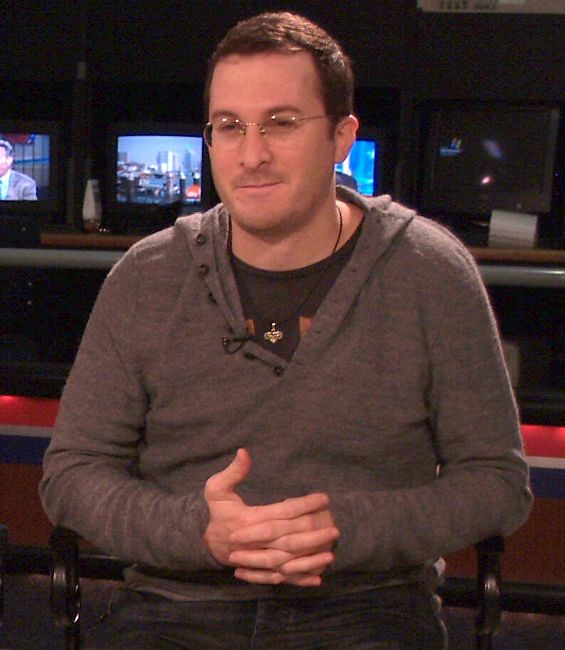
‘A director never finishes a film, he abandons it’


He likes to drive his characters mad and make his audience uncomfortable. But in persona, film-maker Darren Aronofsky, the mind behind intense and tough films like Black Swan is funny and easy. At a roundtable chat organised at the just concluded 12th International Marrakech Film Festival, he was full of quips and quotes. He also spoke at length about his forthcoming Russell Crowe film Noah. Excerpts: On hurricane Sandy’s impact on the filming of Noah: We actually were quite okay. We built a sea worthy vessel —the actual Ark was built in Long Island — which got wrecked since the impact of the Hurricane on Long Island was a lot. We couldn’t reach the sets for weeks. There was no electricity in that area for four days. But the emotional and human toll was much more than physical toll. On tweeting details about Noah: I’m a pretty private person. Agreed that Twitter is a pretty strange thing for me to get involved with, but I feel that we are in the New World so if one hasn’t got on to social media then one can feel left out. I’ve observed the great comedian Louis C.K. over the years. That guy has made millions by talking to his fanbase! I still don’t know how filmmakers will benefit from Twitter, but personally I like talking to young filmmakers, enjoy participating in Q & A and teasing people a bit so I kind of like Twitter. The studio was a bit unsure but being on Twitter allowed me the chance to let out the first image of the film. Doing this on our own is way better, it restricts a big crane sitting on the set. So I guess, it works well. On the story of Noah and his Ark: I’ve been working on Noah forever. In fact this was the first film after Pi that I pitched. I’ve had all these ideas way before I became a filmmaker. Even Black Swan and The Wrestler were ideas I had way back when I was in college. In fact this is my fear—I feel I'm running out of ideas! Now that we are making Noah, they are saying making a Bible picture is the new trend but when we set out we got a lot of No’s and passes before finally we got our studios Paramount Pictures and New Regency interested in it. On his experiments with Indian films: I know Bollywood is kind of a bad word here. Is there a better word? (PS: On my prodding that we call it the Hindi Film Industry, so he can call it Hi Fi, he immediately caught on to the word). Yeah, Hi Fi is better! So I got into Hi Fi a long time ago — it was the same time when my interest in Chinese and Hong Kong films was beginning. I checked out quite a few Hindi movies. I love that one about the Great Bandit — Sholay. I also saw Bandit Queen which was kind of an art film. I like how Baz Luhrmann has taken up the ingredients of Hi Fi films and the way he utilises them. In my neighbourhood in Manhattan, there is a cinema place dedicated to Hi Fi so I keep checking out the stuff that’s playing there. On whether Noah is similar to Life of Pi: I saw Life of Pi and I liked it. There are some visual similarities in terms of the animals and water, but let's see how we do our VFX. On his jinx with superhero films like Batman, Wolverine: I'd like to think Noah was a superhero. He might not have a super power, but what he does is much like a super hero. It's been my dream to do this — to bring my original take on an old story. On the storylines of his films and their uncomfortable quotient: When people say my films make them uncomfortable, I say ‘Very Good!’ I think The Fountain had a kind of a happy ending. Even in Black Swan, she was kinda happy. The Wrestler too. I don’t know. The idea is to start of a character and lead on their conflict. I do agree that sometimes I tend to drive my characters mad, but then that’s okay, I guess. I like the tightrope walk between sanity and insanity that my characters take. It’s just a good story device — when people go slightly over the edge, you can look back and see what was before it. On whether he has it in him to ever make a comedy: As a student I made four shorts and a comedy. Comedian Chris Rock says there is a thin line between laughing and crying — in the former you laugh out the breath and in the latter, you take the breath in. Comedy is a scary genre because if you miss, then you miss. On whether he believes in the classical Hollywood happy ending: It never made sense to me even as a kid. I’m of the opinion that a happy ending is never always a good thing. I grew up in New York, where it wasn’t like that. Life comes with a lot of complications. You never know, who is happy or sad. Guess it is something to do with my big science background. Being trained as a biologist for a few years, I have an environmental take to life which alters my perspective. On if he’d like to change anything in any of his films: I never look back at films. If you look back in a film, you kind of get lost in it. When they were coming up with the DVD of Requiem for a Dream, I stayed out of it, but on the insistence of my sound guy, I watched it and I couldn’t recognise the person, who had made it. It was surely a different person, I could remember myself but I don’t think you can ever recreate the same kind of passion that you had for a film when you are really making it. After a while, you gotta let go. I believe a director never finishes a film, he abandons it. On the status of his HBO series Hobgoblin: It’s been a while I got on the project, but then when I’m making a movie, it’s like I’m in a submarine. I’ll get to it now. Hobgoblin is about a group of magicians and con artists, who use their powers of deception to defeat Hitler during WWII. On whether he believes in magic: Magic? It’s a loaded question? Do I believe in magic that makes a Tiger disappear from a box? Or the simple things? I get touched by magic. I love magicians. David Blaine is a dear friend. I can watch the little tricks these magicians come up with all day. Magical realism is my favourite genre by the way.director never finishes a film, he abandons it’ , Image: flickr.com
Read More........

Rekha extends friendly hand to Jaya Bachchan

It was a rare moment for Bollywood buffs and industry insiders - veteran actors Rekha and Jaya Bachchan were caught greeting each other warmly at an awards function where megastar Amitabh Bachchan was honoured with a lifetime achievement award. At the Life OK Screen Awards held here Tuesday, Rekha was seated and enjoying the show when the Bachchan trio of Amitabh, Jaya and Abhishek came in midway through the event. While Abhishek was busy giving out media bytes on the red carpet to the electronic media, Jaya walked in whereas Amitabh was talking to a guest. Jaya came forward and saw Rekha but instead of walking away or avoiding her the duo exchanged a warm smile, said a source. Rekha got up and greeted Jaya who also clasped the former's hand amicably. Both the screen icons looked resplendent in gorgeous pink saris and sparkling jewels at the event held at the MMRDA grounds here. At one time Big B and Rekha shared a roaring chemistry on and off the screen. Their last Bollywood project together was Yash Chopra's 1981 entertainer Silsila which also starred Jaya. But since then, the duo who acted in films like Namak Haraam, Do Anjaane, Muqaddar Ka Sikandar, Mr. Natwarlal, Suhaag and Khoon Pasina, have not worked together. At the 20th edition of the Screen Awards, Amitabh was recognised for his over four decades of contribution to the world of Hindi cinema. Filmmaker Vidhu Vinod Chopra and actor-politician Shatrughan Sinha handed over the special award to the 71-year-old. Source: Hindustan TimesImage: https://upload.wikimedia.org
Read More........

I'm bullish, billion aspirations drive India: Mukesh Ambani

Mukesh Ambani
Despite concerns about slowing economy, the nation's wealthiest man, Mukesh Ambani, is bullish on the India Story - and hinges his bet on the millions striving to move up in the economic pyramid. "India has had some slow growth but I am really very optimistic on India," said Ambani told CNN's Fareed Zakaria. "I'm very bullish on India, because it's really the aspirations of a billion people. And ours is a country where all the billion count. And they have aspirations. "India is really a bottom-up story. It's not a top-down story," the chairman of Reliance Industries Ltd (RIL) told his celebrated interviewer, who, like him, has his roots in Mumbai. Asia's second wealthiest man, Ambani, whose net worth is close to $21 billion according to Forbes magazine, cited that his confidence in the Indian growth story stemmed from the country's billion consumers moving to make their lives better. Ambani, whose business spans petrochemicals, oil and gas, telecom and how retail, also spoke about India as a land of opportunities. He talked about his late father Dhirubhai Ambani started Reliance with $100 and then when he joined the firm in the 80s, the market value of the company was $30-40 million. "In 30 years, the opportunities that were provided by this country have enabled us to create wealth for India. So, we've created a million millionaires just by investing in Reliance out of ordinary Indians. And that is the process of creating wealth for the country. Once you create opportunity, wealth comes," he said. Ambani is also bullish on the global economic health, especially the United States. "Well, I'm more optimistic than most. And my view is that this year we will see the beginning of a recovery, particularly in the US," he said. RIL, which has business interests and investments tied up in the US market, has reportedly put in at least $5.2 billion through joint ventures with Chevron, Carrizo Oil and Gas, Pioneer Natural Resources so far. Image Link Flickr, Source: Hindustan Times
Read More........

Titanic II blueprints unveiled

Australian billionaire Clive Palmer speaks at a news conference to announce plans for the building of his cruise ship Titanic II under the Blue Star Line in New York, Feb 26, 2013. According to Palmer, Titanic II, which will be a modern close replica of the original HMS Titanic which sank on her maiden voyage in the North Atlantic ocean on April 15, 1912, killing more than 1500 passengers and crew, will be privately funded and built at the CSC Jingling Shipyard in China, with her maiden voyage being from Southampton England to New York in late 2016. [Photo: Agencies]
Australian mining entrepreneur Clive Palmer on Tuesday unveiled blueprints for Titanic II, a modern replica of the doomed ocean liner, although he stopped short of calling the vessel unsinkable. The ship will largely recreate the design and decor of the fabled original, with some modifications to keep it in line with current safety rules and shipbuilding practices, and the addition of some modern comforts such as air conditioning, Palmer said at a press conference in New York. The three passenger classes, however, will be prevented
from mingling, as in 1912, Palmer said. "I'm not too superstitious," Palmer said when asked whether recreating a ship best known for sinking was tempting fate. White Star Line, the operator of the original ship, had said the Titanic was designed to be unsinkable. Some 1,500 people died on Titanic's maiden voyage in 1912 from Southampton to New York after the ship collided with an iceberg in the North Atlantic. Palmer, who created the company Blue Star Line last year, declined to make a similar boast. "Anything will sink if you put a hole in it," Palmer said. "I think it would be very cavalier to say it." Unlike the original,
An undated artist's rendering of the proposed cruise ship Titanic II, provided by the Blue Star Line as Australian billionaire Clive Palmer unveiled plans for his dream ship during a news conference in New York Feb 26, 2013. [Photo: Agencies]
Titanic II will have more than enough space in its lifeboats for every person on board and will have additional escape staircases. Markku Kanerva, sales director at Deltamarin, the Finnish company designing the ship, said it would be the "safest cruise ship in the world." Palmer declined to answer questions about the project's cost. Although the Titanic was the world's largest ship in her time, she would be smaller than many of today's modern cruise ships. "It's not about the money," Palmer said. "I've got enough money for it, I think that's all that matters." Forbes estimated Palmer's net worth to be $795 million in 2012. He describes himself as a billionaire. Titanic II will be built by Chinese state-owned CSC Jinling Shipyard, which is already building four ore carriers for Palmer's mining business, he said. The contract to build Titanic II has not yet been signed, Palmer said. "Oh, probably next week, something like that," Palmer said, when asked when that would happen. "Most things I say I'll do I do. He hoped construction would 
An undated artist's rendering of the interior of the proposed cruise ship Titanic II, provided by the Blue Star Line as Australian billionaire Clive Palmer unveiled plans for his dream ship during a news conference in New York Feb 26, 2013. [Photo: Agencies]
begin later this year, and that the maiden voyage, recreating the trans-Atlantic crossing of the original, would take place in 2016, he said. "But if it takes longer, it takes longer," he said. "But we'll do it. We've got a big pile of money." Jaime Katz, an analyst who tracks the cruise industry, said Titanic II may find it difficult to compete with established cruise lines, particularly the economies of scale of their larger fleets. She said the Titanic II could be marketed to wealthier passengers and could draw repeat business by varying its routes rather than focusing on trans-Atlantic crossings. "People are going to be really 
An undated artist's rendering of the interior of the proposed cruise ship Titanic II, provided by the Blue Star Line as Australian billionaire Clive Palmer unveiled plans for his dream ship during a news conference in New York Feb 26, 2013. [Photo: Agencies]
cautious or superstitious regarding getting on a second version of the Titanic, or it could be a really compelling idea for history buffs who really want to live the story or the legend behind it," Katz said. "There's an audience for all sorts of cruises," she said. Titanic II will operate as a cruise ship, and passengers will find 1912-style clothing in their rooms should they wish to dress up and pretend they are living in an earlier era as they visit facsimiles of the original gilded first-class dining and smoking rooms, if they have the appropriate ticket. Although the classes will be kept largely separate, Palmer said he was
An undated artist's rendering of the interior of the proposed cruise ship Titanic II, provided by the Blue Star Line as Australian billionaire Clive Palmer unveiled plans for his dream ship during a news conference in New York Feb 26, 2013. [Photo: Agencies]
considering offering ticket packages that would allow passengers to experience all three classes during a typical six-day Atlantic crossing. Prices for the tickets will be announced later. Helen Benziger, a descendant of Titanic survivor Margaret Brown, better known as the Unsinkable Molly Brown, said at the press conference that the ship would be a chance to experience the sort of grace and civility she said was sometimes lacking in the modern world. "I think it's a chance to go back in time," said Benziger, who has joined the project's advisory board. Palmer said he plans to travel in third class on Titanic II's maiden voyage. "I'll be looking forward to it as you bang the drum and play the fiddle, twirling around like Leonardo does," he said, meaning actor Leonardo DiCaprio, in one of the repeated references he made to the 1997 James Cameron film 'Titanic.' "Source: China.org.cn
Read More........

I was Hitler's food taster, says woman

London: Margot Woelk, now a 95-year-old woman, says she was the "food taster" of Adolf Hitler for more than two years, and had to taste the dictator's food to ensure it was not poisoned. Woelk ate fresh fruit and vegetables including asparagus, peppers and peas, and was one of a dozen women Hitler used to protect himself at his Eastern front headquarters, also known as the "Wolf's Lair", the Daily Mail reported. She was taken there in 1942 when evacuated from Berlin to Gross Partsch -- Parcz in modern-day Poland. Her husband had then gone for fighting. "Of course, I was afraid. If the food had been poisoned, I would not be here today. We were forced to eat it, we had no choice," she said. "Between 11 and 12 o'clock, we had to taste the food, and only after all 15 of us had tried it was it was driven to the headquarters by the SS." "It was all vegetarian, the most delicious fresh things, from asparagus to peppers and peas, served with rice, and salads. It was all arranged on one plate, just as it was served to him," she said. Woelk does not recall tasting any meat, fish or drinks. There was always an hour's delay before Hitler ate his meal so that effects of any poison in the food could be seen in the women. Woelk had to report every day, but was only used when Hitler's personal train was in the station. She lived with her mother-in-law outside the headquarters until an unsuccessful assassination attempt on Hitler's life by Claus von Stauffenberg in July 1944. She was then confined to a school building. When Hitler abandoned the lair in November 1944, an officer helped the woman escape to Berlin. Woelk said she believes the other tasters were shot by the advancing Russians. In 1946, she was reunited with her husband who she had presumed dead. The couple lived together until he died in 1990, the daily said. Source: News-Bullet
Read More........

Toy Story fans re-make movie with real toys

Desperate to get Pixar’s attention two fanboys remade a hit movie the old-fashioned way
IT WAS a case of back to the future when two aspiring film-makers decided to get the attention of the US animation studio Pixar by recreating Toy Story using real toys. The impressive video of their efforts has been seen by more than 1.5 million people since it was posted on YouTube on Sunday. Jonason Pauley,
19, and Jesse Perrotta, 21 from California created their shot-for-shot remake with a budget of $1,000 and help from 150 friends. Their sole aim was to get an invitation to the studio in Emeryville, California to see where their favourite movies have been made. Pixar have confirmed they’ve received the lovingly made film, but there’s no word yet on whether Pauley and Perrotta will get an invitation. Source: The Week UK
Read More........

'I'm sorry.' Cycling career was one big lie admits Armstrong

'If there's a truth and reconciliation commission, I'll be the first man in the door,' he tells Oprah
BY Gavin Mortimer, "ONE BIG LIE". That's how Lance Armstrong described a cycling career that brought him seven Tour de France titles and a reputation as the sport's greatest star. The Texan rider finally admitted the truth during an astonishing interview with Oprah Winfrey last night, confessing to the chat show host that he had used banned substances and blood transfusions for most of his career. Armstrong dated his doping back to the mid-1990s and said he continued to cheat for a decade, stressing that when he made a comeback in 2009 he was clean. There were other damning admissions from the disgraced rider, who was described by the United States Anti-Doping Agency (USADA) last October as a "serial cheat". Yes, he told Winfrey, he had been a bully. "I was a bully in the sense that I tried to control the narrative and if I didn't like what somebody said, I tried to control that. I was just trying to perpetuate the story and hide the truth". Armstrong verdict: 'clever, calculating, callous and arrogant', He singled out the former masseuse Emma O'Reilly as someone who had suffered particularly as a result of her attempts a decade ago to alert the world to Armstrong's doping. "Emma O'Reilly is one of these people that I have to apologise to," said Armstrong, who had described the Irishwoman as "a prostitute and an alcoholic" in a bid to destroy her credibility. "She is one of these people that got run over, got bullied." O'Reilly was also one of the people who got sued by Armstrong in his aggressive strategy to suppress the truth of what he was doing. Asked by Winfrey how many others he'd sued, Armstrong replied: "To be honest, Oprah, we sued so many people I don't know... I was a guy who expected to get whatever he wanted and to control every outcome. It's inexcusable. There are people who will never forgive - I understand that." Contrary to what many in the cycling world had feared before the interview aired, Armstrong did not try and portray himself as the victim. "I don't look around and say 'Oprah, I am getting so screwed here'. Were there days early on when I said that? Absolutely, but those days are fewer and fewer and further and further in between." Occasionally during the interview, the 41-year-old revealed glimpses of the psychology that had helped him construct his 'one big lie'. "I went and looked up the definition of cheat," he told Winfrey, "and the definition is to gain an advantage on a rival or foe, but I didn't view it that way. I viewed it as a level playing field." In his view, "the issue of performance-enhancing drugs was 'We're going to pump up our tyres and we're going to put water in our bottles, and oh yeah, that too is going to happen'." Ultimately it appears that at the height of his fame Armstrong came to believe his own fairy tale of the cancer sufferer turned sporting champion. "This story was so perfect for so long," he explained. "You overcome the disease, you win the Tour de France seven times - it was this mythic, perfect story, and it wasn't true." Reaction to last night's interview was swift. Travis Tygart, head of USADA, the body who did most to bring Armstrong to justice, said: "Tonight, Lance Armstrong finally acknowledged that his cycling career was built on a powerful combination of doping and deceit. "His admission that he doped throughout his career is a small step in the right direction. But if he is sincere in his desire to correct his past mistakes, he will testify under oath about the full extent of his doping activities." Armstrong didn't address that possibility directly, although he did tell Winfrey: "It's not my place to say 'Hey guys, let's clean up cycling', [but] if there was a truth and reconciliation commission, and I'm invited, I'll be the first man in the door." Nor did Armstrong appear willing to bring others down with him: "It's hard to talk about these things and not mention names, but there are other people in this story," he said. "I didn't invent the [doping] culture, but I didn't try to stop the culture. That's my mistake." Perhaps the hardest word of all for Armstrong to utter was the one that until now had never passed his lips. "I view this situation as one big lie that I repeated a lot of times," he said. "I'm sitting here today to acknowledge that and to say I'm sorry for that." The second part of the interview will be aired tonight (2 am Saturday, UK time). Source: The Week UK
Read More........

Massive fraud by Dutch psychologist shows weak side of scientific method

The credibility of the field of social psychology is at risk, a Dutch panel  has found  after  reviewing  massive misconduct by a researcher who published dozens of articles based on fraudulent data in 15 years at three universities. Diederik Stapel was a psychologist with a long list of publications and a stellar career. He had an eye for media-friendly research topics – meat eaters are more selfish than vegetarians, for example. But in 2011, whistleblowers alerted authorities at Tilburg University about irregularities in his published papers. His reputation unravelled quickly. Stapel has admitted that he had fiddled his data and fabricated research results and has returned his PhD. In a sombre assessment of the case, three panels chaired by Willem Levelt found fundamental flaws in the scientific process both in the Netherlands and internationally. “Virtually nothing of all the impossibilities, peculiarities and sloppiness mentioned in this report was observed by all these local, national and international members of the field, and no suspicion of fraud whatsoever arose… from the bottom to the top there was a general neglect of fundamental scientific standards and methodological requirements.” They also criticised the editors and reviewers of leading international journals. “Not infrequently reviews were strongly in favour of telling an interesting, elegant, concise and compelling story, possibly at the expense of the necessary scientific diligence.” For social psychologists, the conclusion of the report is damning, almost apocalyptic: “A ‘byproduct’ of the Committees’ inquiries is the conclusion that, far more than was originally assumed, there are certain aspects of the discipline itself that should be deemed undesirable or even incorrect from the perspective of academic standards and scientific integrity.” Predictably, the Executive Committee of the European Association of Social Psychology attacked the report’s conclusions as “slanderous”. This is not just a local disaster, but one which will ripple internationally. “I see a train wreck looming,” wrote Nobel laureate Daniel Kahneman in an open email to psychologists who work in social priming, one of Stapel’s areas: “your field is now the poster child for doubts about the integrity of psychological research”. The journal Perspectives on Psychological Science last month had a special issue on the field’s crisis of confidence. It focused on the key issue of replicability.John P. A. Ioannidis, of Stanford University, points out that the authority of science depends upon its ability to self-correct errors. But as the Levelt report revealed, reproducing the results of other researchers is uncommon. Researchers are far more interested in startling new results which will attract more funding. “The self-correcting paradigm … seems to be very uncommon,” Ioannidis writes. Source: Bioedge
Read More........

I won’t change my Bold image ever – Emraan Hashmi

The boldest hero and the film industry’s very own serial kisser Emraan Hashmi says he will never change his Bold image. “I feel my audience relate with the bold shade of my image so I won’t change it”, says Emraan who talked with Page3Bollywood.com and also revealed his excitement for his upcoming film Raaz 3. One more sequel film with Bhatt camp, isn’t this becoming typical for you? Absolutely not, because I feel until you are getting good script and good filmmakers; no matter how many time you repeat the venture. For me Bhatt camp means a lot, I started my career with them and the kind of films and character I did with their films are the best experience of my career. You will be completing 10 years in the industry soon, how do you find your journey? It’s really been a wonderful journey for me. I think since last 4 years I have started growing more as an actor. I really feel the original ‘Jannat’ was the good turning point of my career. I am just growing by days. I never wanted to jump in acting field so my career is been very surprising to me. You haven’t yet been a part of a 100 crore club, don’t you feel to be part of it? Why 100 or 200 crore, I want to be a part of 500 crore film . . .(laugh) but I won’t do any sub -standard films though it will have the ability to get 100 crore business at box office’’. I would eventually do a film that will be on my terms and if it touches 100 crore mark, it will be great and if it not it will also be fine with me. I want to have a consistent run rate at the box office. It will be good if every film is doing a minimum Rs 50 crore business. The money keeps coming in consistently. I would not compromise with the script to achieve the golden benchmark.You have said that you want to a clean film so are trying to change your image? No ways. I will never change my bold image. “I feel my audience relate with the bold shade of my image so I won’t change it”. But yes, as an actor it’s my job to play various kind of character. I want to do a Universal certified film which everyone can watch. So I wish to do a clean film. So is that a reason you chosen Ghanchakkar, a full fresh comedy film? No, that is not the exactly reason. I liked the script, it has nice story line and a good humor. We also heard that after Raaz 3, you will not be doing any sequel film? Yes, probably I won’t do any more sequel film unless I get the good franchise. I also wish to do different type of cinemas and don’t wish to be in a typical type. You will be coming with many interesting projects, can u elaborate more? One I have with Vishal Bhardwaj Ek Thi Daayan and another is with Rajkumar Gupta's Ghanchakkar. Daayan is a supernatural film with not so much of horror. 50% of its shooting is done. We are now shooting in Mumbai.a. Source: Page3
Read More........

I have never seen 100-Crore – Salman Khan

No matter how much his movies earns at box office, the Megastar Salman Khan says he have never seen 100 crore on his table. Especially when it’s their home production film, actor says they always get into loss. So why at all Salman is saying so . . . check out his exclusive interview where he opens up everything about his upcoming movie ‘Dabangg 2’ releasing December 21st. Do you think the sequel film will get the benefit of first Dabangg’s mega success? The film means a lot to me because we have taken lot of extra effort to make it different from 1st Dabangg. Dabangg has become a brand because of its ‘hatke’ title and its unique style. Moreover I think people connects themselves with this brand so who have liked 1st Dabangg, they will watch the sequel but the success of sequel is totally depend upon the response of audience. What was your thinking when you decided to do Dabangg and even the sequel? The script of Dabangg was lying on the tables of many big production houses for 2 years, no one was ready to make the film on it but when we made a film on it everyone got amazed with the response. I personally liked the script and found very appealing to the mass audience, and after that with the amazing response we went for the sequel. Dabangg has a lot of Desi style and belongs 80’s era? No it’s not like that, Dabangg’s style is today’s style which connects with today’s masses. Its style and its category is very hatke’ that doesn’t match with 70’s or 80’s era at all. ‘Chulbul Pandey’ is today’s character. After a long time such a unique character has come, a corrupt police officer who is good at heart, who sings-dance-fights everything in very ‘hatke’ style. How was it working under brother’s direction? Very nice because I was more comfortable, as I knew if anything goes wrong or though I give any kind of suggestion, I didn’t have go down anywhere as Arbaz is a brother. We just have one year age difference so our tuning is also good. We fought a lot on set, also tore each other’s clothes, and over all enjoyed a lot. Was it easy or difficult for sequel and what will be difference that audience will see? The first Dabangg ended on a happy not, there was no villain left or any bitter moment remained with anyone, so it was more difficult for us to work on script where we had to show how and why the story goes ahead. With that we also had to keep in mind that the sequel should not go much bigger than Dabangg or it should not also be lesser than 1st part, we had to make a balance film so that people should enjoy the film and not compare with first one. Well about difference, all the characters are same , just a story has moved forward. This time the romance is one step ahead because I think people likes to watch romance of married couple too. You have now become a star who gives a guarantee of 100 crore film? What is 100 or 200 Crore yaar, I have never seen 100 crores. When it’s our home production film we don’t earn any profit, in-fact we bear a loss because all the time we goes over budget. May it Partner, Hello Brother, Pyaar Kiya Toh. . . or anyone, we have never earned any profit. I think only with Dabangg, Arbaz has managed to earn some profit for 1st time. So now you are full confident for Dabangg 2? Yes, I am; we have seen the film and we all liked it, we think we have delivered our best. Now we are just waiting for response of audience. No matter how much film earns, for me it is successful only if my audience likes it. So can we also say the sequel series will continue? Yes, of-course; in-fact we are ready with Dabangg 3, it will have the story of Chulbul Pandey’s personal life and all. But Dabangg 3 will only come if Dabangg 2 gets the same success. Source: Page3
Read More........

Hitler is back?

Recently the name of Adolf Hitler, the former leader of National Socialism, who drew the German people and the whole humankind into the bloodiest war of the XX century, which burned the lives of 60 million people, has more and more often appeared in mass media. 
By: N. Pavlova, Hitler's name has been surfacing here and there in different context. In Austria the tomb stone on Hitler's parent's grave was destroyed, since it had turned into a place of worship of neo-Nazi and extremists. Turkey banned the video with Germany's Reichkanzler advertising men's shampoo. In India the owner of a men's clothing store called his store with the Fuhrer's name in order to draw customers, causing the Jewish community of Ahmedabad in the state of Gujarat to appeal to have him change the store sign. Last summer, the Italian prosecutors received a signal that some wine trader sold wine in bottles with the labels depicting the portraits of Adolf Hitler and Benito Mussolini. The prosecutors started investigation based on the complaint filed by an American couple, whose relatives died in Oswenzim. In Great Britain the bed linen that had belonged to the creator of the Third Reich was sold at an auction for 2000 pounds. Even in Germany itself the interest in the dictator does not disappear. Two years ago in Berlin in the German History Museum an exhibition took place entitled «Hitler and the Germans. United people and crimes». Every new generation is bothered by the questions: how could it happen that Hitler got to power, what kind of person he was, what were the reasons for his cruelty, what effect his personality had on the people around him? German filmmaker Nico Hofmann is once again ready to investigate those reasons in his new saga about Hitler. The TV series will show the Fuhrer's life beginning with 1914 and ending with his inglorious death after the fall of Berlin in 1945. The German publication Spiegel online, which by the way has a monthly „wake fort he devil“, reports about this risky project. There is always an newsworthy event: political debates around the Fuhrer’s family estate in Austria (whether to demolish it, let people live there or turn it into a monument) or an art exhibition in one of the galleries in Great Britain, where one can play golf with Hitler. Where does this never-ending interest towards Hitler's personality and his surroundings come from? Did Adolf Schicklgruber really have a certain dark charisma, which to this day attracts both scientists and ordinary people? This is the subject of our conversation with Professor Doctor Hans-Henning Schröder, a German historian and political scientist from the German Institute of International Politics and Security. «On the one hand, the film about Rommel is still a film about resistance. You know, Hitler forced him to commit suicide. We are talking about a soldier, who went all the way from a supporter to an opponent of Hitler. Rommel is the central character of the film; he is still very popular in Germany, perhaps because his son was the mayor of Stuttgart. The era of the Third Reich is still being investigated, hence, the figure of Rommel, who took a very complicated path. On the other hand, there is still potential for the far-right radicals in Germany. According to the latest research, about 9% of the Germans support the far-right radical ideas, while in the Eastern regions this figure in even higher – 16%. Such people support the ideas of national patriotism and have anti-democratic views. Such a situation is typical not only of Germany, but also of other countries. Naturally, in Germany the government's efforts are aimed against this phenomenon». The British daily newspaper Daily Mail in its questions and answers section announced that over 39 187 books were written about Hitler, while 85 640 books were written about Napoleon. But Napoleon died 191 years ago, while Hitler 67 years ago. If the interest for Hitler does not decrease, he can easily breach the gap. And given all this, I would like to ask about Hitler's book „Mein Kampf“. Mass media report that it can be published again. Is that so? «German law, including Bavaria, which owns the rights to this publication and uses its rights to prohibit its further publishing anywhere in the world, forbids publishing this book. However, the international law limits copyright to a term of 80 years. At the end of 2015 this term will be over, after which anybody will be able to publish the book. And now the German government is looking for a way to prevent this process in the future». Source: Voice of Russia
Read More........

How the East was won in 1971

The surrender of 93,000 Pakistani soldiers and birth of Bangladesh is the stuff of legend and song both here and across the border. Here’s the back story told by one of the men who put the pieces on the board and helped in the vivisection of a major threat to India. Forty-one years ago, Lt. General Amir Abdullah Khan Niazi, commander of Pakistani forces in East Pakistan, surrendered to the Indian Army at Dhaka’s Ramna Race Course. The architect of the only public surrender in recorded history, Lt. General J. F. R. Jacob (retired), tells the incredible story of how a gamble, a convincing bluff, and a false map engineered Pakistan’s ignominy. The iconic photograph of Pakistan’s surrender of December 16, 1971, is a study in human expression. As Niazi puts pen to paper, he looks like he’d rather be dead. Lt. General Jagjit Singh Aurora watches soberly. His wife causes some commotion as she tries to peek at the document, eyebrows raised in curiosity. The Indian officers appear torn between amusement and surprise. On the far right, one man stands proudly, looking straight ahead and smiling as if at a private joke. His eyes are sunken from lack of sleep, but they have the satisfied gleam of a man who has achieved the impossible. That officer is then-Major General Jacob Farj Rafael Jacob, Chief of Staff of the Eastern Command, who would retire as Lt. General six and a half years later. A few hours before a new nation was signed into birth, armed with only a
typed sheet he had drafted himself and a pipe that would be written about by the gawking press, this man had given Niazi an ultimatum. Niazi had nearly 30,000 troops in Dhaka. India had 3,000, 30 miles out. A 20,000-strong unit of the Mukti Bahini, headed by Tiger Siddiqi, was supposed to march in, but hadn’t. An official draft of the surrender document was expected from Delhi, but wasn’t in. Imagine this: With an aide by his side, Jacob reads out his draft of the surrender document to Niazi. Niazi: “Who the hell said I’m going to surrender? You’ve only come here to negotiate a ceasefire, and you’re asking for an unconditional surrender!” Jacob: “General, this is not unconditional. If you surrender, I’ll ensure the protection of you and your men, your families, and ethnic minorities. You will be treated with respect and dignity as officers and men, according to the Geneva Convention. But if you don’t, obviously, I can’t take responsibility.” With his aides, including Maj. General Farman Ali, advising him not to surrender, Niazi keeps on talking. Jacob: “Look, General, I  can’t give you better terms. So, please think it over, I’ll give you 30 minutes, and then I’ll order the resumption of hostilities, and the bombing of Dacca cantonment.” He walks out, and paces the corridor outside Niazi’s office. He would later be described as “calmly puffing a pipe.” The truth is, he  has
very little going for him. The ceasefire is about to expire, the UN is in session, America is pushing for a resolution that would require the Indians to return home, and the Soviets wouldn’t veto it any more. If Niazi calls his bluff, Jacob has only a tenth of Pakistan’s strength at his disposal. He says a short prayer, dodges the press, and walks back in after 30 minutes. There is dead silence. The paper is on the table. Jacob: “General, do you accept this?” No answer from Niazi. Jacob: “General, do you accept this?” Still no answer. Jacob: “General, do you accept this?” Niazi stares at the table. Tears roll down his cheeks. Jacob picks up the document and announces, “I take it as accepted.” All the Pakistani generals present grunt and scowl. Jacob calls Niazi aside. Jacob: “You will surrender in public.” Niazi: “I won’t. I will surrender in my office.” Jacob: “You will surrender in public. I’ve already given orders that  you will surrender
on the racecourse, in front of the people of Dacca. And you will provide a guard of honour.” Niazi: “I have no one to command it.” Jacob points to Niazi’s ADC and says, “He will command it.” Four hours after Jacob landed in Dhaka, as fighting was going on in the streets between the Mukti Bahini and the Pakistani army, a ceasefire had been converted into a public surrender. It’s poetic to think that force of will could defeat logic and logistics. But can the battlefield boil down to mind games? There are many versions of what happened that day. Niazi’s is recorded in the findings of the high-level (appointed by Prime Minister Zulfiqar Ali Bhutto) Hamoodur Rahman Commission’s Report, declassified by Pakistan in 2000. Jacob has revealed parts of his version in his two books, Surrender at Dacca (published in 1997), and his autobiography An Odyssey in War and Peace(published in 2011). Months after he was awarded the commendation of merit, friends of liberation war honour, by the government of Bangladesh, I meet the 89-year-old general at his home in Delhi. As he walks towards an antique chair in the exquisitely furnished hall of his compact flat in Som Vihar, the General doesn’t seem to have changed a great deal in the 41 years since that famous photograph was taken. The greying hair is now silver, but his eyes are as sharp, bearing as tall, handshake firm, and baritone commanding. His distinctive drollness, apparent in his columns for various media outlets, now leads him to subvert poetry to describe his life in the army. A tenure wrought by accidental twists and tragicomic turns. A Baghdadi Jew born into an affluent family in Calcutta, young Jacob enlisted in the Army against his father’s wishes, in 1942, to fight the Nazis. He served five years in the World War and its fallout, but never did fight Hitler’s Army. As luck would have it, his regiment was repulsed by Rommel’s forces at the oasis of Bir Hakeim in Libya, even before he reached it. They were sent back to British India to get reinforcements and equipment, and then ordered to join the Arakan Campaign in Burma. In those swamps and jungles, he met then-Lt. Colonel (later Field Marshal) Cariappa, then-Lt. Colonel (later General) Thimmayya, and many others. He then went to Sumatra for a year, commanding a “Punjabi Mussalman battery”. His second-in-command was Shaukat Reza, to be later known for his role in East Pakistan. “He was such a reasonable guy when he was with me,” recalls General Jacob, “But I heard later that he was responsible for many atrocities in Dhaka.” Another familiar face he would encounter in East Pakistan was Tikka Khan, one of his students at Deolali Artillery School. “I can’t place him much, it was so long ago, and he didn’t seem to be much of an officer, because I usually remember those,” he says. It was in Sumatra that he was given a guard of honour by a garrison following the Japanese surrender. “I didn’t want to inspect it, and I was walking away, and soldier by solider, they looked at me  pathetically,  like  they  were  asking,
‘Why are you not inspecting it?’ They were all turned out nicely, so I went back and inspected the guard. So I made Niazi do it,” the General smiles. To hear him tell it, the tale of the surrender unfolds like a comedy of errors. On December 13, 1971, the Indian army was in small strength outside Dhaka. Jacob had begun communicating with Niazi on the wireless. The international situation was tricky. America, under Richard Nixon, supported Pakistan. The American resolution in the UN was vetoed by the Soviets, but there would be no more vetoes. “The American fleet was in the Straits of Malacca. There was consternation in Delhi. We got an order to go back and capture all the towns we had bypassed in East Pakistan, but not Dhaka. We were right outside it, and being asked to go back. So, we ignored it, and carried on. “Fortunately, we got an intercept on the 14th of December about a meeting in Government House in Dhaka. There were two government houses, so we took an educated guess, and it turned out to be right. The Indian Air Force bombed it within two hours. The governor of East Pakistan resigned, and went to the Intercontinental Hotel. “The same afternoon, Niazi and Farman Ali went to see Spivack, the American consul general, with these proposals: (a) Ceasefire under the United Nations (b) Withdrawal under UN (c) Handover of the government to the UN (d) No trials for war crimes and things of the sort. There was no mention of India.” The draft was given to Bhutto, then Pakistani foreign minister, in New York, on December 15. That evening, India announced a unilateral ceasefire in East Pakistan. That evening in New York, a resolution by Poland, part of the Soviet bloc, was introduced at the UN. Bhutto tore it up in rage, because it did not condemn India as an aggressor, and stormed out, saying Pakistan would fight till the end, and never surrender. That was the morning of December 16, India time. And Jacob got a phone call from the army chief General Sam Maneckshaw. “He says, ‘Jake, go get a surrender.’ I said, ‘On what terms? I’ve already sent you a surrender document. Do I negotiate on  that?’  Obviously,  the  government  had  not  confirmed
it. “He said, ‘You know what to do, Jake, just go.’ Like I said, I had been talking to Niazi for three days, and I made a slip and said Niazi had invited me for lunch. I forgot about it, and then I was changing helicopters in Jessore, when a man comes running up to me, with an order, saying it was from Army HQ. And I thought, ‘Thank God, they’ve approved of the document.’ “You see, I’m carrying my typed version of the surrender document, nothing to do with the government, it’s my typed document. So, with much relief, I open it. It reads, ‘The Government of India has approved of General Jacob having lunch with Niazi.’ Who the hell asked them, anyway?” When he arrived in Dhaka, he was met by UN representatives who said they would come with him to arrange the withdrawal of the Pakistani army and the takeover of the government. “I said thank you, no thank you,” he says, “Now, the fighting’s still going on between the Pak Army and Mukti Bahini. A Pakistani brigadier met me at the airfield to guide me to Niazi, in a Pakistani Army car! So, the Muktis saw it, and fired at it. I jumped out with my hands up, and the Muktis recognised my olive green as Indian. They wanted to kill the brigadier, and then attack Niazi’s headquarters. I had to explain to them that they were going to surrender. All this while, I was unarmed. After another hassle, we managed to go.” Was he sure he could get a surrender? “I always wanted one,” says Jacob, “I was thinking of it, but we had only been speaking about the ceasefire over the wireless. He kept asking if they could retain their positions if they surrendered, and all sorts of things like that. But no, I wasn’t sure he’d agree. I was alone, in very hostile territory. I had to take the risk, there was no option. I had to bluff Niazi. I conveyed that we had many, many, many more troops than were present. It was a question of my will and  his will. When I came

out of his office, all I was thinking was, ‘What if he says no, what do I do? I have nothing in my hand’. “The ceasefire was about to expire. [Army commander Lt. General Jagjit Singh] Aurora was on his way to sign the papers. Suppose I failed, we’d all be in the bag. We’d have to go back the next day.” As he smoked outside, waiting for Niazi’s answer, Jacob had to handle another problem. “The BBC was there, everyone was there, the press was asking me all sorts of questions. I dodged them. Alan Hart with the BBC followed me up and down, asking questions. I asked, ‘Are you recording?’ and he said no. The bloody man had a recorder, and was recording everything I said. Thankfully, I didn’t put my foot in it.” The General pauses, as he recalls the moment of reckoning. “I, to this day, don’t understand why Niazi crumbled, but getting that surrender was touch and go.” Niazi himself told the Hamoodur Rahman Commission he was blackmailed by Jacob. “He threatened to hand us over to the Bahini, and said they would bayonet us,” Niazi is recorded as having said. Jacob rubbishes the allegations. “I did put pressure on him, but I didn’t say I would hand him over to the Mukti Bahini. That’s a lie. In fact, in the Hamoodur Rehman report, one of the officers present said I never used the word ‘bayonet’. I did say, though, that I would not be responsible for what happened, and that I would order the immediate resumption of hostilities.” Pakistan had lost, but the war wasn’t won. Jacob had no clue what the instrument of surrender General Aurora was bringing with him would say. The plan was to meet Aurora and his entourage, which included his wife, at the airfield in Dhaka. But it wasn’t going to be easy getting to the airport, because the only car available was Niazi’s, and the Mukti Bahini recognised the car en route, stopped it and jumped on it. “Thankfully, my staff officer was a Sikh, so he put his  turbaned  head  out,  and  shouted  at  them.  Near  the  airport,  we  chanced  upon  a  couple  of  our

paratroopers, sightseeing in a jeep. I asked them to follow us.” And it was a good thing. At the airport, a truckload of Mukti Bahini drove up. “Among them, there was this man, wearing our OG (olive green) and this badge with the rank of Major General, followed by two others. I placed him as Tiger Siddiqi, and I had this sudden feeling he wanted to kill Niazi. If that happened, there would be no surrender. So, I told the para boys to shield Niazi and point their rifles at Siddiqi. Then I ordered him off the airfield. Finally they left, and I heaved a sigh of relief.” The aircraft carrying Aurora, Lt. General Sagat Singh, Wing Commander Khondker, Vice Admiral Krishnan and others arrived. Mrs Aurora  joined Aurora and Niazi in the last car, leaving Jacob to hitch a ride in a truck to the Ramna Racecourse. After inspecting the guard of honour, Aurora and Niazi sat down to sign the instrument of surrender. “Niazi removed his epaulettes, and then his revolver, and handed them over to Aurora,” says Jacob. “After the signing, the crowd wanted to lynch Niazi. We had very few troops there. So we put a cordon around Niazi, put him in an army jeep and whisked him away. That document had to be re-signed in Kolkata two weeks later. For some reason, the time printed was 16:31 hours. It was signed at 16:55!” “Now, here’s the thing,” the General says, “When I later examined the revolver Niazi handed over, I realised it could not have been his. The barrel was practically choked with dirt, and the lanyard was dirty. Maybe that was his way of getting some of his own back at us. But we won the war, and we took 93,000 prisoners.” Winning the war looked impossible at one point, and it was difficult from the start. As Pakistan launched Operation Searchlight in the East, from March 26, 1971, millions of refugees began to pour into India. “At the beginning of April, [General] Sam Maneckshaw called up to say the government wants the army to move into East Pakistan immediately. I told him that was not possible, and he asked why. We had mountain divisions which weren’t trained in riverine warfare. There were no bridges and no transport, and there were several wide river networks between us and Dhaka, all unbridged. The monsoon was about to break.” Maneckshaw said he would get back to Jacob, and phoned the next day. “When he came back the next day, he said they were accusing him and the army of being cowards. So I told him, ‘You tell them it’s not you, it’s the  Eastern  Command  that’s  not  moving.’ So he asked me,

‘When the bloody hell can you move?’ I said not before 15th of November, because that is when the ground would have dried up, and we would be able to move, if we got the bridges and other stores required. He went back to tell [Prime Minister] Mrs [Indira] Gandhi and the Cabinet that. “We knew a war was coming, and by the end of May 1971, I had made a plan to capture East Pakistan, based on certain strategic parameters: a. The final objective was to be Dhaka, the geopolitical and geostrategic heart of East Pakistan b. I knew the Pakistanis would defend the towns. So, Pakistani fortified positions and towns were to be bypassed, and thrust lines selected accordingly c. Subsidiary objectives were to be selected in order to secure communication centres as also to destroy command and control centres. Enemy forces bypassed were to be dealt with later. d. In order to achieve the above, it was essential to draw the Pakistani forces into the towns and border areas, leaving Dhaka and key areas lightly defended “The most important of these decisions was to bypass the towns and head straight for Dhaka. You see, capturing a town takes a long time, and I knew the UN was bound to intervene, so the campaign had to be short. The army was so far used to moving on metalled roads with supplies following it. I said, ‘No! You move on subsidiary tracks and open a supply route later. You go in self-contained, so you don’t have to depend on the main roads.’ And the plan was to close in on Dhaka from all directions.” In his book, General Jacob outlines the plan in more detail: The terrain in East Pakistan is divided by the Ganges, Brahmaputra, and Meghna river systems into four sectors. We selected subsidiary objectives for each sector. •In the north-western sector north of the Ganges and west of the Brahmaputra, we selected the communication centre of Bogra as the principal subsidiary objective. •The western sector lies south and west of the Ganges. Critical objectives were Jessore, Magura, and Faridpur (Goalundo Ghat). Faridpur was to be the final subsidiary objective, as it lay opposite the city of Dacca. •The south-eastern sector lay east of the Meghna. The key objectives were to be Daudkhandi and Chandpur on the Meghna, an important river port in the proximity to Dacca. •I had no doubt that Dacca was the primary and final objective. No campaign could be complete without its capture. He sent an outline to the Director of Military Operations, Maj. General K. K. Singh, and began building up logistics even before orders came in. The Border Roads Organisation  was  engaged  to  make
roads, and build hospitals and airfields. However, a meeting with the DMO and Maneckshaw in the first week of August 1971 left Jacob convinced that “the aim appeared to be limited to taking territory, and setting up a ‘provisional Bangladesh government’.” “These orders were issued in writing and never changed. They said we would capture the entry ports of Khulna and Chittagong, and our thrust weighted accordingly. There was no mention of Dhaka. I said we had to take Dhaka, but was told if we took Khulna and Chittagong, the war would be over. I asked how, Before the war even began, though, there was the matter of finding troops. This wasn’t easy, because the Eastern Command had to remember troops were needed against a possible Chinese invasion, as well as for anti-Naxalite operations in the North East, to say nothing of the defence of Bhutan. We asked the Army HQ for two additional infantry divisions. 9 Infantry and 4 Mountain Divisions were already temporarily located here for anti-Naxalite operations. These we proposed to allot for the Western Sector. We had 57 and 8 Mountain Divisions with no artillery operating in a counter-insurgency role in Mizoram and Nagaland, we could use them in the South East. We would require an additional infantry division. 23 Mountain Division was the reserve for 4 Corps in Assam and could allot this division. For command and control of the sector we could use HQ 4 Corps, whose primary role was to defend against the Chinese in Tibet, which could move to this area leaving behind a small HQ at Tezpur. We needed one infantry division plus to move from the north as well as a para-dropped force to capture Dacca. “I begged for troops from the 6 Mountain division, but was told that I was not going to get them, because the Chinese were likely to attack. Maneckshaw refused to give me any troops from the north to take Dacca. I was given a para battalion group. I planned to drop it at Tangail, and link up with that in 24 hours. It occurred exactly as we had planned.” The two divisions in Mizoram and Nagaland had no artillery. Jacob moved all the artillery from the Chinese border, as well as three more brigades. It helped that, soon, Maj. General K. K. Singh was replaced by Maj. General Inder Gill as DMO. Gill and Jacob got on well. Meanwhile, the training of the Mukti Bahini was underway. Army HQ had spelt out three tasks for the Eastern Command: Advise and guide the provisional government of Independent East Bengal in their endeavour to wage a campaign of guerrilla warfare in East Pakistan. Organise and equip a guerrilla force of
20,000, which could subsequently be expanded to 100,000. Plan, direct and coordinate guerrilla forces in East Pakistan in three stages: - Initially operate where there were no Pakistani forces. - Follow by striking at outposts and convoys, and sabotage. - Finally, guerrillas were to operate as sub-units and groups Maneckshaw wanted the guerrillas trained in three to four weeks, but Jacob said he needed three months to train the fighters, and five for the junior leaders. Camps were set up in border areas, and intensive training and arming began. It paid off. Not only did the Mukti Bahini attack crucial communications centres, they made it hard for the Pakistani army to move from one place to another without being ambushed. They even found updated maps the Pakistanis were using, and handed them over to the Indians. On November 30, 1971, the Mukti Bahini operations were over. “Then I told Aurora my plan for Dhaka. He said he would inform Maneckshaw! I said don’t inform him, because Maneckshaw has said the Chinese are likely to attack, and he doesn’t know about this move [of the three brigades].’ “And, of course, he didn’t think Dhaka was important. Inder Gill helped me in this. But nothing was conveyed to Maneckshaw about this until that day, when Aurora sent him a signal saying that I had moved these brigades down to capture Dhaka. “The answer came in two hours and went: ‘Who the hell told you to move these brigades? You will move them back at once!’ Then, Aurora came in all vexed, and asked what we’d do now. When I called up Gill, he said ‘Why the hell did you have to send that stupid signal? Maneckshaw is shouting at me for not telling him about it’. “I said I hadn’t sent that message, and there’s no way I would send those brigades back, because the war is about to start, and how would we get them back on time? Then, Gill told me, ‘Jake don’t send them back, but please don’t commit them into Bangladesh without Army HQ sanction, because the chief is adamant.’  I gave him my word. And,  eventually,  Maneckshaw  didn’t  allow  us  to  move  those brigades
into Bangladesh until December 8, five days after the war began!” The war began on December 3, when Maneckshaw called Jacob to say Pakistan had bombed Indian airfields in the west. Aurora was to inform Mrs Gandhi, who was in Kolkata, while Jacob tied up with air support and began operations. “The advance from the north went off well, and though the move of the two brigades was delayed, the para drop took place as planned. By December 13, we had about 3,000 troops outside Dhaka,” says Jacob. But it wasn’t smooth sailing. Air Chief Marshal P. C. Lal writes in his book, My Years with the IAF: “Here, I must clarify one doubt that has existed in my mind and also the minds of others as to what the objectives of the 1971 war were. As defined by the chiefs of staff and by each respective service chief, it was to gain as much ground as possible in the East and to neutralise the Pakistani forces there to the extent we could and to establish a base, as it were, for a possible state in Bangladesh.” The fall of Dhaka was considered unlikely or that Pakistani forces would collapse as they did. Considering the UN was in session, “and [may] compel the two sides to come to some sort of ceasefire such as in Kashmir”, the focus was on a quick war with limited objectives. He hints that there was very little coordination among the various wings of the armed forces. “With that basic understanding between the three services, the Army, the Navy and the Air Force, they were left to plan their activities as they thought best.” Then came the bombshell. “On December 13, with the American fleet moving into the Straits of Malacca, we intercepted radio signals from Islamabad to the Pakistani forces in the east, which said, ‘Fight on, you are getting help from yellow (China) from the north, and white (America) from the south.’ Maneckshaw reacted and sent us an order to capture ‘all the towns in Bangladesh except Dhaka’. “We were right outside Dhaka, and we were asked to go back and capture the towns we’d bypassed to get there! Not only that, he copied the order down to the corps. So we rang the corps to tell them to ignore the orders. Aurora came agitated into my room, showing me the signal and saying this was my fault because he wanted to capture the towns, and I had opposed it. So I got hold of Niazi that night and explained that our forces outside  Dhaka  were  very  strong,  a Mukti Bahini uprising
was imminent, and offered to protect him, his men, and the ethnic minorities if he surrendered.” In a syndicated column written on February 3, 1998, veteran journalist Kuldip Nayar quotes from Niazi’s The Betrayal of East Pakistan, in which he calls the promise of help from China “a farce”. Niazi goes on to write, “When the Indians did impose the blockade, I spoke to General Hamid (next to Yahya Khan) about using the ‘hump route’ [via Tibet]. He said, ‘Sorry, Niazi, we cannot use the route, you are on your own, carry on with whatever you have, good luck.’ I was abandoned in midstream.” Nayar also quotes from Niazi’s interrogation after the surrender, saying it reveals he “was not told of the pre-emptive strike and start of operations in West Pakistan before they took place”, thus confirming it was Pakistan that started the war. It’s also possible that Niazi’s buckling may have had something to do with information Jacob had cleverly passed to a political officer in the US Consulate. The officer, George B. Griffin, prided himself till at least 2002, on his discretion and skill. The transcript of an interview, given to Stuart Charles Kennedy, now released by the US Department of State for ‘Teaching of Diplomats’, mentions an occasion when he and his wife had been called to dine at General Jacob’s. At this time, American ambassadors Farland in Islamabad and Kenneth Keating in Delhi appeared to be “squabbling”. No one was sure of the American stance. After dinner, Jacob said, “Don’t you have to go to the bathroom? Go through the bedroom.” Griffin says, “I found a huge map of the region on his wall, all of the Indian military formations carefully plotted… I stared at it for as long as I dared, then raced to the Consulate and filed the news that there were troops where we didn’t know there were troops, and many more than we had thought. “What the Indians did was rather remarkable. They took over East Pakistan almost without firing a shot. They did it by transporting an entire division across the Brahmaputra River by tank. Tanks that could swim. Soviet tanks. They did it covertly. Nobody tracked them. I guess we didn’t have good real-time satellite imagery in those days, and didn’t pick it up until I saw his map. It showed a whole division east of the Brahmaputra River that we didn’t know about. They just rolled into Dhaka one day, and that was it. The Pakistanis surrendered or fled in various ways.” Nobody tracked them because there was nobody to be tracked. “I wanted false information on our deployments to be sent to Pakistan,” the General chuckles. “The map in my bedroom was altered accordingly. There was no division with tanks east of the Brahmaputra to swim across. Nor were any of our tanks capable of doing so.” Griffin, he maintains, is a good man. Suspected by the Indian government of being  from  the  CIA,  he

was posted to Kolkata because his credentials weren’t accepted in Delhi. “He wasn’t a CIA guy, but he would still have had to report it to his bosses, who may have informed Pakistan.” What really lost Pakistan the war, though, is bad strategy on Niazi’s part, Jacob says. “His strategy was to defend towns and territories. Once I knew that, and assessed it, we based our strategy on his strategy. He would defend the towns, and we would bypass them and go to Dhaka. Had he, instead of defending the towns, defended the river crossings, we would never have got to Dhaka.” While Niazi blames the surrender on Jacob “blackmailing” him, the National Defence College of Pakistan words it differently. In Crossed Swords, Pakistani American writer Shuja Nawaz notes that “In the words of a later Pakistan National Defence College study of the war, the Indians planned and executed their offensive against East Pakistan in a text book manner. It was a classic example of thorough planning, minute coordination, and bold execution. The credit clearly goes to General Jacob’s meticulous preparations in the Indian Eastern Command.” “The Hamoodur Rahman Commission asked Niazi, ‘You had 26,400 troops in Dhaka, and the Indians a few thousand outside, and you could have fought on for at least two more weeks. The UN was in session, and had you fought on for even one more day, the Indians would have had to go back. Why then did you accept a shameful, unconditional, public surrender, and provide a guard of honour commanded by your ADC?’ And that’s when Niazi came up with that nonsense about me threatening to have him bayoneted. He simply lost his nerve,” says Jacob. Jacob's contention that Maneckshaw had wanted to move into Bangladesh in April 1971, rather than wait, and that the army chief had ordered the recapture of towns that were bypassed, while Jacob himself insisted on the importance of Dhaka, don’t find place in the official version of events. “There are Doubting Thomases who say there were no written orders or plans for the capture of Dhaka. Now, things are fluid in war time, and you don’t put everything down in writing. I did write a demi-official letter to General Gurbux Gill [previous General Officer Commanding] in November 1971, outlining the plan for the capture of Dhaka. Unfortunately, all the documents relating to the operation were ordered to be shredded by Aurora after the war.” He recalls that members of the team that were deputed to write the official history of the 1971 war came to see him, having met  Maneckshaw,  Aurora,  General  Sagat  Singh

and General Inder Gill. “They had not planned to meet me until Gill told them that the only one who could give them an authoritative account was Jacob. I briefed them. They looked puzzled, because they had been given highly coloured accounts from those interviewed earlier. Brigadier Bhimayya, assisting the team, got them to see the operation instructions, and all the signals issued, including those ordering the brigades back to the Chinese border, and the one of December 13 from Maneckshaw, copied to the corps commanders, ordering us to return to capture the towns we had bypassed and making no mention of Dhaka. Later, Bhimayya told me the Ministry of Defence had decided Maneckshaw’s and not my account should be accepted,” Jacob shrugs. He’s made peace with it now, and is firm that he doesn’t want to malign anyone, or “go for” them. All he wanted was to put his own version out there, and this he did in Surrender at Dacca (1997). However, it does upset him that there is a popular perception that he spoke of Maneckshaw’s orders only when the latter wasn’t around to offer a rebuttal. “What I wrote about that in 2011 is only a condensed version of what I wrote in 1997,” he says, “And I gave both Aurora and Maneckshaw the book 15 years ago. They were both around then, and neither contradicted anything. The only thing Maneckshaw said was, ‘Why did you put that awful picture of me in the book?’ Aurora didn’t reply at all.” While some say it is not possible for an Army Chief’s orders to be flouted, or for troop movements to be kept from him, Jacob has many supporters, especially in the armed forces. Vir Chakra awardee Maj. General D. K. ‘Monty’ Palit writes to him, in a letter dated 15 May, 2007, “I have just been reading the interview you had given to Karan Thapar, published in The Hindu. One significant point you made has been an eye-opener, and not just to me, I imagine… the general impression in Delhi (probably influenced by what Army HQ under Sam’s influence was putting out) was that it was Sam who had resisted pressures from Mrs Gandhi and the Ministry to go into the offensive in Bangladesh immediately. I see from the interview that on the contrary Sam wanted a premature offensive with limited aims—and it was you who held out for restraint and to wait to attack only when the strategic, tactical and logical factors (and the international climate) offered the Indians optimum conditions. To one who had the opportunity of sizing up Sam’s… shallow character, that sounds entirely in accordance.” Another  person  who vouches for Jacob’s

version is Kuldip Nayar, whoaccessed the interrogation of Niazi, much to Jacob’s astonishment (since he himself was told the papers were not available with the army). “I’ve talked to him at length,” says Nayar, when I ask him what made him certain about Jacob’s account. “And he was on the field, the one who was in Dhaka. I think he’s an upright man, and one is impressed by his frankness, you know.” Jacob notes that Maneckshaw bore no grudge for going with his instinct. Was he worried that he would get into deep trouble for flouting orders in an institution as hierarchical as the Army? Pat comes the reply. “No, I wasn’t worried, because I knew what I was doing was right. I honestly believed in what I was doing, and I knew it would work out. So, I didn’t worry.” In his nearly four decades in the Army, Lt. General Jacob seems never to have unquestioningly bowed to the higher ranks. Attending an interview to join the army, when he was barely out of his teens, he encountered the “pompous ruler of one of the princely states” on the panel. The royal asked him, “Do you shoot games?” He replied, “No, sir, I don’t shoot games, I shoot goals.” There was stunned silence, after which everyone else broke into laughter. A Canadian officer found himself on the wrong end of a young Major Jacob’s wrath when he made anti-Semitic comments in Burma. “I hammered him,” says Jacob, decades later. Looking back on the Bangladesh Liberation War, he says, "It was touch and go, like I said, but credit for our victory must go to a lot of people. Indira Gandhi showed guts and determination throughout. Jagjivan Ram was very efficient. He provided us with the wherewithal to fight, everything we needed. And I don't want to take anything away from Sam Manekshaw, who managed matters in Delhi, and Aurora in Calcutta. Inder Gill as DMO played an important role. Most of all, all the officers and men of the Eastern Army whose brilliant lightning campaign led to our victory must be given their due. We suffered heavy losses - 4000 killed and 14,000 wounded. Let us not forget their sacrifice." “I’ve said all I have to say now,” he says with a smile, “The truth won’t die with me. As long as you don’t misquote me.” His comic timing is perfect, and I grin, “Shalom, General.” "Jai Hind," he replies, with a smile. Source: Disbursed Meditations

Read More........

Want to do justice to Princess Diana role: Naomi Watts

Actress Naomi Watts wants to do the justice to the character of late Princess Diana in a new biopic 'Diana' about the royal's life. The 44-year-old blonde actress portrays the royal, who died in a Paris car crash in August 1997, in forthcoming movie 'Diana' and she says it was important she told her story in a truthful way, reported Showbiz spy. "It's very difficult to play someone who had such a deep impact and left such a lasting memory on the public. Our memory of her is still very fresh and you have to be respectful of that. It's also more complicated and sensitive when you take into account her two sons. But I want to do her justice and tell her story truthfully," she said. Although Watts is expecting to get criticised for her portrayal of the much-loved princess, she says it was a role she could not turn down. "There's a side that's terrified that my portrayal might not please the public which still has such vivid memories of her. But it's the kind of challenge I felt I couldn't refuse. You know that people will complain that you don't look enough like her, that you're not tall enough, all those things."Source: Screen-india
Read More........

Is 450,000 pounds payout too much?

Photo: EPA
British MPs consider unreasonable the 450,000 pounds payout to BBC Director General George Entwistle who stepped down last Saturday due to a scandal about the Newsnight programme in which well-known politician Lord Alistair McAlpine was wrongly accused of pedophilia. 
John Whittingdale, the head of the Conservative faction in Parliament, asked the BBC Board of Trustees to explain why they found this size of payout reasonable. This request was supported by Harriet Harman, Deputy Leader of the Labour Party. BBC director of news and deputy step aside The two most senior figures at BBC News stepped aside on Monday a day after the chairman of the broadcaster's governing body said it needed a radical overhaul to survive a child sex abuse scandal, it said. Helen Boaden, the director of BBC News, and her deputy Steve Mitchell, stepped aside two days after the director general quit to take the blame for the airing of false child sex abuse allegations against a former politician. The BBC's press office said it could not yet confirm the news but the BBC said on its news website that there would be an announcement later in the day. The development is the latest blow to the corporation, which has been thrown into turmoil by revelations about a historic child sex abuse scandal and the broadcaster's problems with reporting the issue. George Entwistle resigned as general director on Saturday, just two months into the job, to take responsibility for a report aired by the flagship Newsnight programme which wrongly accused a former politician of also being involved in child abuse. Chris Patten, chairman of the BBC Trust, said on Sunday that he would work quickly to find a replacement for Entwistle while leading a radical overhaul of the corporation. BBC Chief Entwistle’s paycheck rises doubts among UK media officials The BBC Trust on Sunday approved a £450,000 pay-off for Mr Entwistle, equal to a full year’s salary, saying it reflected the fact that he would “continue to help on BBC business”, including two inquiries into the Savile affair. John Whittingdale, chairman of the Commons culture, media and sport committee, said he wanted an explanation of the payment. “A lot of people will be very surprised that somebody who was in the job for such a short period of time and then had to leave in these circumstances should be walking away with £450,000 of licence fee payers’ money,” he told the Press Association. Lord Patten, the former chairman of the Conservative party, said he would not respond to calls for his resignation that had appeared in some Sunday newspapers. “I think my job is to make sure that we now learn the lessons from the crisis,” he said. “If I don’t do that and don’t restore huge confidence and trust in the BBC then I’m sure people will tell me to take my cards and clear off,” he said. “But I will not take my marching orders from Mr Murdoch’s newspapers.” 'BBC must reform or face uncertain future' (VIDEO) Britain's BBC must undergo a radical overhaul in the wake of "shoddy" journalism which led to the resignation of its chief or its future will be in doubt, the head of the state-funded broadcaster's governing body said on Sunday. Chris Patten, chairman of the BBC Trust, said opponents of the BBC, especially Rupert Murdoch's media empire, would take advantage of the turmoil to up the pressure on its long-term rival. "If you're saying, does the BBC need a thorough structural radical overhaul, then absolutely it does and that is what we will have to do," Patten, a one-time senior figure in Prime Minister David Cameron's Conservative Party and the last British governor of Hong Kong, told BBC TV. BBC Director General George Entwistle resigned late on Saturday just two months into the job, after the corporation's flagship news programme aired mistaken allegations of child sex abuse against a former leading politician. Already under pressure after revelations that a long-time star presenter had been a paedophile, Entwistle quit saying the unacceptable standards of the Newsnight report had damaged the public's confidence in the 90-year-old BBC. "As the director general of the BBC, I am ultimately responsible for all content as the editor-in-chief, and I have therefore decided that the honourable thing for me to do is to step down," he said. Patten joined critics who said a complex hierarchical management structure at the BBC was partly to blame. One of the BBC's most prominent journalists Jeremy Paxman, a Newsnight presenter, said in recent years, management had become bloated while cash was cut from programme budgets. "He (Entwistle) has been brought low by cowards and incompetents," Paxman said in a statement. Patten, in charge of finding a successor to sort out the turmoil at an institution affectionately known as "Auntie", said changes needed to be made after describing the Newsnight journalism as "shoddy". BBC director of news and deputy step aside The two most senior figures at BBC News stepped aside on Monday a day after the chairman of the broadcaster's governing body said it needed a radical overhaul to survive a child sex abuse scandal, it said. Helen Boaden, the director of BBC News, and her deputy Steve Mitchell, stepped aside two days after the director general quit to take the blame for the airing of false child sex abuse allegations against a former politician. The BBC's press office said it could not yet confirm the news but the BBC said on its news website that there would be an announcement later in the day. The development is the latest blow to the corporation, which has been thrown into turmoil by revelations about a historic child sex abuse scandal and the broadcaster's problems with reporting the issue. George Entwistle resigned as general director on Saturday, just two months into the job, to take responsibility for a report aired by the flagship Newsnight programme which wrongly accused a former politician of also being involved in child abuse. Chris Patten, chairman of the BBC Trust, said on Sunday that he would work quickly to find a replacement for Entwistle while leading a radical overhaul of the corporation. BBC Director-General resigns over misguided Newsnight broadcast In a statement Mr Entwistle said: "I have decided that the honourable thing to do is to step down." Earlier, Mr Entwistle said the BBC Television program Newsnight, which wrongly implicated a former conservative politician, Lord McAlpine, in a child sex abuse scandal, should never have been broadcast. The program covered cases of child abuse at North Wales child care homes. Mr Entwistle took up the post of director general on 17 September. In his statement, Mr Entwistle, who was appointed to the post less than two months ago, said: "In the light of the fact that the director general is also the editor in chief and ultimately responsible for all content, and in the light of the unacceptable journalistic standards of the Newsnight film broadcast on Friday 2 November, I have decided that the honourable thing to do is to step down from the post of director general." The offending Newsnight program came on the heels of the Jimmy Savile crisis, which was erupted after Newsnight had shelved an earlier investigation into allegations of child abuse. In October at a parliamentary hearing Mr Entwistle was accused by MPs of showing "an extraordinary lack of curiosity" over the Jimmy Savile affair and was told to "get a grip". The BBC still faces very serious questions, not just about its journalism but about how the organisation is run. BBC leader resigns in wake of scandal BBC Director General George Entwistle has stepped down over a scandal connected with Lord Alistair McAlpine, falsely suspected by the company of being involved in pedophilia in the 1980s. This was reported by the BBC on Sunday night. "I have decided the honorable thing is to step down from the post," - said the journalist. Entwistle was appointed Director General of the BBC on September 17, 2012, only to resign 54 days later in the wake of the biggest scandal in the history of the information group. The scandal, which began with allegations against a single former BBC employee, has since engulfed hospitals, children’s homes, even the police. It also poses questions for Mark Thompson, Entwistle's immediate predecessor, who on Monday becomes chief executive of The New York Times. For an entire week, one of the BBC's key news shows suggested a leading Conservative party politician, who wasn’t named, had been involved in the rape of a young boy in Wales decades ago. The man accused denied it; the victim himself now says it was a case of mistaken identity. Many networks ran interviews with the victim - one even asked whether a pedophile network had been protected by a masonic conspiracy. Did a judge who led an early inquiry into the abuse at a North Wales children’s home deliberately hide the names of famous or influential abusers? In front of one million television viewers, a morning TV host handed a list of alleged pedophiles to the British Prime Minister David Cameron live on air. That list, allegedly including the names of other senior politicians, was compiled based on unsubstantiated Internet rumors. The revelation that all of this was a mistake is once again causing Britain's media organizations to question their own values, only months after news of newspaper phone-hacking. It has filled Britain with outrage, astonishment and self-doubt. The scandal had begun with separate claims that BBC - one of the most respected brands in journalism worldwide - had failed to expose the late BBC children's television personality and fundraiser, Jimmy Savile, as a pedophile even though it had interviewed several victims who made allegations against the star. It’s now clear those allegations are well founded. Yet the same BBC program, 'Newsnight', that shelved the original and apparently accurate Savile story was the first to broadcast the latest false allegations. 'Newsnight' has apologized on air for its mistake, another inquiry has been launched, and the program has temporarily suspended all its investigatory work. On Saturday, Entwistle, who took his post in September, resigned in response to the growing scandal after a humiliating interviewon the BBC’s own flagship radio news program, 'Today'. The BBC is in crisis. Entwistle only succeeded Mark Thompson, set to take over as chief executive of the New York Times Co, in September and almost immediately faced one of the biggest crises in the history of the BBC, funded by a licence fee paid by TV viewers. This was the revelation by rival broadcaster ITV that the late Jimmy Savile, one of the most recognisable personalities on British television in the 1960s, 70s and 80s, had sexually abused young girls, some on BBC premises. Suggestions then surfaced of a paedophile ring inside the BBC at the time, and a cover-up. Police have launched an inquiry and detectives said they had arrested their third suspect on Sunday, a man in his 70s from Cambridgeshire in central England. Entwistle was condemned for the BBC's slow response to the Savile furore and then lambasted after it emerged that Newsnight had axed a planned expose into Savile shortly after his death and that the broadcaster had gone ahead with tributes instead. His appearance before a parliamentary committee provoked mockery, with one lawmaker saying he had shown a "lamentable lack of knowledge" of what was going on at his own organisation. Thompson has also faced questions from staff at the New York Times over whether he is still the right person to take one of the biggest jobs in American newspaper publishing. The knives were out for Entwistle on Friday after the BBC apologised for the mistaken allegation that an ex-politician, later identified on the Internet as a close ally of former prime minister Margaret Thatcher, had abused children, and had not asked him for a comment before broadcast. The last straw came when Entwistle was forced to admit on BBC radio that he had not been told about the Newsnight report before it aired nor known - or asked - who the alleged abuser was until the name appeared in social media. Voice of Russia, Reuters, RIA, Source: Voice of Russia
Read More........